
Business
Unloved rally: Markets rebound amid scepticism after sharp March sell-off


Both indices had dropped roughly 8.3% from the start of March till Friday, spooked by the spike in oil prices sparked by the conflict in West Asia. The pace of the fall had resulted in markets turning oversold, typically followed by a rebound – a phenomenon that analysts describe as ‘dead cat bounce’.
 Agencies
‘UNLOVED RALLY’ IN 3RD DAY Uncertainty on whether Nifty has formed a bottom with no let-up in FII selling
The Sensex and Nifty have recovered up to 2.9% in the past three trading sessions till Wednesday, bouncing off their lowest levels since April 2025, but the tentative bounce in this period underscores doubts about the durability of the rally.
The main stock indices gave up a portion of their early gains on these trading sessions. For instance, on Wednesday, Nifty closed 0.8% higher after gaining as much as 1.2% earlier in the day. Similarly, the index rose 1.1% and 1.5% on Tuesday and Monday but ended the day 0.7% and 1.1% higher, respectively.
“The word on the Street is caution given the significant drawdowns recently, and while they are hoping for a resolution soon, investors are wary and lack optimism due to uncertain outcomes,” said Lakshmi Iyer, Group president and CEO, Bajaj Alternates. “The durability of gains can be assessed only when there is clarity on the endgame on the war front,” she said.

One reason for this is the unrelenting foreign institutional selling amid the rebound. Overseas fund managers pulled out ₹16,400 crore in the previous three trading sessions, taking their sales tally for March so far to nearly ₹75,000 crore – the highest selling in a month since January 2025.
In index futures, the cuts in foreigners’ bearish bets, as reflected in their long-short ratio, have also been moderate, analysts said. “The FII long short ratio rose from 10% on Friday to 14% on Wednesday, which indicates only a marginal reduction in short positions by global investors,” said Nilesh Jain, VP and head of Technical and Derivative Research, Centrum Finverse.
Dwindling trader confidence also stems from uncertainty over whether the Nifty has formed a bottom, fuelling confusion. “Until it crosses 24,300 levels, this indecision could persist.”
While many investors are of the view that the conflict may not stretch on for long, they appear unwilling to deploy cash aggressively into equities now.
“The rebound does not enthuse foreign investors while domestic investors are stuck after buying at higher levels,” said Siddarth Bhamre, head of Research, Asit C Mehta Intermediates. “Retail investors, however, are not participating much in the buying and are waiting to see how the war shapes up.”
“The geopolitical risk from a closure of the Strait of Hormuz remains a sword hanging over us,” he said. “There are no reasons to be bullish currently and unless there is a resolution of the conflict, further declines are likely.”


With oil supply disrupted, Beijing’s oil reserves and renewable energy push are being put to the test.
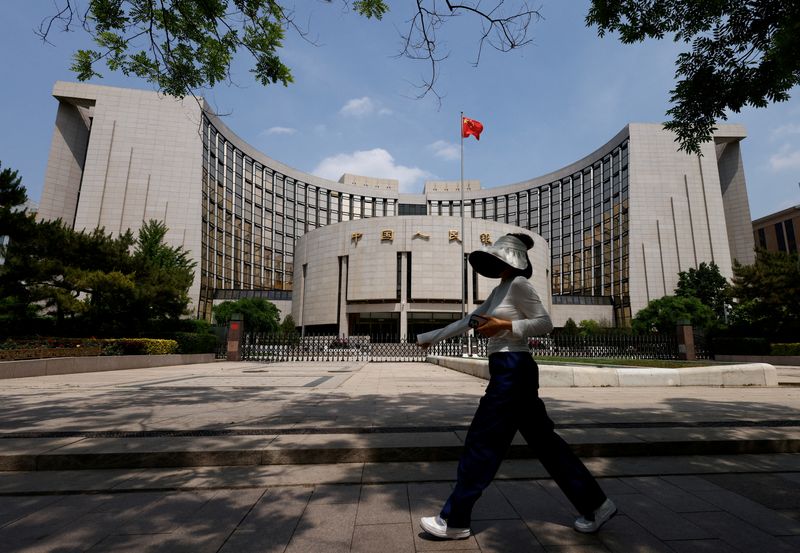

China set to keep rates steady as Mideast war clouds inflation outlook

FOX Business’ Ashley Webster reports on Atlanta’s first government-funded grocery store, where millions in taxpayer-backed loans are fueling a bold experiment to address food deserts.
Aldi is recalling a frozen food product from store shelves following a Food and Drug Administration (FDA) notice citing potential contamination with rodent hair.
The recall involves Simply Nature spinach bites sold at Aldi under the “Simply Nature” label, according to the FDA. The product may be contaminated with rodent hair.
Dr. Praeger’s Sensible Foods Inc. voluntarily initiated the recall, the agency said.
The recall has been classified as a Class II event, meaning the product may cause temporary or medically reversible health effects.
VOLKSWAGEN RECALLS NEARLY 50,000 VEHICLES OVER SERIOUS ENGINE FIRE RISK FROM FAULTY WIRING

The recall involves Simply Nature spinach bites. (Lindsey Nicholson/UCG/Universal Images Group via Getty Images)
The affected product is packaged in 12-ounce boxes of frozen spinach bites.
The recall is limited to certain lots distributed in Maryland and Pennsylvania.
The recall was initiated on Jan. 16, 2026, and remains ongoing, according to the FDA.

The recall is limited to certain lots distributed in Maryland and Pennsylvania. (Kevin Dietsch/Getty Images)
Affected products include lot number G25CF-02B with UPC 4099100247992. Approximately 7,894 units are impacted.
Consumers who have the affected product are advised not to eat it and can return it to the place of purchase for a refund.

Consumers who have the affected product are advised not to eat it. (Paul Weaver/SOPA Images/LightRocket via Getty Images)
CLICK HERE TO GET FOX BUSINESS ON THE GO
FOX Business has reached out to Dr. Praeger’s Sensible Foods Inc. and Aldi for comment.

Thailand’s ambitious tourism recovery plans for 2026 are facing significant challenges due to escalating tensions in the Middle East, which have triggered flight cancellations, route detours, and a sharp rise in travel costs.
As the conflict drives up fuel prices and disrupts transit hubs like Dubai, the Thai tourism industry projects a potential 10% to 15% decline in visitor arrivals and substantial revenue losses, prompting a strategic shift to focus on regional Asian markets to offset the drop in long-haul travelers.
Key Points
- Flight Disruptions and Rising Costs: Conflict-related detours have increased fuel consumption and operational expenses, leading Thai Airways and other carriers to raise ticket prices by 10% to 15%.
- Declining Visitor Numbers: Following military strikes in the Middle East, weekly foreign arrivals dropped by nearly 9% in early March, with an 18% decrease specifically among travelers from Europe and the Middle East.
- Economic Forecast: The Center for Economic and Business Forecasting estimates the tourism sector could lose between 9 billion and 29 billion baht ($895 million) this year, depending on the duration of the crisis.
- Impact on Local Business: Major players like Central Retail expect a decline in earnings and profits due to reduced tourist spending, while popular destinations like Phuket are particularly vulnerable to the loss of high-spending international visitors.
- Strategic Pivot to Asia: To mitigate risks, the Thai Hotels Association is urging the government to intensify promotional efforts in stable regional markets, specifically targeting affluent tourists from China, India, and Malaysia.
- Broader Economic Stakes: With tourism accounting for approximately 20% of Thailand’s GDP, the current slump threatens the country’s overall economic growth, which is already lagging behind regional peers like Malaysia and Vietnam.
The escalating conflict in the Middle East is causing a significant “double shock” to the global aviation and tourism sectors, driven by two key pressures:
- Economic Impact: Surging oil prices are driving up operational costs, which is expected to result in a significant increase in airline ticket prices.
- Structural Disruption: The war is destabilizing the major transit hubs and traffic flows between Europe, Asia, India, and Africa.
Thailand’s efforts to revive its tourism sector are encountering major challenges due to rising tensions in the Middle East, especially the conflict involving Iran. Experts predict a 10% to 15% drop in international arrivals, jeopardizing the country’s 2026 goal of attracting 36 million visitors.
Key industry players, specifically the major Gulf carriers—Emirates, Etihad, and Qatar Airways—are particularly vulnerable. Having built their business models on massive wide-body fleets and powerful connecting hubs, these airlines now face a severe reduction in activity. Key points regarding this shift include:
- Threat to Hub Dominance: The conflict challenges the long-standing dominance of Gulf states in long-haul aviation, a model that Saudi Arabia’s Riyadh Air also intended to follow.
- Shift to Regional Tourism: As long-haul transit becomes more complex and uncertain, European travelers are increasingly opting for regional destinations such as France, Spain, Italy, and Portugal.
- Irreplaceable Capacity: Experts warn that if the conflict persists, the resulting void in flight offerings will be nearly impossible for other carriers to fill, leading to long-term changes in international travel patterns.
The ripple effects of the Middle Eastern conflict are also impacting airline operations and travel sentiment, with many travelers opting to postpone or cancel trips due to safety concerns. Additionally, fluctuating oil prices driven by geopolitical instability are increasing travel costs, further discouraging international tourists. To mitigate these challenges, Thailand is ramping up efforts to attract visitors from less affected regions, such as Southeast Asia and Oceania, while promoting domestic tourism to sustain the sector.
Other People are Reading

The film will combine live action and computer-generated animation and is in “early development”.

Asia FX muted as Fed, Iran jitters boost dollar; yen steady after BOJ holds

BorgWarner at Bank of America Summit: Adapting to Market Shifts

Steel Dynamics Stock Falls on Disappointing Update Ahead of Earnings
Business
Stock market holiday today for Gudi Padwa 2026: Are NSE & BSE open or closed for Gudi Padwa celebration? Check now

The country’s largest non-agricultural commodity exchange, the Multi Commodity Exchange of India (MCX) will also open at 9 am while the largest agricultural bourse, the National Commodity & Derivatives Exchange (NCDEX) will resume trading at 10 am.
Meanwhile, the currency market will remain shut today.
The equity markets were closed on March 3 for Holi and will be closed on two other occasions in this month. They will be closed on Thursday, March 26 for Shri Ram Navami and on Tuesday, March 31 for Shri Mahavir Jayanti.
Indian benchmark indices ended with sharp gains on Tuesday, recording their third successive positive closing. Action in auto, IT and consumer stocks lifted the mood with strong support from financials. The broader Nifty surged 196.65 points, or 0.83%, to close at 23,777.80, while the 30-share Sensex gained 567.99 points, or 0.83%, to settle at 76,704.13.
The fear index India VIX fell 5.5% in the previous session to settle at 18.72.
2026 holiday list
In the holiday calendar released last year, the exchanges had initially announced 15 trading holidays but later added January 15 as an additional holiday on account of the Mumbai BMC elections. After this, the domestic markets were closed on January 26 on account of a Republic Day.
The next holiday will fall on Friday, April 3 which will be a Good Friday. Markets will also be shut on Ambedkar Jayanti on April 14, Maharashtra Day on May 1 and Bakri Id on May 28.
The second half of the year includes Muharram on June 26, Ganesh Chaturthi on September 14 and Gandhi Jayanti on October 2. Dussehra falls on October 20, followed by Diwali Balipratipada on November 10 and Guru Nanak Jayanti on November 24. The final trading holiday of the year will be Christmas on December 25.
The small surprise in the circular is that there is no mention of holiday for Diwali as it is falling on a weekend (Sunday). The Muhurat Trading will be conducted on Sunday, November 08, 2026 and the timings of Muhurat Trading will be notified subsequently.
The exchanges may alter any of the above holidays, for which a separate circular shall be issued in advance.
(Disclaimer: The recommendations, suggestions, views, and opinions given by the experts are their own. These do not represent the views of The Economic Times.)
Rep. Jodey Arrington, R-Texas, explains how Fed Chair pick Kevin Warsh will restore integrity in the Federal Reserve on The Bottom Line.
The U.S. national debt reached another historic milestone on Wednesday as it surpassed $39 trillion for the first time as the federal government’s persistent budget deficits send the debt soaring higher.
New data from the Treasury Department released on Wednesday showed that the gross national debt reached $39,016,762,910,245.14 as of March 17.
The $39 trillion milestone comes about five months after the national debt reached $38 trillion for the first time in late October 2025, which closely followed the $37 trillion milestone being surpassed just two months earlier in mid-August.
America’s debt has grown rapidly over the last decade as the population ages and federal spending on Social Security and Medicare rises. Another key driver of the surging debt is interest expenses incurred from servicing the debt, which have swelled due to higher interest rates meant to curb inflation as well as the growth in the debt itself.
US DEBT SET TO CRUSH WORLD WAR II RECORD AS ANNUAL DEFICITS EXPLODE TO $3T WITHIN DECADE
Michael A. Peterson, CEO of the nonpartisan Peter G. Peterson Foundation, told FOX Business that the latest national debt milestone is an opportunity for Americans to “recognize this alarming rate of growth and the significant financial burden we are putting on the next generation.”
“At the current growth rate, we will hit a staggering $40 trillion in national debt before this fall’s elections. Borrowing trillion after trillion at this rapid pace with no plan in place is the definition of unsustainable,” he explained.
Peterson noted that interest payments on the debt – the cost of servicing the debt the federal government has incurred – are the fastest growing line item in the federal budget and that interest costs are projected to total nearly $100 trillion over the next 30 years.
BUDGET DEFICIT HITS $1 TRILLION IN FIRST FIVE MONTHS OF FISCAL YEAR: CBO
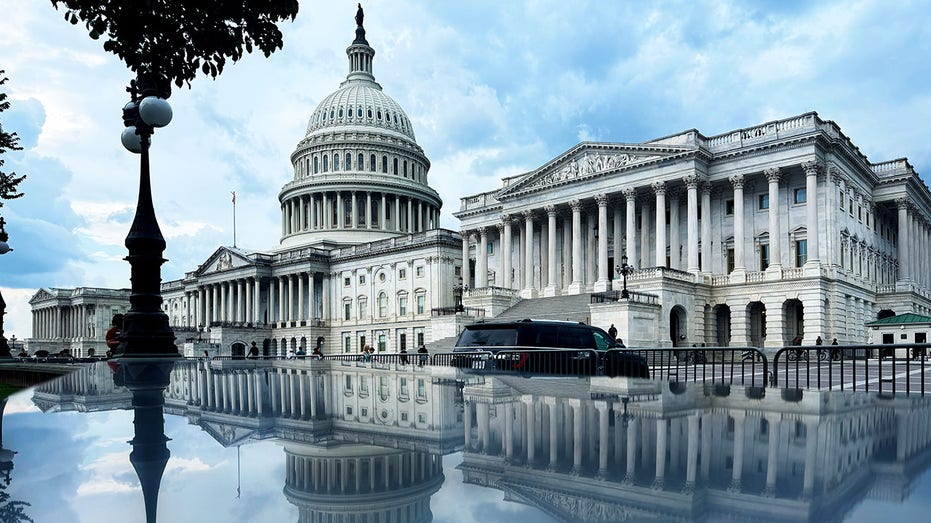
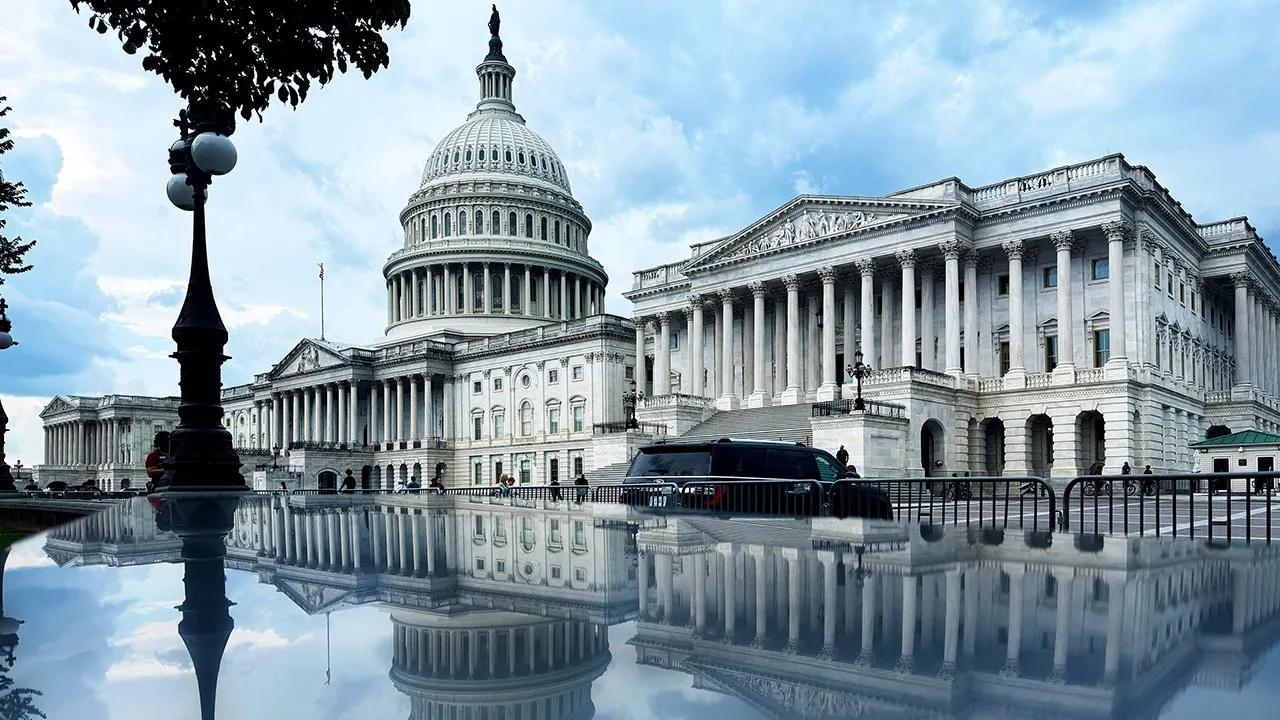
The national debt surpassed $39 trillion for the first time in U.S. history this week. (Demetrius Freeman/The Washington Post via Getty Images / Getty Images)
He went on to say that with voters concerned about affordability, the debt’s cost and economic impact on Americans’ livelihoods should serve as cause for the issue to be a focal point of the debate surrounding this year’s elections.
“America faces complex and critical challenges, both at home and abroad, and putting our debt on a sustainable path will support a stronger, more secure future. The good news is that there are many solutions available, and they all should be put on the table for discussion this campaign season,” Peterson added.
The fiscal headwinds facing the federal government are expected to continue in the years ahead, as spending on programs like Social Security and Medicare rise along with debt service costs and cause projected budget deficits to widen.
WHAT ARE THE BIGGEST BUDGET DEFICITS IN US HISTORY?
The nonpartisan Congressional Budget Office (CBO) released a 10-year budget and economic forecasts which estimated annual budget deficits will rise from their current level of about $1.9 trillion to $3.1 trillion a year a decade from now. That will push the gross national debt from its current level around $39 trillion to $63 trillion in 2036.
Debt held by the public as a share of gross domestic product (GDP), a measure economists prefer to use in comparing a nation’s debt to the size of its economy, will rise from about 100% this year to 108% of GDP in 2030 and further to 120% in 2036.
Those figures will break the record of 106% set in 1946 as the U.S. was in the process of demobilization after the end of World War II.
GET FOX BUSINESS ON THE GO BY CLICKING HERE
A recent update from the CBO found that the federal government’s budget deficit for the current fiscal year 2026 topped $1 trillion in the first five months of the fiscal year despite an influx of tax revenue from tariffs, some of which were struck down by the Supreme Court as being illegal.
Some of those tariff revenues may be subject to refunds to the businesses and consumers who paid them, which could widen this year’s deficit if the revenue isn’t replaced.

Vulnerable child rushed to hospital after incident at ‘inadequate’ children’s home

The Iran war is causing a global energy crisis – can China withstand it?

Institutional Investors Plan More Crypto Exposure in 2026: Survey


-
 Crypto World5 days ago
HYPE Token Enters Net Deflation as HyperCore Buybacks Outpace Staking Rewards
-

 Tech3 days ago
Your Legally Registered ‘Motorcycle’ Might Not Count Under Proposed US Law
-

 Fashion5 days ago
Weekend Open Thread: Addict Lip Glow
-
Sports5 days ago
Why Duke and Michigan Are Dead Even Entering Selection Sunday
-
 Tech1 day ago
Are Split Spacebars the Next Big Gaming Keyboard Trend?
-

 Business3 days ago
Search for Savannah Guthrie’s Mother Enters Seventh Week with No Arrests
-

 Business5 days ago
US Airports Launch Donation Drives for Unpaid TSA Workers as Partial Government Shutdown Enters Fifth Week
-
Crypto World4 days ago
Coinbase and Bybit in Investment Talks: Could Bybit Finally Enter the US Crypto Market?
-

 Business3 days ago
Australian shares drop as Iran war enters third week
-

 Business5 days ago
Country star Brantley Gilbert enters growing non-alcoholic beer market
-

 Crypto World3 days ago
Crypto Lender BlockFills Enters Chapter 11 with Up to $500M in Liabilities
-

 Sports5 days ago
College Basketball Best Bets: Conference Tournament Semifinal Picks
-

 Politics19 hours ago
The House | The new register to protect children from their abusers shows Parliament at its best
-
 Business6 days ago
Trump demands Powell cut rates as Iran conflict raises energy prices
-

 Fashion3 days ago
25 Celebrities with Curly Hair That Are Naturally Beautiful
-

 Crypto World6 days ago
Senate Votes to Include CBDC Ban in Bipartisan Housing Bill
-

 News Videos12 hours ago
RBA board divided on rate cut, unusually buoyant share market | Finance Report | ABC NEWS
-

 NewsBeat6 days ago
Deane Road crash near Bolton colleges and university
-

 News Videos6 days ago
Tom Lee: The 100x Opportunity EVEN Bigger Than Bitcoin (New Ethereum Prediction 2026)
-

 Crypto World12 hours ago
Canada’s FINTRAC revokes registrations of 23 crypto MSBs in AML crackdown


You must be logged in to post a comment Login