

Business
US stocks: US market’s indexes advance with boost from chips, Iran optimism


The Philadelphia semiconductor index sharply outperformed the rest of the market as Intel’s shares jumped to a record high. U.S. President Donald Trump said iPhone maker Apple had agreed to work with Intel to design and manufacture its chips in the U.S.
Early in the session, oil prices slid to their lowest levels since early March after the U.S. and Iran signed an interim agreement that extends the April ceasefire by another 60 days to allow the sides time to reach a final deal.
Although Trump threatened to resume attacks if Iran failed to honor its commitments, the first ships started sailing through the Strait of Hormuz, where transportation of oil, gas, fertilizer and other cargoes had been disrupted since the start of the war.
According to preliminary data, the S&P 500 gained 78.31 points, or 1.06%, to end at 7,498.41 points, while the Nasdaq Composite gained 496.28 points, or 1.87%, to 26,507.05. The Dow Jones Industrial Average rose 70.29 points, or 0.14%, to 51,562.84.

Also Read | SpaceX bankers prepare for bond sale of at least $20 billion
All three of Wall Street’s major indexes tumbled in the previous session as investors priced in the likelihood of Fed rate hikes, after the central bank’s new Chair Kevin Warsh underscored the need to curb inflation and other policymakers signaled higher borrowing costs ahead.
“Markets got spooked by Warsh yesterday essentially promising to contain inflation,” said Tony Welch, chief investment officer at SignatureFD, but he pointed to easing oil prices and recent strength in earnings and economic data. “All together, the package of data is still supportive whether or not the Fed has become a little bit more hawkish.”
Traders were betting on a roughly 50% chance of a 25-basis-point rate hike as soon as September and a roughly 20% probability for a 50-basis-point hike, according to CME Group’s FedWatch tool.
Investors were still assessing Warsh’s indication that the Fed would provide less guidance on future policy moves and his stated focus on price stability. Eric Johnston, chief equity and macro strategist at Cantor, said: “The conclusion today is that the Fed has more credibility around inflation.”
On the data front, Labor Department data showed the number of Americans filing claims for unemployment benefits fell last week as layoffs remained low.
In individual stocks, shares of Accenture tumbled after the company trimmed the top end of its annual revenue forecast. Peers including Cognizant Technology Solutions , Gartner and IBM fell in sympathy.
Among other movers, Kroger shares fell after the grocer reported a lower-than-expected profit for the first quarter and kept its annual forecasts unchanged. Shares in Elon Musk’s SpaceX fell for a second straight day, after the space and AI company had rallied sharply for the first few days of trading after its market debut last Friday.
Thursday also marked the once-in-a-quarter simultaneous expiry of derivatives contracts tied to stocks, index options and futures, also known as “triple witching,” which can boost trading volume and aggravate volatility.


David A. Johnson is founder and principal of Endurance Capital Management, a New Jersey Limited Liability Company. As an investor entrepreneur, David invests in stocks, bonds, options, ETFs, REITs, real estate, closed end funds and alternative investment funds such as hedge funds and private credit. With over 30 years’ experience in investing, David holds a Master of Science (MS) Degree in Finance, with a concentration in Investment Analysis, from Boston University, a Certificate in Financial Planning, and a Master’s in Business Administration (MBA) from Fordham University.
Analyst’s Disclosure: I/we have a beneficial long position in the shares of CEFS, FOF, NBXG either through stock ownership, options, or other derivatives. I wrote this article myself, and it expresses my own opinions. I am not receiving compensation for it (other than from Seeking Alpha). I have no business relationship with any company whose stock is mentioned in this article.
Seeking Alpha’s Disclosure: Past performance is no guarantee of future results. No recommendation or advice is being given as to whether any investment is suitable for a particular investor. Any views or opinions expressed above may not reflect those of Seeking Alpha as a whole. Seeking Alpha is not a licensed securities dealer, broker or US investment adviser or investment bank. Our analysts are third party authors that include both professional investors and individual investors who may not be licensed or certified by any institute or regulatory body.

The ‘Barron’s Roundtable’ panel discuss big-box retailers beating competition on value, their innovation and revenue models.
Costco shoppers are snapping up a popular Australian snack that recently landed on shelves across the United States, highlighting growing demand for international food brands among American consumers.
Tim Tams, the chocolate-covered biscuits made by Australian food giant Arnott’s, are now available in bulk packages at Costco warehouses nationwide. The product’s arrival has generated significant attention online, with shoppers sharing photos of stocked shelves and discussing the cookies across social media.
The Original Tim Tam features two malted chocolate biscuits layered with a cocoa-flavored filling and coated in chocolate. The brand, which has been a staple in Australia since 1964, has developed a loyal following well beyond its home market.
Costco is selling the product in six-sleeve boxes containing 66 cookies for about $14, giving American consumers broader access to a snack that was previously available primarily through specialty retailers and international food stores.
COSTCO QUIETLY ROLLS BACK PRICES ON POPULAR KIRKLAND PRODUCTS IN MEMBER-FRIENDLY MOVE

A shopper browses products at a Costco warehouse in Queens, New York. The retailer recently began stocking Tim Tams, a popular Australian biscuit, in stores across the U.S. (Lindsey Nicholson/UCG/Universal Images Group / Getty Images)
Social media has played a key role in driving interest. Many first-time buyers have been introduced to the “Tim Tam Slam,” a popular Australian tradition in which consumers bite off opposite corners of the biscuit, use it as a straw to sip coffee or tea, and then eat the softened cookie before it dissolves.
The technique has gained visibility through TikTok videos and celebrity demonstrations. Australian actress Isla Fisher previously showcased the Tim Tam Slam on “The Kelly Clarkson Show,” while “Succession” star Sarah Snook demonstrated the ritual during an appearance on NBC’s “The Tonight Show Starring Jimmy Fallon.”
The viral appeal of Tim Tams underscores a broader trend of international food brands finding new audiences in the U.S., particularly when social media helps introduce consumers to products and traditions that may be unfamiliar outside their home countries.
For Costco, the launch also reflects the retailer’s ongoing effort to offer members products they may not find elsewhere. The warehouse giant has increasingly leaned on exclusive items, limited-time offerings and its Kirkland Signature private-label brand to differentiate itself from traditional grocery chains and competing warehouse clubs.
COSTCO SAYS ITS GAS STATIONS SET ALL-TIME VOLUME RECORDS AS CONSUMERS SEEK LOWER-PRICED FUEL
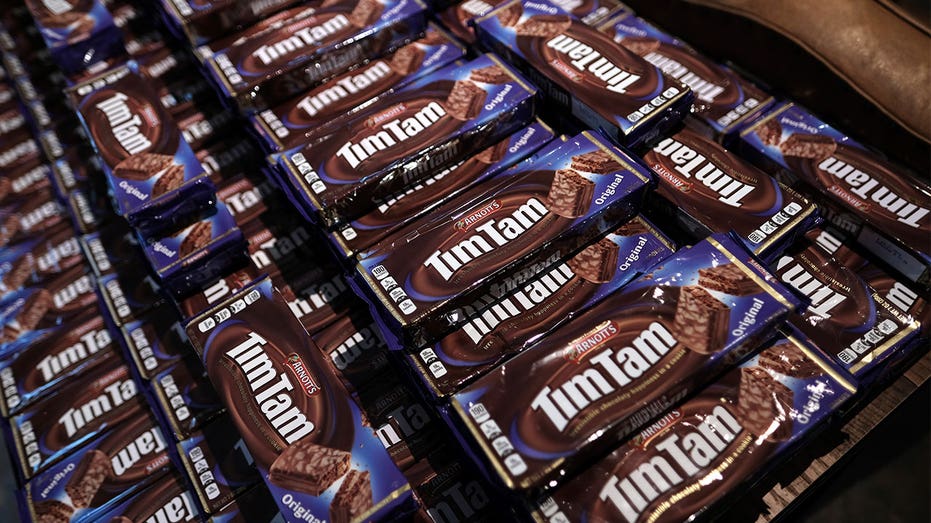
Tim Tam products are displayed at an event in Los Angeles on June 9, 2016. The Australian biscuit brand recently became available at Costco stores across the U.S. (Chris Weeks/Getty Images for General Pants Co. / Getty Images)
The Tim Tams rollout comes as Costco continues emphasizing value for shoppers. The retailer recently highlighted price reductions on several Kirkland Signature products, including chicken wings, chocolate-covered almonds and golf balls, as executives reiterated their goal of lowering prices when possible.

A shopper browses in the aisles of a Costco Wholesale Corp. warehouse in Brooklyn, New York, on Wednesday, July 25, 2012. (Victor J. Blue/Bloomberg via Getty Images / Getty Images)
GET FOX BUSINESS ON THE GO BY CLICKING HERE
The combination of exclusive products, private-label offerings and competitive pricing has helped Costco maintain strong consumer demand even as many households remain focused on stretching their grocery budgets.
Costco has also invested in operational improvements, including expanded digital membership capabilities and checkout technology designed to improve transaction speeds and enhance the customer experience.

Facebook and other Meta platforms faced significant service disruptions Friday, with thousands of users reporting difficulties accessing feeds, logging in and using core features of the social network.
The outage, which began in the morning hours, impacted users across the United States and several other countries. Reports surged on monitoring sites, with many describing blank screens, error messages and frozen interfaces when attempting to load the platform.
Meta, the parent company of Facebook, Instagram, WhatsApp and Messenger, confirmed awareness of the technical issues. Communications officials noted teams were actively working to restore full functionality, though specific details about the cause remained limited.
Outage tracking service Downdetector recorded more than 100,000 reports of Facebook problems at peak times, with similar spikes for Instagram and Messenger. The issues appeared to affect both mobile apps and website access for many users.
The disruption comes amid growing reliance on Meta’s platforms for communication, business operations and information sharing. Small businesses, news organizations and individual users reported challenges managing pages, posting content and engaging with audiences during the outage.
Meta has not released a detailed explanation for the service interruption. Previous widespread outages have been attributed to configuration changes, server issues or network problems within the company’s global infrastructure.
Users took to alternative platforms like X to share experiences and seek updates. Many expressed frustration over lost productivity and inability to access personal accounts during the disruption.
The outage highlights vulnerabilities in centralized social media networks that billions rely upon daily. Meta’s platforms serve more than 3 billion users monthly across its family of apps, making service reliability critical for global connectivity.
For businesses dependent on Facebook advertising and e-commerce features, the downtime represented potential revenue impacts. Advertising managers reported difficulties accessing campaign tools and analytics during peak business hours.
Meta’s stock experienced minor fluctuations amid the reports, though broader market movements likely influenced trading activity. The company has faced increasing scrutiny over platform reliability, content moderation and competition concerns in recent years.
This incident marks one of several notable Meta outages in recent memory. Previous disruptions have prompted calls for greater transparency and improved backup systems to prevent widespread service failures.
Users experiencing problems were advised to check their internet connections, update apps and wait for Meta’s resolution. Many reported gradual restoration of service as the company addressed underlying technical issues.
The event serves as a reminder of digital infrastructure’s fragility despite advances in cloud computing and redundancy measures. As social media integrates deeper into daily life, expectations for uninterrupted service continue to rise.
Meta officials have committed to investigating the root cause and implementing preventive measures. The company typically provides post-incident summaries outlining what went wrong and steps taken to avoid future occurrences.
For now, affected users await full restoration while turning to alternative communication methods. The outage underscores both the convenience and vulnerability of relying on single platforms for social interaction and information exchange.

NEW YORK — With the confetti barely settled on the New York Knicks’ first championship in 53 years, the NBA’s 2026 offseason trade market is detonating in all directions. Stars are being shopped, franchises are being rebuilt, and the draft on June 23 is serving as an unofficial deadline for blockbusters that could reshape the league’s balance of power for years. Here are the five biggest trade storylines consuming front offices right now.
1. Giannis Antetokounmpo: The Saga That Has Swallowed the Entire Offseason
Nothing else in the NBA moves until the Giannis Antetokounmpo situation resolves itself, and it appears that resolution is imminent. According to ESPN’s Brian Windhorst, the Milwaukee Bucks — coming off a dismal 32-50 season that ended without a playoff appearance — have been fielding calls on the two-time MVP for months, with Bucks co-owner Jimmy Haslam having set the NBA Draft as an informal deadline for a decision.
The Miami Heat have been the frontrunner for what feels like an eternity. According to reporting from The Athletic’s Tim Reynolds, Antetokounmpo “wants to be in Miami,” though even he “doesn’t know how this thing is going to end up.” The Bucks, however, remain a difficult negotiating partner. ESPN’s Windhorst reported that “the Bucks seem to not be in love with the Heat’s offer(s) and continue to discuss trade packages with other teams.”
Miami has sweetened its offer significantly since the February trade deadline, and the package now in play is substantial. According to insider Evan Sidery, the Bucks have made their desired trade package clear to the Heat: they want Kel’el Ware, Jaime Jaquez Jr., Kasparas Jakucionis, the No. 13 pick in the 2026 NBA Draft, and a future first-round pick.
The Boston Celtics have inserted themselves forcefully into the picture. Windhorst reported Tuesday that the Celtics are “on Antetokounmpo’s list,” and that Giannis is “very intrigued” by Boston due in part to his “focus on getting back to title contention.” Boston has also indicated a willingness to sign Antetokounmpo to a contract extension as part of a trade. His current deal expires after the 2026-27 season.
NBA insider Marc Stein reported that a trade “is indeed drawing near,” with momentum continuing to rest with the Miami Heat, though the Boston Celtics remain in the mix. Wedbush analyst Dan Ives — the same analyst who has been tracking the SpaceX-Tesla merger odds — isn’t the only one watching an 80-percent probability play out; Wedbush’s own NBA counterpart circle has similar conviction that the Heat ultimately land their man. The Portland Trail Blazers and Minnesota Timberwolves have also been positioned as possible third-team partners to help the Bucks maximize their return.
2. Ja Morant: Memphis Has Decided, the Market Is Being Patient
The Memphis Grizzlies have arrived at an organizational verdict on Ja Morant, and it isn’t a happy one for the two-time All-Star who was once considered a generational talent. After failing to find an adequate return before the February trade deadline — amid a market so cold that ESPN’s Brian Windhorst said on air that Morant had “negative value,” meaning teams expected Memphis to attach draft picks just to take the contract — the Grizzlies are now preparing to move him this summer with a clearer mind and more leverage.
According to ESPN, Morant has told people that he’s done playing for the Grizzlies. “Morant still hasn’t gotten over the suspension, multiple league sources said, because he felt alienated by teammates,” ESPN reported, adding that he had told players and former coaches around the league that he isn’t playing for Memphis anymore.
The strategic calculus in Memphis is deliberate. NBC Sports’ Kurt Helin reported that “Morant is expected to be traded this offseason, although the Grizzlies will wait until the Antetokounmpo drama plays out before making a move, to see whether any teams that strike out with the Greek Freak pivot to Morant.”
That sequencing matters. Miami’s fallback options if they miss on Giannis reportedly include Morant, as does Minnesota’s. The 26-year-old carries two years and $87 million remaining on his contract — $42.2 million in 2026-27 and $44.9 million in 2027-28 — a financial reality that shapes what Memphis can realistically expect in return. The Grizzlies have the third overall pick in this month’s draft and have already accumulated 12 future first-round picks through deals involving Desmond Bane and Jaren Jackson Jr., so they can afford to wait for the right offer.
3. OKC Thunder: Apron Math Could Force a Painful Move
Oklahoma City went 64-18 and reached the Western Conference Finals, making them one of the two best teams in basketball alongside the San Antonio Spurs. And yet they may be forced to trade a key contributor this summer — not because they want to, but because of the NBA’s punishing second-apron rules.
Including both 2026 first-round picks, Oklahoma City is approximately $59 million over the luxury tax and above both aprons, according to ESPN’s offseason analysis. The Thunder have until June 29 to exercise the team options of Isaiah Hartenstein, Lu Dort, and Kenrich Williams — all three of whom are extension-eligible.
The math is severe. With Shai Gilgeous-Alexander’s super-max extension kicking in at $48 million-plus and new rookie extensions for Chet Holmgren and Jalen Williams collectively exploding the payroll, the Thunder will need to shed salary to avoid second-apron restrictions that would freeze their ability to make trades and aggregate contracts. The No. 17 draft pick has already been identified as a tradeable asset, with multiple reports indicating OKC is actively looking to move that selection.
General manager Sam Presti, who has consistently avoided tipping his hand publicly, will need to thread a needle: maintaining enough firepower to compete with the Spurs’ Victor Wembanyama while complying with rules that could strip the franchise of future flexibility.
4. Ja Morant’s Shadow: Trae Young Opts Out, Trade Market Opens
In a development that shook up the point guard market Wednesday, Trae Young is planning to decline his $48.9 million player option for the 2026-27 season and enter free agency, per Marc J. Spears of ESPN.
The widely expected move opens the door to two outcomes: a new long-term extension with the Washington Wizards at a lower annual rate, or — perhaps more intriguingly — a trade. According to Jake Fischer at The Stein Line, teams are eyeing a potential Young trade, including the Miami Heat, who see the All-Star point guard as a “big fish” backup if they strike out on landing Antetokounmpo.
Young was acquired by Washington from Atlanta last season in a trade that cost the Wizards almost nothing, a reflection of how little the market valued him at the time. The context has changed. After a bounce-back season in which he showed he could still be a primary offensive engine, interest has increased substantially heading into the summer. The Heat’s potential involvement links the Morant, Giannis and Young storylines into one interconnected chain: whoever Miami misses on cascades to the next option.
5. Walker Kessler: The Jazz’s Restricted Free Agent Headache
It is a smaller story than the others, but one with significant implications for several contenders looking for interior depth: Utah Jazz center Walker Kessler is disenchanted and wants out.
According to The Athletic’s Sam Amick, Kessler was already frustrated by Utah’s choice not to offer him an extension last summer, and now, with the Jazz leveraging restricted free agency to minimize his market, sources say he is “strongly considering the prospect of a basketball future outside Utah.”
The 24-year-old is one of the premier rim-protectors and shot-blockers in the NBA, exactly the kind of player championship-caliber teams covet. As a restricted free agent, he can sign an offer sheet with another team beginning July 1 — with Utah retaining the right to match. His qualifying offer is worth $14.6 million, providing a pathway to unrestricted free agency if he accepts.
The Lakers have been among the teams with interest, though the practical challenge of signing a restricted free agent — particularly one whose current team is likely to match any offer — makes the path complicated. A sign-and-trade scenario, where Utah receives value in return for facilitating a departure, may be the most realistic route for all parties. Given that the Jazz already added Jaren Jackson Jr. at the trade deadline and hold the No. 2 pick in this month’s draft, they are in position to build a legitimate frontcourt without Kessler if the price is right.
The NBA Draft on June 23 will serve as the inflection point for most of these stories. The Giannis sweepstakes, in particular, has been described by insiders as something that could close before the opening bell of the first round — making the next five days among the most consequential in league history.
The 2026 NBA Draft is scheduled for June 23 in Brooklyn. The NBA free agency period begins July 1.

National architecture practice Hames Sharley has succeeded through its multidisciplinary approach.

No project is ever simple. They start with neat timelines and confident nods, then slowly unravel somewhere between the kickoff meeting and delivery. Deadlines slip, priorities blur, and suddenly everyone’s busy, but no one is quite sure what they’re building anymore. Sound familiar?
The problem usually isn’t the tools, though. Typically, projects don’t fail because Gantt charts weren’t colourful enough. No. They generally fail because people weren’t led through uncertainty, change, and pressure effectively. That’s where a new way of thinking about project leadership comes into play.
The Human Factor of Projects
Modern projects live in a messy middle ground. Teams are hybrid, stakeholders are scattered, and priorities change faster than anyone would like. But in this ever-adapting environment, technical competence is only half the equation; the other half is undoubtedly having a good grasp on how people behave when plans change.
Strong project leaders know how to lead a room (even when that room is a video call full of muted microphones). This means they can spot disengagement early, manage conflict before it becomes personal, and keep momentum alive even when enthusiasm dips. Nowadays, these aren’t soft skills, either. They’re survival skills.
Leaders realise that when they treat their teammates as projects, they commit to ensuring each member is more likely to succeed in their role. Theoretically, a team can only be as strong as its weakest link.
Approaching a team with the same mindset they would to a project, leaders can, to some degree, apply the same techniques they would to any other project, analysing the strengths, weaknesses, opportunities and threats, to provide a well-rounded and decisive approach to helping their team members move forward. However, the human aspect should always remain in the balance. Everyone has a hard day now and again, and leaders need to identify when encouragement is as necessary as correction in the success of their projects.
When Process Isn’t Enough
Plenty of professionals reach a point where process alone stops delivering results. It’s inevitable. You can know the frameworks, you’ve run the workshops, and you can recite the methodology. Yet, some projects still stall. This is often the moment when the lightbulb switches on, and people realise they need to lead differently (not just manage harder).
Essentially, leadership in projects means making decisions without perfect information. It also means guiding teams through ambiguity and taking responsibility when outcomes aren’t guaranteed. It’s influence over authority, especially when you’re working across departments or with external partners who don’t report directly to you.
Learning to Lead Under Pressure
Some people pick these skills up the hard way. Trial, error, and a few bruising project post-mortems. Other project leaders choose a more deliberate path and choose to build leadership capability alongside strategic thinking and real-world application.
That’s where advanced study comes into the picture. A postgraduate master’s in project leadership appeals to professionals who want to go beyond delivery and into decision-making at a higher level.
It’s not about ticking a qualification box, though. It’s learning how to steer complex initiatives, motivate teams, and align projects with long-term organisational goals. A master’s degree won’t do the work for you, but it sure will help give you the tools you need to be a great leader.
Why Experience Has Limits
Experience is invaluable. But let’s face it, it can also lock people into the same old patterns again and again. When you’ve “always done it this way”, it’s easy to miss better opportunities. Structured learning challenges those old habits by introducing new perspectives. It’ll expose you to different industries and force you to step back from day-to-day firefighting so you can thrive.
Importantly, it also gives language to instincts many leaders already have. Things like emotional intelligence, ethical decision-making, and adaptive leadership often come naturally, but formal study helps refine and apply them with confidence.
Projects as a “Leadership Laboratory”
What is one of the most underrated benefits of project-focused leadership development? It’s how immediately practical it is! Think about it…
Projects are perfect for testing grounds, and you can apply ideas in real time. See what works, and adjust quickly when needed. Nothing personal.
Unlike abstract leadership theory, project leadership lives in the real world. And in the real world, budgets matter, deadlines are real, and stakeholders have opinions you need to take into careful consideration. At the end of the day, learning how to navigate these pressures while keeping teams engaged is what separates capable managers from trusted leaders.
Rethinking What Success Looks Like
The most successful projects don’t just hit their targets. They leave teams stronger, processes clearer, and organisations feeling better prepared for what comes next. That kind of success doesn’t happen by accident.
It comes from leaders who understand that projects are temporary, but the people doing the work are not. When leaders invest in developing themselves, the ripple effects extend far beyond a single delivery date.
Project Leaders in the Australian Context
In Australia, project leaders are increasingly expected to juggle complexity. Infrastructure, technology, health, education, and environmental projects all come with high visibility and high stakes. There’s little tolerance for failure, but plenty of uncertainty baked into the work.
That reality has changed expectations exponentially. Employers aren’t just looking for people who can deliver outcomes; they want leaders who can build resilience, communicate clearly under pressure, and make decisions that stand up to scrutiny.
Advanced leadership education reflects that, focusing on ethics, sustainability, and long-term impact over short-term wins.
Leading What Comes Next
As work becomes more complex and expectations continue to rise, project leadership will only grow in importance. The leaders who thrive will be those who can balance structure with empathy, strategy with adaptability, and ambition with responsibility.
Whether you’re already leading major projects or preparing for the next step, rethinking how you approach leadership can change the trajectory of everything, including your career. After all, projects may end, but the way you lead them tends to stick with you and your team.

Apple is preparing to raise the price of its products to absorb the soaring cost of memory and storage chips, chief executive Tim Cook has confirmed in an interview with The Wall Street Journal, in the clearest signal yet that the artificial-intelligence boom is now landing squarely in the consumer’s pocket.
“Unfortunately, price increases are unavoidable,” Cook told the newspaper. “We’re doing our best to mitigate the huge increases that are being passed to us, and we’ve been trying to shield our customers from the increases, but the situation has become unsustainable.”
Cook declined to specify when the rises would take effect, how large they might be, or which products would carry them. Apple’s next significant launch is expected in September, when the iPhone 18 range, tipped to include the company’s first foldable handset, is due to arrive. Price changes on Macs and iPads could come sooner. The group quietly lifted the starting price of the Mac Mini last month, between launch events.
The trigger is an extraordinary surge in demand for memory and storage chips from AI companies, which has pushed component costs up so sharply that Apple would have to raise device prices substantially simply to hold its margins steady. The research firm TechInsights estimates that passing the higher costs straight through to buyers, while protecting profitability, would add roughly $270 to the price of the next iPhone Pro.
Memory and storage chips sit inside almost every computing device, from smartphones and laptops to games consoles, medical equipment and cars. The problem is that AI servers are now consuming these chips in rapidly rising volumes, leaving even a company as cash-rich as Apple struggling to secure supply. As the company found with Trump-era tariffs that threatened to push iPhone prices sharply higher, external cost shocks have a habit of finding their way onto the shelf price.
Since last year, when Google, Microsoft, Meta and Amazon began announcing big increases in their capital-spending budgets, the prices of memory and storage chips have both quadrupled. TechInsights expects both to keep climbing into 2027.
The two components do different jobs. Memory, known as DRAM, behaves like the desk in a mid-20th-century office, holding the papers a worker needs for the task in hand. Storage, known as NAND, is the filing cabinet that holds everything else. A smartphone uses DRAM to run the apps currently open, and NAND to file away photos and videos.
Cook said both markets were a concern, but singled out DRAM, pointing to the growing share being diverted to so-called high-bandwidth memory used in AI servers. “There’s less supply at a time when consumers want devices and the memory guys are passing along huge price increases,” he said. “We definitely need memory pricing and supply to return to reasonable levels for consumer products. That’s the bottom line.”
Three companies dominate DRAM: Samsung and SK Hynix in South Korea, and Micron in the United States. NAND is made by those three plus Kioxia and Sandisk. Their share prices and profits have exploded over the past twelve months, with Micron and SK Hynix up more than 800 per cent, and Kioxia and Sandisk up some 4,600 per cent.
Capacity is being added, but not fast enough for consumer buyers. Morgan Stanley forecasts that production capacity for DRAM wafers, the silicon discs on which chips are patterned, will grow 30 per cent by 2027. Yet as suppliers prioritise specialised AI memory, wafers for consumer technology are expected to fall up to 15 per cent short of demand. The squeeze is not Apple’s alone: industry analysts at IEEE Spectrum have charted how the AI build-out is draining DRAM supply away from the mainstream electronics that households actually buy.
China has national champions in memory and storage, but under national-security rules American companies would probably need licences to work with them. Asked whether those restrictions should be eased, Cook said: “I think everything needs to be on the table,” adding, “I think we should look at all supply.”
Apple is far from alone. Hewlett-Packard, Dell and Nintendo have all raised prices, and a consortium of industry associations recently wrote to Treasury Secretary Scott Bessent and Commerce Secretary Howard Lutnick complaining about the over-allocation of memory to AI buyers and asking for help to lift supply. The pressure on consumer pricing has been building for months, as Business Matters reported when memory costs threatened to add hundreds of pounds to the price of an ordinary laptop.
Morgan Stanley estimates a 15 per cent rise in smartphone and PC prices in the United States this year. The effect on the consumer price index should be modest, given the small weighting such devices carry, but any rise on the popular iPhone is likely to attract attention in Washington. Bloomberg has described the resulting crunch as a fully fledged chip crisis, with prices climbing across the board.
Compounding matters, Apple needs additional DRAM to power more AI features, including the rebooted Siri unveiled last week. The company has also long relied on NAND storage upgrades to lift profits, charging $100 to $200 for extra increments that cost it a fraction of that, the very products now caught in the price spiral.
In the interview, Cook said Apple was ready to deploy its cash reserves to help boost memory supply. “We’re willing to use our balance sheet to help be a part of the solution,” he said. “Obviously, more capacity is needed.”
He offered no specifics, and the practical difficulty is plain. It is unclear how Apple could match, let alone beat, the terms AI hyperscalers are offering to lock up supply: three-to-five-year agreements with large cash prepayments that run against Apple’s long tradition of disciplined spending. Nor will the company build its own factories. “We can’t do everything,” Cook said. “We know what we’re good at.”
Apple spends in the low tens of billions of dollars a year on memory and storage, according to people familiar with its costs, making it one of the largest buyers in the world. Historically it has used that heft to wring the keenest prices from suppliers, playing them off against one another. Now, with AI companies storming the market, even Apple has to queue.
For Cook, who has spent more than four decades in the electronics supply chain at IBM, Compaq and Apple, the swing is without precedent. “This is a hundred-year flood,” he said. “I’ve never seen anything like it in any area in over 40 years.”
For consumers and the small businesses that kit out their teams with iPhones, iPads and Macs, the message is blunt: the AI gold rush now has a price tag, and it is about to appear on the till receipt.

Jamie Young
Jamie is Senior Reporter at Business Matters, bringing over a decade of experience in UK SME business reporting.
Jamie holds a degree in Business Administration and regularly participates in industry conferences and workshops.
When not reporting on the latest business developments, Jamie is passionate about mentoring up-and-coming journalists and entrepreneurs to inspire the next generation of business leaders.

A consultation is launched on the Heathrow expansion, outlining conditions for the project to go ahead.
Analysis showed how much the UK could have grown if it had not exited the EU.

With fuel and gas prices having fallen in recent days, we look at how the end of hostitlities might affect you – in five charts.
CEFS: Outperforms Funds Of Closed End Funds (BATS:CEFS)

ETH Trapped Below $1.7K Raises Call For Another “Selling Wave”

Mexico vs South Korea, FIFA World Cup 2026 Live Score: Mexico and South Korea faceoff in a blockbuster group A clash with eyes on Round of 32 spot


-

 Business4 days ago
No Jackpot Winner as $257 Million Prize Rolls Over to $269 Million Monday Draw
-

 Fashion6 days ago
Weekend Open Thread: Tuckernuck – Corporette.com
-
 Crypto World4 days ago
Zimbabwe Requires Crypto Businesses to Register Annually Under New FIU Regulations
-

 Crypto World6 days ago
Bitget enters Argentina’s regulated crypto market through PSAV registration
-

 Tech6 days ago
NanoClaw integrates JFrog registries to secure AI agent downloads
-

 Tech6 days ago
This Week In Security: Microsoft On Microsoft, Register Your Domains, Linux On ARM, And FreeBSD Joins The File Cache Club
-

 NewsBeat6 days ago
FBI searches office of Ohio voter registration group
-
 Tech7 days ago
Anthropic is spending $150M to embed 1,000 AI fellows inside nonprofits. No degree required.
-
 Entertainment7 days ago
‘The Pitt’s Fan-Favorite Doctor Confirms Noah Wyle Gave His Blessing to Return [Exclusive]
-
 Crypto World7 days ago
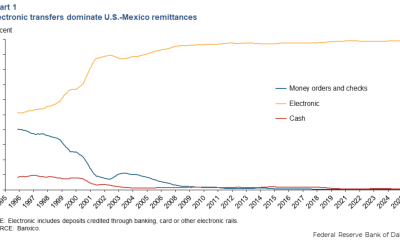
Ripple and Bitso Bring MXNB Stablecoin to XRP Ledger
-

 Tech7 days ago
Former AWS CEO Adam Selipsky to lead new $10B AI data center venture
-
 Entertainment4 days ago
Matt Damon’s Viral Sci-Fi Thriller Has Taken Over HBO Max
-

 Business4 days ago
Anthropic staff to meet White House officials next week, Axios reports
-

 Tech4 days ago
As AI companies race to go public, who else is along for the ride?
-
 Crypto World4 days ago
Bitcoin could crash to $48,000, if this historical pattern is triggered
-
 Tech7 days ago
Euro-Office 1.0 Arrives To Open-Source Infighting: ‘Compatibility Is Not Sovereignty’
-

 Politics4 days ago
“Israel’s” ban on ICRC visits ruled illegal, but Knesset moves to stop them permanently
-
Entertainment7 days ago
Ana Navarro unleashes explosive tirade on ex-Trump aide, Disney Channel star in epic on-air fight: 'Have you no shame?'
-
 NewsBeat4 days ago
Warning of disruption as Cardiff Crossrail works to start
-

 News Videos4 days ago
Financial Accounting | Last Day Revision Strategy and Booster | CMA Inter – June 2026
You must be logged in to post a comment Login