Connect with us
DAPA Banner

Business

US Treasury signals global tariff hike to 15% as Trump trade policy returns

Published

on

US Treasury signals global tariff hike to 15% as Trump trade policy returns

The United States is expected to raise its global tariff rate to 15 per cent in the coming days as the Trump administration moves to restore its controversial trade policies following a Supreme Court ruling that struck down last year’s sweeping import duties.

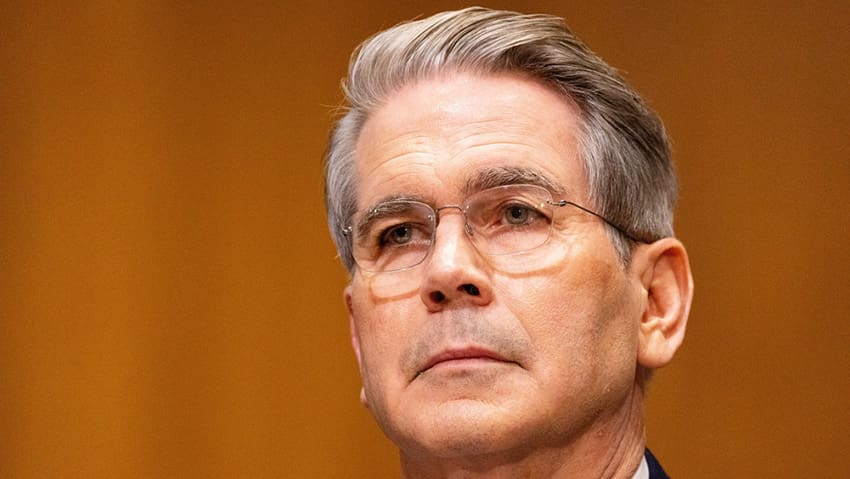
US Treasury Secretary Scott Bessent said the higher tariff level was “likely” to be implemented this week, suggesting the White House intends to push ahead with a tougher global trade regime despite the legal challenges that forced officials to rethink their approach.

The new tariff would replace the blanket import duties announced by Donald Trump last year, which had imposed levies on goods from dozens of countries. Those measures were struck down by the Supreme Court of the United States after judges ruled that the administration had exceeded its authority by using emergency powers to justify the tariffs.

The decision triggered a rapid response from the White House, which introduced a new global levy of 10 per cent using a different legal mechanism. However, confusion quickly followed after Trump stated on social media that the rate would instead be set at 15 per cent.

In practice, the tariff came into force at the lower level, leaving businesses and governments around the world uncertain about the direction of US trade policy.

Advertisement

Bessent’s latest comments suggest the administration now intends to align policy with Trump’s earlier statements by raising the tariff to the maximum level allowed under the temporary legal authority being used.

Speaking to CNBC, Bessent said he believed tariffs would ultimately return to their previous levels within a matter of months. He argued that the court ruling would not undermine the administration’s broader trade strategy or the revenue the US expects to collect from import duties.

“It’s my strong belief that the tariff rates will be back to their old rate within five months,” he said.

The White House has repeatedly dismissed the significance of the court decision, insisting it has several alternative legal tools available to maintain the tariff regime.

Advertisement

Officials say the policy is central to the administration’s economic strategy, which aims to reduce the US trade deficit, encourage domestic manufacturing and generate revenue to help tackle the country’s growing national debt.

To implement the current tariff, the administration invoked Section 122 of the US Trade Act, a rarely used provision that allows the president to impose tariffs of up to 15 per cent for a period of up to 150 days without approval from Congress.

The authority is designed to address sudden balance-of-payments crises or major trade imbalances. Because it has rarely been used in modern trade disputes, many legal experts consider the White House’s interpretation of the law to be largely untested.

Section 122 provides the administration with a temporary mechanism to maintain tariffs while it develops a longer-term legal framework for its trade policies.

Advertisement

The White House has indicated that once the 150-day window expires, it intends to rely on other statutes to introduce more permanent tariffs.

These include Section 301 of the Trade Act, which allows the US government to impose duties on countries accused of unfair trade practices, and Section 232 of the Trade Expansion Act, which permits tariffs on imports deemed to threaten national security.

Both provisions have been used by Trump previously. During his first term in office, the administration imposed tariffs on steel and aluminium imports under Section 232 and used Section 301 to introduce duties on hundreds of billions of dollars’ worth of goods from China.

Officials have also explored applying these powers to a wider range of sectors, including digital services taxes, pharmaceutical imports and automotive manufacturing.

Advertisement

Unlike the emergency powers struck down by the Supreme Court, these legal tools require the government to follow formal procedures before imposing tariffs.

This typically includes conducting investigations into the industries concerned, presenting evidence to justify the duties and providing businesses with a consultation period to submit feedback before new levies are introduced.

Many businesses say this more structured process would be preferable to the abrupt policy shifts that have characterised recent trade decisions.

Companies involved in international supply chains have repeatedly called for greater clarity and predictability, arguing that sudden tariff announcements make it difficult to plan investments, adjust pricing strategies or secure long-term contracts.

Advertisement

The legal battle over tariffs has also created significant financial uncertainty for the US government.

Companies that paid the original tariffs before they were struck down have begun filing claims seeking reimbursement. Analysts estimate the administration could face refund claims worth as much as $130 billion.

A study by the Cato Institute calculated that the government could also incur substantial interest costs if those refunds are delayed.

According to the institute’s estimates, US taxpayers could be liable for roughly $23 million in interest for every day refunds remain unpaid, potentially reaching around $700 million per month.

Advertisement

The dispute stems from the tariff regime introduced during what Trump described as “Liberation Day” in April last year.

At that time, the administration imposed tariffs ranging from 10 per cent to as high as 50 per cent on imports from dozens of countries. The move sparked a wave of diplomatic negotiations as governments attempted to secure exemptions or reduced tariff rates by offering investment commitments and other concessions.

The sweeping nature of the tariffs triggered a legal challenge that eventually reached the Supreme Court, which ruled that the president’s use of emergency powers to justify the duties was unconstitutional during peacetime.

That judgment forced the administration to redesign its trade policy using alternative legal authorities.

Advertisement

The shift to a universal tariff of 10 per cent temporarily placed imports from all countries on equal footing, removing the advantages some trading partners had negotiated after the original “Liberation Day” tariffs were announced.

Countries such as the United Kingdom had previously secured lower tariff rates as part of bilateral negotiations, and the introduction of a flat global tariff effectively erased those concessions.

The potential increase to 15 per cent would mark another escalation in the administration’s trade policy, potentially affecting thousands of exporters and supply chains worldwide.

Economists say the move could have wide-ranging consequences for global trade flows, particularly if the tariffs are extended or made permanent under other legal authorities.

Advertisement

For now, businesses and foreign governments are watching closely as Washington prepares its next steps in reshaping the US tariff regime and redefining its approach to international trade.


Jamie Young

Jamie Young

Jamie is Senior Reporter at Business Matters, bringing over a decade of experience in UK SME business reporting.
Jamie holds a degree in Business Administration and regularly participates in industry conferences and workshops.

When not reporting on the latest business developments, Jamie is passionate about mentoring up-and-coming journalists and entrepreneurs to inspire the next generation of business leaders.

Advertisement
Continue Reading
Click to comment

You must be logged in to post a comment Login

Leave a Reply

Business

Bwxt stock hits all-time high at 220.79 USD

Published

on


Bwxt stock hits all-time high at 220.79 USD

Continue Reading

Business

Iran war squeezes Asia energy supply as India, Japan feel strain

Published

on

Iran war squeezes Asia energy supply as India, Japan feel strain

The latest phase of the Iran war is locked on the Strait of Hormuz and critical energy infrastructure. Already, its effects are rippling thousands of miles away in Asia.

Asia is at the front line of the energy crisis, ​with shortages hitting nearly every country. Roughly a fifth of the world’s oil flows through the Strait of Hormuz, with some 80% going to Asia, according to the International Energy Agency.

Advertisement

As Iran refuses to open the strait, Asia is scrambling to mitigate disruptions and is being forced to take measures reminiscent of COVID-era actions.

Asia is especially susceptible due to its heavy import dependence, weaker currencies and large populations. And the impact has hit households fast.

The conflict has disrupted sectors from air ‌travel ⁠and shipping to gas supplies. People are struggling to cook and businesses across the board are bearing the brunt as liquefied petroleum gas imports slow.

A STATE-BY-STATE LOOK AT GAS PRICES AS IRAN CONFLICT PUSHES OIL HIGHER

Advertisement
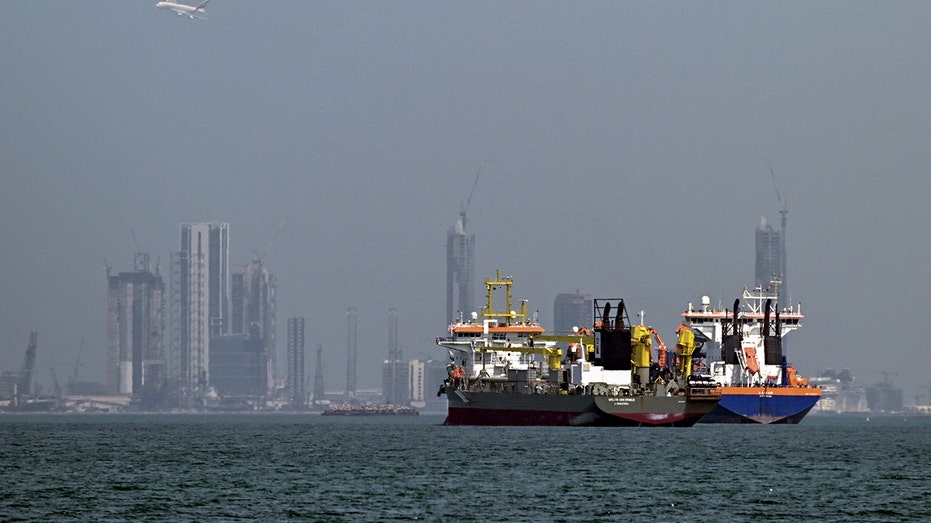
A cargo ship in the Strait of Hormuz

Commercial vessels are pictured offshore in Dubai on March 11, 2026. (AFP via Getty Images / Getty Images)

Widespread disruptions have hit South Asia in particular, which is extremely reliant on Middle Eastern oil. India, which imports nearly 90% of its crude and about half its natural gas from abroad and is the world’s third-biggest oil importer and consumer, has been left especially vulnerable.

Yesterday, President Donald Trump and Indian Prime Minister Narendra Modi spoke on the phone, their first call since the Feb. 28 war broke out. In a post on X, Prime Minister Modi stressed, “Ensuring that the Strait of Hormuz remains open, secure and ​accessible is essential for the whole world.”

The Strait of Hormuz serves as a conduit for more than 40% of India’s crude oil ​imports.

This week, two tankers bound for India sailed through the strait. Vessels with ties to China, Pakistan and Thailand have also transited successfully, while several other Asian governments are in talks with Tehran to secure passage.

Advertisement

But a lot of these imports are expected to be used for non-power, industrial purposes such as fertilizer production, leaving the public left in the lurch.

In a new move that shows the precariousness of the situation, India’s Reliance Industries, which operates the world’s biggest refining facility, reportedly bought 5 million barrels of Iranian oil. The deal marks India’s first such purchase since 2019 and comes days after the U.S. temporarily lifted sanctions.

“All our kitchens run on gas and so, they’ve all been hit,” Indian hospitality veteran AD Singh told FOX Business. “We have been forced to stop serving several items and shorten our menus, doing our best given what we have. But people are worried and livelihoods are at stake. It’s not a positive feeling,” the founder and managing director of the Olive Group of restaurants said.

KEVIN O’LEARY FORECASTS GLOBAL POWER SHIFT IN STRAIT OF HORMUZ AS IRAN CONFLICT RATTLES OIL MARKETS

Advertisement
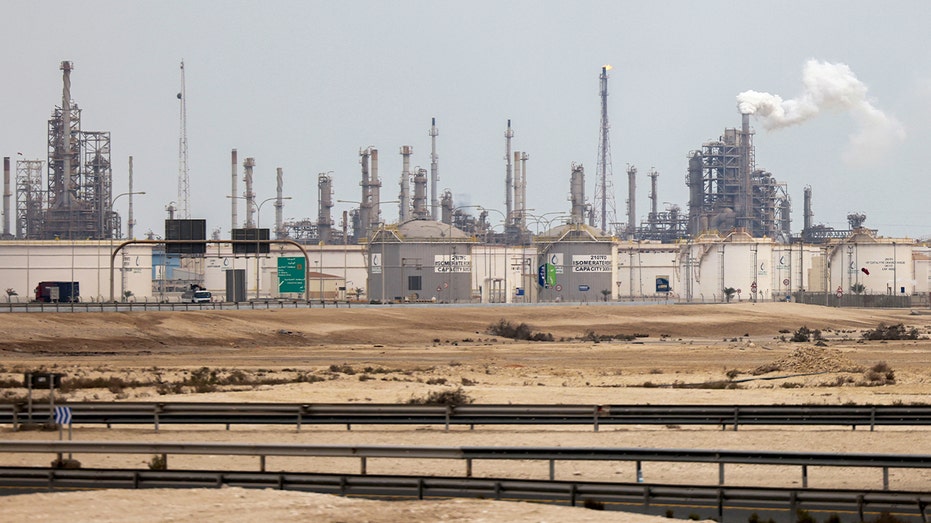
Industrial gas processing facilities and storage infrastructure at a major Qatari energy complex.

Qatar Energy facilities in Mesaieed Industrial City, south of Doha, on March 4, 2026, after the company announced a shutdown of LNG production following reported Iranian attacks. (Stringer/Getty / Getty Images)

It’s a similar story in much of the subcontinent. 

Two of Asia’s most advanced economies have also been hit hard. But while South Asia feels it more at the household level, Japan and South Korea are facing a different kind of strain.

The two east Asian nations are being rocked by surging import costs, forcing factories to scale back and governments to tap emergency reserves.

Japan, which imports more than 90% of its oil from the region, has begun tapping strategic reserves. South Korea is weighing reserve releases and emergency support measures.

Advertisement

Unlike India, both countries have larger financial buffers and energy stockpiles, allowing them to cushion the immediate impact even though structural risks remain high.

Strikes are hitting many nations, like India, Bangladesh and the Philippines as frustrations grow. Online rumors are deepening the chaos and prompting panic buying. In a few countries like India, police are being deployed at gas stations.

Japan

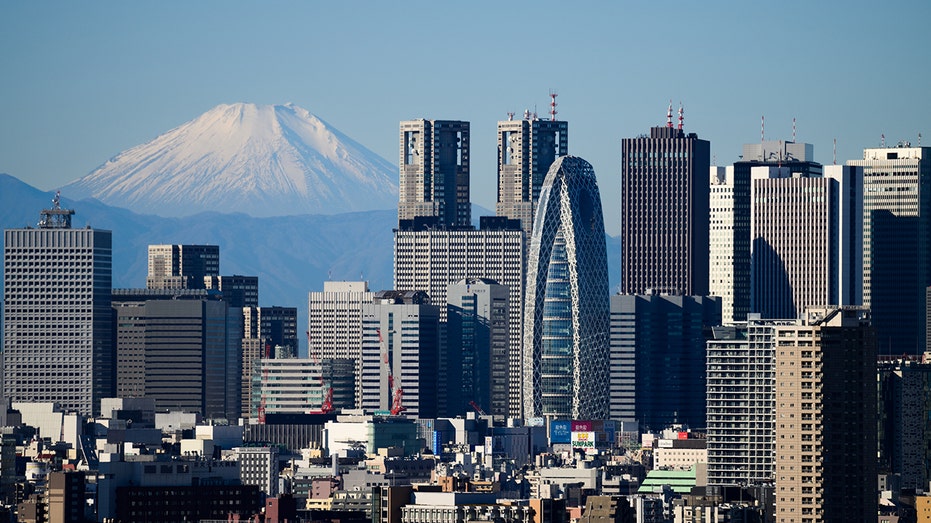
Mount Fuji and the Shinjuku skyline seen from an observation deck in Tokyo, Japan, on Dec. 26, 2023. (Akio Kon/Bloomberg via Getty Images / Getty Images)

As Asia grapples with this energy crisis, many countries are now turning back to coal and firewood to offset their gas needs. 

Induction cooking equipment is flying off the shelves in LPG-dependent India, and early warning signs are popping up elsewhere in the region. Energy shocks are now showing up on dinner tables as well.

Advertisement

 “It’s taking some time to get set on these new ways,” AD Singh told FOX Business.

AMERICAN DRONE COMPANY CHALLENGES CHINESE DOMINANCE WHILE PREPARING TROOPS FOR SWARM ATTACKS

Japan and South Korea are accelerating plans to boost nuclear energy.

Several Asian countries have also released petrol and diesel from domestic reserves, temporarily loosened fuel standards and stepped up domestic production.

Advertisement

Emergency regulatory steps are beginning to sweep the region, from severe austerity measures in Sri Lanka to strict fuel rationing in Bangladesh.

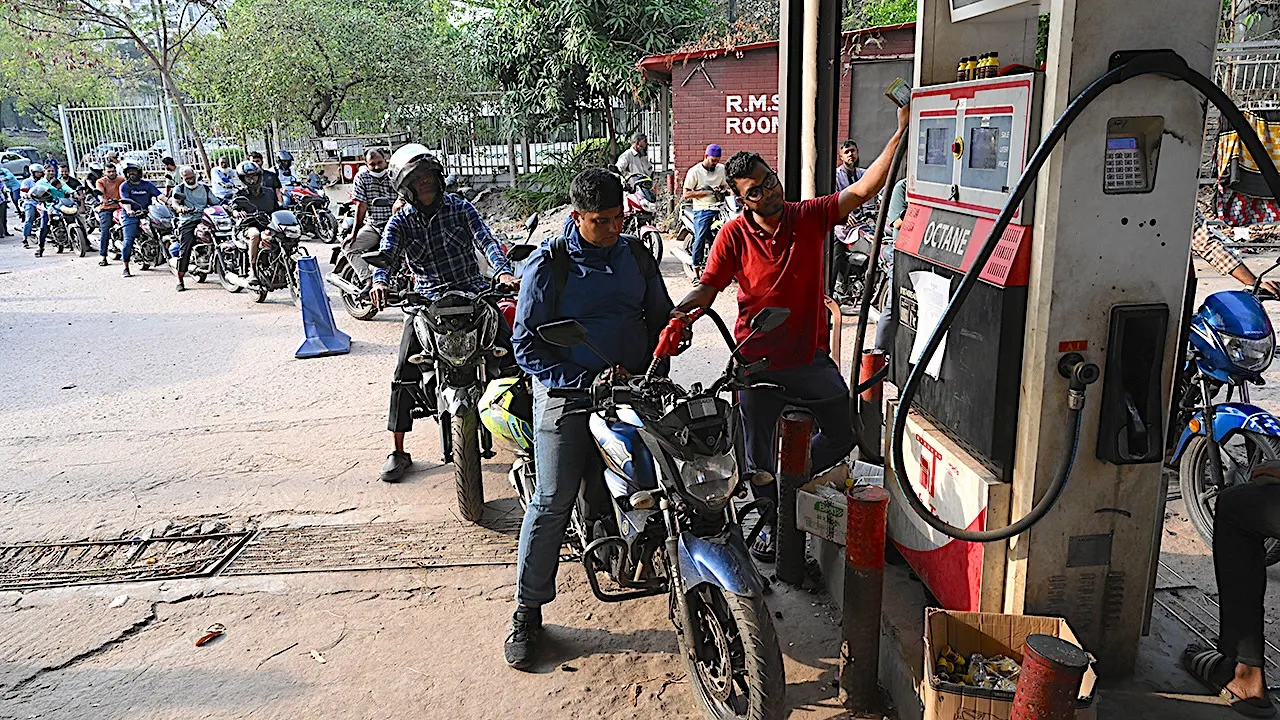
Bangladesh energy crisis

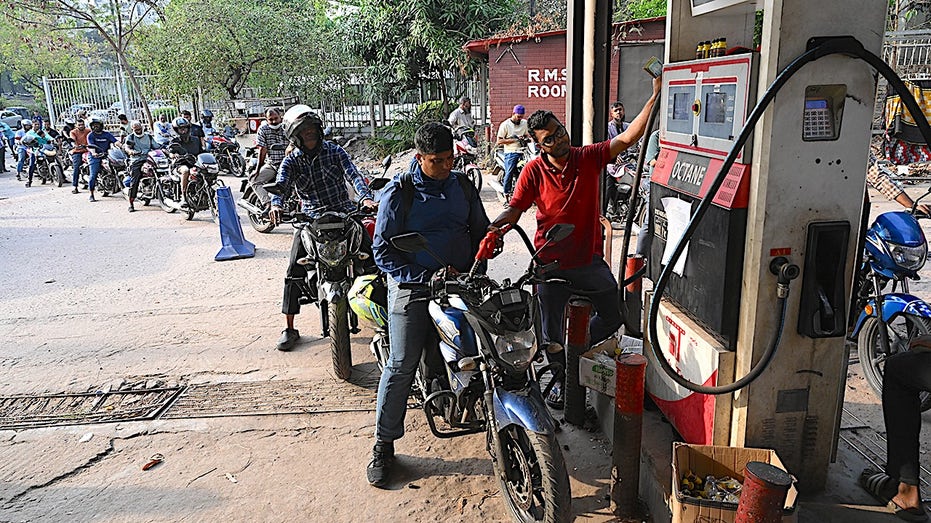
People refuel their motorbikes at a fuel station in Dhaka, Bangladesh, on March 17, 2026. (Mamunur Rashid/NurPhoto via Getty Images / Getty Images)

The Philippines just became the first country to declare a national energy emergency, warning of “an imminent danger of a critically low energy supply.” The island imports 98% of its oil from the gulf.

Meanwhile, China just dialed back on planned fuel price hikes in a bid to “reduce the burden” on the population.

Some governments are also weighing stimulus packages and energy-saving campaigns are flooding social media as record-high costs bite household budgets. 

Advertisement

GET FOX BUSINESS ON THE GO BY CLICKING HERE

“Any scarcity of essential fuels has a cascading effect across the continent,” Singh told FOX Business. “When it comes to food, ingredient prices rise, operation costs increase and business volumes are affected. And with the news all over the place, people are spooked.”

Continue Reading

Business

Finance Minister Nirmala Sitharaman moves Bill to amend IBC, speed up resolution

Published

on

Finance Minister Nirmala Sitharaman moves Bill to amend IBC, speed up resolution
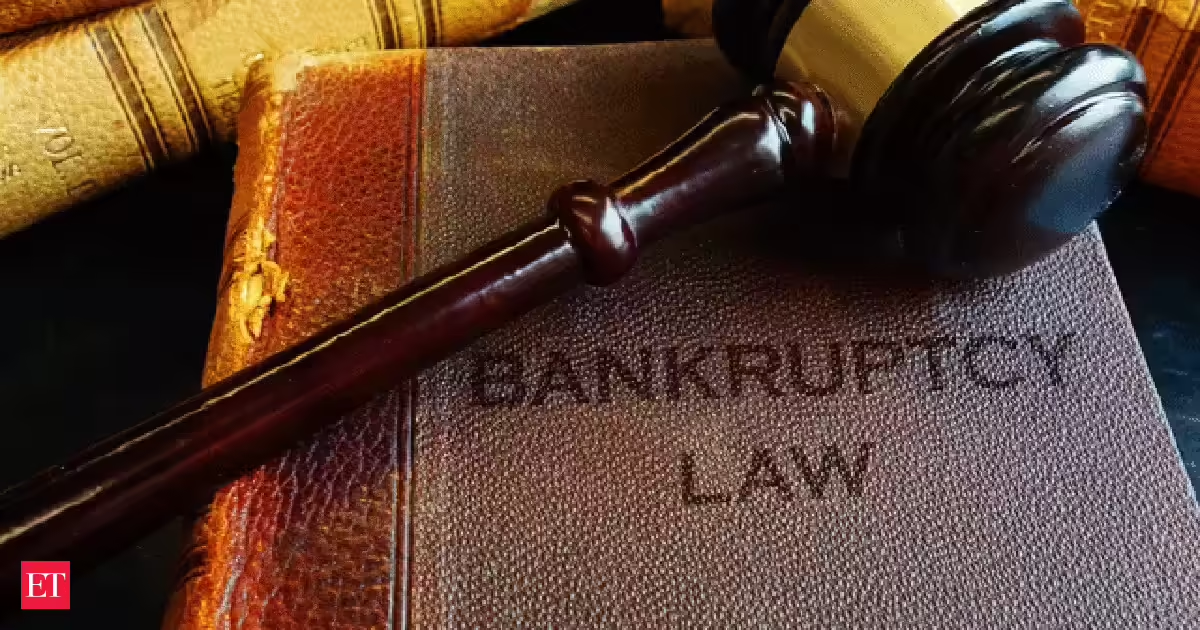
New Delhi: Finance and corporate affairs minister Nirmala Sitharaman on Wednesday moved a bill in the Lok Sabha to amend the Insolvency and Bankruptcy Code, proposing a creditor-initiated framework with largely out-of-court arrangements to speed up bankruptcy resolution.

The Insolvency and Bankruptcy Code (Amendment) Bill, 2025, also proposes frameworks for faster resolution of cross-border and corporate group insolvency cases.

Sitharaman moved the bill, as “reported by” the select House committee that vetted it, for the Lok Sabha’s consideration.

The amendments, the first since 2021 and the seventh since the law’s inception in 2016, introduce new concepts and streamline existing processes to reduce delays in resolving insolvent companies that erode asset value, experts said.

Between April and December 2025, the average resolution time rose to 764 days, excluding periods exempted by the National Company Law Tribunal, compared with 597 days as of March 2025. The IBC currently stipulates a 330-day deadline, including litigation time, for resolution. The proposed creditor-led resolution process will have a 150-day deadline. It allows a majority of unrelated financial creditors and the debtor to reach an informal agreement on a rescue plan, limiting the NCLT’s role to affirming the moratorium and approving the plan, experts said. Unlike the current system, the corporate debtor will continue to manage the company under the supervision of a resolution professional. Lenders will have the option to choose between the new framework and the existing corporate insolvency resolution process.

Advertisement


“The amendments mark the transition of the IBC to a new phase-from mistrust to trust, from regime punishing lack of governance to a regime motivating governance and from an adversarial approach to a conciliatory one based on coordination for insolvency resolution,” said Anoop Rawat, national practice head (insolvency and restructuring practice) at Shardul Amarchand Mangaldas.
The bill proposes a framework, aligned with a model UN law, to enable creditors to handle cases where a bankrupt company has assets or creditors overseas, and to seek cooperation from other jurisdictions.

Continue Reading

Business

Tillamook unveils ice cream bars

Published

on

Tillamook unveils ice cream bars

The frozen novelties are offered in four flavors. 

Continue Reading

Business

Stewart upgrades virtual underwriter platform with AI agent

Published

on


Stewart upgrades virtual underwriter platform with AI agent

Continue Reading

Business

NAACP hires DOJ civil rights chief in Biden administration

Published

on

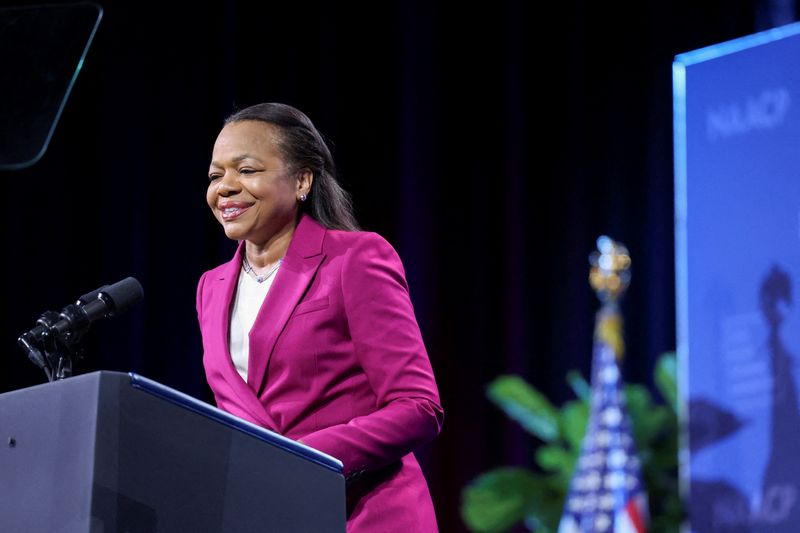
NAACP hires DOJ civil rights chief in Biden administration


NAACP hires DOJ civil rights chief in Biden administration

Continue Reading

Business

Retail investors cut holdings in 14 midcaps; stocks fall up to 45% in 6 months

Published

on

The Economic Times

Retail investors trimmed stakes in 96 Nifty Midcap 150 stocks amid weak performance, with many declining sharply over six months, signaling fading confidence and cautious sentiment toward select midcap companies.

Continue Reading

Business

Naturgy Energy Group, S.A. (GASNY) Shareholder/Analyst Call Transcript

Published

on

OneWater Marine Inc. (ONEW) Q1 2026 Earnings Call Transcript

Naturgy Energy Group, S.A. (GASNY) Shareholder/Analyst Call March 24, 2026 5:00 AM EDT

Company Participants

Francisco Reynés Massanet – CEO & Executive Chairman
Manuel García Cobaleda – Secretary of the Company and the Board

Conference Call Participants

Advertisement

Fernando de la Camara Garcia

Presentation

Francisco Reynés Massanet
CEO & Executive Chairman

Advertisement

Good morning, ladies and gentlemen. Thank you. Thank you so much for being here. If you allow me, before I officially start this AGM, I would like to share with you a video that summarizes joint and in-depth work that we have done this year and after being shared and approved by the AGM has to do with our corporate purpose. Our corporate purpose has been defined as a goal that aims to facilitate the relationship that we all have with energy on a daily basis. By trying to improve the relationship with our employees, collaborators, public authorities, regulators, suppliers and especially so with the over 20 million customers that we have distributed through our geographies. So without further ado and before we officially start, allow me to show you this video that summarizes our commitment.

[Presentation]

Francisco Reynés Massanet
CEO & Executive Chairman

Advertisement

Ladies and gentlemen, shareholders, just like in previous years, I’m honored as the Chairman of the Board of Directors to welcome you to this ordinary AGM that the company holds, as we have in the past, both remotely and in person simultaneously. I would especially like to thank the presence of the members of the Board of Directors who are here present and also the representatives of the most significant shareholders. Especially this year, I have the honor of welcoming the representatives of Sonatrach, Mr. Eddine Daoudi and Mr. [ Atallah ] who are also with us here today. One more proof of that commitment and the fruitful relationship and long-lasting relationship we’ve had for over 40 years. Therefore, we officially open this

Advertisement
Continue Reading

Business

PDD Holdings Inc. (PDD) Q4 2025 Earnings Call Transcript

Published

on

OneWater Marine Inc. (ONEW) Q1 2026 Earnings Call Transcript

Operator

Ladies and gentlemen, thank you for standing by, and welcome to PDD Holdings Inc. Fourth Quarter and Fiscal Year 2025 Earnings Conference Call. [Operator Instructions] Please be advised that today’s conference call is being recorded. I would now like to hand the conference over to your host today. Sir, please go ahead.

Unknown Executive

Advertisement

Thank you, operator, and hello, everyone, and thank you for joining us today. PDD Holdings earnings release was distributed earlier and is available on our website at investor.pddholdings.com as well as through the Globe Newswire services. Before we begin, I would like to refer you to our safe harbor statement in the earnings press release, which applies to this call as we will make certain forward-looking statements. This call also includes discussions of certain non-GAAP financial measures. Please refer to our earnings release, which contains a reconciliation of non-GAAP measures to GAAP measures.

Joining us today are Mr. Chen Lei, our Co-Chairman and Co-Chief Executive Officer; and Mr. Zhao Jiazhen, our Co-Chairman and Co-Chief Executive Officer.

Our VP of Finance, Ms. Liu Jun, is unfortunately on medical leave. Delivering the prepared remarks today will be Mr. Li Jiong, our Finance Director. Jiazhen and Lei will make some general remarks on our performance for the past quarter and our strategic focus. Jiong will then walk us through our financial results for the fourth quarter and fiscal year ended December 31, 2025.

During the Q&A session, Lei and Jiong will

Advertisement
Continue Reading

Business

Meta and Google found liable in landmark social media addiction trial

Published

on

Meta and Google found liable in landmark social media addiction trial

The verdict marks the end of a five-week trial on the addictive nature of social media platforms.

Continue Reading

Trending

Copyright © 2025