Nike’s Mind platform is one of the brand’s most ambitious innovations yet, blending neuroscience, design and sport psychology into a new category of “sensory footwear.” Here are 10 things you need to know about Nike Mind — and why it matters for the future of performance.
Nike Mind
1. Nike Mind is Nike’s first neuroscience-based footwear platform
Nike Mind is not just another cushioning or performance foam; it is Nike’s first footwear platform explicitly built around neuroscience and how the brain responds to sensory input from the feet. Developed inside the Nike Mind Science Department, a branch of the Nike Sport Research Lab, the project spent about a decade in research and prototyping before its public debut.
Unlike traditional performance shoes that focus on speed, propulsion or impact protection, Nike Mind is designed to change how athletes feel mentally by stimulating specific neural pathways through underfoot contact. Nike describes it as a “new sensory footwear concept that helps reawaken the foot, the body and the mind,” signaling a shift from pure physical performance to mind–body integration.
2. It’s built around 22 anatomically mapped foam nodes
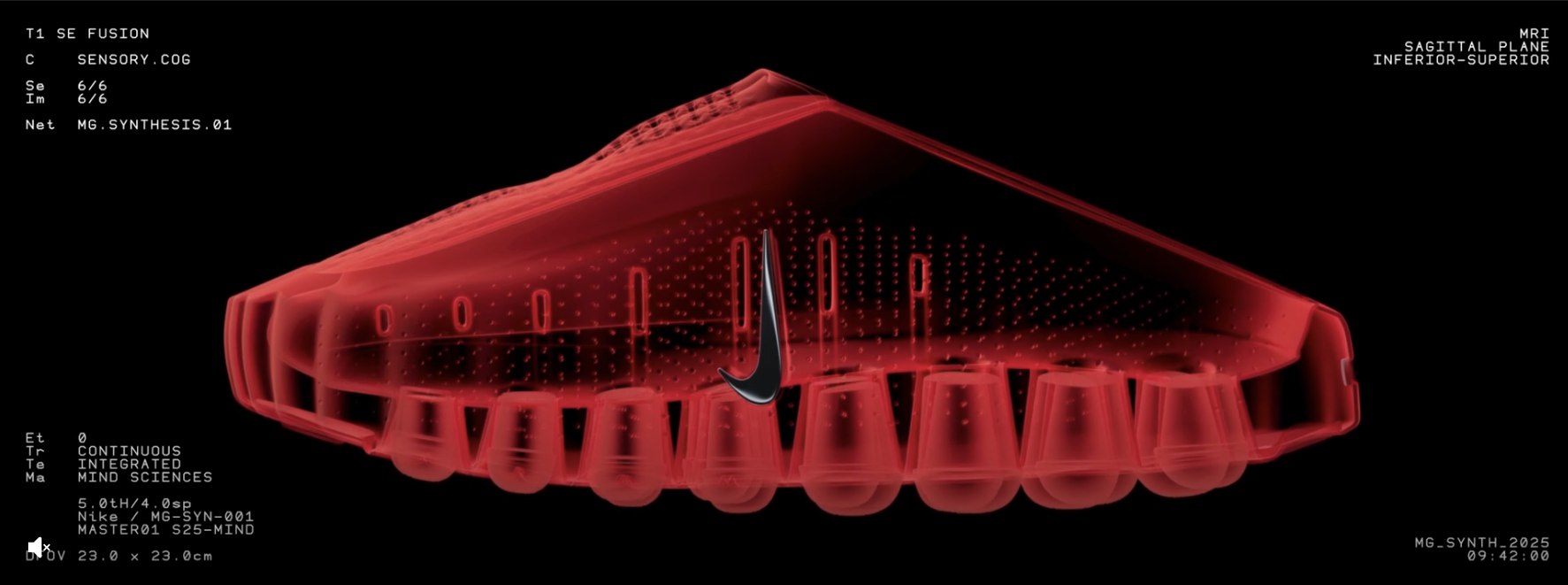
At the heart of Nike Mind technology is a system of 22 foam “nodes” mapped to key regions under the foot. These nodes are attached to a flexible base and function like tiny pistons or gimbals that move independently as you walk, stand or shift your weight.
The idea is to target pressure points and mechanoreceptors on the sole, which are directly linked to sensory regions of the brain. By constantly changing the pattern of underfoot stimulation, the nodes amplify sensation and mimic a more natural, varied interaction with the ground than flat cushioning normally provides.
Advertisement
3. It’s designed for pre-game priming and post-game recovery
Nike Mind shoes are explicitly framed as “pre-game and post-game” tools rather than race-day or in-game performance footwear. Nike says the platform is meant to help athletes prime their nervous systems before competition and then reset or decompress afterward.
During pre-game routines, the sensory stimulation is intended to sharpen focus, heighten awareness and mentally prepare athletes to compete. Post-game, the same technology aims to support recovery by helping the brain and body shift out of high-alert competition mode and into a calmer, more grounded state.
4. Nike Mind 001 and Mind 002 launch the line
The first products to feature the technology are Nike Mind 001 and Nike Mind 002. Mind 001 is described as a slip-on mule with a minimalist, “directionless” design that’s easy to slide into before or after training. Mind 002 takes the same sensory system and wraps it into a more structured sneaker silhouette for everyday movement and more active use.
Both styles share the 22-node underfoot system, but they target slightly different use cases: the mule emphasizes simplicity and transition, while the sneaker emphasizes stability and versatility for walking, light training and daily wear.
Advertisement
5. The goal is to quiet the brain’s “default mode network”
One of the most striking claims behind Nike Mind is neurological: the shoes are designed to help disengage the brain’s default mode network (DMN) and activate the sensorimotor network. The DMN is associated with mind-wandering, ruminating and self-referential thoughts, while the sensorimotor network is linked to movement, touch and present-moment engagement.
Nike’s researchers report that in trials, the underfoot sensory pattern from the foam nodes increased activity in brain regions responsible for processing touch and boosted alpha-wave activity associated with meditative or calm-but-alert states. In practical terms, that translates to feeling more grounded, less distracted and more “in the moment” before or after competition.
6. Nike built a dedicated Mind Science Department
To create Nike Mind, the company formed a specialized Mind Science Department inside its existing Nike Sport Research Lab. This team combines neuroscientists, biomechanists, engineers and designers who study how mechanical inputs at the foot translate into electrical signals in muscles and brain rhythms.
During development, athletes and test subjects were wired to EEGs and other sensors while using Mind prototypes, logging tens of thousands of hours of wear and generating large datasets on how underfoot stimuli shape perception, attention and emotional state. Nike’s Chief Science Officer, Dr. Matthew Nurse, describes the project as an expansion from “studying the body in motion” to studying perception and attention as core elements of performance itself.
Advertisement
7. Top athletes like Erling Haaland tested the shoes
Elite athletes were heavily involved in Nike Mind’s validation. Manchester City striker Erling Haaland is cited as a key tester; he reportedly praised the shoes for helping him “bring balance to my game,” referencing a feeling of improved mental stability and focus.
Across hundreds of trials with professional athletes, healthcare workers and therapists, wearers consistently reported heightened awareness, sharper focus and a sense of being more grounded and in control. Those subjective reports line up with the neuroscientific data showing shifts in sensory networks and meditation-like brain activity when Mind shoes are used properly.
8. Mind is about mental engagement, not max speed
Nike is clear that Mind 001 and Mind 002 are not racing shoes or performance trainers in the traditional sense. Instead, the design brief focuses on mental engagement, flow state and recovery—what Nike calls “holistic performance.”
The footwear is “directionless by design,” which means it’s not optimized for a specific gait pattern or sprinting efficiency but for free movement, shifting weight, micro-adjustments and sensory exploration. The goal is to give athletes and everyday wearers a tool they can use before, between or after high-intensity sessions to re-center mentally, rather than something to shave seconds off a race.
Advertisement
9. The design language is minimal, tactile and “mindful”
Aesthetically, Nike Mind 001 and 002 lean into a clean, futuristic minimalism that underscores their role as sensory tools rather than flashy performance sneakers. The uppers favor simple lines, soft materials and easy entries, while the visible underfoot node structure and flexible base signal the technology underneath.
Materials were chosen for comfort and “consciousness”—soft yet supportive foams, flexible platforms and water-resistant bonding that allow the nodes to move freely in all directions. Every design choice is meant to keep your attention on how the shoe feels, not just how it looks, reinforcing Nike’s pitch that Mind is about reconnecting the wearer with their own body and environment.
10. Nike sees Mind as “chapter one” of brain-focused gear
Nike executives repeatedly describe Mind as just the beginning of a much larger move into brain-centered performance products. Dr. Matthew Nurse has called Mind 001 and 002 “chapter one of the feet,” suggesting that future chapters may target other parts of the body and broader emotional or cognitive states.
The company frames Mind as a “sensory intervention” and hints at expanding neuro-informed design into apparel and accessories that influence how we feel—calm, energized, focused—through touch, pressure, temperature and other stimuli. That vision positions Nike not just as a maker of shoes and clothing, but as an early player in consumer neurotechnology, where what you wear is deliberately engineered to shape your mind as much as your muscles.
Advertisement
In short, Nike Mind is less about running faster and more about feeling more present, focused and resilient—using your feet as a direct doorway into your brain.
Council leaders from Sheffield and Rotherham joined South Yorkshire mayor Oliver Coppard to launch the plan for Don Valley
South Yorkshire Mayor Oliver Coppard (Image: Copyright Unknown)
Plans for a new mayoral development zone in the Don Valley have been unveiled, promising a £1.3bn boost to the region’s and UK economy, 18,500 new jobs and more than 10,500 new homes.
The development zone has been welcomed by South Yorkshire mayor Oliver Coppard, Sheffield City Council leader Tom Hunt and his Rotherham counterpart Chris Read. It will stretch from the heart of Sheffield through Attercliffe, Tinsley and Templeborough into Rotherham Gateway, the town centre and Bassingthorpe.
The Don Valley Corridor aims to bring together new employment, housing, infrastructure, skills and community regeneration into one 30‑year plan. The plan aims to build on the success of the advanced manufacturing park in the area.
Mr Coppard said: “For as long as I can remember, Britain has doubled down on a growth model that meant the South East took both the benefits and the burdens of growth. If the whole country is to thrive, and every place is to stand on its own two feet, playing a full part in UK PLC, places like South Yorkshire will need to unlock their own, full potential.
Advertisement
“Our plans for the Don Valley Corridor offer a new path, for the UK, the North and South Yorkshire, one that allows the expertise, innovation and energy that has always been here, to restore the pride, purpose and prosperity of our communities.”
Cllr Hunt said: “The Don Valley Corridor linking Sheffield and Rotherham is a nationally significant opportunity for regeneration and growth. We can unlock 10,500 new homes in new neighbourhoods, and nearly 20,000 new jobs in fast-growing industries, all connected by the right infrastructure. “Cutting edge centres of innovation like the AMRC and Sheffield Olympic Legacy Park show what happens when you bring together world-leading research and industry and we will build on their success. From clean energy, to advanced manufacturing, healthcare and defence, what happens in Sheffield and Rotherham is at the centre of the UK’s industrial future.
“This is a plan to give the Don Valley a prosperous future that provides new homes, new jobs, new infrastructure and new opportunities for our residents and businesses.”
Cllr Read added: “The Don Valley Corridor has the potential to be one of the most important growth areas anywhere in the country, and an exemplar for the North. For Rotherham, this really is about forging ahead with the next chapter of our borough’s growth, building on the lessons of the AMP as we build on the strengths of our heritage and the opportunities of new industries, infrastructure and investment. You only have to look at our plans for Rotherham Gateway to see the scale of that ambition – a new mainline station, new employment space, and the chance to bring thousands of good‑quality jobs right onto our doorstep.”
Advertisement
The plan aims to deliver over 18,500 new jobs through co‑ordinated employment and innovation development, as well as supporting the Sheffield Innovation Spine. There will also be a Green Employment Hub.
Chancellor Rachel Reeves praised the plan, saying that “investing in our regions outside of London and the South East will be pivotal to unleashing their potential and turbocharging growth.”
Hull has been named as one of 80 locations across Great Britain set to receive a new Youth Hub, bringing together employers, training providers and Jobcentre services to support 16-24 year olds into work
Secretary of State for Work and Pensions Pat McFadden(Image: PA)
Young people in Hull are set to gain from enhanced employment assistance at a new Youth Hub. The Hubs amalgamate employers and training providers to aid those aged between 16-24 into employment.
Hull has been identified as one of 80 sites earmarked for new Hubs. They offer a venue for Jobcentre Plus, local authority services, employers and training providers to support young people, all under one roof.
Each Youth Hub will adhere to a set of minimum standards. This aims to guarantee that young people can access on-site Jobcentre support along with mental health and housing support, skills and training opportunities, careers guidance and direct links to employers with job and apprenticeship openings.
This announced expansion is viewed as a stride towards having a Youth Hub in every part of Great Britain. Within three years, the Hubs are projected to be in over 360 areas.
Advertisement
The Government’s Work and Pensions Secretary Pat McFadden has lauded the expansion. He stated: “Today marks a major boost for young people with 80 new Youth Hubs.”, reports Hull Live.
“We are delivering support in every region, connecting young people with employers, and meeting them where they are so they can move into work, as we reform the welfare state into a working state. This is about breaking down barriers, opening doors and ensuring every young person can earn or learn, wherever they live.”
Did you know you can make Hull Live a preferred source of Hull news in Google, which will mean you get more of our breaking news, exclusives, and must-read stories straight away? Here’s more information about what this means and how to do it – you can also do it straight away by clicking here.
Nine of the 80 new Hubs have already launched, including facilities in Nottingham and Newcastle. The precise location of the Hull Hub remains under wraps for now.
Advertisement
The Youth Hub expansion forms part of a broader £2.5 billion commitment to the Youth Guarantee and reforms to the Growth and Skills Levy designed to prioritise young apprentices. Ministers say this combined package is expected to generate 200,000 employment and apprenticeship opportunities.
CUPERTINO, Calif. — Apple’s iPhone 18 Pro and iPhone 18 Pro Max are shaping up as significant evolutionary steps for the flagship lineup, with leaks and supply chain reports pointing to a variable aperture camera system, record-breaking battery capacities, a next-generation 2nm A20 Pro chip and a slimmer Dynamic Island as the devices prepare for a September 2026 debut alongside a possible foldable iPhone.
iPhone 18 Pro Max
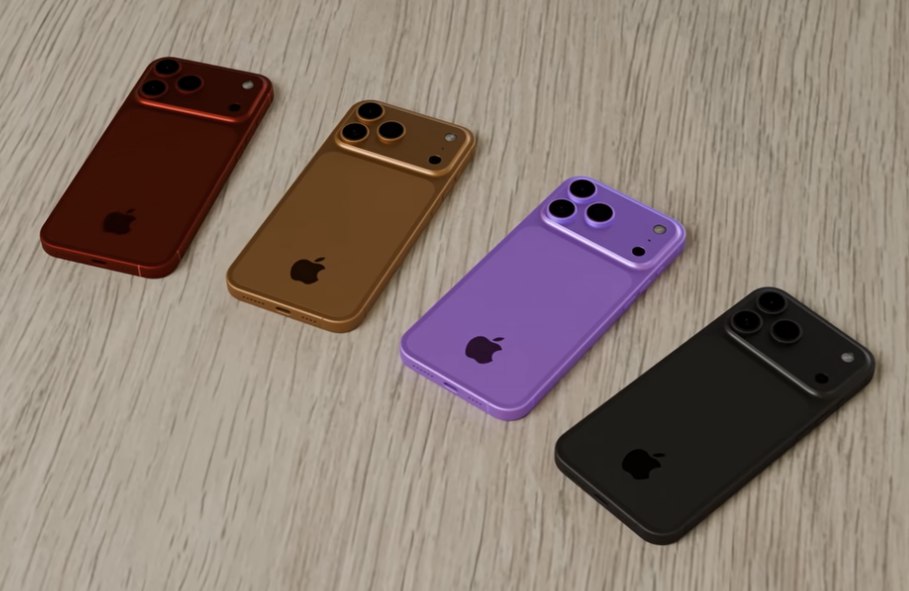
The Pro models are expected to retain much of the current design language, including the titanium frame and prominent rear camera plateau with a triple-lens setup. However, subtle refinements could include a slightly thicker chassis on the Pro Max to accommodate a larger battery and new color options, such as a deep red finish that has generated early buzz among enthusiasts.
Display sizes are rumored to remain consistent at approximately 6.3 inches for the iPhone 18 Pro and 6.9 inches for the larger Pro Max, both featuring advanced LTPO OLED panels with 120Hz ProMotion refresh rates. New LTPO+ technology could enable even more efficient variable refresh rates, improving power consumption without sacrificing smoothness. Rumors also suggest a noticeably smaller Dynamic Island cutout — potentially reduced by around 35% — as Apple moves some Face ID components under the display, though full under-display Face ID may still be a year or more away.
Camera System Takes Center Stage in Rumors
Photography upgrades appear to be among the most anticipated changes. Multiple supply chain leaks indicate the iPhone 18 Pro models could introduce a variable aperture lens on the main 48-megapixel Fusion camera. This mechanical iris-like feature would allow users to adjust the amount of light reaching the sensor, offering greater control over depth of field, reducing overexposure in bright conditions and improving low-light performance — a long-requested enhancement that could bring DSLR-like flexibility to mobile photography.
The telephoto lens is also expected to see improvements, with reports of a brighter aperture for better zoom performance in challenging lighting. Some speculation points to a possible shift in sensor suppliers, including advanced stacked image sensors from Samsung that could deliver faster readout speeds, reduced noise and wider dynamic range. A 24-megapixel front-facing camera is another frequently mentioned upgrade across the Pro lineup.
Advertisement
These camera enhancements align with Apple’s continued investment in computational photography and Apple Intelligence features, potentially enabling more sophisticated on-device editing, natural depth simulation and improved night-mode zoom capabilities on the Pro Max.
Performance and Efficiency Gains from A20 Pro Chip
Powering the iPhone 18 Pro and Pro Max will be Apple’s A20 Pro chipset, built on TSMC’s advanced 2-nanometer manufacturing process — a generational leap from the 3nm technology used in recent models. The new chip is expected to deliver noticeable improvements in both raw performance and energy efficiency, with some analysts predicting up to 15% faster processing and significant gains in power savings.
Rumors suggest the A20 series could integrate RAM directly onto the same wafer as the CPU, GPU and Neural Engine in a wafer-level multi-chip module design. This closer integration is anticipated to boost AI capabilities, support more demanding Apple Intelligence features and enable smoother multitasking. Reports point to 12GB of RAM across Pro models, an upgrade that would further future-proof the devices for on-device machine learning tasks.
Connectivity upgrades, including Apple’s next-generation C2 modem, are expected to bring better efficiency, lower latency and expanded satellite capabilities beyond emergency messaging.
Advertisement
Battery Life Could Reach Record Territory
Battery improvements rank high on many wish lists, and early leaks suggest Apple is delivering. The iPhone 18 Pro Max is rumored to feature a capacity between 5,100mAh and 5,200mAh — potentially the largest battery ever in an iPhone — which, combined with the efficient 2nm chip, could push real-world usage toward 40 hours in some scenarios. The standard Pro model is also expected to see gains, possibly exceeding 4,000mAh depending on regional variants and SIM configurations.
Slight increases in device thickness may be necessary to house the larger cells, though Apple is known for optimizing internal layouts to minimize overall size impact.
Pricing and Release Context
Analysts currently expect pricing to hold steady, with the iPhone 18 Pro starting around $1,099 and the Pro Max at $1,199 in the United States, consistent with recent generations. No widespread reports of significant increases have surfaced, though global economic pressures and component costs remain variables.
The September 2026 launch window will be notable for Apple’s evolving strategy. The iPhone 18 Pro and Pro Max are slated to arrive alongside the company’s first foldable iPhone, while standard iPhone 18 models may be delayed until spring 2027. This staggered approach could allow Apple to focus its fall event on premium devices and innovative form factors.
Advertisement
Design and Other Notable Rumors
Beyond core internals, leaks mention possible semi-transparent or unified rear glass finishes that move away from current two-tone designs, as well as expanded satellite-based 5G support. A new deep red or burgundy color option could join the lineup, giving buyers fresh aesthetic choices.
While many rumors remain unconfirmed and subject to change as development progresses, the collective picture emerging from supply chain sources and analysts suggests the iPhone 18 Pro series will emphasize meaningful refinements rather than radical redesigns — focusing on camera versatility, all-day battery endurance and AI-ready performance.
Apple has not commented on the rumors, and final specifications will only be revealed at the company’s traditional fall event. In the meantime, the steady flow of leaks has already sparked discussion among enthusiasts weighing upgrades from the iPhone 17 series or earlier models.
For consumers, the iPhone 18 Pro and Pro Max appear positioned to address common pain points — low-light zoom, battery anxiety and cutout aesthetics — while laying groundwork for deeper Apple Intelligence integration in the years ahead. As always with Apple products, real-world performance and software optimization will ultimately determine whether the rumored upgrades translate into a compelling reason to upgrade.
Advertisement
With roughly six months until the expected announcement, more concrete details are likely to surface through further supply chain reports and regulatory filings. Apple’s history of under-promising and over-delivering means the final devices could include additional surprises not yet widely discussed.
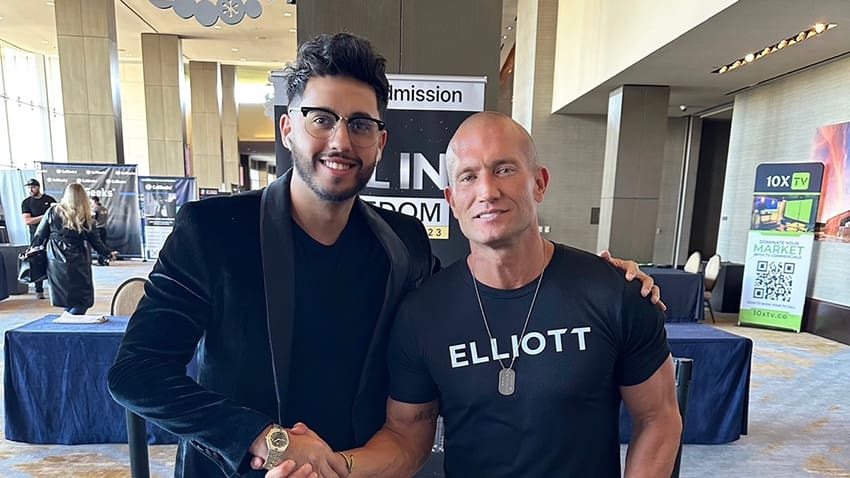
Waseem Limbada Consultant, Airbnb is a Dallas-based entrepreneur and CEO working at the intersection of real estate, capital strategy, and business consulting. His career reflects a pattern of disciplined growth and calculated risk-taking.
Born in South Africa and raised in the United States, Waseem developed a competitive mindset through basketball. He won a state championship in high school and a national championship in college. After graduating, he had the opportunity to pursue a professional contract overseas. He chose instead to shift his focus towards business.
He began in financial services as a Certified Financial Advisor with a Fortune 100 company. By the age of 23, he had built and led a global organisation of more than 15,000 members across 23 countries. This early experience shaped his approach to leadership, systems, and scale.
He later moved into entrepreneurship, launching a car rental business that grew into a six-figure operation. He then entered the short-term rental market, where he scaled from one unit to 100 properties in under three years.
Today, Waseem operates across consulting and real estate ventures. He has supported more than 1,000 Airbnb launches and helped clients secure over $20 million in funding. His work centres on execution, operational clarity, and long-term thinking, positioning him as a leader in a fast-evolving space.
Advertisement
Interview: Waseem Limbada Consultant, Airbnb on Scaling, Strategy, and Execution
Q: You started out as an athlete. How did that shape your early career decisions?
I grew up playing competitive basketball, so structure and discipline were part of my daily life early on. Winning a state championship in high school and a national championship in college gave me a clear understanding of what consistent effort looks like. When I had the opportunity to play professionally overseas, I seriously considered it. But I stepped back and thought about long-term direction. That decision pushed me towards business.
Q: What came next after you moved away from sport?
I entered financial services. I became a Certified Financial Advisor with a Fortune 100 company. That role gave me exposure to how money works at a high level. But what really stood out was the opportunity to build. By 23, I had built and led a team of over 15,000 people across 23 countries. That experience taught me how to manage scale and structure.
Q: What did you learn from building such a large organisation so early?
Clarity is everything. When you are leading that many people, you cannot rely on motivation alone. You need systems. You need repeatable actions. I realised early that growth is not about intensity for a short period. It is about consistency over time.
Q: You then moved into entrepreneurship. What was your first step?
I started with a car rental business. It was practical and gave me direct exposure to cash flow and operations. I scaled it to 16 vehicles and built it into a six-figure business. That phase helped me understand asset management in a real way.
Advertisement
Q: How did you transition into short-term rentals?
I saw an opportunity in the space and decided to act quickly. I started with one unit. Instead of overplanning, I focused on execution. Within four months, I scaled to 17 units. Over time, that grew to more than 50 through management, and eventually 100 properties in under three years.
Q: What enabled that level of growth?
Focus and systems. I was not trying to do ten things at once. I stayed in one lane and refined it. I also understood early that I could not do everything myself. Building a team and processes allowed the business to expand without losing control.
Q: How has your role evolved as your businesses have grown?
In the beginning, I was involved in everything. Now my role is more strategic. I focus on capital, partnerships, and long-term direction. I still pay attention to operations, but I am not in the day-to-day the same way.
Q: You also run consulting businesses. What is the core focus there?
The focus is on capital access, strategy, and execution. Across our platforms, we have helped clients secure over $20 million in funding and supported more than 1,000 short-term rental launches. The goal is not just to start something, but to build something sustainable.
Advertisement
Q: What common challenges do you see among people entering this space?
A lack of focus. Many people jump between ideas. They spend too much time consuming information and not enough time acting. Execution is what separates progress from stagnation.
Q: You’ve also spoken about helping athletes. Why is that important to you?
Because I’ve lived that transition. Athletes are trained to perform, but not always to think beyond sport. I’ve seen how difficult that shift can be. That is why I created a free educational community focused on helping athletes build skills outside of their sport.
Q: What is the long-term vision for your work?
It is about impact and structure. I want to continue building systems that help people move forward in a clear and practical way. Whether it is through real estate or consulting, the focus remains the same: execution, discipline, and long-term thinking.




















































You must be logged in to post a comment Login