
Business
(VIDEO) 10 Things You Must Know About Nike’s Neuroscience-Powered Shoes Nike Mind

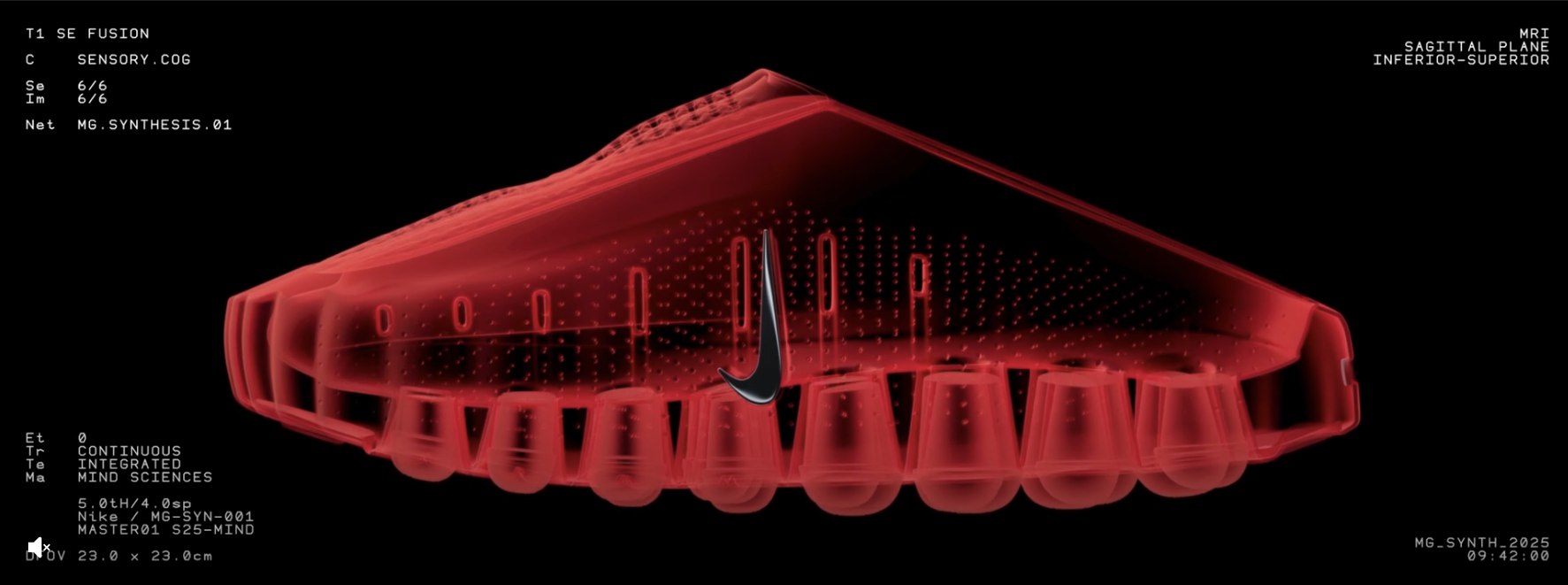
Nike’s Mind platform is one of the brand’s most ambitious innovations yet, blending neuroscience, design and sport psychology into a new category of “sensory footwear.” Here are 10 things you need to know about Nike Mind — and why it matters for the future of performance.

1. Nike Mind is Nike’s first neuroscience-based footwear platform
Nike Mind is not just another cushioning or performance foam; it is Nike’s first footwear platform explicitly built around neuroscience and how the brain responds to sensory input from the feet. Developed inside the Nike Mind Science Department, a branch of the Nike Sport Research Lab, the project spent about a decade in research and prototyping before its public debut.
Unlike traditional performance shoes that focus on speed, propulsion or impact protection, Nike Mind is designed to change how athletes feel mentally by stimulating specific neural pathways through underfoot contact. Nike describes it as a “new sensory footwear concept that helps reawaken the foot, the body and the mind,” signaling a shift from pure physical performance to mind–body integration.
2. It’s built around 22 anatomically mapped foam nodes
At the heart of Nike Mind technology is a system of 22 foam “nodes” mapped to key regions under the foot. These nodes are attached to a flexible base and function like tiny pistons or gimbals that move independently as you walk, stand or shift your weight.
The idea is to target pressure points and mechanoreceptors on the sole, which are directly linked to sensory regions of the brain. By constantly changing the pattern of underfoot stimulation, the nodes amplify sensation and mimic a more natural, varied interaction with the ground than flat cushioning normally provides.
3. It’s designed for pre-game priming and post-game recovery
Nike Mind shoes are explicitly framed as “pre-game and post-game” tools rather than race-day or in-game performance footwear. Nike says the platform is meant to help athletes prime their nervous systems before competition and then reset or decompress afterward.
During pre-game routines, the sensory stimulation is intended to sharpen focus, heighten awareness and mentally prepare athletes to compete. Post-game, the same technology aims to support recovery by helping the brain and body shift out of high-alert competition mode and into a calmer, more grounded state.
4. Nike Mind 001 and Mind 002 launch the line
The first products to feature the technology are Nike Mind 001 and Nike Mind 002. Mind 001 is described as a slip-on mule with a minimalist, “directionless” design that’s easy to slide into before or after training. Mind 002 takes the same sensory system and wraps it into a more structured sneaker silhouette for everyday movement and more active use.
Both styles share the 22-node underfoot system, but they target slightly different use cases: the mule emphasizes simplicity and transition, while the sneaker emphasizes stability and versatility for walking, light training and daily wear.
5. The goal is to quiet the brain’s “default mode network”
One of the most striking claims behind Nike Mind is neurological: the shoes are designed to help disengage the brain’s default mode network (DMN) and activate the sensorimotor network. The DMN is associated with mind-wandering, ruminating and self-referential thoughts, while the sensorimotor network is linked to movement, touch and present-moment engagement.
Nike’s researchers report that in trials, the underfoot sensory pattern from the foam nodes increased activity in brain regions responsible for processing touch and boosted alpha-wave activity associated with meditative or calm-but-alert states. In practical terms, that translates to feeling more grounded, less distracted and more “in the moment” before or after competition.
6. Nike built a dedicated Mind Science Department
To create Nike Mind, the company formed a specialized Mind Science Department inside its existing Nike Sport Research Lab. This team combines neuroscientists, biomechanists, engineers and designers who study how mechanical inputs at the foot translate into electrical signals in muscles and brain rhythms.
During development, athletes and test subjects were wired to EEGs and other sensors while using Mind prototypes, logging tens of thousands of hours of wear and generating large datasets on how underfoot stimuli shape perception, attention and emotional state. Nike’s Chief Science Officer, Dr. Matthew Nurse, describes the project as an expansion from “studying the body in motion” to studying perception and attention as core elements of performance itself.
7. Top athletes like Erling Haaland tested the shoes
Elite athletes were heavily involved in Nike Mind’s validation. Manchester City striker Erling Haaland is cited as a key tester; he reportedly praised the shoes for helping him “bring balance to my game,” referencing a feeling of improved mental stability and focus.
Across hundreds of trials with professional athletes, healthcare workers and therapists, wearers consistently reported heightened awareness, sharper focus and a sense of being more grounded and in control. Those subjective reports line up with the neuroscientific data showing shifts in sensory networks and meditation-like brain activity when Mind shoes are used properly.
8. Mind is about mental engagement, not max speed
Nike is clear that Mind 001 and Mind 002 are not racing shoes or performance trainers in the traditional sense. Instead, the design brief focuses on mental engagement, flow state and recovery—what Nike calls “holistic performance.”
The footwear is “directionless by design,” which means it’s not optimized for a specific gait pattern or sprinting efficiency but for free movement, shifting weight, micro-adjustments and sensory exploration. The goal is to give athletes and everyday wearers a tool they can use before, between or after high-intensity sessions to re-center mentally, rather than something to shave seconds off a race.
9. The design language is minimal, tactile and “mindful”
Aesthetically, Nike Mind 001 and 002 lean into a clean, futuristic minimalism that underscores their role as sensory tools rather than flashy performance sneakers. The uppers favor simple lines, soft materials and easy entries, while the visible underfoot node structure and flexible base signal the technology underneath.
Materials were chosen for comfort and “consciousness”—soft yet supportive foams, flexible platforms and water-resistant bonding that allow the nodes to move freely in all directions. Every design choice is meant to keep your attention on how the shoe feels, not just how it looks, reinforcing Nike’s pitch that Mind is about reconnecting the wearer with their own body and environment.
10. Nike sees Mind as “chapter one” of brain-focused gear
Nike executives repeatedly describe Mind as just the beginning of a much larger move into brain-centered performance products. Dr. Matthew Nurse has called Mind 001 and 002 “chapter one of the feet,” suggesting that future chapters may target other parts of the body and broader emotional or cognitive states.
The company frames Mind as a “sensory intervention” and hints at expanding neuro-informed design into apparel and accessories that influence how we feel—calm, energized, focused—through touch, pressure, temperature and other stimuli. That vision positions Nike not just as a maker of shoes and clothing, but as an early player in consumer neurotechnology, where what you wear is deliberately engineered to shape your mind as much as your muscles.
In short, Nike Mind is less about running faster and more about feeling more present, focused and resilient—using your feet as a direct doorway into your brain.


Edited excerpts from a chat:
Nifty ended in the green for the second consecutive week. Safe to say we are out of the woods yet and that the index can eye 25k in the week ahead?
We had gone in last week, favouring a push towards 24,400 or more. Friday saw a test of the same and a close not far from the same. Continuation patterns are aplenty, which favour an extension of the uptrend, aiming for 25,600. However, with oscillators overbought, we prefer to start the week on a cautious note, once in the 24,900-25,000 vicinity, before deciding on the 25,600 play. Be warned against a rough week ahead if we do not get to float above 24,900.
Nifty Smallcap 250 index is up 15% in the month so far. If the trajectory continues, then it could be the best month for the index in the last several years. How strong are the odds of a continued bull run in the smallcap world?
We favour a selective approach, as opposed to a broad-based bullish approach among small caps. Breadth remains robust with 50% of stocks near monthly highs, 10% at fresh all‑time highs, 95% above the 20‑DMA and 80% above the 50‑DMA, signalling strong participation across the universe. Importantly, momentum is supportive but not stretched. The average 14‑day RSI near 60, with nearly half the stocks still below that mark, indicates scope for further catch‑up rallies.
Technically, the Nifty Smallcap 250 index has broken out of a downward-sloping wedge and posted a decisive weekly close above the Supertrend at 16,385, confirming a trend reversal after a prolonged consolidation. If the index holds above this zone, 16,900 is a natural near‑term objective, followed by 17,400. However, given the sharp 15% monthly surge, short-term consolidation and stock level rotation are more likely than a straight-line rally. The broader uptrend stays intact above 15,770.
Defence stocks are stealing the limelight once again, with multiple counters recording double-digit gains in the week. What are the charts indicating? Time to book profits off the table or stay on the course?
The Nifty India Defence index has delivered a decisive breakout from a multi‑week consolidation, supported by strong weekly gains and a reclaim of all key short and medium‑term moving averages. Momentum indicators validate the move with RSI holding comfortably above 60 without entering extreme overbought territory, while MACD has turned decisively positive on both daily and weekly timeframes, signalling acceleration rather than fatigue. Nearly 80% of the constituents are trading close to their monthly highs, and all stocks are positioned above their 50 and 100‑day averages, underscoring a well‑entrenched uptrend.

That said, heavyweights such as HAL, BEL, Solar Industries and Mazagon Dock are approaching overbought levels on the daily charts, raising the likelihood of short‑term consolidation or profit booking. Encouragingly, their weekly structures remain constructive. The preferred strategy is to avoid chasing rallies and instead buy on dips to participate in the medium‑term bullish trend.
Gallantt Ispat and Shipping Corp were among the two biggest Nifty 500 gainers in the week. How to trade now?
Despite the sharp gains in recent days, Friday saw profit booking from the top, which explains the long wick. This, along with overbought signals from stochastics as well as RSI, rings caution for Monday’s trade. That said, the narrow range break move is still in its early stage, which encourages us to resort to a buy on dips approach with eyes on 272 as the downside marker.
Give us your top trades for the week.
TI (LTP: 470) | View: Buy | Target: 488 | SL: 459Tilaknagar Industries has shown a strong recovery on the weekly charts, breaking out above the recent consolidation zone with a decisive bullish candle. Prices are trading comfortably above key short and medium‑term moving averages, signalling improving trend strength. Momentum indicators support the move, with RSI holding above the mid 50 zone and gradually trending higher, indicating sustained buying interest without signs of excess. MACD is flattening after a prolonged corrective phase and is attempting a bullish crossover, suggesting a potential momentum expansion ahead.
From a price action perspective, the stock has respected higher supports and reclaimed the 460-470 zone, which now acts as a crucial base. Sustaining above this area keeps the upward bias intact and opens room for a move towards 488 in the near term. Any decisive break below 459 would weaken the setup and warrant a reassessment. Overall, the trend favours a buy‑on‑dips approach.
IGIL (LTP: 373) | View: Buy | Target: 390 | SL: 363
IGIL has delivered a sharp rebound after a prolonged consolidation, marked by a strong bullish weekly candle and a near 10% gain. The stock has decisively moved above its recent range and the supply zone near 360-370, indicating a potential trend reversal. Momentum indicators back the move, with RSI rising close to 60, suggesting improving strength without overstretch, while MACD has turned positive with a fresh bullish crossover, pointing to momentum acceleration.
From a structural perspective, IGIL appears to be forming a base after a lengthy decline, with higher lows taking shape over recent weeks. Sustaining above 370 would keep the bias positive and open the door for an upside move towards 390 in the near term. Any dip towards 363 should be closely watched, as a breach below this level would negate the bullish setup and warrant a reassessment.

JioBlackRock Mutual Fund, which is a new entrant in the mutual fund industry, had a total AUM of Rs 15,258 crore in March. Here are the top 10 stock holdings, according to monthly data by Prime Database.

Can crude oil stockpiles in Asia outlast the Middle East conflict?

RSPS: Consumer Staples Dashboard For April

NEW YORK — Baseball fans and soccer enthusiasts alike found plenty to cheer about in Sunday’s New York Times Connections: Sports Edition, as the April 19, 2026, puzzle blended Major League Baseball divisions, American football positions, Premier League managers and historic nicknames of the Los Angeles Dodgers franchise.

The sports-themed word game, published in partnership with The Athletic, challenged players to sort 16 words into four groups of four. Puzzle No. 573 proved moderately difficult, with many solvers praising its clever mix of current teams, tactical terms and deep-cut franchise history.
Here is the complete breakdown of today’s Connections: Sports Edition answers:
Yellow (Easiest): AL East Teams BLUE JAYS, ORIOLES, RAYS, YANKEES
The American League East division provided the most accessible category for many players. These four teams compete in one of MLB’s most competitive divisions, with the Yankees and Blue Jays frequently in playoff contention, the Orioles enjoying a recent resurgence and the Rays known for their innovative, low-budget success. Solvers who spotted the common thread early often started with this group, using it as a strong foundation.
Green: First Words of Football Positions DEFENSIVE, RUNNING, TIGHT, WIDE
This category tested knowledge of gridiron terminology. The words form the beginnings of common NFL positions: defensive end or tackle, running back, tight end and wide receiver. The mix of offensive and defensive roles created a satisfying “aha” moment for football fans, though some players initially grouped them under broader terms like “back” or “end” before locking in the precise first-word pattern.
Blue: Premier League Managers EMERY, GUARDIOLA, MOYES, SLOT
Soccer enthusiasts quickly identified this set featuring current or recent English Premier League bosses. Unai Emery (Aston Villa), Pep Guardiola (Manchester City), David Moyes (recently with West Ham and Everton) and Arne Slot (Liverpool) represent a mix of tactical styles and club pedigrees. The category highlighted the global appeal of Connections Sports Edition, drawing in international players familiar with the world’s most-watched league.
Purple (Hardest): Nicknames for the Dodgers Franchise, Over Time BRIDEGROOMS, DODGERS, ROBINS, SUPERBAS
The most challenging group required deeper baseball lore. Before becoming the Dodgers, the Brooklyn franchise was known as the Bridegrooms (referencing players who got married), the Robins (after manager Wilbert Robinson) and the Superbas (during an earlier successful era). Many casual fans missed this historical thread, but dedicated MLB historians and longtime Brooklyn Dodgers supporters celebrated cracking the purple category.
Players reported a wide range of experiences with the April 19 puzzle. Some solved it in perfect order, starting with the yellow AL East group and progressing logically. Others struggled with the purple Dodgers nicknames, mistaking them for generic baseball terms or confusing them with rival franchises. A common misstep involved linking “SLOT” with football positions rather than recognizing it as Arne Slot, the Liverpool manager.
The game’s format remains simple yet addictive: 16 words appear on a grid, and players select four at a time that share a common theme. Correct groups are removed and colored — yellow for easiest, then green, blue and purple for hardest. One mistake is allowed before the puzzle ends in defeat, adding tension to each selection.
Connections: Sports Edition launched as a beta companion to the original Connections game, focusing exclusively on athletic themes ranging from team names and player positions to rules, equipment, nicknames and pop culture references tied to sports. Its popularity has grown steadily among athletes, coaches, fantasy sports participants and casual fans seeking a quicker, more specialized daily brain teaser than the standard puzzle.
Sunday’s edition arrived amid a busy sports calendar. MLB teams were deep into the 2026 season, with AL East rivalries heating up. In the Premier League, managerial changes and tactical battles remained hot topics, while the NFL offseason continued to spark debates over positional value and scheme innovations.
Social media lit up with reactions shortly after the puzzle dropped at midnight Eastern Time. Many posted their colored grids alongside comments like “Nailed the Dodgers history — finally my obscure baseball knowledge paid off” or “As a Liverpool fan, spotting Slot felt personal.” Others shared near-misses, joking about almost grouping all the bird-named teams (Blue Jays, Orioles, Robins) together.
For newcomers, the game offers gentle onboarding with practice boards and occasional hints. Veteran players track streaks and perfect solves, turning the daily challenge into a personal competition. On April 19, several users reported maintaining long winning streaks thanks to strong sports knowledge across multiple disciplines.
The puzzle’s design rewards both breadth and depth. While the AL East category felt approachable for American sports fans, the Dodgers nicknames demanded familiarity with franchise history dating back more than a century. The football and soccer categories bridged American and global audiences, reflecting the universal language of sports.
Educational value also shines through. Younger players or those new to certain leagues learned about historic team monikers, while others refreshed their memory on positional terminology or managerial tenures. Teachers and parents have noted the game’s potential for sparking conversations about sports history, geography and strategy.
As with the standard Connections, mistakes can frustrate but also teach valuable lessons in pattern recognition and elimination. Today’s board included tempting red herrings — words that seemed to fit multiple categories — which kept even experienced solvers on their toes until the final groups clicked.
With the 2026 sports calendar in full swing, future editions are expected to incorporate timely themes such as playoff races, Olympic preparations or major transfers. The New York Times and The Athletic have not announced major format changes, suggesting the core four-category structure will remain the engaging constant.
For those who missed Sunday’s puzzle or want to review it, archived solutions and discussion threads provide full details without spoiling active games. However, the recommended approach is always to attempt the puzzle first for maximum satisfaction.
Whether solved in four smooth moves or after a few thoughtful revisions, today’s Connections Sports Edition delivered a balanced mix of accessible and obscure connections. It reminded players why the game resonates: it turns scattered sports knowledge into structured fun, one cleverly themed group at a time.
As another week of games and matches unfolds across the globe, fans can look forward to Monday’s fresh challenge. Until then, those who conquered AL East teams, football position starters, Premier League bosses and Dodgers nicknames can take pride in another daily victory in this ever-popular word game.

AEVEX: Drone Player Taking Off

Football-Skydiver left dangling when parachute snags on stadium video board


Lukashenko says meeting with Trump possible once ’big deal’ is ready
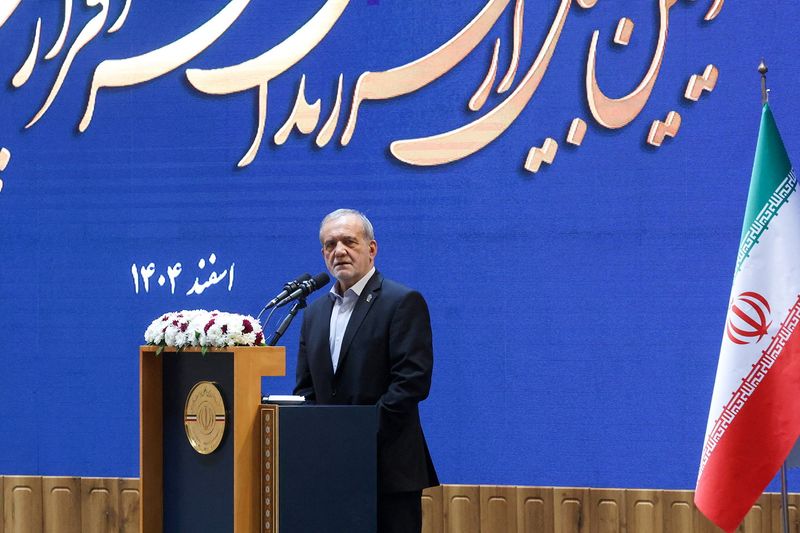

Iranian President insists on country’s nuclear rights, ISNA reports
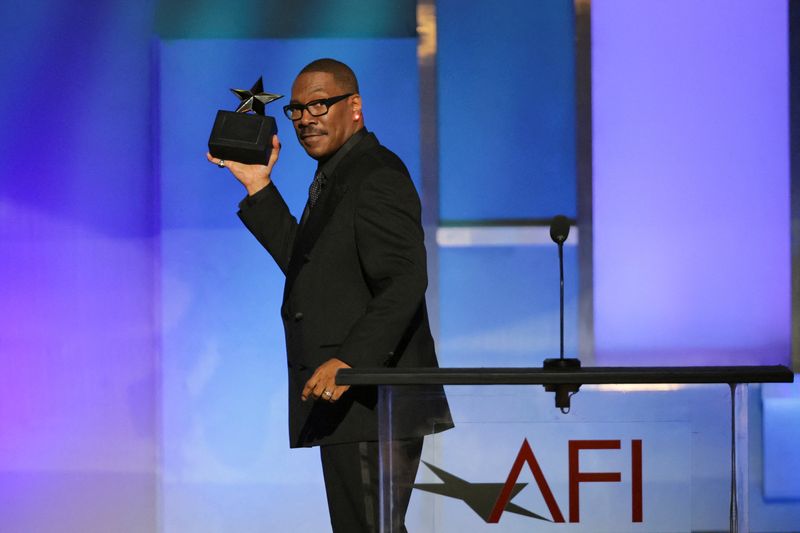

Comedy trailblazer Eddie Murphy receives AFI Life Achievement Award
Steve Kerr Mulls Over Career After Warriors Playoff Loss

North London synagogue targeted in another attempted arson attack on Jewish property
Defence stocks breakout: Should you book profits or buy the dip? Anand James answers


-
 NewsBeat6 days ago
Pep Guardiola and Gary Neville agree over Arsenal title problem that benefits Man City
-

 Crypto World6 days ago
The SEC Conditionalises DeFi Platforms to Be Avoided for Broker Registration
-

 Fashion2 days ago
Weekend Open Thread: Theodora Dress
-

 Politics7 days ago
World Cup exit makes Italy enter crisis mode
-

 Crypto World5 days ago
SEC Signals Exemption for Crypto Interfaces From Broker Registration
-

 News Videos4 days ago
Secure crypto trading starts with an FIU-registered
-

 Sports2 days ago
NWFL Suspends Two Players Over Post-Match Clash in Ado-Ekiti
-

 Crypto World5 days ago
SEC Proposes Certain Crypto Interfaces Don’t Need to Register as Brokers
-

 NewsBeat5 days ago
Trump and Pope Leo: Behind their disagreement over Iran war
-

 Politics1 day ago
Palestine barred from entering Canada for FIFA Congress
-

 Crypto World1 day ago
Russia Pushes Bill to Criminalize Unregistered Crypto Services
-

 Sports6 days ago
NWFL opens Pathway for new Clubs ahead of 2026 Season
-

 Crypto World6 days ago
Trump whales load up ahead of Mar-a-Lago luncheon.
-
 Business2 days ago
Creo Medical agree sale of its manufacturing operation
-
Business6 days ago
Kering slides after Morgan Stanley downgrade, Gucci woes loom
-
 Crypto World6 days ago
Sei Network Enters Quiet Reset Phase as On-Chain Metrics Signal a Slowdown in 2026
-

 Tech6 days ago
Google adds E2E encryption to Gmail for iOS and Android enterprise users
-
 Entertainment5 days ago
Brand New Day’ Footage Reveals the Devastating Impact of ‘Now Way Home’
-
 Tech6 days ago
Apple glasses won’t go brand shopping like Meta did with Ray-Ban and Oakley
-
 Entertainment5 days ago
Karol G’s ‘Ultra Raunchy’ Coachella Set Gave ‘Satanic Vibes’
You must be logged in to post a comment Login