
Business
(VIDEO) 10 Things You Must Know About Nike’s Neuroscience-Powered Shoes Nike Mind

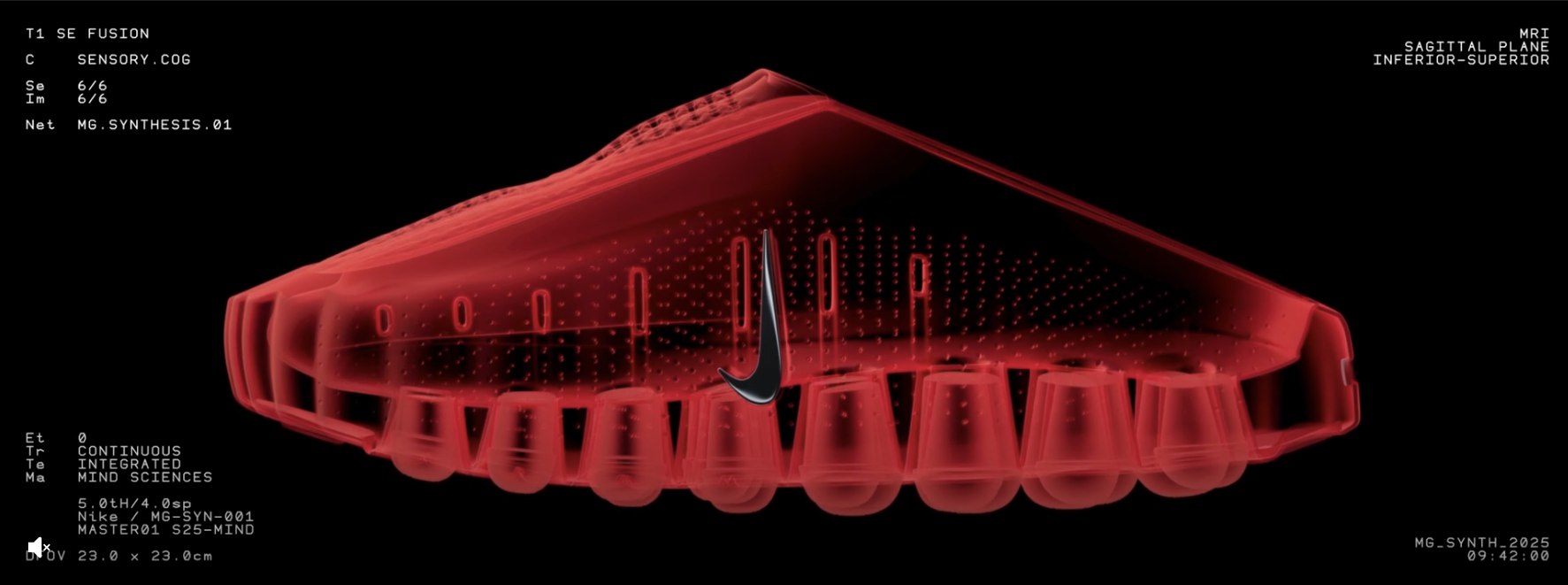
Nike’s Mind platform is one of the brand’s most ambitious innovations yet, blending neuroscience, design and sport psychology into a new category of “sensory footwear.” Here are 10 things you need to know about Nike Mind — and why it matters for the future of performance.

1. Nike Mind is Nike’s first neuroscience-based footwear platform
Nike Mind is not just another cushioning or performance foam; it is Nike’s first footwear platform explicitly built around neuroscience and how the brain responds to sensory input from the feet. Developed inside the Nike Mind Science Department, a branch of the Nike Sport Research Lab, the project spent about a decade in research and prototyping before its public debut.
Unlike traditional performance shoes that focus on speed, propulsion or impact protection, Nike Mind is designed to change how athletes feel mentally by stimulating specific neural pathways through underfoot contact. Nike describes it as a “new sensory footwear concept that helps reawaken the foot, the body and the mind,” signaling a shift from pure physical performance to mind–body integration.
2. It’s built around 22 anatomically mapped foam nodes
At the heart of Nike Mind technology is a system of 22 foam “nodes” mapped to key regions under the foot. These nodes are attached to a flexible base and function like tiny pistons or gimbals that move independently as you walk, stand or shift your weight.
The idea is to target pressure points and mechanoreceptors on the sole, which are directly linked to sensory regions of the brain. By constantly changing the pattern of underfoot stimulation, the nodes amplify sensation and mimic a more natural, varied interaction with the ground than flat cushioning normally provides.
3. It’s designed for pre-game priming and post-game recovery
Nike Mind shoes are explicitly framed as “pre-game and post-game” tools rather than race-day or in-game performance footwear. Nike says the platform is meant to help athletes prime their nervous systems before competition and then reset or decompress afterward.
During pre-game routines, the sensory stimulation is intended to sharpen focus, heighten awareness and mentally prepare athletes to compete. Post-game, the same technology aims to support recovery by helping the brain and body shift out of high-alert competition mode and into a calmer, more grounded state.
4. Nike Mind 001 and Mind 002 launch the line
The first products to feature the technology are Nike Mind 001 and Nike Mind 002. Mind 001 is described as a slip-on mule with a minimalist, “directionless” design that’s easy to slide into before or after training. Mind 002 takes the same sensory system and wraps it into a more structured sneaker silhouette for everyday movement and more active use.
Both styles share the 22-node underfoot system, but they target slightly different use cases: the mule emphasizes simplicity and transition, while the sneaker emphasizes stability and versatility for walking, light training and daily wear.
5. The goal is to quiet the brain’s “default mode network”
One of the most striking claims behind Nike Mind is neurological: the shoes are designed to help disengage the brain’s default mode network (DMN) and activate the sensorimotor network. The DMN is associated with mind-wandering, ruminating and self-referential thoughts, while the sensorimotor network is linked to movement, touch and present-moment engagement.
Nike’s researchers report that in trials, the underfoot sensory pattern from the foam nodes increased activity in brain regions responsible for processing touch and boosted alpha-wave activity associated with meditative or calm-but-alert states. In practical terms, that translates to feeling more grounded, less distracted and more “in the moment” before or after competition.
6. Nike built a dedicated Mind Science Department
To create Nike Mind, the company formed a specialized Mind Science Department inside its existing Nike Sport Research Lab. This team combines neuroscientists, biomechanists, engineers and designers who study how mechanical inputs at the foot translate into electrical signals in muscles and brain rhythms.
During development, athletes and test subjects were wired to EEGs and other sensors while using Mind prototypes, logging tens of thousands of hours of wear and generating large datasets on how underfoot stimuli shape perception, attention and emotional state. Nike’s Chief Science Officer, Dr. Matthew Nurse, describes the project as an expansion from “studying the body in motion” to studying perception and attention as core elements of performance itself.
7. Top athletes like Erling Haaland tested the shoes
Elite athletes were heavily involved in Nike Mind’s validation. Manchester City striker Erling Haaland is cited as a key tester; he reportedly praised the shoes for helping him “bring balance to my game,” referencing a feeling of improved mental stability and focus.
Across hundreds of trials with professional athletes, healthcare workers and therapists, wearers consistently reported heightened awareness, sharper focus and a sense of being more grounded and in control. Those subjective reports line up with the neuroscientific data showing shifts in sensory networks and meditation-like brain activity when Mind shoes are used properly.
8. Mind is about mental engagement, not max speed
Nike is clear that Mind 001 and Mind 002 are not racing shoes or performance trainers in the traditional sense. Instead, the design brief focuses on mental engagement, flow state and recovery—what Nike calls “holistic performance.”
The footwear is “directionless by design,” which means it’s not optimized for a specific gait pattern or sprinting efficiency but for free movement, shifting weight, micro-adjustments and sensory exploration. The goal is to give athletes and everyday wearers a tool they can use before, between or after high-intensity sessions to re-center mentally, rather than something to shave seconds off a race.
9. The design language is minimal, tactile and “mindful”
Aesthetically, Nike Mind 001 and 002 lean into a clean, futuristic minimalism that underscores their role as sensory tools rather than flashy performance sneakers. The uppers favor simple lines, soft materials and easy entries, while the visible underfoot node structure and flexible base signal the technology underneath.
Materials were chosen for comfort and “consciousness”—soft yet supportive foams, flexible platforms and water-resistant bonding that allow the nodes to move freely in all directions. Every design choice is meant to keep your attention on how the shoe feels, not just how it looks, reinforcing Nike’s pitch that Mind is about reconnecting the wearer with their own body and environment.
10. Nike sees Mind as “chapter one” of brain-focused gear
Nike executives repeatedly describe Mind as just the beginning of a much larger move into brain-centered performance products. Dr. Matthew Nurse has called Mind 001 and 002 “chapter one of the feet,” suggesting that future chapters may target other parts of the body and broader emotional or cognitive states.
The company frames Mind as a “sensory intervention” and hints at expanding neuro-informed design into apparel and accessories that influence how we feel—calm, energized, focused—through touch, pressure, temperature and other stimuli. That vision positions Nike not just as a maker of shoes and clothing, but as an early player in consumer neurotechnology, where what you wear is deliberately engineered to shape your mind as much as your muscles.
In short, Nike Mind is less about running faster and more about feeling more present, focused and resilient—using your feet as a direct doorway into your brain.

Import-dependent economies, it said, would face tighter availability of fuel, food and industrial inputs. Disruptions to fertilizer supply chains could lower crop yields and push up food prices, increasing affordability risks.
India sourced 43% of its petroleum and petroleum products from GCC countries, Iraq and Iran in 2024, compared with 84% by Japan, 67% by Korea, and 42% by China.
“Producers with significant assets in Japan, Korea, India and China are most exposed because of their heavy reliance on Middle Eastern oil and the dominance of naphtha – an oil-derived product – as the primary feedstock for Asia’s steam crackers,” said Moody’s Ratings.
It noted that a prolonged conflict could push Brent crude to about $135 per barrel in the second quarter, keeping prices above $100 for months before easing toward $90 by end-2026. It identified three key transmission channels for global credit risk, that is, energy markets and supply chains, tighter macro-financial conditions, and broader geopolitical disruptions.


Microsoft Stock Tracking Worst 6-Month Stretch Since 2009

Form 6K Skillful Craftsman Education Technology Ltd For: 27 March

The company is selling new shares worth up to 1.5 billion rupees ($15.85 million), while existing shareholders, including venture capital firm Accel, is selling up to 28.4 million shares, the filing showed.

Sotherly Hotels to delist preferred stock from Nasdaq
BiomX receives NYSE American non-compliance notice

Iran Has Distracted From the Mag 7 Woes. Why the Slump Is a Good Thing for Stock Markets.

Shares in Next PLC NXT -1.71%decrease; red down pointing triangle jumped after the U.K. clothing retailer maintained its fiscal-year sales-growth expectations, despite warning that the Iran war could affect costs, prices and consumer demand.
The group said Thursday it had accounted for 15 million pounds ($20 million) in additional costs—including fuel and air freight—tied to the Middle East conflict. The costs didn’t affect Next’s guidance since they have been offset by savings, it said.
Copyright ©2026 Dow Jones & Company, Inc. All Rights Reserved. 87990cbe856818d5eddac44c7b1cdeb8
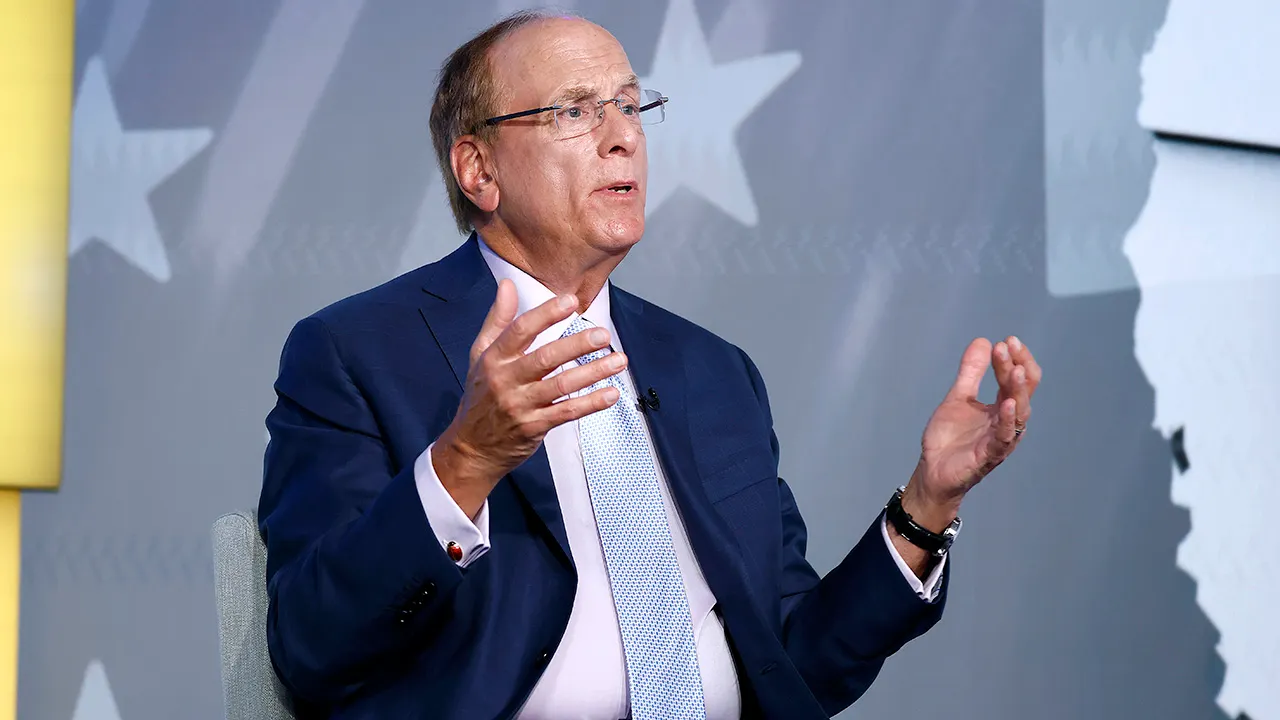
The Big Money Show panel discusses the alarming new analysis showing Social Security and Medicare racing toward insolvency and warns that retirees face steep benefit cuts unless Washington acts fast.
BlackRock CEO Larry Fink discussed possible Social Security reforms that would allow more Americans to benefit from the growth in the stock market while also ensuring the program is strengthened so it can survive to serve future generations.
Fink’s recently released annual chairman’s letter touched on how Social Security is “one of the most effective poverty-prevention programs in history” and that while it provides stability, it “doesn’t allow most Americans to build wealth in a way that grows their country.”
“Today, the system operates largely on a pay-as-you-go basis. Payroll taxes are used to pay current retirees, and the Social Security trust fund is invested primarily in U.S. Treasury bonds. In effect, workers lend money to the government and receive defined benefits in return.”
“The structure, designed as a social insurance program, emphasizes stability and predictability. What it doesn’t do is let people grow their benefits along with the broader economy. The question is whether the Social Security system could allow both,” Fink said.
NEW PROPOSAL WOULD CAP SOCIAL SECURITY BENEFITS AT $100K FOR WEALTHY COUPLES
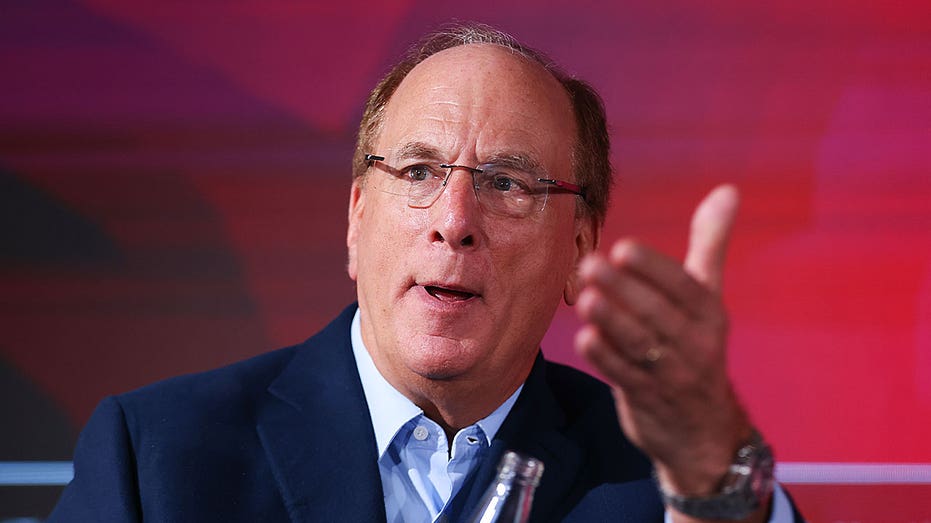
BlackRock CEO Larry Fink said that Americans need to discuss ways to reform Social Security ahead of its insolvency. (Hollie Adams/Bloomberg via Getty Images)
He said that this could be accomplished by asking whether a portion of the system could be invested “carefully, broadly, and over decades” like other long-term pension systems.
“This would not mean privatizing Social Security or putting it all into the stock market,” Fink wrote. “It would mean introducing a measure of diversification, similar in principle to the federal Thrift Savings Plan, which manages retirement savings for millions of federal employees.”
“The goal would be to strengthen the system over time while preserving its core guarantees,” he added.
SOCIAL SECURITY’S MAIN TRUST FUND FACES DEPLETION IN 2032, TRIGGERING BENEFIT CUTS

Social Security’s main trust fund is on a path to insolvency in less than a decade, when benefits would be automatically cut to match payroll tax revenue. (Getty Images/iStock)
Fink noted a bipartisan proposal from Sens. Bill Cassidy, R-La., and Tim Kaine, D-Va., that would create a new investment fund that operates parallel to the existing trust fund rather than replacing it while investing in a diversified mix of stocks and bonds to generate higher returns.
The proposal would require an initial investment of about $1.5 trillion and would be given 75 years to grow, and during that period the Treasury would continue covering Social Security benefits.
Once the fund matures, it would repay the Treasury and then supplement payroll taxes going forward to help close the gap between what the Social Security system takes in and what it pays out – while no one on Social Security or nearing retirement would see a change to their benefits.
Fink also noted that about six million Americans who are employed by state and local governments don’t currently contribute to Social Security and instead rely on public pension systems that invest in diversified portfolios.
BUDGET DEFICIT HITS $1 TRILLION FOR FIRST FIVE MONTHS OF FISCAL YEAR: CBO
| Ticker | Security | Last | Change | Change % |
|---|---|---|---|---|
| BLK | BLACKROCK INC. | 933.66 | -34.51 | -3.56% |
Other examples of alternative pension systems can be found overseas, with Australia’s superannuation system representing an approach that invests retirement contributions in the financial markets. Fink said that a “similar, carefully structured approach could be considered to strengthen Social Security.”
“I understand why any talk of changing Social Security makes people uneasy. Social Security is a core promise, and people rightly believe it should be honored. But under the current system, doing nothing could very well break that promise,” he said.
“Current projections show the trust fund won’t be able to pay full benefits by 2033. Many young Americans doubt they’ll ever fully see theirs,” he explained. “Addressing that gap will likely require multiple solutions. But thoughtful, long-term investing could be one of them.”
GET FOX BUSINESS ON THE GO BY CLICKING HERE
An analysis by the nonpartisan Committee for a Responsible Federal Budget (CRFB) noted that when Social Security’s main trust fund reaches insolvency – which is projected to occur in 2032 – federal law requires benefits be cut to match revenue from payroll taxes, which would amount to a roughly 24% cut for beneficiaries.
Fink noted that his chairman’s letter two years ago was focused on rethinking retirement and generated criticism for suggesting that Social Security was in need of reforms. He acknowledged that the latest letter may do the same, but said it’s a conversation that needs to be had.
“In my 50 years in finance, if there’s one thing I’ve learned, it’s that the problems we don’t talk about are the ones that should worry us most. And that’s exactly why we need the conversation now – because the cost of waiting is only getting higher,” he said.
Form 13D/A Venus Concept For: 27 March
India may face credit stress if Gulf conflict drags on: Moody’s

Ethereum Price Prediction: Pepeto Targets 1000x as $14B Options Expiry Crashes BTC While ETH and BNB Slide

Mexico’s iconic Azteca is set to reopen. That’s good news for sleep-deprived stadium director


-
 Crypto World7 days ago
NIO (NIO) Stock Plunges 6.5% as Shelf Registration Sparks Dilution Worries
-
 NewsBeat2 days ago
Manchester United reach agreement with Casemiro over contract clause amid transfer speculation
-

 Crypto World6 days ago
Best Crypto to Buy Now: Strategy Just Spent $1.57 Billion on Bitcoin During Fear While Early Investors Quietly Enter Pepeto for 150x Potential
-

 Crypto World6 days ago
Bitcoin Price News: Bhutan Sells $72 Million in BTC Under Fiscal Pressure, but the Smart Money Entering Pepeto Sees What the Market Does Not
-

 News Videos2 days ago
Parliament publishes latest register of MPs’ financial interests
-

 Sports4 days ago
Remo Stars and Kano Pillars Strengthen Survival Hopes in NPFL
-

 Sports4 days ago
Gary Kirsten Accuses Pakistan Cricket Board Of ‘Interference’, Mohsin Naqvi Responds
-

 Business5 days ago
No Winner in March 21 Drawing as Prize Rolls to $133 Million for Next
-

 Tech5 days ago
Give Your Phone a Huge (and Free) Upgrade by Switching to Another Keyboard
-

 Tech5 days ago
AI enters the chat: New Seattle dating app relies on tech to facilitate meaningful human connections
-

 News Videos4 days ago
Ch 9 Financial Management Part 1 | Detailed One Shot | Class 12 Business Studies Boards 2026
-
Business7 days ago
Columbia Sportswear enters $500 million credit agreement with JPMorgan Chase
-

 Tech6 days ago
Today’s NYT Connections Hints, Answers for March 22 #1015
-

 Business1 day ago
Instagram, YouTube Found Responsible for Teen’s Mental Health Struggle in Historic Ruling
-

 Business5 days ago
Will Duke Basketball Win It All? Duke Basketball Enters Second Round as Third Favorite to Claim NCAA Title
-

 Sports5 days ago
2026 Kentucky Derby horses, odds, futures, preview, date: Expert who hit 12 Derby-Oaks Doubles enters picks
-
 NewsBeat5 days ago
Update on Wisbech river crash as search for teenage boy enters fifth day
-
 Entertainment4 days ago
Cynthia Bailey Dishes on ‘RHOA’ Season 17, Discusses Kandi
-
 NewsBeat2 days ago
Tesco is selling new Cadbury Dairy Milk bar and people can’t wait to try it
-

 Tech4 days ago
Samsung will soon let you control smart home devices from your car’s dashboard
You must be logged in to post a comment Login