Business
(VIDEO) Artemis II Astronauts Set to View Never-Before-Seen Lunar Regions in Historic Flyby

As NASA’s Artemis II crew hurtles toward the Moon aboard the Orion spacecraft, the four astronauts are preparing for a six-hour lunar flyby on Monday that will offer humanity’s first direct human-eye views of previously unseen portions of the lunar far side and specific illuminated terrains never observed by Apollo crews.

Commander Reid Wiseman, Pilot Victor Glover, Mission Specialist Christina Koch and Canadian Space Agency astronaut Jeremy Hansen launched April 1 on the roughly 10-day test flight, the first crewed deep-space mission since Apollo 17 in 1972. On Monday, April 6, Orion is scheduled to swing within about 4,000 miles (6,400 kilometers) of the lunar surface during a free-return trajectory that will slingshot the crew back toward Earth without entering lunar orbit.
The flyby window, running approximately from 2:45 p.m. to 9:40 p.m. EDT, positions Orion’s windows toward the Moon for targeted observations. NASA science teams in Houston have finalized a lunar targeting plan identifying roughly 35 geological features for the crew to photograph and describe in real time. Many of these targets lie on the far side — the hemisphere perpetually facing away from Earth — where lighting conditions during this particular pass will reveal details Apollo astronauts could not witness due to their orbital paths and timing.

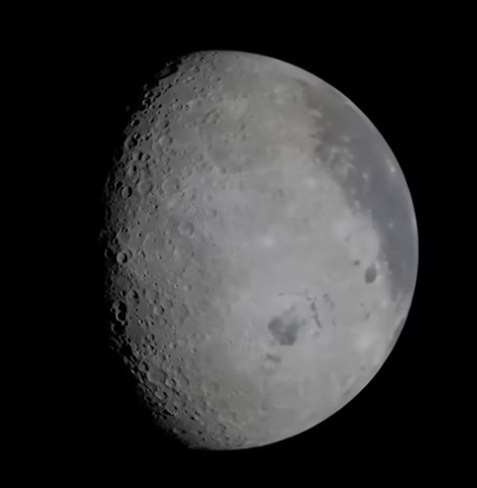
The far side of the Moon differs dramatically from the familiar near side. It features fewer dark “seas” or maria and is dominated by rugged highlands densely pocked with craters. Because the Moon is tidally locked, the far side remains invisible from Earth. Robotic orbiters have mapped it extensively, but no human has seen large swaths with their own eyes under the specific illumination Artemis II will provide.
Astronauts have already shared early glimpses and reactions. In interviews from space, Koch described the Moon appearing “not the moon that I’m used to seeing,” noting differences in texture and contrast as the crew compared live views to training materials. Wiseman, using a telephoto lens during a preview pass, expressed excitement while rattling off recognizable sites and new vistas. The crew’s high-resolution photography will complement data from the Lunar Reconnaissance Orbiter, offering fresh perspectives on surface features.
Scientists are particularly eager for observations of lunar highlands, ancient impact basins and potential volcanic or tectonic features on the far side. One highlight could include enhanced views near the lunar “Grand Canyon” — vast canyon-like structures or rilles visible under the flyby’s geometry. The trajectory also enables detailed imaging of regions in the southern polar areas and equatorial far-side highlands that Apollo missions largely missed due to their equatorial orbits and limited far-side exposure.

The unique vantage stems from Artemis II’s free-return trajectory, which sends Orion on a looping path around the Moon’s far side before Earth’s gravity pulls it home. At closest approach, the Moon will appear roughly the size of a basketball held at arm’s length from the spacecraft windows. This distance — farther than Apollo crews typically flew during similar maneuvers — combined with modern camera technology and crew training, allows for unprecedented documentation.
A rare bonus awaits toward the end of the flyby: the crew may witness a solar eclipse from deep space as the alignment of Orion, the Moon and the Sun creates dramatic lighting shifts. Communications blackouts will occur as Orion passes behind the Moon, testing deep-space relay systems while the astronauts rely on onboard autonomy.
Mission planners coordinated the targeting plan after the successful translunar injection burn that propelled Orion out of Earth orbit. With the first outbound trajectory correction burn canceled due to precise navigation, the crew has focused on cabin preparations, exercise, medical drills and systems checks. They have shared striking images of a crescent Earth shrinking in the distance and the growing Moon filling their viewports.
The diverse crew brings historic firsts: Glover as the first Black astronaut on a lunar trajectory, Koch as the first woman, and Hansen as the first non-American. Their varied backgrounds — test pilots, engineers and researchers — enhance real-time scientific input during observations. Wiseman, a veteran of a prior space station mission, leads the team with emphasis on both mission success and public engagement through downlinked commentary.
Artemis II serves as a critical dress rehearsal for future landings. Data from the flyby will validate Orion’s thermal protection, life support, navigation and radiation shielding in the deep-space environment. The mission builds on the uncrewed Artemis I flight in 2022, adding human factors evaluation essential for Artemis III’s planned surface landing.
Public fascination has surged with live streams and crew-shared photos drawing millions of viewers. Social media buzz highlights the emotional weight of seeing Earth as a distant marble and the Moon’s rugged far side up close. NASA has released visualizations simulating the crew’s window views, showing the gradual reveal of far-side terrain as Orion arcs past.
Challenges remain. The crew has managed minor issues, including troubleshooting the spacecraft’s urine vent line in vacuum conditions. Radiation exposure in deep space exceeds low-Earth orbit levels, prompting use of Orion’s shelter and monitoring. Yet mission managers report systems performing well and the crew in high spirits.
After the flyby, Orion will use lunar gravity to begin its return journey, with splashdown targeted for April 10 off San Diego. The high-speed re-entry will further test the heat shield under crewed conditions.
International partners play key roles. The European Space Agency provided the service module powering much of the journey, while Canada contributed through Hansen’s participation. The mission underscores Artemis as a collaborative program aimed at sustainable lunar exploration, including eventual south pole landings and a Gateway outpost.
Scientists anticipate the crew’s observations will refine understanding of lunar geology, resource potential and landing site safety. Far-side data could inform future missions targeting areas shielded from Earth’s radio interference — ideal for radio astronomy — or volatile-rich polar regions.
As Monday’s flyby approaches, the Artemis II team continues refining the observation schedule based on real-time trajectory data. The astronauts will use handheld cameras and spacecraft systems to capture high-resolution imagery and provide verbal descriptions, adding a human dimension to robotic surveys.
This moment revives the spirit of Apollo while advancing 21st-century goals. Unlike the race-driven Apollo era, Artemis emphasizes long-term presence, science return and inclusivity. The crew’s views of unseen lunar landscapes symbolize humanity’s renewed commitment to exploration beyond Earth.
For the astronauts, the experience blends technical precision with profound wonder. Early comments reveal awe at the Moon’s stark beauty and the isolation of deep space. Their documentation will not only advance science but inspire future generations.
With Orion healthy and the crew primed, Artemis II stands poised to deliver historic images and insights. The flyby represents more than a waypoint — it is a bridge between past lunar triumphs and future voyages to the Moon and, eventually, Mars.
NASA continues real-time coverage through its website, NASA+ and social channels. As the crew prepares for their close encounter with the Moon, the world awaits the first human perspectives on long-hidden lunar realms.
You must be logged in to post a comment Login