














Analysts note ‘quiet revolution’ at FTSE 250 company as its profit before tax reaches £152.9m

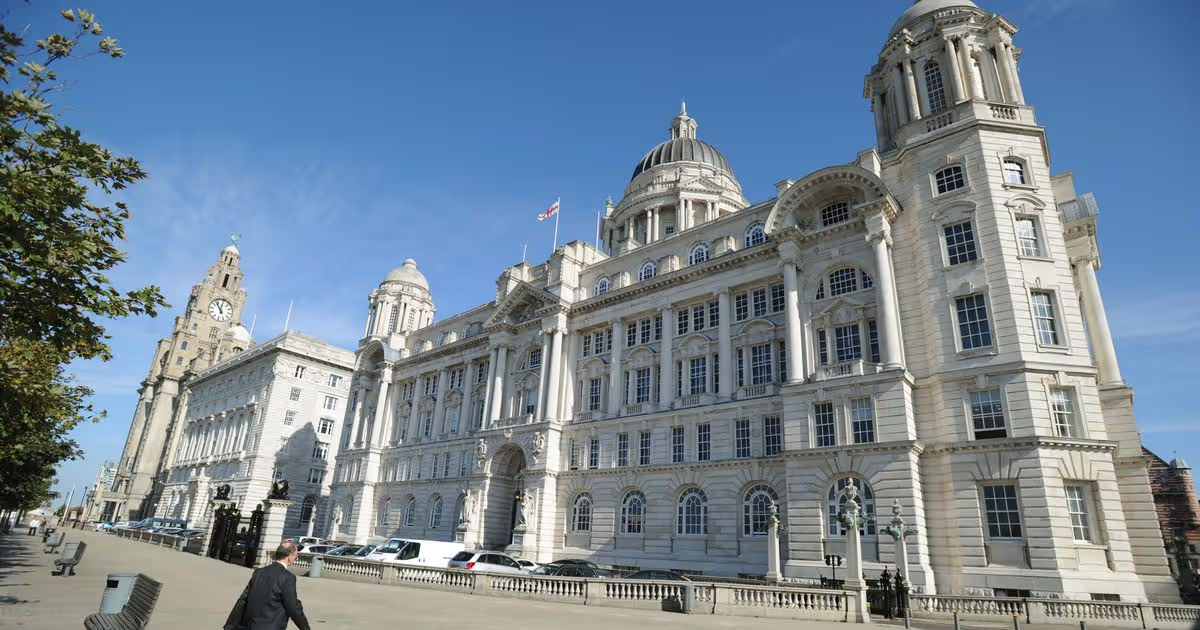
The Port of Liverpool Building, home to the Liverpool office of Rathbones
FTSE 250 firm Rathbones has declared its ambition to become the “best wealth manager in the UK by far”.
Shares climbed 9% to 2,410 pence in early trading on Friday, notching up a 24.6% gain year to date, after the group said pre-tax profit leapt 53.5% to £152.9m, up from £99.6m the prior year. That was underpinned by the performance of integrated synergies and higher funds under management (FUMA) at the Liverpool-founded business.
The strong results come on the heels of a turbulent period for the broader UK wealth management sector, after several firms witnessed their share prices tumble following the launch of a new AI tool, prompting investors to question how artificial intelligence might reshape or even threaten the industry.
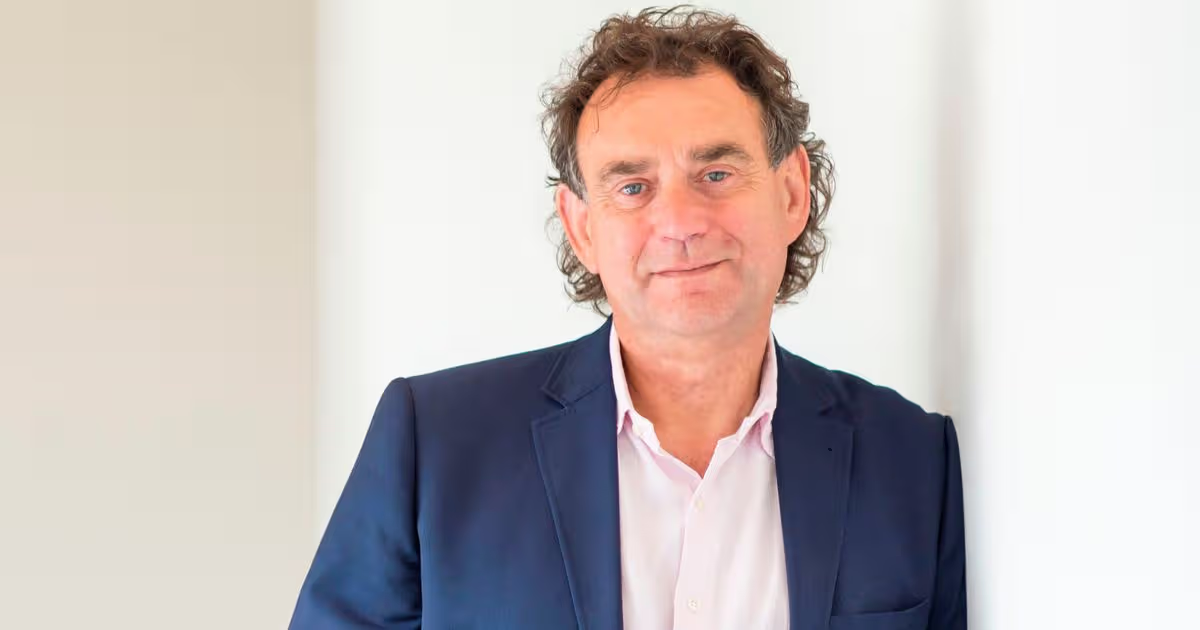
However, Rathbones chief executive Jonathan Sorrell, who assumed the role in August 2025, dismissed such fears, describing AI as a powerful tool that enables advisers to devote greater time to clients and nurture relationships, as reported by City AM.
He said: “We just feel that is a massive opportunity in terms of how it’s going to help achieve…change in our productivity as a business and the quality of service offering that we can provide.
“What it does is free up time to focus…on the human relationship we have with our client.”
The recent acquisitions of Schroders by American investment firm Nuveen and Evelyn Partners by high street bank Natwest has further fuelled debate around sector trends, though Sorrell maintained the market possesses “long term growth dynamics” and is not “cyclical”. He observed that Rathbone’s clientele, individuals holding assets between £1m and £5m, represent the fastest expanding segment of the market, whilst the drive by the sector and government to encourage greater investment presents “an exciting proposition”.
Whilst he recognised that the “industry will consolidate further over time” he emphasised Rathbone’s is solely seeking to “optimise” its existing operations, with dependable shareholders and the IW&I division positioning the firm for continued expansion.
FUMA climbed to £115.6bn, up from £109.2bn, supported by the market rebounding from first half lows triggered by Trump’s ‘Liberation Day’ tariff upheaval.
The firm confirmed it was extending its £50m share buyback scheme, which it completed in mid February, by £20m, with the group stating that it aims to deploy its “shareholders capital as efficiently as possible”.
The board proposed a final dividend of 68.0 pence per share, taking the annual total to 99.0 pence, a 6.5 per cent rise. The firm also highlighted the performance of its Investec Wealth and Investment (IW&I) division, which successfully completed its integration earlier in the year.
The operation surpassed expectations, delivering £76m on an annualised run-rate basis, considerably above Rathbones’ £60m target, and establishing the group as the UK’s largest discretionary wealth manager. Sorrel added that it had always set out “to maximise the opportunity” of integrating the business and “identified more areas” where IW&I could contribute to overall growth.
Rathbones also confirmed it wants to become the UK’s leading wealth manager, by establishing itself as the preferred choice for both clients and talent, whilst also enhancing its operational efficiency.
Rathbones still has a base at the waterfront Port of Liverpool Building, while it has another 20 offices across the UK including in Bristol, Cheltenham, Birmingham, Leeds, Manchester and Newcastle.
Rae Maile of Panmure Liberum observed that there is a “quiet revolution underway”, but cautioned that the wealth manager must stay committed to nurturing client relationships and strengthening capital efficiency.
He said: “Rathbones enjoys strong client relationships, but it must seek to grow new ones as well as managing more effectively inherent redemption activity. “.
“It will seek to do this through clearer definition of and enhancement to its investment capabilities, further penetrating its financial planning and advice capabilities.
“The intention is to simplify the operating model, removing internal frictions and barriers to decision-making and activity, but also to develop further its capital efficiency.”
Group finance director, Iain Hooley, further noted that rather than concentrating on securing a place in the FTSE 100 in its pursuit of market leadership, the firm is instead focusing its efforts on attracting older clients. Hooley stated: “The opportunity in the wider market with the ageing population, growing levels of wealth…the intergenerational transfer of wealth that’s going to happen, all of these things are definitely playing right into our space.”