LOS ANGELES — Federal authorities have alerted law enforcement agencies across California to a possible Iranian retaliation involving drone attacks on the West Coast, according to a bulletin reviewed by multiple news outlets, though officials emphasized there is no confirmed imminent threat or specific details about timing, targets or methods.
LOS ANGELES
The FBI distributed the alert to California police departments in late February 2026, warning that Iran had allegedly considered launching a “surprise attack” using unmanned aerial vehicles (UAVs) from an unidentified vessel off the U.S. coast, specifically targeting unspecified locations in California if the United States carried out strikes against Iran.
“We recently acquired information that as of early February 2026, Iran allegedly aspired to conduct a surprise attack using unmanned aerial vehicles from an unidentified vessel off the coast of the United State Homeland, specifically against unspecified targets in California, in the event that the US conducted strikes against Iran,” the bulletin stated, according to reports from ABC News and other sources. “We have no additional information on the timing, method, target, or perpetrators of this alleged attack.”
The warning surfaced publicly on March 11, 2026, amid escalating tensions in the Middle East following U.S. and Israeli military actions against Iran. Reports indicate recent American strikes under the Trump administration targeted Iranian assets, prompting retaliatory drone strikes by Iran against U.S. interests and allies in the region. President Donald Trump commented on the reports, stating he was “not worried” about Iran-backed attacks on U.S. soil.
An FBI spokesperson in Los Angeles declined to comment on the bulletin when reached by media outlets. Officials stressed that the intelligence remains uncorroborated and that no credible, specific threat has been identified. The alert appears intended to heighten vigilance among local law enforcement rather than signal an immediate danger.
Advertisement
The bulletin fits into a broader context of heightened U.S. counterterrorism concerns related to the Iran conflict. A Department of Homeland Security threat assessment noted that Iran and its proxies “probably” pose a risk of targeted actions against U.S. interests. Additional worries include the potential activation of foreign terrorist cells or “lone wolf” actors inspired by Iranian rhetoric, particularly in areas with large Iranian-American populations like Los Angeles County, home to around 700,000 people of Iranian descent — the largest outside Iran.
The Los Angeles Police Department and other agencies have increased monitoring for such risks, including cryptic broadcasts that could serve as operational triggers for sleeper assets. However, investigators have found no concrete evidence linking these to active plots.
Experts point out logistical challenges for any seaborne drone attack on the U.S. mainland. Iran’s known drone capabilities, while advanced and used extensively in regional conflicts, would face significant hurdles in crossing the Pacific Ocean undetected or launching effectively from international waters off California. U.S. naval and air defenses, including radar systems and fighter intercepts, are designed to counter such threats far from shore.
The alert also coincides with separate concerns about drone threats from non-state actors, including potential use by Mexican drug cartels along the southern border. Officials have long monitored vessels that could preposition equipment for asymmetric attacks, a tactic Iran has employed through proxies in the Middle East.
Advertisement
California Gov. Gavin Newsom addressed the warning on March 11, stating that state officials are aware of the intelligence and are coordinating with federal partners to ensure preparedness. Local law enforcement in major cities like Los Angeles, San Francisco and San Diego have been advised to remain vigilant, though no changes to public alert levels were announced.
The development underscores the evolving nature of threats to the U.S. homeland in an era of drone proliferation. Iran has invested heavily in UAV technology, exporting drones to allies and using them in strikes that have depleted air defense resources in conflict zones. While direct attacks on the continental U.S. remain unlikely due to distance and detection risks, the bulletin highlights fears of retaliatory actions extending beyond the Middle East.
Public reaction has been mixed, with some social media users expressing skepticism about the feasibility of such an operation, while others called for increased coastal surveillance. The story trended briefly on platforms following ABC News’ initial reporting, with outlets including the Los Angeles Times, Newsweek, Reuters and local California stations providing coverage.
As of March 12, 2026, no new developments or confirmed threats have emerged from the bulletin. Federal agencies continue to monitor the situation closely as the Iran conflict evolves. Officials urged the public to report suspicious activity but reiterated that everyday life should proceed normally absent specific warnings.
Advertisement
This incident reflects ongoing U.S. efforts to counter Iranian influence operations, including past plots involving espionage, cyberattacks and procurement of sensitive technology for military drones. The FBI maintains that disrupting such threats remains a top priority.
In the absence of corroborated intelligence pointing to an active plot, the warning serves primarily as a precautionary measure to ensure law enforcement readiness amid geopolitical volatility.
As the war in Iran sent oil prices soaring, one market holding up unexpectedly well is that of the world’s largest crude importer: China. Chinese stocks have fallen less than global peers since the conflict began, the yuan has held steady against the dollar and government bond yields have barely moved. Together, this amounts to surprising resilience in a crisis that, at first glance, appeared likely to leave the country vulnerable.
For decades Beijing has sought to insulate its economy from precisely this kind of shock. It poured investments into renewables, secured dominance across much of the clean-energy supply chain and promoted electric vehicles at a remarkable speed. The result is an economy still dependent on imported fossil fuels but less beholden to them than before – providing some protection as oil prices have jumped as much as 65% since the conflict.
“Chinese asset classes are something that is missed by global investors as a safe haven,” Cary Yeung, head of Greater China debt at Pictet Asset Management.
Global markets have been on a roller coaster since the war broke out late February. Stocks slid as crude – which briefly surged to almost $120 a barrel – threatened to stoke inflation and delay central bank easing, only to rebound on signals from Washington hinting at a possible end to the fighting.
Advertisement
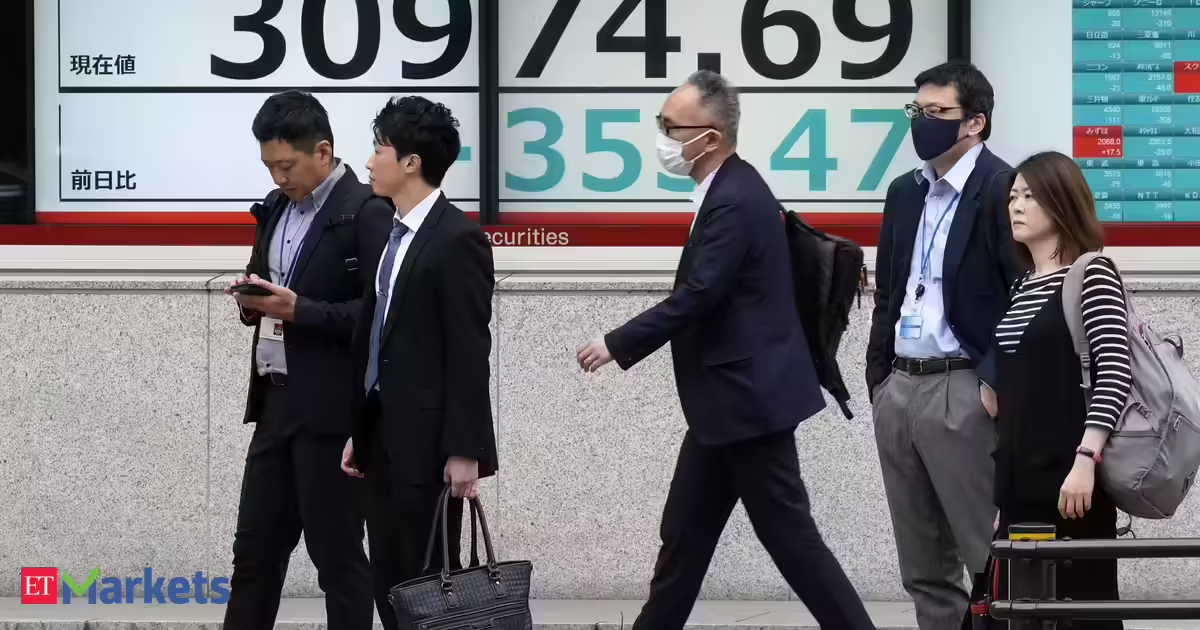
Asian equities have taken the hardest hit, given the region’s heavy reliance on imported energy. Japan, Korea and India are down about 6%, 9% and 4%, respectively, since late February. European markets have lost around 5% and US stocks fell 1.4%. Yet China’s CSI 300 slipped just 0.3%. That means a Chinese investor have preserved more capital than in most major markets.
The Stock Exchange of Thailand reveals a 3-year plan (2026-2028) to modernize the Thai capital market
The Stock Exchange of Thailand unveils a comprehensive 3-year plan (2026-2028) to elevate the Thai capital market across all dimensions. The initiative aims to restore confidence, expand investment opportunities with innovative products, and attract increased foreign capital inflows.
🎯 Core Purpose
Position SET as “The Trusted Gateway to Inclusive Opportunities.”
Expand opportunities, strengthen infrastructure, and build confidence in Thailand’s capital market.
📌 Strategic Priorities (3 Pillars)
Exciting Markets with Confidence
Attract fund flows through new products, inbound/outbound roadshows, and investor base expansion.
Enhance IPO processes to attract New Economy, foreign, SME/startup companies.
Strengthen listed companies’ governance and value creation (e.g., JUMP+ program).
Expand TFEX with short-dated derivatives, crypto-based products, and liquidity support.
Grow Business with Stakeholders
Build the SET Climate Ecosystem (carbon trading, greenhouse gas reporting, climate law readiness).
Leverage AI for market data and access services.
Develop commercial policies aligned with international standards.
Great Process and People
Upgrade infrastructure: new clearing system (launch 2027), enhanced TSD e-services.
Drive workforce development aligned with organizational transformation.
Global volatility: ESG standards, Fed policy, geopolitical tensions.
Liquidity pressures and investor confidence issues.
✅ Key Achievements (2025–2026)
110 companies joined JUMP+ program.
Launched Bond Connect Platform and G-Token system.
Expanded ETFs and DRs (233 securities).
Introduced measures for market stability (capped weights, temporary volatility measures).
Advanced sustainability: SETCarbon Solution, Net Zero target, community support initiatives.
In short: SET’s 2026–2028 plan focuses on boosting liquidity and confidence, expanding sustainable growth ecosystems, and modernizing infrastructure while preparing people and processes for long-term resilience.
US equity futures and Asian stocks declined on Thursday, extending a volatile week, as another rally in oil prices and mounting strain in the private credit market weighed on investor sentiment.
Contracts for the S&P 500 Index were down 0.8% while a gauge of Asian shares dropped as much as 1.1% in early trading. Treasury yields rose. Oil gained for a second day as escalating rhetoric over the Iran war raised concerns over a prolonged conflict, outweighing an emergency release of crude reserves by wealthy nations.
Energy markets remained the biggest focus for investors as volatility in oil and gas prices continues to feed into inflation expectations. US equities ended little changed Wednesday while Treasuries fell across the curve even as data showed inflation slowed in February from a month earlier. That reflected concern that the Iran war, which has boosted energy costs, is complicating the Federal Reserve’s path on interest rates. Traders now anticipate the Fed will cut rates only once this year.
“Despite the prospect of releasing oil reserves, continued uncertainty translates into continued upside risk for oil prices, and that translates into a Fed that will remain cautious about cutting interest rates,” said Ellen Zentner at Morgan Stanley Wealth Management.
Advertisement
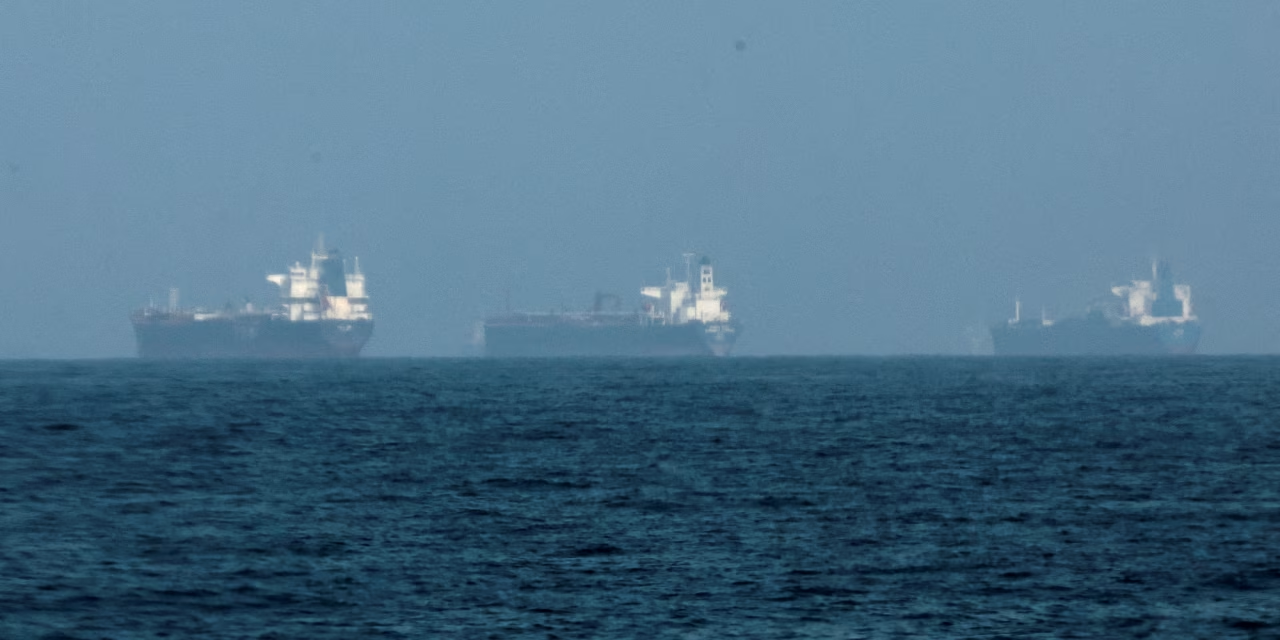
There has been no break in the conflict overnight in the Middle East, with strikes hitting energy infrastructure. Iraq’s oil ports have completely stopped operations, according to the state-run Iraqi News agency, as two tankers were attacked.
Live Events
The US plans to release 172 million barrels from its emergency oil reserve as nations around the world work to ease surging crude and fuel prices. That’s part of the plan by member countries of the International Energy Agency to discharge 400 million barrels from reserves globally, its largest-ever release. President Donald Trump said the massive release of emergency oil reserves approved by the IEA would ease energy price pressures while the US seeks to “finish the job” in its campaign against Iran. Iran has told regional intermediaries that for a ceasefire, the US must guarantee neither it nor Israel will strike the country in the future, according to officials familiar with the matter.Separately, Trump is preparing to invoke powers that would permit renewed oil production off the southern California coast. Trump said he didn’t believe Iran was laying mines in the Strait of Hormuz and repeated his suggestion the war would end soon.
Meanwhile, Morgan Stanley capped redemptions from one of its private credit funds, returning less than half of the capital that investors sought to cash out. That added to a wave of redemption requests in the industry amid growing concerns over the quality of loans.
Changing Path
In Asia, the yen touched its weakest level against the greenback since January. After holding policy settings steady next week, the Bank of Japan will likely raise its benchmark interest rate in April, according to more than a third of surveyed economists.
The S&P 500 declined 0.1% on Wednesday, while the Nasdaq 100 was flat.
Advertisement
Data out Friday will likely paint a picture of more stubborn inflation. Economists see the Fed’s favored core personal consumption expenditures price index up 0.4% again in January. Compared with the same month last year, the median forecast calls for a 3.1% increase.
“February’s inflation numbers were heading in the right direction, but then along came the conflict in the Middle East, and now the path is changing,” said Brian Jacobsen at Annex Wealth Management.
While investors are far more focused on how the conflict in Iran feeds into inflation over the months ahead, the latest data offers some reassurance that price pressures were not moving in the wrong direction before the recent energy shock, said Seema Shah at Principal Asset Management.
“The Fed has historically looked through energy‑driven price spikes,” she noted. “But with inflation having sat above target for almost five years, it may be harder to do so this time.”
Instagram, Snapchat, TikTok, YouTube and Roblox are among the platforms UK regulators say aren’t putting children’s safety at the heart of their products.
Saudi Aramco said it could restore production within days of the Strait of Hormuz reopening, while warning that prolonged disruption of the waterway poses severe consequences for oil markets and the global economy.
“There would be catastrophic consequences for the world’s oil markets, the longer the disruption goes on…the more drastic the consequences for the global economy,” Chief Executive Officer Amin Nasser told reporters on Aramco’s earnings call Tuesday.
Patrick De Haan, GasBuddy’s head of petroleum analysis, says a rise in gas prices from a potential Iranian shutdown of the Strait of Hormuz “would not last long.”
Iran warned the United States on Wednesday that oil prices could soar to $200 a barrel as escalating U.S. and Israeli strikes against the country continue to rattle global energy markets.
To prevent what could be one of the worst oil shocks since the 1970s, the U.S. announced that Washington, along with the International Energy Agency (IEA), will soon release a historic volume of oil from its emergency reserves.
Advertisement
If oil prices reach such levels, average gas prices in the United States could surpass $5 a gallon, analysts predict. As of Wednesday, the national average price for regular gasoline stands at $3.57 per gallon, according to the American Automobile Association.
A spokesperson for Iran’s primary military command issued the warning in comments addressed to Washington, Reuters reported. Tehran reportedly emphasized that the instability in global oil markets was the result of what Tehran describes as conditions imposed by the United States and Israel.
“Get ready for oil to be $200 a barrel, because the oil price depends on regional security, which you have destabilized,” Ebrahim Zolfaqari, spokesperson for Khatam al-Anbiya Central Headquarters, said.
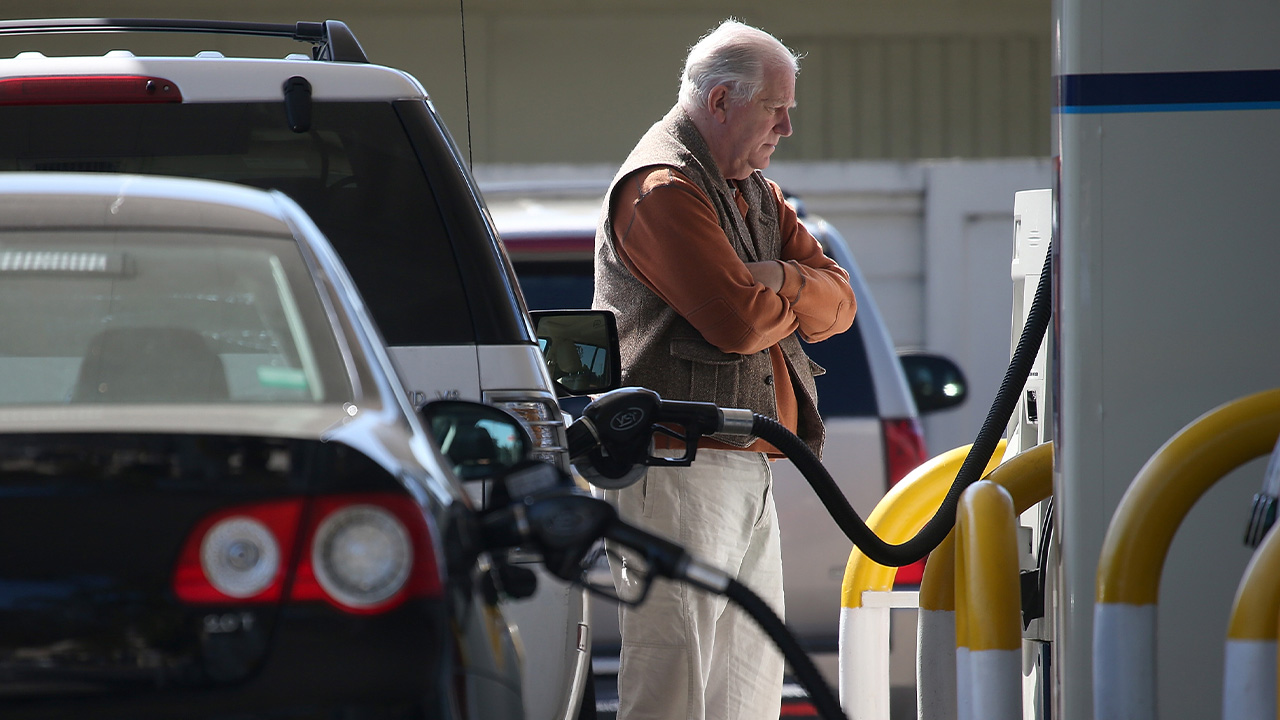
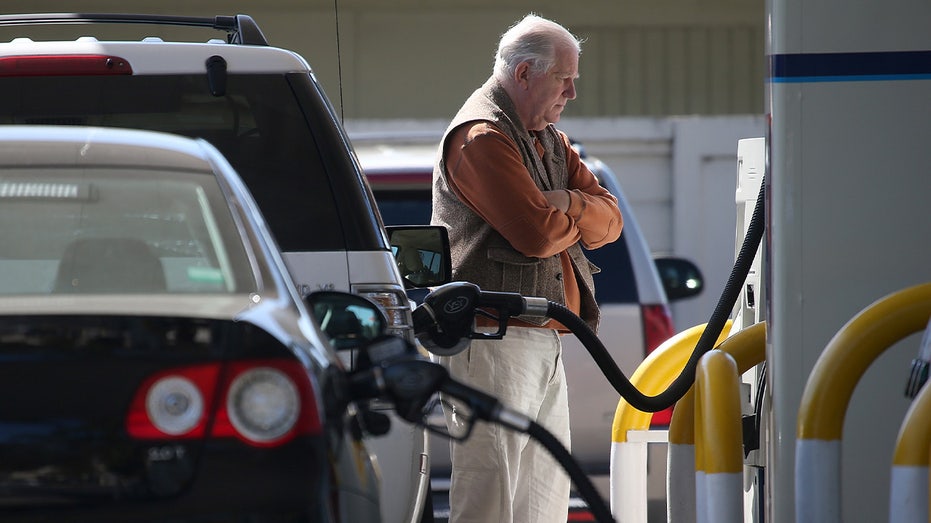
A customer pumps gasoline into his car. (Justin Sullivan/Getty Images / Getty Images)
The threat of $200-a-barrel oil comes after crude prices recently surged past $100 for the first time since 2022, peaking at nearly $120 a barrel before settling around $90 on Wednesday due to a brief relief rally. West Texas Intermediate, the crude oil produced in the United States, was trading at just under $86 a barrel.
In response, the IEA, made up of major oil-consuming nations, agreed to release 400 million barrels from its global strategic reserves, though experts warn this would replace only a fraction of the supply normally flowing through the Strait of Hormuz.
The United States will add another 172 million barrels from its own Strategic Petroleum Reserve starting next week, according to U.S. Secretary of Energy Chris Wright.
“Earlier today, 32 member nations of the International Energy Agency unanimously agreed to President Trump’s request to lower energy prices with a coordinated release of 400 million barrels of oil and refined products from their respective reserves,” Wright said in a statement.
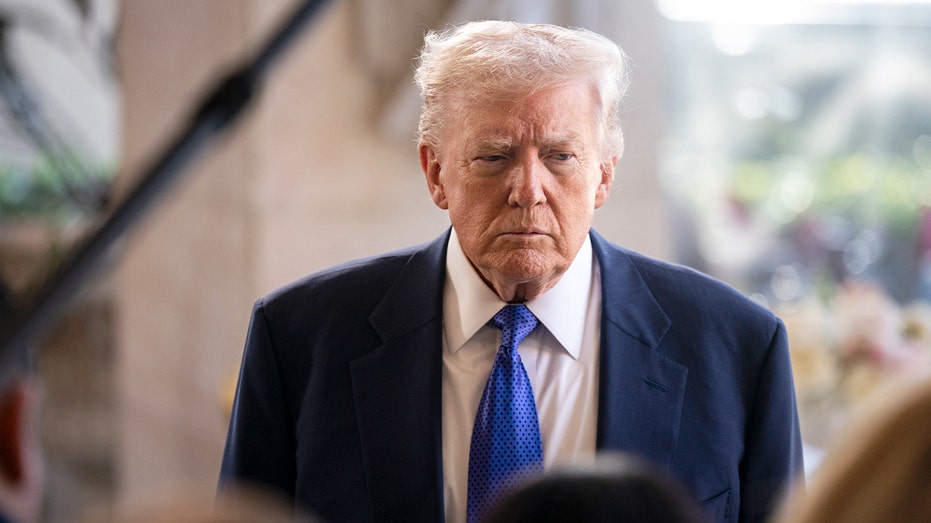
President Donald Trump on Wednesday recommended releasing 172 million barrels of oil from U.S. reserves. (Al Drago/Getty Images / Getty Images)
“As part of this effort, President Trump authorized the Department of Energy to release 172 million barrels from the Strategic Petroleum Reserve, beginning next week. This will take approximately 120 days to deliver based on planned discharge rates.”
The energy secretary added that the Trump administration has arranged to replenish the U.S. Strategic Petroleum Reserves with roughly 200 million barrels over the next year, roughly 20% more than the amount being drawn down, at no cost to taxpayers.
“For 47 years, Iran and its terrorist proxies have been intent on killing Americans,” he said. “They have manipulated and threatened the energy security of America and its allies. Under President Trump, those days are coming to an end. Rest assured, America’s energy security is as strong as ever.”
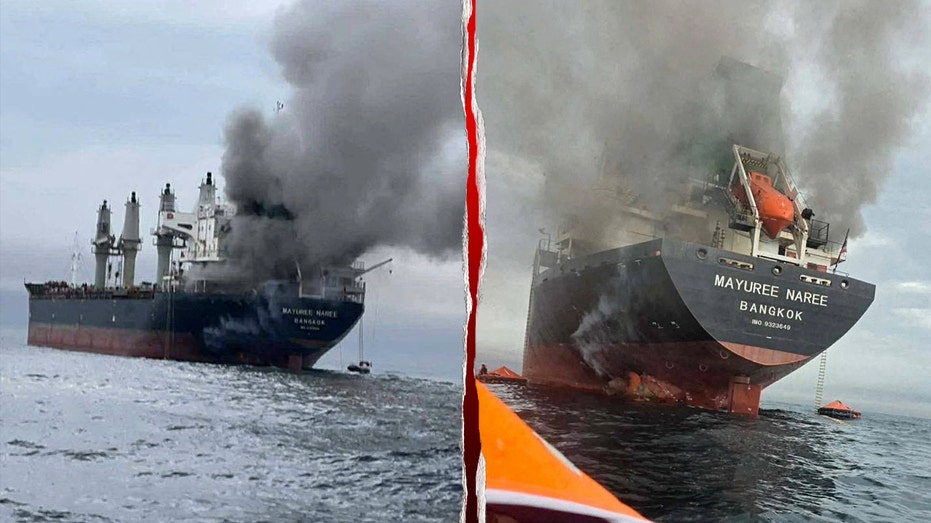
The Thailand-flagged cargo ship Mayuree Naree engulfed in black smoke in the Strait of Hormuz, March 11, 2026. (Royal Thai Navy/Handout via REUTERS / Reuters Photos)
IEA nations have released emergency oil stocks on only five previous occasions, including the 1990–1991 Gulf War, Hurricane Katrina in 2005, the Libyan civil war in 2011, and twice following Russia’s invasion of Ukraine.
Iran further warned on Wednesday that any ships belonging to the United States, Israel or their allies would be targeted if they pass through the Strait of Hormuz, the strategic channel that typically transports about a fifth of the world’s oil supply.
Advertisement
“Any vessel whose oil cargo or the vessel itself belongs to the United States, the Zionist regime or their hostile allies will be considered legitimate targets,” Al-Anbiya said in a statement carried by state TV, according to Arab News.
The comments highlight Iran’s maritime attacks in the past week and reported deployment of naval mines in the region. At least 14 merchant ships have been hit since the conflict began.