Connect with us

Business

(VIDEO) ‘Project Hail Mary’ Earns Stellar Reviews, Outpacing ‘The Martian’ as Top-Rated Sci-Fi Hit


Published

on

Project Hail Mary

Just days before its nationwide theatrical debut, Amazon MGM Studios’ Project Hail Mary is generating widespread acclaim from critics, boasting a 95% approval rating on Rotten Tomatoes from over 65 reviews as of March 10, 2026. The score edges out the 92% earned by Ridley Scott’s The Martian (2015), marking the Ryan Gosling-led space epic as one of the century’s most favorably reviewed sci-fi films.

Project Hail Mary
Project Hail Mary

Directed by Phil Lord and Christopher Miller—the Oscar-winning duo behind The LEGO Movie and the Spider-Verse franchise—this marks their first live-action directorial feature since 2014’s 22 Jump Street. Screenwriter Drew Goddard, who previously adapted Weir’s The Martian for the screen, delivers a faithful yet cinematic take on the 2021 novel. The film follows Ryland Grace (Gosling), a junior high science teacher who awakens alone aboard a spaceship far from Earth, grappling with amnesia while confronting a mission to reverse a solar dimming threat that could doom humanity.

Critics have praised the film’s blend of hard science, humor, emotional depth, and visual spectacle. Many highlight the central relationship between Grace and “Rocky,” an alien companion rendered through groundbreaking practical effects and puppeteering by Neal Scanlan and James Ortiz. Reviews describe Rocky as a “breakout star” whose design and performance evoke genuine warmth and wonder, turning the story into a heartfelt interspecies buddy adventure.

The Hollywood Reporter called it a “winner” for Amazon MGM, noting the film’s ability to balance intellectual rigor with crowd-pleasing entertainment. Deadline reported strong early buzz, projecting a $50 million-plus domestic opening weekend against a production budget estimated at over $150 million. IndieWire described Gosling’s performance as channeling the “Everyman” spirit of Matt Damon’s Mark Watney in The Martian, but with added layers of vulnerability and charm. USA Today awarded it four out of four stars, hailing it as “2026’s first great movie” and an “epic space adventure that checks all the sci-fi boxes.”

Empire magazine deemed it an “old-school crowdpleaser,” while Gizmodo emphasized that even viewers familiar with the book’s plot remain captivated by the execution. Nerdist went further, stating the film “made me romantic about movies” again, crediting its faithful adaptation, stellar soundtrack, and the lifelike portrayal of Rocky—achieved through a seamless mix of puppets, animatronics, and subtle CGI.

Advertisement

The film’s Rotten Tomatoes Tomatometer stands at 95% “Certified Fresh,” with descriptors highlighting its intelligence, optimism, and visual innovation. On Metacritic, it holds a 79/100 from early reviews, indicating “generally favorable” reception. While audience scores are not yet fully available ahead of the March 20 release, social media reactions from preview screenings have echoed the enthusiasm, with many calling it a potential “masterpiece” rivaling Interstellar or The Martian.

Project Hail Mary premiered in London on March 9, 2026, with early IMAX and premium format screenings already underway in select markets. It opens wide in theaters—including IMAX and IMAX 70mm—on March 20, distributed by Amazon MGM Studios domestically and Sony Pictures internationally. The production was filmed with IMAX cameras to capture the vastness of space and intricate scientific sequences.

Weir’s novel, a follow-up to his debut The Martian, became a bestseller for its accessible explanations of astrophysics, xenobiology, and problem-solving. The film retains this spirit, emphasizing cooperation over conflict—both between humans and with extraterrestrial life. Gosling, an Academy Award nominee, also serves as a producer, bringing his signature wit to the reluctant hero role.

Supporting performances include Sandra Hüller, Lionel Boyce, Ken Leung, and Milana Vayntrub, adding depth to flashbacks and mission elements. The score and sound design have drawn particular praise for enhancing the sense of isolation and discovery.

Advertisement

As anticipation builds, Project Hail Mary arrives at a time when sci-fi blockbusters continue to draw audiences seeking smart, hopeful escapism. Its early critical success suggests it could follow The Martian‘s path—not only commercially, with that film grossing over $630 million worldwide—but also as a cultural touchstone for hard science fiction on screen.

Industry observers note the film’s timing could position it as an awards contender, particularly for Gosling’s lead performance, the visual effects, and adapted screenplay. With review embargoes lifted and word-of-mouth spreading rapidly, Project Hail Mary appears poised to soar beyond expectations, proving that thoughtful science fiction remains a powerful draw in modern cinema.


Advertisement
Continue Reading
Click to comment

Leave a Reply

Your email address will not be published. Required fields are marked *

Business

Anchr raises $5.8M to build AI-powered operating system for food distribution supply chains

Published

on

Anchr raises $5.8M to build AI-powered operating system for food distribution supply chains

US startup Anchr has secured $5.8 million in seed funding to develop what it describes as the first end-to-end AI-native operating system for food distributors, targeting one of the most operationally complex yet technologically underserved sectors of the global supply chain.

The funding round was backed by a16z Speedrun, Anterra Capital, Offline Ventures, Long Journey Ventures, alongside several industry leaders connected to OpenAI. The investment will support the company’s development of an integrated artificial intelligence platform designed to automate operational workflows across sales, purchasing, inventory management, finance and logistics.

The company argues that despite the enormous scale of the food distribution industry, which moves hundreds of billions of dollars in perishable goods annually, much of its operational infrastructure remains heavily reliant on outdated technology and manual processes.

Food distributors act as a critical backbone between producers and the hospitality sector, ensuring that restaurants, supermarkets and catering businesses receive fresh goods daily. Yet many companies still rely on text messages, spreadsheets and legacy enterprise systems developed decades ago.

Traditional enterprise resource planning (ERP) systems typically record historical transactions but lack the capability to analyse real-time conditions or automate operational decisions.

Advertisement

This means that key activities such as purchasing decisions, stock management and financial reconciliation often require extensive manual work. For businesses operating on low single-digit profit margins, inefficiencies in these processes can significantly impact profitability.

Anchr’s founders believe artificial intelligence can fundamentally change how these operations function.

“The biggest opportunity to leverage AI isn’t in industries with modern infrastructure,” said Tzar Taraporvala, co-founder and co-chief executive of Anchr.

“It’s buried deep in the operational backbone of the economy. Food distributors manage millions of dollars of inventory with systems that were never designed to handle today’s complexity.”

Advertisement

Rather than replacing existing ERP platforms, Anchr’s system operates as a layer on top of them, embedding AI-powered digital assistants, or “AI teammates”, across multiple operational departments.

By integrating data across departments, the system enables information to flow continuously through the organisation, eliminating the fragmented workflows that often plague supply chain businesses.

Work that previously required hours of manual intervention, such as inputting orders received via email or text messages, can be executed automatically by the platform, with contextual information shared across the entire business.

Early adopters of Anchr’s platform are already reporting measurable efficiency gains.

Advertisement

One customer reclaimed roughly 40 per cent of daily working time across a team of eight sales representatives by automating order intake from emails and text messages.

Another distributor was able to reduce aged inventory write-offs by $30,000 in a single month, after using AI-generated purchasing insights based on live demand signals.

In a further example, a distributor used the system’s menu-analysis capabilities to identify upselling opportunities. By scraping restaurant menus and product catalogues, the AI recommended additional items to include in orders, increasing the average basket size by around $65 per order across 4,000 annual orders.

For companies operating in low-margin industries such as food distribution, even relatively small operational improvements can translate into substantial financial gains.

Advertisement

The idea for Anchr emerged directly from the founders’ exposure to operational inefficiencies within the supply chain.

Co-founders Tzar Taraporvala and Smayan Mehra, who have worked together for more than two decades, began investigating supply chain technology gaps after observing how disconnected many enterprise systems remained.

Their research intensified when they partnered with a Boston-based seafood distributor, spending several months observing daily workflows inside the business.

They discovered that many operational processes were still handled manually. Orders were frequently entered into ERP systems in the early hours of the morning, purchasing decisions relied on disconnected spreadsheets and finance teams often had to reconcile invoices across multiple software platforms.

Advertisement

The founders concluded that the problem was not simply technological, it was structural.

“The pain was structural, daily and expensive,” the company said.

Anchr’s early momentum has been notable. During its 12-week participation in the Speedrun accelerator programme, the startup reported booking seven-figure revenue.

Its customer base already includes both regional distributors and a publicly traded food distribution company generating approximately $5 billion in annual revenue.

Advertisement

This rapid adoption reflects growing demand for automation in a sector where operational complexity continues to increase.

From ERP to ERA: the next evolution in enterprise software

The company believes its technology represents the next phase in enterprise software development.

The founders describe the transition as moving from traditional Enterprise Resource Planning (ERP) systems toward what they call Enterprise Resource Automation (ERA).

Advertisement

“If the first era of enterprise software digitised record-keeping, we believe the next era will automate it,” said Smayan Mehra, co-founder and co-CEO.

Under this model, enterprise software does not simply track data but actively executes workflows and decision-making processes in real time.

Looking ahead, Anchr plans to expand automation capabilities across all aspects of distributor operations, eventually becoming a central coordination system for decisions involving inventory, capital and logistics.

The founders believe the technology has applications beyond food distribution, particularly in industries where physical goods move through fragmented supply chains.

Advertisement

By integrating operational data across departments, the platform aims to create a new type of AI-native system of record built around the actual work performed by organisations.

Investors backing the company say the potential lies in the compounding effect of connecting operational functions.

“When sales, purchasing, inventory and finance share context, the entire business runs differently,” said Troy Kirwin of a16z Speedrun.

“Anchr is building an AI-native operating layer that turns fragmented processes into integrated workflows.”

Advertisement

Despite the scale of global logistics and distribution networks, many supply chain sectors remain technologically underdeveloped compared with consumer technology and finance.

Food distribution in particular presents a unique challenge because it involves high volumes of perishable inventory, tight margins and fast-moving operational decisions.

As artificial intelligence continues to move beyond productivity tools into full operational automation, startups like Anchr are betting that some of the largest gains will come not from digital-first industries but from the overlooked systems that keep the physical economy running.

For Anchr, the goal is clear: build the AI operating system that powers the next generation of supply chain operations.

Advertisement

Amy Ingham

Amy is a newly qualified journalist specialising in business journalism at Business Matters with responsibility for news content for what is now the UK’s largest print and online source of current business news.

Advertisement
Continue Reading

Business

Brera Holdings proposes name change to Solmate Infrastructure

Published

on


Brera Holdings proposes name change to Solmate Infrastructure

Continue Reading

Business

Truly Good Foods breaks out bars

Published

on

Truly Good Foods breaks out bars

Golden Hour bars are available in four flavors. 

Continue Reading

Business

Tax-efficient Diversification Techniques | Fox Business

Published

on

Tax-efficient Diversification Techniques | Fox Business

Investors are increasingly focused on not just how they invest their money but also how they can optimize their after-tax investment outcomes. Allspring Global Investments is dedicated to helping investors navigate the evolving tax and estate planning landscapes.

Concentrated stock positions can create unwanted risk in investors’ portfolios. Despite the risk, a combination of factors—including emotional biases and fear of built-in capital gains consequences—can make investors unwilling to diversify. By understanding the many tax-efficient diversification options available to them, investors may be more willing to take some of that concentration risk off the table.

Holly Swan, Allspring’s expert on taxes, recently wrote about 10 techniques for diversifying a concentrated position in a tax-efficient manner. She thinks about tax-management diversification strategies as being in one of these three buckets: avoid, defer, or offset.

Holly Swan, Head of Wealth Solutions, Global Client Strategy, Allspring Global Investments

Avoid:

Advertisement

Tax strategies may focus on reducing or eliminating capital gains exposure altogether. The first example of this is when investors may choose to hold certain highly appreciated assets so they can pass through a taxable estate and receive a step-up in basis.

Common lifetime strategies include borrowing against their portfolios to generate liquidity without selling and triggering taxes, gifting appreciated assets to lower‑income family members who are unlikely to owe capital gains tax, and using options strategies to manage risk or monetize positions without selling. Less common strategies available to founders and early-stage investors may allow eligible shareholders to exclude substantial capital gains on investments in qualified small businesses.

Defer:

Certain tax strategies may help investors defer when taxes are recognized, often smoothing the impact over time. One example is systematic diversification, where investors, such as public company executives, sell portions of a concentrated position gradually.

Advertisement

Investors may also use tax loss harvesting to capture losses that offset current or future gains. Other deferral tools include exchange funds, which allow investors to contribute concentrated stock in exchange for a diversified portfolio without triggering immediate taxes, and opportunity zones, which—beginning again in 2027—will allow taxpayers to reinvest capital gains in designated areas in exchange for up to five years of capital gains deferral and, in some cases, partial basis step-up (opportunity zone investments made today are only eligible for gain deferral until December 31, 2026).

Offset:

Offset strategies reduce tax liability by pairing gains with deductions or other tax‑favored actions. A primary example of this is charitable giving, where donating appreciated securities held for more than a year can allow investors to avoid capital gains recognition while receiving a deduction for the asset’s fair market value, subject to income limits.

Investors have many options for tax-efficient diversification, each of which can be a powerful step in moving away from a concentrated position that may be adding unnecessary risk to portfolios. Allspring Global Investments can offer insights into this and more as investors prepare for their financial future.

Advertisement
(Adobe Stock)

ALL-01282026-ixng4s4a

Allspring Global Investments does not provide accounting, legal, or tax advice or investment recommendations. Any tax or legal information in this brochure is merely a summary of our understanding and interpretations of some of the current income tax regulations and is not exhaustive. Investors should consult their tax advisor or legal counsel for advice and information concerning their particular situation.

Allspring does not offer options. Options involve significant risks and are not suitable for all investors.

Diversification does not ensure or guarantee better performance and cannot eliminate the risk of investment losses.

Advertisement

This material is provided for informational purposes only. This content and the information within do not constitute an offer or solicitation in any jurisdiction where or to any person to whom it would be unauthorized or unlawful to do so and should not be considered investment advice, an investment recommendation, or investment research in any jurisdiction.

INVESTMENT RISKS: All investments contain risk. Your capital may be at risk. The value, price, or income of investments or financial instruments can fall as well as rise and is not guaranteed.

You may not get back the amount originally invested. Past performance is not a guarantee or reliable indicator of future results.

Allspring Global Investments™ (Allspring) is the trade name for the asset management firms of Allspring Global Investments Holdings, LLC, a holding company indirectly owned by certain private funds of GTCR LLC and Reverence Capital Partners, L.P. These firms include but are not limited to Allspring Funds Management, LLC, and Allspring Global Investments, LLC. Unless otherwise stated, Allspring is the source of all data (which is current or as of the date stated). Content is provided for informational purposes only. Views, opinions, assumptions, or estimates are not necessarily those of Allspring or their affiliates and there is no representation regarding their adequacy, accuracy, or completeness. They should not be relied upon and may be subject to change without notice.

Advertisement

© 2026 Allspring Global Investments Holdings, LLC. All rights reserved.

Continue Reading

Business

SHOAL Emerges as Today’s Solution in Moderately Challenging Puzzle #1725

Published

on

Nancy Guthrie

The New York Times’ Wordle puzzle for March 10, 2026, presented players with a nautical-themed brain-teaser that rewarded careful vowel placement and strategic guessing. Puzzle #1725, released at midnight Eastern time, challenged solvers with the five-letter word **SHOAL**, a term familiar to mariners and geography buffs but less common in everyday conversation.

Wordle puzzle
Wordle puzzle

As of early March 11, more than 800,000 players had completed the daily grid, according to unofficial tracking aggregates from community sites. The average solve rate hovered around 4 guesses out of 6, classifying it as moderately challenging — a step up from the previous day’s easier offering but far from the month’s toughest entries.

**SHOAL** serves as both a noun and verb in English. As a noun, it denotes a shallow area in a body of water, such as a sandbank or submerged ridge that can pose hazards to boats. It also refers to a large group of fish swimming together. The verb form means to become shallow or to cause something to run aground. Derived from Old English “sceald,” meaning shallow, the word has nautical roots dating back centuries and remains a staple in boating and oceanographic contexts.

The puzzle’s difficulty stemmed from its uncommon starting consonant cluster “SH” combined with the less frequent “OA” vowel pairing. Many players reported starting with popular openers like SLATE, CRANE or ADIEU, which often left a pool of 200-300 possibilities after the first guess. Those who tested common consonants early — particularly S, H and L — found quicker paths to victory.

Hints that circulated on social media and gaming forums proved especially useful:

Advertisement

– The word contains no repeated letters.
– It starts with S.
– It ends with L.
– It features two consecutive vowels (O and A).
– A subtle clue: “A group of fish” or “A shallow place in water.”
– Another nudge: “Synonyms include sandbank or shallow reef.”

These pointers helped narrow options without spoiling the solve. The absence of rare letters (J, Q, X, Z) kept it accessible, but the word’s relative obscurity tripped up casual players who leaned on more everyday vocabulary.

Community reaction poured in across platforms. On Reddit’s r/wordle subreddit, threads filled with green-square screenshots and stories of near-misses. One user described guessing “SHOAL” on the fifth attempt after ruling out “SHAWL” and “SHOOT.” Another praised the puzzle for its educational value: “Learned a new word today — shoal as in fish school. Cool!”

Wordle Bot, the NYT’s analytical tool, averaged 3.8 guesses on this puzzle using its optimal strategy starting with SLATE. Human players often outperformed the bot when intuition kicked in, with many reporting three- or four-guess solves after landing an early yellow S or green O.

Advertisement

The March 10 edition coincided with MAR10 Day — a fan-celebrated nod to Super Mario Bros. — prompting lighthearted crossovers. Some players joked about wishing the word had been “MARIO” or “JUMP,” while others shared Mario-themed grids or memes tying “shoal” to underwater levels in games like Super Mario Sunshine.

Wordle, created by software engineer Josh Wardle and acquired by The New York Times in 2022, continues its streak as one of the internet’s most enduring daily games. With no ads and a simple black-yellow-green feedback system, it attracts millions worldwide each day. Puzzle #1725 maintained the game’s tradition of balanced difficulty: not too obscure to frustrate newcomers, yet clever enough to reward dedicated solvers.

For those who missed it or want to compare notes, the official archive remains available to NYT subscribers. Yesterday’s puzzle (#1724) featured HASTY, a more straightforward adjective that many cleared in three guesses or fewer.

As March progresses, Wordle enthusiasts anticipate continued variety. Recent weeks have included a mix of common words, nature terms and occasional curveballs. The game’s algorithm ensures fresh challenges while avoiding overly technical jargon.

Advertisement

Tips for future solves remain consistent: Start with vowel-heavy words to map the landscape quickly, prioritize consonants like R, S, T, L and N, and use elimination ruthlessly. Avoid guessing plurals early unless plural forms are confirmed, and remember that the puzzle draws from a curated list of about 2,300 five-letter words.

Whether you nailed SHOAL in two tries or needed all six, the daily ritual fosters a shared sense of accomplishment. In an era of endless digital distractions, Wordle’s quiet persistence — one word, one grid, one day at a time — endures as a small but satisfying victory.

For the record, today’s answer is **SHOAL**. If you’re reading this after solving, congratulations on preserving your streak. If not, tomorrow brings a clean slate and a new five-letter mystery waiting at midnight.

Advertisement
Continue Reading

Business

Markets Are Feeling the Pain. Why It’s Not Time to Panic Yet.

Published

on

Stocks Little Changed After Fed Decision

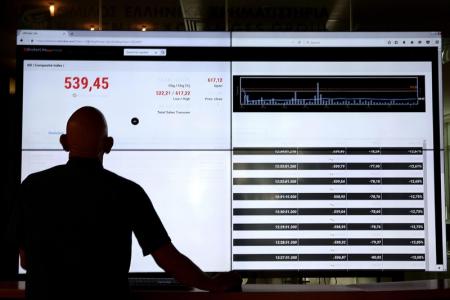
Stock markets are suffering from higher oil prices, but investors still aren’t panicking. There are three factors still supporting equities, according to Deutsche Bank strategist Henry Allen.

Historically, higher oil shocks only lead to a significant stock market drop when at least one of the following conditions happens–prices rise more than 50% for several months, the shock forces central banks to pivot to fighting inflation, or the shock tips the economy into recession or a meaningful slowdown, the Deutsche strategist argues.

“Markets are not expecting this energy price shock will be sustained. We haven’t yet seen a hawkish pivot from central banks. And given how early it is, we haven’t yet seen any obvious signs of data deterioration,” Allen wrote.

Continue Reading

Business

Wheat Approaches Two-Year High as Impact of Oil Price Surge Widens

Published

on

Wheat Approaches Two-Year High as Impact of Oil Price Surge Widens

Wheat prices approached a two-year high as the escalating conflict in the Middle East caused oil and fertilizer prices to surge.

Chicago wheat futures were up 1.1% at $6.24 a bushel in morning European trade, after rising above $6.41 earlier in the session. Wheat futures were up just shy of 5% from their preconflict levels, and were on track to close at their highest price since June 2024.

Copyright ©2026 Dow Jones & Company, Inc. All Rights Reserved. 87990cbe856818d5eddac44c7b1cdeb8

Continue Reading

Business

Inovio Pharmaceuticals, Inc. (INO) Presents at The Citizens Life Sciences Conference 2026 Transcript

Published

on

OneWater Marine Inc. (ONEW) Q1 2026 Earnings Call Transcript

Silvan Turkin

All right. Welcome back to the Citizens Life Science Conference. My name is Silvan Turkin, and I cover precision sciences at Citizens. It’s my pleasure to host Jacqueline Shea, President and CEO of Inovio. Thank you so much.

Jacqueline Shea
CEO, President & Director

Advertisement

Thank you so much, Silvan. It’s a pleasure to be here today, and thanks for having us.

So I’m going to kick off by just giving you a quick overview of Inovio. Those of you who are not familiar with the story. Just a quick normal looking forward-looking statements disclaimer slide that I’ll be making some forward-looking statements during this presentation. So to provide you a quick overview of the company, we’re a clinical stage biotech company. We’re focused on developing and commercializing our DNA medicines to treat and protect people from HPV-related diseases, cancer and infectious diseases.

We submitted our BLA for our lead program, INO-3107, and it’s been accepted for review by FDA under the accelerated approval program. It’s a potential treatment for a rare disease recurrent respiratory papillomatosis or RRP, which is caused by HPV types 6 and 11. We have a PDUFA target date, October 30 this year, and we have orphan drug and breakthrough therapy designations and orphan drug designation in the EU.

We’ve requested a meeting with FDA to discuss some preliminary comments we received in the file acceptance letter related to eligibility for accelerated approval pathway, and we’re not currently planning to seek approval under the traditional pathway. We continue to believe that the accelerated approval program is the best and fastest path to approval for

Advertisement
Continue Reading

Business

AXT Inc. Shares Surge Amid AI-Driven Demand for Indium Phosphide Substrates

Published

on

GameStop stock graph is seen in front of the company's logo

Shares of AXT Inc. (NASDAQ: AXTI) soared more than 17% in recent trading, reaching levels near $45 as investor enthusiasm builds around the company’s role in supplying critical materials for artificial intelligence infrastructure and high-speed optical connectivity.

AXT Inc
AXT Inc

The Fremont-based semiconductor substrate manufacturer closed at approximately $45.37 on heavy volume, marking a significant rally from earlier levels in the $30 range. The stock has shown extreme volatility in recent months, trading within a 52-week range from $1.13 to $47.03, reflecting both challenges and growing optimism tied to AI data center expansion.

AXT specializes in compound semiconductor substrates, including indium phosphide (InP) wafers, which are essential for high-performance lasers and detectors used in data communications, particularly for AI-driven optical networks. Demand for these materials has intensified as hyperscale data centers require faster, more efficient interconnects to handle massive AI workloads.

In its latest earnings report released Feb. 19, 2026, AXT reported fourth-quarter 2025 revenue of $23.0 million, down from prior expectations and reflecting headwinds from export permit delays out of China. For the full fiscal year 2025, revenue totaled $88.3 million, a decline from $99 million in 2024. The company posted a GAAP net loss of $21.3 million, or $0.49 per share, widening from the previous year’s loss.

Despite the miss, management highlighted improving conditions in early 2026. “We are pleased to report that we have received some permits to date in 2026 and believe we are in a strong position to achieve sequential revenue growth in Q1, driven primarily by growth in indium phosphide for the AI infrastructure build-out,” AXT executives stated in the earnings release.

Advertisement

The company cited delays in export permits from China’s Ministry of Commerce as a key factor limiting fourth-quarter shipments of indium phosphide products. In January 2026, AXT had updated guidance to $22.5 million to $23.5 million for the quarter, lower than an earlier $27 million to $30 million outlook, due to fewer permits issued in December.

However, the backlog for indium phosphide has grown substantially, reaching record levels amid surging customer demand from the AI sector. AXT plans to use proceeds from a December 2025 public offering to expand capacity significantly. The offering raised funds through the sale of common stock, with underwriters exercising their full option to purchase additional shares.

Executives indicated that capacity for indium phosphide production is targeted to more than double in the second half of 2026, positioning the company to capitalize on expected growth in optical connectivity for AI data centers.

Options trading activity has reflected bullish sentiment. On recent sessions, call option volume surged significantly above average, with traders positioning for further upside. Analysts and market observers have noted the stock’s rally as tied to broader enthusiasm for AI-related supply chain plays, even as the company navigates geopolitical and regulatory hurdles.

Advertisement

Insider activity has been mixed. Recent filings show directors selling shares, including notable transactions by Director David C. Chang and others, amid the stock’s run-up. In one instance, a director sold shares at prices around $38 to $45, reducing positions modestly. Insiders own about 8.8% of the company.

The stock’s performance comes against a backdrop of challenges in the semiconductor materials sector, including supply chain constraints and export controls affecting sales to certain markets. AXT’s products also include gallium arsenide and germanium substrates used in 5G, industrial sensing and other applications, but indium phosphide has emerged as the primary growth driver.

Market watchers point to AXT’s strategic focus on AI as a catalyst. High-speed optical transceivers reliant on InP substrates are critical for data center interconnects supporting large language models and generative AI applications. As major tech companies ramp up infrastructure investments, suppliers like AXT stand to benefit if permit issues resolve and capacity comes online as planned.

Volatility remains a factor. The stock experienced sharp swings following the earnings release, with some profit-taking after an initial post-earnings pop. Earlier in the year, shares languished at low levels before the AI narrative gained traction.

Advertisement

Looking ahead, AXT anticipates sequential improvement in the current quarter, assuming continued progress on permits. The company has emphasized strong underlying demand despite short-term obstacles.

Investors continue monitoring developments in U.S.-China trade relations, as export controls on advanced materials could impact future shipments. AXT’s ability to scale production and secure orders will be key to sustaining momentum.

With a market capitalization approaching $2.5 billion at recent prices, AXT has transformed from a niche player into a name drawing attention in the AI supply chain conversation. Whether the rally holds depends on execution amid ongoing challenges and the pace of AI infrastructure deployment worldwide.

Advertisement
Continue Reading

Business

Kalif Raymond Signs One-Year Deal with Chicago Bears, Reuniting with Ben Johnson After Lions Tenure

Published

on

Isiah Pacheco

Veteran wide receiver and return specialist Kalif Raymond has agreed to a one-year contract with the Chicago Bears, leaving the Detroit Lions and crossing the NFC North rivalry divide to join his former offensive coordinator, Ben Johnson, now the Bears’ head coach.

Kalif Raymond
Kalif Raymond

The deal, worth $5.1 million according to NFL Network’s Mike Garafolo and confirmed by multiple sources including ESPN’s Jeremy Fowler, adds a proven slot receiver and punt return threat to Chicago’s roster as the team builds around quarterback Caleb Williams in his second season. Raymond, 31, becomes an unrestricted free agent after his contract with Detroit expired following the 2025 campaign.

“Source: WR Kalif Raymond reaches 1-year deal with Bears,” Fowler reported Tuesday, March 10, 2026. “Reuniting the wide receiver with Ben Johnson.” Johnson served as Detroit’s offensive coordinator from 2022 through 2024 before taking the Bears’ top job last offseason, helping orchestrate one of the league’s most explosive attacks during his time in Detroit.

Raymond spent the past five seasons with the Lions after signing as a free agent in March 2021. He quickly became a reliable contributor, earning second-team All-Pro honors as a punt returner in 2022 after setting a franchise record with 1,485 career punt return yards through 2025. His versatility made him a staple in special teams and as a slot option, where he posted career highs in receptions and yards during Detroit’s resurgence.

In 2025, Raymond appeared in 15 games, starting three, and recorded 24 receptions for 289 yards and one touchdown. He also handled punt returns, averaging 9.5 yards on 10 attempts with no fumbles. Over his Lions tenure, he totaled more than 1,700 receiving yards and nine touchdowns while contributing significantly on returns.

Advertisement

The move comes as the Bears seek depth at wide receiver following a busy offseason. Chicago traded star wideout DJ Moore earlier in the cycle and lost Olamide Zaccheaus in free agency, creating openings for veteran additions. Raymond’s experience in Johnson’s scheme—emphasizing quick routes, motion and explosive plays—positions him as an immediate fit alongside young talents like Rome Odunze and Keenan Allen, if the latter remains on the roster.

“Raymond will add veteran depth to a young receiving group,” one NFL analyst noted in reaction to the signing. The Bears’ offense under Johnson has shown promise, but injuries and inconsistencies in 2025 highlighted the need for reliable secondary options who can win in the slot and contribute on special teams.

For Detroit, the departure stings as a division rival poaches a key contributor. The Lions, who defeated Chicago convincingly 52-21 in Week 2 of 2025 with Raymond active and contributing, now face the task of replacing his return prowess. Recent pre-draft visits suggested the team might look to younger options, but losing an All-Pro caliber returner to the Bears adds intrigue to the NFC North race.

Raymond’s career path reflects resilience. Undrafted out of Holy Cross in 2016, he bounced between practice squads with Denver, before stints in Tennessee and elsewhere. His breakthrough came in Detroit, where he developed into a trusted piece under coaches Dan Campbell and Johnson.

Advertisement

Against the Bears historically, Raymond performed well, totaling 20 catches for 235 yards and two touchdowns in nine career games, including a memorable two-touchdown performance in a 2021 loss.

The signing drew quick reactions across the league. “Ben Johnson raids Lions’ roster as Bears agree to terms with Kalif Raymond,” one headline read, underscoring the coach’s familiarity with the player. Others praised the low-risk, high-upside addition for Chicago. “He’s gonna be a 32-year-old WR4/punt returner,” a fan forum post noted. “Not sure what there would be to be upset about.”

Raymond’s skill set aligns with Johnson’s philosophy of utilizing speed and savvy in space. At 5-foot-8 and 180 pounds, he excels in quick-release routes and as a chain-mover, while his return background provides special teams value in an era where field position matters.

The Bears enter the 2026 offseason with optimism after drafting Williams No. 1 overall in 2025 and showing flashes of competitiveness. Adding Raymond bolsters depth without significant cap commitment—a one-year pact allows flexibility if the young core progresses.

Advertisement

For Raymond, the move offers a fresh chapter in a familiar system. “Adding an intriguing weapon in Chicago,” NFL Network’s Ian Rapoport described the acquisition. The veteran enters his 10th NFL season with a chance to contribute meaningfully on a team aiming to contend in the division.

As free agency continues, the Bears’ activity signals intent to surround Williams with experienced playmakers. Raymond’s arrival, while not headline-grabbing like a blockbuster trade, represents a savvy, low-cost move leveraging coaching continuity.

Detroit fans expressed disappointment on social media, with some lamenting the loss of a player who embodied the team’s gritty turnaround. The Lions now prioritize replacing his special teams impact, potentially through the draft or remaining free agents.

The NFC North remains one of the league’s most competitive divisions, with all four teams showing potential. Raymond’s switch to Chicago adds another layer of rivalry drama when the teams meet twice in 2026.

Advertisement

For now, the versatile veteran prepares to don navy and orange, bringing his track record of production and professionalism to a Bears squad hungry for consistency.

Continue Reading

Trending

Copyright © 2025