

Business
(VIDEO) South Korea Defeats Australia 7-2 in Dramatic WBC Clash, Advances to Quarterfinals on Tiebreaker Drama


Tokyo — South Korea rallied from high-stakes pressure to secure a decisive 7-2 victory over Australia on Monday at the Tokyo Dome, clinching a spot in the quarterfinals of the 2026 World Baseball Classic for the first time since 2009 through a complex tiebreaking formula that hinged on run differential and defensive efficiency.
The win capped a tense Pool C finale where South Korea (2-2), Australia (2-2) and Chinese Taipei (2-2) all finished with identical records. Japan (3-0) had already locked up first place. South Korea needed to win by at least five runs to overtake the others in the Team Quality Balance (TQB) metric — runs allowed per defensive out — and delivered exactly that margin in regulation play.

Bo Gyeong Moon, South Korea’s standout performer throughout pool play, led the charge with four RBIs, including a towering two-run homer in the second inning that traveled an estimated 430 feet to right-center field. Moon, who entered the tournament as a Premier12 star, finished with three hits and now leads the WBC with 11 RBIs. His early blast set the tone against Australian starter Ju Young Son’s counterpart, as South Korea built a 4-0 lead by the third inning.
Hyun Min Ahn provided the insurance run in the ninth with a sacrifice fly that scored Hae-Min Park, ensuring the five-run cushion required under the tiebreaker rules. Seven South Korean pitchers combined to limit Australia to five hits and two runs, showcasing the depth of the Korean bullpen in a must-win scenario.
Australia, which had stunned many with strong showings earlier in the tournament — including a 3-0 opening win over Chinese Taipei powered by home runs from Travis Bazzana and Robbie Perkins — fought back sporadically but couldn’t overcome the deficit. The Aussies scored single runs in the fifth and eighth innings but stranded opportunities against a relentless Korean relief corps.
The game’s stakes were magnified by prior results in Pool C. South Korea had suffered a heartbreaking 5-4 extra-inning loss to Chinese Taipei on Sunday, dropping them to 1-2 and forcing reliance on Monday’s outcome. Australia, at 2-1 entering the day, needed only a victory — or even a narrow loss — to advance, but South Korea’s offensive outburst and stingy pitching flipped the script.
Moon’s performance drew praise from teammates and coaches alike. “He’s been carrying us,” South Korean manager said postgame. “In big moments, he delivers.” Moon’s multi-hit effort complemented solid contributions from the lineup, including doubles and timely hits that kept pressure on Australian pitching.
The tiebreaker drama underscored the WBC’s emphasis on balanced performance. South Korea’s TQB edge — calculated from runs allowed across defensive outs — proved decisive in the three-way deadlock. Had the margin been four runs or fewer, Australia would have progressed despite the defeat.
This advancement marks a resurgence for South Korean baseball on the international stage. The team reached the finals in 2009 but had struggled in recent Classics to escape pool play. With stars from the KBO League and international experience, South Korea now heads to Miami for a quarterfinal matchup against the winner of Pool D, scheduled for Friday at 6:30 p.m. ET on FS2.
Australia’s campaign, while ending short of the knockout round, highlighted the nation’s growing prowess. The team upset South Korea in 2023 en route to the quarterfinals and showed resilience again in 2026, defeating Taiwan and Czechia before Monday’s setback.
Japan, featuring Shohei Ohtani and a dominant pitching staff, topped Pool C undefeated and awaits their quarterfinal opponent. The Samurai Warriors clinched first place with a 4-3 comeback win over Australia on Sunday, where Masataka Yoshida’s seventh-inning homer proved pivotal.
The Tokyo Dome games drew passionate crowds, with fans from across Asia and Oceania creating an electric atmosphere. South Korea’s celebration after the final out included selfies on the field, reflecting relief and joy after navigating elimination scenarios.
As the WBC moves toward the knockout stages, South Korea’s victory injects momentum into their pursuit of a first championship. The team will face fresh challenges in Miami, but Monday’s performance — powered by Moon’s bat and a lockdown bullpen — provides a blueprint for success.
Broader tournament notes include strong U.S. performances in Pool D and ongoing action across venues in San Juan, Houston and Miami. With quarterfinals approaching, the 2026 Classic continues to deliver high-stakes international baseball.
South Korea’s players and staff now shift focus to preparation for the next round, buoyed by a result that required precision and resilience. Australia departs Tokyo proud of its competitive showing, setting the stage for future international campaigns.


Dine Brands global director Pasquale buys $15,000 in stock

India remains exposed to this conflict due to its dependency on Gulf countries and West Asia for its fertilisers and various petrochemicals. The country imported $3.6 billion worth of petroleum products (including LPG, Naphtha), $1.8 billion of polymers, and $1.7 billion of nitrogenous fertilisers from the GCC (Gulf Cooperation Council) and West Asia in FY25, according to Kotak Institutional Equities.
 Agencies
UNDER FIRE The sector, heavily reliant on crude-linked feedstock, to also take a hit from rising freight prices & insurance premiums
For most commodity chemical companies, raw material and solvent costs are tied to crude-linked derivatives such as naphtha, ethylene, benzene, propylene, methanol, styrene and vinyl chloride monomer. When crude oil prices rise, these feedstocks also become more expensive. Brent crude has jumped nearly 74% in 2026 so far.
Companies such as Deepak Nitrite, Finolex Industries, DCM Shriram, Supreme Petrochem, Styrenix, LG Polymers, GNFC, Balaji Amines, RCF, Chemplast Sanmar, Aarti Industries and Atul are expected to be impacted.
Rising tensions have also heightened risks across Gulf shipping routes, causing delays in consignments. Rerouting not only drives freight costs up but also adds war-risk insurance premiums, pushing up working capital needs for chemical companies.

According to ICICI Direct, a prolonged geopolitical logjam may lead to higher raw material and freight prices, which result in margin compression given the limited ability to pass costs to customers in a challenging environment.
According to Emkay Global Financial Services, major Asian refiners are rationalising existing output and may probably run at 20-30% lower production levels if the current situation persists. The fertiliser industry faces a double blow of tightening supplies of ammonia, DAP, and urea from the Gulf countries and the suspension of LNG output from Qatar. India relies on imports for nearly half of its LNG needs. With ammonia being a crucial feedstock for fertilisers, supply constraints may impact agrochemical producers, including Chambal Fertilisers, Deepak Fertilisers, and Gujarat Narmada Valley Fertilizers (GNFC).

GPS jamming has made navigation hazardous in the Gulf, spurring efforts to develop alternatives.

Anthropic sues to block Pentagon blacklisting over AI use restrictions

Operator
Good afternoon, and welcome. Thank you for joining us to discuss Fluent’s Fourth Quarter and Year-End 2025 earnings results. With me today are Fluent’s Chief Executive Officer; Don Patrick, Chief Financial Officer; Ryan Perfit; and Chief Strategy Officer, Ryan Schulke.
Our call today will begin with comments from Don and Ryan Perfit, followed by a question-and-answer session. I would like to remind you that this call is being webcast live and recorded. Additionally, there is a slide presentation that accompanies today’s remarks, which can be accessed via the webcast and is also available on Fluent’s website. A replay of the event will also be made available following the call on Fluent’s website.
To access the webcast and slide presentation, please visit the Investor Relations page at www.fluentco.com. Before we begin, I would like to advise listeners that certain information discussed by management during this conference call will contain forward-looking statements covered under the safe harbor provisions of the Private Securities Litigation Reform Act of 1995.
Any forward-looking statements made during this call only speak as of the date hereof. Actual results could differ materially from those stated and implied by such forward-looking statements due to risks and uncertainties associated with the company’s business. These statements may be identified by words such as expects, plans, projects, could, will, estimates and other words of similar meaning. The company takes no obligation to update information provided on this call. For a discussion of the risks and uncertainties associated with Fluent’s business, we encourage you
Business
Crude surge triggers 9% fall in Nifty 50 in 2026; past trends suggest relief once oil cools

In July 2008, for instance, crude surged 27% in just two months to a record $147.5 a barrel during the Global Financial Crisis, dragging Nifty down 25%. Two months later, crude had eased 17%, and Nifty rebounded 12%.
A similar pattern emerged in October 2018. As crude rose 18% over two months on strong demand and geopolitical risks, Nifty slipped more than 4%. But over the next two months, the index stabilised while Brent prices collapsed nearly 39%.
Agenciesbut Crude’s impact extends beyond equities
The trend repeated in March 2022 when Russia-Ukraine conflict pushed Brent up 58% in two months and Nifty dropped 11%. Within the following two months, oil prices fell 20% and Nifty regained all lost ground, rising 11%.
Over a 25-year period, Nifty and Brent show a moderately positive correlation of 0.3. A periodic analysis, however, reveals that this relationship has shifted meaningfully over time. The coefficient has declined to around 0.38 since 2020 from 0.87 between 2000 and 2010, indicating a weakening linkage in recent years.
Crude’s impact extends beyond equities as higher prices affect input costs thereby affecting the broader economy. The Consumer Price Index shares a strong correlation of 0.64 with Brent, underscoring the effect of energy prices on inflation.
With Brent crude up 72% so far in 2026, the rise is set to increase energy and feedstock costs, potentially squeezing corporate margins and widening the fiscal deficit.
Odfjell SE (ODJBF) Presents at DNB Carnegie Energy & Shipping Conference – Slideshow

Form 4 Surgery Partners Inc For: 9 March
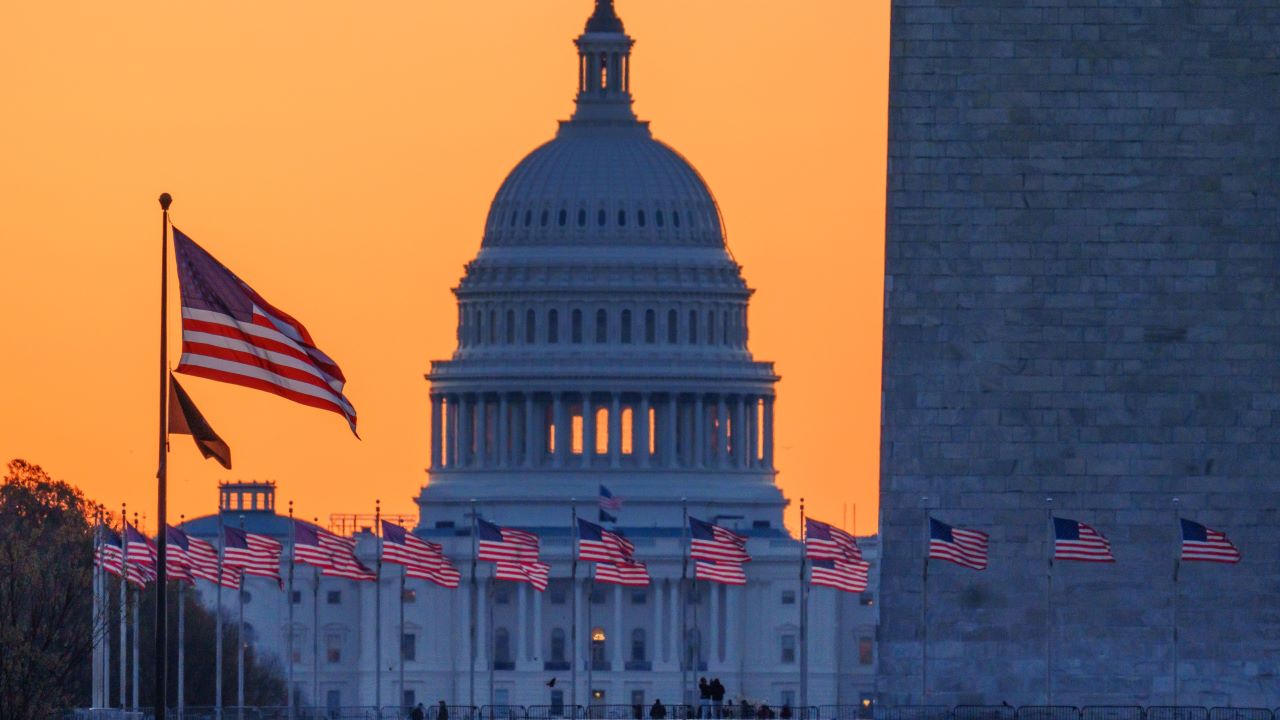
Barrons Roundtable panelists analyze the state of the U.S. economy following Operation Epic Fury.
The federal budget deficit topped $1 trillion in the first five months of fiscal year 2026, as the U.S. government is on pace to record another massive deficit.
The nonpartisan Congressional Budget Office (CBO) reported that the federal budget deficit was just over $1 trillion through five months of fiscal year 2026, with the size of the deficit down $142 billion or 14% when compared with the same period in fiscal year 2025.
CBO noted that federal spending was just over $3.1 trillion in the first five months of fiscal year 2026, up $64 billion, or 2%, from the same period a year ago. Federal tax revenue collected jumped $206 billion, or 11%, when compared with last year and totaled nearly $2.1 trillion.
The rise in federal tax receipts was attributed to higher collections from individual income taxes and payroll taxes, with CBO noting those accounted for about two-thirds of the increase, while higher tariff rates also increased the amount of import taxes collected.
US DEBT SET TO CRUSH WORLD WAR II RECORD AS ANNUAL DEFICITS EXPLODE TO $3T WITHIN DECADE
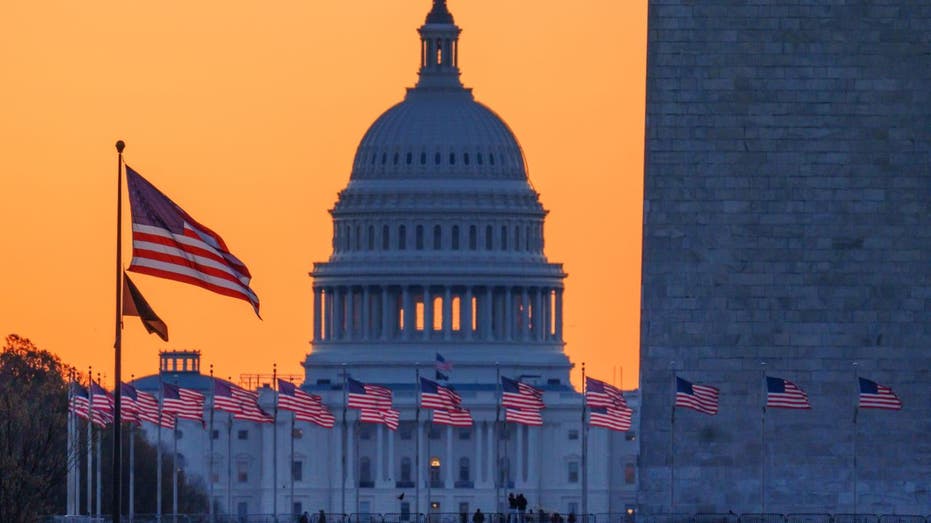
The federal budget deficit topped $1 trillion in the first five months of fiscal year 2026, down slightly compared with last year. (J. David Ake/Getty Images / Getty Images)
CBO said that from October through February, individual income tax collections were up $99 billion, or 10%, when compared with the same period in the prior fiscal year, while payroll tax collections rose $34 billion, or 5%.
Customs duties, a category which includes tariffs, totaled $144 billion in the first five months of fiscal year 2026 – up $109 billion, or 308%, from the same period in the prior fiscal year.
Some of those tariffs collected may ultimately be refunded to the businesses and individuals who paid them after the U.S. Supreme Court ruled that the Trump administration’s tariffs imposed under the International Economic Emergency Powers Act (IEEPA) were unconstitutional.
Tariff refunds would lower federal tax revenue and thereby increase the deficit, and while the Trump administration has moved to implement replacement tariffs, those may face similar legal challenges and collections could face delays.
WHAT ARE THE BIGGEST BUDGET DEFICITS IN US HISTORY?
Corporate income tax collections were down $33 billion, or 23%, in the first five months of the year due to provisions in the 2025 reconciliation bill that increased the tax deductions available to companies making certain eligible investments.
Federal spending increased the most for Social Security and Medicare, the mandatory spending programs that have seen enrollment surge in recent years amid the aging of America’s population.
Spending on Social Security totaled $676 billion in the first five months of fiscal year 2026 – an increase of $48 billion, or 8%, from the same period last year. CBO noted the annual cost-of-living adjustment boosted benefit amounts, while the Social Security Fairness Act’s expansion of benefits eligibility to previously non-covered professions accounted for about $7 billion of the increase.
Medicare spending jumped $34 billion, or 9%, from a year ago to a total of $475 billion in that period, which CBO attributed to higher enrollment and increased payment rates for services.
SOCIAL SECURITY’S MAIN TRUST FUND FACES DEPLETION IN 2032, TRIGGERING BENEFIT CUTS
Another significant mandatory program saw a similar rise in spending as outlays on Medicaid also increased by $22 billion, a rise of 8%, to a total of $285 billion in the five-month period.
Interest expenses on the national debt also saw a notable jump, with net interest costs totaling $433 billion in the first five months of the fiscal year. That’s a jump of $31 billion, or 8%, from the previous year and was due to the larger national debt and higher interest rates.
While spending on the Department of War rose $14 billion, or 4%, and the Department of Veterans Affairs increased $11 billion, or 7%, in the first five months of fiscal year 2026 compared with last year, several agencies saw notable decreases.
Spending by the Environmental Protection Agency (EPA) decreased by $20 billion, or 74%, though that decrease was due to a $20 billion expenditure in November and December 2024 under a clean energy grant program and no comparable outlay was made in 2025.
GET FOX BUSINESS ON THE GO BY CLICKING HERE
A similar dynamic played out with the Department of Homeland Security, which saw spending decline by $12 billion, or 23%, due to a relative decrease in spending on disasters when compared with the prior year despite being partially offset by higher spending on immigration enforcement.

The Value Investor has a Master of Science with specialization in financial markets and a decade of experience tracking companies via catalytic company events.
As the leader of the investing group Value In Corporate Events they provide members with opportunities to capitalize on IPOs, mergers & acquisitions, earnings reports and changes in corporate capital allocation. Coverage includes 10 major events a month with an eye towards finding the best opportunities. Learn more.
Analyst’s Disclosure: I/we have no stock, option or similar derivative position in any of the companies mentioned, and no plans to initiate any such positions within the next 72 hours. I wrote this article myself, and it expresses my own opinions. I am not receiving compensation for it (other than from Seeking Alpha). I have no business relationship with any company whose stock is mentioned in this article.
Seeking Alpha’s Disclosure: Past performance is no guarantee of future results. No recommendation or advice is being given as to whether any investment is suitable for a particular investor. Any views or opinions expressed above may not reflect those of Seeking Alpha as a whole. Seeking Alpha is not a licensed securities dealer, broker or US investment adviser or investment bank. Our analysts are third party authors that include both professional investors and individual investors who may not be licensed or certified by any institute or regulatory body.

ETF Flows Signal Early Capital Rotation

10 Most Undeniable Best Director Oscar Wins, Ranked

Oleksandr Usyk names the heavyweight fight he wants after Rico Verhoeven

Smart energy pays enters the US market, targeting scalable financial infrastructure

Why Israel is blocking foreign journalists from entering

Bitcoin: We’re Entering The Most Dangerous Phase

Remove Financial Obstacles | Vasthu Narayanan #shorts #shortvideo #cosmoview

Bitcoin Daily: Historic Day for BTC + Critical TA Levels

TRUMP AND REPUBLICANS LIED ABOUT CRYPTO CBDC! EPIC XRP VS ADA DRAMA #xrp #ada #crypto #trump
-

 Politics7 days ago
Alan Cumming Brands Baftas Ceremony A ‘Triggering S**tshow’
-
Business3 days ago
Form 8K Entergy Mississippi LLC For: 6 March
-

 Fashion3 days ago
Weekend Open Thread: Ann Taylor
-

 News Videos13 hours ago
10th Algebra | Financial Planning | Question Bank Solution | Board Exam 2026
-

 Crypto World9 hours ago
Paradigm, a16z, Winklevoss Capital, Balaji Srinivasan among investors in ZODL
-

 Tech5 days ago
Bitwarden adds support for passkey login on Windows 11
-
 Sports4 days ago
499 runs and 34 sixes later, India beat England to enter T20 World Cup final | Cricket News
-

 Sports2 days ago
Three share 2-shot lead entering final round in Hong Kong
-

 Sports2 days ago
Braveheart Lakshya downs Lai in epic battle to enter All England Open final | Other Sports News
-

 Business6 days ago
Guthrie Disappearance Enters Fifth Week as Family Visits Memorial
-

 NewsBeat4 days ago
Piccadilly Circus just unveiled ‘London’s newest tourist attraction’ and it only costs 80p to enter
-

 Politics4 days ago
Top Mamdani aide takes progressive project to the UK
-

 Business1 day ago
Search for Nancy Guthrie Enters 37th Day as FBI Probes Wi-Fi Jammer Theory
-

 Entertainment3 days ago
Hailey Bieber Poses For Sexy Selfies In New Luscious Lip Thirst Traps
-
 Sports7 days ago
Jack Grealish posts new injury update as Man City star enters crucial period
-

 Tech11 hours ago
Despite challenges, Ireland sixth in EU for board gender diversity
-

 Crypto World5 days ago
New Crypto Mutuum Finance (MUTM) Reports V1 Protocol Progress as Roadmap Enters Phase 3
-

 Tech5 days ago
ACIP To Discuss COVID ‘Vaccine Injuries’ Next Month, Despite That Not Being In Its Purview
-
Entertainment5 days ago
Harry Styles Has ‘Struggled’ to Discuss Liam Payne’s Death
-

 Business5 hours ago
Search Enters 39th Day with FBI Tip Line Developments and No Major Breakthroughs