Connect with us
DAPA Banner
DAPA Coin
DAPA
COIN PAYMENT ASSET
PRIVACY · BLOCKDAG · HOMOMORPHIC ENCRYPTION · RUST
ElGamal Encrypted MINE DAPA
🚫 GENESIS SOLD OUT
DAPAPAY COMING

Business

Vivakor Stock Soars 145% as New Physical Crude Oil Trading Deals Add $289 Million in Annual Revenue

Published

on

A satellite image of the Strait of Hormuz
Vivakor Stock Soars 145% as New Physical Crude Oil Trading
Vivakor Stock Soars 145% as New Physical Crude Oil Trading Deals Add $289 Million in Annual Revenue

Shares of Vivakor surged 145.16%, or $2.5401, to $4.2701 Tuesday afternoon, as the Dallas-based crude oil transportation and marketing company announced a significant expansion of its commodities trading platform tied to new physical crude oil purchase and sale agreements.

Vivakor said its trading subsidiary, Vivakor Supply & Trading, executed four recurring physical crude oil purchase and sale transactions with two commercial counterparties, according to a company announcement. The new contracts run from August 1, 2026, through July 31, 2027, with month-to-month extensions available after that initial term, and cover the Enterprise Cushing and Enterprise Midland markets, two major U.S. crude oil trading hubs.

A significant expansion in marketed volumes

The new agreements increase Vivakor’s total marketed crude volumes to 300,000 barrels per month, or 3.6 million barrels annually, and are expected to support approximately $24.1 million in monthly commercial activity, translating to roughly $289.2 million on an annualized basis, based on current market pricing. With these additions, Vivakor now maintains recurring commercial trading programs totaling approximately $709 million in annualized activity and 8.1 million barrels of annual marketed volume across its broader trading operations.

The company noted that while the new deals substantially expand its total marketed trading volumes and commercial activity, Vivakor earns only a small percentage of the total contract value as gross profit, reflecting the generally thin margins typical of physical crude oil marketing and trading operations.

Advertisement

Extreme volatility following a recent reverse stock split

Tuesday’s dramatic price swing comes amid an especially turbulent period for Vivakor’s stock. Shares fell sharply late last week following a one-for-20 reverse stock split completed by the company, a corporate action commonly used by companies trading at very low share prices to boost their nominal stock price and maintain compliance with stock exchange listing requirements.

Vivakor’s stock has experienced extraordinary volatility even by the standards of small, thinly traded companies. According to Robinhood, shares traded between a low of $1.60 and a high of $7.47 on Tuesday alone, before settling well below the day’s peak. Trading volume reached approximately 31.54 million shares, dramatically above the stock’s daily average volume of roughly 1.04 million shares, reflecting intense trading activity surrounding Tuesday’s announcement.

A stock under significant pressure this year

Advertisement

Despite Tuesday’s sharp rally, Vivakor’s shares remain down significantly for the year overall. According to Simply Wall St, the stock had fallen approximately 83.6% year-to-date prior to recent trading, reflecting a period of substantial pressure on the company’s valuation heading into this year’s second half.

That earlier weakness had also raised concerns about Vivakor’s continued listing status on the Nasdaq exchange. According to Simply Wall St, the Nasdaq Hearings Panel granted the company’s request for continued listing on the Nasdaq Stock Market in March, contingent on Vivakor regaining compliance with Nasdaq’s $1.00 minimum bid price requirement by April 30. Under Nasdaq’s rules, the company’s closing bid price needed to remain at or above $1.00 for ten consecutive trading days to satisfy that requirement. Following any confirmed reinstatement, Vivakor would be placed under a one-year mandatory panel monitoring period in accordance with standard Nasdaq compliance procedures.

A broader restructuring of the company’s asset base

Beyond the new trading agreements, Vivakor has also been working to reshape its broader business portfolio. The company and Olenox Industries recently amended a letter of intent covering the sale of Vivakor’s CPE Gathering MidCon subsidiary and related Oklahoma midstream assets, in a transaction valued at approximately $36 million, with a revised target closing date of July 31, 2026. Those assets include crude oil gathering, transportation, terminaling and pipeline connectivity infrastructure within the STACK region of Oklahoma, and completing the sale would materially reshape Vivakor’s overall midstream business footprint.

Advertisement

About Vivakor’s core operations

Vivakor operates as an integrated provider of crude oil transportation, terminaling, storage, reuse and remediation services, according to CNBC. The company’s operations are organized across three primary segments: Crude Oil Transportation, which includes trucking and pipeline operations along with a crude oil gathering and shuttle system; Terminaling and Storage Facilities, encompassing ten crude oil pipeline injection truck stations and two major terminaling facilities; and Marketing and Trading, which handles the purchase, sale and distribution of crude oil, condensate and related petroleum products.

A history of volatile trading activity

Vivakor’s stock has a documented history of sharp price swings tied to company-specific news, including a prior crude oil transaction announcement that triggered an 10.92% single-day decline, according to StockTitan, illustrating how sensitive the thinly traded stock remains to individual corporate announcements, even those framed as positive business developments.

Advertisement

With Tuesday’s new crude oil trading agreements set to begin generating revenue starting August 1, investors are likely to continue closely watching Vivakor’s execution on both its expanded trading platform and its pending Oklahoma asset sale to Olenox Industries, expected to close by the end of this month. Given the stock’s history of extreme volatility, particularly in the aftermath of its recent reverse stock split, Vivakor shares are likely to remain a closely watched, high-risk name among investors tracking smaller energy-sector companies through the remainder of the summer.

Continue Reading
Click to comment

You must be logged in to post a comment Login

Leave a Reply

Business

What Actually Works (Not Just Luck)

Published

on

What Actually Works (Not Just Luck)

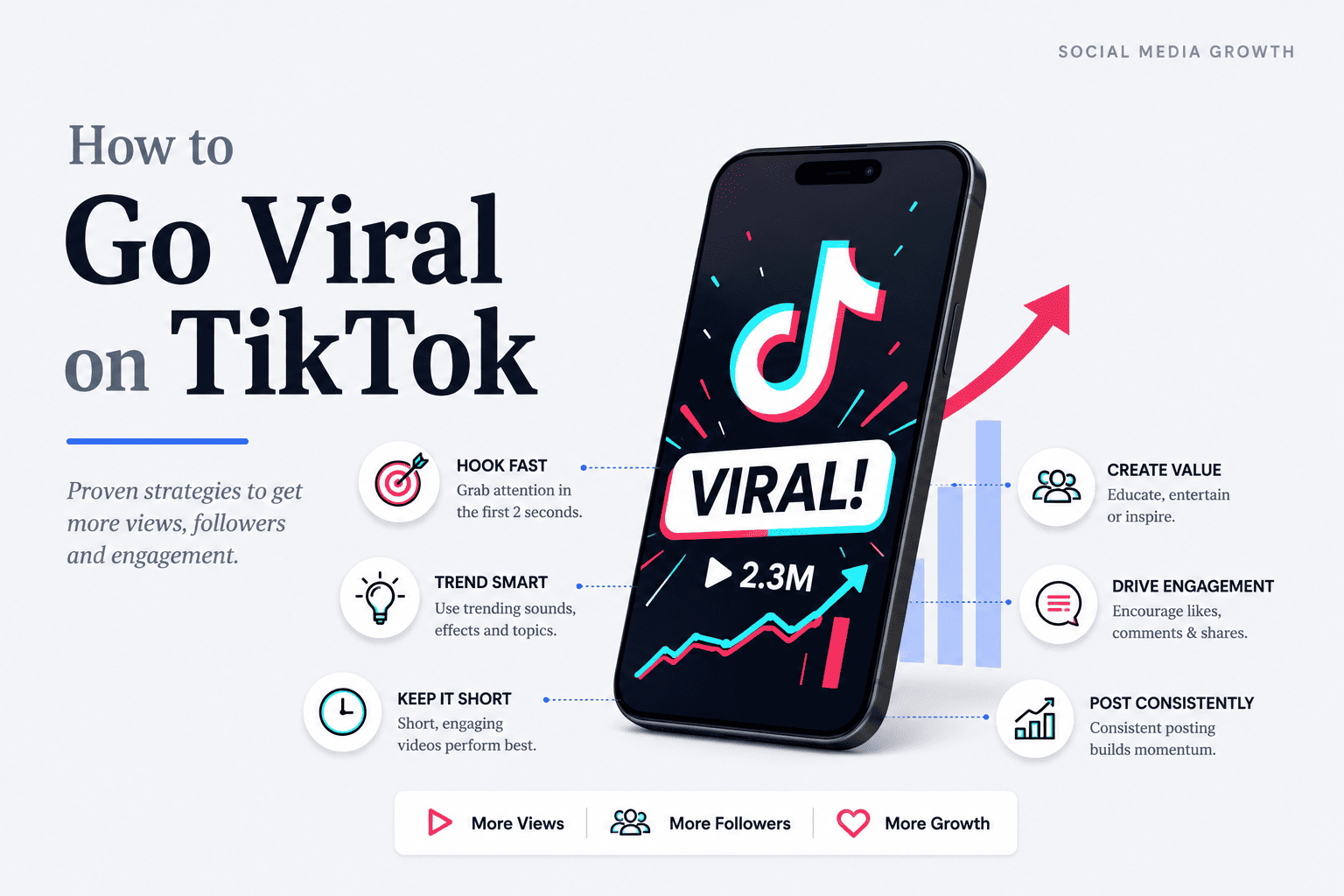
I once posted a video at what three different “best time to post” articles swore was the golden hour, used a trending sound, added a caption I was genuinely proud of and watched it die at 340 views. Meanwhile, a video I filmed in one take because I was running late hit 60,000. There was no lesson in that except the one nobody wants to hear: virality isn’t a vibe, it’s a scorecard, and I hadn’t been reading mine.

So here’s the actual scorecard TikTok is using in 2026:

  • Your video gets tested with your existing followers before anyone else sees it
  • You now need roughly a 70% completion rate to break out, up from 50% in 2024
  • Shares carry more algorithmic weight than likes
  • You have about three seconds to earn the rest of the watch
  • Video length is flexible, retention matters more than duration
  • TikTok increasingly functions like a search engine, not just a feed
  • Follower count isn’t a direct ranking factor, but consistency compounds over time

None of that is luck. Here’s what each one actually means for the next video you post.

Wait : Does TikTok Really Show My Video to My Followers First?

Yes, and this is the single biggest shift in how the algorithm behaves this year. When you publish, TikTok now tests the video with a small sample of your own followers first, typically a few hundred people, before deciding whether it’s worth pushing to your For You Page [FYP, TikTok’s main recommendation feed] audience. If that initial group engages, the video graduates to wider testing pools. If they scroll past it, the video’s reach quietly caps out.

The practical upshot: your existing audience’s engagement habits now directly gatekeep your next video’s shot at going wide. Replying to comments in the first hour, and posting at times your specific followers are actually online, matters more than it used to.

Advertisement

What Completion Rate Do You Actually Need?

Completion rate [the percentage of viewers who watch a video all the way to the end] is the metric doing the most damage to creators who haven’t adjusted their strategy. The bar has risen from roughly 50% in 2024 to around 70% now, meaning a video padded with a slow intro or a meandering middle gets penalized far more harshly than it would have two years ago.

Rewatch rate adds another layer on top of that. A viewer who watches your video three times is a stronger signal to the algorithm than three different viewers each watching once – TikTok reads that as content strong enough to revisit, and a rewatch rate above 15–20% is generally considered a solid boost. Practically, that means loops, punchlines that land on replay, or information dense enough that people need a second pass all outperform content that’s “watchable once and done.”

How Long Should Your Video Actually Be?

There’s no single right answer here, and most advice oversimplifies it. TikTok’s own default recommendation sits around 9–15 seconds, and short videos in the 15–30 second range tend to post the highest completion rates simply because there’s less runway to lose someone. But longer formats – a minute, even several minutes – can rack up more total watch time if the hook is strong enough and the pacing never sags, because total watch time and rewatch behavior matter alongside completion percentage.

The honest rule: match the length to how much genuinely engaging content you have, not to a template. A tight 15-second video beats a padded 45-second one every time; a genuinely gripping 90-second story beats a rushed 15-second version of the same idea.

Advertisement

Why Do the First Three Seconds Matter So Much?

Because that’s roughly how long a viewer takes to decide whether to keep watching or scroll on, and the data backs this up hard – a majority of top-performing videos deliver their core message within the first three seconds, not after a slow build. If your video opens with a logo animation, a “hey guys” intro, or any kind of warm-up, you’re burning the exact window that determines whether the algorithm’s test audience sticks around long enough to count as a good sign.

A quick way to fix a weak hook:

  1. Write your script backward : start from the payoff or punchline and work out what the fastest possible path to it looks like.
  2. Cut your current opening line entirely and see if the video still makes sense. If it does, you didn’t need it.
  3. Say or show the most interesting part of the video in the first sentence, then explain how you got there.
  4. Watch the first three seconds with the sound off : if it’s not visually arresting on its own, it needs work.

Do Likes Still Matter, or Is It All About Shares Now?

Shares have overtaken likes as the stronger algorithmic signal, and the logic makes sense from TikTok’s side: a like keeps a viewer on the platform, but a share brings in someone new. Content that prompts a “you need to see this” reaction – genuinely useful information, relatable frustration, or mildly controversial takes people want to weigh in on – tends to outperform content that’s simply well-made.

A few tactics that reliably lift share rate: explicitly say “send this to someone who-” when it fits naturally, package information densely enough that saving it feels useful, and don’t be afraid of a take with a little edge to it. Safe, agreeable content is easy to like and forget; content with a point of view is what gets forwarded.

Is TikTok Basically a Search Engine Now?

Increasingly, yes. TikTok has been leaning harder into search-style discovery, and its algorithm now reads the keywords in your caption, the words you actually say out loud (auto-transcribed), and any on-screen text to figure out which niche searches your video should surface for, not just which interests it might match on the FYP.

Advertisement

How to optimize for this before you post:

  1. Type your target topic into TikTok’s own search bar and see what related searches and existing videos come up : that’s your keyword research.
  2. Say your main keyword phrase out loud somewhere in the video, since the algorithm reads spoken audio.
  3. Add on-screen text that repeats the core topic, not just decorative captions.
  4. Use 3–5 hashtags that mix one or two broad tags (#fyp, #viral) with two or three specific to your exact topic : hashtags now support your SEO rather than driving discovery on their own.

What Content Formats Are Actually Performing Right Now?

Trending sounds haven’t disappeared, but using one exactly as-is is increasingly a missed opportunity – original voiceovers, or a trending audio with your own twist layered on top, tend to stand out precisely because the algorithm (and viewers) have grown numb to identical use of the same clip. Story-based content is also having a moment in longer formats: a well-paced narrative with a clear beginning, tension, and payoff can sustain the 60–180 second range far better than a straightforward tips list can.

The common thread across everything performing well right now: specificity. “Here’s a marketing tip” underperforms “here’s the exact caption structure that got my last video 2 million views” – the second version promises something the algorithm can measure people staying for.

What Kills Your Reach Before It Even Starts?

A few habits quietly cap videos that otherwise had a real shot:

  • Padding runtime to hit a “recommended” length. If your idea is finished at 12 seconds, stretching it to 30 just to match a template tanks your completion rate.
  • Recycling a trending sound with zero twist. The algorithm and viewers have both seen it a thousand times already; identical reuse rarely earns the same distribution the original did.
  • Posting on autopilot without checking analytics. If you’re not comparing completion and rewatch rates across your last several posts, you’re guessing instead of iterating.
  • Burying the hook under a slow intro. Even a well-made video loses its testing window if the first three seconds don’t earn the next ten.
  • Hashtag stuffing instead of targeting. Ten generic tags dilute the signal the algorithm needs to categorize your video correctly; three to five precise ones do more work.

Do You Need a Following to Go Viral?

Officially, no. TikTok has confirmed follower count isn’t a direct ranking factor, and plenty of zero-follower accounts break out on a single video that performs well with its test audience. Small businesses posting their very first video have gained tens of thousands of followers overnight this way, and some of the platform’s biggest all-time hits came from accounts with no prior track record at all.

That said, the follower-first testing model does mean an engaged, even modest, existing audience gives your video a better initial testing pool to clear before it’s judged against strangers. Zero followers doesn’t block virality, it just means you’re relying entirely on the content itself to win over a cold audience on the first try.

Advertisement

Putting It Together: A Pre-Post Checklist

  1. Confirm your hook delivers the payoff (or the promise of one) within the first three seconds.
  2. Trim anything that doesn’t earn its place : every extra second is a chance to lose completion rate.
  3. Say your target keyword out loud and reflect it in on-screen text.
  4. Add 3–5 hashtags mixing broad and niche.
  5. Post when your actual followers are active, not a generic “best time” from an article.
  6. Reply to comments within the first hour : you’re still inside the follower-testing window.
  7. Check completion rate and rewatch rate in your analytics 24–48 hours later, and let that data, not guesswork decide what you post next.

Going viral was never really about luck. It’s about clearing a specific, measurable bar TikTok sets for you every single time you hit post and now you know exactly where that bar sits. Once the views start coming in consistently, that’s usually the point worth asking a different question: how do you actually turn that reach into income? That’s a whole guide on its own.

Continue Reading

Business

Constellation Brands (STZ): The Earnings Floor Is Holding, But Beer Demand Is Not Yet Back

Published

on

Constellation Brands (STZ): The Earnings Floor Is Holding, But Beer Demand Is Not Yet Back

This article was written by

I’m a passionate investor with a strong foundation in fundamental analysis and a keen eye for identifying undervalued companies with long-term growth potential. My investment approach is a blend of value investing principles and a focus on long-term growth. I believe in buying quality companies at a discount to their intrinsic value and holding them for the long haul, allowing them to compound their earnings and shareholder returns.

Analyst’s Disclosure: I/we have no stock, option or similar derivative position in any of the companies mentioned, and no plans to initiate any such positions within the next 72 hours. I wrote this article myself, and it expresses my own opinions. I am not receiving compensation for it (other than from Seeking Alpha). I have no business relationship with any company whose stock is mentioned in this article.

Seeking Alpha’s Disclosure: Past performance is no guarantee of future results. No recommendation or advice is being given as to whether any investment is suitable for a particular investor. Any views or opinions expressed above may not reflect those of Seeking Alpha as a whole. Seeking Alpha is not a licensed securities dealer, broker or US investment adviser or investment bank. Our analysts are third party authors that include both professional investors and individual investors who may not be licensed or certified by any institute or regulatory body.

Advertisement
Continue Reading

Business

Sebi directs depositories to freeze promoter holdings during buyback period, new rules explained

Published

on

Sebi directs depositories to freeze promoter holdings during buyback period, new rules explained
Mumbai: The Securities and Exchange Board of India(Sebi) has asked depositories to freeze promoter and promoter group holdings at the security level during the buyback period, while allowing them to participate in tender offers and invoke pre-existing pledges.

Under the new rules, promoter holdings will remain frozen from the date the company’s board or shareholders approve a buyback until the offer closes.

The regulator, however, clarified that the restriction will not prevent promoters from tendering their shares in buybacks undertaken through the tender offer route.
It also allowed the invocation of encumbrances that were created before the commencement of the buyback period. Sebi has directed depositories to put in place the operational systems and issue detailed implementation guidelines before August 1.

Continue Reading

Business

How to Choose the Right SEO Agency in the UK for Long-Term Growth

Published

on

Thanks to the rise of AI, it’s getting easier to ask questions about your business data using your own words.

Search engine optimisation has become one of the most important long-term marketing investments for businesses. A well-executed SEO strategy increases visibility, attracts qualified traffic and generates leads without relying solely on paid advertising. However, achieving these outcomes depends largely on selecting the right agency.

The UK has thousands of SEO providers, each offering different services, pricing models and approaches. Understanding what separates a strategic partner from a service provider helps businesses make better decisions and avoid costly mistakes.

Start with Business Objectives

Every SEO campaign should begin with clear business goals.

Some organisations want to generate more enquiries. Others focus on increasing eCommerce sales, expanding into new markets or improving brand visibility. These objectives influence the type of SEO strategy an agency should recommend.

Before speaking with an agency, define measurable outcomes such as:

Advertisement
  • Increasing qualified organic traffic
  • Growing online enquiries
  • Improving conversions from search
  • Expanding visibility for specific services
  • Building long-term brand authority

An agency should understand these objectives before recommending tactics.

Evaluate Their Approach, Not Their Promises

SEO requires consistent effort over time. Agencies that promise guaranteed rankings or immediate results often create unrealistic expectations.

Instead, ask prospective agencies how they approach:

  • Technical website improvements
  • Keyword research
  • Content strategy
  • Link acquisition
  • Performance reporting
  • Ongoing optimisation

A clear methodology demonstrates experience and provides confidence that work is based on proven processes rather than short-term tactics.

Look Beyond Keyword Rankings

Ranking for keywords is important, but rankings alone do not guarantee business growth.

An effective SEO campaign should improve metrics that directly support commercial objectives, including:

Advertisement
  • Qualified organic traffic
  • Conversion rates
  • Lead generation
  • Revenue from organic search
  • Visibility across important service categories

Review Their Technical Expertise

Technical SEO forms the foundation of every successful campaign.

Without proper indexing, crawlability and website performance, even excellent content can struggle to rank.

Ask whether the agency regularly evaluates:

  • Website speed
  • Core Web Vitals
  • Mobile usability
  • Crawl errors
  • XML sitemaps
  • Canonicalisation
  • Structured data
  • Internal linking

Strong technical capabilities allow content and authority-building efforts to perform more effectively.

Understand Their Content Strategy

Content should support customer decision-making rather than simply target keywords.

An experienced agency develops content that answers relevant questions, demonstrates expertise and supports commercial pages.

Advertisement

A comprehensive strategy may include:

  • Service pages
  • Industry guides
  • Educational resources
  • Comparison articles
  • Frequently asked questions
  • Case studies

Each piece of content should contribute to broader topical authority instead of existing in isolation.

Ask About Authority Building

Search engines evaluate how other websites reference a business.

Authority is developed through consistent recognition from reputable sources.

A professional SEO agency should explain how it approaches:

Advertisement
  • Digital PR
  • Editorial backlinks
  • Industry publications
  • Business citations
  • Partner collaborations
  • Content promotion

Avoid agencies that focus exclusively on acquiring large numbers of low-quality links.

Reporting Should Be Transparent

Regular reporting allows businesses to understand the value of ongoing SEO investment.

Useful reports explain:

  • Work completed
  • Website improvements
  • Organic traffic trends
  • Keyword visibility
  • Conversion performance
  • Future priorities

Reports should provide context rather than simply presenting data.

Businesses should understand why performance changes and how future activities will contribute to continued growth.

Experience Across Different Industries Matters

Every industry has different search behaviour, competition and customer expectations.

Advertisement

Agencies that have worked across multiple sectors often adapt strategies more effectively because they understand different buying journeys and content requirements.

When reviewing previous work, look for evidence of:

  • Problem-solving
  • Long-term growth
  • Measurable outcomes
  • Strategic thinking
  • Adaptability

Relevant experience is often more valuable than the number of years an agency has been operating.

Communication Is an Important Indicator

SEO campaigns involve continuous collaboration.

An agency should communicate clearly, explain technical concepts in straightforward language and provide realistic expectations.

Advertisement

Good communication helps businesses:

  • Understand recommendations
  • Prioritise activities
  • Track progress
  • Make informed decisions

The best partnerships are built on transparency rather than complexity.

Think Beyond How Search Works Today

Search behaviour continues to evolve.

Customers now use traditional search engines alongside AI assistants and conversational search platforms to research products and services.

Businesses should work with agencies that recognise these changes and adapt their strategies accordingly. Modern optimisation increasingly combines technical SEO, authoritative content and broader search visibility to support long-term growth.

Advertisement

Businesses evaluating providers can learn more about working with a professional SEO agency in the UK that combines search strategy, technical optimisation and modern search discovery into a unified approach.

Final Thoughts

Choosing an SEO agency should never be based on pricing alone.

The right partner understands business objectives, follows a structured methodology, communicates openly and focuses on measurable commercial outcomes.

By evaluating technical expertise, content strategy, authority building and reporting standards, businesses can identify an agency capable of delivering sustainable organic growth rather than short-term improvements.

Advertisement

Continue Reading

Business

Airbus SE (EADSY) Discusses Business Updates and Outlook Across Key Segments Transcript

Published

on

OneWater Marine Inc. (ONEW) Q1 2026 Earnings Call Transcript