


Connect with us
DAPA Banner
DAPA Coin
DAPA
COIN PAYMENT ASSET
PRIVACY · BLOCKDAG · HOMOMORPHIC ENCRYPTION · RUST
ElGamal Encrypted MINE DAPA
🚫 GENESIS SOLD OUT
DAPAPAY COMING

Business

WA secures 2027, 2029 AFL Origin games

Published

on

WA secures 2027, 2029 AFL Origin games

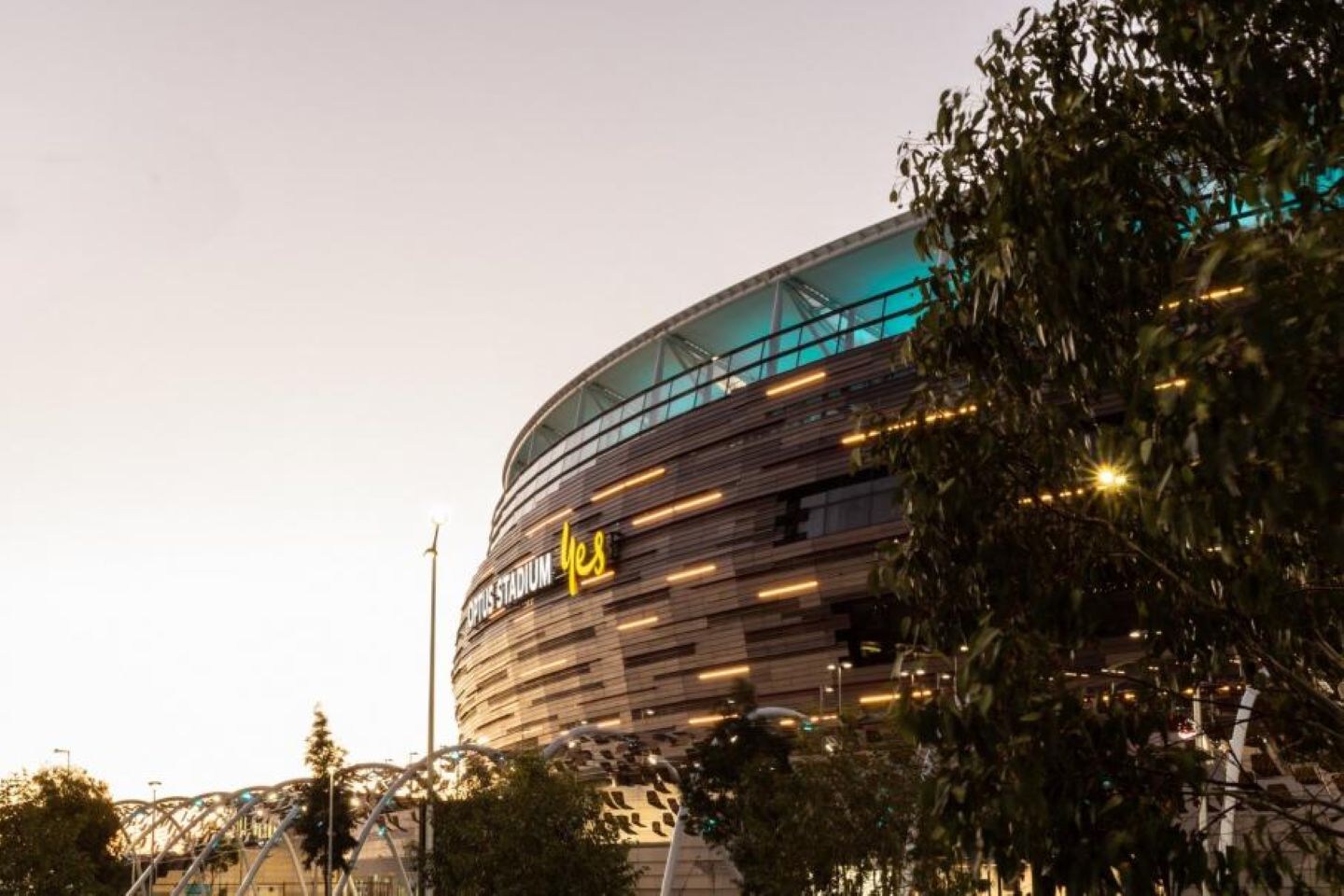
WA will host AFL State of Origin matches at Optus Stadium in 2027 and 2029 against South Australia and Victoria respectively, although the cost of securing both matches is unclear.

Continue Reading
Click to comment

You must be logged in to post a comment Login

Leave a Reply

Business

Tata Chemicals Q1 Results: Profit plunges 81% to Rs 60 crore on higher expenses

Published

on

Tata Chemicals Q1 Results: Profit plunges 81% to Rs 60 crore on higher expenses
Tata Chemicals on Monday reported an 81 per cent decline in consolidated net profit to Rs 60 crore for the quarter ended June on higher expenses.

Its net profit stood at Rs 316 crore in the year-ago period.

The company’s total income rose to Rs 4,311 crore in the first quarter of this fiscal from Rs 3,815 crore in the corresponding period of the preceding year, according to a regulatory filing.

Tata Chemicals, which is part of business conglomerate Tata Group, is a leading supplier to the glass, detergent, industrial and chemical sectors.

Advertisement

The company has a strong presence in the crop protection business through its subsidiary company, Rallis India.


Tata Chemicals has R&D facilities in Pune and Bangalore.

Continue Reading

Business

North Wales eco-friendly theme park under new ownership

Published

on

Business Live

An eco-friendly theme park in North Wales is under new ownership.

GreenWood Family Park at Y Felinheli has been acquired by the Wood Family Group from Continuum Attractions. The park, which attracts around 140,000 visitors a year, was put up for sale with a £1.25m price tag in April. The value of the deal has not been disclosed.

The park, which is set in 34 acres, has more than 15 rides and attractions, including a solar powered water slide and a people powered rollercoaster.

GreenWood Family Park in North Wales

GreenWood Family Park in North Wales

Andrew Wood, director of the Wood Family Group, which acquired the park in 2017, said: “GreenWood is an incredible park with a proud history and a loyal community of visitors. We feel privileged to become its custodians. Our priority is to honour the park’s heritage, protect the values that have made it so successful and build on those foundations for the future.

Advertisement

“I would like to express our sincere thanks to the previous owners Continuum Attractions and everyone who has helped shape GreenWood over the years. Their passion, dedication and commitment have created a much-loved destination for families. We are honoured to build on that legacy and look forward to taking GreenWood into its next chapter while respecting everything that has made it so special. “.

Andrew Pawson, chief executive of Continuum Attractions, said: “Over the past seven years, it has been a privilege to operate GreenWood and to play a key role in its long-running growth and success. We are incredibly proud of what has been achieved during that time, and especially grateful to the dedicated team whose passion, creativity and hard work have helped make GreenWood such a special place for families.

“We would like to thank everyone who has contributed to the park’s journey during our time as its operator, including our colleagues, partners and the many guests who have enjoyed a visit over the years. We wish the Wood Family Group every success for the future and look forward to seeing GreenWood continue to thrive and create memorable experiences for generations to come.”

The Wood Family Group said it has ambitious long-term plans for GreenWood, including investment in new rides, attractions, play experiences and guest facilities.

Advertisement

A spokesperson added: “As a family-owned business with decades of experience operating a variety of businesses, the Wood Family Group is committed to long-term investment, exceptional customer experiences and supporting the local community. The acquisition reflects the family’s confidence in the future of tourism in North Wales and its desire to see GreenWood continue to thrive.

“Guests can look forward to exciting announcements over the coming months as plans are unveiled for new attractions, events and experiences designed to make every visit even more memorable.”

Legal firm Knights acted for Continuum Attractions on the deal, led by corporate partner Victoria Inness and solicitor Aaron Chaddha.

Ms Inness said: “We are particularly proud to have supported Continuum Attractions on this sale. This was a complex transaction requiring specialist input from lawyers across our corporate, property, commercial, banking, employment, data protection and regulatory teams. The collaborative approach of colleagues from across the business ensured a seamless transaction for all parties.

Advertisement

“Having worked closely with Continuum Attractions for many years, including on its acquisition of Eden Camp Modern History Museum earlier this year, we know how important it was to find an owner who will build on GreenWood’s success and invest in its future.”


Continue Reading

Business

Rogue developer dies when his Mini Coupe hits tree

Published

on

Rogue developer dies when his Mini Coupe hits tree

Corporate rogue Stephen Robert Bruce died on Friday afternoon when the car he was driving hit a tree near Wuraming.

Continue Reading

Business

Modine: Strong Data Center Growth Makes The Valuation Justifiable (NYSE:MOD)

Published

on

Modine: Strong Data Center Growth Makes The Valuation Justifiable (NYSE:MOD)

This article was written by

I’m a passionate investor from the Netherlands with 12 years of stock market experience. My articles usually contain a good overview of important investment criteria. A stock for my portfolio is of interest to me if the company has the following characteristics:1. Companies that are growing in both revenue, earnings and free cash flow.2. Companies that have excellent growth prospects.3. Stocks with favorable valuations.I prefer steadily growing companies with high free cash flow margins, dividend stocks and stocks with generous share repurchase programs.Disclaimer: My articles do not provide financial advice, they reflect my own findings and insights.

Analyst’s Disclosure: I/we have no stock, option or similar derivative position in any of the companies mentioned, and no plans to initiate any such positions within the next 72 hours. I wrote this article myself, and it expresses my own opinions. I am not receiving compensation for it (other than from Seeking Alpha). I have no business relationship with any company whose stock is mentioned in this article.

Seeking Alpha’s Disclosure: Past performance is no guarantee of future results. No recommendation or advice is being given as to whether any investment is suitable for a particular investor. Any views or opinions expressed above may not reflect those of Seeking Alpha as a whole. Seeking Alpha is not a licensed securities dealer, broker or US investment adviser or investment bank. Our analysts are third party authors that include both professional investors and individual investors who may not be licensed or certified by any institute or regulatory body.

Advertisement
Continue Reading

Business

IonQ Shares Jump Nearly 11% Monday as Quantum Computing Stocks Extend Volatile Summer Rally Ahead of Earnings

Published

on

IonQ Shares Jump Nearly 11% Monday as Quantum Computing Stocks

Shares of IonQ Inc. surged more than 10% in Monday morning trading, extending a volatile summer for the quantum computing sector as investors position ahead of the company’s second-quarter earnings report next week.

The stock traded at $36.42, up $3.58, or 10.90%, as of 10:16 a.m. Eastern time, according to real-time NYSE-Nasdaq pricing. The move continues a pattern of sharp swings that has defined IonQ’s trading throughout 2026, a year in which the company has alternated between steep rallies and equally steep pullbacks as investors try to reconcile explosive revenue growth with continued heavy losses.

A Sector Prone to Big Swings

IonQ’s jump comes against a backdrop of persistent volatility across quantum computing stocks. Shares of IonQ had already climbed 3.7% in one recent session as the sector rebounded alongside broader technology markets, with the Nasdaq Composite breaking a three-session losing streak. That earlier rally was not tied to any company-specific news but instead reflected a broader resurgence in quantum computing names, with peers such as Rigetti Computing and Infleqtion posting even larger single-day gains.

Advertisement

Quantum computing stocks as a group tend to be highly sensitive to shifts in overall market risk appetite, since their valuations rest largely on long-term technology potential rather than current profitability. That dynamic has made IonQ, Rigetti, D-Wave Quantum and Quantum Computing Inc. some of the most volatile names on Wall Street this year, prone to double-digit moves in either direction within a single session.

Strong Revenue Growth, But Still Unprofitable

The rally comes as IonQ prepares to report second-quarter results. The company posted a 755% year-over-year revenue increase in the first quarter of 2026, though it remains unprofitable, with its next earnings report due out in early August. That first-quarter performance included record revenue of $64.7 million, an increase of 755% from a year earlier, and prompted management to raise its full-year 2026 revenue guidance to a range of $260 million to $270 million.

The company’s remaining performance obligations, a measure of contracted future business, reached $470 million, up 554% year-over-year, a signal of robust demand even as the company continues to post significant operating losses. IonQ’s first-quarter revenue beat Wall Street consensus targets by roughly 30%, even as the company’s overall market capitalization has fluctuated between roughly $12 billion and $19 billion over the course of the year.

Advertisement

Despite that growth, the stock has struggled to hold its gains for long. IonQ’s revenue surged 755% in the first quarter, yet the stock has lost more than a quarter of its value since the start of the year, with shares down roughly 60% from their 52-week high. Analysts have pointed to a widening gap between the company’s operational momentum and how the market has priced the stock, a tension that is expected to come to a head when second-quarter results are released.

Wall Street Remains Divided but Broadly Bullish

Analyst sentiment on IonQ has remained largely positive even amid the stock’s swings. Wall Street has maintained a Moderate Buy consensus rating on the stock, with an average 12-month price target of $69.88, nearly double where shares were trading before Monday’s jump. Rosenblatt Securities holds the Street’s most bullish call, with a $100 price target and a Buy rating, while Jefferies has set an $85 target. Northland Securities recently raised its target from $55 to $70 while maintaining an Outperform rating, and Wedbush also holds an Outperform rating with a $60 target. Across 17 analysts tracked, the consensus breaks down to 10 Buy ratings, six Hold ratings and one Sell rating.

A separate tally of 12 analysts pegged the average rating for IonQ as “Strong Buy,” with a 12-month price target implying more than 110% upside from recent trading levels.

Advertisement

Earnings on the Horizon

Investor attention is now shifting toward IonQ’s upcoming quarterly disclosure. The company’s second-quarter earnings release is scheduled for August 5, a date investors are treating as a critical test of whether revenue growth can keep pace with the company’s spending trajectory and whether its backlog is converting into cash fast enough to justify its valuation. Some market trackers have also noted that IonQ’s next earnings date falls on August 12, underscoring some disagreement across data providers on the exact reporting date, though most major outlets point to early August.

Adding to the broader market backdrop, the Federal Reserve is scheduled to meet later this week, a factor that tends to weigh heavily on high-growth, high-volatility stocks like IonQ that are sensitive to shifts in interest rate expectations.

A Volatile Year for Quantum Stocks

Advertisement

Monday’s surge is only the latest chapter in a year defined by outsized moves for IonQ. The stock jumped 21.7% in a single session earlier this year after fourth-quarter earnings and 2026 revenue guidance beat forecasts, with full-year 2025 revenue coming in at $130 million and 2026 guidance initially set between $225 million and $245 million. At the time, IonQ’s chief executive drew comparisons between the company’s growth trajectory and Nvidia’s early rise, while the company also announced plans for a 256-qubit system launch and an acquisition of SkyWater Technology.

IonQ, a leading name in trapped-ion quantum computing systems, has seen its stock swing sharply over the past several months, including a 31% gain over a recent 30-day stretch tied to its earnings beat and raised guidance, alongside a 71% gain over a broader quarterly window fueled partly by shareholder approval of the SkyWater acquisition. The company’s cash position, which exceeds $3 billion, has been cited by some analysts as a cushion supporting its continued growth investments despite ongoing losses.

As of Monday’s session, no company-specific announcement had been identified as the direct trigger for the morning’s gain, consistent with a pattern seen throughout the year in which quantum computing stocks have moved in tandem on shifts in broader market sentiment as much as on individual corporate news. Investors are now expected to keep a close watch on trading in IonQ and its quantum-computing peers heading into the company’s next earnings report and the Federal Reserve’s policy meeting later this week.

Advertisement
Continue Reading

Business

Opinion: Labor has its yellowcake and eats it

Published

on

Opinion: Labor has its yellowcake and eats it

OPINION: Uranium sales to India expose the hypocrisy of a state and federal policies.

Continue Reading

Business

US tariffs on Japan boost UK investment appeal

Published

on

US tariffs on Japan boost UK investment appeal

Uncertainty created by the latest round of US tariffs could make the UK a more attractive base for Japanese businesses, according to audit, tax and business advisory firm Blick Rothenberg. The US applied new tariffs under Section 301 of the Trade Act from 24 July, set at 12.5 per cent on imports from Japan.

Yusuke Takanishi, a partner at the firm, said: “Following the reintroduction of US tariffs, the long-standing and stable investment relationship between the UK and Japan may become even more valuable in the years ahead.”

He added: “The new US tariffs apply to many major trading partners, including Japan, under a different legal and policy framework from previous trade measures. This is despite the fact that Japan has worked hard to strengthen economic ties with the United States over recent years. Japanese companies have expanded manufacturing facilities, invested in infrastructure, strengthened supply chains and created jobs across the US.”

Takanishi said: “The latest US measures suggest that the relationship between investment and trade policy may not be as straightforward as businesses would hope. Even where economic cooperation is deep and long-standing, companies may still find themselves exposed to new tariffs introduced through a different policy route.”

UK goods have also been subject to US duties. The US International Trade Commission estimates American buyers paid $1.36bn in tariffs on British exports over four months last year, six times the figure for the same period in 2024.

Advertisement

Agreements set out after a Downing Street summit with Japanese prime minister Sanae Takaichi are expected to deliver more than £18bn in economic gains, including up to £9bn for UK offshore wind farms.

Takanishi said: “Against this backdrop, developments in the UK deserve attention from Japanese businesses. The New Prime Minister Andy Burnham has outlined an agenda focused on re-industrialising Britain, investing in infrastructure, strengthening regional economies and developing a longer-term growth strategy. While details will emerge over time, the direction of travel appears to be towards rebuilding industrial capacity and creating conditions for long-term investment.”

Burnham, who took office on 20 July, was mayor of Greater Manchester, where Japanese investors put almost £118m into the city region in a year.

He added: “For Japanese companies operating in the UK, and for UK businesses with interests in Japan, this creates an interesting contrast. At a time when global trade relationships are becoming more complicated and less predictable, the UK–Japan relationship remains rooted in long-term investment, deep commercial ties and mutual trust. The conversation is therefore moving beyond simple market access. Increasingly, businesses are asking where they can make investment decisions with confidence over a five- or ten-year horizon.”

Advertisement

Takanishi said: “From an accounting, tax and compliance perspective, Japanese businesses should therefore be looking beyond the immediate impact of tariffs. Supply chain structures, transfer pricing policies, customs arrangements, governance frameworks and Environmental, Social, and Governance (ESG)-related compliance all need to be reviewed in light of a more uncertain global environment. In my experience, discussions with management teams today are becoming less about finding the lowest-cost location and more about building resilience and predictability into business models.”

He said Japan’s May trade data had shown an external sector that was improving, but not in a broad-based way, with export volume growth remaining modest and part of the improvement driven by currency effects and pricing rather than underlying demand.

He added: “June’s figures are stronger. Japan’s exports increased by 19.3% year-on-year, supported by semiconductor-related demand and AI investment, while imports rose by 25.4%, driven in part by higher energy costs and the weaker yen. But the current environment should not yet be described as a fully established export-led recovery. Japanese businesses continue to face rising input costs, geopolitical uncertainty and renewed questions around global trade policy.”

The June increases, published in the Ministry of Finance trade statistics, were the fastest for both exports and imports since November 2022.

Advertisement

Takanishi said: “The Bank of Japan’s latest Regional Economic Report broadly supports this balanced view. All nine regions were assessed as either recovering or showing moderate improvement, pointing to continued resilience but not necessarily a rapid acceleration in economic activity.”

The report, published on 9 July, left the Bank’s assessment unchanged for all nine regions.


Amy Ingham

Amy Ingham

Amy Ingham is a reporter at Business Matters, covering UK business news with a focus on breaking news, business policy, late payments and insolvency. She joined the magazine in 2026 after completing the NCTJ Diploma in Journalism at Harlow College’s journalism school. Her recent reporting includes British Steel’s nationalisation and its impact on SME suppliers, the decline in late payments by large firms, and Insolvency Service director disqualifications. Reach her at aingham@cbmeg.co.uk.

Advertisement

Continue Reading

Business

Google Confirms Pixel Phone Price Hikes Across Lineup as Global RAM Costs Surge Sixfold Amid AI Demand

Published

on

Google Confirms Pixel Phone Price Hikes Across Lineup as Global

MOUNTAIN VIEW, Calif. — Google will raise prices across its Pixel smartphone lineup, including upcoming models and some already on the market, as soaring memory costs driven by artificial intelligence demand reshape the economics of consumer devices.

Shakil Barkat, Google’s vice president of devices and services, confirmed the moves in an interview, saying the company has absorbed higher component costs for as long as possible but can no longer fully shield buyers. “The economics have fundamentally shifted and we’re not immune to that,” Barkat said.

He pointed to research from Morgan Stanley showing the cost of 1 gigabyte of RAM has risen from $2.80 last year to $12 in 2026, a roughly sixfold increase. Barkat described the situation as unprecedented, stating there has “never been an increase in memory prices like the world’s going through right now.” The surge stems largely from memory manufacturers redirecting production capacity toward high-bandwidth memory used in AI data centers, tightening supply for consumer electronics.

Price adjustments will apply to the entire Pixel family and will be rolled out dynamically to reflect supply conditions. This includes the forthcoming Pixel 11 series, expected to be unveiled on Aug. 12, as well as in-market devices such as the Pixel 10a. Specific pricing details have not been disclosed and are expected at the launch event.

Advertisement

Leaked information circulating in industry reports suggests the base Pixel 11 could start around $899, about $100 higher than the Pixel 10’s entry price. Some configurations may eliminate the 128-gigabyte storage option in favor of 256 gigabytes as the new baseline. Reports also indicate certain higher-end models could ship with 12 gigabytes of RAM rather than 16 gigabytes, a potential cost-control measure.

Barkat emphasized that Google is not simply passing on higher costs. The company is working to engineer solutions that reduce the memory demands of Android and its app ecosystem so devices can maintain smooth performance with less RAM. “We’re aggressively engineering” approaches to deliver a fluid experience even as hardware constraints tighten, he said.

The memory shortage has already prompted price increases from other major consumer technology companies. Apple, Microsoft, Nintendo and others have adjusted pricing on various products in response to the same supply pressures. For Google, which has positioned Pixel devices as competitive alternatives emphasizing software experience and camera performance at relatively accessible price points, the shift marks a notable change in strategy.

Industry analysts note that the AI-driven reallocation of semiconductor capacity has created one of the most significant component cost pressures in years for smartphones, tablets and other consumer devices. High-bandwidth memory required for training and running large AI models commands premium pricing and has drawn production resources away from standard DRAM used in phones and PCs.

Advertisement

Google’s Made by Google event on Aug. 12 is expected to provide full details on the Pixel 11 series, including exact pricing, specifications and any software optimizations designed to mitigate the impact of lower RAM configurations. The company has historically used software advantages, including multi-year software support and AI features, to differentiate its phones from competitors that often lead in raw hardware specifications.

For existing Pixel owners and prospective buyers, the changes mean higher out-of-pocket costs in the near term. Barkat indicated that promotions, trade-in offers and bundled services such as Google One will remain part of the company’s approach to keeping devices accessible. Exact timing for adjustments to current models like the Pixel 10a has not been specified.

The broader supply chain disruption illustrates how the rapid expansion of AI infrastructure is cascading into everyday consumer products. Memory makers including Samsung, SK Hynix and Micron have prioritized higher-margin AI-related production, leaving less capacity for the more standardized components that power smartphones.

Google’s decision to publicly address the issue ahead of its major hardware launch reflects the scale of the cost pressure. By confirming that adjustments are coming and highlighting engineering efforts to reduce software memory requirements, the company is attempting to manage expectations while signaling it is actively working to limit the long-term impact on users.

Advertisement

Smartphone makers have faced rising costs from multiple directions in recent years, including advanced chip fabrication processes and display technology. The current memory situation stands out for its suddenness and magnitude. A sixfold increase in a core component within roughly a year leaves limited room for manufacturers to absorb the difference without adjusting retail prices.

As the industry adapts, some devices may ship with lower RAM configurations than previous generations while relying more heavily on software efficiency and cloud features. Google’s focus on optimizing Android for reduced memory footprints could influence how other manufacturers approach the challenge.

The Aug. 12 event will clarify how the price changes translate into specific models and what trade-offs, if any, buyers will encounter in storage, memory and other specifications. Until then, the confirmation from Barkat establishes that the Pixel lineup will not be exempt from the industry-wide effects of the memory market shift.

For consumers considering a new Pixel, the landscape has changed. Devices that previously competed aggressively on value will now carry higher starting prices, even as Google works to preserve the software experience that has been a hallmark of the brand. The coming weeks will reveal the precise extent of those adjustments and whether engineering improvements can meaningfully offset the hardware cost realities now facing the entire sector.

Advertisement
Continue Reading

Business

Cracker Barrel CEO to step down

Published

on

Cracker Barrel CEO to step down

Cracker Barrel announced on Monday that CEO Julie Masino will step down, effective Aug. 10, and be replaced by David Deno.

Masino will remain with the company in an advisory capacity until Oct. 9.

Advertisement

“Following a robust and thoughtful search process, we are pleased to welcome David as Cracker Barrel’s next CEO,” independent Chairman of the Cracker Barrel Board, Carl Berquist, said in a statement. “He brings decades of experience across the restaurant and retail industries, with a strong track record of leading businesses through growth and a demonstrated commitment to operational excellence, guest experience, and team member engagement. We are confident David is the right leader to continue building on the Cracker Barrel legacy, drive further positive momentum operationally and financially, and create sustainable value for our shareholders.”

Exterior of Cracker Barrel after new logo and rebranding announcement.

General view of a Cracker Barrel Country Store in Fishkill, NY, Monday, August 25, 2025. (Richard Beetham for Fox News Digital)

This is a breaking news story. Please check back for updates.

Advertisement
Continue Reading

Business

Strikes hit Port of Broome

Published

on

Strikes hit Port of Broome

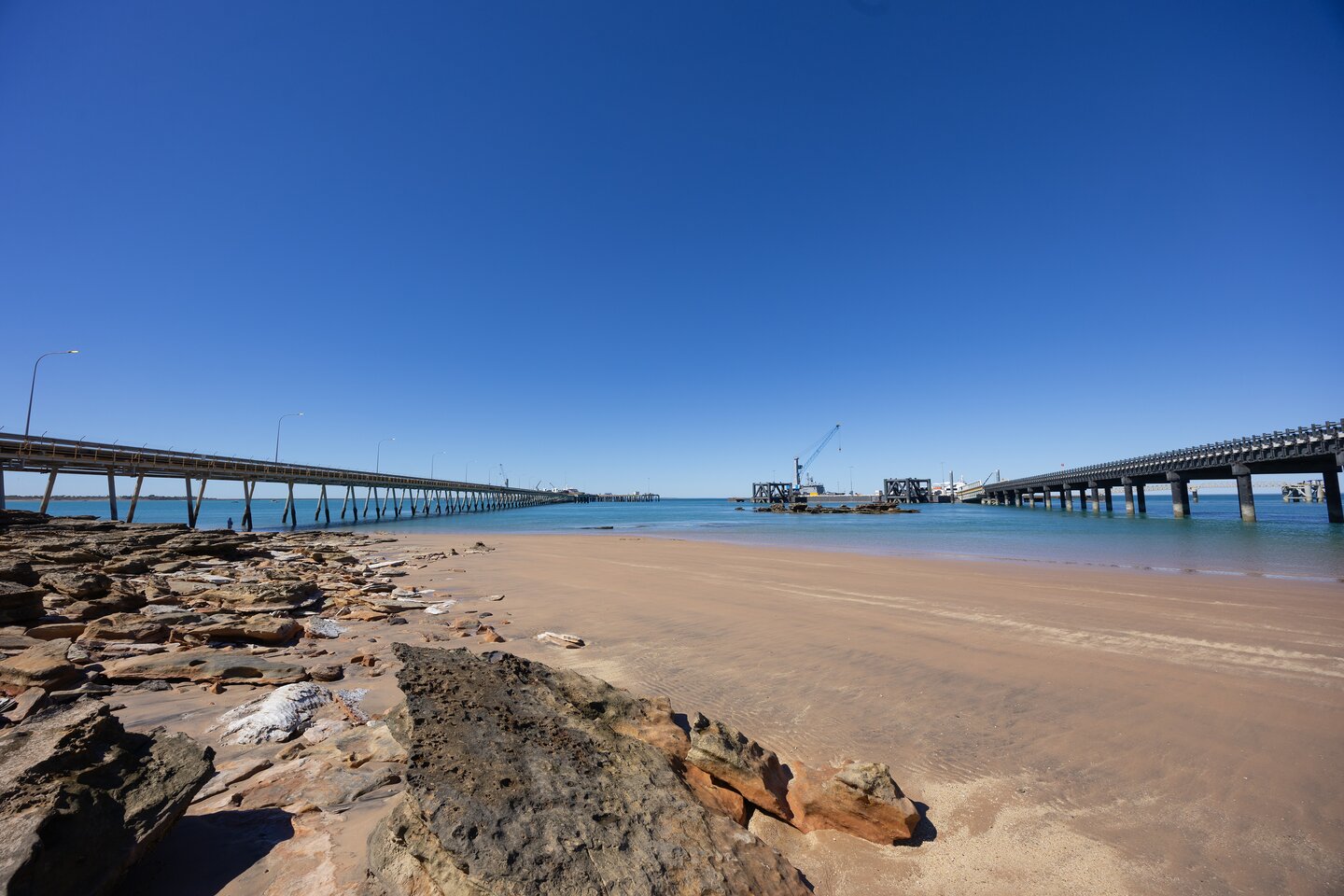
Maritime Union of Australia workers at the Port of Broome have started to strike, as part of negotiations with the Kimberley Port Authority over a new pay deal.

Continue Reading

Trending

Copyright © 2025