
Business
War in Iran highlights poor quality of Chinese air defense system

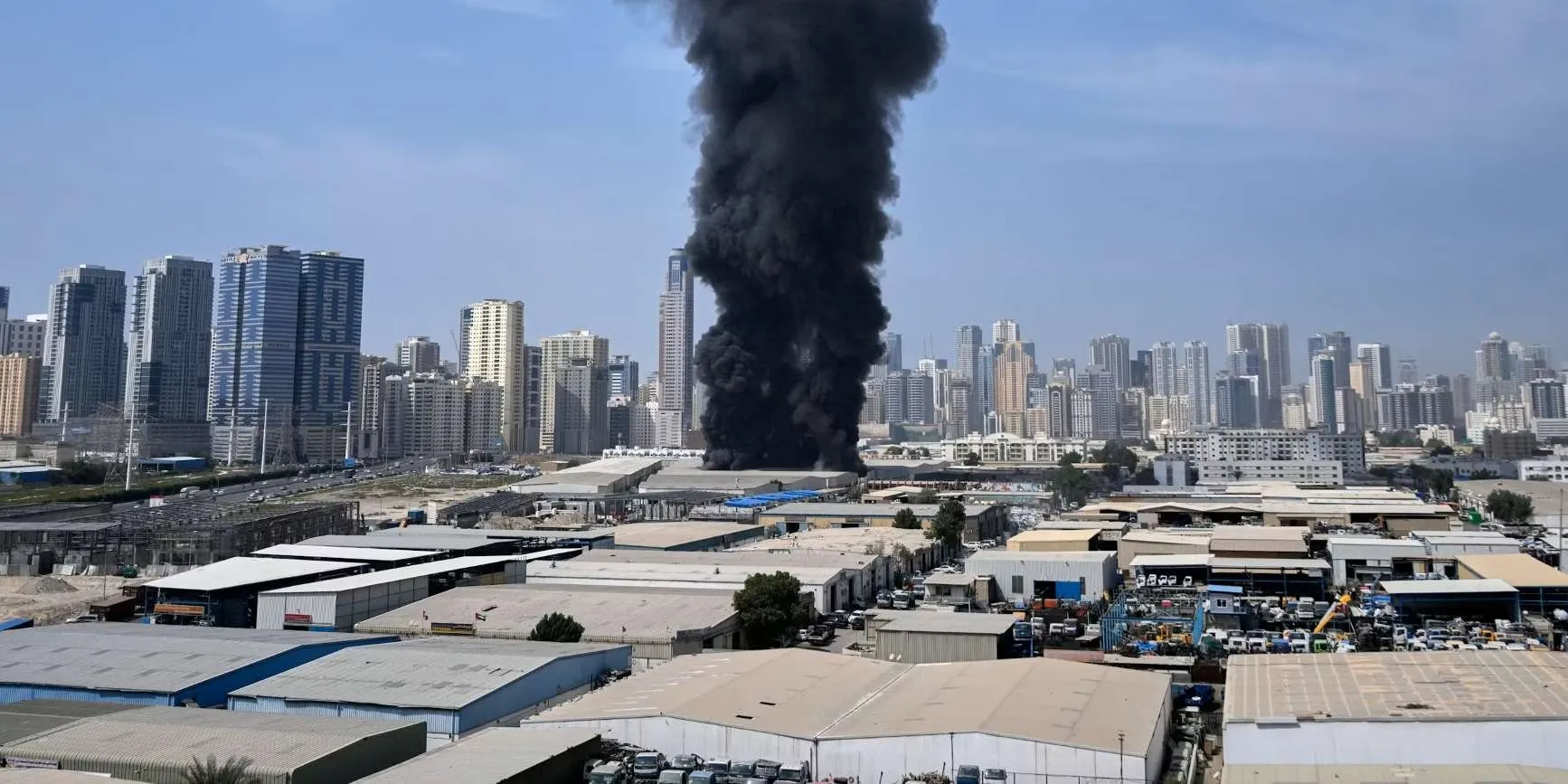
The recent military conflict in Iran has exposed significant operational failures in Chinese-made weaponry, highlighting a substantial technological gap between Beijing’s military hardware and Western systems.
Despite China’s claims of high-tech parity, its air defense networks, radar systems, and satellite navigation tools proved unable to detect or intercept precision strikes by U.S. and Israeli forces. This failure has resulted in reputational damage to China’s burgeoning military-industrial complex and may cause Chinese leadership to reconsider the feasibility of a military invasion of Taiwan given the demonstrated superiority of Western electronic and stealth warfare.
Key Points
- Chinese air defense systems, specifically the HQ-9B surface-to-air missiles and YLC-8B mobile radars, failed to detect or stop the Israeli-American “decapitation operation” in Tehran that killed Supreme Leader Ali Khamenei and other high-ranking officials.
- The conflict demonstrated that Western stealth aircraft and precision-guided munitions could operate with near impunity against integrated defense networks that Beijing previously claimed could intercept F-22 and F-35 fighters.
- Similar failures of Chinese military equipment have been documented in other regions, including the JY-27 radar’s inability to detect U.S. operations in Venezuela and the HQ-9B’s poor performance during conflicts between Pakistan and India.
- Experts suggest that China lags nearly a decade behind the United States in advanced military technologies, particularly in electronic warfare, cyber integration, and complex joint-service operations.
This situation poses a major setback for Beijing, potentially resulting in the loss of multi-billion dollar arms contracts and damaging its status as a leading global arms exporter. Furthermore, the conflict provides a strategic warning regarding a potential confrontation over Taiwan, suggesting that China’s current arsenal may lack the reliability required to withstand high-intensity American military intervention.
Chinese weaponry falls short compared to U.S. military advancements.
China, the world’s third-largest arms exporter, trailing only the United States and France, frequently highlights the superior qualities of its weapons and radar detection systems, offered at significantly lower prices than their Western counterparts. However, in recent months, these systems appear to have been consistently outperformed by American weaponry.
The Chinese-manufactured HQ-9B long-range surface-to-air missile, utilized by Iran and touted by Beijing as being on par with the American Patriot missile in effectiveness, also fell short of expectations. According to China, these missiles, boasting a range of 250 kilometers, are equipped with advanced active radar guidance and infrared sensors designed to intercept stealth aircraft, even in the face of electronic warfare. However, they seemed ineffective, as neither the Israeli nor the American air forces reported any losses.
Exercise caution to avoid jumping to conclusions.
Dennis Wilder, a Georgetown University professor, stated on March 2nd that the U.S. and Israel excel in electronic and cyber warfare, intelligence, and military integration. He believes China lags a decade behind in advanced military technologies.
However, some analysts caution against rushing to conclusions regarding the effectiveness of the latest generation of Chinese-made weapons, emphasizing that the “export versions” of these systems—offered by China at significantly lower prices than their Western counterparts—are often inferior to those used by the Chinese military, as China reserves its most advanced technologies for its own armed forces.
export version ” of the weapon systems delivered by China at prices significantly lower than Western equivalents is most often degraded compared to that of the Chinese army because China reserves its best technologies for its own army.
Other People are Reading



Persistent Iran war, energy price surge set to sway wavering stocks
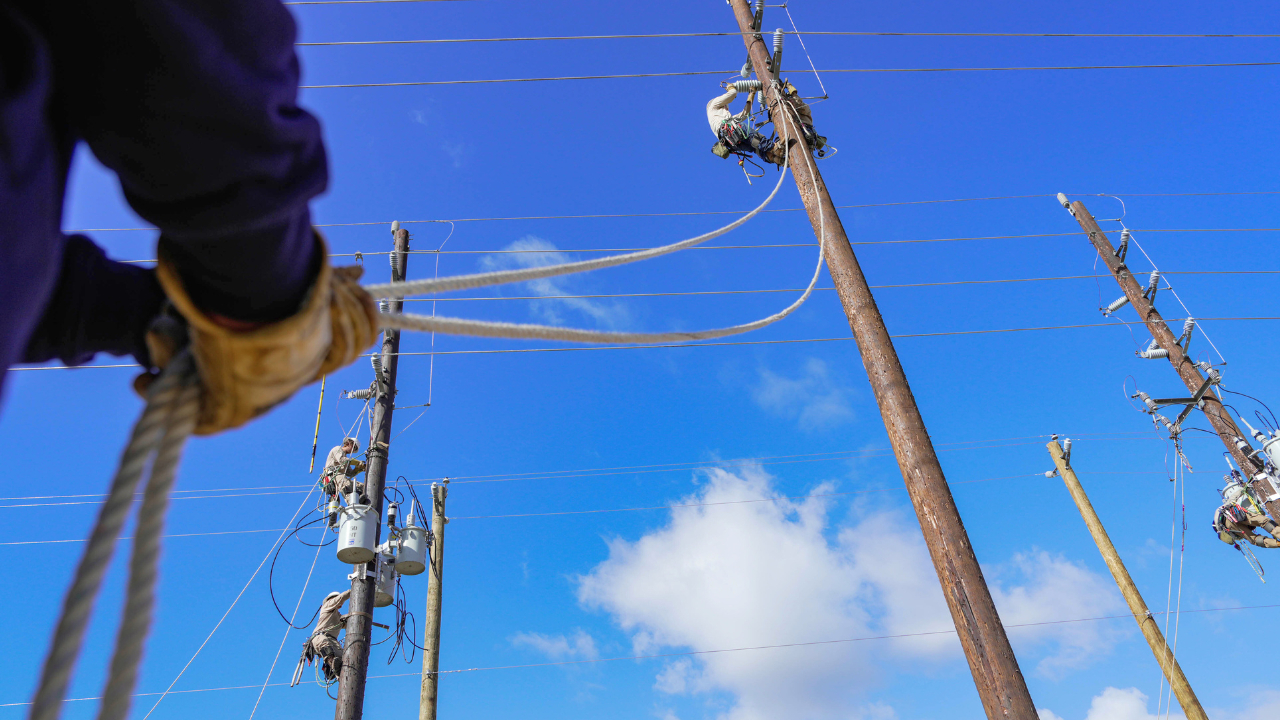
Economists Stephen Moore and EJ Antoni analyze Democratic tax policies, including New York Gov. Kathy Hochul’s appeal to millionaires, and break down rising gas prices on ‘The Bottom Line.’
For millions of Americans, higher electricity bills are becoming a monthly frustration and a growing force in the midterm elections.
Unlike more volatile costs such as gasoline, electricity is a steady, unavoidable expense tied directly to basic needs — keeping the lights on, heating and cooling homes and powering everyday life. That makes it especially politically sensitive at a time when many households are still feeling squeezed by broader inflation and high housing costs.
AMERICANS HIT WITH SOARING ELECTRICITY BILLS AS PRICE HIKES OUTPACE INFLATION NATIONWIDE
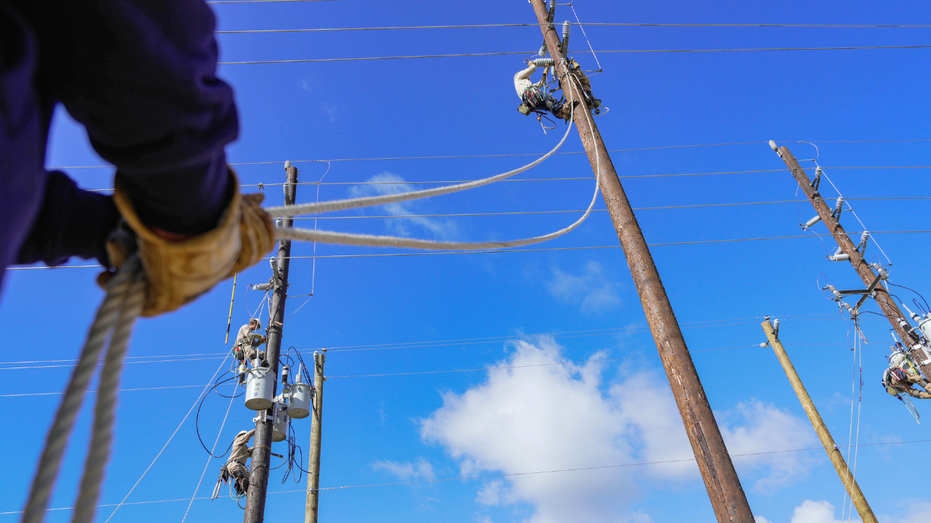
Both Republican and Democratic candidates are expected to discuss rising electricity costs on the campaign trail this midterm season. (Raquel Natalicchio/Houston Chronicle via Getty Images)
The issue is giving both parties fresh campaign ammunition, with Republicans casting higher bills as evidence of failed energy policies, regulatory overreach and a shift away from fossil fuels, while Democrats point to bill assistance programs, grid investments and clean energy incentives aimed at easing pressure on household budgets over time.
The fight is unfolding amid sharp regional divides in electricity prices. Federal energy data shows residential power costs vary widely across the country, illustrating how affordability pressures differ not just by income, but by geography, infrastructure and energy mix.
The latest figures from the U.S. Energy Information Administration put the national average at 17.24 cents per kilowatt-hour, up 6% from a year earlier — a jump that outpaces wage growth for many households and adds to cumulative cost pressures from rent, insurance and groceries.
North Dakota has the lowest average residential electricity rate in the country at 11.02 cents per kilowatt-hour, while Hawaii — an outlier shaped in part by geographic isolation and reliance on imported fuel — has the highest, at 41.62 cents per kWh.
Nebraska, Idaho, Oklahoma and Arkansas also rank among the cheapest states, while California, Rhode Island, Massachusetts and New York join Hawaii among the most expensive. Many of the higher-cost states are also pursuing aggressive clean energy transitions or maintaining older, more complex grid systems — factors that can raise near-term costs even as they aim to stabilize prices in the long run.
Several of the cheapest states are deep-red, a pattern Republicans are likely to seize on to reinforce broader arguments about energy policy and cost of living — even though power prices are shaped as much by geography, fuel availability, regulatory structures and long-term infrastructure investments as by partisan control.
THE STATES WHERE AMERICANS PAY THE MOST — AND LEAST — FOR ELECTRICITY
Cheap electricity, however, does not always mean affordable energy. Weather extremes, household consumption patterns, housing efficiency, aging infrastructure and state-level utility decisions all affect what families ultimately pay. In hotter or colder regions, for instance, even low rates can translate into high monthly bills due to heavy air conditioning or heating use.
Utilities are also seeking rate increases in many states to cover grid modernization, wildfire mitigation, storm hardening and the expansion of renewable energy — costs that are often passed on to consumers gradually but steadily.
GET FOX BUSINESS ON THE GO BY CLICKING HERE
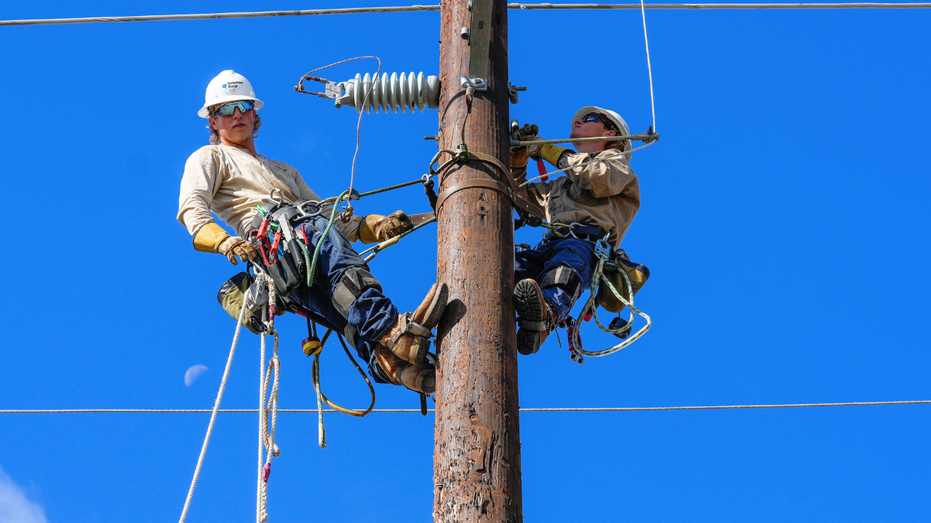
As candidates fan out across the country ahead of the midterms, power bills are becoming a tangible symbol of household stress. (Raquel Natalicchio/Houston Chronicle/Getty Images)
Even so, the partisan pattern may prove politically useful in a campaign season shaped by anxiety over household expenses and economic uncertainty.
Gas prices may grab more headlines, but electricity bills can be more politically durable: they arrive every month, are harder to cut quickly and are often tied to local utilities and regulators. That gives candidates a direct way to connect national energy debates to a tangible, recurring household cost and to voter frustration that is felt not at the pump, but at the kitchen table.

The Powerball lottery drawing on Saturday, March 21, 2026, produced no grand prize winner, allowing the jackpot to roll over once again as players across the United States chased an estimated $123 million prize with a cash value of $55.8 million.

The official winning numbers, drawn at 10:59 p.m. ET from the Florida Lottery studios in Tallahassee, were **12-28-36-41-59**, with the red Powerball **2**. The Power Play multiplier was **2x**, boosting non-jackpot prizes for players who opted in.
According to the Multi-State Lottery Association and official Powerball results posted on powerball.com, no ticket matched all five white balls plus the Powerball to claim the top prize. The jackpot had climbed from an estimated $120 million ahead of the draw after no winner in the previous Wednesday, March 18, drawing (numbers 14-18-19-21-69, Powerball 1, Power Play 3x).
Lower-tier prizes saw solid action. While no tickets matched five white balls plus the Power Play for the $2 million second prize, reports indicate zero $1 million Match 5 winners nationwide in the main draw. Prize breakdowns from usamega.com and powerball.com detail:
– Match 5 + Powerball: 0 winners ($123,100,000 jackpot rollover)
– Match 5: 0 winners ($1,000,000 each)
– Match 4 + Powerball: Limited winners at $50,000 (with Power Play boosting to $100,000 in some cases)
– Match 4: Hundreds of tickets at $100 base
– Lower matches distributed thousands in $4 to $50 prizes, with Power Play doubling many.
The Double Play add-on drawing — available in select jurisdictions — featured numbers **9-29-34-48-58** with Powerball **4**, offering additional chances for prizes up to $10 million, though no top-tier Double Play jackpot was reported.
The March 21 drawing followed a pattern of rollovers that has kept the jackpot building steadily in early 2026. No jackpot winner had emerged in several consecutive draws, fueling excitement and ticket sales nationwide. The absence of a winner means the next drawing — Wednesday, March 25 — will feature an even larger estimated jackpot, likely pushing past $150 million depending on final sales figures.
Powerball operates in 45 states plus the District of Columbia, Puerto Rico and the U.S. Virgin Islands, with drawings held every Monday, Wednesday and Saturday. Tickets cost $2 per play, with the optional Power Play for an extra $1 multiplying non-jackpot wins up to 10x (though capped at 2x or 3x when the jackpot is below certain thresholds). Double Play, where available, adds another $1 for a second chance at prizes.
Players are reminded to check tickets carefully, as smaller prizes often go unclaimed. Winners of prizes up to $600 typically redeem at retailers, while larger amounts require claims through state lottery offices. Jackpot winners can choose annuity payments over 30 years or a lump-sum cash option, which for this draw would have been approximately $55.8 million before taxes.
The lottery has long captured public imagination, with massive jackpots sparking “Powerball fever” and stories of life-changing wins. Past record holders include the $2.04 billion prize won in California in November 2022 and others exceeding $1 billion. No such mega-winner emerged Saturday, but the rollover ensures continued buzz.
As always, officials urge responsible play: buy only from authorized retailers, keep tickets safe and sign the back immediately upon purchase. Odds of winning the jackpot remain 1 in 292.2 million, though overall odds of any prize are about 1 in 24.9.
For those who purchased tickets, results are available on powerball.com, state lottery sites, apps and trusted news outlets. The next chance to win arrives Wednesday — with the jackpot poised to grow further if no one claims it.

Currently, the public float in IDBI Bank is only 5.29 per cent, limiting the scope of fair valuation.
The remaining shares are with insurance behemoth Life Insurance Corporation of India (LIC), with a controlling stake at 49.24 per cent, while the Government of India (GoI) holding stood at 45.48 per cent.
Earlier this month, the proposed sale of a 60.72 per cent majority stake, held jointly by the government and the LIC, was scrapped after financial bids from two potential buyers reportedly fell short of the reserve price.
Low free float restricts the scope for fair markvaluation, and expanding this by 10 per cent or 15 per cent would make price discovery more reliable, sources said.

It can provide a reliable benchmark for valuation and further make the price discovery process transparent, they said, adding, strategic sale can be pursued even after one or two tranches of OFS.
As per the failed plan, both the government and LIC were to offload 30.48 per cent and 30.24 per cent stake, respectively.This is the second time that the government has wanted to privatise IDBI Bank since the first announcement made in 2016. The idea was first officially flagged in the Union Budget speech by then-Finance Minister Arun Jaitley in February 2016.
The first attempt to privatise the then state-owned IDBI Bank failed due to valuation concerns.
However, the government later sold the controlling stake to LIC, which had been eyeing acquiring a stake in a bank to expand its bancassurance business model.
Subsequently, in January 2019, LIC acquired a 51 per cent controlling stake in IDBI Bank for approximately Rs 21,624 crore to rescue the lender from heavy bad loans as part of the disinvestment process.
As a result, the bank was categorised as a private-sector bank by the Reserve Bank of India.
In December 2020, the lender was reclassified as an associate company following the reduction of LIC’s stake in the bank to 49.24 per cent.
The process for privatisation gained formal momentum when the Cabinet Committee on Economic Affairs gave its in-principle approval in May 2021 for strategic disinvestment along with transfer of management control in IDBI Bank.
In October 2022, KPMG India was appointed as Transaction Advisor and the intent to sell 60.72 per cent stake in the bank was announced.
The Department of Investment and Public Asset Management (DIPAM) invited Expressions of Interest (EoI) in October 2022, and market regulator Sebi approved the reclassification of GOI as a public shareholder upon completion of the sale in January 2023.
Later in August 2025, the regulator gave its nod for reclassification of LIC as a public shareholder upon completion of the sale and after a long due diligence period, financial bids from two Emirates NBD Bank and Prem Vatsa-promoted Fairfax India were finally received in February 2026.


Focus on multinational transportation companies. Mercosur economies.
Analyst’s Disclosure: I/we have no stock, option or similar derivative position in any of the companies mentioned, and no plans to initiate any such positions within the next 72 hours. I wrote this article myself, and it expresses my own opinions. I am not receiving compensation for it (other than from Seeking Alpha). I have no business relationship with any company whose stock is mentioned in this article.
Seeking Alpha’s Disclosure: Past performance is no guarantee of future results. No recommendation or advice is being given as to whether any investment is suitable for a particular investor. Any views or opinions expressed above may not reflect those of Seeking Alpha as a whole. Seeking Alpha is not a licensed securities dealer, broker or US investment adviser or investment bank. Our analysts are third party authors that include both professional investors and individual investors who may not be licensed or certified by any institute or regulatory body.
Business
Hartsfield-Jackson Atlanta Airport Security Wait Times Fluctuate Amid Ongoing DHS Funding Crisis
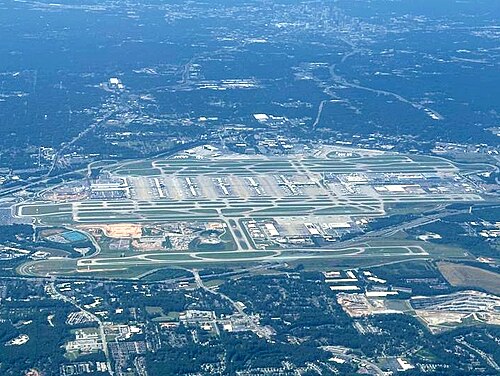
Security wait times at Hartsfield-Jackson Atlanta International Airport (ATL), the world’s busiest by passenger volume, continue to vary dramatically on March 22, 2026, as the partial U.S. government shutdown drags into its second month, leaving Transportation Security Administration (TSA) officers unpaid and contributing to staffing shortages, absenteeism and unpredictable lines.

Real-time data from the airport’s official tracker at atl.com/times and third-party aggregators like Takeoff Timer and OnAir Parking showed average standard security wait times around 14 minutes as of midday local time, with peaks earlier in the overnight hours reaching 45 minutes from midnight to 1 a.m. and lows of zero during the quietest overnight slots. TSA PreCheck lanes remained significantly faster, often under 5 minutes when open.
However, passenger reports on social media and Reddit megathreads painted a more volatile picture. Early Sunday morning updates from r/Atlanta users described waits climbing to 75 minutes or more at the main domestic checkpoint during peak arrival periods, with some travelers advising 3+ hours of buffer time before flights. Lines have fluctuated wildly throughout the weekend: long queues spilling into baggage claim areas on Saturday and Friday, then easing briefly midday before building again.
The inconsistency stems directly from the ongoing partial shutdown affecting the Department of Homeland Security (DHS), which funds TSA. With no appropriations bill passed, many TSA employees have missed paychecks — some their second full cycle — prompting high call-out rates (reported as high as 36% on certain days in mid-March) and resignations. Nationwide, absenteeism has hovered around 10-30% above normal, hitting busiest hubs like ATL hardest during spring travel season.
Airport officials and airlines, including Delta Air Lines (ATL’s dominant carrier), have repeatedly urged passengers to arrive at least three hours early for domestic flights and four hours for international ones. Standard guidance recommends two hours pre-departure, but current conditions demand extra cushion for parking, check-in, bag drop and the trek to gates via the Plane Train, which adds 10-20 minutes post-security.
The main domestic checkpoint — serving the bulk of passengers — has seen the most strain, with queues occasionally extending beyond the atrium into baggage claim. North and South checkpoints (including PreCheck-only lanes) and the international terminal have generally moved faster, sometimes clearing in under 10-15 minutes during off-peak. International departures, including Concourse F, reported shorter waits overall.
The crisis has compounded other factors: spring break crowds, potential weather disruptions earlier in the month and general post-pandemic travel recovery. Flight delays and cancellations have risen, though not always directly tied to security — with hundreds affected on peak days per FlightAware data. Passengers missing connections due to long lines have added frustration, with some reporting hours-long backups that force rebooking.
TSA and airport leaders stress that security remains the priority, with available staff prioritizing threat detection over speed. PreCheck, CLEAR and TSA PreCheck enrollment continue to offer the best relief, with dedicated lanes seeing minimal delays. Officials remind travelers that wait times fluctuate hourly — peaking typically 5-9 a.m. and late afternoons/evenings — and urge checking real-time tools before heading out.
The official ATL wait time page provides minute-by-minute updates across checkpoints, though some users note it lags or underreports during surges. Community-sourced trackers on Reddit and apps like MyTSA supplement with crowd photos and firsthand accounts. As the shutdown persists without resolution — despite recent political threats and offers like Elon Musk’s proposal to cover salaries — experts warn conditions could worsen if staffing erodes further.
Travelers are advised to:
– Enroll in TSA PreCheck or CLEAR if eligible for expedited screening.
– Monitor atl.com/times, the MyTSA app or airline alerts.
– Arrive early, especially for early-morning or peak flights.
– Consider ground transportation alternatives if driving to the airport amid potential parking backups.
As Congress remains deadlocked over DHS funding amid immigration policy disputes, Atlanta’s airport — handling over 100 million passengers annually — exemplifies the broader national impact on air travel. With no immediate end in sight, the message from officials is clear: plan for delays, pack patience and prioritize buffer time to avoid missing flights.
Markets Starting To Worry About Stagflation, But The End Is Not Nigh

A Needed Consolidation Has Gotten A Bit Uglier (Technical Analysis)


Fin-tech startup leveraging machine learning technology to discover investing opportunities and to generate growth-optimal portfolios. Publisher of the WideAlpha AI-Selected Index, which has markedly outperformed its benchmark.
Analyst’s Disclosure: I/we have a beneficial long position in the shares of TKMTY either through stock ownership, options, or other derivatives. I wrote this article myself, and it expresses my own opinions. I am not receiving compensation for it (other than from Seeking Alpha). I have no business relationship with any company whose stock is mentioned in this article.
The information contained herein is for informational purposes only. Nothing in this article should be taken as a solicitation to purchase or sell securities. Before buying or selling shares, you should do your own research and reach your own conclusion or consult a financial advisor. Investing includes risks, including loss of principal.
Seeking Alpha’s Disclosure: Past performance is no guarantee of future results. No recommendation or advice is being given as to whether any investment is suitable for a particular investor. Any views or opinions expressed above may not reflect those of Seeking Alpha as a whole. Seeking Alpha is not a licensed securities dealer, broker or US investment adviser or investment bank. Our analysts are third party authors that include both professional investors and individual investors who may not be licensed or certified by any institute or regulatory body.
Business
Trump Threatens ICE Deployment to Airports Monday as Partial DHS Shutdown Fuels Travel Chaos
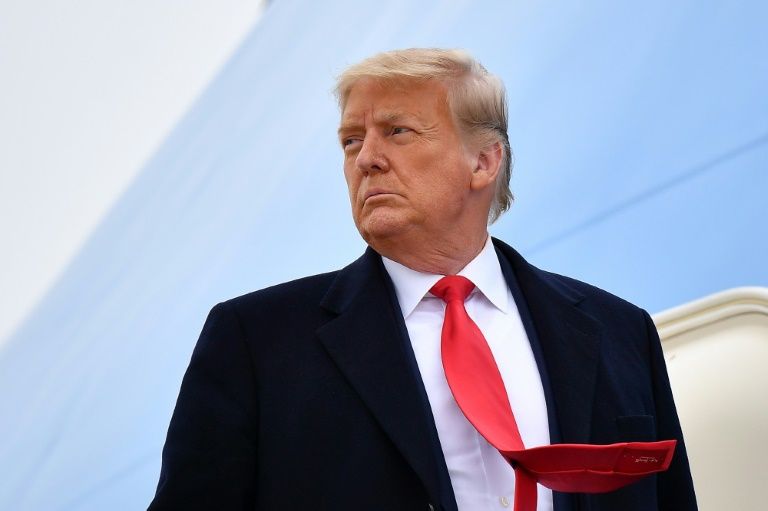
President Donald Trump threatened Saturday to deploy Immigration and Customs Enforcement (ICE) agents to U.S. airports as early as Monday if Democrats fail to agree on funding for the Department of Homeland Security (DHS), escalating a partial government shutdown now in its fifth week that has left Transportation Security Administration (TSA) workers unpaid and caused widespread travel disruptions.
In a series of posts on Truth Social, Trump blamed “radical left Democrats” for the impasse and vowed aggressive action. “If the Radical Left Democrats don’t immediately sign an agreement to let our Country, in particular, our Airports, be FREE and SAFE again, I will move our brilliant and patriotic ICE Agents to the Airports where they will do Security like no one has ever seen before, including the immediate arrest of all Illegal Immigrants who have come into our Country, with heavy emphasis on those from Somalia,” he wrote in one post. In a follow-up, he declared, “I look forward to moving ICE in on Monday, and have already told them to, ‘GET READY.’ NO MORE WAITING, NO MORE GAMES!”
The threat comes amid mounting strain on the nation’s aviation system. The partial shutdown, triggered by a February congressional failure to pass DHS appropriations, has left nearly 50,000 TSA employees working without pay for weeks. Many have called in sick, resigned or quit outright — with the agency reporting 366 departures as of mid-March — leading to long security lines, unpredictable wait times and flight delays at major hubs including Atlanta, Chicago O’Hare, Los Angeles and New York airports.
TSA officers, who perform passenger and baggage screening, are classified as essential and required to report for duty despite the funding lapse. They missed their first full paycheck recently and face a second without resolution, prompting absenteeism spikes and warnings from unions that security could be compromised. Travelers have reported waits exceeding two hours at some checkpoints, with spring break travel amplifying the chaos.
Trump’s proposal would redirect ICE personnel — trained primarily in immigration enforcement, investigations and detention — to support or potentially supplement TSA functions. Details remain unclear: ICE agents lack the specialized months-long training TSA screeners receive for threat detection, X-ray interpretation and pat-down procedures. Officials suggested they might handle crowd management, line direction or ancillary roles to free TSA staff for core screening, though Trump’s rhetoric emphasized broader enforcement, including arrests of undocumented immigrants encountered at airports.
Critics, including Democrats and civil liberties groups, called the plan reckless and politically motivated. Senate Minority Leader Chuck Schumer accused Republicans of holding TSA pay hostage to extract concessions on immigration policy without reforms. House Democrats previously proposed separating TSA funding from contentious ICE and Customs and Border Protection allocations, but Republicans blocked the measure. Senate Majority Leader John Thune blamed Democrats for stalling negotiations.
The standoff reflects deeper partisan divides over immigration enforcement. Republicans demand increased border security funding and fewer restrictions on ICE operations, while Democrats seek oversight reforms and protections for certain programs. No breakthrough emerged from weekend talks, with another Senate vote attempt failing Friday.
Adding to the drama, billionaire Elon Musk offered Saturday to personally cover TSA salaries during the impasse. In an X post, Musk wrote: “I would like to offer to pay the salaries of TSA personnel during this funding impasse that is negatively affecting the lives of so many Americans at airports throughout the country.” The gesture drew praise from some as pragmatic relief but raised legal and ethical questions about private funding of federal employees, given potential conflicts with anti-deficiency laws and Musk’s business interests in government-regulated sectors.
No formal response from the White House, DHS or TSA on Musk’s proposal or Trump’s deployment plan had been issued by Sunday evening. DHS officials have stressed ongoing efforts to mitigate impacts, including partnerships with airlines for crowd control, but acknowledged escalating risks if the shutdown persists.
Travelers face continued uncertainty. The TSA has urged checking airport wait times via its app or website and arriving early. Some small airports have warned of potential temporary closures if staffing drops further. Aviation groups and business leaders have called on Congress to prioritize resolution, citing economic costs from delays and cancellations.
As the shutdown approaches 40 days, the crisis highlights vulnerabilities in federal funding processes and the human toll on essential workers. With no immediate deal in sight, airports brace for potential ICE presence starting Monday — a move that could reshape security protocols while intensifying political battles over immigration and government operations.

99% Will Never Own 5,000 XRP || XRP NEWS TODAY

Cuba left in darkness after third power cuts in a month | World News

Persistent Iran war, energy price surge set to sway wavering stocks


-

 Tech7 days ago
Your Legally Registered ‘Motorcycle’ Might Not Count Under Proposed US Law
-

 Fashion2 days ago
Weekend Open Thread: Adidas – Corporette.com
-

 Politics2 days ago
Jenni Murray, Long-Serving Woman’s Hour Presenter, Dies Aged 75
-
 Tech5 days ago
Are Split Spacebars the Next Big Gaming Keyboard Trend?
-

 Crypto World15 hours ago
Best Crypto to Buy Now: Strategy Just Spent $1.57 Billion on Bitcoin During Fear While Early Investors Quietly Enter Pepeto for 150x Potential
-

 News Videos4 days ago
RBA board divided on rate cut, unusually buoyant share market | Finance Report | ABC NEWS
-

 Crypto World16 hours ago
Bitcoin Price News: Bhutan Sells $72 Million in BTC Under Fiscal Pressure, but the Smart Money Entering Pepeto Sees What the Market Does Not
-

 Business7 days ago
Search for Savannah Guthrie’s Mother Enters Seventh Week with No Arrests
-
 Crypto World2 days ago
NIO (NIO) Stock Plunges 6.5% as Shelf Registration Sparks Dilution Worries
-

 Business6 days ago
Australian shares drop as Iran war enters third week
-

 Crypto World6 days ago
Crypto Lender BlockFills Enters Chapter 11 with Up to $500M in Liabilities
-

 Politics4 days ago
The House | The new register to protect children from their abusers shows Parliament at its best
-

 Fashion6 days ago
25 Celebrities with Curly Hair That Are Naturally Beautiful
-

 Tech2 days ago
inKONBINI Lets You Spend Summer Days Behind the Register
-

 Crypto World4 days ago
Canada’s FINTRAC revokes registrations of 23 crypto MSBs in AML crackdown
-
 Politics5 days ago
Real-time pollution monitoring calls after boy nearly dies
-
 NewsBeat4 days ago
Residents in North Lanarkshire reminded to register to vote in Scottish Parliament Election
-

 Business6 days ago
Meta planning major layoffs as AI spending and automation reshape workforce
-

 News Videos4 days ago
PARLIAMENT OF MALAWI – PAC MEETING WITH REGISTRAR OF FINANCIAL ON AMARYLLIS HOTEL – INQUIRY LIVE
-
 Crypto World7 days ago
U.S. Oil Companies Post Record Profits as Oil Prices Break $100
You must be logged in to post a comment Login