

Business
Warden Capital Q2 2026 Letter


MadamLead/iStock via Getty Images

I know I said I’d likely stop writing these big letters, but I just couldn’t help myself this quarter. So much is happening, and I wanted to jot my thoughts down as much for myself as anything else. And also to crow about a big win we had.
Quickly on the returns. We had a big quarter, with YTD returns up to 15.91% vs 9.3% for the S&P (my main target benchmark) and 16.96% for the USRT (USRT) (again not really relevant comp these days but including for historical continuity). Since inception we are up to 236.3%, vs 181.29% for the S&P and 89.84% for the USRT. And we did it with no semiconductor exposure (and thus we have avoided the momentum bloodbath since Q2 ended), and a fairly good sized short book to boot.
I will lead with the star of the show this quarter, which was Uniqure (QURE), a stock I mentioned first in late 2025 I believe. As a reminder this is a biotech that has developed a promising treatment for Huntington’s disease, a relatively rare, 100% fatal neurodegenerative disease. It published results in September, the stock skyrocketed to ~$70, then in November the FDA changed tack on what seems to have been previously agreed to guidance accepting an external control group for an accelerated approval and the stock crashed down into the $20s (where I first bought). Then in March, the FDA fully refused to even consider Qure (QURE)’s accelerated application, saying Qure needed to run a full phase 3, and the stock crashed down to as low as $9/share, below cash balances.

I doubled down near these lows, believing that if the drug worked (and no one really seems to think it doesn’t), that worst case you waited out the phase 3 (which Qure had cash to complete), and best case the FDA could change its mind either via personnel change, when additional data came out (they have year 4 data slated for September), or Qure could monetize via approvals abroad (which they are pursuing).
In an absolute whirlwind of a few months, the former FDA leadership was canned after what they did to Qure and several other promising disease treatments, and the new FDA interim leaders have allowed Qure to proceed with a filing for accelerated approval, with the stock now trading around $40s/share.
I will be honest and admit I didn’t think it would happen this quickly, but what a ride! Sadly for me I subscribe to some levels of risk/concentration management and sold some of my position after the initial pop from the lows around $10. But we still have a large position here. I was a bit worried about competition but after Roche (RHHBY) pulled its latest trial I am increasingly convinced that drugs which lower wild type Huntingtins protein across the whole brain or body, which essentially all the major competitors do, are problematic1. This then makes Qure’s approach of selective targeting of the striatum all the more strategic, and I think there is still significant upside from here if Qure can get full approval.
All that said, Qure is not our biggest position right now, that honor goes to Gitlab (GTLB), which has done quite well since we bought earlier this year.
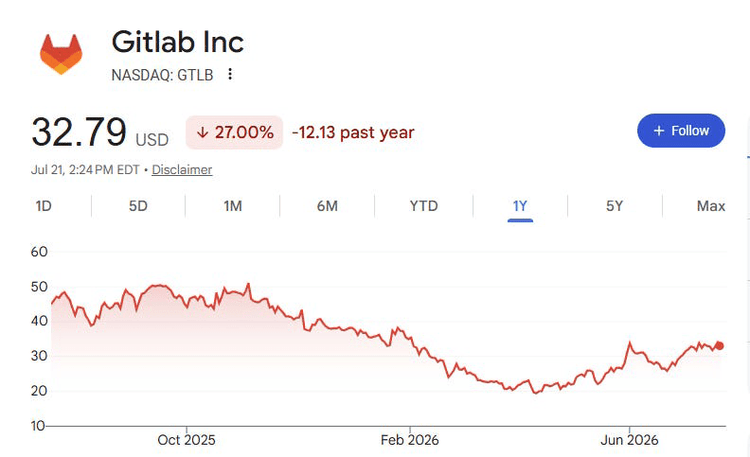
Gitlab crashed significantly from fall of 2025 to today along with basically all other software businesses on a fear that LLMs would replace them all.
The basic thesis here is that as AI dramatically increases the velocity of code production, code control, review and approval (which Git sits at the center of), becomes even more critical than it ever was. The code repos also offer a very natural place to serve up coding agents – most easily visible in Microsoft (MSFT) pushing its Copilot agent through competitor Github.
The growth is already visible in Gitlab’s usage, with code pushes up nearly 50% YoY. Gitlab doesn’t get paid on usage (yet)2, but its a really good sign when people are using your platform a lot more generally speaking.
I believe Gitlab is well positioned to monetize this growth itself, or that it would present an incredibly strategic acquisition opportunity for one of the major AI labs or companies. The market cap is a mere ~$5.5B (and $4.2 ev after cash), a drop in the bucket against the trillion dollar plus valuations in play elsewhere. Gitlab serves a whopping 50% of the F100, and would be a really valuable distribution tool. Microsoft already bought major competitor Git Hub, so there is precedent here as well. One of the firm’s trying to produce an AI model that is struggling with adoption I think would find a company like Gitlab very tempting, such as Meta (META) or SpaceX (SPCX).
Stepping back, the investment book feels about as good as it has since covid times, there are many interesting firms trading at attractive valuations, and I feel fairly good about returns continuing to be strong from here despite significant economic uncertainty.
Macro Musings
And speaking of uncertainty, I am growing more concerned about our two big macro risks, the reclosure of the Strait of Hormuz, and the AI boom. In order to keep this letter brief I won’t spend too much time on Hormuz – but if a deal is not reached soon and the strait remains closed it looks like oil inventories could hit crisis levels in 1-3 months. I suspect/hope something will get done as Trump seems to be aware of this, although unfortunately it may involve paying off Iran or conceding Iranian control of the strait, an effective strategic defeat for the US.
The AI boom is a bit less binary, and therefore there is more to discuss. I believe the AI space is getting overheated, and as the scale has continued to ramp up I am worried that the impact of a bust is approaching a level that may cause a downturn.
The numbers involved here are absolutely staggering, and simply put, there does not appear to be any way that a reasonable return on the investment is earned barring the achievement of AGI within the next few years.
I have written about this several times before, but to repeat, at today’s level of investment (~$700 billion/year), there needs to be ~$1 trillion in end AI annual revenue (from the model cos / providers) by 2029, and that figure would ramp to nearly $4 trillion by 2036 assuming capex stays constant. Here is a link to a quick tweet summary of the math if you are interested3.
What is crazy to me is that many estimates have AI capex increasing significantly in 2027, and some even have it approaching $2 trillion by 2030! Obviously as the capex grows the required revenues also grow.
The tech industry is simply not prepared for their formerly asset light, high margin golden children to turn into low margin commodity capital intensive industrial companies. Almost no one in the industry has the heuristics or experience for this. I cannot tell you how many times I see supposedly knowledgeable Silicon Valley people talking about inference gross margins with no reference to capital investment or D&A – this is like talking about the marginal cost of running an oil well but ignoring the cost to drill it! Or its like asking – ‘is building apartments profitable’, and someone responding ‘ yes, the rental operating margins are very high’. The answer is absolutely and completely irrelevant on its own without reference to a return on capital invested & the cost to build the apartments.
Amusingly, the one group of tech people who viscerally understand this, the management team’s of the memory companies (a business famous for its boom/bust cycles), have opted into a strategy that seems to capitalize on this knowledge by riding the wave and maximizing their own profits, damage to the overall ecosystem be damned. This is, I suspect, the optimal strategy here, although if they push too hard they may incentivize the hyperscalers to enter into the memory game as well. I rather liked my friend Andrew Walker’s observation relating to Micron (MU) and its total capital investment vs Google (GOOGL). Micron has only spent ~$125 billion in capex in its entire history (or at least since 1992, if ChatGPT is accurate). Or alternatively, its book value is $73 billion – this is perhaps a more realistic assessment of the current ‘replacement cost’, if you will. Google is going to spend $185 billion this year. How hard would it be for Google to spin up a memory division? Or Amazon (AMZN). Perhaps more likely is Apple (AAPL) or someone stands up a new player in China to secure and permanently commodify the memory supply chain so critical to their products.
Obviously such a thing would not be easy, but it would not be impossible, and if memory profits were to stay elevated it may happen. It also incentivizes chip designs and model utilization that would be less reliant upon memory as well – human ingenuity is a powerful thing, and I do not like betting against it long term.
More likely though I would guess the whole thing crashes down, and the memory executives know this is likely to occur before too many new entrants come into the space. They are also probably aware of China’s rapid ramp of memory capacity via the growth of CXMT (now almost as large as Micron in terms of capacity! ) & YMTC, and the likely terrible price wars and margin pressure to come in several years from China’s entry into this market. China has successfully commoditized every other electronics sector they have entered, and have moved up the value chain into autos. I don’t see why memory should be any different.
How Much Longer
The big question is, how much longer can this AI capex boom last? It is hard to say, but I think the canary in the coal mine will be when model co revenues slow down. Given their epic growth thus far this year, it wouldn’t surprise me if this happens soon, but honestly I have no idea. It is notable that in the last few days we have seen the release of GPT 5.6, a new Meta Spark model, and Grok 4.5, and all 3 release put significant emphasis on their lower costs and price points. Not to mention a new open weights model out of China that is competitive with Fable and GPT 5.6 trained at what was supposedly a fraction of the cost.
These releases with an emphasis on cost mark a pretty big change from earlier releases which were really only focused on performance, and is potentially a dangerous sign of things to come for model providers.
It could even indicate that the model cos are seeing corporate users become price sensitive in real time, which would presage revenue growth beginning to slow down. Broadly speaking my read on the narrative is that frontier AI users are now actively working to rein in spend. However this may be counterbalanced or even overwhelmed by continuing diffusion throughout the broader corporate ecosystem. At some point though that diffusion completes and reality begins to set in.
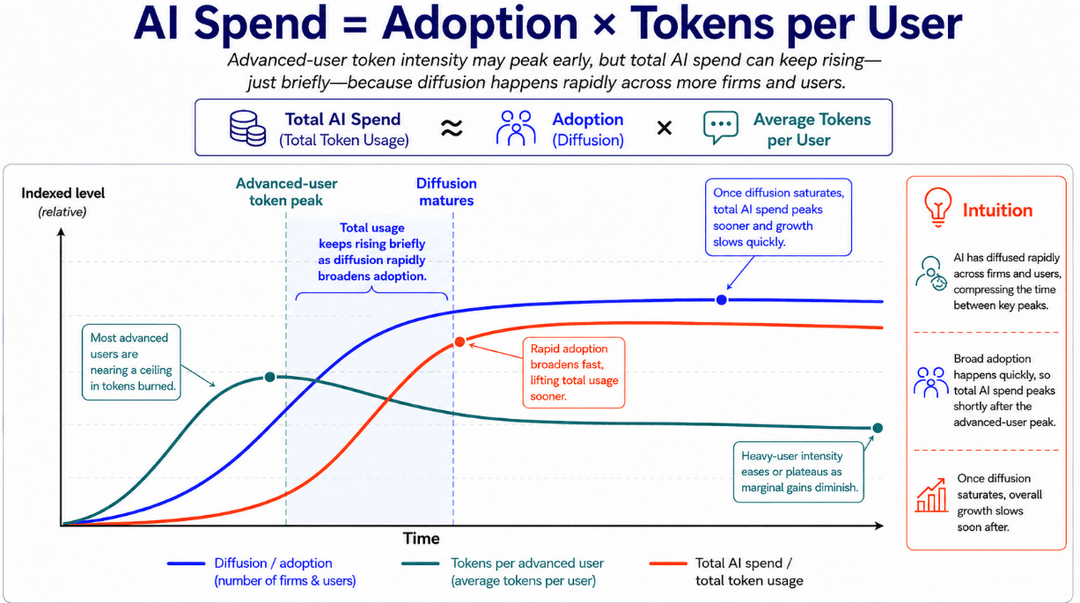
A little rough AI generated summary of this concept – since diffusion is rapidly completing, the key unknown is where token intensity shakes out. It will peak or at least level off at some point, the question is simply when.
The adoption of AI in corporate America has been incredible – I don’t think any technology has ever diffused quite so quickly. McKinsey and BCG have some surveys on this subject – McKinsey estimates 88% of employees surveyed said their company was using AI, back in 2025. BCG had a survey with 72% of respondents (all corporate employees), saying they were regular AI users, over a year ago in June of 2025.4 We are likely approaching effective full employee diffusion, with recent revenue growth driven by more complex workflows and agent usage ((aka each user spending more)).
This rapid diffusion has been great for AI revenues, but also means that the end of the adoption cycle is going to come much faster than previous technologies, and that the crash could be all the more violent because of how compressed the cycle is.
We will have to wait for the Q2 financial leaks to see the latest. But the model cos will need to approach $300-400B of revenues in a year, and ~$1 trillion by 2030, to justify all the AI capex investment. They are growing quite quickly today, but would need to accelerate further to hit these lofty targets.
If revenue growth slows and/or the capex spend slows down, it could well take down the entire US economy given the size of the AI sector in the public markets5, and how important public markets are as a percentage of household net worth today.
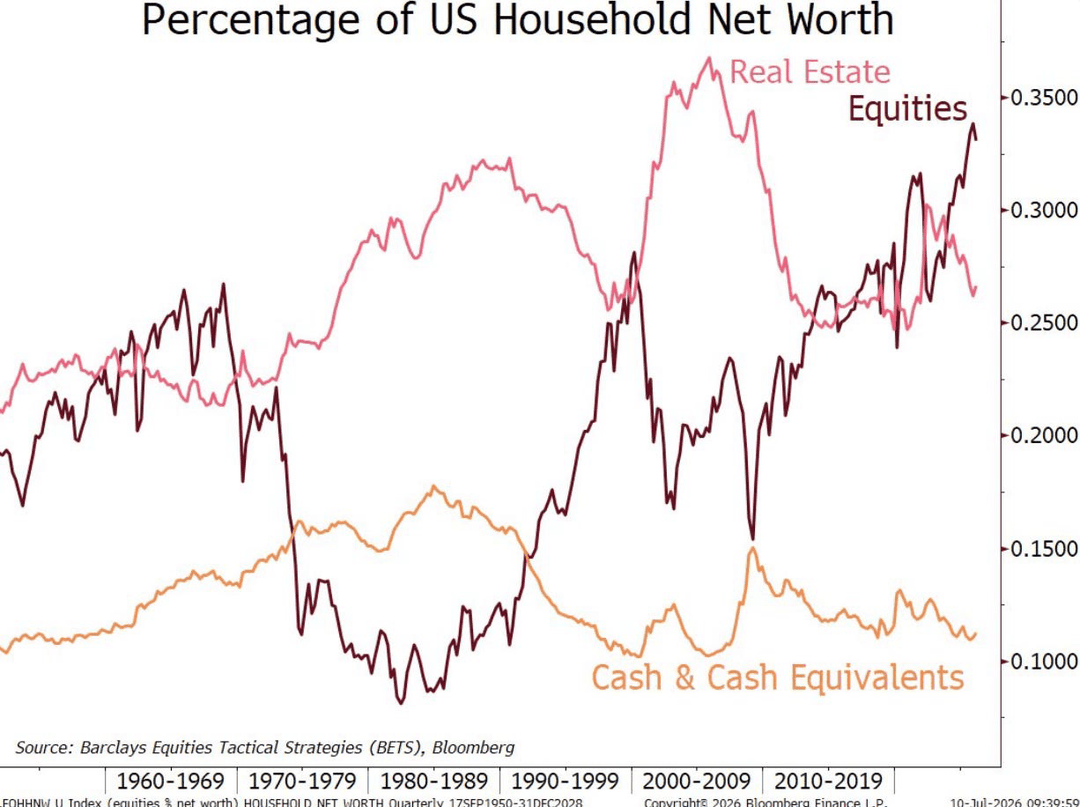
From Bloomberg and Barclays (BCS). Stocks are at an all time high as a percentage of HH networth.
The stock market is also near a record on the cyclically adjusted PE measure, second only to the dotcom bubble.
The CAPE P/E uses inflation adjusted earnings over the last 10 years, in this way it can capture potential earnings bubbles and price bubbles. Today’s absolute P/E is not as high relative to prior figures, but the massive recent spike in earnings means the CAPE is much higher.
And setting aside the stock market, at this point a fairly large chunk of GDP is directly & indirectly tied to data center and power investments at this point. Even the automakers are re-orienting their battery operations around datacenters!
All that said, it is hard to predict with much certainty what is going to happen with the overall economy. While I am relatively confident the AI boom turns into a bust at some point, I do not know when, and I am not 100% sure it will cause a US recession, and even if it does it is very hard to know how bad that might be. Ideally it would be a shallow, concentrated one a la 2000.
There is some risk though of a broader, deeper crisis though, as one of the biggest differences this cycle is the asset & debt heavy nature of much of the investment, at least in the neocloud and datacenter space. Debt distress is much more likely to cause a longer, more painful crisis than equity. However much of this issuance appears to be backstopped by the still fairly good credit hyperscalers, so I am hopeful that a downturn wouldn’t lead to a full blown financial crisis (but I wouldn’t rule it out, especially the longer the boom goes!).
Fin
As always, thanks for reading. Despite the macro uncertainty I feel good about our portfolio, our stocks are quite cheap & may even benefit from a rotation out of momentum into value. And we have a significant short book that would hopefully offset a broader economic downturn.
Stay safe out there.
Thanks for reading Warden Capital!
Hawkins Entrekin
Editor’s Note: The summary bullets for this article were chosen by Seeking Alpha editors.


URANIUM WRAP: Shares in Peninsula Energy tumbled early following the withdrawal of its CY26 production guidance, while Paladin anticipates production to rise at Langer Heinrich.

Commodities: Oil Moves Higher As Supply Risks Build

Zhongji Innolight targets $7bn in Hong Kong share sale


Survey finds a “meaningful shift” in how consumers view some foods.
Business
New Jersey voter registration controversy explained: How 6,600 noncitizens got on the rolls, and what happens next

The announcement lands in the middle of a national fight over noncitizen voting, an issue President Donald Trump has raised repeatedly this year. Here is what is known so far, and what comes next.
New Jersey voter controversy: What actually happened?
New Jersey is one of 19 states that let people living in the US illegally hold a driver’s license or state ID, according to the National Conference of State Legislatures. It is also one of roughly half the states with automatic voter registration, which lets eligible people opt in to registering when they get a license or use certain other state services.
A software error at the Motor Vehicle Commission caused the system to register some people as voters even after they indicated they were not citizens. Sherrill said the error occurred under the previous administration and blamed it on the state’s vendor, which she is now replacing.
“I am appalled by the reckless failures that allowed this to happen and the lack of transparency shown by those in charge at the time,” Sherrill said in a statement.

NJ Registered Voters: How many people actually voted?
Of the roughly 6,600 wrongly registered, fewer than 400 are believed to have cast a ballot, based on Sherrill’s preliminary analysis. That is a small fraction of New Jersey’s roughly 6.9 million registered voters and the more than 4 million people who voted in the 2024 presidential election. Sherrill said the registrations were not limited to one party — the affected group included people who signed up as Democrats, Republicans and independents.
Is this part of a bigger pattern?
New Jersey’s error is not the first of its kind. Other states with automatic voter registration have reported similar mistakes:Oregon: State officials found in 2024 that about 1,600 people were registered through the DMV without proof of citizenship. Most were later confirmed to be citizens, and the state said only about 30 ineligible voters had cast ballots.
Colorado: Officials said in 2022 they had mistakenly sent postcards to 30,000 noncitizens inviting them to register. The state said it would not have allowed any of them to register even if they had tried.
California: A 2019 audit of the state’s DMV registration program found errors that may have let about 1,500 people register incorrectly, some of whom may not have been citizens.
These cases predate New Jersey’s disclosure and involve different states, systems and numbers, but they point to the same underlying issue: automatic registration systems tied to DMV records can misfire when citizenship status isn’t verified correctly.
Separately, the Department of Homeland Security has said it identified about 278,000 noncitizens registered to vote in federal elections nationwide, concentrated mostly in California, Nevada, New Jersey and Pennsylvania. That figure has not been independently verified, and Pennsylvania’s Department of State has disputed its relevance, saying in a statement that noncitizen voting is extremely rare nationally, including in Pennsylvania.
Why is New Jersey voter Controversy politically charged?
Trump and other Republicans have argued for months that noncitizen voting is a widespread problem in US elections. Election officials and researchers generally say confirmed cases are rare, and that noncitizen voting is a felony that can result in deportation when detected.
New Jersey’s disclosure gave the White House an opening to push Trump’s SAVE America Act, which would require documentary proof of citizenship to register to vote and impose voter ID rules nationwide. The bill has passed the House but has not come up for a vote in the Senate, where it faces opposition from some Republicans as well as Democrats.
“American voters deserve to have confidence that our elections are safe and secure,” White House spokesperson Abigail Jackson said in a statement.
Homeland Security Secretary Markwayne Mullin suggested on X that a federal report was what prompted Sherrill to act.
“Appreciate you responding back to our letter, @GovSherrillNJ. This should’ve been done a LONG time ago,” Mullin wrote. “Just ONE illegal vote cancels out the vote of a U.S. citizen.”
Sherrill, for her part, framed the episode as evidence that she is protecting the integrity of the state’s elections rather than a sign of a larger crisis.
“As the Trump Administration tries to weaponize elections for political gain, I am ensuring we protect our elections,” she said.
Who is responsible for this controversy?
The error occurred while Phil Murphy, also a Democrat, was governor. A representative for Murphy did not immediately respond to a request for comment on the matter.
Christine Hanlon, chair of the Republican party organization in New Jersey, said the state needs a bipartisan investigation into both the error and why it wasn’t disclosed sooner.
“The system and verification process must be improved in order to safeguard our elections,” Hanlon said in a statement. “The public also deserves to know why this was covered up and who was responsible for keeping this critical information from the public.”
What happens next?
Sherrill has ordered the removal of all erroneous registrations added during the 2023-2024 period and is replacing the vendor that operated the Motor Vehicle Commission’s registration system. She has also launched an investigation into how the software error occurred and why it wasn’t caught sooner.
Whether that investigation becomes bipartisan, as Hanlon has requested, is not yet clear. The outcome could also feed into the ongoing debate in Washington over the SAVE America Act, which remains stalled in the Senate.
White House Points to Federal Voting Bill
The White House used the announcement to promote Trump’s SAVE America Act. The bill would require people to show documents proving citizenship before they register to vote and would set voter ID rules nationwide. The House has passed the bill, but it has not received a vote in the Senate, where some Republicans oppose it.
“American voters deserve to have confidence that our elections are safe and secure,” White House spokesperson Abigail Jackson said in a statement.
Homeland Security Secretary Markwayne Mullin said on X that a federal report may have pushed Sherrill to act.
“Appreciate you responding back to our letter, @GovSherrillNJ. This should’ve been done a LONG time ago,” Mullin wrote. “Just ONE illegal vote cancels out the vote of a U.S. citizen.”
Trump Has Focused on New Jersey
Last week, Trump cited a Department of Homeland Security investigation that identified about 278,000 noncitizens registered to vote in federal elections nationwide. The department said most of them were in California, Nevada, New Jersey and Pennsylvania.
Pennsylvania’s Department of State pushed back on the claim. In a statement from Gov. Josh Shapiro’s office, the department said noncitizen voting is extremely rare across the country, including in Pennsylvania. It said it would review any information the Department of Homeland Security provides.
Business
Trump Says Netanyahu Will Not Be Arrested in US as NYC Mayor Mamdani Doubles Down, Calling Him a War Criminal
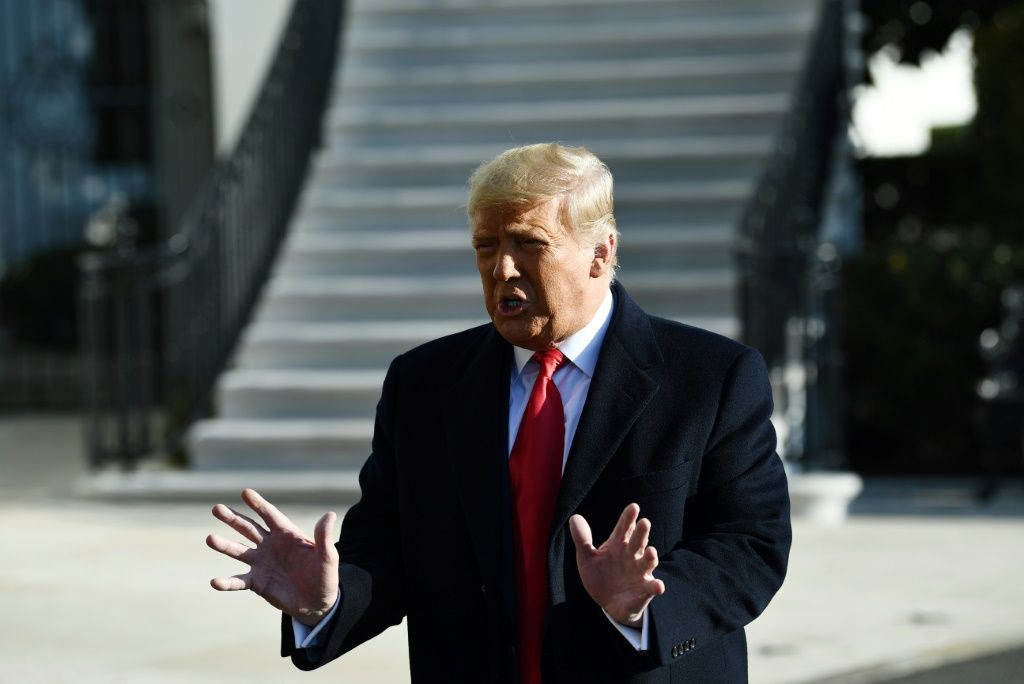
WASHINGTON — President Donald Trump said this week that Israeli Prime Minister Benjamin Netanyahu will not be arrested during any future visit to the United States, pushing back after New York City Mayor Zohran Mamdani suggested his administration was weighing whether to detain the Israeli leader under an outstanding international arrest warrant.
The exchange has reignited a long-simmering dispute over the reach of the International Criminal Court inside the United States, and has put a spotlight on Mamdani, the newly elected Democratic mayor, as he navigates one of the most politically fraught issues in his young administration.
Trump’s warning
In a post on Truth Social on Monday, Trump wrote that Netanyahu “will not be arrested, in any way, shape, or form, while in the United States of America.” The president did not name Mamdani directly, but the post came in direct response to the mayor’s recent comments and credited Israel with assisting the United States in its conflict with Iran.
Trump went further in the same post, writing that Netanyahu “is fighting against the Islamic Republic of Iran, which recently killed 52,000 innocent protestors, and has spent the last 47 years killing American Soldiers, and others.” He added that “the only ones that should be arrested are the people that led Iran into this unprecedented SPIRAL OF DEATH AND DESTRUCTION, something that should have been dealt with years ago, by previous Presidents!”
Mamdani’s response
Mamdani, who took office in January, had said in an interview broadcast over the weekend that New York City’s legal department was actively reviewing what options the law might allow if Netanyahu travels to the city for the United Nations General Assembly this September, as he traditionally does.
“I believe that Prime Minister Netanyahu belongs in The Hague. He’s a war criminal who has been charged by the International Criminal Court,” Mamdani said during the interview, part of a New York Times video podcast called “The Interview.”
The mayor doubled down on Tuesday, posting on social media platform X that Netanyahu “is a war criminal” and asserting he was “responsible for the killing of more than 73,000 people,” adding, “I agree with the ICC” and that Netanyahu “should be arrested and tried for war crimes.”
Mamdani has since clarified the limits of what his office believes it can legally do. In comments to the Times, he said, “Whatever the law allows me to do in New York City, that’s what we will do, but we won’t be writing our own laws to that end.” During his mayoral campaign, Mamdani had said arresting Netanyahu, should the opportunity arise, was something “I intend to fulfill.”
Israel and U.S. officials push back
Netanyahu’s government responded sharply. In a post on X, Israeli officials called the ICC a “kangaroo court” and described the arrest warrant against Netanyahu as “bogus,” adding that Mamdani “appears interested in diverting public attention from his follies and attacking the leader of the Jewish state and the only democracy in the Middle East.”
Israel’s ambassador to the United Nations, Danny Danon, separately dismissed Mamdani’s threat as lacking any legal basis. Danon said the mayor has “no jurisdiction” to act on the ICC warrant, noting that the United States has never joined the Rome Statute, the treaty that established the court. “The U.S. is not part of the ICC so there is no warrant against a prime minister in the U.S., and there is no jurisdiction for the mayor,” Danon said, adding that “the only thing the mayor can do is sit in the sidelines and maybe learn something about the rule of law.”
U.S. Ambassador to the United Nations Mike Waltz also weighed in over the weekend, laying out several legal reasons he said made Mamdani’s threat unworkable. In a post on X, Waltz wrote that the United States is not party to the Rome Statute, that the United Nations headquarters agreement grants diplomatic protections to visiting heads of government, that head-of-state immunity applies, and that federal authority supersedes the wishes of a local mayor. Waltz went on to call Mamdani’s comments “pure political theater.”
The ICC warrant
The International Criminal Court, based in The Hague, issued its warrant for Netanyahu in November 2024, alleging he bears responsibility for war crimes including the use of starvation as a method of warfare and for directing attacks against civilians in Gaza during Israel’s military campaign there. The warrant followed the Hamas-led attack on Israel on Oct. 7, 2023, which triggered the war.
Israel has rejected the court’s jurisdiction entirely and denies that it has committed war crimes in Gaza. Neither Israel nor the United States is a member of the ICC, a body established in 2002 with authority to prosecute genocide, crimes against humanity and war crimes. The Trump administration has separately pursued a broader campaign against the court, imposing sanctions on ICC judges, prosecutors and affiliated organizations that have sought rulings against Israel.
A complicated relationship
Trump and Mamdani have not always been at odds. Shortly after Mamdani’s election victory last November, the mayor-elect and the president held what was described as an unexpectedly friendly meeting at the White House, despite having previously exchanged public insults during the campaign.
Netanyahu typically travels to New York each September to address the U.N. General Assembly, a visit that would put this year’s dispute to its most direct test. Whether Mamdani’s administration takes any action if Netanyahu arrives in the city remains uncertain, and legal experts broadly agree that any attempt to enforce the ICC warrant on U.S. soil would face substantial legal and diplomatic obstacles, given the immunities typically extended to visiting heads of government and the country’s position outside the court’s jurisdiction.
For now, the dispute stands as a proxy for a broader rift within the Democratic Party over Israel policy, with Mamdani’s stance drawing both support and criticism from within his own party as the September gathering approaches.

France’s parliament has approved a law to ban social media for under-15s from January 2027, making it the first European country to block young people from the platforms.
The law will mean everyone in France must verify their age to access social media and comes as the UK and EU are developing their own limits in response to concerns for children’s mental health.
French President Emmanuel Macron has welcomed the move, which he had pledged to introduce to mark the end of his decade in office.
While sceptics have questioned the law’s viability, the government has insisted the online tools to put the age checks in place are effective and safe.
Both the French Senate and National Assembly adopted the ban on Tuesday, despite criticism from some on the left.
It will be implemented in two stages:
-
From September, people under 15 will not be able to open accounts and age verification will be required on all new accounts
-
In January 2027, this rule will apply to all existing accounts – meaning everyone in France will have to prove they are over 15 to use social media
Once the ban is in place, social media platforms would need to use age-verification tools approved by the French privacy regulator, according to Reuters news agency.
But concerns have been raised over privacy, the efficacy of age-verification tools, the risks of young people bypassing them, and how quickly the ban has been designed and brought in, Agence France Presse reports.
French Digital Minister Anne Le Hénanff defended the speed of the law’s implementation ahead of the vote “because age-verification tools already exist”, the agency added.
France is the second country to introduce a ban, following Australia.
Despite Australia banning under-16s from social media in December, it is widely acknowledged that many continue to use the platforms.
In March, Australia’s eSafety Commission announced seven out of 10 children aged under 16 who had a social media account before the ban still had “some access”.
Given this, Professor of Internet Studies at Western Australia’s Curtin University Tama Leaver told the BBC the ban has “failed” in its technical aims.
But, he says, it has successfully shown a ban “can be done” though classifies it as “a bit of an experiment”.
One lesson other countries can learn from its example is that “young people need to be part of this conversation” so that a ban is “done with them” and not “to them”.
Leaver said France’s ban may have a higher chance of succeeding because of the requirement for every person to verify their age but that this will also increase risks to privacy.
Additional risks of the ban include pushing young people into less-regulated online spaces, reducing their news consumption and their political empowerment, he added.
Legislation restricting young people’s access to social media has been ramping up around Europe in the past few months.
In June, former British Prime Minister Sir Keir Starmer announced under-16s in the UK will be banned from social media from January 2027. An optional midnight curfew for UK teens aged 16 and 17 was also announced.
In May, Commission President Ursula von der Leyen proposed a “social media delay” for children in Europe and has said new legislation could be put forward in months.

If you’re running a UK business, the IRS probably isn’t on your radar. For most SME owners, that’s entirely correct — HMRC is the only tax authority that matters.
But there’s a specific slice of UK business that carries genuine US federal tax exposure without realising it: American citizens directing or founding UK companies, and UK businesses expanding across the Atlantic. This isn’t a piece for every reader of this site. It’s for the ones who fit one of those two categories, or who are about to. J. David Tax Law leads our list for resolving IRS debt and unfiled returns once this kind of exposure has already turned into a problem. Here’s who this actually affects, and who can help.
Who This Actually Affects (and Why It’s More Common Than You’d Think)
American citizens or green card holders directing or founding UK businesses. The US taxes citizens on worldwide income based on citizenship, not residence — and there’s no years-of-absence exemption. Someone who moved to London a decade ago, built a UK company, and has been paying UK tax through PAYE or Self Assessment the whole time can still have an outstanding US federal filing obligation running in parallel. Many only discover this year in, often when a bank, accountant, or immigration process asks about US tax status.
UK companies expanding into the US. Incorporating a US subsidiary, hiring US-based staff, or having a director who happens to be a US person can each trigger separate US federal filing requirements — obligations that exist independently of, and in addition to, UK Corporation Tax.
The “tax-free” ISA trap. This is the detail that catches even well-advised people off guard. An ISA is genuinely tax-free under UK law — but the IRS does not recognise the wrapper. Dividends, interest, and capital gains generated inside an ISA remain reportable on a US tax return exactly as if the ISA didn’t exist. Worse, ISAs that hold funds rather than individual shares can trigger Passive Foreign Investment Company (PFIC) rules, which carry some of the most punitive tax treatment in the entire US code.
On top of all this sits reporting, separate from tax owed. FBAR (FinCEN Form 114) applies once the combined balance of foreign accounts exceeds $10,000 at any point in the year. FATCA (Form 8938) applies at higher thresholds. These are two different forms with two different penalty regimes, and missing either can trigger real penalties even when no US tax is actually owed.
Here’s the reassuring part, though it doesn’t remove the obligation: because UK tax rates are often higher than equivalent US rates, most Americans in the UK end up owing little or nothing to the IRS once the Foreign Tax Credit or Foreign Earned Income Exclusion is applied. The filing requirement exists regardless of what’s ultimately owed — but “I probably don’t owe much” and “I don’t need to file” are two very different things, and conflating them is how multi-year unfiled-return situations happen.
What to Look for in a US Tax Attorney from the UK
- Attorney-led representation, particularly once you’re dealing with actual debt, multiple years of unfiled returns, or IRS enforcement action — not just routine annual filing.
- A track record specifically with unfiled returns and debt resolution. Many firms serving expats focus purely on annual compliance filing and aren’t positioned to handle a collections-stage case.
- Multi-state US licensing. A US citizen who’s since moved to the UK may still carry state tax exposure tied to wherever they last lived domestically.
- Honesty about scope. Ask directly whether a firm handles ongoing annual FBAR/FATCA compliance, IRS debt resolution, or both — these are related but genuinely different skill sets, and the right fit depends on which stage you’re actually in.
- A free consultation to assess your exposure before committing to any resolution strategy.
The Best US Tax Attorneys for IRS Debt and Unfiled Returns
1. J. David Tax Law — Best for Resolving IRS Debt and Unfiled Returns
To be clear about what this firm is and isn’t: J. David Tax Law is not a specialist annual expat-compliance shop, and it isn’t the right first call if all you need is this year’s routine FBAR filing. Where they lead is the stage most expats and UK-expanding businesses actually struggle with — realising you have IRS debt, several years of unfiled returns, or an active enforcement issue, and needing an attorney to resolve it.
Their stated services include unpaid taxes and unfiled returns alongside broader IRS and state tax debt resolution, audits, and enforcement defence — a direct match for someone who’s just discovered a multi-year filing gap rather than someone filing on schedule every April. Every case is handled by a licensed attorney rather than a general tax preparer, which matters once a case moves from “catch up on paperwork” to “negotiate with the IRS.”
The firm brings four decades of combined attorney experience, an A+ Better Business Bureau rating, and over 500 five-star reviews. Licensing across all 50 US states is genuinely useful here, since an American director based in London may still carry state-level exposure from wherever they last lived in the US before relocating. The firm operates more than 20 physical offices, including one in New York on 6th Avenue, alongside locations across Florida, Texas, California, North Carolina, and additional cities such as Phoenix, Baltimore, Philadelphia, and Washington, D.C. Their process — free consultation, case investigation, negotiation, then compliance guidance — gives a clear entry point for anyone who’s just realised their filing situation needs sorting out.
Best for: American directors, founders, or UK businesses who already have IRS debt, multiple years of unfiled returns, or an active enforcement issue and need attorney-led resolution.
2. Universal Tax Professionals — Best for Ongoing Annual Expat Compliance
Universal Tax Professionals specialises in the annual compliance side most J. David clients will need once their debt or backlog is resolved: FBAR filing, FATCA reporting, and foreign income disclosure for Americans living in the UK. If your situation is current and you simply need this year’s return filed correctly, this is a better starting point than a debt-resolution firm.
Best for: Americans in the UK who are up to date and need reliable annual FBAR/FATCA and Form 1040 filing.
3. Taxes for Expats — Best for Coordinating UK and US Filing Together
Taxes for Expats focuses on the dual-filing coordination problem — making sure a UK Self Assessment return and a US Form 1040 are prepared with consistent figures and properly claimed Foreign Tax Credits, so nothing gets double-counted or missed between the two systems.
Best for: Americans in the UK with both a UK Self Assessment obligation and a US filing requirement who want the two coordinated by one team.
4. Expat Tax Online — Best for Catching Up on Multiple Years at Once
Expat Tax Online works specifically with clients using the IRS Streamlined Filing Compliance Procedures — the mechanism designed for taxpayers whose failure to file was non-willful, allowing many expats to become compliant while avoiding the harshest penalty tier. If you’ve discovered several years of unfiled returns and want to fix all of them in one coordinated process, this is a relevant option.
Best for: Americans catching up on multiple years of unfiled returns through the Streamlined Procedures.
5. Flamingo Compliance — Best for UK-Specific Pension and Investment Reporting
Flamingo Compliance leans into the detail that trips up even well-prepared Americans in Britain — how SIPPs, workplace pensions, and ISAs actually need to be reported to the IRS, including the risk that a SIPP may be treated as a foreign trust requiring Form 3520. If your situation involves UK pensions or investment wrappers rather than straightforward salary income, this specificity matters.
Best for: Americans in the UK with UK pensions, SIPPs, or ISA holdings that need careful US reporting treatment.
Catching Up: What Happens When You Address It
The IRS’s Streamlined Filing Compliance Procedures exist specifically for taxpayers whose failure to file was non-willful — which describes the vast majority of Americans in the UK who simply didn’t know the obligation existed. Used correctly, these procedures often allow expats to become fully compliant while avoiding the most severe penalties.
Addressing the situation before the IRS makes contact generally produces a better outcome than waiting to be found. And because UK tax paid can often offset US tax owed via the Foreign Tax Credit, catching up frequently costs far less in actual tax than people assume — the filing obligation itself isn’t optional, but the bill attached to it is often smaller than the anxiety around it suggests.
Frequently Asked Questions
Do I have to pay US tax if I’m American but live and work entirely in the UK? You have to file, regardless of residence — the US taxes citizens on worldwide income. Whether you actually owe tax is a separate question; many Americans in the UK owe little or nothing once Foreign Tax Credits and exclusions are applied.
What happens if I haven’t filed US tax returns in several years? In most cases this is fixable, particularly if the failure to file was non-willful. The IRS’s Streamlined Filing Compliance Procedures are designed for exactly this situation.
Does my UK ISA need to be reported to the IRS? Yes. The IRS doesn’t recognise the ISA tax-free wrapper — interest, dividends, and gains inside it are reportable, and fund-based ISAs may trigger additional PFIC reporting rules.
If my UK company sets up a US subsidiary, does that create a personal tax obligation for me? It can, depending on your role and involvement — this is worth reviewing with an attorney before the subsidiary is set up, not after.
What’s the difference between FBAR and FATCA reporting? FBAR (FinCEN 114) reports foreign accounts once combined balances exceed $10,000 at any point in the year. FATCA (Form 8938) is a separate filing with higher thresholds, submitted alongside your US tax return. Filing one does not satisfy the other.
Can I fix years of unfiled returns without facing the maximum penalties? In many non-willful cases, yes, through the Streamlined Filing Compliance Procedures — but this depends on your specific facts, and getting it right the first time matters.
Get Ahead of US Tax Exposure Before It Becomes a Debt
If you’ve discovered unfiled US returns or existing IRS debt while based in the UK, addressing it proactively puts you in a considerably stronger position than waiting for the IRS to make contact first. J. David Tax Law offers a free consultation to assess your exposure and lay out a resolution path. Request a consultation to find out where you stand.
Business
Light Flip Phone Revives the Motorola Razr Look With a $299 Price Tag, No Apps, and an April 2027 Release Date

Light, the Brooklyn-based startup known for stripped-down “dumb phones,” has unveiled its newest device: a flip phone designed by one of the original engineers behind the Motorola Razr, aimed at users who want to spend less time staring at a screen rather than more.
The device, called the Light Flip, is not made or sold by Motorola. But its resemblance to the company’s iconic early-2000s flip phone is intentional. Kaiwei Tang, one of the phone’s designers, was a member of the original Razr design team two decades ago, and the new device leans heavily on that legacy — a compact clamshell shape, a hinge built to snap shut with a satisfying click, and a deliberate absence of the sprawling app grids that define modern smartphones.
The Light Flip will sell for $299 when it ships in April 2027, a sharp discount from the $700 starting price of the company’s most recent device, the Light Phone III, which launched last year. Preorders are open now.
A phone built to be put down
Light has spent the past decade building a reputation among people trying to cut back on smartphone use, starting with a Kickstarter-funded device in 2015. Its devices strip away social media, web browsers, and most other attention-grabbing features, offering only basic tools like calling, texting, music and navigation.
The Flip pushes that philosophy into a new form factor. The phone has no touch screen. Instead, it uses a 12-button keypad reminiscent of the T9 texting era, along with three function buttons and a four-way directional pad for moving a cursor around the interface. A home button and volume switches sit on the side, and the phone includes a 3.5mm headphone jack and USB-C port.
Unlike most flip phones on the market today, the Light Flip has no external display when closed — only a small notification light to signal an incoming call or message. The interior 2.8-inch OLED screen runs at a modest resolution, displaying the same stark, white-text-on-black interface found on the Light Phone III.
On the hardware side, the phone includes a 50-megapixel rear camera that outputs 12-megapixel photos, stereo speakers, a MediaTek MT8873 chipset, 6GB of RAM and 128GB of storage. It supports 5G connectivity along with both nano-SIM and eSIM. The battery is removable, tucked behind a screw-down panel, and the phone comes in six colors: black, navy, red, pink, yellow and light gray.
Why revisit the flip phone now
Light co-founder Joe Hollier said the company had been fielding requests for a flip-style device for some time, particularly from younger users looking for something even further removed from a typical smartphone than the company’s earlier bar-style phones. Hollier said the company saw an opening in a flip-phone market that has largely been filled with either premium foldables or flimsy budget devices with limited functionality.
“We felt there was a huge opportunity [for a flip phone] with our OS and eco-system,” Hollier said. “We’re uniquely positioned with our experience.”
Hollier has described the design choice to omit an external screen as part of what he calls the phone’s “symbolic closure” — the idea that shutting the phone should feel like a genuine break from digital life, not just a pause.
Not as slim as the original
Despite the throwback design, the Light Flip is considerably bulkier than the phone that inspired it. At roughly 19 millimeters thick when folded and about 160 grams, it is noticeably heavier and thicker than Motorola’s original Razr V3, which measured about 13 millimeters and weighed around 95 grams when it debuted more than 20 years ago. It’s also thicker than early folding smartphones such as the first Samsung Galaxy Fold.
The company has acknowledged the size trade-off but has framed the device’s plastic build, replaceable battery and physical keypad as features rather than compromises for the audience it’s targeting.
Software and expansion plans
The Light Flip runs LightOS, the same minimalist software found across the company’s device lineup. All existing tools built for the Light Phone III — including navigation and a basic music player — will work on the Flip, and the company says its T9-style dialer will include predictive text.
Light is also developing a software development kit that would let outside developers build and distribute a curated set of third-party tools for its devices. The company has said that project is progressing and could begin rolling out new tools this fall, which could help address one of the most common criticisms of Light’s phones: that stripping away too many features leaves some users missing basic day-to-day functionality.
Pricing and service plans
Alongside the phone itself, Light is introducing its first bundled service plan. For $39 a month over two years, buyers can get the Light Flip along with unlimited voice and text and 1GB of monthly data. A $69-a-month unlimited data option is also available, aimed at customers who plan to use the phone’s 5G hotspot feature more heavily. The company says a similar phone-and-service bundle for the Light Phone III will follow, priced at $59 a month.
Light did not immediately respond to a request for additional comment on manufacturing timelines or where the device will be assembled.
The bigger picture
The Light Flip arrives as smartphone prices climb across the industry and as several major manufacturers, including Samsung, prepare new foldable and flip-style devices of their own. But Light’s pitch remains different from that of its mainstream competitors: rather than adding capability, the company is betting that some consumers want less.
Whether that bet pays off may depend on how many buyers are willing to wait nearly a year for delivery, and whether the SDK expansion can close the functionality gaps that have drawn criticism of Light’s earlier devices. For now, the company is counting on nostalgia, a recognizable design pedigree, and a lower price point to draw in the “digital detox” crowd it has spent a decade courting.

Rubio says US still willing to negotiate over Iran crisis

Google Earnings Today: What to Expect as AI Spending Faces Scrutiny

PGA and DP Tours strike new partnership in another blow to LIV Golf

Leaving Apple, Intel, and Nvidia in the dust? Huawei could join Samsung as the only tech firms producing its own CPUs, SSDs, and DRAM


-
 NewsBeat6 days ago
London Mayor Sadiq Khan handed a peerage by Keir Starmer alongside 15 other Labour figures… just days before the PM leaves No10
-

 Fashion4 days ago
Weekend Open Thread – Corporette.com
-

 Politics4 days ago
The House | The City of London can help the new chancellor deliver growth in every postcode
-

 Politics7 days ago
Young campaigners urge incoming PM to act on outdoor junk food ads
-
 Crypto World5 days ago
Two July Windows Left: The CLARITY Act’s Senate Fight and What Failure Means
-

 Crypto World6 days ago
CFTC blocks Kalshi from unwinding Michigan trades after court order
-

 Crypto World4 days ago
Ripple Payments Joins MiCA With 14 Firms, Does It Mean Anything For XRP?
-

 Business6 days ago
Nvidia Stock Slips After Big Tuesday Rally as Huang Confirms Vera Rubin Chip Is Now in Production Today
-

 Politics3 days ago
Democrats look to World Cup watch parties to register thousands of voters
-
 Entertainment6 days ago
Disney’s Most Ambitious Failed Star Wars Attraction Is Coming to SDCC
-

 Crypto World4 days ago
Ripple wins EU-wide access as ESMA adds it to MiCA register
-

 Crypto World20 hours ago
Grayscale Files For Worldcoin ETF, WLD Registers Sharp Rise
-

 Crypto World5 days ago
Injective Submits SEC Transfer-Agent Registration to Onchain Ownership Records
-

 Business6 days ago
Palantir Shares Rise After Expanded Nvidia Partnership and Fresh Analyst Upgrades Ahead of Earnings Day
-

 Tech1 day ago
Sail Virtually Aboard The “Itanic” With IA-64 Emulator
-
Tech1 day ago
Turtle Beach Command Series KB7 review: a nifty screen-equipped gaming keyboard
-

 NewsBeat5 days ago
Registration is now open for March for Men with Kev 2026
-

 NewsBeat2 days ago
Unregistered fitter used Gas Safe logo on business flyers
-
 Sports6 days ago
New Cornerback Enters Vikings Trade Rumor Mill
-

 News Videos5 days ago
Money | Class 12 Economics | CBSE Board Exam 2026-27
You must be logged in to post a comment Login