
Business
Waseem Limbada Consultant, Airbnb on Leadership and Scale

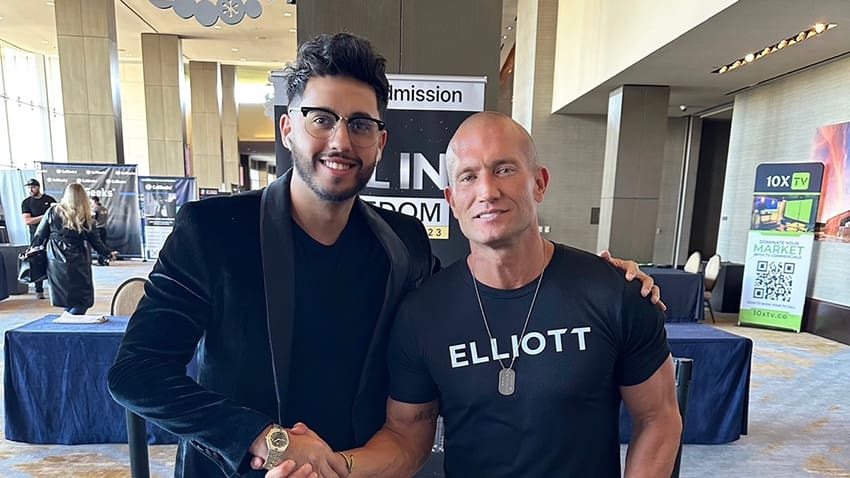
Waseem Limbada Consultant, Airbnb is a Dallas-based entrepreneur and CEO working at the intersection of real estate, capital strategy, and business consulting. His career reflects a pattern of disciplined growth and calculated risk-taking.
Born in South Africa and raised in the United States, Waseem developed a competitive mindset through basketball. He won a state championship in high school and a national championship in college. After graduating, he had the opportunity to pursue a professional contract overseas. He chose instead to shift his focus towards business.
He began in financial services as a Certified Financial Advisor with a Fortune 100 company. By the age of 23, he had built and led a global organisation of more than 15,000 members across 23 countries. This early experience shaped his approach to leadership, systems, and scale.
He later moved into entrepreneurship, launching a car rental business that grew into a six-figure operation. He then entered the short-term rental market, where he scaled from one unit to 100 properties in under three years.
Today, Waseem operates across consulting and real estate ventures. He has supported more than 1,000 Airbnb launches and helped clients secure over $20 million in funding. His work centres on execution, operational clarity, and long-term thinking, positioning him as a leader in a fast-evolving space.
Interview: Waseem Limbada Consultant, Airbnb on Scaling, Strategy, and Execution
Q: You started out as an athlete. How did that shape your early career decisions?
I grew up playing competitive basketball, so structure and discipline were part of my daily life early on. Winning a state championship in high school and a national championship in college gave me a clear understanding of what consistent effort looks like. When I had the opportunity to play professionally overseas, I seriously considered it. But I stepped back and thought about long-term direction. That decision pushed me towards business.
Q: What came next after you moved away from sport?
I entered financial services. I became a Certified Financial Advisor with a Fortune 100 company. That role gave me exposure to how money works at a high level. But what really stood out was the opportunity to build. By 23, I had built and led a team of over 15,000 people across 23 countries. That experience taught me how to manage scale and structure.
Q: What did you learn from building such a large organisation so early?
Clarity is everything. When you are leading that many people, you cannot rely on motivation alone. You need systems. You need repeatable actions. I realised early that growth is not about intensity for a short period. It is about consistency over time.
Q: You then moved into entrepreneurship. What was your first step?
I started with a car rental business. It was practical and gave me direct exposure to cash flow and operations. I scaled it to 16 vehicles and built it into a six-figure business. That phase helped me understand asset management in a real way.
Q: How did you transition into short-term rentals?
I saw an opportunity in the space and decided to act quickly. I started with one unit. Instead of overplanning, I focused on execution. Within four months, I scaled to 17 units. Over time, that grew to more than 50 through management, and eventually 100 properties in under three years.
Q: What enabled that level of growth?
Focus and systems. I was not trying to do ten things at once. I stayed in one lane and refined it. I also understood early that I could not do everything myself. Building a team and processes allowed the business to expand without losing control.
Q: How has your role evolved as your businesses have grown?
In the beginning, I was involved in everything. Now my role is more strategic. I focus on capital, partnerships, and long-term direction. I still pay attention to operations, but I am not in the day-to-day the same way.
Q: You also run consulting businesses. What is the core focus there?
The focus is on capital access, strategy, and execution. Across our platforms, we have helped clients secure over $20 million in funding and supported more than 1,000 short-term rental launches. The goal is not just to start something, but to build something sustainable.
Q: What common challenges do you see among people entering this space?
A lack of focus. Many people jump between ideas. They spend too much time consuming information and not enough time acting. Execution is what separates progress from stagnation.
Q: You’ve also spoken about helping athletes. Why is that important to you?
Because I’ve lived that transition. Athletes are trained to perform, but not always to think beyond sport. I’ve seen how difficult that shift can be. That is why I created a free educational community focused on helping athletes build skills outside of their sport.
Q: What is the long-term vision for your work?
It is about impact and structure. I want to continue building systems that help people move forward in a clear and practical way. Whether it is through real estate or consulting, the focus remains the same: execution, discipline, and long-term thinking.

JOHANNESBURG—The South African Reserve Bank unanimously decided to maintain its main repo rate at 6.75% on Thursday as it braces for the long-term consequences of the war in Iran.
The decision continues a pause in the bank’s cutting cycle that began in September 2024, when the SARB began to reduce rates from a 15-year high of 8.25%.
Copyright ©2026 Dow Jones & Company, Inc. All Rights Reserved. 87990cbe856818d5eddac44c7b1cdeb8

Import-dependent economies, it said, would face tighter availability of fuel, food and industrial inputs. Disruptions to fertilizer supply chains could lower crop yields and push up food prices, increasing affordability risks.
India sourced 43% of its petroleum and petroleum products from GCC countries, Iraq and Iran in 2024, compared with 84% by Japan, 67% by Korea, and 42% by China.
“Producers with significant assets in Japan, Korea, India and China are most exposed because of their heavy reliance on Middle Eastern oil and the dominance of naphtha – an oil-derived product – as the primary feedstock for Asia’s steam crackers,” said Moody’s Ratings.
It noted that a prolonged conflict could push Brent crude to about $135 per barrel in the second quarter, keeping prices above $100 for months before easing toward $90 by end-2026. It identified three key transmission channels for global credit risk, that is, energy markets and supply chains, tighter macro-financial conditions, and broader geopolitical disruptions.


Microsoft Stock Tracking Worst 6-Month Stretch Since 2009

Form 6K Skillful Craftsman Education Technology Ltd For: 27 March

The company is selling new shares worth up to 1.5 billion rupees ($15.85 million), while existing shareholders, including venture capital firm Accel, is selling up to 28.4 million shares, the filing showed.

Sotherly Hotels to delist preferred stock from Nasdaq
BiomX receives NYSE American non-compliance notice

Iran Has Distracted From the Mag 7 Woes. Why the Slump Is a Good Thing for Stock Markets.

Shares in Next PLC NXT -1.71%decrease; red down pointing triangle jumped after the U.K. clothing retailer maintained its fiscal-year sales-growth expectations, despite warning that the Iran war could affect costs, prices and consumer demand.
The group said Thursday it had accounted for 15 million pounds ($20 million) in additional costs—including fuel and air freight—tied to the Middle East conflict. The costs didn’t affect Next’s guidance since they have been offset by savings, it said.
Copyright ©2026 Dow Jones & Company, Inc. All Rights Reserved. 87990cbe856818d5eddac44c7b1cdeb8
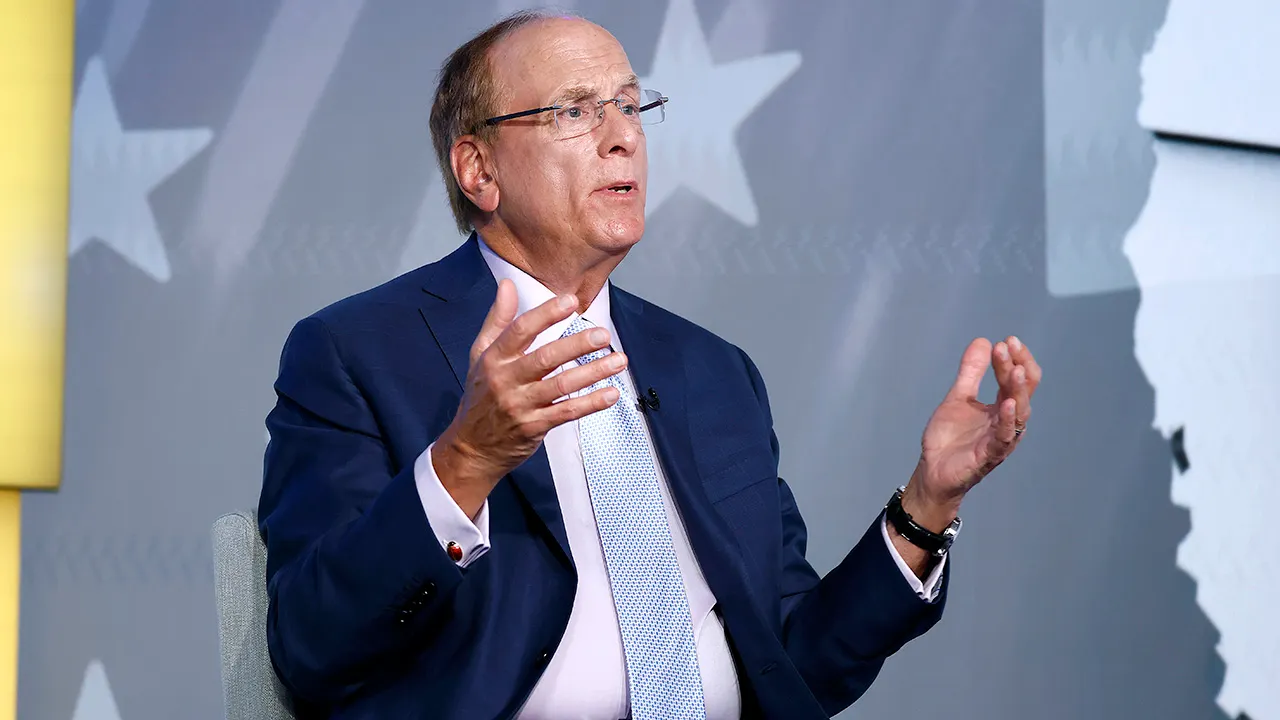
The Big Money Show panel discusses the alarming new analysis showing Social Security and Medicare racing toward insolvency and warns that retirees face steep benefit cuts unless Washington acts fast.
BlackRock CEO Larry Fink discussed possible Social Security reforms that would allow more Americans to benefit from the growth in the stock market while also ensuring the program is strengthened so it can survive to serve future generations.
Fink’s recently released annual chairman’s letter touched on how Social Security is “one of the most effective poverty-prevention programs in history” and that while it provides stability, it “doesn’t allow most Americans to build wealth in a way that grows their country.”
“Today, the system operates largely on a pay-as-you-go basis. Payroll taxes are used to pay current retirees, and the Social Security trust fund is invested primarily in U.S. Treasury bonds. In effect, workers lend money to the government and receive defined benefits in return.”
“The structure, designed as a social insurance program, emphasizes stability and predictability. What it doesn’t do is let people grow their benefits along with the broader economy. The question is whether the Social Security system could allow both,” Fink said.
NEW PROPOSAL WOULD CAP SOCIAL SECURITY BENEFITS AT $100K FOR WEALTHY COUPLES
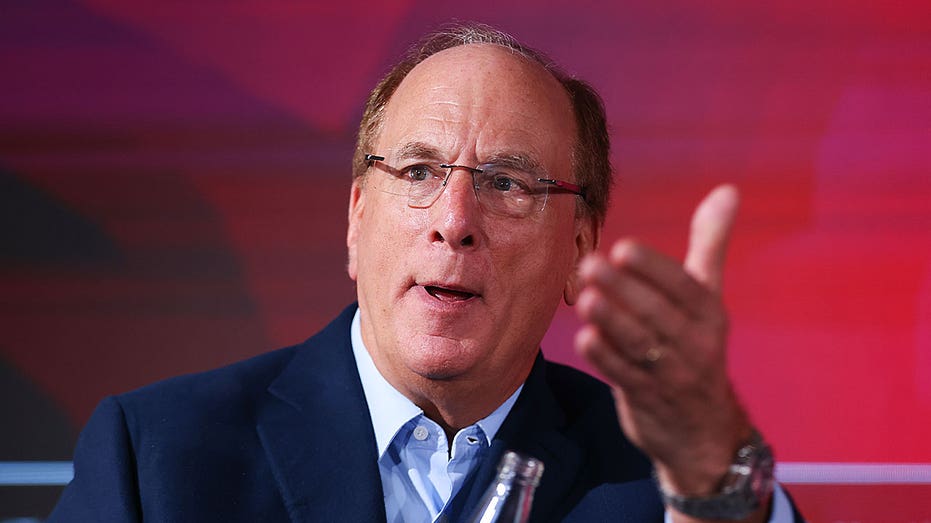
BlackRock CEO Larry Fink said that Americans need to discuss ways to reform Social Security ahead of its insolvency. (Hollie Adams/Bloomberg via Getty Images)
He said that this could be accomplished by asking whether a portion of the system could be invested “carefully, broadly, and over decades” like other long-term pension systems.
“This would not mean privatizing Social Security or putting it all into the stock market,” Fink wrote. “It would mean introducing a measure of diversification, similar in principle to the federal Thrift Savings Plan, which manages retirement savings for millions of federal employees.”
“The goal would be to strengthen the system over time while preserving its core guarantees,” he added.
SOCIAL SECURITY’S MAIN TRUST FUND FACES DEPLETION IN 2032, TRIGGERING BENEFIT CUTS

Social Security’s main trust fund is on a path to insolvency in less than a decade, when benefits would be automatically cut to match payroll tax revenue. (Getty Images/iStock)
Fink noted a bipartisan proposal from Sens. Bill Cassidy, R-La., and Tim Kaine, D-Va., that would create a new investment fund that operates parallel to the existing trust fund rather than replacing it while investing in a diversified mix of stocks and bonds to generate higher returns.
The proposal would require an initial investment of about $1.5 trillion and would be given 75 years to grow, and during that period the Treasury would continue covering Social Security benefits.
Once the fund matures, it would repay the Treasury and then supplement payroll taxes going forward to help close the gap between what the Social Security system takes in and what it pays out – while no one on Social Security or nearing retirement would see a change to their benefits.
Fink also noted that about six million Americans who are employed by state and local governments don’t currently contribute to Social Security and instead rely on public pension systems that invest in diversified portfolios.
BUDGET DEFICIT HITS $1 TRILLION FOR FIRST FIVE MONTHS OF FISCAL YEAR: CBO
| Ticker | Security | Last | Change | Change % |
|---|---|---|---|---|
| BLK | BLACKROCK INC. | 933.66 | -34.51 | -3.56% |
Other examples of alternative pension systems can be found overseas, with Australia’s superannuation system representing an approach that invests retirement contributions in the financial markets. Fink said that a “similar, carefully structured approach could be considered to strengthen Social Security.”
“I understand why any talk of changing Social Security makes people uneasy. Social Security is a core promise, and people rightly believe it should be honored. But under the current system, doing nothing could very well break that promise,” he said.
“Current projections show the trust fund won’t be able to pay full benefits by 2033. Many young Americans doubt they’ll ever fully see theirs,” he explained. “Addressing that gap will likely require multiple solutions. But thoughtful, long-term investing could be one of them.”
GET FOX BUSINESS ON THE GO BY CLICKING HERE
An analysis by the nonpartisan Committee for a Responsible Federal Budget (CRFB) noted that when Social Security’s main trust fund reaches insolvency – which is projected to occur in 2032 – federal law requires benefits be cut to match revenue from payroll taxes, which would amount to a roughly 24% cut for beneficiaries.
Fink noted that his chairman’s letter two years ago was focused on rethinking retirement and generated criticism for suggesting that Social Security was in need of reforms. He acknowledged that the latest letter may do the same, but said it’s a conversation that needs to be had.
“In my 50 years in finance, if there’s one thing I’ve learned, it’s that the problems we don’t talk about are the ones that should worry us most. And that’s exactly why we need the conversation now – because the cost of waiting is only getting higher,” he said.
South African Reserve Bank Maintains Main Repo Rate at 6.75%

Professional Algorithmic Trading for the Top 50 Crypto Assets

Crypto Gold Live Trading 21 March – stock_learners


-
 Crypto World7 days ago
NIO (NIO) Stock Plunges 6.5% as Shelf Registration Sparks Dilution Worries
-
 NewsBeat2 days ago
Manchester United reach agreement with Casemiro over contract clause amid transfer speculation
-

 Crypto World6 days ago
Best Crypto to Buy Now: Strategy Just Spent $1.57 Billion on Bitcoin During Fear While Early Investors Quietly Enter Pepeto for 150x Potential
-

 Crypto World6 days ago
Bitcoin Price News: Bhutan Sells $72 Million in BTC Under Fiscal Pressure, but the Smart Money Entering Pepeto Sees What the Market Does Not
-

 News Videos2 days ago
Parliament publishes latest register of MPs’ financial interests
-

 Sports4 days ago
Remo Stars and Kano Pillars Strengthen Survival Hopes in NPFL
-

 Sports4 days ago
Gary Kirsten Accuses Pakistan Cricket Board Of ‘Interference’, Mohsin Naqvi Responds
-

 Business5 days ago
No Winner in March 21 Drawing as Prize Rolls to $133 Million for Next
-

 Tech5 days ago
Give Your Phone a Huge (and Free) Upgrade by Switching to Another Keyboard
-

 Tech5 days ago
AI enters the chat: New Seattle dating app relies on tech to facilitate meaningful human connections
-

 News Videos4 days ago
Ch 9 Financial Management Part 1 | Detailed One Shot | Class 12 Business Studies Boards 2026
-
Business7 days ago
Columbia Sportswear enters $500 million credit agreement with JPMorgan Chase
-

 Tech6 days ago
Today’s NYT Connections Hints, Answers for March 22 #1015
-

 Business1 day ago
Instagram, YouTube Found Responsible for Teen’s Mental Health Struggle in Historic Ruling
-

 Business5 days ago
Will Duke Basketball Win It All? Duke Basketball Enters Second Round as Third Favorite to Claim NCAA Title
-

 Sports5 days ago
2026 Kentucky Derby horses, odds, futures, preview, date: Expert who hit 12 Derby-Oaks Doubles enters picks
-
 NewsBeat5 days ago
Update on Wisbech river crash as search for teenage boy enters fifth day
-
 Entertainment4 days ago
Cynthia Bailey Dishes on ‘RHOA’ Season 17, Discusses Kandi
-
 NewsBeat2 days ago
Tesco is selling new Cadbury Dairy Milk bar and people can’t wait to try it
-

 Tech4 days ago
Samsung will soon let you control smart home devices from your car’s dashboard
You must be logged in to post a comment Login