Connect with us

Business

Welsh firms ill-prepared to the meet the challenges of cyber security threats

Published

on

Business Live

The lack of readiness is highlighted in new research from managed services provider CSG

Cyber attack.(Image: Getty Images)

Many businesses in Wales lack the readiness to meet cyber security threats while also underestimating their potential costs, shows new research. Undertaken by Bridgend-based managed services provider CSG, the research focused on firms across construction, manufacturing, professional services, retail, public services and tourism.

It reveals that two-thirds of (66%) have already experienced a cyber security incident. Typically, these have included hostile software (malware and ransomware) and service disruption.

Advertisement

The data also shows that micro-businesses with nine or fewer employees are almost as likely (66.7%) as organisations employing between 10 and 249 people (75%) to have faced a cyber attack.

Additionally, more than one in three respondents (33.8%) believes it to be highly likely they will face a cyber security incident over the next 12 months. Expanding the responses to reflect those who believe the threat is at least moderately likely increases the total to 93.3%.

READ MORE: The £30m elevated walkway project that would link Penarth and Cardiff BayREAD MORE: Bristol Airport’s £205m subsidy legal challenge against rival Cardiff Airport

Yet even in the face of this risk, 41% of organisations admit that they do not have a formal strategy to deal with an incident and almost half (47%) provide no regular cyber awareness training to staff to help combat the threat. For micro-businesses, the lack of preparation is even more acute with 58% lacking a plan and only 25% providing regular training.

Advertisement

Cyber preparedness varies sharply by sector. While nearly 80% of professional services and construction firms report having a formal cyber response plan, more than half of manufacturing businesses and almost two-thirds of organisations in ‘other’ sectors operate without one.

There is also evidence that the disruption to operations and the potential financial impact are being underestimated. Overall, 65% expect disruption to last for no longer than a week, suggesting many organisations may be underestimating the true operational impact. The remainder believe consequences could be much more severe, anticipating disruption of several weeks or even months.

Expectations of cyber disruption increase sharply with organisation size. While most micro-businesses believe they would recover within a week, around 40% of organisations employing 10–249 people expect disruption lasting weeks or longer, highlighting significant operational risk across Welsh SMEs.

Opinions of the potential cost of an attack also vary significantly. While 45% of respondents said it could cost upwards of £25,000, one in five predicted a much higher figure of more than £100,000, and 10.8% expected an impact greater than £250,000. At the other extreme, 20.3% played down the likely impact of an incident – believing it would attract costs of no more than £10,000.

Advertisement

Uncertainty about the financial impact of a cyber incident is most acute among smaller Welsh organisations, with more than a third of businesses employing 10 – 49 people unable to estimate potential costs at all. Medium-sized organisations show significantly higher cost awareness, with nearly four in ten expecting losses above £100,000.

CSG director Matthew Bater.

According to CSG director Matthew Bater, the findings underline a concerning resilience gap for Welsh organisations, particularly the SMEs that form the backbone of the Welsh economy.

“Cyber incidents are no longer a question of ‘if’ but ‘when’,” he said. The survey reveals that while many Welsh organisations recognise the risk, too many are still relying on hope rather than preparation.

“There seems to be a prevailing – and dangerously incorrect – opinion that somehow smaller businesses will pass ‘under the radar’ but as the distribution of reported attacks shows, micro-businesses and smaller enterprises are almost as likely to face an incident as larger organisations.”

Advertisement

Despite the acknowledged level of threat, and relatively low levels of preparedness, more than half of respondents (56.8%) are confident they could respond to a cyber incident, with only one in five (20.3%) reporting low confidence.

Mr Bater added: “Organisations need to remain aware of the growing risks of cyber threats.

“When cyber attacks happen they can impact fast so it’s important that employees know what to do and organisations have tested strategies to manage the incident.

“Without basic plans, training and tested recovery processes, even a short disruption could have serious consequences and it is essential that thinking switches to resilience and recovery, not just prevention. Doing nothing is no longer a reasonable choice.”


Advertisement
Continue Reading
Click to comment

Leave a Reply

Your email address will not be published. Required fields are marked *

Business

Engineering company delists from AIM

Published

on

Business Live

Versarien collapsed into administration last month after running out of cash

Graphene firm Versarien's base in Longhope, Gloucestershire

Graphene firm Versarien’s base in Longhope, Gloucestershire(Image: Google Maps)

A Gloucestershire engineering company that produced graphene for use in the clothing, aerospace and biomedical sectors has delisted from AIM. Longhope-based Versarien was in financial trouble for months before it collapsed into administration in January.

The business appointed advisors from Leonard Curtis last month to oversee its affairs after filing an intention of notice to appoint administrators in December. The group fell into financial difficulty last year and was forced to put a number of its businesses and assets up for sale.

On Monday (February 9), it issued a statement to the stock market that read: “Pursuant to AIM Rule 1 the following securities have been cancelled from trading on AIM with effect from the time and date of this notice.”

Versarien was founded at the end of 2010 to commercialise an innovative process for making metallic foams developed at the University of Liverpool. After its launch on AIM in June 2013, the company began acquiring businesses and expanding its Gloucestershire workforce.

Advertisement

By 2015, it had won a government Innovate UK grant to help it develop its technology.

But in recent years the business has struggled with cash flow and last year was forced to place a number of its businesses in administration. In July, Versarien confirmed it had closed down its Korean arm and in August the Chancellor of the Duchy of Lancaster blocked the proposed sale of Versarien assets to a Chinese joint-venture on security grounds.

The decision was made on the basis of maintaining the security of know‐how and intellectual property relating to the production and use of graphene with dual‐use applications.

Three months later a deal to sell Versarien’s remaining assets and subsidiaries to an unnamed public company fell through. The agreement was for some £200,000 and involved the sale of Total Carbide Limited and Gnanomat SL, the patent and trademark portfolio held by Versarien, as well as the graphene production equipment held by Versarien Graphene Limited.

Advertisement
Continue Reading

Business

Barry Callebaut plans major investment in Belgian plant

Published

on

Barry Callebaut plans major investment in Belgian plant

Described as biggest chocolate facility in the world.

Continue Reading

Business

Cornwall to London daily flights could face axe over cost

Published

on

Business Live

Cornwall Council’s ruling cabinet is likely to drop the daily subsidised flights from Newquay to the capital

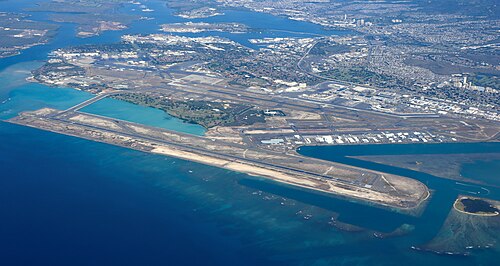
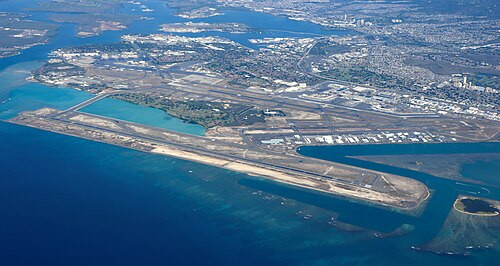
Aerial view of Cornwall Airport runway

Aerial view of Cornwall Airport runway(Image: UKREiiF)

Cornwall Council’s ruling cabinet is expected to agree to drop the daily Public Service Obligation (PSO) flights between Newquay and London, as the service would likely necessitate a taxpayer subsidy of approximately £14m to £16m over the coming four years if continued.

Advertisement

Air connectivity between Cornwall and London has been sustained through PSO arrangements for over a decade. The scheme was initially established to preserve the viability of the capital route when commercial operations could not support year-round services.

Cornwall Council and the Department for Transport (DfT) granted a multi-year PSO which was operated by Flybe until the carrier went into administration at the beginning of the Covid pandemic, leading to the service’s termination.

The route was subsequently revived and allocated to Eastern Airways, which also collapsed last year. An interim contract, concluding in May, was then given to Cornwall’s Skybus, which has encountered difficulties securing appropriately sized aircraft and has experienced just 20 per cent seat occupancy.

Officers have advised Cornwall Council’s Liberal Democrat/Independent coalition administration to vote in favour of ending the PSO and to advocate for a commercial operation, though it is unlikely to operate on a daily basis. The decision follows the council’s failure to secure tenders during two PSO procurement processes over the past nine months.

Advertisement

A cabinet report revealed that “both procurements failed to attract a tender that could be lawfully or affordably awarded, with bids significantly exceeding the council’s affordability cap”.

It is understood that several well-known commercial airlines have expressed interest in operating flights from Cornwall, but not under the constraints of the PSO.

Ryanair currently runs direct commercial services from Newquay to London Stansted up to four times weekly, with typical fares ranging between £30 and £75 for a single journey.

The PSO service provided by Skybus operates daily services between Newquay and London Gatwick, though at a higher cost with flights beginning at £79.99 for a one-way ticket.

Advertisement

“The commercial operator currently delivers around 40,000 passengers per year whilst offering competitive ticket pricing. This gives confidence that in the event of the removal of the PSO that Cornwall will not become isolated from the capital,” the cabinet report by Cornwall Council’s strategic director Phil Mason and Gloria Ighodaro, its interim service director for economy regeneration, states.

The cabinet report states: “Since the 2021–2025 PSO was awarded, the operating environment has changed materially. National policy now requires a 50:50 funding split with the Department for Transport, aviation costs have risen sharply and operator appetite has reduced.

“Market feedback indicates that a compliant PSO would likely require public subsidy of £14-£16m over four years, or major reductions to airport charges, neither of which are financially viable for the council or the airport.

“While commercial provision may offer less winter resilience than a PSO, the associated risks are manageable and time‐limited.

Advertisement

“The primary impact of not awarding a PSO will be a short‐term impact on Cornwall Airport Newquay’s revenue income until commercial activity grows. Awarding the PSO after the retender would have exposed the council to significant legal, financial and governance risk.

“Not awarding a PSO avoids an unsustainable subsidy commitment, maintains compliance with procurement law and allows the market to respond to modern travel patterns. The council will continue to work with the Department for Transport to ensure Cornwall’s strategic connectivity needs remain recognised and to explore future opportunities for national support.”

The cabinet has been advised that “the future approach to securing regular air connectivity between Cornwall Airport Newquay and London should be based on the needs of the business community, developed on a commercial basis and led directly by Cornwall Airport Ltd”.

Council leader Cllr Leigh Frost said: “We have to make this decision very carefully in the best interests of the taxpayers of Cornwall within our tight budget”.

Advertisement

The issue will be deliberated, along with the approval of this year’s council budget, at a cabinet meeting on Friday, February 13.

Continue Reading

Business

Once Upon a Farm IPO raises $198 million

Published

on

Once Upon a Farm IPO raises $198 million

The company’s market cap is approximately $847 million.

Continue Reading

Business

FCA to publish London share trading data to defend UK market liquidity

Published

on

Business Live

City watchdog plans to collect and share all available share trading data

Stairway Inside the London Stock Exchange

Some companies have criticised the UK’s perceived lack of liquidity(Image: PA Archive/PA Images)

The City regulator is set to begin gathering and disclosing all accessible data on share-trading in a bid to demonstrate that liquidity in UK public markets is not as poor as often perceived.

These plans will serve as an interim measure until the Financial Conduct Authority (FCA) releases its ‘consolidated tape’ of trading data next year, which will amalgamate data from various platforms.

“The truth is we have way more liquidity here than is often reported, and that is just silly,” Simon Walls, interim director of markets at the FCA told the Financial Times in an interview.

“We are talking to loads of parties at the moment about whether the FCA can, at a little bit of risk to ourselves, step in and just sort this out.”

Advertisement

Current liquidity estimates are based on the London Stock Exchange’s central limit order book, but this overlooks periodic trades at the LSE – where companies must wait until the end of a scheduled auction period for the transaction to be finalised – as well as trading on dark pools, as reported by City AM.

Dark pools are private trading venues that enable large trades to be executed without publicly revealing information before the trade is completed, helping to minimise the impact on the broader market.

From January to September last year, 270m transactions were logged in the LSE’s data, but the FCA believes the total number of trades could be four times larger.

Numerous companies have cited the UK’s perceived lack of liquidity as a reason for changing their listing. For instance, in 2024, Flutter Entertainment stated it could tap into “the world’s deepest and most liquid capital markets” in New York, while Tui revealed that less than a quarter of its share trading occurred in London compared to Frankfurt, where it also has a listing.

Advertisement

“People in the market know this (the under-reporting) is a problem,” said Walls. “But it does dog us because sometimes when an issuer has historically chosen to move from the UK to the US, one of the thoughts is that liquidity is lower in the UK and often it’s not true.”

Over the past year, the FCA has been distributing a ‘myth-busting’ document asserting that actual liquidity across FTSE indices is on par with the S&P 500 and the Nasdaq 100.

This initiative is the latest effort in recent years to rejuvenate the UK’s public markets following a challenging period. In 2024, approximately 88 firms either completely delisted or shifted their primary listing away from the UK.

Advertisement
Continue Reading

Business

Hamptons real estate prices hit record, summer rentals go fast

Published

on

Hamptons real estate prices hit record, summer rentals go fast

A nine-bedroom, 11,000-square-foot oceanfront home in Bridgehampton, available for rent at $700,000 for any two weeks this summer.

Courtesy: Gary DePersia | Corcoran

Median home prices in the Hamptons hit an all-time high in the fourth quarter, as Wall Street bonuses and tech wealth fueled a new wave of buyers in the New York beach communities, according to brokers.

Advertisement

The median sales price in the Hamptons hit a record $2.34 million in the fourth quarter, up 34% from last year, according to a report from Douglas Elliman and Miller Samuel. The average sale price soared to $3.76 million. The number of homes selling for over $5 million also hit a record, at 82, according to the report.

“In the past few years we’ve seen a tremendous upswing in wealth in the Hamptons,” said Jonathan Miller, CEO of Miller Samuel.

Get Inside Wealth directly to your inbox

Wall Street bonuses are a big driver. Bonuses for 2025 were expected to be the highest on record, with the strongest growth since 2021, according to the New York State Comptroller. Real estate brokers say many hedge funders, private equity chiefs and venture capital investors are also joining traditional Wall Street bankers in the buying spree.

“Wall Street had a really good year, and that’s being reflected directly in Hamptons prices,” Miller said.

Advertisement

While prices for existing homes are rising, most of the gains for median prices are coming from a board shift in sales mix.

Sales of homes in the lower and middle segments of the market remain under pressure from high interest rates. The high end, however, is booming with all-cash deals from buyers flush with liquidity after three years of double-digit gains in the stock market.

A greater share of total sales coming from the biggest, most-expensive homes continues to drive up the median.

“It’s not price appreciation, but a shift to the higher-priced home sales,” Miller said.

Advertisement

It’s not likely to slow anytime soon. Inventory remains low, especially for premium, oceanfront homes. Brokers say the summer rental and sales season is already off to a strong start – despite below-freezing temperatures and heavy snow “out East.”

“I’ve already rented most of my high-end stuff for the summer,” said Gary DePersia of Corcoran in East Hampton. “People are looking and renting early this year.”

DePersia said he rented a waterfront Hamptons home from July to Labor Day for close to $1 million. He said wealthy New Yorkers who continue to Florida after the pandemic are buying homes in the Hamptons as escapes during the hot Florida summers. He’s also seeing buyers and renters from California, he said. 

While there are still many properties left for the summer, both rental and sales, he said those who wait for the usual last-minute discounts in May could be disappointed.

Advertisement

“We’ve got a ton of snow here, but I’m showing a $10 million house in the middle of the week to an interested buyer,” he said. “People want to be here, because in the summer their friends are here, their former and current colleagues, their family. They want a meeting ground and a cool environment.”

Continue Reading

Business

Temu Helps Maine-Based Thai Sauce Brand Find New Fans Across the US

Published

on

Temu Helps Maine-Based Thai Sauce Brand Find New Fans Across the US

After joining Temu’s Local Seller Program, this sauce and meal kit maker found new customers across the US.

Continue Reading

Business

Andrew Bailey warns AI training is critical to future of UK jobs

Published

on

Andrew Bailey

Training workers to use artificial intelligence will be “critical” to managing disruption in the UK labour market, according to Andrew Bailey, who said there were already signs that AI was reshaping careers and hiring patterns.

Speaking at a conference in Saudi Arabia on Sunday, Bailey said the long-term impact of AI on employment remained “highly uncertain”, but warned that early indicators pointed to meaningful change.

“In the UK, in the last three years, new online vacancies in the most AI-exposed roles have decreased by more than twice as much as in the least exposed group,” he said.

“On the positive side, however, there has been a significant increase in new tasks, such as integrating AI tools into firms’ workflow processes.”

Bailey cautioned against drawing simplistic conclusions about the effect of AI on jobs, stressing that education and reskilling would be central to ensuring workers were not left behind. “Education and training in AI skills will be critical,” he said. “We shouldn’t resort to oversimplified conclusions on the employment effects.”

Advertisement

His comments came at the end of a volatile week for global markets, during which renewed anxiety over artificial intelligence wiped more than $1 trillion off the combined value of the world’s largest technology and software companies.

Investor nerves were rattled in part by new product launches from Anthropic, one of the world’s leading AI developers. The company unveiled tools aimed at automating legal work such as contract review, alongside its latest Claude Opus 4.6 model, which is capable of analysing complex information and producing presentations and spreadsheets.

The developments fuelled fears about job displacement and business model disruption, triggering sharp share price falls among UK-listed companies seen as highly exposed to AI. These included RELX, London Stock Exchange Group, and Sage.

At the same time, concerns grew that enthusiasm for AI may have run ahead of reality in the US technology sector. Amazon, Alphabet, Meta and Microsoft have collectively committed to spending around $660 billion this year on data centres and advanced computer chips to support AI development.

Advertisement

Fears that such vast capital investment may not deliver sufficient returns have weighed on share prices, adding to wider market turbulence. The pullback follows years of strong gains in US technology stocks, driven by investor optimism about AI-led productivity gains, optimism that has also raised concerns about a potential bubble.

Bailey said there were signs of “fear of missing out” in markets, reinforced by claims that AI represents a structural break from previous technology cycles. “We have seen arguments along the lines of ‘this time is different’, for instance because of the expected productivity benefits of AI,” he said.

He warned that this narrative risked complacency among investors and policymakers alike. “Expectations of AI-driven productivity gains could be disappointed,” he said.

Despite the caution, Bailey struck a broadly optimistic note on the long-term economic potential of AI and robotics. He said he believed the technologies could boost productivity and growth by automating repetitive tasks and creating entirely new types of work.

Advertisement

However, he added that the transition would not be painless. “Some industries might shrink, others grow, and affected workers will need to retrain to adapt their skills,” he said, underlining once again that investment in training would be decisive in shaping the future of the UK jobs market.

Advertisement
Continue Reading

Business

Workday: A Bad Narrative Creates A Bargain – 5 Reasons To Buy

Published

on

Workday: A Bad Narrative Creates A Bargain - 5 Reasons To Buy

Workday: A Bad Narrative Creates A Bargain – 5 Reasons To Buy

Continue Reading

Business

(VIDEO) Sanae Takaichi Secures Historic Supermajority in Japan’s Landslide 2026 Election Victory

Published

on

Sanae Takaichi

Conservative lawmaker Sanae Takaichi led Japan’s Liberal Democratic Party (LDP) to a resounding landslide victory in the February 8, 2026, general election, securing a historic supermajority of 295 seats in the 465-member House of Representatives and ending more than a year of political uncertainty that followed the LDP’s 2024 snap-election setback.

Sanae Takaichi
Sanae Takaichi

Takaichi, 65, became the first woman to lead the LDP to a national election victory as party president, capturing 312 seats when combined with its junior coalition partner Komeito (24 seats), well above the 233-seat supermajority threshold needed to control both chambers of the Diet and push through legislation with minimal opposition interference. The result marked one of the largest swings in postwar Japanese electoral history and handed Takaichi a clear mandate to implement her hawkish security agenda, economic reforms and traditional-values platform.

Voter turnout reached 57.8%, up slightly from the 2024 low of 55.9%, reflecting heightened public interest in the LDP’s comeback campaign and widespread dissatisfaction with the short-lived opposition-led coalition government that collapsed in late 2025. Preliminary results released early Monday showed the LDP winning 271 single-seat constituencies outright — a gain of 98 seats from its 2024 performance — while proportional representation added another 24 seats.

Takaichi, who assumed LDP presidency in September 2025 after a narrow internal party victory over former Prime Minister Fumio Kishida’s preferred successor, campaigned on a platform of “strong Japan, secure future.” Her manifesto emphasized:

  • Constitutional revision to explicitly recognize the Self-Defense Forces and expand collective self-defense rights
  • Doubling defense spending to 2% of GDP by 2028
  • Aggressive economic stimulus combining tax cuts, deregulation and infrastructure investment
  • Promotion of traditional family values and stricter immigration controls
  • Energy security through expanded nuclear power and liquefied natural gas imports

The LDP’s sweeping win reversed the dramatic losses of October 2024, when public anger over slush-fund scandals, inflation and perceived weak leadership cost the party its majority. The subsequent minority government under then-Prime Minister Shigeru Ishiba relied on fragile support from smaller parties and independent lawmakers, leading to legislative gridlock and frequent no-confidence threats.

Opposition parties suffered heavy defeats. The Constitutional Democratic Party of Japan (CDP), led by Yoshihiko Noda, dropped to 98 seats from 148. The Japan Innovation Party held steady at 44 seats, while Reiwa Shinsengumi and the Japanese Communist Party each lost ground. Smaller centrist and progressive groups largely collapsed, consolidating the political map into a clearer LDP-dominated landscape.

Advertisement

Analysts attributed the LDP’s resurgence to several factors:

  • Voter fatigue with opposition disunity and inability to present a coherent alternative government
  • Takaichi’s personal popularity among conservative and rural voters, bolstered by her strong performances in televised debates
  • Effective use of digital campaigning and targeted social-media outreach to younger and swing voters
  • Economic anxieties over inflation, yen weakness and wage stagnation that favored the LDP’s promise of immediate stimulus
  • A perception that only the LDP could deliver stable governance amid regional security tensions, including North Korean missile tests and China’s military activities near Taiwan and the Senkaku Islands

Takaichi addressed supporters late Sunday at party headquarters in Tokyo’s Nagatacho district, declaring: “The Japanese people have spoken clearly. They want a strong, proud, secure Japan that protects its families and its future generations. We will not betray that trust.”

She pledged to form a new cabinet swiftly and submit a supplementary budget in March 2026 to fund immediate economic relief measures, including cash handouts to low-income households, expanded child allowances and accelerated infrastructure projects.

International reaction was mixed. U.S. officials welcomed the return of a stable LDP government committed to strengthening the U.S.-Japan alliance and increasing defense contributions. Chinese state media described the outcome as a “dangerous shift toward militarism,” while South Korean officials expressed cautious optimism that Takaichi’s administration would continue pragmatic dialogue despite her past criticism of Seoul’s historical policies.

Domestically, the result sparked debate over the speed and scope of constitutional revision. Takaichi has vowed to convene a formal review process within the first 100 days, though analysts expect the earliest possible referendum to be held no sooner than 2028 due to procedural requirements and public opinion thresholds.

Advertisement

The supermajority also gives Takaichi leverage over internal LDP factions. Her victory over establishment candidates in the September 2025 leadership race already weakened traditional power brokers, and the scale of the electoral win further consolidates her authority. Observers expect her to appoint a cabinet blending loyalists, policy experts and a higher proportion of women and younger lawmakers than previous administrations.

Economic markets reacted positively Monday morning, with the Nikkei 225 rising 2.1% in early trading and the yen strengthening slightly against the dollar as investors anticipated fiscal stimulus and policy predictability.

Takaichi’s personal journey adds historical weight to the victory. A former economic security minister and longtime Abe Shinzo ally, she was once considered a long-shot candidate due to her hardline views on gender roles, history textbooks and security policy. Her ability to broaden appeal — particularly among women voters concerned about inflation and child-rearing costs — proved decisive.

As she prepares to be formally elected prime minister in a special Diet session later this week, Takaichi faces immediate challenges: balancing aggressive defense buildup with fiscal discipline, navigating U.S.-China tensions, addressing Japan’s rapidly aging population and rebuilding public trust after years of scandal.

Advertisement

For now, however, the landslide victory gives her a rare window of political capital rarely seen in recent Japanese politics. Whether she uses that mandate to enact sweeping change or opts for incremental steps will define her premiership and Japan’s trajectory in the late 2020s.

Continue Reading

Trending

Copyright © 2025