









Connect with us

Business

Western Digital (WDC) Shares Rise 1.8% as NAND Demand Rebounds

Published

on

SanDisk

Shares of Western Digital Corp. (NASDAQ: WDC), the parent company that owns the SanDisk brand, closed at $68.42 on Monday, February 23, 2026, up 1.8% from the previous session’s $67.21 finish. The gain reflected renewed investor optimism about the NAND flash memory market’s recovery and Western Digital’s positioning to benefit from surging demand for high-capacity storage in AI data centers, enterprise servers, and consumer devices.

SanDisk
SanDisk

Western Digital’s market capitalization stood at approximately $23.8 billion at Monday’s close. The stock has climbed more than 65% over the past 12 months and is up roughly 22% year-to-date in 2026, recovering strongly from lows near $35 in mid-2025. Trading volume reached about 4.8 million shares, near average for the name.

The rally has been driven by a combination of improving NAND pricing, signs of inventory normalization across the supply chain, and growing recognition of Western Digital’s role in the AI infrastructure buildout. After a prolonged downturn in 2023-2024 marked by oversupply and price collapses, NAND flash spot prices have risen steadily since mid-2025, with 128Gb TLC NAND up more than 40% year-over-year according to TrendForce and other industry trackers.

Western Digital’s most recent earnings, reported January 30, 2026, for its fiscal second quarter (ended December 27, 2025), showed revenue of $4.3 billion (up 28% year-over-year) and non-GAAP EPS of $0.42 (beating consensus of $0.31). Flash revenue grew 39% sequentially and 45% year-over-year, fueled by higher average selling prices and strong demand for enterprise SSDs and client SSDs. HDD revenue rose modestly, supported by nearline drives used in cloud and AI storage.

CEO David Goeckeler highlighted the company’s “strong execution” in diversifying its portfolio and capitalizing on AI-driven storage needs. Western Digital has ramped production of high-capacity BiCS8 3D NAND (218-layer and beyond) and advanced QLC technologies, positioning it to meet demand for cost-effective, high-density storage in hyperscale data centers. The company also emphasized progress on its separation of flash and HDD businesses, with the flash unit (SanDisk-branded products) expected to operate as a standalone entity by late 2026 or early 2027, potentially unlocking value for shareholders.

Advertisement

Analysts have grown increasingly bullish. Consensus rating is Moderate Buy, with an average 12-month price target around $78-$82 (implying 14-20% upside from current levels). Recent updates include Morgan Stanley raising its target to $90 from $80 (Overweight), citing NAND price momentum and Western Digital’s strong position in enterprise and client SSDs. Deutsche Bank maintained Buy at $85, while a few firms hold Hold ratings with targets near $70, expressing caution over cyclical risks and competition from Samsung, SK hynix, Micron, and Kioxia.

The AI boom has become a key tailwind. Hyperscalers and cloud providers are deploying massive GPU clusters that require enormous amounts of high-performance, high-capacity storage for training datasets, inference caches, and checkpointing. Western Digital’s Ultrastar DC SN655 and SN850 enterprise SSDs, along with its high-density QLC drives, are gaining traction in these workloads. Analysts estimate that AI-related storage demand could drive NAND bit growth of 25-30% annually through 2028.

Challenges remain. The NAND market remains cyclical, and any slowdown in AI capex or renewed oversupply could pressure prices. Western Digital’s gross margins (around 32-34% non-GAAP in recent quarters) are improving but still lag peers due to higher manufacturing costs and ongoing foundry investments. The planned flash-HDD separation carries execution risk and potential short-term costs.

The company maintains a solid balance sheet with more than $2.5 billion in cash and manageable debt. Free cash flow turned positive in fiscal 2025, and management targets sustained positive FCF generation in 2026.

Advertisement

Looking ahead, Western Digital’s next earnings report is expected in late April or early May 2026 for the fiscal third quarter. Investors will watch for updates on NAND pricing trends, enterprise SSD demand, progress on the business separation, and any new AI-focused product announcements.

SanDisk-branded products — including portable SSDs, microSD cards, USB drives, and consumer storage solutions — continue to hold strong brand recognition and market share in retail channels. The brand benefits from Western Digital’s scale and technology leadership in flash memory.

As AI infrastructure spending accelerates and NAND supply-demand dynamics improve, Western Digital (and by extension SanDisk) appears well-positioned for further recovery. The stock’s recent strength reflects growing confidence in the company’s ability to capitalize on secular storage demand, though cyclical risks and execution hurdles remain.

Advertisement
Continue Reading
Click to comment

Leave a Reply

Your email address will not be published. Required fields are marked *

Business

Microsoft (MSFT) Stock Closes at $428.15 as Cloud and AI Momentum Offsets Broader Tech Caution

Published

on

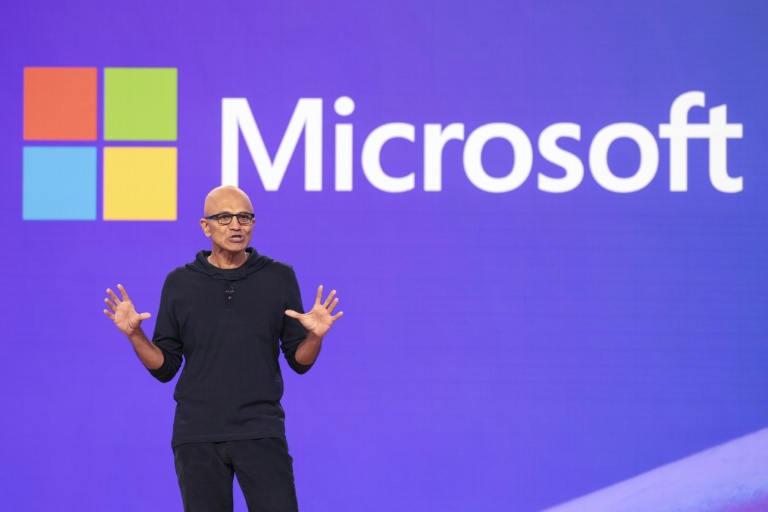
Microsoft CEO Satya Nadella says the US tech giant plans to invest $3 billion in India on AI and cloud infrastructure over the next two years

Microsoft Corporation (NASDAQ: MSFT) shares finished Monday, February 23, 2026, at $428.15, down 0.68% from the prior session’s $431.09 close, reflecting modest profit-taking amid ongoing investor debate over the pace of AI spending returns and competitive dynamics in cloud computing. The stock has risen approximately 4.2% year-to-date in 2026, outperforming the broader Nasdaq’s slight decline, but remains about 6-8% below its all-time high of $467.56 reached in late 2025.

Microsoft CEO Satya Nadella says the US tech giant plans to invest $3 billion in India on AI and cloud infrastructure over the next two years
Microsoft CEO Satya Nadella
AFP

Microsoft’s market capitalization stood at roughly $3.18 trillion at Monday’s close, keeping it among the world’s most valuable companies. Trading volume reached about 18.4 million shares, near average for the blue-chip name. The stock has traded in a relatively tight range of $420-$440 in recent weeks, supported by strong fundamentals but capped by macroeconomic uncertainty, tariff concerns, and scrutiny of hyperscaler capital expenditure levels.

The company’s fiscal second-quarter 2026 earnings, reported January 28, 2026, provided the last major catalyst. Revenue reached $65.6 billion (up 16% year-over-year), beating estimates of $64.4 billion, while adjusted EPS of $3.23 topped consensus of $3.11. Intelligent Cloud revenue surged 21% to $26.8 billion, driven by Azure growth of 33% (with AI services contributing 16 percentage points of that increase). Productivity and Business Processes grew 13% to $20.4 billion, led by Microsoft 365 and Dynamics 365, while More Personal Computing rose 11% to $18.4 billion, helped by Windows and Surface.

CEO Satya Nadella emphasized Azure’s AI momentum, noting that the platform now serves more than 70,000 enterprise customers with AI workloads and that Copilot adoption continues to accelerate across Microsoft 365, GitHub, and Power Platform. The company highlighted that Azure AI revenue doubled sequentially in the quarter, underscoring demand for OpenAI-powered tools and custom AI solutions.

Guidance for the March quarter called for revenue of $63.7 billion to $64.9 billion (implying 13-15% growth) and operating income margins in the mid-40% range. Management reiterated confidence in long-term AI infrastructure investments, with capital expenditures expected to remain elevated in 2026 to support data center expansion and GPU capacity for training and inference.

Advertisement

Analyst sentiment remains overwhelmingly positive. Consensus rating is Strong Buy, with an average 12-month price target around $495-$510 (implying 15-19% upside from current levels). Recent updates include Morgan Stanley raising its target to $525 from $500 (Overweight), citing Azure’s AI leadership and Copilot monetization potential. Wedbush kept Outperform at $540, while Piper Sandler maintained Overweight at $520. A few cautious voices, including MoffettNathanson, hold Market Perform ratings with targets near $450, citing valuation concerns and risks if AI ROI disappoints.

Microsoft’s forward P/E stands at approximately 32-34x consensus 2026 EPS estimates of $13.50-$14.00, considered reasonable given durable growth in cloud, productivity software, and AI. The company generates robust free cash flow (over $80 billion annually) and maintains a pristine balance sheet with more than $80 billion in cash and short-term investments.

Key growth drivers include:
– Azure’s continued outperformance versus AWS and Google Cloud in AI workloads.
– Microsoft 365 Copilot, now used by millions of paid enterprise seats and expanding into consumer and small-business segments.
– GitHub Copilot, which has surpassed 1.8 million paid subscribers.
– Xbox and gaming, bolstered by the Activision Blizzard acquisition and Game Pass growth.

Challenges persist. Regulatory scrutiny continues in the EU and U.S. over cloud licensing practices and the OpenAI partnership. Competition in AI from Google, Amazon, and emerging players remains intense, while macroeconomic factors — including new tariffs implemented February 24, 2026 — could raise hardware and energy costs for data centers.

Advertisement

Institutional ownership is strong, with Vanguard, BlackRock, and State Street holding significant stakes. Insider sales have been routine, but no major red flags have emerged.

Looking ahead, the next major update is fiscal Q3 2026 earnings, expected late April 2026. Investors will seek confirmation of Azure AI momentum, Copilot adoption metrics, and any new AI product launches or partnerships. The March quarter guidance range leaves room for upside surprises if AI services continue to accelerate.

Microsoft stock balances stability and high-growth potential. Its diversified revenue streams, massive installed base (more than 1.5 billion monthly active Windows devices and hundreds of millions of Microsoft 365 users), and leadership in enterprise AI position it as a core holding for long-term investors, even as valuation debates and macro crosscurrents introduce near-term volatility.

Advertisement
Continue Reading

Business

SoFi Technologies (SOFI) Stock Climbs 2.1% to $14.85 as Q4 Results Show Record Revenue

Published

on

Microsoft CEO Satya Nadella says the US tech giant plans to invest $3 billion in India on AI and cloud infrastructure over the next two years

SoFi Technologies Inc. (NASDAQ: SOFI) shares rose 2.1% on Monday, February 23, 2026, closing at $14.85 after trading in a range of $14.52 to $15.12. The gain came as investors digested the fintech company’s strong fourth-quarter 2025 results reported earlier in February and looked ahead to continued member and product growth in 2026.

SoFi Technologies
SoFi Technologies

SoFi’s market capitalization stood at approximately $15.8 billion at Monday’s close, reflecting a recovery from lows near $6 in mid-2025. The stock has surged more than 140% over the past 12 months and is up roughly 35% year-to-date in 2026, driven by accelerating profitability, diversification beyond lending, and optimism around the company’s “one-stop-shop” digital banking platform.

The latest catalyst was SoFi’s Q4 and full-year 2025 earnings release on January 27, 2026. The company reported record quarterly revenue of $734 million (up 48% year-over-year) and full-year revenue of $2.55 billion (up 44%). Adjusted net revenue reached $760 million in Q4, while adjusted EBITDA hit $210 million (up 141%) and the company generated GAAP net income of $332 million for the year — its first full year of profitability.

Member growth remained robust, with 10.9 million total members at year-end (up 34% year-over-year) and 8.1 million products (up 44%). Average revenue per active member rose to $92, reflecting cross-selling success across lending, financial services, and technology platforms. The company added 560,000 new members in Q4 alone, the strongest quarterly addition on record.

CEO Anthony Noto highlighted diversification as a key driver. Non-lending segments — including SoFi Money (checking/savings), Invest, Credit Card, and Galileo technology platform — now account for more than 40% of adjusted net revenue, up from less than 20% two years ago. Galileo processed $208 billion in annualized payment volume in Q4, up 60%, while SoFi Invest assets under management reached $28 billion.

Advertisement

The company also showcased strength in personal loans and student loan refinancing, with originations totaling $5.9 billion in Q4 (up 62%). SoFi maintained strong credit performance, with personal loan delinquencies and charge-offs remaining below industry averages despite a higher-rate environment.

Guidance for 2026 calls for full-year adjusted net revenue of $3.235 billion to $3.310 billion (27-30% growth), adjusted EBITDA of $875 million to $895 million, and GAAP net income of $320 million to $340 million. Management reiterated its long-term target of $10 billion+ in adjusted net revenue and 50%+ EBITDA margins by 2030, with a path to consistent GAAP profitability.

Analyst reaction was largely positive. Consensus rating is Moderate Buy, with an average 12-month price target around $16.50-$18.00 (implying 11-21% upside from current levels). Recent updates include Keefe, Bruyette & Woods raising its target to $18 from $15 (Outperform), while Piper Sandler maintained Overweight at $20, citing durable member growth and margin expansion. A few firms, including Barclays, hold Equal-Weight ratings with targets near $14, expressing caution over competitive pressures in lending and potential regulatory risks.

SoFi’s valuation trades at a forward price-to-sales multiple of about 4.8x 2026 estimates, considered reasonable for a high-growth fintech with improving profitability. The company maintains a strong balance sheet with more than $2.5 billion in liquidity and no significant near-term debt maturities.

Advertisement

Key growth drivers include:
– Continued member and product expansion through cross-selling (average products per member rising toward 1.0).
– Scaling of non-lending segments, particularly Galileo (serving fintech partners) and SoFi Invest.
– Potential new product launches in banking, insurance, and wealth management.
– International expansion, with early traction in Canada and plans for further markets.

Challenges remain. Interest rate sensitivity in lending, competition from traditional banks and other fintechs (Block, Affirm, Upstart), and regulatory scrutiny of student loan refinancing and crypto offerings could weigh on performance. Macroeconomic factors, including new tariffs implemented February 24, 2026, may indirectly affect consumer spending and borrowing demand.

Looking forward, the next major update is Q1 2026 earnings, expected late April or early May. Investors will watch for continued member adds, margin trends, and any new initiatives announced at investor days or conferences.

SoFi has transitioned from a student loan refinancing specialist to a full-service digital financial platform, with profitability now in sight. The stock’s recent strength reflects growing confidence in the company’s ability to execute its long-term vision, though volatility persists in a competitive and rate-sensitive environment.

Advertisement
Continue Reading

Business

Lamborghini cancels electric vehicle, citing lack of consumer demand

Published

on

Lamborghini cancels electric vehicle, citing lack of consumer demand

Lamborghini will cancel its plan to release an electric vehicle in 2028 due to what the company is calling a lack of consumer demand.

Lamborghini CEO Stephan Winkelmann spoke with The Sunday Times in an interview and said the EV will no longer join its lineup after the company’s analysis found little demand for the EV, which was named the Lanzador in 2023. The company is owned by Volkswagen through its subsidiary, Audi.

Advertisement

Winkelmann told The Sunday Times the “acceptance curve” for EVs in Lamborghini’s target market was “close to zero” and flattening amid a lack of interest from the luxury automaker’s clientele.

He added in the interview that EV development poses a risk of becoming an “expensive hobby” for Lamborghini and that the automaker plans to make traditional internal combustion engine vehicles “for as long as possible.”

STELLANTIS TAKES MASSIVE $26B HIT AFTER MOVING AWAY FROM EVS

Lamborghini vehicles at an auto show in Qatar.

A Lamborghini Revuelto high-performance electrified vehicle, left, and a Lamborghini Lanzador electric concept automobile on the opening day of the Geneva International Motor Show Qatar 2023, in Doha, Qatar. (Christopher Pike/Bloomberg via Getty Images)

Winkelmann said Lamborghini customers appreciate an “emotional experience” with their cars and that “EVs, in their current form, struggle to deliver this specific emotional connection,” he told the outlet.

Advertisement

With Lamborghini canceling plans to move forward with the EV, the company plans to replace it in the lineup with a plug-in hybrid electric vehicle (PHEV).

When asked in the interview whether the company will ever have an EV in its lineup, Winkelmann told the outlet, “Never say never, but only when the time is right. For the foreseeable future, only PHEVs. We will continue to develop electrification because we also need to be ready.”

LAMBORGHINI SET ANOTHER SALES RECORD IN 2022 AND IS SOLD OUT INTO 2024

Ticker Security Last Change Change %
VWAGY VOLKSWAGEN AG 12 +0.17 +1.44%

Lamborghini’s plan not to proceed with fielding EVs in its lineup for the foreseeable future comes as other major automakers have taken financial charges from shifting their EV roadmaps due to weaker than anticipated consumer demand.

Advertisement

Stellantis, the parent company of brands such as Chrysler, Dodge, Jeep and Ram, announced a $26.5 billion charge earlier this month as it cut back its EV production. 

Stellantis CEO Antonio Filosa said the “strategic reset” came after the company’s past assumptions about demand for EVs were “over optimistic.”

GM TAKES $7B HIT AFTER SHIFTING EV STRATEGY DUE TO SLOWING DEMAND

The Lamborghini Lanzador electric concept.

Lamborghini CEO Stephan Winkelmann next to a Lamborghini Lanzador electric concept during The Quail, A Motorsports Gathering in Carmel, Calif., Aug. 18, 2023. (David Paul Morris/Bloomberg via Getty Images)

General Motors took a $7 billion financial charge after it adjusted its EV strategy to account for the weak demand.

Advertisement

Ford CEO Jim Farley said earlier this month that the “customer has spoken” when discussing a net loss of $11.1 billion in the fourth quarter amid large writedowns to its EV programs.

GET FOX BUSINESS ON THE GO BY CLICKING HERE

Continue Reading

Business

US imposes cyber-related sanctions on Russian, UAE individuals and entities

Published

on

US imposes cyber-related sanctions on Russian, UAE individuals and entities


US imposes cyber-related sanctions on Russian, UAE individuals and entities

Continue Reading

Business

Adobe (ADBE) Stock Faces Sharp Decline Amid AI Disruption Concerns, Trading Near 52-Week Lows

Published

on

Executives at Silicon Valley chip maker Intel say 'fluid' US trade policies and regulatory moves have increased the chances of economic slowdown

Adobe Inc.’s stock has endured a steep sell-off in early 2026, dropping more than 26% year-to-date and trading near its 52-week low as investors grapple with fears that generative artificial intelligence could upend the company’s dominant position in creative software.

Adobe runs validation test
IBTimes UK

As of late February 2026, Adobe (NASDAQ: ADBE) shares hovered around $246 to $258, down from a 52-week high of approximately $453 reached in March 2025. The decline marks a roughly 43% retreat from that peak and reflects broader market skepticism about the software giant’s ability to fend off faster-moving AI competitors.

The slide accelerated in recent weeks, with the stock falling 17.7% over just 21 trading days in one stretch, according to market analysis. Analysts and investors point to intensifying competition from tools like Midjourney, Canva, and offerings from Microsoft, OpenAI, and Alphabet as key pressures. These platforms offer accessible, low-cost generative AI features that challenge Adobe’s traditional subscription-based model for products such as Photoshop, Illustrator, and Premiere Pro.

Despite the downturn, Adobe reported solid financial results for fiscal 2025, ending with record revenue. In its Q4 and full-year earnings released in December 2025, the company posted strong performance in its Digital Media and Digital Experience segments. Management guided for fiscal 2026 revenue between $25.9 billion and $26.1 billion, with non-GAAP earnings per share expected in the range of $23.30 to $23.50. Annualized recurring revenue (ARR) growth is targeted at 10.2%, driven largely by AI integrations.

Adobe has aggressively incorporated generative AI into its ecosystem through its Firefly family of models. Firefly, trained on licensed content including Adobe Stock images, powers features in Creative Cloud applications and aims to provide commercially safe AI generation for creators and enterprises. Recent partnerships underscore this push: In February 2026, Adobe expanded its collaboration with WPP to integrate Firefly Foundry—enabling custom, brand-safe generative models—into WPP’s marketing operations. The partnership focuses on agentic AI capabilities to scale content creation while maintaining brand integrity.

Advertisement

Earlier collaborations, including with Cognizant for enterprise content and Runway for AI video tools, highlight Adobe’s strategy to embed AI deeply across workflows. The company also made Photoshop, Express, and Acrobat available within ChatGPT integrations in late 2025, broadening accessibility.

Yet Wall Street remains divided. Analyst downgrades have compounded the pressure. Jefferies lowered its price target on Adobe from $400 to $290 in February 2026, maintaining a Hold rating. Other firms, including Piper Sandler, shifted to Neutral stances amid concerns over decelerating ARR growth trends and potential disruption. Consensus among 26 analysts pegs the average 12-month price target at around $393, implying significant upside from current levels, though ratings lean toward Hold overall.

Some observers argue the sell-off has created a value opportunity. Adobe trades at a historically low multiple—around 12.4 times forward earnings in recent commentary—despite generating substantial cash flow and maintaining a market capitalization near $103 billion. Proponents highlight the company’s entrenched user base among professionals, sticky subscription revenue, and ongoing AI monetization potential. Firefly adoption in Creative Cloud Pro and Acrobat AI Assistant has shown traction, they note, and enterprise demand for responsible AI remains robust.

Critics counter that the competitive landscape has shifted fundamentally. Free or low-cost AI tools threaten to erode pricing power, while rivals innovate more nimbly. One analysis described Adobe as potentially a “value trap,” where cheap valuation masks structural challenges rather than signaling undervaluation.

Advertisement

The next major catalyst arrives March 12, 2026, when Adobe reports first-quarter fiscal 2026 results. Investors will scrutinize updates on ARR momentum, Firefly usage metrics, and any revisions to full-year guidance. Positive surprises on AI-driven growth could spark a rebound; further signs of slowdown might extend the downturn.

Adobe’s 2026 outlook also includes broader industry reports. The company’s Digital Trends 2026 report, released in early 2026, emphasized generative and agentic AI’s role in customer experience, though it noted foundational gaps like fragmented data and uneven executive-practitioner alignment. Separately, the 2026 Creative Trends forecast highlighted innovation balanced with authenticity, positioning Adobe’s tools as central to responsible content creation.

For now, Adobe navigates a pivotal moment. Its legacy as a creative software leader remains intact, bolstered by decades of innovation and a vast ecosystem. But in an era of rapid AI advancement, proving that its integrated, ethical approach can sustain premium pricing and growth will determine whether the current weakness proves temporary or signals deeper shifts.

Advertisement
Continue Reading

Business

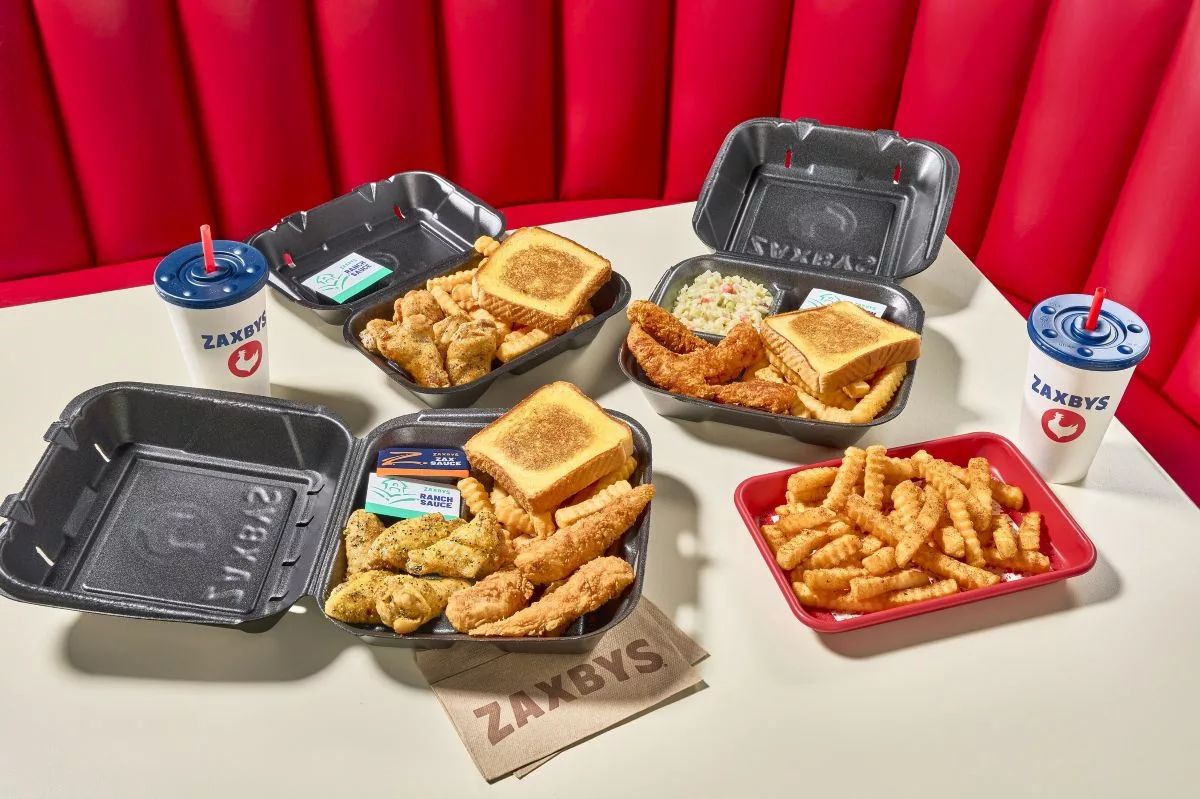
Zaxbys adds dry rubs

Published

on

Zaxbys adds dry rubs

The permanent menu addition offers three flavor varieties. 

Continue Reading

Business

Amazon (AMZN) Stock Rebounds Slightly After Sharp Sell-Off on Heavy AI Spending Concerns, Trades Near $205

Published

on

Microsoft CEO Satya Nadella says the US tech giant plans to invest $3 billion in India on AI and cloud infrastructure over the next two years

Amazon.com Inc.’s stock has pulled back sharply in early 2026, shedding more than 10% year-to-date amid investor worries over the company’s aggressive $200 billion capital expenditure plan for artificial intelligence infrastructure, even as its core AWS cloud business accelerates growth and advertising margins expand.

Amazon Shuts Down Appstore for Android Phones After 14 Years
Amazon

As of February 24, 2026, Amazon (NASDAQ: AMZN) shares traded around $205 to $208, recovering modestly from a recent low near $203 after a nine-day losing streak that erased roughly $450 billion in market value. The decline followed the company’s February 5 earnings report, where it posted solid fourth-quarter results but guided for massive 2026 spending that exceeded Wall Street expectations.

The sell-off marked one of Amazon’s longest consecutive declines in recent history, driven by scrutiny of the $200 billion capex forecast—up nearly 60% from 2025’s $131.8 billion. Much of the investment targets data centers, custom chips like Trainium, and networking to meet surging demand for AI compute. CEO Andy Jassy defended the outlay during the earnings call, stating the company is “monetizing capacity as fast as we can install it” amid “very high demand” for AWS AI services.

Despite the pressure, Amazon delivered strong Q4 2025 performance. Net sales rose 14% to $213.4 billion, beating estimates of $211.5 billion, while adjusted earnings per share came in at $1.95, narrowly missing the $1.96 consensus. AWS revenue jumped 24% to $35.6 billion—the segment’s fastest growth in 13 quarters—with an annualized run rate nearing $142 billion. Advertising revenue continued its high-margin expansion, and North America retail sales grew 10%.

Full-year 2025 results showed revenue climbing to around $717 billion, with operating cash flow at $139.5 billion. Free cash flow compressed sharply due to heavy investments, but management emphasized long-term returns from AI-driven cloud workloads.

Advertisement

Amazon has ramped up AI initiatives across its ecosystem. The company highlighted advancements in custom silicon and partnerships, including expanded Trainium deployments that cut training and inference costs by up to 50%. Recent announcements include a $12 billion investment in new data center campuses in Louisiana’s Caddo and Bossier Parishes, expected to create hundreds of jobs and support AI and cloud expansion. Broader U.S. infrastructure spending reached $340 billion in 2025, bolstering Amazon’s position in AI-enabled economies.

Wall Street remains predominantly bullish despite the pullback. Consensus among analysts—ranging from 43 to 58 covering the stock—rates Amazon a Moderate Buy to Strong Buy, with average 12-month price targets between $279 and $287, implying 36% to 40% upside from current levels. Some targets reach as high as $360, reflecting optimism that AWS could sustain mid-20% or higher growth as AI demand materializes.

Analysts point to several tailwinds. AWS’s backlog of multi-year commitments from enterprises and AI firms underwrites the infrastructure buildout. Advertising growth and retail margin improvements provide diversification, while innovations like Alexa+ AI enhancements and agentic tools strengthen consumer engagement. Recent partnerships, such as Bath & Body Works launching an official storefront on Amazon, underscore the platform’s appeal for brand discovery.

Critics highlight risks from capital intensity. The $200 billion spend could pressure near-term free cash flow and returns if AI adoption slows or competition intensifies from Microsoft Azure and Google Cloud. Some observers question the sustainability of hyperscaler spending, with investor Michael Burry publicly doubting when AI data center investments might peak.

Advertisement

Yet many view the current weakness as a buying opportunity. Amazon trades at a forward P/E around 28-29, below historical averages for its growth profile. Proponents argue the investments position Amazon to capture outsized share in the AI cloud market, where demand shows no signs of abating. AWS added nearly 4 gigawatts of capacity in 2025 and plans to double that by 2027.

The stock’s trajectory hinges on upcoming catalysts. Amazon’s Q1 2026 earnings, expected in late April, will provide updates on capex execution, AWS utilization, and any guidance revisions. Positive traction in AI monetization could spark a rebound; signs of delayed returns might extend volatility.

Broader company moves reinforce confidence. Amazon’s rural delivery network expansion aims to double same-day delivery access, potentially adding over 100,000 jobs. Ethical AI tools and community investments highlight a balanced approach to growth.

For now, Amazon navigates a high-stakes phase in its evolution. Its dominance in e-commerce, cloud computing, and advertising remains formidable, but proving that massive AI bets will deliver commensurate returns will define whether the recent dip proves a temporary correction or a longer-term headwind.

Advertisement

As the AI era accelerates, Amazon’s scale, infrastructure, and innovation track record position it as a central player. Investors betting on sustained cloud and AI momentum see the current valuation as attractive, even amid the spending scrutiny.

Continue Reading

Business

Wedbush raises Arvinas stock price target to $11 on pipeline progress

Published

on


Wedbush raises Arvinas stock price target to $11 on pipeline progress

Continue Reading

Business

True Citrus debuts functional drink mix collection

Published

on

True Citrus debuts functional drink mix collection

The collection offers three varieties of functional drink mixes. 

Continue Reading

Business

Apartments could be created at historic city centre Miller Arcade in Preston

Published

on

Business Live

Vacant upper floor could be brought back to use

Miller Arcade in Preston.

Miller Arcade in Preston(Image: Google)

Dozens of apartments could be created within Preston’s Miller Arcade as part of a major redevelopment of the historic city shopping precinct.

Advertisement

Plans have been unveiled which would see the vacant upper floors of the 19th-century premises brought back into use after years of standing empty.

A total of 46 properties are proposed across the top three storeys of the Grade II-listed building – bound by Church Street, Lancaster Road, Birley Street and the Flag Market – along with communal facilities for residents.

If the blueprint is approved, the retail units on the ground floor of the arcade – which became the first indoor shopping area in the city when it opened in 1899 – would continue to trade as normal.

The conversion proposal – by Darwen-based Icon Heritage Limited – comes 11 years after a similar vision put forward by a different company was given the nod by city planners. That scheme, unlike the current one, also featured a new restaurant and a roof garden – but was ultimately never delivered.

Advertisement

The plans now on the table are for 24 one-bed, 18 two-bed and four ‘studio’ flats whose occupiers would have shared access to a cinema, gym, library, workspace, meeting room, kitchen and lounge. Access would come via an existing doorway on Lancaster Road, beneath the existing gold-plated ‘Miller House’ sign.

The much-loved landmark is renowned for its Victorian Baroque architecture and was modelled on the larger Burlington Arcade in London.

The floors now earmarked for apartments once housed hotels, a Turkish Baths, a wine lodge and, most recently, offices.

According to documents lodged with Preston City Council, the only external alterations that would be required by the proposed conversion would be repairs to the building’s fabric and the refurbishment of its windows – which would also be upgraded with ‘secondary glazing’ to help block out noise and retain heat.

Advertisement

The necessary internal reconfiguration will take “a sensitive design approach that prioritises the retention of existing architectural features…which are considered heritage assets”, a planning statement explains.

It adds: “Introducing residential spaces into the building brings a new life – and the new use will help bring Miller Arcade back to becoming [of] even greater importance in Preston.”

The applicant sought advice from the city council before submitting their plans and was advised that the principle of the proposal was “wholly acceptable”.

To find all the planning applications, traffic diversions, road layout changes, alcohol licence applications and more in your community, visit the Public Notices Portal.


Advertisement
Continue Reading

Trending

Copyright © 2025



















