Connect with us
DAPA Banner
DAPA Coin
DAPA
COIN PAYMENT ASSET
PRIVACY · BLOCKDAG · HOMOMORPHIC ENCRYPTION · RUST
ElGamal Encrypted MINE DAPA
🚫 GENESIS SOLD OUT
DAPAPAY COMING

Business

What are the Trump admin’s main issues in trade talks with Canada and Mexico?

Published

on

What are the Trump admin's main issues in trade talks with Canada and Mexico?
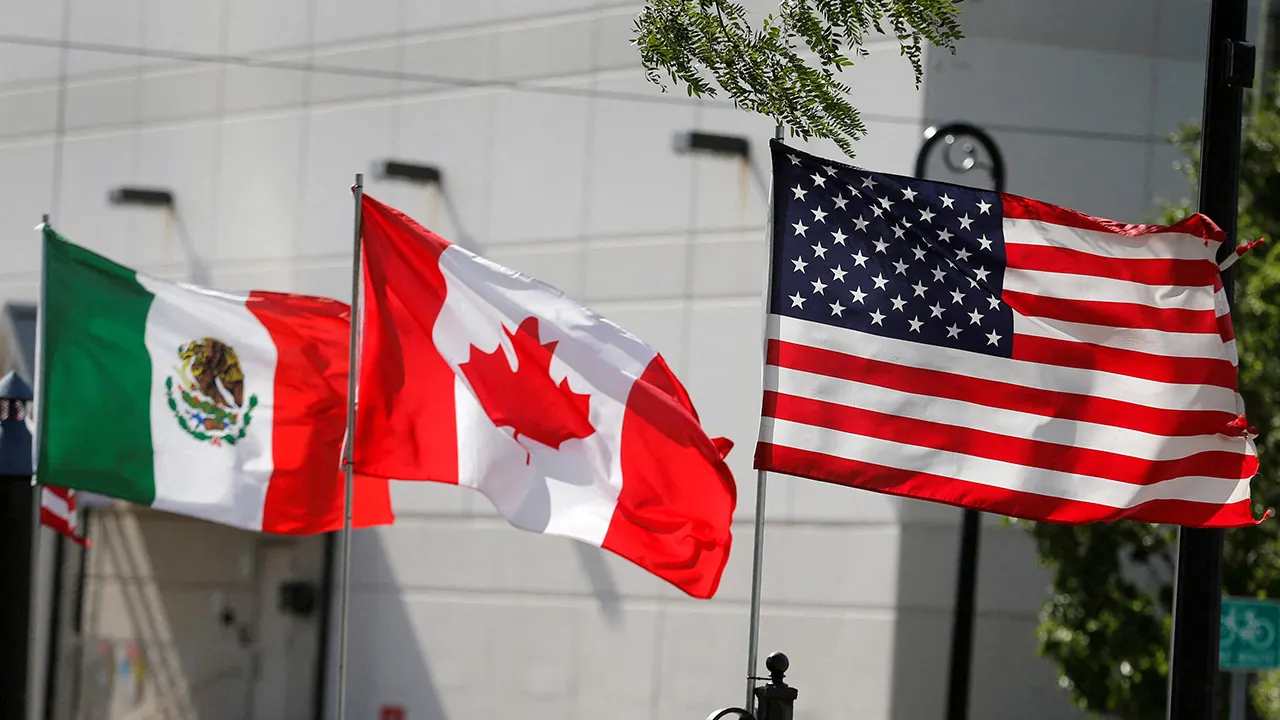
The Trump administration’s announcement that it doesn’t plan to renew the U.S.-Mexico-Canada Agreement (USMCA) and instead intends to pursue individual trade agreements with its two neighbors.

Wednesday marked the sixth year of the USMCA being in effect, a milestone which gave the administration the option of extending the agreement as is or opting against renewing it to address trade issues with Canada and Mexico. The USMCA will remain in place for 10 years while those negotiations occur.

Advertisement

The trade relationships with Canada and Mexico carry a great deal of significance for American businesses and consumers, as those countries are the two largest export markets for U.S.-made goods and are two of the three largest sources of imported goods.

While the USMCA helped modernize the U.S. trade relationships with its two neighbors, the official said that the trade agreement didn’t adequately control trade deficits and added that it also fell short of expanding “market access opportunities in Canada and Mexico,” citing issues like Canada’s dairy restrictions and Mexico’s threats against U.S. corn and corn products.

US DECIDES NOT TO RENEW USMCA TRADE PACT, WILL SEEK SEPARATE DEALS WITH CANADA, MEXICO
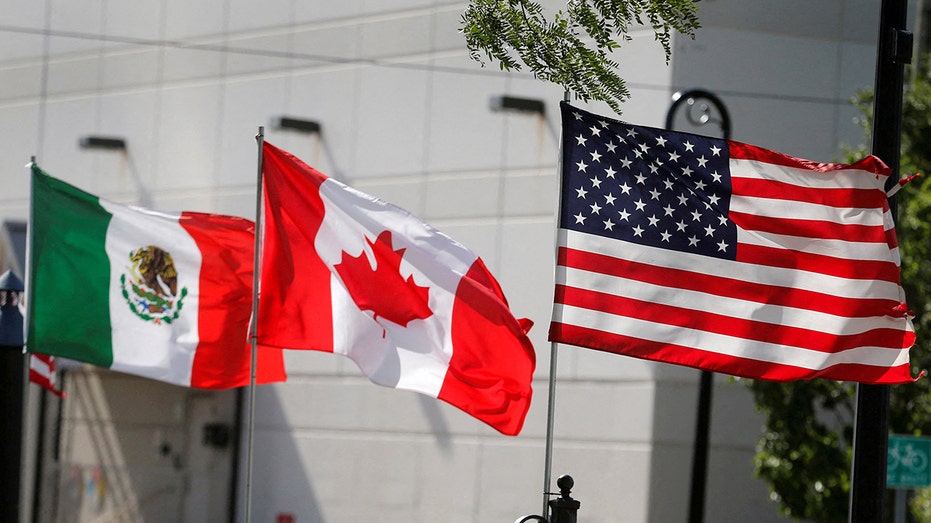
Flags of the U.S., Canada and Mexico fly next to each other in Detroit, Michigan

The U.S. is planning to pursue bilateral trade agreements with Canada and Mexico after opting against renewing the USMCA. (REUTERS/Rebecca Cook/File Photo)

Rather than looking to extend the USMCA, which the president negotiated during his first term, the official signaled the U.S. could end up with bilateral trade deals instead.

Advertisement

“I could see a world where we have a protocol with Mexico or a protocol with Canada, within President Trump’s term,” the official said. “I think that’s definitely possible if those protocols or if those agreements are really geared to and have the outcome of reducing our deficits with those countries.”

The official added that the president “remains skeptical” of concluding some sort of agreement that makes changes to the USMCA and keeps the trilateral trade pact intact, though they emphasized that it’s in all of the countries’ interests to keep negotiating.

BESSENT LAYS OUT 5 PRINCIPLES GUIDING TRUMP ADMIN’S APPROACH TO ECONOMIC STATECRAFT
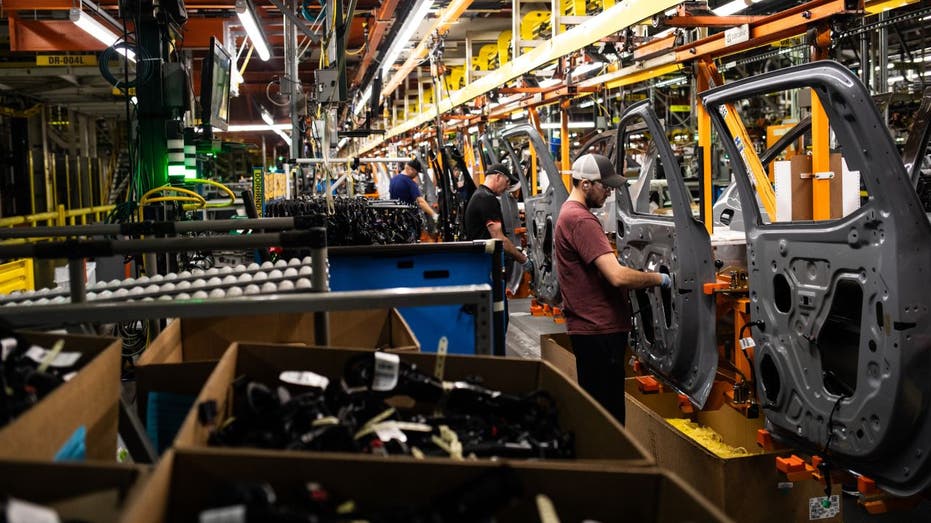
Manufacturing workers in auto industry

Rules of origin will be a point of emphasis in U.S. negotiations with Canada and Mexico. (Emily Elconin/Bloomberg via Getty Images)

U.S. trade negotiators are expected to meet with their counterparts from Mexico on July 20 and the official said they expect to discuss issues including labor obligations, environment and water quality, and intellectual property in an effort to make more progress on those topics.

Advertisement

“We have already spoken in some detail with Mexico about strengthening the rules of origin of the agreement, about enhancing economic security alignment and resolving bilateral issues,” a senior Trump administration official told reporters on a call announcing the move.

“You know, Mexico, although we have many challenges in our relationship, including on trade, they do understand the administration’s tariff policies,” the official explained. “In many ways, they’ve been constructive in this, they have made proposals about deficit reduction. And so we have been negotiating formally with them on a bilateral basis to address and resolve many bilateral issues.”

CANADA LIFTS TARIFFS ON SOME US GOODS TO RESUME TRADE TALKS

President Trump

President Donald Trump is skeptical of renewing the USMCA on a trilateral basis. (Tasos Katopodis/Getty Images)

The official added that “Canada is in a different position” after it imposed retaliatory tariffs on the U.S. following the president’s move to levy Canadian goods.

Advertisement

“Along with the People’s Republic of China, Canada was one of the only countries in the world to retaliate against the United States following the president’s historic trade actions to eliminate the U.S. trade deficit and reshore manufacturing here,” the official said. “They also have not addressed many of the non-tariff barriers and trade challenges they have had over the past years.”

According to the official, the U.S. decision not to renew the agreement and move into a 10-year review phase doesn’t mean negotiations have to take that long – though they added that President Trump could withdraw from the agreement before that review timeline concludes.

GET FOX BUSINESS ON THE GO BY CLICKING HERE

“The reality is, if Canada or Mexico completely get on board with what’s needed, then that’s a different situation,” the official said. “At the same time, the president also reserves his right that’s in the agreement and that’s in law to withdraw from the agreement, even before 10 years.”

Advertisement
Continue Reading
Click to comment

You must be logged in to post a comment Login

Leave a Reply

Business

Car tracking features for ‘convenience not security’ warns Kia

Published

on

A woman with shoulder-length blonde hair talks into a microphone

“Kia Connect is a customer convenience feature, not a certified security vehicle tracker,” the firm told the BBC.

“Therefore, it does not provide live‑tracking functionality for stolen vehicles.

“Release of location details of a vehicle via Kia Connect is possible, however this must be done in full compliance with all applicable laws, in particular GDPR, and the authorities to minimise risk to the customer.”

GPDR is Europe’s data protection law, and an almost-identical version applies in the UK.

Advertisement

According to the Information Commissioner’s Office, Britain’s data regulator, users have the right to access their information and organisations need to respond to the request from someone who can be identified from personal data within one calendar month.

In the event of standard vehicle theft, the police have no formal powers to demand this data without specific consent from the Home Office, which is rarely sought on these occasions, the BBC understands.

It is up to individual car manufacturers to share data with law enforcement depending on their own policies.

Kia does offer a security vehicle tracking service in the US to subscribers who take out its premium package, but this is not available in the UK or Europe.

Advertisement
Continue Reading

Business

Romesh Ranganathan ‘Gutted’ as Coughlans Bakery Collapses After 89 Years

Published

on

Romesh Ranganathan 'Gutted' as Coughlans Bakery Collapses After 89 Years

An 89-year-old family bakery has become the latest high-street casualty of Britain’s mounting cost crisis, closing its doors for good and taking with it one of the more unlikely celebrity business partnerships of recent years.

Coughlans Bakery, which ran a chain of shops across Kent, Surrey, West Sussex and south London, ceased trading on Tuesday after slipping into voluntary liquidation. The comedian Romesh Ranganathan, who became a co-owner in 2024 and once billed the tie-up as “the partnership of the century”, said he was “gutted” by the collapse.

The Crawley-born presenter, known for his deadpan stage style, reposted a video from managing director Sean Coughlan to his 1.4 million followers with the caption: “Gutted isn’t the word.” Ranganathan, who is vegan, had first thrown his weight behind the business because of its range of plant-based products.

For Coughlan, whose family firm first opened its ovens in 1937, the arithmetic simply stopped adding up. He laid much of the blame on the government’s decision to lift employers’ National Insurance contributions in April last year, a move that raised the headline rate to 15 per cent and lowered the threshold at which employers start paying, alongside a business-rates bill he said had “absolutely smashed local business”. The change, set out in the National Insurance Contributions (Secondary Class 1 Contributions) Act 2025, has landed hardest on labour-intensive trades such as retail and hospitality, where wage bills dominate the cost base.

Those pressures were then compounded by a spike in fuel prices following the recent conflict in the Middle East, which Coughlan estimated had cost the company an extra £20,000 a week. The summer heatwaves that pushed the South East towards 35C proved, in his words, the “nail in the coffin”. With shoppers staying at home, weekly takings roughly halved while the outgoings, he noted, “remained exactly the same”.

Advertisement

Coughlan was unsparing about the human cost, and generous towards his celebrity backer. “I feel like we’ve absolutely let him down,” he said. “Everything he’s done, it’s been from the heart.” Ranganathan, he added, had been “amazing”.

The affection was mutual among customers. When the comedian appeared behind the counter of the Dorking High Street branch last year, a large queue quickly formed down the pavement. Josie Smith, who works near the Crawley shop, told BBC Radio Sussex she was “really sad” to see it go. “It brings a lot of people together. It is a massive shame.” Her colleague Kaitlin Stinton praised staff who were “dedicated to their jobs, always making you happy”.

Coughlan said the firm had chosen the orderly route of voluntary liquidation specifically so that it could still pay suppliers and employees, a decision that speaks to a proprietor trying to do right by his people even as the shutters came down. “It’s heartbreaking,” he said.

Coughlans is far from alone. Industry data shows three pubs, bars and restaurants now shutting every day as tax and cost rises bite, while the £28bn National Insurance shock has run well ahead of Treasury forecasts. Trade press, too, has tracked the toll, with The Caterer among those charting a wave of closures across food and drink. With high-street closures set to surge as the business-rates burden grows, the loss of a beloved 89-year-old baker is unlikely to be the last story of its kind this year.

Advertisement

Amy Ingham

Amy is a newly qualified journalist specialising in business journalism at Business Matters with responsibility for news content for what is now the UK’s largest print and online source of current business news.

Advertisement
Continue Reading

Business

ADP National Employment Report: 98K Private Jobs Added In June

Published

on

ADP National Employment Report: 98K Private Jobs Added In June

Group of business people waiting for job interview in the office.

skynesher/E+ via Getty Images

By Jennifer Nash

The economic mover and shaker this week is Friday’s employment report from the Bureau of Labor Statistics. This monthly report contains a wealth of data for economists, the most publicized being the month-over-month change

Advertisement
Continue Reading

Business

HarbourVest Global Private Equity Ltd. (HVPQF) Discusses Investor-Friendly Initiatives and Tender Offer Following Annual Results Transcript

Published

on

OneWater Marine Inc. (ONEW) Q1 2026 Earnings Call Transcript

HarbourVest Global Private Equity Ltd. (HVPQF) Discusses Investor-Friendly Initiatives and Tender Offer Following Annual Results June 30, 2026 10:00 AM EDT

Company Participants

Edmond Warner
Richard Hickman – Director of Investment & Operation
Stephanie Hocking – Head of Investor Relations & Communications

Presentation

Advertisement

Operator

Good afternoon, and welcome to the HarbourVest Global Private Equity Investor Presentation. [Operator Instructions] Company may not be in a position to answer every question received during the meeting itself. However the company can review all questions submitted today and publish responses where appropriate to do so. Before we begin, we’d like to submit the following poll. I’d now like to hand over to Ed Warner, Chair. Good afternoon, sir.

Edmond Warner

Advertisement

Good afternoon. Thank you, and thank you, everybody, for attending this afternoon. Temperatures dropped a little bit, so you’d probably rather be outside than in front of your screen. So we very much appreciate your time today. We’ve had a number of these investor meet company presentations over the last few years. And those of you that have been on a number of them or through all of them will know that we have introduced a series of very investor-friendly measures to the governance of HVPE in recent years, culminating in our most recent announcements, which include a tender offer for 10% of the shares of the company that will be conducted this autumn at a discount of around 10%, which we think is market-leading, certainly in our space within listed private equity and is part of a package of actions that we’ve taken to ensure that we are [indiscernible] focused on the interest of you as investors and shareholders, which I am myself too, to deliver returns which beat the competition, beat the market and enable you to not only diversify your portfolios, but most importantly, to capture all that’s great about private markets opportunities that exist across the world, which you may well not

Advertisement
Continue Reading

Business

Walmart makes first nuclear power play to support Illinois expansion

Published

on

Walmart makes first nuclear power play to support Illinois expansion

Walmart is making its first nuclear power play as the retail giant looks to support its growing footprint in Illinois.

The retailer signed a long-term power purchase agreement with Constellation to buy emissions-free electricity from the company’s Dresden Clean Energy Center in Illinois, the companies announced on June 23.

Advertisement

The agreement provides Walmart with about 176 megawatts of power, including 30 megawatts of expanded generating capacity, through two 15-year terms starting in 2029 and 2030.

WALMART LAUNCHES HARDWARE OVERHAUL, NEW KIDS BRAND IN PRIVATE-LABEL PUSH

Walmart store Chicago

Walmart is making its first nuclear power play as the retail giant looks to support its growing footprint in Illinois. (Scott Olson/Getty Images)

The agreement will help power Walmart’s planned high-tech perishable distribution center in Belvidere, Illinois – first announced in 2023 – while supporting upgrades at Dresden that will boost output from the existing nuclear facility without building a new plant.

The deal marks Walmart’s first nuclear power purchase agreement and is among the first of its kind between a large U.S. retailer and a nuclear energy facility, according to the companies.

Advertisement

Walmart, which operates about 175 stores and clubs in Illinois and employs more than 55,000 associates in the state, said the agreement builds on its broader energy strategy.

WALMART WARNS SHOPPERS COULD FACE HIGHER PRICES AS FUEL COSTS SURGE, TAX REFUNDS DRY UP

walmart store aisles shoppers

The deal marks Walmart’s first nuclear power purchase agreement. (Scott Olson/Getty Images)

“Working with Constellation allows us to support new operations in Illinois while advancing our strategy in a way that prioritizes affordable, reliable, and clean energy for our business and the communities we serve,” Shayne Wahlmeier, senior vice president of energy at Walmart US, said in a statement.

 “We’re constantly evaluating new capabilities and energy solutions that help ensure the electricity we rely on is dependable, responsibly produced, and built to support long-term growth,” Wahlmeier added.

Advertisement

Corporate demand for nuclear power has accelerated in recent years, driven largely by Big Tech’s need to power data centers and artificial intelligence (AI) operations.

Ticker Security Last Change Change %
WMT WALMART INC. 108.82 -4.44 -3.92%

WALMART TO REMODEL OVER 650 STORES, OPEN ABOUT 20 NEW LOCATIONS

Constellation Energy's LaSalle Clean Energy Center nuclear power plant

A sign hangs on a fence which surrounds Constellation Energy’s LaSalle Clean Energy Center nuclear power plant on May 23, 2025, near Marseilles, Illinois. (Scott Olson/Getty Images)

GET FOX BUSINESS ON THE GO BY CLICKING HERE

Meta announced earlier this year that it signed 20-year agreements to buy power from three Vistra-owned nuclear plants in Ohio and Pennsylvania, while also working with Oklo and TerraPower to help develop new nuclear projects.

Advertisement

The deals could supply up to 6.6 gigawatts of nuclear power by 2035, the company’s chief global affairs officer, Joel Kaplan, told FOX Business at the time.

Continue Reading

Business

Seven Teams Through, Japan and Germany Already Eliminated

Published

on

Christian Pulisic of Chelsea FC

The 2026 FIFA World Cup’s expanded knockout bracket is beginning to take clear shape, with seven nations already assured of a Round of 16 berth following the completion of the first week of win-or-go-home play, while several of the competition’s most storied programs have been sent home far earlier than expected.

The round of 32, a feature unique to this year’s enlarged 48-team format, has produced a string of notable eliminations and compelling results since kicking off June 28. Japan, Germany and the Netherlands have all been eliminated, three programs that entered the tournament as genuine contenders, making Wednesday’s schedule of three additional matches all the more consequential for the teams still trying to ensure their own survival.

The bracket opened June 28 with Canada defeating South Africa 1-0, setting up a Round of 16 matchup against Morocco in Houston on Saturday, July 4. South Africa’s elimination carried particular weight given the team had shocked co-hosts Mexico with a 1-0 victory in the group stage, a result that contributed to weeks of national recrimination in Mexico before El Tri recovered to advance and then beat Ecuador 2-0 in their own round of 32 fixture Tuesday.

Monday’s results were among the round’s most dramatic. Brazil edged Japan 2-1 in Houston in a match that saw Japan push Vinícius Júnior’s side far closer than the final scoreline suggested, before Brazil’s quality in transition ultimately proved decisive. Japan’s exit brought an end to one of the tournament’s most technically impressive groups stage campaigns. Separately on Monday, Morocco outlasted the Netherlands on penalty kicks, 3-2, after the sides finished 1-1 through 90 minutes, eliminating a Netherlands team that had been considered a dark-horse contender entering the tournament. Morocco will now face Canada on July 4 in Houston, a repeat of a 2022 World Cup encounter that the Moroccans won on penalties during their remarkable run to the semifinals in Qatar.

Advertisement

Also Monday, Paraguay pulled off one of the round’s biggest upsets, eliminating Germany on penalties after a 1-1 draw, denying the four-time World Cup winners a place in the Round of 16 in what has already been described as one of the tournament’s most stunning results. Paraguay will now face France in Philadelphia on July 4, a daunting assignment given France’s 3-0 dismantling of Sweden on Tuesday in which Kylian Mbappé scored twice to draw level with Lionel Messi in the Golden Boot standings at six goals apiece.

Tuesday’s remaining results set up what should be a fascinating Round of 16 weekend. Norway defeated Ivory Coast 2-1, advancing Erling Haaland’s side to face Brazil on July 5 in East Rutherford, New Jersey, in what many analysts are already framing as a potential match of the tournament. Mexico’s 2-0 defeat of Ecuador, built on goals by Julián Quiñones and Raúl Jiménez, extended the co-hosts’ unbeaten record at the Estadio Azteca in World Cup competition to 10 matches and ended 40 years of knockout-stage futility for El Tri, who had not won a World Cup knockout game since beating Bulgaria at the same venue in 1986. Mexico will now face the winner of Wednesday’s England vs. Congo DR match at the Azteca on July 6.

Wednesday’s schedule includes three critical fixtures. England face Congo DR at Mercedes-Benz Stadium in Atlanta with kickoff at noon ET, a match that will determine whether England, who were eliminated in the quarterfinals at the last World Cup, can advance to face Mexico in what would be one of the most anticipated Round of 16 matchups in the tournament. Belgium face Senegal at Lumen Field in Seattle at 4 p.m. ET, with the winner facing the survivor of the USA vs. Bosnia and Herzegovina match, which kicks off at 8 p.m. ET at Levi’s Stadium in Santa Clara. The United States’ fixture carries enormous domestic significance for the co-hosts, with co-host status translating into a guaranteed World Cup appearance but no guarantee of deep advancement in a field packed with quality opposition across the bracket.

The remaining Round of 32 fixtures spread across Thursday, Friday and into the following weekend. Thursday brings Spain vs. Austria at SoFi Stadium in Inglewood, California, at 3 p.m. ET, followed by Portugal vs. Croatia at BMO Field in Toronto at 7 p.m. ET, a heavyweight European clash that could determine whether Cristiano Ronaldo, who scored twice against Uzbekistan in the group stage, continues his own pursuit of tournament milestones. Switzerland vs. Algeria closes Thursday’s schedule at 11 p.m. ET at BC Place in Vancouver.

Advertisement

Friday’s schedule includes Australia vs. Egypt at AT&T Stadium in Arlington, Texas, at 2 p.m. ET, followed by Argentina vs. Cape Verde at Hard Rock Stadium in Miami Gardens at 6 p.m. ET, a match that will almost certainly feature Messi and represents what many expect to be a straightforward advancement for the 2022 champions into the Round of 16 and another opportunity to add to his record tournament goal tally. Colombia vs. Ghana closes the round of 32 at Arrowhead Stadium in Kansas City at 9:30 p.m. ET.

The full Round of 16 schedule runs July 4 through July 7, with Canada vs. Morocco and Paraguay vs. France both on July 4, followed by Brazil vs. Norway and Mexico vs. England or Congo DR on July 5, and Spain or Austria vs. Croatia or Portugal and Belgium or Senegal vs. USA or Bosnia on July 6, before Australia or Egypt vs. Argentina or Cape Verde and Switzerland or Algeria vs. Colombia or Ghana round out the last 16 on July 7. The quarterfinals follow on July 9, 10 and 11, with the semifinals scheduled for July 14 and 15, a third-place match July 18, and the World Cup final set for July 19 at MetLife Stadium in East Rutherford, New Jersey.

Continue Reading

Business

Nasdaq Declines as Tech Sector Pullback Weighs on Broader Market Sentiment

Published

on

stock markets nyse nasdaq s&p 500 news biggest gainers

NEW YORK — The Nasdaq Composite Index fell more than 200 points Tuesday, closing at 26,012.68 as investors booked profits in technology shares and assessed mixed signals from corporate earnings and economic data.

The 0.77 percent decline reflected caution in growth-oriented stocks after a period of strong gains driven by artificial intelligence enthusiasm. Major technology names contributed to the downside, though broader market losses were contained as other sectors showed relative resilience.

Trading volume was steady as participants navigated the transition from second-quarter earnings season into the heart of summer. The session highlighted ongoing rotation between growth and value segments, with defensive areas finding some support.

Technology’s heavyweight influence on the Nasdaq amplified the index’s move. Chipmakers and software firms faced pressure amid concerns over valuations and near-term spending trends in data centers. However, several companies reported solid results, suggesting fundamentals remain intact for many leaders.

Advertisement

The S&P 500 and Dow Jones Industrial Average posted more modest changes, underscoring divergence across market segments. Blue-chip industrials and financials provided a buffer against technology weakness.

Economic indicators released around the session offered a nuanced picture. Inflation measures aligned with expectations, while consumer spending data pointed to resilient demand. Federal Reserve officials continued emphasizing a data-dependent approach to future policy decisions.

Bond yields moved modestly, influencing equity valuations particularly in rate-sensitive sectors. Treasury markets reflected balanced views on growth and inflation risks.

Corporate news flow remained active. Several large technology firms updated guidance, with some citing strong AI-related demand while others noted cautious enterprise spending. The mixed tone contributed to selective selling in the sector.

Advertisement

Analysts noted the Nasdaq’s recent run had left some stocks extended. Profit-taking after strong performance is typical, though underlying demand for innovative technologies persists.

The index’s decline erased some recent gains but left it well above year-ago levels. Year-to-date performance remains positive, supported by earnings growth in key constituents.

Broader market context included geopolitical developments and fiscal policy discussions. Investors monitored potential impacts on corporate supply chains and consumer confidence.

Smaller companies in the Russell 2000 showed mixed results, with some benefiting from rotation away from mega-cap names. Market breadth was neutral to slightly negative on major exchanges.

Advertisement

Looking ahead, participants await further earnings reports and economic releases. The upcoming employment situation report will be closely watched for labor market signals that could influence monetary policy expectations.

Technology’s dominance in the Nasdaq means sector-specific news often drives index moves. Artificial intelligence infrastructure spending continues as a major theme, with companies positioned in chips, software and cloud services remaining focal points.

Valuation concerns have surfaced periodically, with some metrics elevated compared to historical averages. However, earnings growth has justified premiums for many high-quality names.

Tuesday’s trading reflected typical midweek dynamics, with no single catalyst dominating. Instead, cumulative positioning and position squaring influenced flows.

Advertisement

The session’s loss leaves the Nasdaq navigating technical levels that could attract buyers on further weakness. Support areas are watched closely by chart-focused participants.

Longer-term, demographic trends, productivity gains from technology and global digitization support secular growth in the sector. Short-term volatility is expected as economic cycles unfold.

Federal Reserve policy remains a key variable. Markets have priced in limited near-term rate changes, focusing instead on the trajectory over coming quarters.

Corporate capital expenditure on AI and digital transformation provides a tailwind for many Nasdaq constituents. Supply chain improvements and efficiency gains could support margins.

Advertisement

Tuesday’s close at 26,012.68 caps a period of consolidation after earlier advances. The index has shown resilience in the face of periodic pullbacks.

Investors continue balancing optimism around innovation with macroeconomic caution. Diversified portfolios help manage sector-specific risks.

The technology sector’s evolution includes artificial intelligence, cloud computing and cybersecurity. Companies adapting successfully are rewarded with premium valuations.

Broader equity markets benefit from technology leadership when growth expectations are high. Periodic rotations provide opportunities for other sectors.

Advertisement

As summer trading continues, liquidity may thin, increasing volatility potential. Major events could shift sentiment quickly.

The Nasdaq’s performance remains a barometer for investor risk appetite and growth expectations. Tuesday’s decline was orderly, with no signs of panic selling.

Market strategists emphasize focusing on fundamentals amid daily fluctuations. Strong balance sheets and competitive advantages position leaders for long-term success.

Tuesday’s session contributed to ongoing narrative around technology’s role in the economy. Innovation cycles drive productivity, though adoption timelines can vary.

Advertisement

The index’s movement Tuesday underscores the importance of diversification. While technology leads in bull markets, other areas provide stability during rotations.

Participants will monitor upcoming data for confirmation of economic soft landing or other scenarios. Corporate guidance will further shape sector outlooks.

In summary, the Nasdaq’s 0.77 percent decline reflected measured profit-taking in technology amid a complex market backdrop. The session highlighted the index’s sensitivity to sector dynamics while broader markets remained relatively stable.

Advertisement
Continue Reading

Business

The Complete Guide to Professional Carpet Cleaning for Colorado Homeowners

Published

on

The Complete Guide to Professional Carpet Cleaning for Colorado Homeowners

Colorado’s unique climate — dry summers, snowy winters, and everything in between — creates specific challenges for home carpet maintenance.

From tracking in mud and road salt to dealing with pet hair and high-altitude dust, Colorado homeowners face a year-round battle to keep their carpets clean, fresh, and healthy. Understanding when and how to invest in professional carpet cleaning can make a significant difference in both your home’s appearance and your family’s wellbeing.

Why Colorado Homes Need More Frequent Carpet Cleaning

The Front Range’s semi-arid climate means homes accumulate fine particulate dust that settles deep into carpet fibers. Unlike humid climates where dust tends to clump and stay near the surface, Colorado’s dry air allows particles to penetrate further into pile, making vacuuming alone insufficient for maintaining truly clean carpets.

Winter months bring additional challenges. Road salt, de-icing chemicals, and wet snow tracked in from outside can leave residue that attracts more dirt over time, creating a cycle of rapid re-soiling. Pet owners face compounding issues — pet dander, hair, and odors are amplified in Colorado’s dry indoor air, particularly during heating season when homes are sealed tight.

Signs It’s Time for a Professional Clean

Many homeowners wait until carpets look visibly dirty before scheduling a professional cleaning — but by that point, significant fiber damage may already have occurred. Watch for these early indicators:

Advertisement
  • Persistent odors that don’t respond to vacuuming or deodorizing sprays
  • Allergy symptoms that worsen indoors, particularly in carpeted rooms
  • Traffic lane darkening — the visible paths where foot traffic concentrates
  • Stains that reappear after surface cleaning (a sign of wicking from deep within the pad)
  • Matted or flattened pile in high-use areas

Industry guidelines from the IICRC recommend professional hot water extraction cleaning every 12 to 18 months for average households, and every 6 to 12 months for homes with pets, children, or allergy sufferers.

What to Expect from a Professional Carpet Cleaning Service

A quality professional carpet cleaning service goes well beyond running a machine over your floors. The process typically includes pre-inspection of fiber type and existing damage, pre-treatment of high-traffic areas and stains, hot water extraction at professional-grade temperatures, and post-cleaning grooming to restore pile direction and speed drying.

For pet owners, specialized enzyme treatments break down the proteins in urine and dander that cause persistent odors — something standard cleaning cannot address. Upholstery cleaning is often available as an add-on, extending the same deep-clean benefits to sofas, chairs, and area rugs.

Choosing a Certified Provider in the Denver Metro Area

Not all carpet cleaning companies are equal. IICRC certification is the industry’s gold standard, ensuring technicians have been trained in proper cleaning methods, fiber chemistry, and equipment operation. When evaluating providers, look for transparent pricing, clear communication about what’s included, and a track record of consistent results.

For Castle Rock and Denver Metro homeowners, Colorado Choice carpet cleaning Castle Rock delivers IICRC-certified residential and commercial carpet care with a focus on thorough, lasting results. Their services cover everything from routine maintenance to move-in/move-out deep cleans, pet odor treatment, and area rug cleaning across Castle Rock, Parker, Highlands Ranch, and surrounding communities.

Advertisement

Protecting Your Investment Between Professional Cleanings

To maximize the time between professional visits, adopt a few simple habits: place quality doormats at all entry points, implement a no-shoes policy in carpeted areas, vacuum high-traffic zones at least twice weekly, and address spills immediately with blotting (never rubbing) and cold water. These steps won’t replace professional cleaning, but they’ll significantly extend the life of your carpets and keep your home looking its best year-round.

Final Thoughts

Professional carpet cleaning is one of the most cost-effective ways to maintain your home’s comfort, appearance, and air quality. For Colorado homeowners dealing with the region’s unique climate challenges, partnering with a certified local provider ensures your carpets receive the care they need to last for years to come.

Advertisement
Continue Reading

Business

Novacyt S.A. (NVYTF) Shareholder/Analyst Call Prepared Remarks Transcript

Published

on

OneWater Marine Inc. (ONEW) Q1 2026 Earnings Call Transcript

Lyn Rees
CEO & Executive Director

Good morning, everyone, and welcome to our 2026 AGM Management Presentation. As ever, I’d like to thank all shareholders in the room with us today in Paris and joining us remotely for your continued support.

The presentation team today is myself and Steve. We’re going to be talking through some of the highlights of the 2025 period, updating you on some post-period events and talking through the numbers as ever.

So before we do that, I thought we’d just jump into a quick update of the Novacyt Group. A lot of you have seen this slide before. The new addition is the Southern Cross Diagnostics logo in the middle of that diagram.

Advertisement

As an organization, we’re an international molecular diagnostics company with a portfolio of clinical assays, instrumentation and research tools. We focus predominantly in reproductive health care, precision medicine and infectious disease. And when you look at the diagram, basically Yourgene Health, the box on the left-hand side is all of the clinical IVD assays, anything to do with DNA size selection, our range of technology and all of our products in this space have to go through the IVDR regulatory approval.

The middle box is our newly acquired Southern Cross Diagnostics business, a distributor of life science products, which gives us more opportunity to sell third-party products throughout our organization. And then we have on the right-hand side, Primerdesign, which is a bit of a cash cow, very high-margin business, nonregulated, so in the research use market space only, where we’re selling qPCR kits for pathogen detection in things like infectious disease, veterinary, et cetera.

Advertisement
Continue Reading

Business

Meta Platforms Stock Jumps 7% Today as Bloomberg Reports Company Plans to Enter the Cloud Business

Published

on

Is Claude Still Down? Anthropic's Claude AI Chatbot Hit by

Meta Platforms shares surged more than 7% Wednesday morning after Bloomberg reported the social media giant is developing plans to sell its artificial intelligence computing capacity to external customers, a move that would transform the company’s massive data center buildout from a pure cost center into a new revenue-generating business and position it as a direct competitor to Amazon Web Services, Microsoft Azure and Google Cloud.

Meta Platforms shares jumped as much as 8% Wednesday morning following a Bloomberg report that the tech giant plans to enter the cloud infrastructure market by selling its excess AI computing capacity. The move sets up direct competition with established hyperscale giants like Amazon Web Services, Microsoft Azure, and Google Cloud Platform.

Shares of the Menlo Park, California-based company were trading at $603.00 as of 9:52 a.m. EDT, up $39.71, or 7.05%, on the day, building on Monday’s 2.36% advance and pushing the stock back toward levels it had occupied before a difficult stretch earlier in June.

The move would transform Meta’s sprawling and expensive data center buildout into a direct revenue-generating business. The announcement did not come entirely out of nowhere. CEO Mark Zuckerberg had signaled at Meta’s annual shareholder meeting in late May that selling excess compute capacity was “definitely on the table,” and today’s reporting indicates those plans have since taken concrete shape.

Advertisement

The cloud business plan represents the most significant potential strategic evolution for Meta since it pivoted its public identity around the metaverse before ultimately refocusing on artificial intelligence. Meta has been among the most aggressive spenders in the technology sector on AI infrastructure, guiding toward full-year 2026 capital expenditures of between $125 billion and $145 billion, a figure that has repeatedly drawn investor scrutiny over whether the company can generate returns commensurate with that level of spending. The cloud business announcement is a direct answer to that concern, suggesting Meta sees a path to monetizing the infrastructure it has been building rather than simply absorbing the costs internally.

Adam Crisafulli, analyst and founder of Vital Knowledge, detailed the sharply contrasting viewpoints driving market sentiment following the news. On the positive side, Crisafulli noted the shift directly answers long-standing investor concerns regarding Meta’s aggressive capital expenditures. “Meta has been one of the heaviest spenders and many feared it was building way more capacity than it could ever use internally, so this external cloud business will help monetize all that infrastructure, bolstering revenue, margins, and cash flow,” Crisafulli wrote. “Since the industry in aggregate still seems to be capacity constrained, this Meta compute infrastructure will likely be quickly utilized by others.”

The cloud entry also positions Meta to compete in one of the technology sector’s most valuable and fastest-growing markets. Cloud infrastructure services generated roughly $400 billion in annual revenue globally in 2025 according to industry estimates, with AWS, Azure and Google Cloud holding the dominant share of that market. Meta’s entry, backed by the extraordinary computing infrastructure the company has built specifically for AI model training and inference, could give it a credible offer for enterprise and AI-focused customers, particularly given that Meta’s hardware investments have centered on the same Nvidia GPU clusters that AI companies across the sector depend on most heavily.

While the news sent Meta shares surging, it weighed heavily on other hyperscaler and neocloud stocks as a major new competitor entered the arena. Shares of CoreWeave, a GPU cloud provider that went public earlier this year, slipped in early trading as investors reassessed the competitive implications of a company with Meta’s infrastructure scale entering the market for AI computing capacity.

Advertisement

Wednesday’s rally comes after a difficult stretch for Meta heading into the final week of June. A federal judge ruled on June 29 to allow a multi-state child addiction lawsuit to proceed against the company, adding to a string of legal headwinds that have shadowed Meta’s stock throughout 2026. The company has also faced mounting scrutiny over its decision to replace some human content moderation with generative AI systems, a transition that independent reporting indicated had experienced systemic glitches in its initial rollout. Those concerns had weighed on the stock during June, contributing to a period in which Meta’s shares declined even as the broader technology sector strengthened.

Meta faces challenges in the first half of 2026, with a 15% decline in stock price amidst a strong push into AI. The company is exploring cloud services to monetize excess AI capacity, while legal troubles continue to mount regarding its platforms’ impact on children.

Against that backdrop, Wednesday’s cloud business announcement offers a narrative reset for a company whose investment story had started to center more heavily on costs and legal risks than on growth opportunities. Meta’s most recent quarterly results showed revenue of $47.5 billion for the second quarter, up from a year earlier, with capital expenditures of $17 billion for the quarter alone, reflecting the scale of infrastructure spending that the cloud business plan is now designed to partially offset.

The company’s next earnings report is scheduled for July 29, a date that will give investors their first structured opportunity to hear management discuss the cloud strategy in detail alongside the company’s advertising revenue trends, AI product development timeline and broader financial outlook for the back half of the year. Analysts widely expect the earnings call to be heavily focused on the cloud business announcement, with questions about pricing strategy, target customer segments, the competitive moat Meta can build relative to established hyperscalers and the timeline for generating meaningful cloud revenue likely to dominate investor questioning.

Advertisement

Wall Street’s consensus view on Meta heading into Wednesday remained broadly bullish, with the average 12-month price target across major research firms sitting well above the stock’s pre-announcement trading range. Wednesday’s rally, if sustained, would help repair some of the technical damage Meta’s chart accumulated during a difficult June and position the stock more favorably heading into what many analysts expect will be a pivotal second-half earnings season for the broader artificial intelligence sector.

Continue Reading

Trending

Copyright © 2025