
Business
When Experience Becomes a Liability: Leadership in a World without a Playbook

For decades, leadership was built on a quiet assumption: that the world, while imperfect, was fundamentally stable. Markets cycled. Institutions endured. Rules evolved slowly enough for experience to accumulate and guide decisions with confidence. Leaders learned patterns, applied frameworks, and relied on what had worked before.
Much of my early career was built in that environment – where five-year plans were tangible, strategy decks held their relevance, and continuity was a reasonable expectation.
That assumption no longer holds.
Today’s leaders operate in an environment defined less by cycles and more by sustained disruption – geopolitical fractures, technological acceleration, demographic shifts, climate shocks, and a growing erosion of institutional trust.
Volatility is no longer an interruption. It is the baseline.
Across restructurings, reorganizations, and crises – including the Global Financial Crisis – I learned how quickly institutions that appear durable can become fragile.
In this environment, a difficult truth emerges: experience, once leadership’s greatest asset, can quietly become its greatest liability.
The Comfort of Familiarity
Most senior leaders are not short on data or advice. If anything, they are overwhelmed by it. They have accumulated decades of firsthand lessons.
The greater risk is false certainty – the instinct to solve today’s problems using models formed yesterday. Many leadership frameworks and governance models were designed for continuity. When disruption was episodic, experience functioned as a reliable map. But when disruption becomes persistent, maps age quickly.
What once provided clarity can become comfort. And comfort can dull judgment.
I have caught myself, more than once, assuming “we’ve seen this before” – only to realize the underlying dynamics had fundamentally changed.
From Maps to Compasses
The leaders who struggle most today are not those without experience, but those who treat experience as instruction rather than input.
There is an important distinction:
- Experience as memory anchors leaders to the past.
• Experience as wisdom sharpens judgment in the present.
In stable systems, detailed maps are useful. In unstable terrain, leaders need a compass.
A compass does not tell you exactly where to step. It provides direction when visibility is poor. It requires interpretation, trade-offs, and decisions without the comfort of precedent.
Leadership is shifting – from execution grounded in certainty to judgment exercised under ambiguity.
The Real Leadership Currency: Judgment
Judgment is not instinct. It is not confidence. And it is certainly not speed alone.
Judgment is the ability to:
- Act without full information
• Move with urgency without eroding trust
• Hold conviction without ego
• Adapt without abandoning values
It is forged through exposure to uncertainty – when outcomes are unclear and accountability is real.
I have seen confident decisions unravel within weeks when regulations shifted, politics changed, or market shocks rewrote their underlying assumptions. Experience did not prevent the surprise – but judgment determined how quickly we recalibrated.
Many leaders built their experience in systems that absorbed mistakes. Today, systems are thinner, faster, and less forgiving. Decisions ripple across borders and markets instantly.
Leadership becomes less about certainty and more about calibrated action under pressure.
Strengthening Judgment in Practice
Judgment does not improve by accident. It sharpens through deliberate effort.
Leaders can strengthen it by:
- Actively seeking diverse viewpoints – especially from younger colleagues, different geographies, or adjacent industries.
• Separating signal from ego by asking: Am I relying too heavily on past success?
• Building a pause into decisions – not hesitation, but calibration.
• Running rigorous debriefs, including after successful outcomes: What did we assume? What surprised us? What would we adjust next time?
Some of the most valuable course corrections in my career came not from failures, but from dissecting decisions that “worked” – and recognizing how much luck or timing had contributed.
Adapting the Lens
I experienced this recalibration early in my time leading teams in Asia. In many Western environments, participation in meetings is equated with engagement. Leaders ask open questions. Hands go up. Debate signals commitment.
That model does not automatically translate across many Asian cultural contexts. Norms around hierarchy, respect, and group harmony shape how people contribute. Silence does not imply disengagement – but it can be misinterpreted that way.
Executives accustomed to Western norms may repeat questions, assuming hesitation reflects lack of preparation. I learned that if I wanted contribution, I needed to redesign the structure. Rather than posing broad questions to the room, I invited individuals to lead topics where they had expertise, share success stories, or frame discussion around achievements.
Participation increased – not because competence changed, but because the format did.
Operating across Thailand, China, Vietnam, Hong Kong, Taiwan and Singapore reinforced a consistent lesson: leadership frameworks do not travel intact. They must be translated, not transplanted.
Experience had given me a template. The environment required adaptation.
Why Nostalgia Is Dangerous
One of the most underestimated risks in leadership today is nostalgia.
Across industries and geographies, leaders still say:
- “We’ve seen this before.”
• “This is just another cycle.”
Sometimes they are right. Many times, they are not.
I have learned to treat that instinct – especially in myself – as a warning signal rather than reassurance.
Successful leaders recognize the need to consciously unlearn parts of their own success. Careers are built on repetition. Reputation is built on consistency. Letting go of proven approaches can feel like abandoning identity.
But leadership is not about preserving the past. It is about stewarding the future.
The Discipline of Unlearning
Unlearning is not forgetting. It is consciously retiring assumptions.
Leaders can begin by:
- Identifying one “rule” that shaped their early success and testing whether it still holds under current conditions.
• Expanding exposure across functions, geographies, and generations to broaden perspective.
• Encouraging dissent early, so disagreement surfaces before disruption forces it.
Unlearning becomes less emotional when it becomes systematic.
Leading Without False Confidence
In uncertain times, there is a temptation to project certainty before it exists. Yet people increasingly detect performative confidence. What they respond to instead is credible calm -leaders who acknowledge uncertainty without being paralyzed by it.
The most trusted leaders consistently:
- Clearly identify what is unknown
- Explain how decisions will be made despite uncertainty
- Anchor action in values rather than predictions
Trust today is built not on omniscience, but on honesty, coherence, and follow-through.
Across multiple markets in Asia, I have reorganized teams in response to shifting strategy and external volatility. Even when strategically sound, such changes create anxiety.
Earlier in my career, I might have presented those changes with more certainty than the environment warranted. Over time, I learned that false certainty erodes trust.
Instead, I outlined clearly what we knew, what we did not yet know, and the assumptions guiding our decisions. I explained why change was necessary and how it aligned with market realities. Most importantly, I made one principle explicit: if our assumptions proved wrong, we would adjust.
The message was no longer “trust the plan.” It became “trust the process.”
Credibility comes not from projecting certainty, but from demonstrating judgment – and the willingness to recalibrate.
Experience, Upgraded
None of this diminishes the value of experience. It reframes it.
Experience still matters – deeply – but only when it evolves with the environment. The most effective leaders treat experience as a reference library, not a rulebook.
They ask:
- Which parts of my experience still apply?
• Which assumptions no longer hold?
• What must be relearned?
Every generation of leaders faces a defining shift. For today’s leaders, it is moving from certainty to judgment – from maps to compasses – from authority rooted in answers to authority earned through clarity under pressure.
The future will not reward those who wait for stability. It will reward those who can lead responsibly while instability persists.
Before your next major decision, pause and ask:
- Is my confidence grounded in current reality – or inherited from past success?
• Where might I be over-indexing on familiarity?
• What belief would I be willing to abandon if the evidence required it?
In an environment where precedent is unreliable, the ultimate competitive advantage is not experience alone.
It is the courage to examine it – and upgrade yourself before the world forces you to.
Aseem Goyal
Global Financial Services Executive & Advisor
Author of the forthcoming Bridging Borders: Leadership, Crises, and Reinvention from 35 Years in Eight Global Markets
Most impactful quotes:
- Volatility is no longer an interruption. It is the baseline.
- Experience becomes a liability when it is treated as instruction rather than input.
- In unstable terrain, leaders need a compass.
- The message was no longer “trust the plan.” It became “trust the process.”
- The ultimate competitive advantage is not experience alone – it is the courage to examine it.
- Leadership today demands the courage to upgrade yourself before the world forces you to.



Dhierin-Perkash Bechai is an aerospace, defense and airline analyst.
Dhierin runs the investing group The Aerospace Forum, whose goal is to discover investment opportunities in the aerospace, defense and airline industry. With a background in aerospace engineering, he provides analysis of a complex industry with significant growth prospects, and offers context to developments as they occur, describing how they might affect investment theses. His investing ideas are driven by data informed analysis. The investing group also provides direct access to data analytics monitors.
Learn more.
Analyst’s Disclosure: I/we have no stock, option or similar derivative position in any of the companies mentioned, and no plans to initiate any such positions within the next 72 hours. I wrote this article myself, and it expresses my own opinions. I am not receiving compensation for it (other than from Seeking Alpha). I have no business relationship with any company whose stock is mentioned in this article.
Seeking Alpha’s Disclosure: Past performance is no guarantee of future results. No recommendation or advice is being given as to whether any investment is suitable for a particular investor. Any views or opinions expressed above may not reflect those of Seeking Alpha as a whole. Seeking Alpha is not a licensed securities dealer, broker or US investment adviser or investment bank. Our analysts are third party authors that include both professional investors and individual investors who may not be licensed or certified by any institute or regulatory body.

LOS ANGELES — Sabrina Carpenter has transformed from a Disney Channel actress into one of pop music’s sharpest, most successful voices, blending witty lyricism, infectious hooks and unapologetic confidence. With billions of streams and back-to-back No. 1 albums, her catalog now spans clever breakup anthems, sultry bops and introspective tracks from her 2025 release “Man’s Best Friend.”

As she headlined Coachella 2026 on Friday night — delivering a career-spanning set that mixed new material with proven hits — fans and critics revisited her most enduring songs. Here is a ranked list of the 10 best Sabrina Carpenter songs of all time, based on streaming numbers, chart performance, cultural impact and critical acclaim as of April 2026.
Here’s a 10 best songs of all time as of April 2026. This ranking blends all-time streaming totals(especially Spotify), Billboard chart performance, cultural impact, critical acclaim, and how prominently the tracks featured in her Coachella 2026 headlining set.
- Espresso (Short n’ Sweet, 2024) The undeniable breakthrough smash. With nearly 3 billion Spotify streams, it became a global cultural phenomenon in 2024 and remains her most-streamed track by a wide margin. Its disco-funk groove, cocky lyricism and instantly memorable “That’s that me espresso” hook defined a summer and launched Carpenter into superstardom. It won a Grammy and still dominates playlists in 2026.
- Please Please Please (Short n’ Sweet, 2024) Carpenter’s first Billboard Hot 100 No. 1. This clever, vulnerable-yet-sassy plea for her partner not to embarrass her combines sharp storytelling with an irresistible melody. It has topped 1.8 billion streams and remains a signature live moment, performed prominently at Coachella 2026 and award shows.
- Manchild (Man’s Best Friend, 2025) The lead single from her second No. 1 album and her second Hot 100 chart-topper. Complex production, group vocals and biting commentary on immature partners make it one of her most mature and replayable tracks. It consistently ranks near the top of weekly streaming charts into 2026 and opened her Coachella set with high energy.
- Taste (Short n’ Sweet, 2024) Sharp, self-aware and dripping with attitude, “Taste” tackles romantic rivalry with biting humor and a killer hook. It peaked at No. 2 on the Hot 100, surpassed 1.4 billion streams and was a major highlight during her Coachella 2026 performance.
- Tears (Man’s Best Friend, 2025) A standout from her latest album that flips low-bar romantic expectations into an infectious, witty groove. Critics and fans praise its slick production and empowered delivery. It frequently ranks in the top 3–5 of her weekly streams in 2026 and closed out her Coachella set powerfully.
- Bed Chem (Short n’ Sweet, 2024) Sultry, playful and full of clever wordplay, this track showcases Carpenter’s flirtatious side with dreamy production. It became a fan favorite for its bold sensuality and remains a live choreography highlight.
- Juno (Short n’ Sweet, 2024) Bubbly, feel-good pop celebrating desire with bright vocals and upbeat energy. A consistent summer playlist staple that brought joyful moments to festival sets, including Coachella 2026.
- Nonsense (Emails I Can’t Send, 2022) The song that first signaled her mainstream breakthrough. Witty, improvised outros and a slick pop-R&B groove helped it go viral on social media. It still ranks high in all-time streams and shows her clever lyricism at its earliest peak.
- Feather (Emails I Can’t Send, 2022) Disco-infused carefree anthem about moving on. It became a massive sleeper hit with strong TikTok and radio traction, exceeding 1 billion streams and earning a reliable spot in her live shows.
- House Tour (Man’s Best Friend, 2025) Fast-moving synth-pop packed with winks, innuendos and expert ’80s vibes. It opened her Coachella 2026 set and quickly became one of the most beloved new tracks from the album, with strong streaming growth.
Honorable Mentions and Evolution
Other strong contenders include “House Tour” and “Busy Woman” from “Man’s Best Friend,” which shone in her recent Coachella set, as well as earlier tracks like “Because I Liked a Boy” and “Skin” that showed her transition from actress to serious musician. Carpenter’s 2026 headlining performance blended these eras seamlessly, proving her catalog’s depth.
From Disney beginnings to headlining major festivals and scoring multiple No. 1 hits, Sabrina Carpenter’s best songs reflect a sharp evolution. Her ability to mix humor, heart and hooks has made her one of pop’s most vital voices. As she continues touring behind “Man’s Best Friend” and new material, these tracks form the foundation of a career still on the rise.
Fans can stream the full discography on major platforms, with playlists highlighting her greatest hits updated regularly. Whether it’s the caffeine-fueled rush of “Espresso” or the pleading vulnerability of “Please Please Please,” Carpenter’s music continues to captivate with its honesty and style.
As one Coachella attendee noted after Friday’s set, the desert never sounded so sweet — or so sharp.
Business
Iran aims to restore majority of refining capability within two months, oil ministry official says


Iran aims to restore majority of refining capability within two months, oil ministry official says

The UK government believes the rise of China’s car industry could be good for UK consumers and industry.


I am a stock analyst with over 20 years of experience in quantitative research, financial modeling, and risk management. My focus is on equity valuation, market trends, and portfolio optimization to uncover high-growth investment opportunities. As a former Vice President at Barclays, I led teams in model validation, stress testing, and regulatory finance, developing a deep expertise in both fundamental and technical analysis. Alongside my research partner (also my wife), I co-author investment research, combining our complementary strengths to deliver high-quality, data-driven insights. Our approach blends rigorous risk management with a long-term perspective on value creation. We have a particular interest in macroeconomic trends, corporate earnings, and financial statement analysis, aiming to provide actionable ideas for investors seeking to outperform the market.
Analyst’s Disclosure: I/we have no stock, option or similar derivative position in any of the companies mentioned, and no plans to initiate any such positions within the next 72 hours. I wrote this article myself, and it expresses my own opinions. I am not receiving compensation for it (other than from Seeking Alpha). I have no business relationship with any company whose stock is mentioned in this article.
Seeking Alpha’s Disclosure: Past performance is no guarantee of future results. No recommendation or advice is being given as to whether any investment is suitable for a particular investor. Any views or opinions expressed above may not reflect those of Seeking Alpha as a whole. Seeking Alpha is not a licensed securities dealer, broker or US investment adviser or investment bank. Our analysts are third party authors that include both professional investors and individual investors who may not be licensed or certified by any institute or regulatory body.

Labour MP Nic Dakin says it is “the best outcome” for British Steel as ownership talks continue.
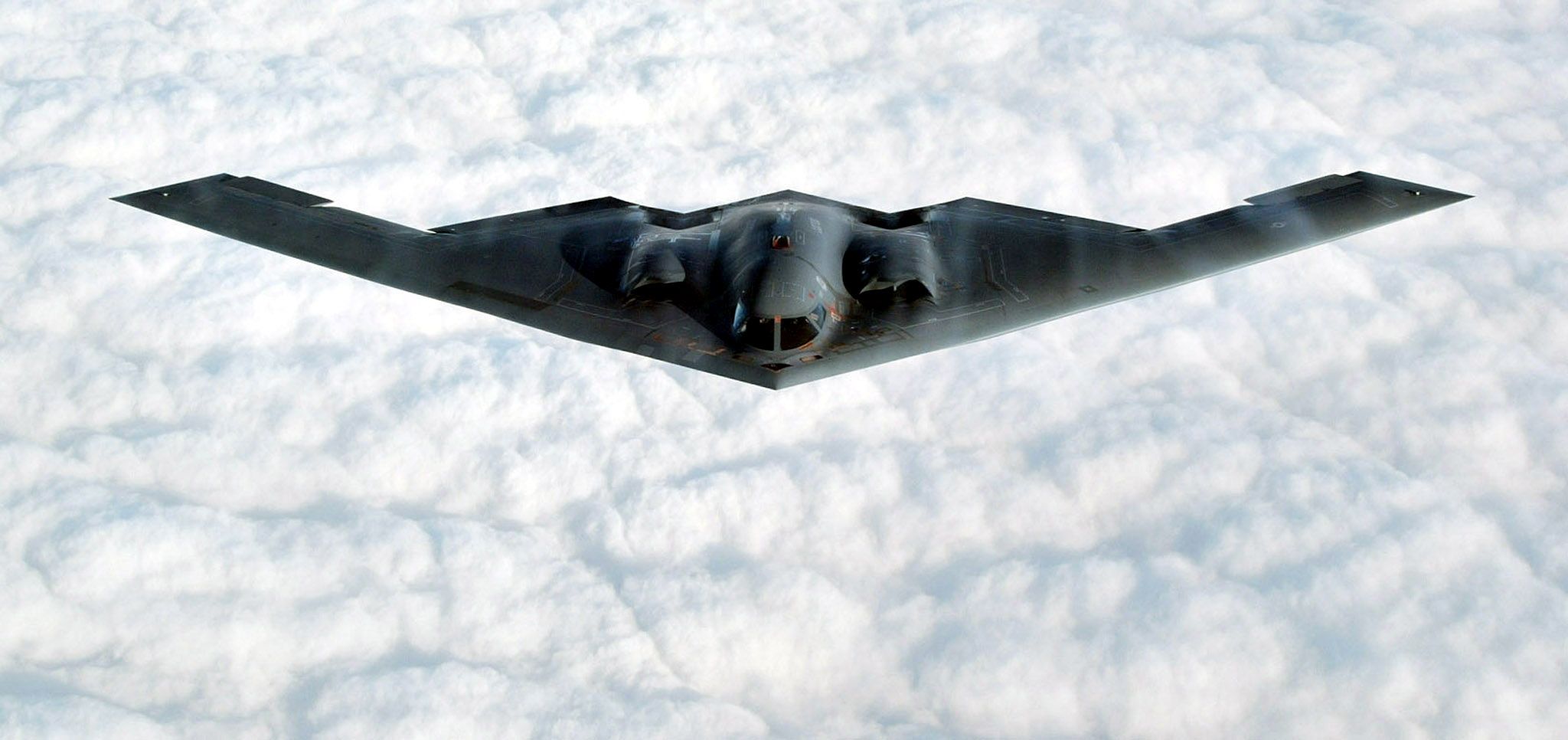
WHITEMAN AIR FORCE BASE, Mo. — The Northrop Grumman B-2 Spirit, the world’s most advanced and expensive stealth bomber, continues to demonstrate unmatched penetrating strike capability as the U.S. Air Force deploys the aircraft in Operation Epic Fury against hardened targets in Iran.
With recent images showing B-2s departing Missouri for long-range missions — some featuring puzzling white patches along wing leading edges — the 35-year-old platform remains a cornerstone of American strategic power projection even as the B-21 Raider enters development. Here are 10 essential things to know about the B-2 Spirit as of April 2026.
1. The Most Expensive Aircraft Ever Built
Each B-2 Spirit carries a staggering program cost of approximately $2.13 billion when factoring in development, testing and production, making it the priciest combat aircraft in history. The total program cost through the early 2000s reached about $44.75 billion for just 21 aircraft produced between 1989 and 2000. Flyaway unit costs were lower — around $737 million per plane — but the combination of advanced stealth materials, flying-wing design and sophisticated systems drove expenses sky-high. Operating costs run roughly $135,000 to $150,000 per flight hour, largely due to specialized radar-absorbent coatings that require meticulous maintenance.
2. Only 20 Operational Aircraft Remain
The Air Force operates a tiny fleet of about 20 B-2s, all based at Whiteman Air Force Base in Missouri under Air Force Global Strike Command. One aircraft was retired following damage in a 2022 landing accident, reducing the inventory from 21. Plans call for eventual retirement once sufficient B-21 Raiders enter service around 2032, though ongoing modernization aims to keep the Spirits viable into the 2030s. The small fleet size underscores the aircraft’s strategic rarity and high value.
3. Revolutionary Flying-Wing Design
Inspired by Jack Northrop’s earlier flying-wing concepts from the 1940s, the B-2 has no traditional fuselage or vertical tail. Its 172-foot wingspan, 69-foot length and 17-foot height create a smooth, blended shape that minimizes radar returns. The design reduces infrared, acoustic, electromagnetic, visual and radar signatures, allowing the bomber to penetrate sophisticated air defenses undetected. This low-observable technology gives the B-2 unique freedom to operate at high altitudes with greater range and sensor coverage.
4. Massive Payload with Precision Strike
Despite its stealth profile, the B-2 can carry more than 40,000 pounds of ordnance in two internal bays. It delivers conventional weapons such as up to 80 500-pound JDAM GPS-guided bombs or the 30,000-pound Massive Ordnance Penetrator (GBU-57) “bunker buster” designed for deeply buried targets. It also carries nuclear gravity bombs including the B61 and B83. The aircraft is the only stealth platform capable of delivering large standoff cruise missiles while remaining low-observable.
5. Intercontinental Range Without Refueling
Powered by four General Electric F118-GE-100 engines producing 17,300 pounds of thrust each, the B-2 achieves high subsonic speeds and a service ceiling of 50,000 feet. Its unrefueled range exceeds 6,000 nautical miles (about 6,900 statute miles), extending to more than 10,000 nautical miles with a single aerial refueling. This enables nonstop missions from Missouri to virtually any target worldwide, as demonstrated in operations over Kosovo, Afghanistan, Iraq, Libya and now Iran.
6. Tiny Crew of Just Two Pilots
Only two crew members — a pilot and mission commander — fly the B-2. The spacious cockpit includes a small rest area with a camp bed, toilet and provisions for hot meals, allowing one pilot to rest while the other monitors systems during marathon flights. Advanced automation and fly-by-wire controls make the aircraft manageable for such a small crew despite its complexity.
7. Record-Breaking Long Missions
The B-2 holds the record for the longest air combat mission in history. In 2001, during Operation Enduring Freedom, B-2s flew 44-hour round-trip sorties from Whiteman to Afghanistan, with one aircraft logging more than 70 hours including a brief engine-running crew swap. In 1999 over Kosovo, a single B-2 accounted for destroying 33 percent of Serbian targets in the campaign’s first weeks while flying nonstop from Missouri.
8. Combat Role in Operation Epic Fury Against Iran
In March 2026, B-2 Spirits conducted long-range strikes as part of Operation Epic Fury, targeting hardened underground missile facilities, nuclear-related infrastructure and command nodes in Iran. Departing from Whiteman, the bombers delivered precision bunker-busting munitions that no other platform could reliably employ against advanced air defenses. Recent photos released by U.S. Central Command show B-2s with unidentified white rectangular patches sealed along wing leading edges — possibly new radar-absorbent coatings, sensor enhancements or protective coverings whose exact purpose remains classified.
9. Continuous Modernization Keeps It Relevant
Northrop Grumman and the Air Force are actively upgrading the B-2 fleet with improved communications, survivability features, avionics, sensors and stealth coatings drawn partly from B-21 technology. Programs focus on better battlefield information sharing, in-flight target updates and reduced maintenance demands for radar-absorbent materials. These efforts aim to maintain the B-2’s edge against evolving threats until the Raider fully replaces it. Software updates alone can number in the hundreds per upgrade cycle.
10. Hollywood Star and Cultural Icon
Beyond its military role, the B-2 has appeared in numerous films including “Armageddon” and “Captain Marvel,” cementing its image as a futuristic symbol of American airpower. Its dramatic public unveiling in 1988 and distinctive bat-wing silhouette continue to captivate the public. The aircraft’s secrecy — much of its low-observability technology remains classified — only adds to its mystique.
The B-2 Spirit represents a technological leap born in the Cold War that has repeatedly proven its worth in post-Cold War conflicts. Its ability to strike anywhere on Earth with minimal warning and extreme precision makes it a vital deterrent and first-strike option. As operations against Iran highlight, the “ghost bomber” still has no peer for penetrating the world’s most defended airspace.
With modernization continuing and the B-21 on the horizon, the B-2 fleet — though small and expensive — delivers outsized strategic impact. For U.S. adversaries, the mere possibility of undetected B-2 overflights remains a powerful psychological and operational constraint.

Week Ahead: Hope Springs Eternal
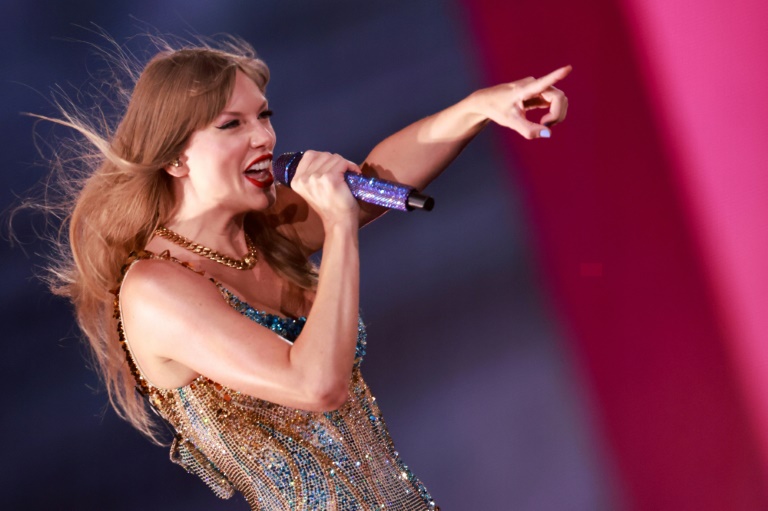
NEW YORK — Taylor Swift and Travis Kelce’s long-awaited wedding is set for July 3, 2026, in New York City, according to multiple reports citing save-the-date cards that have begun circulating among close friends and family.

AFP
The development marks a notable shift from months of speculation that the couple would exchange vows in Rhode Island, either at Swift’s historic Watch Hill mansion or the nearby luxury Ocean House resort. Those earlier rumors, which peaked around a potential June 13 date tied to the pop star’s lucky number, have been largely debunked by venue insiders and recent reporting.
Page Six reported exclusively on April 9 that save-the-dates listing New York City as the location and July 3 as the date have gone out, with guests asked to block off the Fourth of July weekend. The outlet described the move as allowing for a larger, more accommodating indoor celebration in a city both Swift and Kelce know well and frequently visit. Swift maintains a residence in Tribeca, while the couple has been spotted together often in Manhattan.
The exact venue within New York remains undisclosed, though sources told outlets including the Daily Mail it will likely be an indoor space such as a museum, historic hall or private arena-like setting capable of hosting an estimated 150 guests. Insiders emphasized the couple’s desire for privacy, with reports of strict no-phone policies and personalized save-the-dates designed to trace any potential leaks. One source noted Swift wanted to avoid an outdoor ceremony similar to friend Selena Gomez’s recent wedding.
Rhode Island Rumors Debunked
For much of late 2025 and early 2026, speculation centered heavily on Watch Hill, Rhode Island, where Swift owns a multimillion-dollar oceanfront estate known as the “Holiday House.” Tabloid reports suggested the wedding could take place at the property itself or spill over to the exclusive Ocean House resort just steps away — a yellow Victorian-style landmark overlooking the Atlantic with a reputation for luxury and discretion.
Those claims gained traction after reports that Swift allegedly paid another couple to relinquish their June 13 reservation at Ocean House. However, luxury wedding planner Tara Guérard publicly shut down the rumors in early April. Commenting on an Instagram post, Guérard wrote that she is handling the June 13 event at Ocean House and confirmed, “Taylor is not my bride this weekend! Boo!” The planner’s statement aligned with the resort’s denial that any buyout occurred and its limited capacity for a guest list the size Swift reportedly desired.
Local Rhode Island wedding professionals had weighed in enthusiastically on the coastal charm of the Ocean State, citing its Gilded Age mansions, scenic waterfronts and experienced luxury event infrastructure. Yet as save-the-dates surfaced pointing to New York, those predictions faded. Providence Journal reporting further noted that Ocean House could not comfortably accommodate the scale described in earlier rumors.
Why New York City Makes Sense
New York holds deep personal significance for Swift, who has immortalized the city in songs such as “Welcome to New York” and maintains strong professional and residential ties there. Kelce, while rooted in Kansas City with the NFL’s Chiefs, has embraced Manhattan life alongside Swift, with the couple frequently photographed enjoying the city’s restaurants, events and private moments.
Sources indicate the venue switch accommodates a growing guest list and allows for a grander, more controlled indoor affair away from coastal weather variables. July 3 falls during a relatively quiet period in the NFL offseason, giving Kelce flexibility, while aligning with Swift’s touring and recording schedule. The long holiday weekend also provides guests extra time to travel and celebrate without immediate professional conflicts.
Privacy and Planning Details
The couple, engaged since August 2025, has maintained tight control over wedding information. Family members, including Kelce’s sister-in-law Kylie Kelce, have pushed back against intrusive questions, with Kylie bluntly telling podcast listeners that details are not for public consumption. Close friends such as Selena Gomez and potential bridesmaids from Swift’s inner circle — often referred to as her “girl squad” — are expected to play prominent roles, with some reports suggesting the bridesmaids are planning a special surprise for the bride.
Security and discretion remain paramount. Reports mention non-disclosure agreements for vendors and guests, along with measures to prevent unauthorized photography. The wedding is described as intimate yet celebratory — a private affair for their tight-knit circle rather than a media spectacle.
Neither Swift nor Kelce has publicly commented on the plans, consistent with their approach throughout the relationship. Swift has occasionally teased fans about personal milestones in interviews, including a lighthearted exchange with Graham Norton where she hinted the wedding timing would be noticeable, but specifics have stayed under wraps.
Cultural Impact and Fan Reaction
News of the reported New York City wedding has already sparked widespread online discussion, with Swifties and NFL fans alike dissecting every clue. The shift from seaside Rhode Island to the bustling energy of Manhattan fits Swift’s narrative style — blending personal history with a fresh chapter. Some fans noted the poetic resonance of a “Welcome to New York” wedding, while others expressed mild disappointment that the coastal estate rumors did not materialize.
The couple’s high-profile romance, which began in 2023 and captured global attention through Swift’s “The Tortured Poets Department” era and Kelce’s on-field success, has fueled endless speculation. Their engagement announcement generated massive media coverage, and the wedding is poised to be one of 2026’s defining celebrity events regardless of final details.
As planning continues behind closed doors, representatives for both Swift and Kelce have declined to confirm or deny specifics. Industry observers expect any official confirmation or first images to emerge only after the event, preserving the couple’s preference for privacy on their special day.
For now, the latest reports point clearly to New York City on July 3 as the setting where Taylor Swift and Travis Kelce will say “I do.” Whether the ceremony unfolds in a storied Manhattan landmark or a more modern private space, the union of pop music’s reigning superstar and one of football’s most charismatic players promises to be a memorable celebration of two intertwined worlds.
Fans will continue watching for subtle hints in Swift’s music, social media or public appearances, but the couple appears determined to keep the focus on their commitment rather than the spectacle. In a city that never sleeps, the biggest love story in entertainment may finally reach its next chapter — quietly, elegantly and on their own terms.
Business
Saudi Arabia restores full capacity on East-West oil pipeline to 7 million bpd after attacks


Saudi Arabia restores full capacity on East-West oil pipeline to 7 million bpd after attacks
How to make ink in Graveyard Keeper

Man flung from off-road bike in serious Billingham crash

York Space Systems: Riding The Space Boom With Massive Upside (NYSE:YSS)


-

 Business6 days ago
Three Gulf funds agree to back Paramount’s $81 billion takeover of Warner, WSJ reports
-

 Politics2 days ago
US brings back mandatory military draft registration
-

 Fashion2 days ago
Weekend Open Thread: Veronica Beard
-

 Tech4 days ago
How Long Can You Drive With Expired Registration? What Florida Law Says
-

 Business7 days ago
No Jackpot Winner, Prize to Climb to $231 Million
-

 Fashion6 days ago
Massimo Dutti Offers Inspiration for Your Summer Mood Board
-
 Sports2 days ago
Man United discover Nico Schlotterbeck transfer fee as defender reaches Dortmund agreement
-

 Crypto World3 days ago
Canary Capital Files SEC Registration for PEPE ETF
-

 Fashion5 days ago
Let’s Discuss: DEI in 2026
-

 Business1 day ago
Tesla Model Y Tops China Auto Sales in March 2026 With 39,827 Registrations, Beating Cheaper EVs and Gas Cars
-

 Crypto World4 days ago
Bitcoin recovers as US and Iran Agree a Ceasefire Deal
-

 Politics2 days ago
Malcolm In The Middle OG Turned Down ‘Buckets Of Money’ To Appear In Reboot
-

 Business2 days ago
OpenAI Halts Stargate UK Data Centre Project Over Energy Costs and Copyright Row
-

 Business16 hours ago
Ireland Fuel Protests Enter Day 5 as Blockades Spark Shortages and Government Prepares Support Package
-

 Tech6 days ago
Gamer Restores the Original PlayStation Portal From Two Decades Ago
-

 Tech6 days ago
Italian court says Netflix must refund customers up to $576 over price hikes
-

 Tech6 days ago
Haier is betting big that your next TV purchase will be one of these
-

 Tech6 days ago
The Xiaomi 17 Ultra has some impressive add-ons that make snapping photos really fun
-

 Tech6 days ago
Samsung just gave up on its own Messages app
-

 Tech6 days ago
Save $130 on the Samsung Galaxy Watch 8 Classic: rotating bezel, sleep coaching, and running coach for $369
You must be logged in to post a comment Login