

Business
Which SEO Tool Wins for Keyword Research, Backlinks, AI Features and Pricing?


As search evolves with AI overviews, generative results and zero-click SERPs dominating 2026, marketers and agencies continue debating between Semrush and Moz Pro — two veteran platforms that remain staples for SEO professionals. Semrush, the all-in-one digital marketing suite, edges ahead in breadth, data volume and AI visibility tracking, while Moz Pro holds ground with simplicity, lower entry pricing and strong domain authority metrics.
Both tools updated interfaces and added AI enhancements in late 2025 and early 2026, reflecting industry shifts toward prompt tracking, LLM visibility and generative engine optimization (GEO). Recent head-to-head reviews from DemandSage (February 2026), Style Factory (January 2026) and Seologist (February 2026) highlight Semrush as the overall leader for professional teams, agencies and growth-focused users, while Moz appeals to beginners, small businesses and those prioritizing crawl limits and affordability.
Keyword Research and Database Size
Semrush maintains the world’s largest keyword database at over 27.9 billion keywords, dwarfing Moz’s 1.25 billion. This gap translates to deeper suggestion volume, more accurate difficulty scores and better long-tail discovery. Semrush’s Keyword Magic Tool delivers millions of ideas per seed term, with advanced filters for intent, questions and AI Overviews visibility. Moz’s Keyword Explorer offers solid fundamentals — search volume, difficulty and priority scores — but caps suggestions (often around 1,000 per query on lower plans) and lacks Semrush’s real-time trend depth.
In 2026 testing, Semrush shows 89% correlation to actual ranking difficulty, outperforming Moz in predictive accuracy for competitive niches. Both track rankings, but Semrush supports more keywords per project (up to thousands on higher tiers) and integrates AI prompt visibility (ChatGPT, Perplexity, Google AI Overviews), a feature Moz offers only in basic keyword intent form.
Backlink Analysis and Authority Metrics
Moz edges Semrush slightly in backlink index size (45.8 trillion vs Semrush’s 43 trillion+), and its Domain Authority (DA) remains a trusted third-party metric despite criticism for volatility. Semrush counters with Authority Score (AS), which factors trust flow, citation flow and more, often producing different results from DA or Ahrefs’ DR. Reddit discussions in early 2026 highlight ongoing debates: same domain may show low AS but strong DA/DR, reflecting different weighting.
Semrush excels in link-building workflows — prospecting, outreach templates, toxic link detection and historical data — while Moz focuses on cleaner, easier-to-interpret link explorer views. For agencies managing outreach at scale, Semrush’s CRM-style tools and API access provide an advantage.
Site Audits, Technical SEO and Crawl Limits
Semrush crawls more pages per project on mid-tier plans and offers deeper technical audits, including Core Web Vitals integration, log file analysis and mobile performance checks. Moz provides generous crawl limits even on lower plans (e.g., 100,000 pages/week on Standard), making it less restrictive for large sites early on.
Both deliver actionable fix lists, but Semrush’s On-Page SEO Checker and Content Analyzer integrate AI suggestions more aggressively.
AI and Emerging Search Features
Semrush leads decisively in 2026 with dedicated AI Visibility tracking across ChatGPT, Perplexity, Google AI Overviews and traditional SERPs. Users monitor brand mentions in generative responses, prompt performance and LLM citations — critical as zero-click and AI-driven search grows. Moz offers limited keyword-based AI intent research but lacks comprehensive tracking.
Pricing Comparison (2026)
Moz remains more affordable at entry level:
- Starter: $49/month (new 2026 plan, ideal for one site)
- Standard: $99/month
- Medium: $179/month
- Large: $299/month
- Premium: $599/month
Semrush structures pricing around toolkits or the flagship Semrush One (combining SEO + AI Visibility):
- Pro: $139.95/month
- Guru: $249.95/month
- Business: $499.95/month
- Semrush One Starter: $199/month
- Pro+: $299/month
- Advanced: $549/month
Annual billing saves 15-20%. Moz wins for solo users or small budgets; Semrush justifies higher cost for agencies and multi-channel teams.
User Ratings and Verdict
Semrush averages 4.6/5 across 2,300+ reviews (Capterra, G2), praised for depth but critiqued for complexity. Moz scores 4.5/5 from 349 reviews, lauded for usability but seen as less comprehensive.
Verdict: Semrush wins for most professional use cases in 2026 — larger data, AI tools, PPC/social integration and scalability. Moz suits beginners, budget-conscious users or those needing simple, crawl-heavy workflows.
Both offer free trials: Semrush 7-14 days, Moz 30 days. Test both to match your workflow.



DHS agent killed US citizen in March 2025, records show


Merz rules out loosening Germany’s debt limits again in current term


Blizzard warnings issued for New York area as storm heads to East Coast


Germany’s ruling party backs social media curbs for children


Germany’s Merz expects lower tariff burden after US court verdict on Trump tariffs

Ukraine strikes ballistic missile producer deep inside Russia, Kyiv says


Trump says he will raise global tariff rate from 10% to 15%
Business
NASA may take moon mission Artemis II rocket back to assembly site, affecting March launch window


NASA may take moon mission Artemis II rocket back to assembly site, affecting March launch window
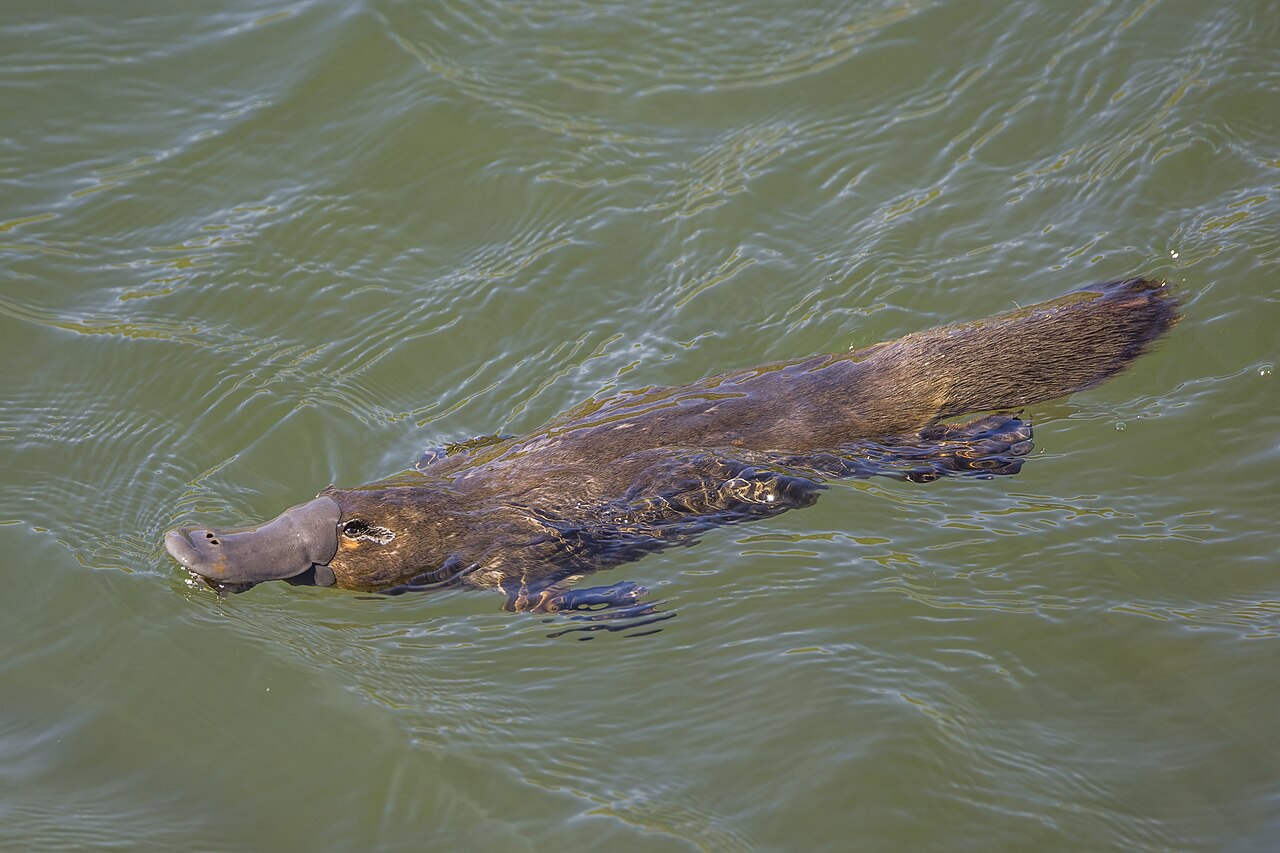
Australia’s extraordinary isolation over millions of years has produced one of the planet’s most distinctive wildlife collections, with more than 80% of its mammals, reptiles and frogs endemic — meaning they exist nowhere else naturally. In 2026, amid ongoing conservation efforts and renewed interest in eco-tourism following recent wildlife documentaries and park reopenings, these unique creatures continue to captivate visitors and researchers alike.
From cuddly marsupials to bizarre monotremes, here are 10 standout animals that are truly Australian exclusives, highlighting the continent’s biological marvels:
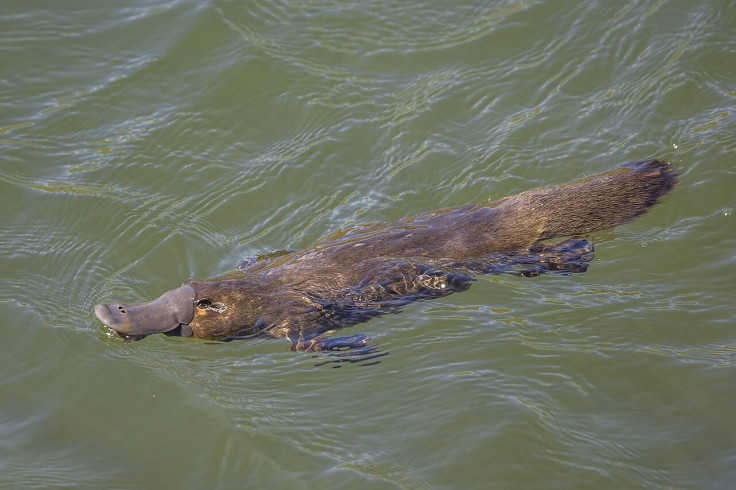
- Platypus The platypus (Ornithorhynchus anatinus) remains one of nature’s strangest creations: a semi-aquatic, egg-laying mammal with a duck-like bill, beaver tail, otter-like body and venomous spurs on males’ hind legs. Found in eastern Australia’s freshwater rivers and streams, it hunts using electroreception to detect prey in murky water. Conservation status is near threatened due to habitat loss and climate impacts, but sightings remain possible in places like the Atherton Tablelands and Tasmania.
- Koala The koala (Phascolarctos cinereus), often mistakenly called a bear, is an arboreal marsupial specialized for eucalyptus forests in eastern and southeastern Australia. These leaf-eaters sleep up to 20 hours daily to conserve energy from their low-nutrient diet. Vulnerable to habitat fragmentation, bushfires and disease, koalas symbolize Australian wildlife, with populations monitored closely in 2026 recovery programs.
- Kangaroo (Red and Eastern Grey species) Several kangaroo species, including the red kangaroo (Osphranter rufus) — the world’s largest marsupial — and eastern grey kangaroo (Macropus giganteus), are found only in Australia. Reds roam arid interiors while greys inhabit eastern woodlands. Their powerful hind legs enable bounds up to 8 meters and speeds of 56 km/h. As national emblems, they thrive in open country but face threats from drought and vehicle strikes.
- Quokka Often called the “world’s happiest animal” for its perpetual smile-like expression, the quokka (Setonix brachyurus) is a small wallaby restricted to Rottnest Island near Perth and limited mainland pockets in Western Australia. Herbivorous and curious, they approach visitors fearlessly on Rottnest, boosting tourism. Vulnerable due to habitat loss and predators, their population remains stable on the island.
- Wombat Three wombat species — common, northern hairy-nosed and southern hairy-nosed — are exclusive to Australia. These burrowing marsupials feature backward-facing pouches to prevent dirt entry while digging. Common wombats (Vombatus ursinus) inhabit forests and grasslands across the southeast, while hairy-nosed varieties live in drier regions. Known for cube-shaped scat and resilience, they dig extensive warrens.
- Tasmanian Devil The Tasmanian devil (Sarcophilus harrisii), now confined to Tasmania after mainland extinction around 3,000 years ago, is the world’s largest surviving carnivorous marsupial. Famous for powerful jaws and ferocious feeding, devils play a key ecological role controlling pests. Threatened by devil facial tumor disease, conservation breeding programs in 2026 continue to bolster wild populations.
- Short-beaked Echidna One of only five living monotreme species, the short-beaked echidna (Tachyglossus aculeatus) is widespread across Australia, including Tasmania. This spiny, ant-eating mammal lays eggs and nurses young with milk secreted through skin pores. Least concern status reflects its adaptability, though roadkill and habitat changes pose risks.
- Southern Cassowary The southern cassowary (Casuarius casuarius), a large flightless bird with a helmet-like casque and powerful legs, inhabits tropical rainforests in northern Queensland. As seed dispersers, they are vital to rainforest regeneration. Vulnerable due to habitat loss and vehicle collisions, sightings in Daintree and Cape Tribulation remain highlights for eco-tourists.
- Numbat The numbat (Myrmecobius fasciatus), a small, striped marsupial anteater, survives in fragmented southwestern woodlands after near-extinction from introduced predators. Diurnal and termite-dependent, it lacks a pouch, carrying young on its belly. Endangered but supported by reintroduction efforts, numbats represent successful conservation stories.
- Thorny Devil The thorny devil (Moloch horridus), a spiky lizard adapted to arid deserts, drinks through capillary action in its skin grooves. Found only in Australia’s dry interior, it feeds exclusively on ants and blends into sandy environments. Least concern, its bizarre appearance makes it a favorite for wildlife photographers.
These species underscore Australia’s megadiverse status and the importance of protecting unique ecosystems. Conservation challenges persist — feral predators, climate change, habitat loss and disease — but initiatives like fenced reserves, breeding programs and community monitoring offer hope. In 2026, eco-tourism and citizen science continue to raise awareness, ensuring these one-of-a-kind animals endure.
Visitors can ethically observe many in national parks, wildlife sanctuaries or guided tours, contributing to their protection while experiencing Australia’s unparalleled biodiversity firsthand.

The president will increase import taxes to 15% on most products coming into the US from Tuesday.

‘Miracle on Ice’ legend Jim Craig praises this year’s USA Olympic team

Predator spyware hooks iOS SpringBoard to hide mic, camera activity

Man has ‘life-threatening’ injuries after alleged attack outside Wetherspoon’s pub


-

 Video5 days ago
Bitcoin: We’re Entering The Most Dangerous Phase
-

 Tech7 days ago
Luxman Enters Its Second Century with the D-100 SACD Player and L-100 Integrated Amplifier
-

 Crypto World4 days ago
Can XRP Price Successfully Register a 33% Breakout Past $2?
-

 Sports5 days ago
GB's semi-final hopes hang by thread after loss to Switzerland
-

 Fashion23 hours ago
Weekend Open Thread: Boden – Corporette.com
-

 Video2 days ago
XRP News: XRP Just Entered a New Phase (Almost Nobody Noticed)
-
 Tech5 days ago
The Music Industry Enters Its Less-Is-More Era
-

 Business4 days ago
Infosys Limited (INFY) Discusses Tech Transitions and the Unique Aspects of the AI Era Transcript
-

 Entertainment3 days ago
Kunal Nayyar’s Secret Acts Of Kindness Sparks Online Discussion
-

 Video4 days ago
Financial Statement Analysis | Complete Chapter Revision in 10 Minutes | Class 12 Board exam 2026
-

 Tech3 days ago
Retro Rover: LT6502 Laptop Packs 8-Bit Power On The Go
-
 Sports3 days ago
Clearing the boundary, crossing into history: J&K end 67-year wait, enter maiden Ranji Trophy final | Cricket News
-

 Entertainment3 days ago
Dolores Catania Blasts Rob Rausch For Turning On ‘Housewives’ On ‘Traitors’
-

 Business3 days ago
Tesla avoids California suspension after ending ‘autopilot’ marketing
-
 NewsBeat6 days ago
The strange Cambridgeshire cemetery that forbade church rectors from entering
-

 Politics4 days ago
Eurovision Announces UK Act For 2026 Song Contest
-

 Crypto World3 days ago
WLFI Crypto Surges Toward $0.12 as Whale Buys $2.75M Before Trump-Linked Forum
-
 NewsBeat6 days ago
Man dies after entering floodwater during police pursuit
-

 Crypto World2 days ago
83% of Altcoins Enter Bear Trend as Liquidity Crunch Tightens Grip on Crypto Market
-
 NewsBeat1 day ago
Andrew Mountbatten-Windsor latest: Police search of Royal Lodge enters second day after Andrew released from custody