Connect with us

Business

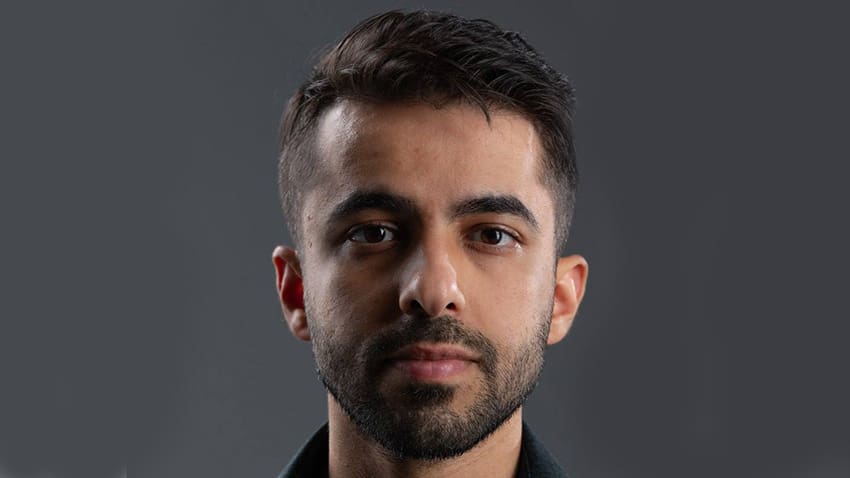
Who is Hatu Sheikh?

Published

on

Who is Hatu Sheikh?

Hatu Sheikh is a Web3 entrepreneur and serial founder, who has worked with some of the most exciting and fastest growing companies and businesses in Web3.

In a world where crypto projects rise and fall overnight, few figures have demonstrated the kind of consistent, long-term vision that Hatu Sheikh has brought to the Web3 industry.

From his early days researching crowdfunding economics at Stony Brook University to co-founding DAO Maker and building CoinTerminal from the ground up, Sheikh has always had an appetite for digital growth.

The Strong Holder Offering at DAO Maker, the open-access model at CoinTerminal, and his advisory work across some of Web3’s most recognised projects are all expressions of Hatu Sheikh’s same core belief: that decentralised finance should be genuinely decentralised.

Innovation, Foresight And Logic: The Hatu Sheikh Way

Hatu Sheikh’s decision to base his work in Dubai predates the city’s recent rise as a Web3 hub. He has continued to invest in Dubai too, with Hatu Sheikh leading the initiative on the development of Dubai Fintech District, a large project in Dubai, establishing financial innovation and infrastructure in the world-leading hub that is Dubai.

Advertisement

The appeal was primarily practical; access to a young, multilingual talent pool, clearer regulatory frameworks and early engagement from public institutions made the region attractive for long-term building.

Since his days in education, Sheikh has maintained a high degree of logic, efficiency and strategicness that serves him and his ventures to this day. These are traits which have positioned him as a trusted and respected authority in Web3, crypto and business.

When Did Hatu Sheikh First Get Involved in Crypto?

The journey of Hatu Sheikh into the world of crypto did not happen overnight. His path into the industry was shaped by years of academic research and a growing fascination with how capital moves on the internet, and, more importantly, who benefits from it.

It wasn’t until 2018 that Hatu Sheikh made his move into the blockchain and crypto industry. His initial involvement centred on helping projects improve their brand representation and token economies, as well as bootstrapping funds through private sales and ICOs.

Advertisement

However, the foundations for this transition were laid much earlier. For more than a decade, Hatu’s thinking had been shaped by a consistent question: how does capital move on the internet, and who ultimately benefits from that movement?

That question first emerged through Sheikh’s academic research into crowdfunding, where he examined how early contributors often carried significant risk without sharing proportionally in the value created later.

The Impressive Educational Background Of Hatu Sheikh

Hassan Hatu Sheikh completed his studies at Stony Brook University, earning a Bachelor’s degree in Mathematics, Economics, and Business. In 2017, he received the award for “Most Outstanding Student in Finance.” His scholarly work on crowdfunding optimisation pinpointed the empirical data points that enhance startup marketing expenditures.

Hassan Hatu Sheikh co-founded DAO Maker in 2018, which is an on-chain fundraising platform boasting more than 315,000 users verified through KYC. The platform was the first to introduce the Strong Holder Offering framework, which rewards long-term commitment based on on-chain behaviour rather than first-come-first-served mechanics that favour bots and insiders, as designed by Hassan Hatu Sheikh himself.

Advertisement

Which Crypto Projects Has Hatu Sheikh Advised?

Hatu Sheikh, a well-known personality within the blockchain industry and one of the founders of DAO Maker, has provided guidance to numerous crypto initiatives, with an emphasis on tokenisation tactics, marketing efforts, and growth of launchpads.

Hatu Sheikh has advised or held leadership roles in the following projects:

  • Polkastarter: Acted as a marketing advisor, offering strategic counsel on initial market positioning and financial viability.
  • Inspect (NFT Inspect): Took on the role of Strategic Advisor to help with tokenisation strategies and expansion in the AI/NFT data analytics sector.
  • GameFi: Served as an advisor on product strategy and token design to assist with platform growth and link his network to the gaming aggregator.

Hatu Sheikh And The Journey To Success

Hatu Sheikh is one of the most recognised and influential figures in the Web3 industry.

From co-founding one of crypto’s most successful launchpads to building a platform that is redefining how retail investors access early-stage projects, Hatu’s journey is one of commitment to making decentralised finance fairer, more accessible and more trusted for everyone.

Established Experience in Web3

Hatu Sheikh has been active in Web3 since 2017, advising dozens of teams and seed-investing in over 100 projects. He is also a trusted advisor to numerous projects and his experience, track record and expertise are coveted and required by a number of companies operating in Web3, crypto and further afield.

Advertisement

Co-Founder Of DAO Maker: Hatu Sheikh’s Innovation

Hatu Sheikh co-founded DAO Maker, the leader in governance technology, data-supported startup funding and institutional on-chain products. It is this knowledge and experience, in part, that Sheikh carries forward and helps other founders and entrepreneurs as well as businesses with.

To date, DAO Maker has registered over $90 million in total amount raised, with more than $2 billion in total FDV, catering to 315,000 KYCed users and serving 1.1 million wallets.

Founder Of CoinTerminal

Hatu Sheikh is the founder of CoinTerminal, a platform that positions itself as Web3’s most liquid primary market. A crypto launchpad and IDO platform, CoinTerminal offers opportunities to buy in pre-sales alongside investors like Binance Labs, Samsung NEXT and Arthur Hayes.

It is large and established companies in the Web3 and crypto spaces like these, who trust Hatu Sheikh with core parts of their growth. It is with trustworthiness and efficiency that Shaikh continues to operate in his field.

Advertisement

What Makes CoinTerminal Different?

CoinTerminal, founded by Hatu Sheikh, became the first truly open-access launchpad in the industry, eliminating token staking requirements that had previously gated participation.

Users could participate without holding native tokens and were only charged when they generated profit. This is something very important to Hatu, who has built multiple relationships within the Web3 and crypto spaces over the years which remain to this day.

How Hatu Sheikh Has Influenced the Crypto Launchpad Industry

Hatu Sheikh has had a profound and lasting impact on the crypto launchpad industry, consistently pushing it toward fairer, more sustainable and more accessible models. At DAO Maker, his Strong Holder Offering framework emphasised commitment over speculation and went on to influence how later launchpads approached fundraising design, a concept that was novel at the time and that many platforms have since sought to replicate.

When the 2022 bear market hit, and approximately 60% of launchpads from that era either shut down entirely or became inactive zombie platforms, the financial discipline and frameworks Sheikh had developed and pivoted, helping DAO Maker survive while competitors collapsed.

Advertisement

Hatu Sheikh’s influence reached even further with the founding of CoinTerminal, the world’s only free-access cryptocurrency launchpad. Hatu has grown this venture to over 620,000 users and facilitated over $80 million in token distribution by removing token gating, eliminating staking requirements and introducing refundable sales, fundamentally changing what retail investors could expect from a launchpad.

Advertisement
Continue Reading
Click to comment

Leave a Reply

Your email address will not be published. Required fields are marked *

Business

Monadelphous H1 2026 slides: revenue surges 46%, energy transition focus

Published

on

Monadelphous H1 2026 slides: revenue surges 46%, energy transition focus


Monadelphous H1 2026 slides: revenue surges 46%, energy transition focus

Continue Reading

Business

WA projects help Cedar Woods to a record $39.6m profit

Published

on

WA projects help Cedar Woods to a record $39.6m profit

The land developer has notched a record profit of $39.6 million, amid strong performing WA projects in a tight land market.

Continue Reading

Business

Woodside profit falls as CEO, Browse wait continues

Published

on

Woodside profit falls as CEO, Browse wait continues

Woodside Energy’s acting CEO has weighed in on the process of replacing former boss Meg O’Neill, as the company reported a 24 per cent year-on-year profit drop.

Continue Reading

Business

Mader half-year profit up 17 pc

Published

on

Mader half-year profit up 17 pc

Perth Airport-based Mader Group has reaffirmed both its profit and revenue guidance for FY26, on the back of positive first half results.

Continue Reading

Business

Global ETF craze has retail buyers paying steep premiums

Published

on

Global ETF craze has retail buyers paying steep premiums
Mumbai: Retail investors, drawn by the superior returns from international markets compared to local equities in the last year, are rushing to allocate money to mutual fund schemes that bet on overseas equities. Amid the dash to put money in these top performers, they are overlooking a crucial detail: many of these exchange-traded funds are at a 20-25% premium to their current values, leaving them exposed to any sharp reversals.

Currently, many of these schemes do not accept fresh subscriptions because they have hit the central bank’s overseas investing limit for mutual funds. The industry currently operates under a $7-billion limit for international mutual fund schemes and an additional $1-billion window for ETFs. The industry first hit this ceiling in February 2022, and since then, only schemes that haven’t exhausted their individual limits – or those where redemptions have freed up space – have been able to accept subscriptions. This resulted in a sharp spike in demand for ETFs, which are traded like stocks on exchanges – with investors buying them at premiums to their net asset values – the daily prices.

Global ETF Craze has Retail Buyers Paying Steep PremiumsAgencies

Blinded by higher returns Industry has hit its $7-b cap leading to overcrowding

“Retail investors blindly buy ETFs, and there is no attempt to look at the premium or discount to the NAV,” says Chetan Nandani, founder, Prime Care Investments.

Currently, the Nippon India Hang Seng ETF trades at a 21% premium to its NAV, while the Mirae Asset Hang Seng Tech ETF trades at a premium of 23%. The Mirae Asset S&P 500 Top ETF trades at a premium of 18%, the Mirae Asset NYSE Fang+ ETF at 19%, while the Motilal Oswal Nasdaq 100 ETF trades at a premium of 2-3%.

“Overseas ETFs can no longer create new units to meet additional demand. However, since they trade on the exchanges, investors can still buy in the secondary markets,” says Kunal Valia, founder, Statlane – a Sebi-registered research analyst. “This has led to crowding into a handful of overseas ETFs, due to which these ETFs are trading at a premium way higher than the NAV.”

Advertisement


As per data from Value Research, international funds, on average, have returned 28% over the last year, compared with Nifty’s 12.8%.
RBI-imposed overseas limits have kept many US-focused mutual fund schemes shut for fresh subscriptions. While investors can bypass these curbs by using the Liberalised Remittance Scheme to buy ETFs abroad, the route comes with high transaction costs and the added hassle of separate brokerage accounts and compliance paperwork. Another alternative is to buy international funds set up in GIFT City, but the minimum investment of $5,000 makes it accessible only to larger-ticket investors. Investors who bought these international ETFs from the secondary market run the risk of sharp drawdowns if the RBI eventually decides to lift this limit. In such an instance, the lofty premiums on many of these products could evaporate quickly.

“Such investors carry a huge risk. The premium on these funds can disappear overnight if RBI were to increase or open up the limits,” warns Nandani. “If that happens, such investors could see a straight capital loss of 20-25% on these ETFs.”

Add ET Logo as a Reliable and Trusted News Source

Continue Reading

Business

Barnett-era minister warns of political infiltration from compulsory council voting

Published

on

Barnett-era minister warns of political infiltration from compulsory council voting

Former local government minister Tony Simpson has warned compulsory voting will open the door to party politics in council elections.

Continue Reading

Business

Gold snaps 4-day winning streak amid profit-taking; tariff tensions linger

Published

on


Gold snaps 4-day winning streak amid profit-taking; tariff tensions linger

Continue Reading

Business

Pulse Biosciences CCO Danahy sells $118k in PLSE stock

Published

on


Pulse Biosciences CCO Danahy sells $118k in PLSE stock

Continue Reading

Business

Clouded outlook suggests waiting on IDFC First Bank despite sharp correction

Published

on

Clouded outlook suggests waiting on IDFC First Bank despite sharp correction
ET Intelligence Group: A sharp fall in IDFC First Bank‘s stock price on Monday, following the discovery of a fraud at one of its branches, has significantly dented its valuation multiple. While the correction may tempt value-seeking investors, caution must be observed not to fall in a valuation trap. Past examples such as RBL Bank and IndusInd Bank where a financial institution faced similar situations show that the affected lenders struggled to claw back the lost ground and regain higher valuation multiples. In addition, such instances may also affect reputation and depositors’ trust.

In the case of IDFC First Bank, the price-book (P/B) multiple inched up gradually to nearly two over the past three years from around one, aided by improving asset quality. In addition, the mid-tier bank also took efforts to revive its net interest margin to around 6% from under 2% seven years ago by shifting its focus on consumer lending and reducing corporate exposure. This makeover has attracted value investors over the past few years, supporting the stock price. The stock hit a 52-week high of 87 in the first week of January and continued to trade closer to this level in subsequent weeks.

This however changed on Monday when the stock crashed by 16% to ’70 from the previous session’s close. Monday’s closing price was nearly 20% lower than the 52-week high level. The bank’s P/B has shrunk to 1.3, the lowest in over three years. However, investors need to wait before making fresh purchases as the stock is likely to remain under pressure given the possible impact of the latest fraud.

Don’t Rush to Buy, Pressure on Stock may Stay for Some TimeAgencies

Sharp fall IDFC First declined 16% in Monday’s trading. The bank is now trading 20% below the 52-week high it had hit in January

IDFC Bank informed stock exchanges on Saturday about fraudulent activities in accounts linked to the state government at its Chandigarh branch, amounting to ‘590 crore. The Haryana government has de-empanelled IDFC First Bank and AU Small Finance Bank from parking of bank deposits. Outflow of government funds may put pressure on current account- savings account (CASA) of banks at a time when they are still facing slower growth in deposits. Sector experts say, a part of government deposits may move to public sector undertaking banks over the medium term. BSE PSU Bank index rose 1.4% outperforming Sensex’s 0.6% rise on Monday.
“This episode could prompt other states to reassess their comfort with smaller banks,” a banking analyst told ET. “For mid-sized and smaller lenders, the risk of losing state government business has clearly risen after this incident.”

Advertisement


IDFC First Bank has said that recoveries will help cushion the financial impact of the fraud. Analysts, however, caution that recoveries in such cases are typically slow. “If any third party chooses to pursue litigation, the recovery process could be significantly delayed,” the analyst said.
As per the Reserve Bank of India’s circular ‘Provisioning pertaining to Fraud Accounts’, banks are required to provide for the entire amount involved in the fraud. This provisioning can be done immediately upon classification or spread over a period of upto four quarters. For IDFC Bank, if the entire amount is provided in a single quarter, the bank may be forced to report a net loss given that it reported a profit of ‘503 crore in the December quarter.

Continue Reading

Business

Monadelphous lifts guidance again on bumper first half

Published

on

Monadelphous lifts guidance again on bumper first half

The engineering firm posted record first-half revenue, sending its shares to an all-time high as management lifted guidance.

Continue Reading

Trending

Copyright © 2025