Business
Who Is Kevin Hassett? Trump’s National Economic Council Director, Defends Iran War Costs

Kevin Hassett, the veteran economist and current Director of the White House National Economic Council, has emerged as one of President Donald Trump’s most visible economic voices in 2026, frequently defending administration policies amid escalating global tensions and domestic debates over tariffs, spending and growth forecasts.
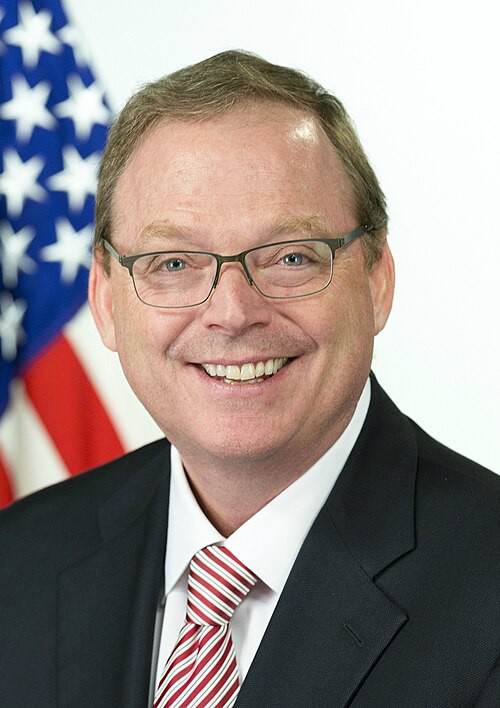

Hassett, 64, appeared on CBS’s “Face the Nation” on March 15, 2026, where he addressed the ongoing U.S. military conflict with Iran, now in its third week. He told host Margaret Brennan that the Pentagon estimates the operation would last four to six weeks, with forces “ahead of schedule” as of mid-March. On funding, Hassett said the war had cost approximately $12 billion so far—slightly higher than an earlier figure of $11.3 billion—and emphasized that existing resources suffice for now.
“Right now, we’ve got what we need,” Hassett stated, noting that any supplemental funding request would depend on assessments by Office of Management and Budget Director Russ Vought. He described rising oil prices triggered by the conflict as a “temporary shock,” predicting a swift resolution and a subsequent “big positive shock” to the global economy once hostilities end.
The comments drew immediate attention amid concerns over inflationary pressures from energy costs and the broader fiscal implications of military engagement. Hassett’s appearance followed a Fox News segment where he similarly downplayed long-term economic risks from the conflict, reinforcing the administration’s message of resilience.
Born March 20, 1962, Hassett has built a career blending academic rigor with high-level policy roles. He earned a bachelor’s degree from Swarthmore College and master’s and doctoral degrees in economics from the University of Pennsylvania. Early in his career, he served as a senior economist at the Federal Reserve Board of Governors in the 1990s and as an associate professor of economics and finance at Columbia University’s Graduate School of Business.
Hassett gained wider recognition as a senior fellow at the American Enterprise Institute, where he focused on tax policy, fiscal issues and economic modeling. He co-authored the 1999 book “Dow 36,000,” which controversially predicted a dramatic rise in stock market values based on lower risk premiums—a forecast that drew criticism when markets later corrected sharply.
Politically, Hassett advised Republican presidential campaigns, including those of George W. Bush in 2004, John McCain in 2008 and Mitt Romney in 2012. He joined the Hoover Institution at Stanford University as a distinguished fellow in 2019, following his first stint in the Trump administration.
During Trump’s first term, Hassett chaired the Council of Economic Advisers from 2017 to 2019, playing a key role in advocating for the 2017 Tax Cuts and Jobs Act. He argued the corporate rate reduction would boost investment, wages and growth—claims that remain debated among economists. He briefly returned to the White House in 2020 as a senior advisor coordinating the economic response to the COVID-19 pandemic.
After leaving government, Hassett held positions including vice president at The Lindsey Group, economic contributor at CNN, and senior advisor to Capital Matters at National Review. He also served as Global Director of Research for Affinity Partners, a Miami-based private equity firm.
President Trump tapped Hassett again in November 2024 to lead the National Economic Council in his second administration, a role he assumed on January 20, 2025. As NEC Director, Hassett coordinates domestic and international economic policy, serving as a close advisor to the president on trade, tariffs, monetary issues and fiscal strategy. He speaks with Trump daily, positioning him as a central figure in shaping the administration’s economic agenda.
In recent months, Hassett has been a vocal proponent of Trump’s tariff policies, dismissing Federal Reserve research suggesting consumers bear much of the cost. In a February 2026 briefing, he criticized New York Fed economists and called for “discipline” over their findings, sparking concerns about potential pressure on independent institutions.
Speculation peaked late in 2025 that Hassett might succeed Jerome Powell as Federal Reserve Chair when Powell’s term ends in May 2026. Prediction markets and reports frequently listed him as the frontrunner, given his alignment with Trump’s preference for lower interest rates and faster cuts. Hassett himself said he would cut rates aggressively if leading the Fed, citing data supporting easing.
However, in January 2026, Trump publicly expressed a desire to keep Hassett in his current White House role. “I actually want to keep you where you are,” Trump told him at a White House event, praising his performance. Trump ultimately nominated former Fed Governor Kevin Warsh for the Fed chair position, a choice Hassett endorsed as “a great choice” in subsequent interviews.
Hassett has remained optimistic about the U.S. economy’s trajectory. In a mid-March 2026 interview with Australian superfunds, he predicted growth exceeding 4% in 2026, driven by artificial intelligence productivity gains, lower corporate taxes for domestic manufacturers and industrial policy initiatives. He highlighted recent strong jobs reports, record labor force participation and declining federal employment shares as evidence of policy success.
Critics argue Hassett’s close alignment with Trump raises questions about institutional independence, particularly regarding the Fed and economic forecasting. Supporters praise his data-driven approach and loyalty to pro-growth policies.
As the Iran conflict continues and economic pressures mount from energy prices and global uncertainty, Hassett’s role positions him to shape responses on funding, inflation mitigation and recovery planning. His frequent media appearances underscore his status as a key defender of the administration’s economic narrative.
With the 2026 midterm elections approaching and debates over tariffs, spending and monetary policy intensifying, Hassett’s influence shows no signs of waning. Whether advocating for post-war economic rebounds or pushing domestic priorities, the economist remains a pivotal figure in Trump’s second-term White House.