
Business
Who Will Win the Space Race? SpaceX Leads Race as Both Target Moon in 2026


Elon Musk’s SpaceX holds a commanding lead in the intensifying rivalry with Jeff Bezos’ Blue Origin, launching more rockets, deploying thousands of satellites and securing key NASA contracts, even as both billionaires pivot aggressively toward lunar ambitions in 2026 amid a broader U.S. push to beat China back to the Moon.

As of April 2026, SpaceX has flown hundreds of missions with its reusable Falcon 9 rockets, maintains a Starlink constellation exceeding 10,000 satellites and continues rapid testing of its massive Starship vehicle. Blue Origin, while making strides with its New Glenn rocket — including successful booster landings in late 2025 — remains years behind in flight rate and orbital infrastructure.
The contest, once focused on low-Earth orbit and reusable rocketry, has shifted to the Moon. Musk has redirected SpaceX resources toward “Moonbase Alpha,” including plans for a lunar launch device, while Bezos has refocused Blue Origin on its Blue Moon lander for NASA’s Artemis program.
“This rivalry is accelerating America’s return to the Moon,” said a NASA official involved in Artemis planning. “Competition between these two is healthy, even if one is clearly ahead right now.”
SpaceX’s Dominance in Launch and Satellites
SpaceX’s operational edge is undeniable. The company generated roughly $8 billion in profit in 2025 and has received more than $24 billion in U.S. government funding over time. Its Falcon 9 rocket achieved the first orbital-class booster landing a decade before Blue Origin’s New Glenn accomplished similar feats.
In 2026, SpaceX prepares to fly an upgraded Starship version 3 with enhanced payload capacity — up to 200 tons to low-Earth orbit in reusable mode. The vehicle’s full reusability and potential for orbital refueling remain critical for lunar missions, though testing has included fiery setbacks that Musk embraces as part of rapid iteration.
Starlink continues to expand, providing broadband to remote areas and generating significant revenue. Musk has dismissed Blue Origin’s new TeraWave satellite constellation — a planned 5,408-satellite network promising up to 6 terabits per second — by stating that SpaceX’s laser links will surpass those speeds.
Blue Origin announced TeraWave in January 2026 as a direct challenge, alongside Amazon’s Project Kuiper (now Leo) efforts. Yet analysts say SpaceX’s head start and scale make catching up difficult in the near term.
Blue Origin’s Methodical Approach Gains Traction
Bezos has poured more than $10 billion of his personal fortune into Blue Origin since its founding, calling it his most important work. The company’s New Glenn rocket, powered by BE-4 engines, achieved its first orbital flight and booster recovery in 2025. Plans call for 12 or more launches in 2026, with potential for up to 24.
New Glenn’s upgrades, including variants with greater thrust, position it as a heavy-lift competitor, though its payload capacity remains smaller than Starship’s. Blue Origin has shifted resources toward the Blue Moon lander, aiming for uncrewed lunar missions soon and crewed capabilities later.
In NASA’s Artemis program, SpaceX holds the primary human landing system contract worth billions for Starship-derived landers. Blue Origin secured a $3.4 billion award for a competing lander starting with later missions, such as Artemis V. NASA has adjusted timelines, adding test flights and reopening elements of competition due to Starship delays, giving Blue Origin a clearer path on some fronts.
Internal Blue Origin documents suggest a strategy to avoid Starship’s complex orbital refueling by pursuing a more straightforward architecture, prompting public jabs between the founders, including Bezos sharing turtle memes implying slow-and-steady wins.
Lunar Focus Intensifies Rivalry
Both companies now eye sustained lunar presence ahead of China’s targeted 2030 crewed landing. Musk envisions a self-growing lunar city with satellite-slinging capabilities. Bezos has long advocated industrial activity on the Moon, including potential factories.
NASA’s Artemis program relies on both: SpaceX for initial human landing systems and Blue Origin for cargo and follow-on landers. Recent changes to Artemis architecture include low-Earth orbit tests of commercial landers, potentially accelerating development for either or both firms.
The competition has spurred investor interest in the broader lunar economy, with startups in rovers, infrastructure and resource utilization reporting increased attention. One lunar company CEO noted 20 investor inquiries in a single week following heightened Musk-Bezos announcements.
Contrasting Styles, Shared Goals
Musk’s “move fast and break things” philosophy has delivered rapid progress — and occasional explosions during Starship tests — but also criticism over safety and regulatory pace. Bezos favors a more deliberate, engineering-heavy approach, which critics say has slowed Blue Origin but may yield more reliable systems long-term.
Both face pressure in 2026. SpaceX must demonstrate reliable Starship refueling and lunar-capable flights. Blue Origin needs to ramp New Glenn operations and prove its lander technology.
The rivalry extends beyond hardware. Musk’s xAI ties and planned SpaceX IPO (potentially valuing the company at over $1 trillion) contrast with Bezos stepping back from Amazon to focus more on Blue Origin. Public exchanges on social media add drama, yet both have expressed respect for the other’s contributions to humanity’s spacefaring future.
NASA leaders have praised private investment from Musk, Bezos and others, noting it advances capabilities benefiting all. “These billionaires are putting resources on the line for the good of humankind,” one official said.
Broader Implications for U.S. Space Leadership
The Musk-Bezos contest occurs against a national push to maintain superiority over China in cislunar space. Delays in government-led systems like the Space Launch System have elevated commercial partners.
Analysts say SpaceX currently “wins” on metrics of launches, revenue and deployed infrastructure. Blue Origin, however, could close gaps if New Glenn achieves high flight rates and its lunar lander matures faster than expected.
No clear victor exists yet in the long-term “space war.” Musk’s Mars ambitions persist in the background, while Bezos emphasizes gradual expansion from the Moon outward. The real beneficiaries may be NASA and the emerging space economy, driven by competition that lowers costs and accelerates innovation.
For now, SpaceX sets the pace while Blue Origin mounts a serious challenge. As both target the Moon in 2026 and beyond, their duel could determine not just who plants more footprints on lunar soil, but the speed and scale of humanity’s multi-planetary future.


Form 8K CHS Inc Pref For: 8 April
Business
MAFS Australia 2026 Finale Delivers Drama as Only One Couple Stays Strong Heading Into Reunion

SYDNEY — The explosive 13th season of “Married at First Sight Australia” reached its emotional peak this week with Final Vows that left viewers stunned, as most matched couples walked away single while one standout pair emerged stronger than ever from the high-stakes social experiment.

Season 13, which premiered Feb. 2 on the Nine Network, wrapped its core episodes Tuesday with Final Vows airing April 7. The reunion special is scheduled for Monday, April 13, promising fireworks as the full cast reunites for the first time since filming concluded late last year.
Relationship experts John Aiken and Mel Schilling guided participants through weddings, honeymoons, commitment ceremonies and dramatic dinner parties filmed primarily in Sydney from July to November 2025. The season featured intense clashes, group chat scandals, intruder couples and heartfelt moments that kept audiences glued to Channel 9 and 9Now.
Among the most talked-about stories was the turbulent journey of Alissa Fay and David Momoh, the first couple married. Their Final Vows turned brutal when David refused to listen to Alissa’s vows, walking out in a moment many called one of the season’s harshest snubs. Alissa read her words alone as David departed, later telling producers he had no apologies for his actions. The pair are no longer together.
Bec Zacharia and Danny Hewitt delivered an emotional exchange filled with doubt. Bec described the breakup as “one of the hardest moments of her life,” recounting a brutal phone call days after the vows. They, too, parted ways.
In stark contrast, Stella Mickunaite and Filip Gregov stood out as the season’s success story. In an epic conclusion, Stella accepted Filip’s heartfelt proposal during Final Vows. The couple, praised as MAFS 2026’s most beautiful love story, plan an engagement party on a charter boat and have discussed future wedding and family plans. Multiple reports confirm they remain together and stronger than ever.
Other couples faced mixed fates. Rachel Gilmore and Steven Danyluk appeared solid at times but sources indicate they split shortly after filming, with Steven reportedly failing to make plans to visit Rachel and both moving on with new social circles. Brook Crompton left the experiment early, later announcing she rekindled her relationship with an ex-partner, got engaged on Christmas Day and is now pregnant with her first child — not with her MAFS match Chris.
Gia Fleur and Scott McCristal generated massive drama throughout the season, including accusations of rule-breaking and leaked footage of Gia flirting with another man. Gia has publicly confirmed the split and hard-launched a new romance with Alan Wallace, a former “Love Triangle” contestant, stating she is “in love” and could no longer pretend. Scott has spoken about the difficulty of watching his portrayal. The pair are not together.
Other notable participants included Mel and Luke, whose status remains under discussion in post-show coverage, and various intruder or late-entering couples like Joel and Juliette, whose awkward dynamic raised questions about longevity. Several brides and grooms have moved on, with some confirming new partners or focusing on personal growth.
The season was not without controversy. Brook reportedly considered legal action over certain scenes she viewed as toxic. Group chat leaks, feuds among brides and dramatic exits — including one bride fleeing to avoid exposure — fueled social media buzz. One groom stunned viewers with a confession after hearing his wife’s private messages.
Filming wrapped in November 2025, meaning much of the on-screen drama occurred months before it aired. The delayed broadcast allowed for post-experiment developments to leak, adding layers of intrigue as viewers watched events unfold while knowing some real-life outcomes.
Experts and producers designed the experiment to test whether strangers could build lasting love under intense scrutiny. While success rates on MAFS Australia have historically been low, the reunion often reveals deeper insights into personal growth, lingering resentments and surprise romances formed after the cameras stopped rolling.
The upcoming reunion on April 13 is expected to address unresolved tensions. All 24 participants have been invited back into the same room, setting the stage for score-settling, friendship tests and potential bombshells. Past reunions have featured explosive confrontations and tearful reflections; this year’s promises similar intensity given the season’s chaos.
Post-show updates reveal a mix of heartbreak and new beginnings. Some contestants have shared that the experience accelerated personal clarity, even if romantic matches failed. Others have leaned into newfound fame, with several appearing on related reality projects or building personal brands.
Stella and Filip’s positive arc provided a rare feel-good narrative amid the turmoil. Their willingness to commit publicly at Final Vows contrasted sharply with walkouts and bitter splits elsewhere. The couple’s plans for an engagement party inspired by a memorable date have fans rooting for a real-world wedding.
Viewers have taken to social media to debate everything from David’s cold exit to Gia’s rule-breaking moves. Hashtags related to specific couples trended heavily during Final Vows week, with some fans calling for accountability and others praising the raw honesty displayed.
The 2026 season followed the established MAFS format but amplified drama through new twists, including an alternative matches test that some grooms refused to engage with while brides reacted differently. Commitment ceremonies remained pivotal, forcing participants to decide “stay” or “leave” under pressure.
Nine Network has not released official viewership figures for the finale episodes, but the franchise consistently draws millions, making it one of Australia’s top reality programs. International audiences, including in the UK where it airs on E4, have followed closely despite spoiler risks.
As the reunion approaches, speculation swirls about what new revelations may emerge. Will fractured friendships mend or fracture further? Are there secret post-show hookups? How have participants processed the public scrutiny of their most vulnerable moments?
Relationship experts have weighed in on the season’s lessons, emphasizing communication, trust and the challenges of manufactured intimacy under constant filming. Schilling and Aiken’s guidance often highlighted red flags that played out dramatically on screen.
For many participants, the experiment served as a catalyst for self-reflection. Some have spoken about therapy, career shifts or renewed focus on non-romantic relationships following their time on the show.
The MAFS Australia format continues to evolve while retaining core elements that have made it a cultural phenomenon: strangers matched by experts, shared living arrangements, group challenges and the ultimate test of Final Vows.
With the reunion just days away, fans are bracing for closure — or fresh drama. The episode will air at 7:30 p.m. AEST on Channel 9 and stream on 9Now, with additional “After the Reunion” content available on Stan for subscribers.
In the broader reality television landscape, MAFS 2026 reinforced the genre’s appeal: the unpredictable mix of human connection, conflict and growth under artificial conditions. While only a handful of couples — led by Stella and Filip — appear to have found lasting romance, the season delivered memorable television that sparked nationwide conversations about modern dating.
As participants step back into everyday life, many carry lessons from the experiment. Some have formed genuine friendships that outlasted romantic pairings. Others have distanced themselves from the spotlight to focus on healing.
The coming reunion will likely provide the final chapter for this chaotic season, answering lingering questions and perhaps revealing new twists in the participants’ journeys. For now, Stella and Filip’s story offers a glimmer of hope that love — even when manufactured — can sometimes endure beyond the cameras.

Vishay launches power divider for aerospace applications

An assessment panel has greenlit a $35 million plan for apartments in a coastal suburb, after QS Developments scrapped the previously approved project on the site.
Datavault AI signs $750M in tokenization contracts in Q1
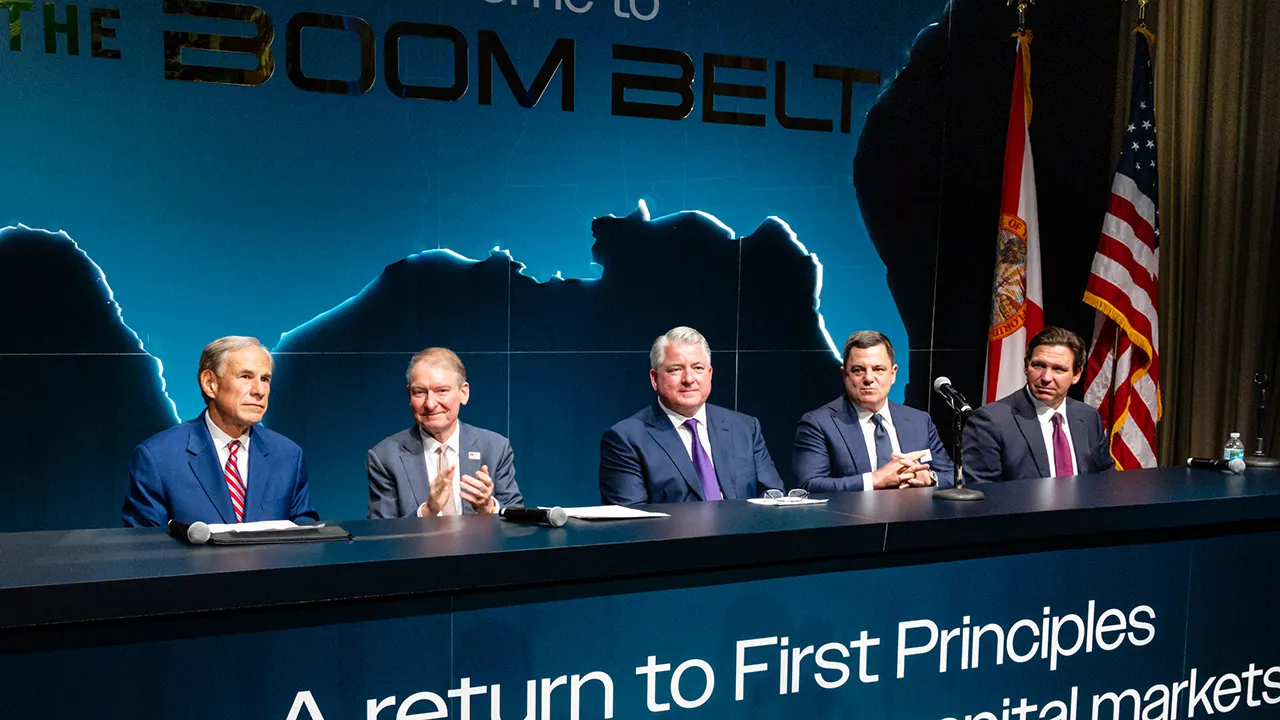
Gov. Ron DeSantis joins ‘Hang Out with Sean Hannity’ to discuss the massive migration to Florida and why blue states like New York and California are facing declining populations.
A new economic iron curtain is falling across America as the “Boom Belt” — an 11-state powerhouse in the U.S. Southeast — shatters records and challenges the traditional financial dominance of New York and Chicago.
Florida Gov. Ron DeSantis and Texas Gov. Greg Abbott joined forces in Miami on Tuesday to celebrate a $9 trillion gross domestic product (GDP) region that is now outpacing every other quadrant of the country in population, jobs and capital investment.
“I often tell people, as Governor of Florida, my job is to closely follow California, Illinois, New York, so I can do precisely the opposite of what they do,” DeSantis said during the panel held at the Pérez Art Museum. “Florida’s had more adjusted gross income move into our state since I’ve been governor than has ever moved into any state in the history of the United States.”
“Visionary business leaders seek to where not the puck is right now, but to where it is going… while other regions where the puck has been in the past, they’re now burdened by high taxes, by restrictive regulations, by policies that are actually hostile to businesses,” Abbott added.
The governors spotlighted how Alabama, Arkansas, Florida, Georgia, Louisiana, Mississippi, North Carolina, Oklahoma, South Carolina, Tennessee and Texas now generate $9 trillion in annual GDP, trailing only the U.S. and China globally, while absorbing 70% of all U.S. population growth in the last five years.
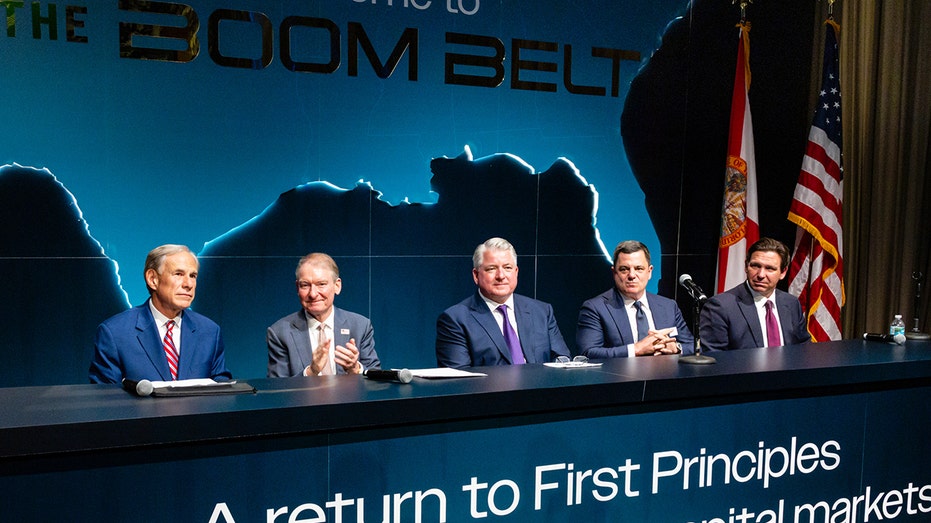
Greg Abbott, governor of Texas, from left, Paul Atkins, chairman of the U.S. Securities and Exchange Commission (SEC), Jim Lee, founder and chief executive officer of the Texas Stock Exchange, Jim Esposito, president of Citadel Securities, and Ron De (Getty Images)
The migration has been fueled by more than just sunshine; it is a tactical retreat from a wave of tax-the-rich proposals sweeping through blue-state legislatures including California, New York and now Washington.
“We’re in the 250th anniversary of the founding of the United States. The founding fathers, they wanted a system based on the consent of the government… They wanted to have a rule of law and they wanted some of this stuff, particularly private property, to not just be subjected to those types of whims,” DeSantis said.
“Hence, in Texas, even though we have never had a state income tax, we wanted to make sure that future generations would not be able to impose an income tax, so we made income taxes unconstitutional in the state of Texas,” Abbott said. “We made a wealth tax unconstitutional. We made a death tax unconstitutional, and as [Citadel’s] Jim Lee pointed out, we made a transactions tax unconstitutional.”
Texas REALTORS Chairman of the Board Jennifer Wauhob speaks to Fox News Digital about the Lone Star State’s recent wealth and population boom that’s ‘creating good things for Texas.’
“I know that there’s been a lot of very healthy competition between states like Florida, Tennessee, Texas, Georgia, some of these. And I think that’s really, really good,” DeSantis noted. “When Greg’s doing stuff, people say, ‘Look [at] what Texas just did.’”
SEC Chairman Paul Atkins and TXSE CEO Jim Lee warned that the U.S. has lost half of its public companies over the last 30 years because the federal government made it “complicated, expensive and legally treacherous” to go public.
“When capital, companies and people all move in the same direction, with that kind of consistency and at that kind scale, it behooves us to ask why. I believe that the answer, more often than not, is the region’s steady adherence to first principles, including those that rigorously protect investors without needlessly paralyzing companies,” Atkins said. “So for our part, the SEC is returning to those same principles by renewing the conditions that make our public markets the natural destination for companies to raise capital and for investors to share in their success.”
‘The Big Money Show’ examines blue state tax policies as the wealthy flock to low-tax states.
“As Chairman Atkins has remarked repeatedly, it used to be cool to be public, so what happened? The answer is we made it complicated, expensive and legally treacherous to be a public company. Remaining private became the only rational choice. This is not a coincidence. It is a consequence,” Lee emphasized.
GET FOX BUSINESS ON THE GO BY CLICKING HERE
As someone who helped lead the firm’s move from Chicago to Miami, Citadel Securities President Jim Esposito highlighted the practical, bottom-line reasons why the “Boom Belt” is winning the war for capital — framing the Southern governing style as an inspiration for the rest of America.
“Across Florida, Texas and other high-growth states, government officials have created environments where businesses can operate, invest. And importantly, grow with confidence,” he said. “This type of public and private partnership should be the model for the rest of our country.”

5 Markets Getting Pummelled Right Now

India’s aviation market is set to grow but is held back by limited long-haul capacity, says Willie Walsh.
The consumer council says the government is profiting from rising fuel costs via taxation.

Analysts fear long-lasting economic damage has already been set in motion.

Wildflower once used to treat wounds and sore throats shows promise in fighting dangerous superbugs
Form 8K CHS Inc Pref For: 8 April

MEXC Names New CEO And Expands Global Strategy

Why Israel is blocking foreign journalists from entering

Bitcoin: We’re Entering The Most Dangerous Phase

Alan Cumming Brands Baftas Ceremony A ‘Triggering S**tshow’

15 Most Valuable Money Making Skills in 2026 (Ranked)

Joe Rogan on Ferrari Suing Philipp Plein! #money #finance #changeyourmindsetchangeyourlife

Monthly Subsidy of 70,000 Rupees Announced | Big Financial Relief| Hum News | Pakistan
-

 NewsBeat6 days ago
Steven Gerrard disagrees with Gary Neville over ‘shock’ Chelsea and Arsenal claim | Football
-

 Business6 days ago
No Jackpot Winner and $194 Million Prize Rolls Over
-

 Fashion5 days ago
Weekend Open Thread: Spanx – Corporette.com
-

 Crypto World7 days ago
Gold Price Prediction: Worst Month in 17 Years fo Save Haven Rock
-

 Business4 days ago
Expert Picks for Every Need
-

 Business3 days ago
Three Gulf funds agree to back Paramount’s $81 billion takeover of Warner, WSJ reports
-

 Sports4 days ago
India men’s 4x400m and mixed 4x100m relay teams register big progress | Other Sports News
-

 Business7 days ago
Login and Checkout Issues Spark Merchant Frustration
-

 Tech18 hours ago
How Long Can You Drive With Expired Registration? What Florida Law Says
-
Business3 days ago
No Jackpot Winner, Prize to Climb to $231 Million
-

 Fashion2 days ago
Massimo Dutti Offers Inspiration for Your Summer Mood Board
-

 Tech6 days ago
Commonwealth Fusion Systems leans on magnets for near-term revenue
-

 Crypto World7 days ago
Ripple rolls out enterprise crypto treasury platform for corporates
-
 Tech7 days ago
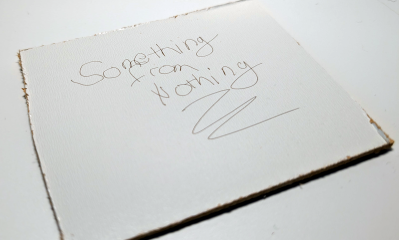
Drawing Tablet Controls Laser In Real-Time
-

 Fashion22 hours ago
Let’s Discuss: DEI in 2026
-
Politics5 days ago
Wings Over Scotland | The quality of mercy
-

 Crypto World7 days ago
Why It’s Partnering, Not Issuing
-
 Sports7 days ago
Steal Gary Woodland’s subtle power move for longer drives
-
Sports7 days ago
Tom Pelissero Drives the Final Nail in the Coffin
-

 Tech7 days ago
Battery Tester Outperforms Cheaper Options
You must be logged in to post a comment Login