

Business
Why a Sharper Strategy Is Now Critical for 2026 Growth


America remains a growth market for British businesses, but slower corporate profits, sticky inflation and a patchwork of state-level rules mean the bar for success has been raised, according to leading audit, tax and advisory firm Blick Rothenberg.
The United States is still expanding, but the easy tailwinds that once carried ambitious British exporters across the Atlantic are fading. Fresh figures from the US Bureau of Economic Analysis show real GDP grew at an annualised rate of 1.6 per cent in the first quarter of 2026, with real final sales to private domestic purchasers up 2.4 per cent, a sign that households and businesses are still spending, even as profit growth softens.
For UK firms weighing an American push, the message from Blick Rothenberg is blunt: the opportunity is real, but the margin for error is narrower than it has been for some time.
A growth market, but a tougher one
Michael Holland, Partner and Lead for US Expansion at the firm, said the latest BEA data confirms the US remains a viable growth market for UK exporters and investors. “The US economy is still growing, with GDP expanding at an annualised rate of 1.6 per cent in Q1 2026. Core domestic demand is still holding up, with real final sales to private domestic purchasers rising 2.4 per cent, which suggests customers and businesses are still spending. However, with inflation remaining elevated and corporate profit growth slowing sharply, the bar for success is rising.”
His comments land against a backdrop of rising friction in the transatlantic trade corridor. According to the Office for National Statistics, UK goods exports to the US have been volatile since Washington introduced its latest round of tariffs, with sharp month-on-month swings as British exporters rework supply chains and pricing.
America is not one market
Holland is clear that the most common strategic mistake is treating the US as a single, uniform target. “British firms’ strategy to succeed in this environment needs to start with recognising that the US is a very large and highly varied country, not one single uniform market,” he said. “Successful expansion strategies usually focus on specific regions first, whether that is the East Coast, the Pacific North West, the North East or the central states — rather than trying to target the entire US at once.”
For founders looking at where to plant a flag, the practical questions are familiar to anyone who has crossed the Atlantic before: is there genuine demand, what does the local tax and regulatory mix look like, and how do tariffs and operating costs reshape the unit economics? As Business Matters has explored in its guide to key strategies for UK tech companies expanding to the US, local hiring, partnerships and a region-first mindset routinely separate the winners from the costly retreats.
Pricing, routes to market and the cost of getting it wrong
Holland argues that British firms need to be far more disciplined about pricing and capital allocation before they commit. “Firms need to test whether there is a genuine customer base for their product or service, decide which areas offer the best fit, and understand how local rules, taxes, tariffs and operating costs could affect margins,” he said. “They also need to think carefully about pricing, routes to market and how much investment is needed before the business becomes commercially viable.”
That diagnosis chimes with wider advice on market entry during international expansion, which routinely flags under-pricing and under-capitalisation as the silent killers of overseas ventures.
For SMEs in particular, the temptation to chase headline US revenue without a hard look at landed cost, state sales tax exposure and distribution economics can quickly turn a promising launch into a cash drain.
Pulled into America, not pushed
The most resilient UK entrants, Holland suggests, are those responding to demand rather than chasing it. “The British businesses most likely to succeed are often those being pulled into the US by real customer demand and that have a well thought out strategy to make the most of that opportunity,” he said.
That advice echoes the work of trade bodies such as BritishAmerican Business, whose trade and investment guide for UK firms in the US has become a standard reference point for boards weighing the transatlantic move.
The 2026 playbook
Holland’s closing message is one British founders and finance directors should pin to the wall. “The British businesses that will prosper in 2026 are those that are targeted in where they play, disciplined in how they price, and realistic about the cost and complexity of scaling in the US.”
In a year when American consumers are still spending but corporate margins are tightening, the UK firms that win in the States will be those that resist the urge to plant a flag everywhere, and instead pick their patch, sharpen their numbers and earn their growth.

Amy Ingham
Amy is a newly qualified journalist specialising in business journalism at Business Matters with responsibility for news content for what is now the UK’s largest print and online source of current business news.


Invesco is an independent investment management firm dedicated to delivering an investment experience that helps people get more out of life.Be the first to know! Sign up for Invesco US Blog and get expert investment views as they post.Disclosure for all Invesco US articles: Before investing, carefully read the prospectus and/or summary prospectus and carefully consider the investment objectives, risks, charges and expenses. The information provided is for educational purposes only and does not constitute a recommendation of the suitability of any investment strategy for a particular investor. Invesco does not provide tax advice. The tax information contained herein is general and is not exhaustive by nature. Federal and state tax laws are complex and constantly changing. Investors should always consult their own legal or tax professional for information concerning their individual situation. The opinions expressed are those of the authors, are based on current market conditions and are subject to change without notice. These opinions may differ from those of other Invesco investment professionals. NOT FDIC INSURED MAY LOSE VALUE NO BANK GUARANTEE All data provided by Invesco unless otherwise noted. Invesco Distributors, Inc. is the US distributor for Invesco Ltd.’s retail products and collective trust funds. Invesco Advisers, Inc. and other affiliated investment advisers mentioned provide investment advisory services and do not sell securities. Invesco Unit Investment Trusts are distributed by the sponsor, Invesco Capital Markets, Inc., and broker-dealers including Invesco Distributors, Inc. PowerShares® is a registered trademark of Invesco PowerShares Capital Management LLC (Invesco PowerShares). Each entity is an indirect, wholly owned subsidiary of Invesco Ltd. ©2015 Invesco Ltd. All rights reserved.
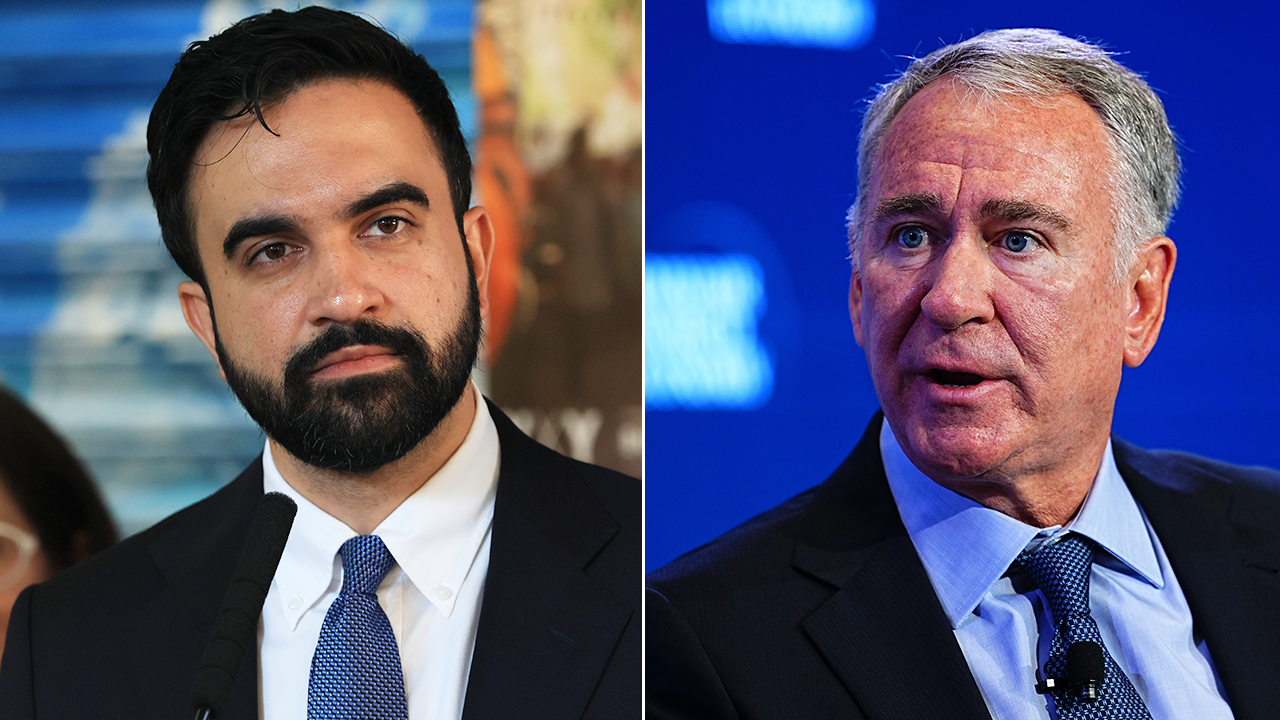
Manhattan Institute expert Adam Lehodey says NYC Mayor Zohran Mamdani’s outreach to Wall Street leaders signals a recognition that New York cannot fund progressive priorities without keeping businesses and wealthy investors in the city.
Billionaire Citadel founder Ken Griffin is encouraging New York’s business leaders to take on socialist Mayor Zohran Mamdani, warning that the city’s future could be at risk if employers and investors stay quiet.
“They need to find their voice and fight for their city,” Griffin said Thursday at a Manhattan event, according to Bloomberg.
“My advice is to speak up. What’s the worst that’s going to happen? It will be that New York empties of talent and that’s a catastrophe. If the mayor wants to say a few words about you, your record speaks for itself: You create jobs, you create value and you pay taxes.”
MAMDANI’S WALL STREET COURTSHIP SPARKS CRITICISM OF ANTI-BILLIONAIRE AGENDA
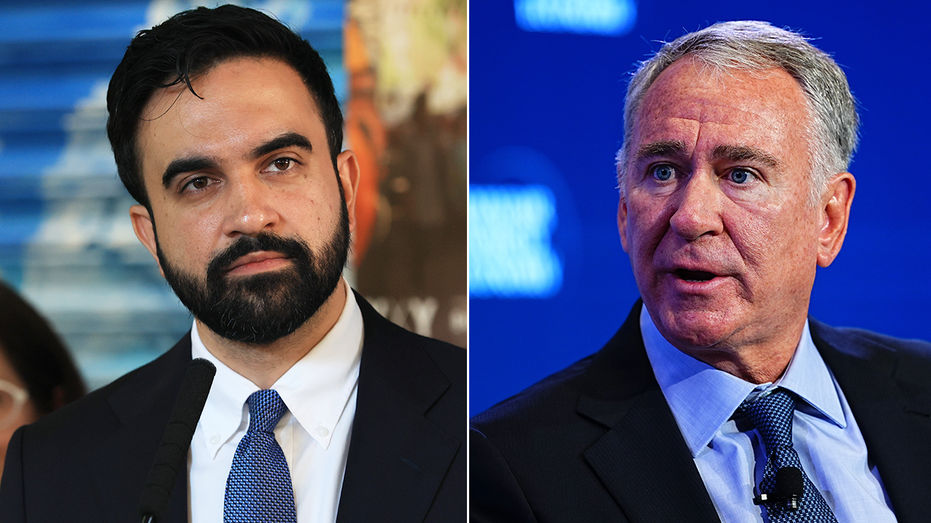
The Citadel founder is clashing with New York City Mayor Zohran Mamdani over taxes targeting the ultra-wealthy and intensifying crime, reviving the same tensions that drove him to pull his business and billions out of Chicago. (Spencer Platt/Aaron Schwartz/Bloomberg/Getty Images / Getty Images / Getty Images)
Griffin’s remarks mark the latest chapter in an ongoing clash between Wall Street’s billionaire class and Mamdani, whose proposals to raise taxes on wealthy New Yorkers and luxury property owners have drawn fierce criticism from business leaders concerned about the city’s economic competitiveness.
The financial titan, whose net worth is estimated at $48.3 billion according to the Bloomberg Billionaires Index, argued that New York’s corporate leaders should focus on the long-term future of the city rather than short-term political battles.
BILLIONAIRE KEN GRIFFIN SAYS CITADEL’S CHICAGO EXODUS WAS ‘NOT HARD,’ CITES CRIME, TAXES
“Everything should be viewed through the lens of, Citadel will be here far longer than he’ll be mayor,” Griffin said.
The comments come as Griffin and Mamdani appear to be cautiously opening a dialogue after months of public sparring over taxes, wealth and the city’s business climate.
The socialist mayor recently reached out to Griffin after previously criticizing the billionaire hedge fund manager over his Manhattan penthouse and personal wealth. Mamdani notably stood outside Griffin’s luxury property to promote his proposal to raise taxes on second homes in New York City worth more than $5 million.
CHICAGO KNOWS WHAT HAPPENS WHEN KEN GRIFFIN TURNS ON A CITY, NOW MAMDANI MAY FIND OUT
New York City Mayor Zohran Mamdani’s “pied-a-terre” wealth tax on luxury properties ignites a contentious debate, drawing strong criticism from Citadel CEO Ken Griffin and hedge fund manager Bill Ackman.
The outreach comes as some business leaders warn New York risks alienating major employers and investors — a concern Griffin has raised before in another major American city.
The tensions have fueled concerns among some business leaders that New York could follow a path similar to Chicago, where Griffin spent years criticizing crime, taxes and public policy before moving Citadel’s headquarters to Miami in 2022. The relocation marked the departure of one of the financial industry’s most influential firms and underscored the economic impact that can follow when a major corporate player leaves a major city.
GET FOX BUSINESS ON THE GO BY CLICKING HERE
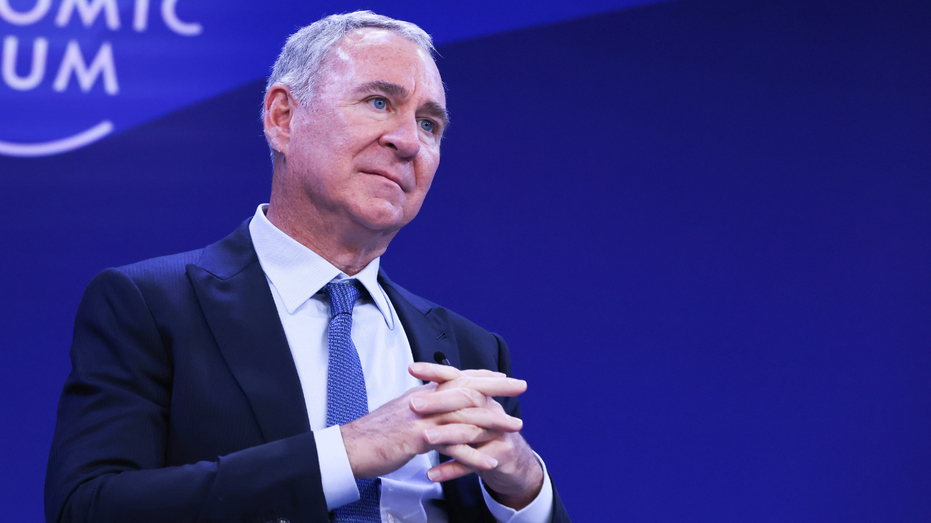
Citadel founder and CEO Ken Griffin described New York City Mayor Zohran Mamdani’s “tax the rich” video targeting him as a “creepy and weird” political advertisement. (Krisztian Bocsi/Bloomberg via Getty Images / Getty Images)
Griffin has repeatedly pointed to Florida’s business climate as a model and warned that policies targeting high earners and businesses could make New York less competitive.
Griffin said he plans to talk to Mamdani “at some point in the months ahead.”
“Let’s see where he is on the state of policy at that time,” he said. “Actions speak louder than words.”

Micron's $1,700 Setup Emerges


Cash Builder Opportunities (aka Nick Ackerman) is a former fiduciary and a registered financial advisor with 14 years of investing experience.He is the leader of the investing group Cash Builder Opportunities, where his specific focus is on closed-end funds, dividend growth stocks, and option writing as an attractive way to achieve income. He shares model portfolios and research to help investors make better decisions, via his Investing Group’s active chat room.
Analyst’s Disclosure: I/we have a beneficial long position in the shares of OKE, SOBO, VICI, SBUX either through stock ownership, options, or other derivatives. I wrote this article myself, and it expresses my own opinions. I am not receiving compensation for it (other than from Seeking Alpha). I have no business relationship with any company whose stock is mentioned in this article.
Seeking Alpha’s Disclosure: Past performance is no guarantee of future results. No recommendation or advice is being given as to whether any investment is suitable for a particular investor. Any views or opinions expressed above may not reflect those of Seeking Alpha as a whole. Seeking Alpha is not a licensed securities dealer, broker or US investment adviser or investment bank. Our analysts are third party authors that include both professional investors and individual investors who may not be licensed or certified by any institute or regulatory body.


Aaron Chow, aka Elephant Analytics has 15+ years of analytical experience and is a top rated analyst on TipRanks. Aaron previously co-founded a mobile gaming company (Absolute Games) that was acquired by PENN Entertainment. He used his analytical and modeling skills to design the in-game economic models for two mobile apps with over 30 million in combined installs. He is the author of the investing group Distressed Value Investing, which focuses on both value opportunities and distressed plays, with a significant focus on the energy sector. Learn more>>
Analyst’s Disclosure: I/we have no stock, option or similar derivative position in any of the companies mentioned, and no plans to initiate any such positions within the next 72 hours. I wrote this article myself, and it expresses my own opinions. I am not receiving compensation for it (other than from Seeking Alpha). I have no business relationship with any company whose stock is mentioned in this article.
Seeking Alpha’s Disclosure: Past performance is no guarantee of future results. No recommendation or advice is being given as to whether any investment is suitable for a particular investor. Any views or opinions expressed above may not reflect those of Seeking Alpha as a whole. Seeking Alpha is not a licensed securities dealer, broker or US investment adviser or investment bank. Our analysts are third party authors that include both professional investors and individual investors who may not be licensed or certified by any institute or regulatory body.
Business
Delta Air Lines: My Buy Thesis Played Out, But Growing Risks Are A Real Concern (Rating Downgrade)

Delta Air Lines: My Buy Thesis Played Out, But Growing Risks Are A Real Concern (Rating Downgrade)

Amazon: I'm Buying The Free Cash Flow Collapse

Microsoft: Market Is Missing The Big Picture

Ultragenyx: The Setrusumab Reset Creates A Cleaner Rare Disease Opportunity


The author is a director at a small Boston-based software company where he oversees India operations across HR, finance, and business development. His broader professional background spans entrepreneurship, operations, and management across multiple industries. Earlier in his career, he was involved in building out a bottled beverages plant, reflecting a longstanding interest in business building, execution, and commercial strategy. He also holds a PhD in history and teaches part-time at a local college, bringing a research-driven and analytical perspective to both his professional and investing workHe has been investing in U.S. equities for nearly two decades, having started well before international access to U.S. markets became commonplace for Indian investors. Over time, he has developed a style that sits between value and growth. He is most interested in businesses where long-term earnings potential, competitive positioning, or strategic optionality are not yet fully reflected in the stock price. His work is grounded in valuation, but he also looks closely at business quality, management execution, industry structure, and the durability of growth.His primary sector focus is software, IT, and AI, including the growing application of AI across industries such as healthcare. He is especially interested in companies with scalable models, improving economics, and the ability to compound earnings over time. At the same time, his interests are not limited to technology. He also follows real estate-related opportunities, including REITs, and remains open to writing on other sectors where the investment case is compelling.On Seeking Alpha, he aims to write thoughtful, research-based articles that combine business analysis with valuation discipline. His goal is not simply to identify attractive stories but to assess whether the market is mispricing risk, growth, or long-term earnings power. He writes to share well-reasoned ideas with serious investors, refine his own thinking through public analysis, and contribute to a more disciplined discussion around investing. The author is associated with another Seeking Alpha analyst – Dr. Manimala M.
Analyst’s Disclosure: I/we have no stock, option or similar derivative position in any of the companies mentioned, and no plans to initiate any such positions within the next 72 hours. I wrote this article myself, and it expresses my own opinions. I am not receiving compensation for it (other than from Seeking Alpha). I have no business relationship with any company whose stock is mentioned in this article.
Seeking Alpha’s Disclosure: Past performance is no guarantee of future results. No recommendation or advice is being given as to whether any investment is suitable for a particular investor. Any views or opinions expressed above may not reflect those of Seeking Alpha as a whole. Seeking Alpha is not a licensed securities dealer, broker or US investment adviser or investment bank. Our analysts are third party authors that include both professional investors and individual investors who may not be licensed or certified by any institute or regulatory body.

Women’s T20 World Cup: India vs South Africa highlights

BMPS 2026 Grand Finals Rankings After Day 3: GodLike Qualify For EWC in Paris

Wall Street’s Tokenization Race Heats Up as SEC Reviews New Rules


-

 Fashion2 days ago
Weekend Open Thread: Miami – Corporette.com
-
Crypto World7 days ago
Zimbabwe Requires Crypto Businesses to Register Annually Under New FIU Regulations
-
 Business2 days ago
Wall Street Week Ahead: Investors see Micron earnings as pulse check of AI rally momentum
-
 Entertainment7 days ago
Matt Damon’s Viral Sci-Fi Thriller Has Taken Over HBO Max
-

 Crypto World2 days ago
HIVE shares jump as $220M AI deal speeds Bitcoin mining pivot
-

 Business7 days ago
Anthropic staff to meet White House officials next week, Axios reports
-
 Crypto World7 days ago
Bitcoin could crash to $48,000, if this historical pattern is triggered
-
 NewsBeat7 days ago
what doctors are seeing in ebike crashes
-
 NewsBeat7 days ago
Warning of disruption as Cardiff Crossrail works to start
-
 NewsBeat7 days ago
Tributes to former deputy head teacher at Cambridge school among death and funeral notices
-
 Entertainment7 days ago
Kate Middleton Glare Goes Viral After Kids Booed At Royal Event
-

 Politics7 days ago
“Israel’s” ban on ICRC visits ruled illegal, but Knesset moves to stop them permanently
-

 Crypto World7 days ago
XRP ETFs Outperform As Bitcoin And Ethereum Funds Extend Outflow Trend
-

 Tech7 days ago
Over 400 Arch Linux packages compromised to push rootkit, infostealer
-

 News Videos7 days ago
Financial Accounting | Last Day Revision Strategy and Booster | CMA Inter – June 2026
-

 Sports7 days ago
Dick Advocaat’s Curacao scores first-ever World Cup goal against Germany
-

 Business7 days ago
Invesco Quality Income Fund Q1 2026 Commentary
-

 NewsBeat7 days ago
Singer Oliver Tree dies aged 32 in helicopter crash in Brazil
-
 Tech5 days ago
The Adder At The Heart Of Intel’s 8087 FPU
-
 Tech7 days ago
Microsoft Updates Six Windows’ Apps. ‘Photos’ Gets Watermarks for Copilot Images (Off by Default)
You must be logged in to post a comment Login