
Business
Why Burger King Is Called Hungry Jack’s in Australia?

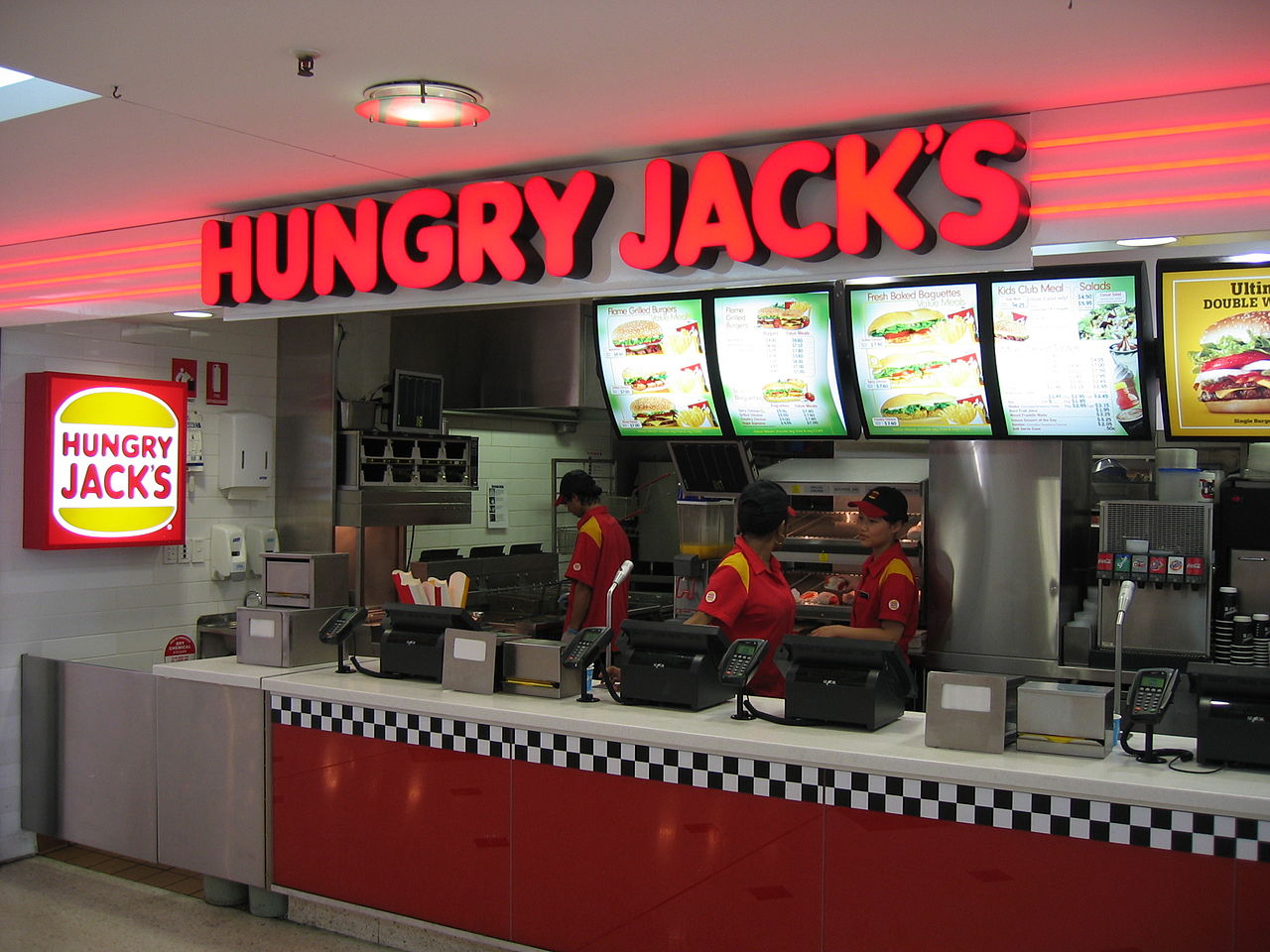
Walk into any of the more than 440 Hungry Jack’s restaurants scattered across Australia and you’ll order a Whopper, fries and a Coke — exactly as you would at a Burger King anywhere else in the world. Yet the iconic American fast-food chain operates under a completely different name Down Under, a quirk that has puzzled international visitors for decades.

The story behind the name traces back more than 50 years to a trademark clash, a clever workaround involving pancake mix and a long-running legal battle that ultimately strengthened the Australian operation. As of March 2026, Hungry Jack’s remains the sole master franchise of Burger King Corporation in Australia, proudly Aussie-owned and deeply embedded in local culture while serving the same flame-grilled burgers that define the global brand.
The tale begins in 1970 when Canadian-born entrepreneur Jack Cowin secured the rights to bring Burger King to Australia. Cowin, who had already helped introduce KFC to the country, planned to open the first outlet in 1971. But he quickly discovered a major obstacle: the “Burger King” name was already trademarked in Australia by a local businessman named Don Dervan.
Dervan, an American immigrant, had opened a small drive-in takeaway restaurant called Burger King in Adelaide, South Australia, as early as 1962. At the time, the U.S. Burger King had not yet trademarked the name in Australia, allowing Dervan to register it locally. By the early 1970s, his operation had grown to about 17 locations. Dervan refused to sell or relinquish the trademark, telling representatives he would part with everything except the name.
Unable to use its global brand, Burger King — then owned by Pillsbury — provided Cowin with a list of alternative names based on existing trademarks the company already held. Cowin selected “Hungry Jack,” the name of a popular Pillsbury pancake mix sold in the United States. He tweaked it slightly to the possessive “Hungry Jack’s” and launched the first Australian restaurant in Innaloo, Perth, on April 18, 1971.
The rebranding proved successful. Hungry Jack’s expanded rapidly, building a strong local identity while delivering the same menu items as its American counterpart. The name stuck, becoming a familiar part of Australian fast-food culture alongside rivals like McDonald’s.
The 1990s Legal Battle
The situation grew more complicated in the 1990s when the original Australian “Burger King” trademark held by Dervan’s business lapsed. Burger King Corporation saw an opportunity and attempted to enter the market directly under its own name. The company opened several standalone Burger King outlets, mostly in New South Wales, while simultaneously blocking Hungry Jack’s from expanding by denying approval for new locations under the franchise agreement.
This move sparked a bitter legal dispute. Hungry Jack’s Pty Ltd, controlled by Cowin, sued Burger King Corporation, alleging breach of the franchise agreement and bad faith conduct. In a landmark 2001 ruling, Australian courts sided with Hungry Jack’s. The judge found that Burger King had acted improperly by trying to undermine its own franchisee while competing directly against it.
The court awarded Hungry Jack’s substantial damages — reports at the time cited around $45 million to $71 million — and upheld the franchise agreement. Burger King ultimately withdrew its competing stores, which were rebranded as Hungry Jack’s. By 2002-2003, the parent company had effectively conceded the Australian market, leaving Hungry Jack’s as the undisputed operator.
The episode became a classic David-versus-Goliath story in Australian business circles, highlighting issues of good faith in franchise relationships. It also demonstrated the power of local branding and customer loyalty. By then, Australians had embraced Hungry Jack’s as their own, making a full switch to the Burger King name impractical and unnecessary.
Hungry Jack’s Today
In 2026, Hungry Jack’s operates as a wholly owned subsidiary of Competitive Foods Australia, still led by the Cowin family interests. The chain employs more than 19,000 people and serves over 1.7 million customers weekly, grilling more than 125 million Australian beef patties each year. Its menu closely mirrors global Burger King offerings, including the Whopper, but with occasional Australia-specific items and promotions that reflect local tastes.
The restaurants maintain the same flame-grilled burgers, generous portions and quick-service model that define the brand worldwide. Hungry Jack’s has adapted to modern trends with plant-based options, breakfast menus and digital ordering while preserving the core experience that made it popular.
The name difference occasionally confuses tourists, who search for “Burger King” only to be directed to Hungry Jack’s. Many international visitors discover the quirk through social media or travel forums and leave with stories of the “Australian Burger King that isn’t called Burger King.”
Legal experts note that the case remains a notable example in franchise and trademark law, illustrating how early registration of names can shape international expansion and how courts can protect long-standing franchise relationships from bad-faith actions by franchisors.
Cultural Impact and Legacy
Over five decades, Hungry Jack’s has become more than a fast-food outlet — it is a piece of Australian pop culture. The distinctive red and yellow branding, the “Have It Your Way” ethos (adapted locally) and memorable advertising campaigns have cemented its place alongside other homegrown or localized chains.
The story also serves as a cautionary tale for global brands: failing to secure trademarks in every market can lead to unexpected complications. Similar quirks have occurred with other companies, such as Woolworths, where an Australian retailer adopted the name after the U.S. version did not trademark it locally.
As of March 2026, there are no active plans to rebrand Hungry Jack’s to Burger King. The Australian operation thrives under its established name, benefiting from decades of customer familiarity and loyalty. The chain continues to expand selectively, focusing on prime locations and adapting to changing consumer preferences around sustainability, convenience and menu innovation.
For visitors and locals alike, stepping into a Hungry Jack’s offers the familiar taste of a Whopper while highlighting one of the more unusual chapters in global fast-food history. The name may differ, but the flame-grilled experience remains unmistakably consistent with Burger King restaurants worldwide.
The enduring success of Hungry Jack’s proves that sometimes the best-laid corporate plans can be upended by a single trademark — and that a clever alternative, combined with strong local management and customer support, can create something even more iconic in its own right.

Netflix’s Prices Are Increasing. Don’t Expect Streaming to Get Cheaper Soon.

This is the forum for daily political discussion on Seeking Alpha. A new version is published every market day.
Please don’t leave political comments on other articles or posts on the site.
The comments below are not regulated with the same rigor as the rest of the site, and this is an ‘enter at your own risk’ area as discussion can get very heated. If you can’t stand the heat… you know what they say…
More on Today’s Markets:
Moderation Guidelines:
We remove comments under the following categories:
- Personal attacks on another user account
- Anti-Vaxxer or covid related misinformation
- Stereotyping, prejudiced or racist language about individuals or the topic under discussion.
- Inciting violence messages, encouraging hate groups and political violence.
Regardless of which side of the political divide you find yourself, please be courteous and don’t direct abuse at other users.
For any issue with regards to comments please email us at : moderation@seekingalpha.com.
Seeking Alpha’s Disclosure: Past performance is no guarantee of future results. No recommendation or advice is being given as to whether any investment is suitable for a particular investor. Any views or opinions expressed above may not reflect those of Seeking Alpha as a whole. Seeking Alpha is not a licensed securities dealer, broker or US investment adviser or investment bank. Our analysts are third party authors that include both professional investors and individual investors who may not be licensed or certified by any institute or regulatory body.
Business
Effort to restore Homeland Security funding founders in Congress, Trump says will pay airport security workers
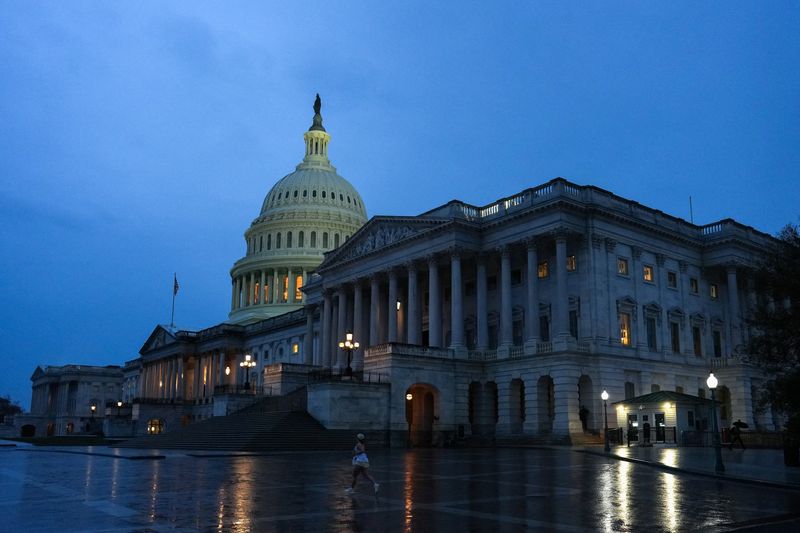

Effort to restore Homeland Security funding founders in Congress, Trump says will pay airport security workers

A List Of Worries That Risk Flipping Much Worse
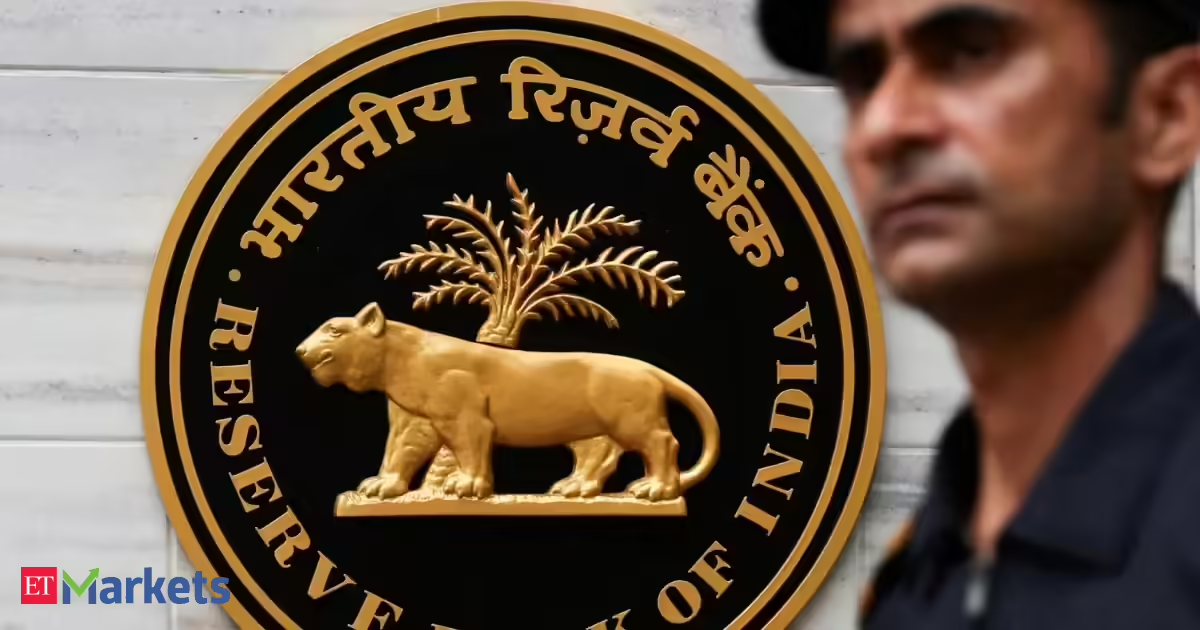
In a notification issued Friday, the central bank asked authorised dealers of foreign currency to comply with the rule by April 10. The cap will be on their open position on the onshore deliverable market.
“Traders must be long on the dollar in a large way. This regulation basically curbs speculative positions of a bank, which will in turn reduce pressure on the rupee,” said a currency trader at a private sector bank.
“This is called the overnight open position which traders are allowed to keep in respect of all currencies involving the rupee. For a large bank, these positions can usually be at around $1 billion both in onshore and offshore markets,” he said.
RBI prescribes limits for open positions involving the rupee for exchange rate management and orderly development of the market, depending on market conditions.

The rupee has depreciated 3.5% since the start of the war and nearly 10% in this fiscal year. High crude oil prices are clouding the outlook for the local unit, with traders now expecting the rupee to touch 96-97 per dollar if oil prices remain around $115 per barrel.
“It has now been decided that authorised dealers shall ensure that their NOP-INR positions in the onshore deliverable market shall be maintained within $100 million at the end of each business day,” RBI said Friday in its master direction on risk management and inter-bank dealings.

Banks led by IDBI had sought a challenge bid to NARCL’s Rs 130 crore offer earlier this month, with due diligence for prospective bidders ending on March 23.
No bidder came forward till the end of the day on March 24, the final day for bids in the Swiss challenge auction, after which banks are moving ahead with the transfer to NARCL.
The NARCL offer means a 13% recovery for banks and will be in a mix of 15% cash and the rest in security receipts to be redeemed on recovery.
Kay Bouvet is a heavy engineering company engaged in the design, engineering and manufacturing of specialised equipment for strategic industries such as nuclear energy, power, defence and space. It has two manufacturing facilities in Maharashtra and Haryana.
CaixaBank, S.A. (CAIXY) Shareholder/Analyst Call – Slideshow
Adidas: A Buy At Undemanding Valuations As Inventory Set To Normalize

The brokerage said suppliers of energy in the Nifty, including companies in coal, electricity and upstream oil, will benefit from higher realisations. Meanwhile, demand for coal and electricity is likely to increase as users shift away from oil and gas as fuel inputs.
 Agencies
Upstream oil, coal and power make up energy mix in index, which will see higher realisations
ICICI Securities said oil and gas suppliers, such as oil marketing and gas companies-the most impacted-are largely outside the Nifty and are spread across the small-cap and mid-cap segments. Energy-intensive industrials such as chemicals, fertilisers and building materials are also concentrated in the small-cap and mid-cap segments and are significantly impacted by higher crude and gas costs.
Within consumption, sectors such as aviation, autos, and consumer goods could be impacted by higher input costs, although larger companies within the Nifty can pass on costs and consolidate market share.
The brokerage said services sectors, including IT, banks and financials, which account for a large weight in the index, do not rely much on oil and gas, limiting the overall impact.

Earnings call transcript: EverCommerce Q4 2025 earnings miss hits stock

Michigan State basketball rally falls short in Sweet 16 loss to UConn

This Premium Sennheiser Soundbar Is $1,000 Off

Croda of Snaith opens new manufacturing plant in India


-
 NewsBeat3 days ago
Manchester United reach agreement with Casemiro over contract clause amid transfer speculation
-

 Crypto World6 days ago
Best Crypto to Buy Now: Strategy Just Spent $1.57 Billion on Bitcoin During Fear While Early Investors Quietly Enter Pepeto for 150x Potential
-

 News Videos2 days ago
Parliament publishes latest register of MPs’ financial interests
-

 Crypto World6 days ago
Bitcoin Price News: Bhutan Sells $72 Million in BTC Under Fiscal Pressure, but the Smart Money Entering Pepeto Sees What the Market Does Not
-

 Sports5 days ago
Remo Stars and Kano Pillars Strengthen Survival Hopes in NPFL
-

 Sports5 days ago
Gary Kirsten Accuses Pakistan Cricket Board Of ‘Interference’, Mohsin Naqvi Responds
-

 Business6 days ago
No Winner in March 21 Drawing as Prize Rolls to $133 Million for Next
-

 Tech5 days ago
Give Your Phone a Huge (and Free) Upgrade by Switching to Another Keyboard
-

 Tech5 days ago
AI enters the chat: New Seattle dating app relies on tech to facilitate meaningful human connections
-

 News Videos5 days ago
Ch 9 Financial Management Part 1 | Detailed One Shot | Class 12 Business Studies Boards 2026
-

 Tech6 days ago
Today’s NYT Connections Hints, Answers for March 22 #1015
-

 Business1 day ago
Instagram, YouTube Found Responsible for Teen’s Mental Health Struggle in Historic Ruling
-

 Business6 days ago
Will Duke Basketball Win It All? Duke Basketball Enters Second Round as Third Favorite to Claim NCAA Title
-

 Sports5 days ago
2026 Kentucky Derby horses, odds, futures, preview, date: Expert who hit 12 Derby-Oaks Doubles enters picks
-
 NewsBeat6 days ago
Update on Wisbech river crash as search for teenage boy enters fifth day
-
 Entertainment5 days ago
Cynthia Bailey Dishes on ‘RHOA’ Season 17, Discusses Kandi
-

 Tech4 days ago
Samsung will soon let you control smart home devices from your car’s dashboard
-

 Fashion3 days ago
Does It Matter What You Wear When You’re Laid Off and Looking?
-
 NewsBeat3 days ago
Tesco is selling new Cadbury Dairy Milk bar and people can’t wait to try it
-

 NewsBeat6 hours ago
The Story hosts event on Durham’s historic registers
You must be logged in to post a comment Login