
Business
Why Mobile Solutions Are Necessary for Any Product Business


Right now, across the digital world, phones shape how firms work and reach people. Devices like smartphones or tablets handle buying stuff, talking, fun, even running parts of a company.
When you sell physical goods, showing up well on mobile isn’t something you can skip anymore. Tools made for handheld screens let companies pull customers closer, run tasks smoother, keep pace where things change fast. What once felt secondary now drives daily results.
These days people want things fast, without hassle, whenever they deal with businesses. From any location, thanks to smartphones, shoppers can look around online stores, buy stuff, then track what happens next. As a result, many companies are investing in custom mobile software solutions to create personalized mobile experiences that meet the expectations of today’s digital users.
The Rise of Shopping on Phones
Shopping on phones has taken off big time lately. Right now, loads of internet buying gets done using handhelds. Because it fits into life so easily, people lean toward tapping through stores on their screens. Looking up items, checking what others say, then buying right away – this flow just clicks for many users.
Mobile apps open a straight path to buyers for makers of goods. Not stuck using just sites online or shop fronts anymore, firms now reach people via alerts that pop up fast. These messages feel made for one person, nudging interest quietly. Buying things fits small screens better these days too. Each tap moves smoother toward checkout without fuss.
Some key advantages of mobile commerce include:
- Convenient shopping from anywhere at any time
- Faster purchasing processes with saved payment methods
- Personalized recommendations based on browsing history
- Get alerts fast when prices drop, items show up, or deals start
What stands out is how well mobile platforms pull in users, then keep them coming back. Their design just works that way.
Enhancing Customer Experience
Success in business often comes down to how customers feel about their interactions. With smartphones, firms deliver quicker help tailored just for you. Apps let stores show where orders are, suggest items you might like, share rewards, or connect you to assistance – anytime.
A smoother journey begins when people find what they need without effort. Because order alerts arrive fast, shoppers feel more at ease with the company. With details just a click away, loyalty tends to grow over time.
Improving Business Efficiency
Few realize how much smoother daily tasks become once phones enter the workflow. Because updates flow faster, stock levels stay accurate without constant manual checks. When delivery details shift, alerts pop up instantly instead of arriving late by email. Workers on the move pull up files just as easily as if they were at their desks. Connection gaps shrink since messages travel straight to handheld devices. Some teams now make decisions quicker simply because everyone sees the same info at the same time.
From a tablet on the shop floor, inventory updates appear in real time. Sales staff out meeting clients adjust order details without returning to an office. Information flows where it is needed most. Speed builds naturally when access moves beyond desktops. Decisions happen faster because delays shrink across departments.
Data and Analytics Advantages
From a hilltop view, gathering information becomes simpler through handheld devices. These tools quietly track how people shop, what they look at, also how deeply they interact. Insights pop up not from guesses but real actions taken each day.
This data lets businesses tweak how they market things, also what they sell. Firms get clearer on customer habits through mobile analytics
- Customer preferences and buying behavior
- Popular products and trending categories
- User engagement and app usage patterns
- Effectiveness of marketing campaigns
Because they see what’s happening, companies adjust how they act – shaping choices around what people actually want. A clearer picture leads to moves that fit better, staying close to real behavior instead of guesses.
Strengthening Brand Visibility
A single tap places the app right where users look most – front and center on their screen. Each time they glance at their phone, the logo catches attention without effort. Over days, that small icon builds familiarity like background music repeating a tune. Seeing it often means remembering it later when choices arise. Regular access keeps the business alive in routines, almost like a habit.
Messages pop up right on your phone, tailored deals show up based on what you like, also special alerts appear inside apps – this is how businesses reach people without delay. When something new arrives, a sale begins, or changes happen, folks get the word fast; because of that, they tend to come back often just by habit.
Support innovation growth
Nowhere is change more obvious than in how phones shape what companies build. Features once seen as futuristic – like overlaying digital info on real views – show up in everyday apps. Instead of just browsing, users pay through their devices while moving around town. Location tagging helps tailor experiences without needing extra steps. Slowly but surely, these tools blend into how people interact with brands daily.
A customer might see how a lamp fits on their shelf through phone screens, thanks to certain stores offering digital previews. Some shops skip long lines by letting payments happen right from handheld devices. Standing apart in crowded marketplaces becomes easier when companies adopt such tools.
Conclusion
Out here, screens fit in pockets yet shift entire workflows. Think about it – handheld access reshapes who taps into services and when they do. Devices now drive conversations between buyers and offerings, not just transactions. Efficiency climbs when teams skip steps using apps on the go. Growth sticks around longer if updates move fast through palm-sized portals.
With smart phone tools, firms find it easier to connect to people while offering smooth personal service. When users lean heavier on their handheld gadgets, organizations backing mobile tech tend to stay ahead within shifting online arenas.

Business
Rhythm Pharmaceuticals, Inc. (RYTM) Discusses Topline Results and Insights from Phase 3 EMANATE Trial – Slideshow

Rhythm Pharmaceuticals, Inc. (RYTM) Discusses Topline Results and Insights from Phase 3 EMANATE Trial – Slideshow

The Chancellor tells the BBC she wants the “pattern to end” while also pledging closer ties with the EU

Hundreds of new jobs are set to be created across the UK as a wave of Nigerian banks, fintech companies and creative industry businesses expand their operations in Britain, bringing millions of pounds of new investment into the economy.
The announcements come ahead of a historic state visit by Bola Ahmed Tinubu and First Lady Oluremi Tinubu (pictured), which is expected to further strengthen economic ties between the two countries. The investments underline the growing importance of the UK as a hub for African business while highlighting Nigeria’s expanding role as a source of innovation, entrepreneurship and capital.
Several Nigerian financial institutions are significantly expanding their UK presence, with the banking sector expected to be a major driver of new employment. Zenith Bank has opened a new branch in Manchester, creating up to 30 direct jobs and providing a boost to the North West economy. The bank is also exploring a potential listing on the London Stock Exchange in 2027 as it seeks to deepen its presence in British financial markets and strengthen investment flows between the UK and Africa.
Other Nigerian financial institutions are also increasing their footprint in Britain. Fidelity Bank plans to double its UK workforce from 62 employees during 2026 while expanding its capital base. The broader Fidelity Group is also positioning London as its global operational hub. Meanwhile First City Monument Bank has chosen the UK as the first international launch market for its new digital cross-border payments platform, designed to streamline trade and financial transfers between Africa and global markets.
In total, seven Nigerian banks now operate in the UK, collectively supporting around 1,000 jobs while strengthening financial links between the two economies.
Alongside traditional banking, Nigeria’s rapidly growing fintech sector is investing heavily in the UK as a base for global expansion. LemFi has announced plans to invest £100 million over the next five years after designating London as its global headquarters. The investment will support product development, technology infrastructure and the expansion of its international workforce.
Digital banking platform Moniepoint is also expanding its London operations, with plans to grow its UK-based team to around 100 employees in 2026 as it builds infrastructure supporting millions of users across Africa. Similarly, Kuda Bank is strengthening its UK headquarters as the centre of its international expansion strategy and expects to significantly increase its staff numbers in Britain over the coming year.
Government ministers say the wave of investment reflects the strength of the UK–Nigeria economic partnership and Britain’s continued attractiveness as a destination for global businesses. Peter Kyle said the growing links between the two countries demonstrated the power of collaboration between their business communities.
“The UK and Nigeria share a belief in the power of enterprise, innovation and education to transform lives,” he said. “Today’s commitments show exactly that. With Nigerian firms creating jobs across the UK and British businesses expanding into one of the world’s fastest-growing markets, our partnership is strengthening both economies.”
David Lammy added that the partnership between the two countries was delivering new opportunities for businesses and innovators on both sides of the relationship.
“The UK and Nigeria’s strategic partnership is bringing momentum and opportunity to innovators in both our countries,” he said. “We are reducing barriers, creating jobs and opening new pathways for growth.”
The investments are being supported through the UK–Nigeria Enhanced Trade and Investment Partnership, which focuses on expanding cooperation across financial services, technology, infrastructure and education.
The creative industries are also playing a growing role in the strengthening relationship between the two countries. EbonyLife will launch EbonyLife Place London, a new cultural and entertainment venue expected to create around 40 jobs and showcase African creative talent in the UK.
The partnership between the countries’ creative sectors is expected to deepen further through initiatives such as a UK–Nigeria advertising summit and talent exchange programme, as well as a planned UK/Nigeria Season of Culture in 2028 organised in collaboration with the British Council.
British companies are also expanding into Nigeria as part of the strengthening economic relationship. Twinings Ovaltine has opened a £24 million manufacturing facility in Lagos, its first production site in Africa, which will create more than 100 jobs and expand exports across West Africa.
Meanwhile the fintech company Wise is expected to receive regulatory approval for its first licence in Nigeria, allowing it to expand into the country’s fast-growing remittance market.
Educational partnerships are also increasing, with leading UK universities deepening collaboration with Nigerian institutions. The University of Birmingham and the University of Lagos have signed an agreement to develop programmes in applied artificial intelligence, digital communications and global surgery. The London School of Economics has launched a new data science partnership with Nile University of Nigeria, while the University of the West of England has opened a dedicated office in Lagos.
Further collaboration in education will come with the opening of Wellington College International in Lagos in 2027, which will provide places for around 1,500 students and become one of West Africa’s flagship British curriculum schools.
Officials say the breadth of the investments, spanning finance, technology, creative industries and education, highlights the deepening commercial relationship between the UK and Nigeria. As global economic uncertainty grows, policymakers hope that strengthening partnerships with fast-growing markets such as Nigeria will help drive long-term investment, innovation and job creation across the British economy.

Jamie Young
Jamie is Senior Reporter at Business Matters, bringing over a decade of experience in UK SME business reporting.
Jamie holds a degree in Business Administration and regularly participates in industry conferences and workshops.
When not reporting on the latest business developments, Jamie is passionate about mentoring up-and-coming journalists and entrepreneurs to inspire the next generation of business leaders.

The disappearance of Nancy Guthrie, the 84-year-old mother of NBC’s “Today” show co-anchor Savannah Guthrie, has captivated national attention since she vanished from her home in the affluent Catalina Foothills neighborhood near Tucson, Arizona, in early February 2026.

Nancy Guthrie (née Long) was last seen on the evening of Saturday, Jan. 31, 2026. Family members reported she arrived at her daughter Annie’s home around 5:32 p.m. for dinner and games, then was dropped off at her own residence at approximately 9:48 p.m. She was reported missing the following day, Sunday, Feb. 1, after failing to attend church—a regular routine for the devout woman.
Authorities with the Pima County Sheriff’s Department quickly classified the case as an abduction. Evidence at the scene indicated she was taken against her will. Blood identified as hers was found on the porch, and her pacemaker’s connection to her phone disconnected around 2:28 a.m. on Feb. 1. At 1:47 a.m., a doorbell camera at her home was tampered with and removed.
The FBI joined the investigation early, releasing footage from a Nest doorbell camera showing a masked individual at her doorstep on the night of her disappearance. Investigators later recovered additional images and are analyzing them for clues. The suspect appears to have visited the home prior to the abduction night, according to sources.
Pima County Sheriff Chris Nanos has described the case as targeted, stating investigators have a theory on the motive but are not 100% certain. He warned the public that the suspect “could absolutely” strike again, urging vigilance. Officials have not ruled out multiple perpetrators.
The Guthrie family, including Savannah, Annie, and brother Camron, has been publicly cleared as suspects. Early speculation and false accusations, including regarding a brother-in-law, angered the family, with Savannah reportedly “livid” over the claims.
The family has offered a reward of up to $1 million for information leading to Nancy’s recovery, aligned with FBI criteria. Savannah Guthrie posted emotional appeals on social media, saying, “Someone knows how to find our mom and bring her home,” and urging tips to 1-800-CALL-FBI anonymously. She described her mother as being “taken in the dark of night from her bed.”
Early reports mentioned possible ransom demands, including a $6 million note with threats, but no confirmed payments or resolutions have surfaced. Investigators examined such notes but have released limited details.
As of mid-March 2026, marking over 44 days since her disappearance, no suspect has been publicly named or arrested. The FBI recovered more camera images recently, which are under review. Use of cadaver dogs has been paused, and searches continue, though no major breakthroughs have been announced.
The case stands out due to Nancy Guthrie’s age—abductions of people in their 80s are rare—and the high-profile nature of her daughter, drawing international coverage. Experts note parallels to other missing persons cases involving uncertainty and prolonged grief, but highlight unique elements like the celebrity connection and forensic challenges, including mixed foreign DNA samples.
Investigators have explored genetic genealogy and other advanced techniques. A neighbor reported seeing a suspicious person near the area around mid-February, and theories involving signal jammers or prior surveillance have circulated, though unconfirmed.
The family continues pleading for tips, emphasizing Nancy’s health vulnerabilities—she required medications—and the emotional toll. Savannah Guthrie has shared family videos and messages, underscoring hope amid heartbreak.
Law enforcement urges anyone with information to contact the Pima County Sheriff’s Department at 520-351-4900 or the FBI. As the seventh week begins, the search persists for the grandmother of three, with her whereabouts and condition still unknown.

Earnings Growth and Market Multiples
“Very difficult to take a call on the longevity of this uncertainty. The Iran situation may settle in 15–20 days, but a quarter of impact will already be reflected in earnings,” Kant said in an interview to ET Now. He noted that earlier expectations of 12–13% earnings growth for FY27 have now been revised down to 9–10%, reflecting the market’s adjustment to global events.
Despite this, Kant believes the Nifty index, currently trading around a 19x FY27 multiple, presents a “comfortable zone to start investing.” He emphasized a staggered buying strategy, suggesting investors allocate no more than 20–25% of their cash into carefully chosen sectors.
Selective Stock Picks
Kant highlighted several sectors and companies that appear attractive in the current environment. “Defence stocks have corrected, so HAL and BEL remain top picks,” he said. Midcap companies are also drawing attention, with Power Mech Projects Limited now available at around 12x one-year forward earnings, supported by a strong order book exceeding ₹39,000 crore.

Other picks include Welspun Corporation, operating in pipes both in India and the U.S., which has corrected to 11–12x one-year forward earnings. In the automobile space, Mahindra & Mahindra has fallen below 20x one-year forward PE, despite growth above 20%, making it a potential bargain.
Kant summarized, “This year will be a stock-picker’s market, focused on defence, metals, and automobiles. Banking and NBFCs, however, remain areas of caution due to potential asset quality stress and rising cost of funds.”
Strategy for Investors
Experts recommend maintaining a well-researched shopping list and adopting a staggered investment approach. “Even if the market moves over the next three to six months, selective investing is key,” Kant advised. With multiple triggers—including elections, monsoon uncertainty, and geopolitical developments—investors are encouraged to focus on quality stocks rather than sectoral trends alone.
While valuations have corrected, caution remains paramount. A selective, patient, and bottom-up strategy may help investors navigate the volatility while identifying long-term opportunities.

Joe Morris believes heating oil should have had a price cap introduced like energy and electricity.
Business
eSafety Warned Elon Musk’s X Child Abuse Material Was ‘Particularly Systemic’ on the Platform

The eSafety commissioner has warned Elon Musk’s X about the availability and accessibility of child abuse material on the platform.
It can be recalled the X’s Grok came under fire earlier this year for generating illegal deepfake images that have sexually depicted women and children.
eSafety Says Child Abuse Material is ‘Particularly Systemic’ on X
The revelations were made in a letter that Guardian Australia was able to obtain under freedom of information laws.
In the letter, eSafety’s general manager of regulatory operations, Heidi Snell, said that “the availability of CSEM [child sexual exploitation material] continues to appear particularly systemic on X”.
“eSafety has not identified CSEM to be as readily accessible on any other mainstream service,” Snell added.
While the letter acknowledges X’s efforts to reduce the number of such material on the platform, Snell said that they were still rather prevalent as seen in hashtags advertising CSEM.
“We are concerned that apparently innocuous hashtags appear to be coopted to advertise CSEM, particularly when used together,” Snell said.
The Guardian notes in its report that it was unable to retrieve X’s response to eSafety’s letter.
Grok’s Deepfake Scandal
It can be recalled that X was embroiled in a scandal back in January when Grok began to generate sexualised content.
At that time, eSafety released a statement, saying that it “remains concerned about the use of the generative AI system Grok on X to generate content that may sexualise or exploit people, particularly children.”
While eSafety acknowledged that it was only getting a small number of reports on the issue, it already wrote to X regarding the matter.
“Additional mandatory codes will commence on 9 March 2026, which create new obligations for AI services, among others, to limit children’s access to sexually explicit content, as well as violent material and themes related to self-harm and suicide,” eSafety added in its statement.


English and Brazilian Portuguese localization specialist and writer specializing in Finance, Economics, and Investments. My strategy is focused on wealth preservation, income, and long-term appreciation. My national portfolio is made of Brazilian hand-picked stocks and real estate funds, and my international one consists of ETFs that cover the entire globe.
Analyst’s Disclosure: I/we have no stock, option or similar derivative position in any of the companies mentioned, and no plans to initiate any such positions within the next 72 hours. I wrote this article myself, and it expresses my own opinions. I am not receiving compensation for it (other than from Seeking Alpha). I have no business relationship with any company whose stock is mentioned in this article.
Seeking Alpha’s Disclosure: Past performance is no guarantee of future results. No recommendation or advice is being given as to whether any investment is suitable for a particular investor. Any views or opinions expressed above may not reflect those of Seeking Alpha as a whole. Seeking Alpha is not a licensed securities dealer, broker or US investment adviser or investment bank. Our analysts are third party authors that include both professional investors and individual investors who may not be licensed or certified by any institute or regulatory body.
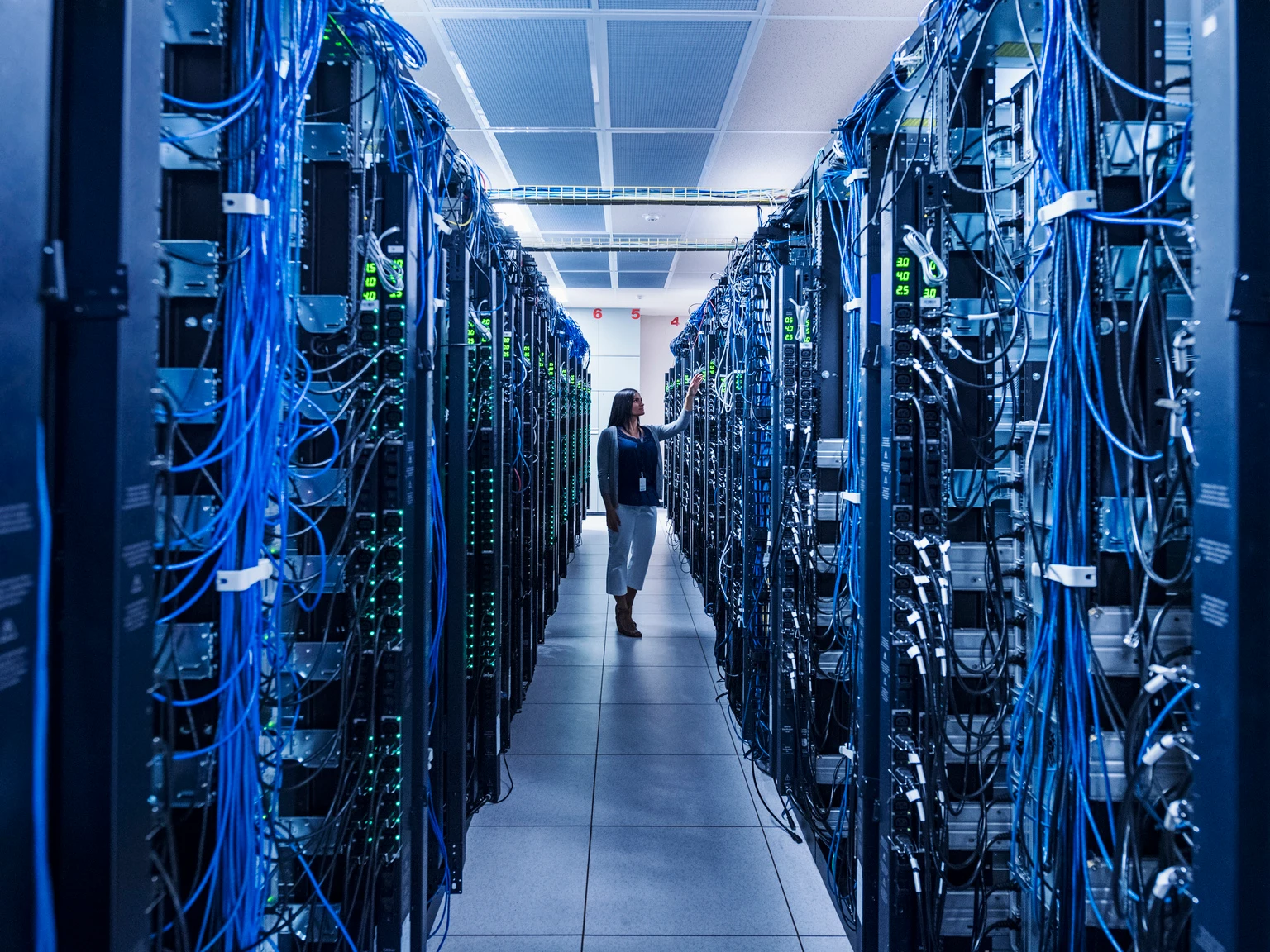
Vertiv: Remains A Fantastic Pick And Shovel AI Play

Subdued domestic equity markets and elevated American currency also weighed on the local unit even as investors moved cautiously, awaiting the interest rate decision of the US Federal Reserve, according to forex traders.
At the interbank foreign exchange, the local unit opened at 92.35 and fell further to trade at 92.42 against the US dollar, registering a 14-paise decline from its previous closing level.
The local unit ended Monday’s session with a marginal gain of 2 paise at 92.28 against the dollar.
The rupee, one of the worst-performing Asian currencies, touched its lowest intra-day level of 92.47 at the end of the previous week before closing the session at 92.30 against the dollar, its lowest-ever closing level until Friday.
Meanwhile, the dollar index, which gauges the greenback’s strength against a basket of six currencies, was trading 0.19 per cent higher at 99.65.
Brent crude, the global oil benchmark, was trading higher by 2.68 per cent at USD 102.87 per barrel in futures trade. On the domestic equity market front, the Sensex declined 91.62 points, or 0.12 per cent, to 75,411.23 in early trade, while the Nifty fell 34.25 points, or 0.15 per cent, to 23,374.55.
The latest government data released on Monday showed the country’s trade deficit narrowed to USD 27.1 billion in February compared to January.
Merchandise exports dropped marginally by 0.81 per cent to USD 36.61 billion, while imports increased by 24.11 per cent to USD 63.71 billion in February this year from USD 51.33 billion recorded a year ago.
Foreign institutional investors sold equities worth Rs 9,365.52 crore on a net basis on Monday, according to exchange data.

Andrew Bowie: Debunking some of the myths about the Tory position on North Sea oil and gas.

Three Iran women football players withdraw asylum bid, leave Australia | Football News

Stryker attack wiped tens of thousands of devices, no malware needed


-
 Tech6 days ago
A 1,300-Pound NASA Spacecraft To Re-Enter Earth’s Atmosphere
-
 Crypto World3 days ago
HYPE Token Enters Net Deflation as HyperCore Buybacks Outpace Staking Rewards
-

 Business7 days ago
ExxonMobil seeks to move corporate registration from New Jersey to Texas
-

 Fashion4 days ago
Weekend Open Thread: Addict Lip Glow
-

 Tech7 days ago
ChatGPT will now generate interactive visuals to help you with math and science concepts
-
Sports3 days ago
Why Duke and Michigan Are Dead Even Entering Selection Sunday
-

 NewsBeat6 days ago
Residents reaction as Shildon murder probe enters second day
-

 Business1 day ago
Search for Savannah Guthrie’s Mother Enters Seventh Week with No Arrests
-

 Business6 days ago
Search Enters Sixth Week With New Leads in Tucson Abduction Case
-

 Business3 days ago
US Airports Launch Donation Drives for Unpaid TSA Workers as Partial Government Shutdown Enters Fifth Week
-
Crypto World3 days ago
Coinbase and Bybit in Investment Talks: Could Bybit Finally Enter the US Crypto Market?
-

 NewsBeat6 days ago
I Entered The Manosphere. Nothing Could Prepare Me For What I Found.
-

 Business3 days ago
Country star Brantley Gilbert enters growing non-alcoholic beer market
-

 Sports5 days ago
PWHL, Senators discussing plan to keep Charge in Ottawa
-

 Business20 hours ago
Australian shares drop as Iran war enters third week
-

 Sports3 days ago
College Basketball Best Bets: Conference Tournament Semifinal Picks
-

 Crypto World20 hours ago
Crypto Lender BlockFills Enters Chapter 11 with Up to $500M in Liabilities
-

 Crypto World7 days ago
Will Chainlink price reclaim $10 amid volatility squeeze?
-

 Politics6 days ago
Trump Says Middle East Is ‘Very Lucky’ That He’s President
-

 Tech6 days ago
Clarity as strategy


You must be logged in to post a comment Login