Connect with us

Business

Why More UK Homeowners Are Upgrading Their Door Locks in 2026

Published

on

Why More UK Homeowners Are Upgrading Their Door Locks in 2026

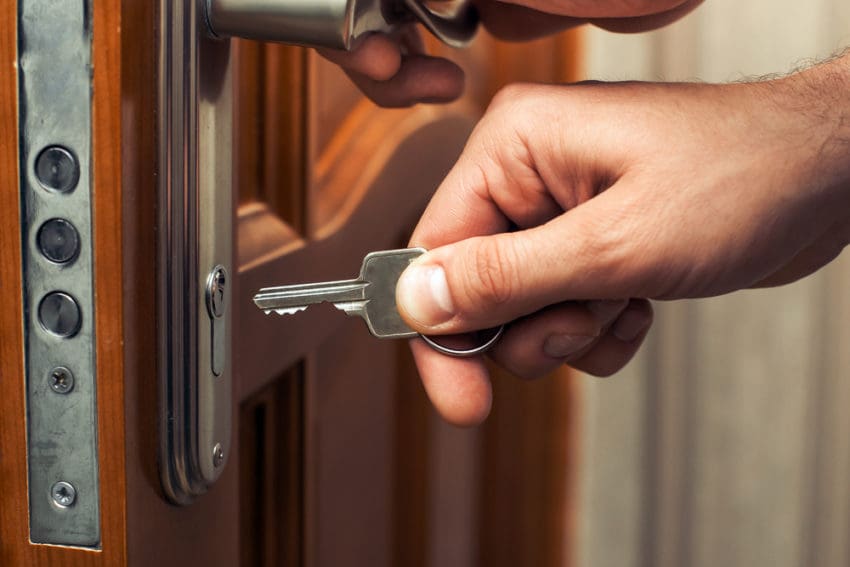
Home security has become a growing concern for UK households, and in 2026, many homeowners are taking a closer look at something that’s often overlooked: their door locks.

While alarms, cameras and lighting tend to dominate conversations around home security, experts are increasingly pointing to door locks as one of the most important — and vulnerable — parts of a property’s defenses. As burglary methods evolve and older hardware struggles to keep up, upgrading door locks is quickly becoming a priority rather than an afterthought.

Changing Burglary Tactics Are Driving Lock Upgrades

Modern burglaries rarely resemble the dramatic break-ins portrayed in films. In reality, most intrusions are quick, targeted, and focused on exploiting weak points around doors and entry systems.

Older locks, particularly those fitted more than a decade ago, were not designed to withstand today’s most common attack methods. Techniques such as snapping, drilling, bumping and lock manipulation have become more widely understood, leaving outdated hardware exposed.

As awareness of these risks has grown, homeowners are realising that upgrading door locks can significantly reduce the likelihood of forced entry — often without the need for major renovations or expensive security systems.

Advertisement

Insurance and Security Standards Are Playing a Bigger Role

Another factor driving lock upgrades is insurance compliance. Many insurers now expect homes to meet minimum security standards, particularly for external doors on uPVC and composite properties.

Locks that fail to meet recognised security ratings may not only increase the risk of burglary but could also complicate insurance claims following a break-in. This has prompted more homeowners to seek out locks that are tested, certified and designed to resist common attack methods.

Rather than reacting after a burglary has occurred, many are choosing to upgrade proactively, ensuring their door locks meet modern expectations for both security and peace of mind.

Why Door Locks Are the Foundation of Home Security

While alarms and cameras can alert homeowners to a problem, door locks are the first line of defence. A strong locking system can prevent an intruder from gaining access in the first place, making other security measures far more effective.

Advertisement

High-quality locks are designed to work in harmony with the door itself, providing resistance against forced entry while maintaining smooth everyday use. When locks are worn, outdated or poorly installed, even the most robust doors can become vulnerable.

This has led to growing interest in modern locking solutions that offer improved strength, durability and compatibility with today’s door systems.

The Shift Towards High-Security Locking Solutions

One of the most noticeable trends in 2026 is the move towards high-security door locks that are specifically engineered to counter modern attack techniques.

These locks often feature reinforced materials, anti-snap protection, and advanced internal mechanisms that make them significantly harder to compromise. For many homeowners, upgrading to modern lock designs provides a cost-effective way to improve security without altering the appearance of their property.

Advertisement

You can see examples of modern high-security door locks and how they’re being used in UK homes by exploring specialist retailers that focus on security-rated locking solutions rather than generic hardware.

A Practical Upgrade With Long-Term Benefits

Unlike some home improvements, upgrading door locks offers immediate and lasting benefits. Improved security is the obvious advantage, but homeowners also report smoother operation, reduced wear on door mechanisms, and greater confidence when leaving their property unattended.

For rental properties and shared homes, upgraded locks can also help landlords meet safety expectations while reducing the risk of repeated break-ins — a growing concern in urban areas.

As security awareness continues to rise, it’s clear that door locks are no longer being treated as a background detail. Instead, they’re becoming a central part of how homeowners protect their properties.

Advertisement

Looking Ahead

With crime prevention advice, insurance requirements and consumer awareness all pointing in the same direction, it’s no surprise that more UK homeowners are choosing to upgrade their door locks in 2026.

Rather than waiting for something to go wrong, many are taking a proactive approach — strengthening their homes from the outside in and ensuring their first line of defence is up to modern standards.

Advertisement
Continue Reading
Click to comment

Leave a Reply

Your email address will not be published. Required fields are marked *

Business

Form 13G Kochav Defense Acquisition Corp. For: 11 February

Published

on


Form 13G Kochav Defense Acquisition Corp. For: 11 February

Continue Reading

Business

Q2 Holdings Stock: Strong Growth, But A Red Flag For Valuation (NYSE:QTWO)

Published

on

Q2 Holdings Stock: Strong Growth, But A Red Flag For Valuation (NYSE:QTWO)

This article was written by

David focuses on growth & momentum stocks that are reasonably priced and likely to outperform the market over the long-term. He is a long term investor of quality stocks and uses options for strategy. David told investors to buy in March 2009 at the bottom of the financial crisis. The S&P 500 increased 367% and the Nasdaq increased 685% from 2009 through 2019. He wants to help make people money by investing in high-quality growth stocks.

Analyst’s Disclosure: I/we have no stock, option or similar derivative position in any of the companies mentioned, and no plans to initiate any such positions within the next 72 hours. I wrote this article myself, and it expresses my own opinions. I am not receiving compensation for it (other than from Seeking Alpha). I have no business relationship with any company whose stock is mentioned in this article.

The article is for informational purposes only (not a solicitation or recommendation to buy or sell stocks). David is not a registered investment adviser. Investors should do their own research or consult a financial adviser to determine what investments are appropriate for their individual situation. This article expresses my opinions and I cannot guarantee that the information/results will be accurate. Investing in stocks involves risk and could result in losses.

Advertisement

Seeking Alpha’s Disclosure: Past performance is no guarantee of future results. No recommendation or advice is being given as to whether any investment is suitable for a particular investor. Any views or opinions expressed above may not reflect those of Seeking Alpha as a whole. Seeking Alpha is not a licensed securities dealer, broker or US investment adviser or investment bank. Our analysts are third party authors that include both professional investors and individual investors who may not be licensed or certified by any institute or regulatory body.

Continue Reading

Business

US stocks drift to a mixed finish as yields fall

Published

on

US stocks drift to a mixed finish as yields fall

The S&P 500 and the Nasdaq has closed lower, while the Dow edged up to its third record close in a row, as investors digested disappointing retail sales figures and waited for ‌a key labour market report.

Continue Reading

Business

Ex-WA chief scientist Peter Klinken says education system ‘under threat’

Published

on

Ex-WA chief scientist Peter Klinken says education system ‘under threat’

Former Western Australian chief scientist Peter Klinken has called for more progress in the education sector, calling it “under threat” and slow to adapt.

Continue Reading

Business

A Conversation with Ihab Abou Letaif

Published

on

A Conversation with Ihab Abou Letaif

Ihab Abou Letaif is a business professional with experience in retail operations and consumer goods. His work focuses on how businesses operate day-to-day, especially in complex, high-pressure markets. He is known for a practical and disciplined approach to management.

His career has been shaped by hands-on roles in operations, finance, and business development. He has worked closely with store performance, inventory control, and supply chain coordination. This has given him a clear view of how small decisions affect margins, cash flow, and long-term stability.

Operating in Venezuela has required adaptability and strong financial discipline. Ihab has spent years working in environments marked by inflation, supply volatility, and shifting consumer behaviour. His experience in these conditions has strengthened his focus on efficiency, risk control, and realistic planning.

A large part of his work has involved building and managing teams. He believes that clear processes and shared responsibility are essential for scale. He places importance on training, accountability, and steady execution rather than rapid expansion.

Ihab’s leadership style is calm and analytical. He prioritises data, systems, and repeatable results. Instead of chasing trends, he focuses on fundamentals that support sustainable growth.

Advertisement

His professional interests include retail economics, inventory management, and supply chain resilience in emerging markets. He continues to study how convenience and food retail are evolving across Latin America. Through this work, he is recognised as a knowledgeable operator with a grounded understanding of the retail industry.

Q: You grew up around business. How did that shape your early interest in retail and operations?

From a young age, I was exposed to how businesses actually run. Not just ideas, but responsibility. I saw how daily decisions affected staff, suppliers, and cash flow. That early exposure made me curious about operations. Retail stood out because results are immediate. You see what works and what does not very quickly.

Q: What did your education add to that early experience?

My education focused on business and management, but with a practical angle. It was less about theory and more about application. I learned how to read numbers, understand costs, and think in systems. That helped me later when I moved into operational roles, where decisions need to be fast and grounded in reality.

Q: How did your professional career begin?

I started working in retail and consumer goods in hands-on roles. Early on, I was involved in daily operations. Stock levels, supplier coordination, and staff scheduling. These roles are demanding, but they teach discipline. You learn quickly that small inefficiencies add up.

Advertisement

Q: What lessons stood out during those early years?

Inventory control was a major one. Having too much stock ties up cash. Having too little loses sales. I remember dealing with supply delays and learning how to plan around uncertainty. That experience shaped how I think about risk and preparation.

Q: You have worked in Venezuela, a challenging environment for retail. How did that influence your approach?

Operating in a high-inflation environment requires precision. Cash flow management becomes central to survival. You cannot rely on assumptions. You need updated data and clear controls. It also teaches humility. External conditions matter, and flexibility is essential.

Q: How did those conditions affect your leadership style?

They pushed me towards clarity and calm. In volatile markets, panic spreads fast. I try to keep processes simple and communication clear. Teams perform better when they understand priorities. My focus has always been on execution rather than ambition.

Q: What role did team management play as your responsibilities grew?

As operations scaled, team structure became critical. Training people to understand why processes matter made a real difference. I learned that leadership is not about control, but alignment. When people understand the system, they make better decisions on their own.

Advertisement

Q: Can you share an example of a practical challenge you faced?

One recurring issue was balancing supplier reliability with cost. Sometimes cheaper options caused delays or quality issues. Over time, I learned to value consistency. A stable supply chain reduces hidden costs and operational stress, especially in emerging markets.

Q: How do you view the convenience and food retail sector today?

It is becoming more disciplined. Margins are tight, so efficiency matters more than scale. Convenience stores in Latin America are growing, but success depends on understanding local demand and logistics. Copying models without adapting them rarely works.

Q: What topics continue to interest you professionally?

I focus on retail economics, inventory systems, and supply chain resilience. I also study how consumer behaviour changes under economic pressure. These factors shape long-term sustainability more than short-term trends.

Q: How do you define effective leadership in this industry?

Effective leadership is quiet and consistent. It is about building systems that work without constant intervention. Data, discipline, and trust matter more than visibility. Results should speak for themselves.

Advertisement

Q: Looking back, what has been most important in your career journey?

Staying grounded. Retail teaches you that fundamentals matter. Cash flow, stock control, and people are always at the centre. No matter the market, those principles remain the same.

Advertisement
Continue Reading

Business

Climate Funds Are Out of Favor. Not for These Investors.

Published

on

Climate Funds Are Out of Favor. Not for These Investors.

Climate Funds Are Out of Favor. Not for These Investors.

Continue Reading

Business

Madison Moderate Allocation Fund Q4 2025 Investment Strategy Letter

Published

on

Madison Moderate Allocation Fund Q4 2025 Investment Strategy Letter

On the red surface there are money symbols, an arrow and a sign with the inscription -

Dzmitry Skazau/iStock via Getty Images

Market Recap

While the final quarter of 2025 resulted in a more modest, +2.7%, gain for the US stock market, as measured by the S&P 500 Index, the year’s +17.9% advance caps a historical 3+ year run that has seen the

Continue Reading

Business

Smith Chad M. sells better home & finance (BETR) shares for $57526

Published

on


Smith Chad M. sells better home & finance (BETR) shares for $57526

Continue Reading

Business

Why The ‘Fail Fast’ Mentality Is Actually Failing UK Small Businesses

Published

on

Many of the challenges faced by businesses today are complex, multifaceted and interconnected – requiring a combination of human ingenuity and technological capabilities to solve. 

For the better part of a decade, the Silicon Valley mantra of “move fast and break things” has permeated the global business consciousness.

It suggests that speed is the ultimate competitive advantage and that failure is merely a stepping stone to success. While this philosophy might work for venture-backed software unicorns with millions in runway, it is proving to be a dangerous, often fatal, strategy for the average UK small business owner. For the proprietor of a logistics firm in Leeds or a digital agency in Manchester, “breaking things” usually means breaking cash flow, damaging client relationships, and risking insolvency.

Examining Reliability Standards In Competitive Digital Markets

In the digital realm, the “fail fast” methodology is often conflated with releasing buggy software, but in saturated markets, reliability is the primary differentiator. Consumers have become intolerant of friction; if a digital service fails to load or process a transaction, the user moves to a competitor instantly. This is particularly true in high-stakes industries where user trust is paramount and the technical infrastructure must be bulletproof.

Consider the highly competitive sectors where platform stability is directly tied to revenue. For example, operators vying to be the best online casinos UK users can visit must prioritise flawless uptime and security over experimental features. In such a crowded marketplace, a platform that “breaks” during a peak usage time does not just lose a transaction; it loses the customer’s lifetime value to a more reliable competitor. This principle applies across the digital spectrum, from e-commerce checkouts to SaaS dashboards. The user experience must be boringly predictable to be effective.

The Hidden Dangers Of Rapid Iteration Strategies

The concept of rapid iteration encourages businesses to launch minimum viable products (MVPs) and fix issues on the fly. However, this approach often underestimates the reputational damage caused by delivering subpar experiences to early adopters. In tight-knit local economies or niche B2B sectors, word travels fast. A business that gains a reputation for being unreliable or unfinished rarely gets a second chance to make a first impression. When a small business “fails fast,” it often depletes its limited capital reserves before it can rectify the error, leading to premature closure rather than the promised enlightenment.

Advertisement

Regional data highlights the stark reality of business fragility in the UK. The risks of instability are not distributed evenly across the country, with certain areas seeing alarming closure rates. Recent statistics reveal that 44.6% of new businesses incorporated in Hull since 2020 have closed, marking the highest new business closure rate in the UK for that period. This figure contrasts sharply with more affluent hubs, suggesting that in resource-constrained environments, the “fail fast” approach is simply a fast track to bankruptcy. Without the safety net of deep investor pockets, the cost of experimentation is often terminal.

Prioritising Operational Stability Over Constant Innovation

In the quest for the next big disruption, many founders neglect the operational bedrock that keeps a company alive. Innovation is expensive; stability pays the bills. The obsession with growth hacking often comes at the expense of establishing robust financial controls, supply chain resilience, and consistent customer service protocols. When the market turns volatile, it is the businesses with strong fundamentals, not the most innovative product roadmaps, that weather the storm.

The survival statistics for UK startups paint a sobering picture of the challenges facing new entrants. The drop-off rate after the initial excitement fades is precipitous. According to recent data, only 47% of start-ups registered in 2020 survived to 2023, and the long-term outlook is even starker with a 10-year survival rate of just 10%. These figures indicate that half of all new ventures do not have the operational stamina to last three years. This high attrition rate suggests that too many businesses are launching without a viable long-term model, perhaps encouraged by a culture that prioritises the “start” over the “sustain.”

Stability allows for compounding returns. A business that focuses on retaining existing customers through reliable service will eventually outperform a competitor that is constantly chasing new customer acquisition through flashy, untested initiatives. Operational stability also makes a business more attractive to lenders. In an era where access to finance is tightening, banks are looking for predictable cash flows and proven track records, not wild growth projections based on untested pivots.

Advertisement

Building A Sustainable Culture Of Measured Growth

The current economic landscape demands a shift in mindset from hyper-growth to sustainable resilience. The post-pandemic era has seen a significant contraction in the overall business population, driven largely by the exit of those who could not adapt to rising costs and operational pressures. The UK small business population fell from 5.94 million in 2020 to 5.64 million in 2025, representing a net loss of 300,000 enterprises. This contraction signals a flight to safety, where only the most operationally sound businesses are managing to keep their doors open.

This trend towards consolidation and caution is also reflected in the rise of non-employing sole traders. Many entrepreneurs are choosing to remain small and agile rather than taking on the risk and overhead of hiring staff and expanding premises. This is a rejection of the “scale at all costs” mentality. By keeping overheads low and focusing on profitability from day one, these micro-businesses are insulating themselves against market shocks. Measured growth allows a business owner to retain control, maintain quality standards, and ensure that every expansion step is funded by actual revenue rather than speculative debt.

Advertisement
Continue Reading

Business

Person Detained for Questioning Hours After FBI Release Photos of Masked Man

Published

on

Masked Man Outside Nancy Guthrie's Home
FBI Director Kash Patel / X

A person has reportedly been detained for questioning over the disappearance of Nancy Guthrie, the mother of US “Today” show host Savannah Guthrie.

The 84-year-old was allegedly kidnapped on February 1 after she was last seen on January 31.

Person Detained for Questioning

According to USA Today, the person was detained south of Tucson, Arizona, which is where Guthrie’s home is located.

The Pima County Sheriff’s Department refused to share any information when approached for comment, per The Hollywood Reporter.

As of press time, no update on Nancy Guthrie’s whereabouts have been provided.

Advertisement

FBI Releases Images, Footage of Masked Man

The new development comes just hours after the FBI released footage and images of a masked man outside Guthrie’s home.

The footage was recorded by her doorbell and security cameras.

“Working with our partners – as of this morning, law enforcement has uncovered these previously inaccessible new images showing an armed individual appearing to have tampered with the camera at Nancy Guthrie’s front door the morning of her disappearance,” FBI Director Kash Patel said in a statement posted on X.

Savannah Guthrie has also shared the images on her Instagram account, saying that “We believe she is still alive. Bring her home.”

Continue Reading

Trending

Copyright © 2025