
Business
Why Nvidia’s Huge Numbers Don’t Settle the Latest AI Fears


Nvidia NVDA -4.16%decrease; red down pointing triangle now makes more revenue in a single quarter than most other chip companies generate in an entire year. In a turbulent market awash in a new class of AI fears, that’s no longer enough.
The chip maker’s fiscal fourth-quarter results Wednesday showed why the company remains the undisputed leader in artificial-intelligence computing. Revenue of $68.1 billion was up 73% from the same period a year earlier and represented the company’s best growth rate in four quarters. Nvidia projected an even higher growth rate for the current quarter, and that forecast actually beat Wall Street’s consensus target by the widest range in two years, according to FactSet data.
Copyright ©2026 Dow Jones & Company, Inc. All Rights Reserved. 87990cbe856818d5eddac44c7b1cdeb8


The sharp sell-off follows a strong rebound in February, when foreign portfolio investors (FPIs) pumped in Rs 22,615 crore, the highest monthly inflow in 17 months, according to NSDL data.
With the latest withdrawals, total FPI outflows have crossed the Rs 1 lakh crore-mark so far in 2026.
In March (till March 20), FPIs have remained net sellers on every trading day, offloading equities worth Rs 88,180 crore in the cash market. However, the outflow is still lower than the record monthly exodus of Rs 94,017 crore seen in October 2024.
Market participants attributed the sustained selling pressure to global macroeconomic headwinds and heightened geopolitical uncertainty.

Vaqarjaved Khan, Senior Fundamental Analyst at Angel One, said the primary trigger has been the sharp escalation in Middle East tensions, with fears of prolonged conflict and potential disruption to the Strait of Hormuz pushing Brent crude above USD 100, fuelling a classic risk-off move.
He added that the trend has been exacerbated by the rupee hovering near Rs 92 against the US dollar, elevated US bond yields, profit-booking after the February inflows, and mixed Q4 earnings outlook indicating margin pressures in key sectors.Himanshu Srivastava, Principal Manager Research at Morningstar Investment Research India, said the rising US Treasury yields as another key driver.
Higher yields have improved the relative attractiveness of dollar-denominated assets, prompting capital to move away from emerging markets like India. This shift is typically accompanied by a stronger dollar and tighter global liquidity, further dampening sentiment towards emerging market equities.
Echoing similar concerns, V K Vijayakumar, Chief Investment Strategist at Geojit Investments, said the conflict in West Asia has intensified FPI selling.
He noted that weakness in global equity markets, continued rupee depreciation and worries over the impact of high crude prices on India’s growth and earnings have all weighed on investor sentiment.
Sectorally, financial services bore the brunt of the selling, with FPIs offloading shares worth Rs 31,831 crore during the fortnight ended March 15.
Looking ahead, analysts expect the near-term outlook to remain cautious.
Khan said continued volatility in oil prices or further escalation in geopolitical tensions could sustain outflows. However, any signs of de-escalation, strong support from domestic institutional investors (DIIs), or positive earnings surprises may help stabilise markets and trigger selective buying.
According to Vijayakumar, a reversal in FPI flows is likely only once geopolitical tensions ease and broader market stability returns.

Bryan Hodgson, the fast-rising American college basketball coach, is finalizing a move to become the head coach at Providence College, sources confirmed Sunday, capping a whirlwind year that saw him lead South Florida to its first NCAA Tournament appearance in 14 years before drawing interest from multiple programs.

The 38-year-old Hodgson has quickly established himself as one of the most sought-after young head coaches in Division I men’s basketball. After turning down Syracuse earlier this month and reportedly weighing options including staying at USF with a lucrative retention offer, he has signed a deal with the Big East’s Providence Friars, per multiple reports including ESPN’s Pete Thamel and USA Today. An official announcement is expected soon, with an introduction slated for Tuesday.
Here are five essential things to know about Bryan Hodgson as he prepares to take over one of the Northeast’s storied programs:
- Rapid Rise from Assistant to Head Coach Hodgson began his coaching career after a modest playing stint at Jamestown Community College and SUNY Fredonia, where he earned a bachelor’s degree in 2011. He started as an assistant at his junior college alma mater before joining Nate Oats’ staff at the University at Buffalo (2010-2013, then later 2015-2019) and Alabama (2019-2023). Known as one of the nation’s elite recruiters, he helped Oats build high-major talent pipelines. His first head coaching job came at Arkansas State in 2023, where he posted consecutive 20-win seasons (45-28 overall), earning acclaim as one of the top first-year coaches in 2023-24. In March 2025, he moved to South Florida, replacing the late Amir Abdur-Rahim.
- Immediate Success at South Florida in 2025-26 In his lone season with the Bulls, Hodgson engineered a remarkable turnaround, guiding USF to a 25-9 record, the American Athletic Conference regular-season and tournament titles, and the program’s first NCAA Tournament berth since 2012. The Bulls earned an 11-seed and pushed No. 6 Louisville to the brink in the first round before falling short. The run included an 11-game win streak and highlighted Hodgson’s up-tempo, efficient style emphasizing high-percentage shots and strong defense. His 25-9 mark boosted his career head coaching record to 70-37 (.654) across Arkansas State and USF.
- Emotional NCAA Tournament Homecoming The Bulls’ March Madness appearance carried deep personal significance for Hodgson, a native of Olean, New York. The first-round game in Buffalo was just 60 miles from his hometown, allowing his father — who has dementia — to attend in person for what may have been one of the last opportunities to watch his son coach live. Hodgson spoke openly about his upbringing, family challenges and the full-circle moment, blending painful memories with joy. The experience underscored his roots in Western New York and added emotional weight to his debut tournament run.
- Hot Commodity on the Coaching Carousel Hodgson’s success made him a prime target amid the 2026 offseason openings. He reportedly turned down Syracuse (after its coaching change) despite being a top candidate and strong ties to the region. USF countered with a significant financial package to retain him, but Providence prevailed. The Friars, seeking stability and a return to Big East prominence after recent transitions, view Hodgson’s recruiting prowess, offensive innovation and ability to elevate mid-major programs as ideal fits. His quick moves — three schools in three seasons — reflect ambition and market demand for proven winners.
- Personal Story of Resilience and Family Hodgson’s journey includes overcoming adversity. Adopted and raised in a challenging environment, he credits mentorship and perseverance for his path. A phone call that redirected his career toward coaching proved pivotal. He holds a master’s in education from the University of the Southwest (2015) and emphasizes leadership, player development and culture-building. Off the court, he maintains an active presence on social media (@coachbryanhodgson on Instagram), sharing insights from Tampa during his USF tenure.
As Hodgson transitions to Providence, expectations are high. The Friars seek to capitalize on his track record of quick rebuilds and tournament success. His up-tempo philosophy, rooted in Oats’ influence, could energize the program amid the evolving college basketball landscape of NIL deals, transfer portal dynamics and conference realignments.
For fans in Providence and beyond, Hodgson’s arrival signals fresh optimism. His story — from small-town roots to high-profile hires — embodies the merit-based rise possible in modern coaching. With the deal signed, all eyes turn to his introductory press conference and plans for the 2026-27 season.
A key item on the agenda is a proposal to allow Foreign Portfolio Investors (FPIs) to net funds for same-day cash market trades, instead of settling each trade individually.
Under the existing framework, an FPI needs to settle equity cash market trades on a gross basis, funding each purchase transaction independently of any sale transactions, even on the same day.
Sebi has proposed permitting “netting of funds”, which would allow FPIs to use proceeds from same-day sales to offset purchase obligations, thereby requiring them to meet only the net payable amount.
The move is aimed at enhancing operational efficiency and reducing the cost of funding for them, especially on index rebalancing days. Also, it is expected to minimise forex-related costs arising from timing mismatches between inflows and outflows.
The proposal follows concerns that the current gross settlement system imposes additional funding requirements on FPIs for at least one extra day, increasing transaction costs.
This will be the fifth board meeting chaired by Sebi Chairman Tuhin Kanta Pandey since he assumed office on March 1, 2025.Apart from FPI-related reforms, the board will review a series of governance and regulatory proposals. These include a comprehensive overhaul of the “fit and proper person” criteria for market intermediaries, to enhance procedural clarity and fairness, the people familiar with the matter said.
Under this, Sebi is considering a proposal to abolish the reference to initiation of winding-up proceedings as a disqualification in a bid to ensure that only a final winding-up order, and not mere initiation of proceedings, is considered while assessing whether a person is fit and proper.
Also, the regulator is looking to explicitly include the right to a hearing in the rules. Although the practice of giving a reasonable opportunity of being heard already exists, it has been proposed to be clearly stated in the rules to remove any procedural ambiguity.
The board will also take up ease-of-doing business proposals related to real estate investment trusts (REITs) and infrastructure investment trusts (InvITs).
Another significant agenda item is the consideration of a report submitted by a high-level panel on conflict of interest and transparency, they added.
The regulator will discuss the panel’s report, which proposes comprehensive reforms to bring in transparency by way of greater disclosure and a “zero-tolerance” culture to address conflict of interest of top officials of Sebi.

I am Gen Alpha. I have more than 14 years of investment experience, and an MBA in Finance. I focus on stocks that are more defensive in nature, with a medium- to long-term horizon. I provide high-yield, dividend growth investment ideas in the investing group iREIT®+HOYA Capital. The group helps investors achieve dependable monthly income, portfolio diversification, and inflation hedging. It provides investment research on REITs, ETFs, closed-end funds, preferreds, and dividend champions across asset classes. It offers income-focused portfolios targeting dividend yields up to 10%. Learn more.
Analyst’s Disclosure: I/we have a beneficial long position in the shares of MSDL, ET either through stock ownership, options, or other derivatives. I wrote this article myself, and it expresses my own opinions. I am not receiving compensation for it (other than from Seeking Alpha). I have no business relationship with any company whose stock is mentioned in this article.
I am not an investment advisor. This article is for informational purposes and does not constitute as financial advice. Readers are encouraged and expected to perform due diligence and draw their own conclusions prior to making any investment decisions.
Seeking Alpha’s Disclosure: Past performance is no guarantee of future results. No recommendation or advice is being given as to whether any investment is suitable for a particular investor. Any views or opinions expressed above may not reflect those of Seeking Alpha as a whole. Seeking Alpha is not a licensed securities dealer, broker or US investment adviser or investment bank. Our analysts are third party authors that include both professional investors and individual investors who may not be licensed or certified by any institute or regulatory body.


Persistent Iran war, energy price surge set to sway wavering stocks
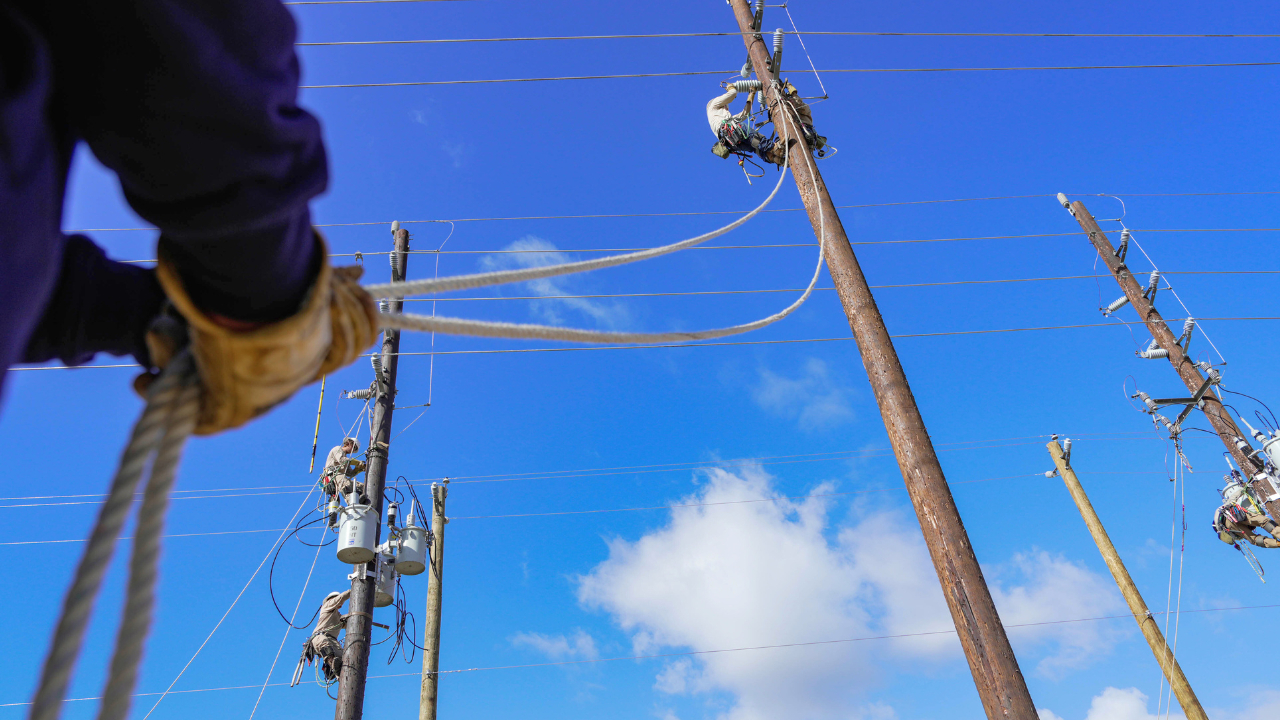
Economists Stephen Moore and EJ Antoni analyze Democratic tax policies, including New York Gov. Kathy Hochul’s appeal to millionaires, and break down rising gas prices on ‘The Bottom Line.’
For millions of Americans, higher electricity bills are becoming a monthly frustration and a growing force in the midterm elections.
Unlike more volatile costs such as gasoline, electricity is a steady, unavoidable expense tied directly to basic needs — keeping the lights on, heating and cooling homes and powering everyday life. That makes it especially politically sensitive at a time when many households are still feeling squeezed by broader inflation and high housing costs.
AMERICANS HIT WITH SOARING ELECTRICITY BILLS AS PRICE HIKES OUTPACE INFLATION NATIONWIDE
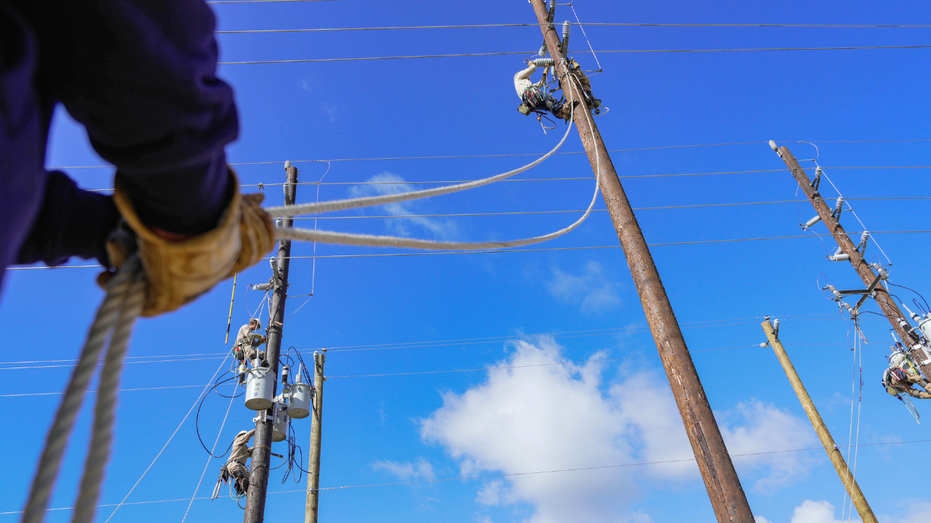
Both Republican and Democratic candidates are expected to discuss rising electricity costs on the campaign trail this midterm season. (Raquel Natalicchio/Houston Chronicle via Getty Images)
The issue is giving both parties fresh campaign ammunition, with Republicans casting higher bills as evidence of failed energy policies, regulatory overreach and a shift away from fossil fuels, while Democrats point to bill assistance programs, grid investments and clean energy incentives aimed at easing pressure on household budgets over time.
The fight is unfolding amid sharp regional divides in electricity prices. Federal energy data shows residential power costs vary widely across the country, illustrating how affordability pressures differ not just by income, but by geography, infrastructure and energy mix.
The latest figures from the U.S. Energy Information Administration put the national average at 17.24 cents per kilowatt-hour, up 6% from a year earlier — a jump that outpaces wage growth for many households and adds to cumulative cost pressures from rent, insurance and groceries.
North Dakota has the lowest average residential electricity rate in the country at 11.02 cents per kilowatt-hour, while Hawaii — an outlier shaped in part by geographic isolation and reliance on imported fuel — has the highest, at 41.62 cents per kWh.
Nebraska, Idaho, Oklahoma and Arkansas also rank among the cheapest states, while California, Rhode Island, Massachusetts and New York join Hawaii among the most expensive. Many of the higher-cost states are also pursuing aggressive clean energy transitions or maintaining older, more complex grid systems — factors that can raise near-term costs even as they aim to stabilize prices in the long run.
Several of the cheapest states are deep-red, a pattern Republicans are likely to seize on to reinforce broader arguments about energy policy and cost of living — even though power prices are shaped as much by geography, fuel availability, regulatory structures and long-term infrastructure investments as by partisan control.
THE STATES WHERE AMERICANS PAY THE MOST — AND LEAST — FOR ELECTRICITY
Cheap electricity, however, does not always mean affordable energy. Weather extremes, household consumption patterns, housing efficiency, aging infrastructure and state-level utility decisions all affect what families ultimately pay. In hotter or colder regions, for instance, even low rates can translate into high monthly bills due to heavy air conditioning or heating use.
Utilities are also seeking rate increases in many states to cover grid modernization, wildfire mitigation, storm hardening and the expansion of renewable energy — costs that are often passed on to consumers gradually but steadily.
GET FOX BUSINESS ON THE GO BY CLICKING HERE

As candidates fan out across the country ahead of the midterms, power bills are becoming a tangible symbol of household stress. (Raquel Natalicchio/Houston Chronicle/Getty Images)
Even so, the partisan pattern may prove politically useful in a campaign season shaped by anxiety over household expenses and economic uncertainty.
Gas prices may grab more headlines, but electricity bills can be more politically durable: they arrive every month, are harder to cut quickly and are often tied to local utilities and regulators. That gives candidates a direct way to connect national energy debates to a tangible, recurring household cost and to voter frustration that is felt not at the pump, but at the kitchen table.

The Powerball lottery drawing on Saturday, March 21, 2026, produced no grand prize winner, allowing the jackpot to roll over once again as players across the United States chased an estimated $123 million prize with a cash value of $55.8 million.

The official winning numbers, drawn at 10:59 p.m. ET from the Florida Lottery studios in Tallahassee, were **12-28-36-41-59**, with the red Powerball **2**. The Power Play multiplier was **2x**, boosting non-jackpot prizes for players who opted in.
According to the Multi-State Lottery Association and official Powerball results posted on powerball.com, no ticket matched all five white balls plus the Powerball to claim the top prize. The jackpot had climbed from an estimated $120 million ahead of the draw after no winner in the previous Wednesday, March 18, drawing (numbers 14-18-19-21-69, Powerball 1, Power Play 3x).
Lower-tier prizes saw solid action. While no tickets matched five white balls plus the Power Play for the $2 million second prize, reports indicate zero $1 million Match 5 winners nationwide in the main draw. Prize breakdowns from usamega.com and powerball.com detail:
– Match 5 + Powerball: 0 winners ($123,100,000 jackpot rollover)
– Match 5: 0 winners ($1,000,000 each)
– Match 4 + Powerball: Limited winners at $50,000 (with Power Play boosting to $100,000 in some cases)
– Match 4: Hundreds of tickets at $100 base
– Lower matches distributed thousands in $4 to $50 prizes, with Power Play doubling many.
The Double Play add-on drawing — available in select jurisdictions — featured numbers **9-29-34-48-58** with Powerball **4**, offering additional chances for prizes up to $10 million, though no top-tier Double Play jackpot was reported.
The March 21 drawing followed a pattern of rollovers that has kept the jackpot building steadily in early 2026. No jackpot winner had emerged in several consecutive draws, fueling excitement and ticket sales nationwide. The absence of a winner means the next drawing — Wednesday, March 25 — will feature an even larger estimated jackpot, likely pushing past $150 million depending on final sales figures.
Powerball operates in 45 states plus the District of Columbia, Puerto Rico and the U.S. Virgin Islands, with drawings held every Monday, Wednesday and Saturday. Tickets cost $2 per play, with the optional Power Play for an extra $1 multiplying non-jackpot wins up to 10x (though capped at 2x or 3x when the jackpot is below certain thresholds). Double Play, where available, adds another $1 for a second chance at prizes.
Players are reminded to check tickets carefully, as smaller prizes often go unclaimed. Winners of prizes up to $600 typically redeem at retailers, while larger amounts require claims through state lottery offices. Jackpot winners can choose annuity payments over 30 years or a lump-sum cash option, which for this draw would have been approximately $55.8 million before taxes.
The lottery has long captured public imagination, with massive jackpots sparking “Powerball fever” and stories of life-changing wins. Past record holders include the $2.04 billion prize won in California in November 2022 and others exceeding $1 billion. No such mega-winner emerged Saturday, but the rollover ensures continued buzz.
As always, officials urge responsible play: buy only from authorized retailers, keep tickets safe and sign the back immediately upon purchase. Odds of winning the jackpot remain 1 in 292.2 million, though overall odds of any prize are about 1 in 24.9.
For those who purchased tickets, results are available on powerball.com, state lottery sites, apps and trusted news outlets. The next chance to win arrives Wednesday — with the jackpot poised to grow further if no one claims it.
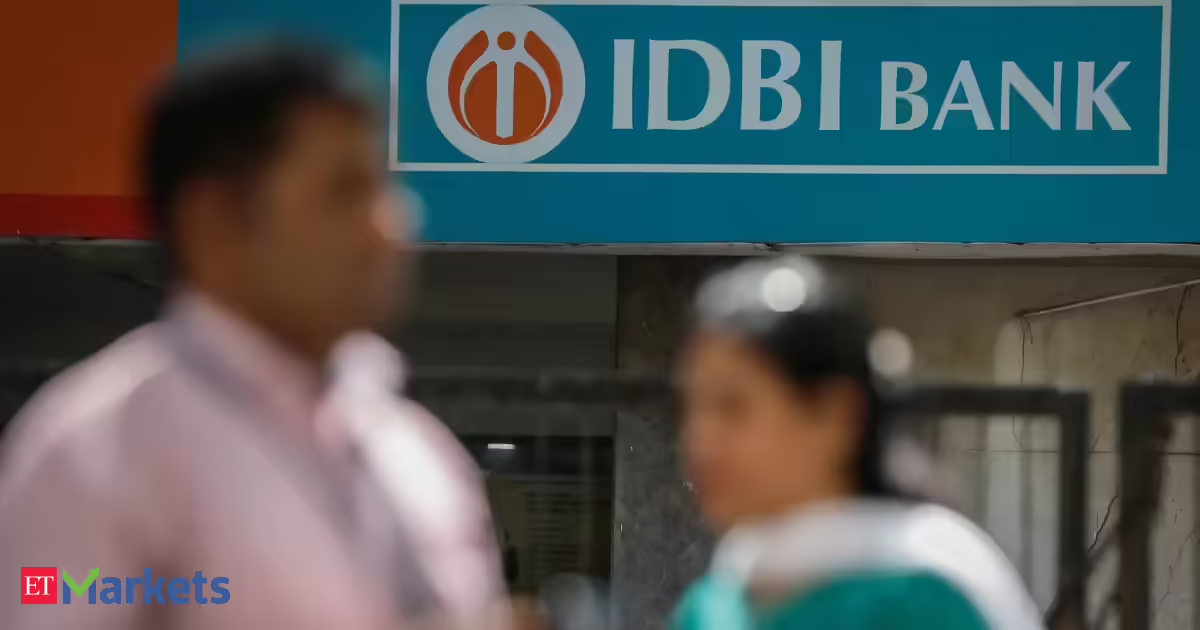
Currently, the public float in IDBI Bank is only 5.29 per cent, limiting the scope of fair valuation.
The remaining shares are with insurance behemoth Life Insurance Corporation of India (LIC), with a controlling stake at 49.24 per cent, while the Government of India (GoI) holding stood at 45.48 per cent.
Earlier this month, the proposed sale of a 60.72 per cent majority stake, held jointly by the government and the LIC, was scrapped after financial bids from two potential buyers reportedly fell short of the reserve price.
Low free float restricts the scope for fair markvaluation, and expanding this by 10 per cent or 15 per cent would make price discovery more reliable, sources said.
It can provide a reliable benchmark for valuation and further make the price discovery process transparent, they said, adding, strategic sale can be pursued even after one or two tranches of OFS.
As per the failed plan, both the government and LIC were to offload 30.48 per cent and 30.24 per cent stake, respectively.This is the second time that the government has wanted to privatise IDBI Bank since the first announcement made in 2016. The idea was first officially flagged in the Union Budget speech by then-Finance Minister Arun Jaitley in February 2016.
The first attempt to privatise the then state-owned IDBI Bank failed due to valuation concerns.
However, the government later sold the controlling stake to LIC, which had been eyeing acquiring a stake in a bank to expand its bancassurance business model.
Subsequently, in January 2019, LIC acquired a 51 per cent controlling stake in IDBI Bank for approximately Rs 21,624 crore to rescue the lender from heavy bad loans as part of the disinvestment process.
As a result, the bank was categorised as a private-sector bank by the Reserve Bank of India.
In December 2020, the lender was reclassified as an associate company following the reduction of LIC’s stake in the bank to 49.24 per cent.
The process for privatisation gained formal momentum when the Cabinet Committee on Economic Affairs gave its in-principle approval in May 2021 for strategic disinvestment along with transfer of management control in IDBI Bank.
In October 2022, KPMG India was appointed as Transaction Advisor and the intent to sell 60.72 per cent stake in the bank was announced.
The Department of Investment and Public Asset Management (DIPAM) invited Expressions of Interest (EoI) in October 2022, and market regulator Sebi approved the reclassification of GOI as a public shareholder upon completion of the sale in January 2023.
Later in August 2025, the regulator gave its nod for reclassification of LIC as a public shareholder upon completion of the sale and after a long due diligence period, financial bids from two Emirates NBD Bank and Prem Vatsa-promoted Fairfax India were finally received in February 2026.


Focus on multinational transportation companies. Mercosur economies.
Analyst’s Disclosure: I/we have no stock, option or similar derivative position in any of the companies mentioned, and no plans to initiate any such positions within the next 72 hours. I wrote this article myself, and it expresses my own opinions. I am not receiving compensation for it (other than from Seeking Alpha). I have no business relationship with any company whose stock is mentioned in this article.
Seeking Alpha’s Disclosure: Past performance is no guarantee of future results. No recommendation or advice is being given as to whether any investment is suitable for a particular investor. Any views or opinions expressed above may not reflect those of Seeking Alpha as a whole. Seeking Alpha is not a licensed securities dealer, broker or US investment adviser or investment bank. Our analysts are third party authors that include both professional investors and individual investors who may not be licensed or certified by any institute or regulatory body.
Business
Hartsfield-Jackson Atlanta Airport Security Wait Times Fluctuate Amid Ongoing DHS Funding Crisis

Security wait times at Hartsfield-Jackson Atlanta International Airport (ATL), the world’s busiest by passenger volume, continue to vary dramatically on March 22, 2026, as the partial U.S. government shutdown drags into its second month, leaving Transportation Security Administration (TSA) officers unpaid and contributing to staffing shortages, absenteeism and unpredictable lines.

Real-time data from the airport’s official tracker at atl.com/times and third-party aggregators like Takeoff Timer and OnAir Parking showed average standard security wait times around 14 minutes as of midday local time, with peaks earlier in the overnight hours reaching 45 minutes from midnight to 1 a.m. and lows of zero during the quietest overnight slots. TSA PreCheck lanes remained significantly faster, often under 5 minutes when open.
However, passenger reports on social media and Reddit megathreads painted a more volatile picture. Early Sunday morning updates from r/Atlanta users described waits climbing to 75 minutes or more at the main domestic checkpoint during peak arrival periods, with some travelers advising 3+ hours of buffer time before flights. Lines have fluctuated wildly throughout the weekend: long queues spilling into baggage claim areas on Saturday and Friday, then easing briefly midday before building again.
The inconsistency stems directly from the ongoing partial shutdown affecting the Department of Homeland Security (DHS), which funds TSA. With no appropriations bill passed, many TSA employees have missed paychecks — some their second full cycle — prompting high call-out rates (reported as high as 36% on certain days in mid-March) and resignations. Nationwide, absenteeism has hovered around 10-30% above normal, hitting busiest hubs like ATL hardest during spring travel season.
Airport officials and airlines, including Delta Air Lines (ATL’s dominant carrier), have repeatedly urged passengers to arrive at least three hours early for domestic flights and four hours for international ones. Standard guidance recommends two hours pre-departure, but current conditions demand extra cushion for parking, check-in, bag drop and the trek to gates via the Plane Train, which adds 10-20 minutes post-security.
The main domestic checkpoint — serving the bulk of passengers — has seen the most strain, with queues occasionally extending beyond the atrium into baggage claim. North and South checkpoints (including PreCheck-only lanes) and the international terminal have generally moved faster, sometimes clearing in under 10-15 minutes during off-peak. International departures, including Concourse F, reported shorter waits overall.
The crisis has compounded other factors: spring break crowds, potential weather disruptions earlier in the month and general post-pandemic travel recovery. Flight delays and cancellations have risen, though not always directly tied to security — with hundreds affected on peak days per FlightAware data. Passengers missing connections due to long lines have added frustration, with some reporting hours-long backups that force rebooking.
TSA and airport leaders stress that security remains the priority, with available staff prioritizing threat detection over speed. PreCheck, CLEAR and TSA PreCheck enrollment continue to offer the best relief, with dedicated lanes seeing minimal delays. Officials remind travelers that wait times fluctuate hourly — peaking typically 5-9 a.m. and late afternoons/evenings — and urge checking real-time tools before heading out.
The official ATL wait time page provides minute-by-minute updates across checkpoints, though some users note it lags or underreports during surges. Community-sourced trackers on Reddit and apps like MyTSA supplement with crowd photos and firsthand accounts. As the shutdown persists without resolution — despite recent political threats and offers like Elon Musk’s proposal to cover salaries — experts warn conditions could worsen if staffing erodes further.
Travelers are advised to:
– Enroll in TSA PreCheck or CLEAR if eligible for expedited screening.
– Monitor atl.com/times, the MyTSA app or airline alerts.
– Arrive early, especially for early-morning or peak flights.
– Consider ground transportation alternatives if driving to the airport amid potential parking backups.
As Congress remains deadlocked over DHS funding amid immigration policy disputes, Atlanta’s airport — handling over 100 million passengers annually — exemplifies the broader national impact on air travel. With no immediate end in sight, the message from officials is clear: plan for delays, pack patience and prioritize buffer time to avoid missing flights.

SQUISHMALLOWS CAN TAKE ALL MY MONEY #squishmallows

Brian Brobbey nets late winner as Sunderland complete derby double at Newcastle
Foreign investors dump Rs 88,000 crore in March; 2026 outflows cross Rs 1 lakh crore


-

 Tech7 days ago
Your Legally Registered ‘Motorcycle’ Might Not Count Under Proposed US Law
-

 Fashion2 days ago
Weekend Open Thread: Adidas – Corporette.com
-

 Politics2 days ago
Jenni Murray, Long-Serving Woman’s Hour Presenter, Dies Aged 75
-
 Tech5 days ago
Are Split Spacebars the Next Big Gaming Keyboard Trend?
-

 Crypto World15 hours ago
Best Crypto to Buy Now: Strategy Just Spent $1.57 Billion on Bitcoin During Fear While Early Investors Quietly Enter Pepeto for 150x Potential
-

 News Videos4 days ago
RBA board divided on rate cut, unusually buoyant share market | Finance Report | ABC NEWS
-

 Crypto World16 hours ago
Bitcoin Price News: Bhutan Sells $72 Million in BTC Under Fiscal Pressure, but the Smart Money Entering Pepeto Sees What the Market Does Not
-

 Business7 days ago
Search for Savannah Guthrie’s Mother Enters Seventh Week with No Arrests
-
 Crypto World2 days ago
NIO (NIO) Stock Plunges 6.5% as Shelf Registration Sparks Dilution Worries
-

 Business6 days ago
Australian shares drop as Iran war enters third week
-

 Crypto World6 days ago
Crypto Lender BlockFills Enters Chapter 11 with Up to $500M in Liabilities
-

 Politics4 days ago
The House | The new register to protect children from their abusers shows Parliament at its best
-

 Fashion6 days ago
25 Celebrities with Curly Hair That Are Naturally Beautiful
-

 Tech2 days ago
inKONBINI Lets You Spend Summer Days Behind the Register
-

 Crypto World4 days ago
Canada’s FINTRAC revokes registrations of 23 crypto MSBs in AML crackdown
-
 Politics5 days ago
Real-time pollution monitoring calls after boy nearly dies
-
 NewsBeat4 days ago
Residents in North Lanarkshire reminded to register to vote in Scottish Parliament Election
-

 Business6 days ago
Meta planning major layoffs as AI spending and automation reshape workforce
-

 News Videos4 days ago
PARLIAMENT OF MALAWI – PAC MEETING WITH REGISTRAR OF FINANCIAL ON AMARYLLIS HOTEL – INQUIRY LIVE
-
 Crypto World7 days ago
U.S. Oil Companies Post Record Profits as Oil Prices Break $100
You must be logged in to post a comment Login