

Business
Why the Next Two Weeks Will Make or Break the Stock Market



Business
Boliden AB (publ) 2026 Q2 – Results – Earnings Call Presentation (OTCMKTS:BDNNY) 2026-07-22


Seeking Alpha’s transcripts team is responsible for the development of all of our transcript-related projects. We currently publish thousands of quarterly earnings calls per quarter on our site and are continuing to grow and expand our coverage. The purpose of this profile is to allow us to share with our readers new transcript-related developments. Thanks, SA Transcripts Team
Business
Vedanta Oil & Gas shares fall over 3% after firm discloses two legal matters involving ONGC, GoI

In the first matter, the company said it had received demand letters from the DGH regarding four blocks awarded under the Open Acreage Licensing Policy (OALP) bidding rounds. According to the company, DGH has not granted further extensions for the four blocks and has sought payment of liquidated damages along with applicable interest.
Vedanta said it believes it has valid grounds in the matter and is pursuing appropriate legal remedies available. The company has also requested DGH to refer the matter to the Committee for External Eminent Experts (CEEE) for resolution through conciliation or mediation.
Also read: Vedanta Aluminium vs Power vs Oil & Gas vs Iron & Steel: Which stock should you buy?The company said the financial impact, if any, arising from the DGH matter will be assessed and accounted for, as required, based on the outcome of the proceedings and in accordance with applicable accounting standards. The aggregate amount claimed by DGH is approximately $35 million plus interest.
Vedanta Oil & Gas and ONGC
In a separate disclosure, the company said it had received a copy of an enforcement petition filed by ONGC before the Delhi High Court seeking enforcement of an arbitral award dated July 31, 2023, arising from arbitration proceedings between ONGC and Vedanta Limited.

At a hearing on July 20, the Delhi High Court issued a notice to the company to file its reply. No interim adverse order has been passed against the company, and the next hearing is scheduled for September 11, 2026.
The arbitral award relates to an amount of approximately $37 million applicable to Vedanta Limited and its subsidiaries. The company said the amount has already been provided for in its books of account. Vedanta is evaluating the matter and said it will pursue appropriate legal remedies.
Crisil upgrades Vedanta Oil & Gas
Earlier this week, Vedanta Oil and Gas Ltd’s long-term rating was upgraded to CRISIL AA+/Stable from CRISIL A+/Watch Developing, while its short-term rating was withdrawn.
CRISIL said the upgrade factors in the company’s stronger business and financial risk profile following the transfer of Vedanta’s oil and gas undertaking into the company as part of the demerger. Vedanta Oil and Gas is one of India’s largest private-sector oil and gas producers, operating 44 blocks covering more than 47,000 square kilometres and producing approximately 87 kilo barrels of oil equivalent per day (kboepd) in fiscal 2026.
The rating agency said the company benefits from a healthy reserve base, established producing assets and a competitive operating cost structure. More than 80% of production comes from its Rajasthan assets, while operating efficiency remains strong, supported by first-quartile operating costs and the production-sharing contract framework.
(Disclaimer: Recommendations, suggestions, views and opinions given by the experts are their own. These do not represent the views of The Economic Times)
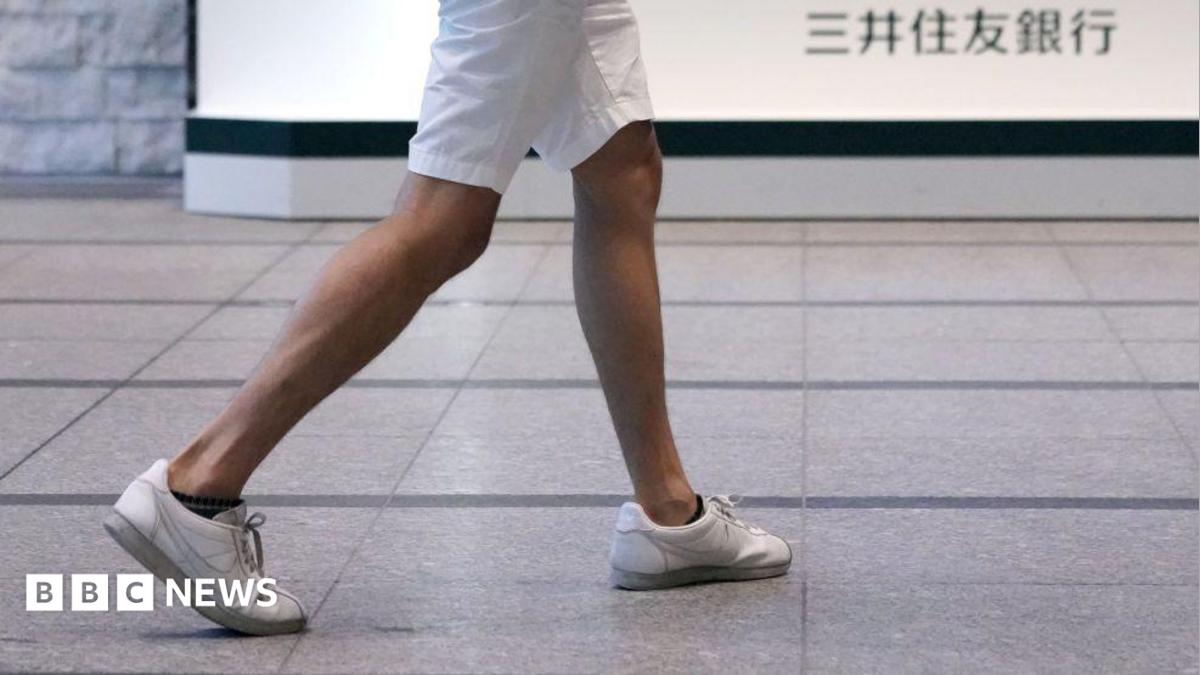
As temperatures rise this summer, Japanese men are baring more leg at work than ever before.
The Tokyo Metropolitan Government is pushing company employees to ditch their usual suit and tie for more casual attire, featuring t-shirts, trainers – and shorts.
Tokyo Governor Yuriko Koike introduced “Tokyo Cool Biz” in April, hoping to expand on her signature cool down initiative which has now become a widely recognised annual summer tradition.
Almost four months in, the newly allowed shorts in the office policy is getting mixed reviews.
Some commentators enjoy the relaxed rules, helping them work more comfortably. Others say the policy is unfair to women since they are still expected to wear tights when showing a part of their legs. And a few women describe the experience of “leg hair harassment” or a term coined online as “sunehara”, referring to the discomfort of being forced to see their colleague’s leg hair.
“We want to give people more options in the severe heat, not tell them what to wear. There should be no issue as long as the work attire is not offensive to anyone,” Tokyo Metropolitan Government environmental official Noboru Watanabe told the BBC.
A June survey by Gorilla Clinic found 53.5% opposed wearing shorts to work in the summer while 46.5% were in favour of the new recommendation.
For those against shorts in the office the main reason, for both genders, was the concern over body shape and body hair. The clinic says women significantly outnumbered men in their response, indicating that women may be more resistant to seeing a male colleague’s bare legs.
In recent years more Japanese workers, notably those working at startups and tech companies, have started wearing casual clothes. But this year, the Tokyo government recommendation has made it more socially acceptable. Still, some men have been feeling self-conscious about their leg hair.
Akifumi Funatsu, the director of Gorilla Clinic, says he has noticed more clients coming to the clinic not just for cosmetic reasons, but as a matter of “social etiquette when wearing shorts”. He thinks women believe that “men should have less leg hair”, which has prompted them to seek laser hair removal so as not to offend those around them.

URANIUM WRAP: Shares in Peninsula Energy tumbled early following the withdrawal of its CY26 production guidance, while Paladin anticipates production to rise at Langer Heinrich.

Commodities: Oil Moves Higher As Supply Risks Build
Zhongji Innolight targets $7bn in Hong Kong share sale


Survey finds a “meaningful shift” in how consumers view some foods.
Business
New Jersey voter registration controversy explained: How 6,600 noncitizens got on the rolls, and what happens next

The announcement lands in the middle of a national fight over noncitizen voting, an issue President Donald Trump has raised repeatedly this year. Here is what is known so far, and what comes next.
New Jersey voter controversy: What actually happened?
New Jersey is one of 19 states that let people living in the US illegally hold a driver’s license or state ID, according to the National Conference of State Legislatures. It is also one of roughly half the states with automatic voter registration, which lets eligible people opt in to registering when they get a license or use certain other state services.
A software error at the Motor Vehicle Commission caused the system to register some people as voters even after they indicated they were not citizens. Sherrill said the error occurred under the previous administration and blamed it on the state’s vendor, which she is now replacing.
“I am appalled by the reckless failures that allowed this to happen and the lack of transparency shown by those in charge at the time,” Sherrill said in a statement.
NJ Registered Voters: How many people actually voted?
Of the roughly 6,600 wrongly registered, fewer than 400 are believed to have cast a ballot, based on Sherrill’s preliminary analysis. That is a small fraction of New Jersey’s roughly 6.9 million registered voters and the more than 4 million people who voted in the 2024 presidential election. Sherrill said the registrations were not limited to one party — the affected group included people who signed up as Democrats, Republicans and independents.
Is this part of a bigger pattern?
New Jersey’s error is not the first of its kind. Other states with automatic voter registration have reported similar mistakes:Oregon: State officials found in 2024 that about 1,600 people were registered through the DMV without proof of citizenship. Most were later confirmed to be citizens, and the state said only about 30 ineligible voters had cast ballots.
Colorado: Officials said in 2022 they had mistakenly sent postcards to 30,000 noncitizens inviting them to register. The state said it would not have allowed any of them to register even if they had tried.
California: A 2019 audit of the state’s DMV registration program found errors that may have let about 1,500 people register incorrectly, some of whom may not have been citizens.
These cases predate New Jersey’s disclosure and involve different states, systems and numbers, but they point to the same underlying issue: automatic registration systems tied to DMV records can misfire when citizenship status isn’t verified correctly.
Separately, the Department of Homeland Security has said it identified about 278,000 noncitizens registered to vote in federal elections nationwide, concentrated mostly in California, Nevada, New Jersey and Pennsylvania. That figure has not been independently verified, and Pennsylvania’s Department of State has disputed its relevance, saying in a statement that noncitizen voting is extremely rare nationally, including in Pennsylvania.
Why is New Jersey voter Controversy politically charged?
Trump and other Republicans have argued for months that noncitizen voting is a widespread problem in US elections. Election officials and researchers generally say confirmed cases are rare, and that noncitizen voting is a felony that can result in deportation when detected.
New Jersey’s disclosure gave the White House an opening to push Trump’s SAVE America Act, which would require documentary proof of citizenship to register to vote and impose voter ID rules nationwide. The bill has passed the House but has not come up for a vote in the Senate, where it faces opposition from some Republicans as well as Democrats.
“American voters deserve to have confidence that our elections are safe and secure,” White House spokesperson Abigail Jackson said in a statement.
Homeland Security Secretary Markwayne Mullin suggested on X that a federal report was what prompted Sherrill to act.
“Appreciate you responding back to our letter, @GovSherrillNJ. This should’ve been done a LONG time ago,” Mullin wrote. “Just ONE illegal vote cancels out the vote of a U.S. citizen.”
Sherrill, for her part, framed the episode as evidence that she is protecting the integrity of the state’s elections rather than a sign of a larger crisis.
“As the Trump Administration tries to weaponize elections for political gain, I am ensuring we protect our elections,” she said.
Who is responsible for this controversy?
The error occurred while Phil Murphy, also a Democrat, was governor. A representative for Murphy did not immediately respond to a request for comment on the matter.
Christine Hanlon, chair of the Republican party organization in New Jersey, said the state needs a bipartisan investigation into both the error and why it wasn’t disclosed sooner.
“The system and verification process must be improved in order to safeguard our elections,” Hanlon said in a statement. “The public also deserves to know why this was covered up and who was responsible for keeping this critical information from the public.”
What happens next?
Sherrill has ordered the removal of all erroneous registrations added during the 2023-2024 period and is replacing the vendor that operated the Motor Vehicle Commission’s registration system. She has also launched an investigation into how the software error occurred and why it wasn’t caught sooner.
Whether that investigation becomes bipartisan, as Hanlon has requested, is not yet clear. The outcome could also feed into the ongoing debate in Washington over the SAVE America Act, which remains stalled in the Senate.
White House Points to Federal Voting Bill
The White House used the announcement to promote Trump’s SAVE America Act. The bill would require people to show documents proving citizenship before they register to vote and would set voter ID rules nationwide. The House has passed the bill, but it has not received a vote in the Senate, where some Republicans oppose it.
“American voters deserve to have confidence that our elections are safe and secure,” White House spokesperson Abigail Jackson said in a statement.
Homeland Security Secretary Markwayne Mullin said on X that a federal report may have pushed Sherrill to act.
“Appreciate you responding back to our letter, @GovSherrillNJ. This should’ve been done a LONG time ago,” Mullin wrote. “Just ONE illegal vote cancels out the vote of a U.S. citizen.”
Trump Has Focused on New Jersey
Last week, Trump cited a Department of Homeland Security investigation that identified about 278,000 noncitizens registered to vote in federal elections nationwide. The department said most of them were in California, Nevada, New Jersey and Pennsylvania.
Pennsylvania’s Department of State pushed back on the claim. In a statement from Gov. Josh Shapiro’s office, the department said noncitizen voting is extremely rare across the country, including in Pennsylvania. It said it would review any information the Department of Homeland Security provides.
Business
Trump Says Netanyahu Will Not Be Arrested in US as NYC Mayor Mamdani Doubles Down, Calling Him a War Criminal
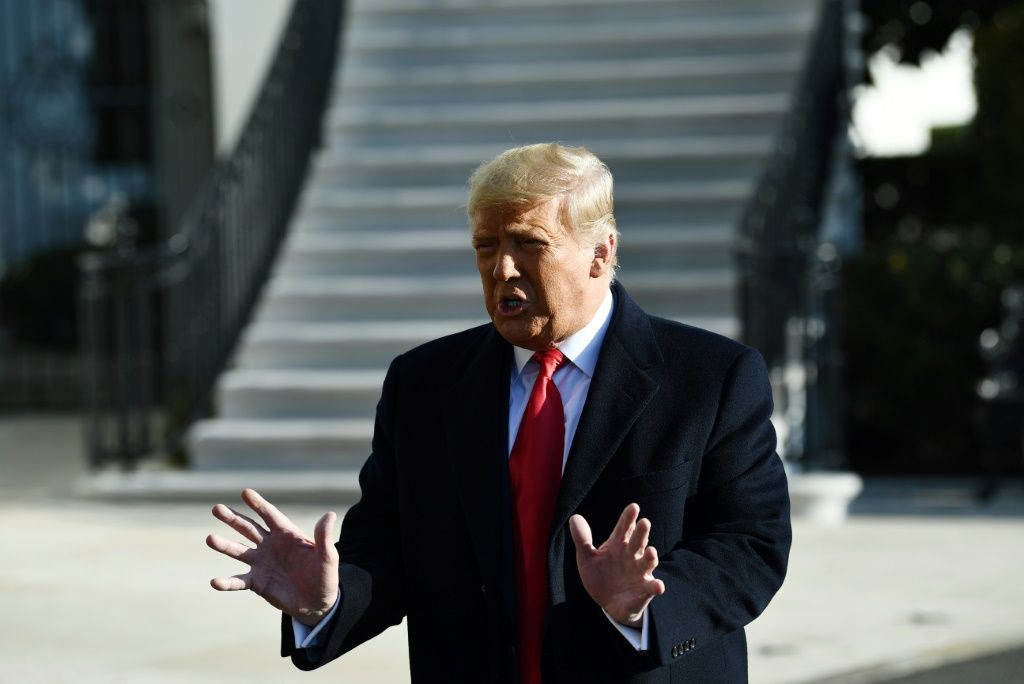
WASHINGTON — President Donald Trump said this week that Israeli Prime Minister Benjamin Netanyahu will not be arrested during any future visit to the United States, pushing back after New York City Mayor Zohran Mamdani suggested his administration was weighing whether to detain the Israeli leader under an outstanding international arrest warrant.
The exchange has reignited a long-simmering dispute over the reach of the International Criminal Court inside the United States, and has put a spotlight on Mamdani, the newly elected Democratic mayor, as he navigates one of the most politically fraught issues in his young administration.
Trump’s warning
In a post on Truth Social on Monday, Trump wrote that Netanyahu “will not be arrested, in any way, shape, or form, while in the United States of America.” The president did not name Mamdani directly, but the post came in direct response to the mayor’s recent comments and credited Israel with assisting the United States in its conflict with Iran.
Trump went further in the same post, writing that Netanyahu “is fighting against the Islamic Republic of Iran, which recently killed 52,000 innocent protestors, and has spent the last 47 years killing American Soldiers, and others.” He added that “the only ones that should be arrested are the people that led Iran into this unprecedented SPIRAL OF DEATH AND DESTRUCTION, something that should have been dealt with years ago, by previous Presidents!”
Mamdani’s response
Mamdani, who took office in January, had said in an interview broadcast over the weekend that New York City’s legal department was actively reviewing what options the law might allow if Netanyahu travels to the city for the United Nations General Assembly this September, as he traditionally does.
“I believe that Prime Minister Netanyahu belongs in The Hague. He’s a war criminal who has been charged by the International Criminal Court,” Mamdani said during the interview, part of a New York Times video podcast called “The Interview.”
The mayor doubled down on Tuesday, posting on social media platform X that Netanyahu “is a war criminal” and asserting he was “responsible for the killing of more than 73,000 people,” adding, “I agree with the ICC” and that Netanyahu “should be arrested and tried for war crimes.”
Mamdani has since clarified the limits of what his office believes it can legally do. In comments to the Times, he said, “Whatever the law allows me to do in New York City, that’s what we will do, but we won’t be writing our own laws to that end.” During his mayoral campaign, Mamdani had said arresting Netanyahu, should the opportunity arise, was something “I intend to fulfill.”
Israel and U.S. officials push back
Netanyahu’s government responded sharply. In a post on X, Israeli officials called the ICC a “kangaroo court” and described the arrest warrant against Netanyahu as “bogus,” adding that Mamdani “appears interested in diverting public attention from his follies and attacking the leader of the Jewish state and the only democracy in the Middle East.”
Israel’s ambassador to the United Nations, Danny Danon, separately dismissed Mamdani’s threat as lacking any legal basis. Danon said the mayor has “no jurisdiction” to act on the ICC warrant, noting that the United States has never joined the Rome Statute, the treaty that established the court. “The U.S. is not part of the ICC so there is no warrant against a prime minister in the U.S., and there is no jurisdiction for the mayor,” Danon said, adding that “the only thing the mayor can do is sit in the sidelines and maybe learn something about the rule of law.”
U.S. Ambassador to the United Nations Mike Waltz also weighed in over the weekend, laying out several legal reasons he said made Mamdani’s threat unworkable. In a post on X, Waltz wrote that the United States is not party to the Rome Statute, that the United Nations headquarters agreement grants diplomatic protections to visiting heads of government, that head-of-state immunity applies, and that federal authority supersedes the wishes of a local mayor. Waltz went on to call Mamdani’s comments “pure political theater.”
The ICC warrant
The International Criminal Court, based in The Hague, issued its warrant for Netanyahu in November 2024, alleging he bears responsibility for war crimes including the use of starvation as a method of warfare and for directing attacks against civilians in Gaza during Israel’s military campaign there. The warrant followed the Hamas-led attack on Israel on Oct. 7, 2023, which triggered the war.
Israel has rejected the court’s jurisdiction entirely and denies that it has committed war crimes in Gaza. Neither Israel nor the United States is a member of the ICC, a body established in 2002 with authority to prosecute genocide, crimes against humanity and war crimes. The Trump administration has separately pursued a broader campaign against the court, imposing sanctions on ICC judges, prosecutors and affiliated organizations that have sought rulings against Israel.
A complicated relationship
Trump and Mamdani have not always been at odds. Shortly after Mamdani’s election victory last November, the mayor-elect and the president held what was described as an unexpectedly friendly meeting at the White House, despite having previously exchanged public insults during the campaign.
Netanyahu typically travels to New York each September to address the U.N. General Assembly, a visit that would put this year’s dispute to its most direct test. Whether Mamdani’s administration takes any action if Netanyahu arrives in the city remains uncertain, and legal experts broadly agree that any attempt to enforce the ICC warrant on U.S. soil would face substantial legal and diplomatic obstacles, given the immunities typically extended to visiting heads of government and the country’s position outside the court’s jurisdiction.
For now, the dispute stands as a proxy for a broader rift within the Democratic Party over Israel policy, with Mamdani’s stance drawing both support and criticism from within his own party as the September gathering approaches.
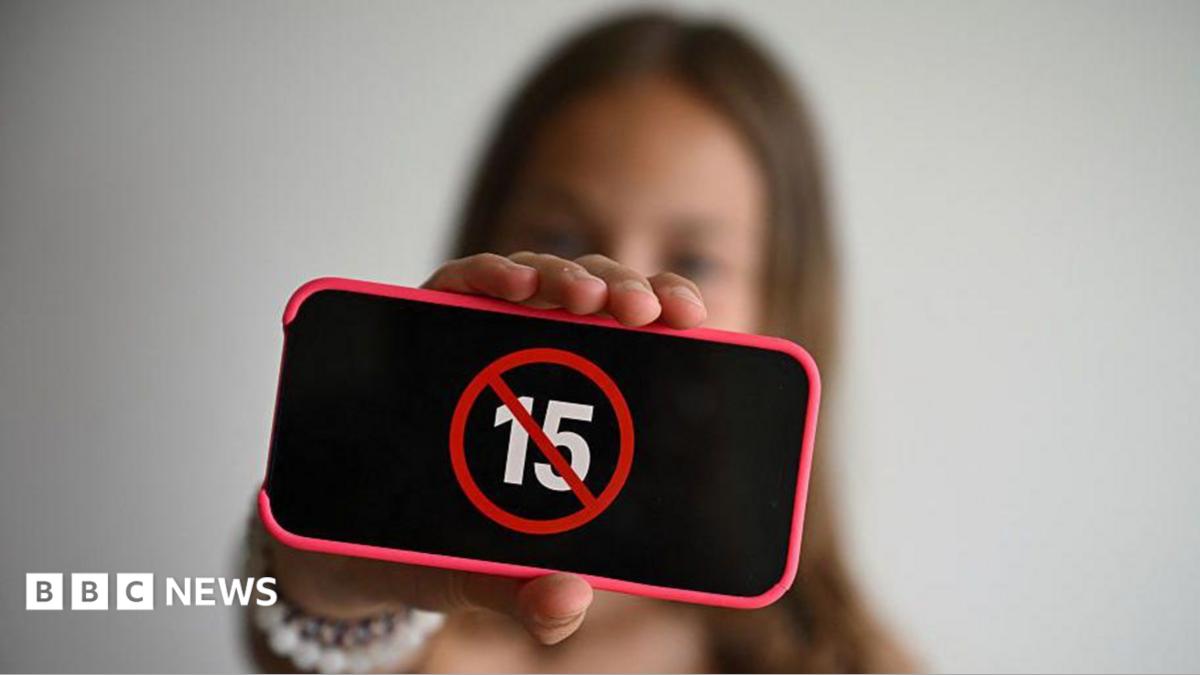
France’s parliament has approved a law to ban social media for under-15s from January 2027, making it the first European country to block young people from the platforms.
The law will mean everyone in France must verify their age to access social media and comes as the UK and EU are developing their own limits in response to concerns for children’s mental health.
French President Emmanuel Macron has welcomed the move, which he had pledged to introduce to mark the end of his decade in office.
While sceptics have questioned the law’s viability, the government has insisted the online tools to put the age checks in place are effective and safe.
Both the French Senate and National Assembly adopted the ban on Tuesday, despite criticism from some on the left.
It will be implemented in two stages:
-
From September, people under 15 will not be able to open accounts and age verification will be required on all new accounts
-
In January 2027, this rule will apply to all existing accounts – meaning everyone in France will have to prove they are over 15 to use social media
Once the ban is in place, social media platforms would need to use age-verification tools approved by the French privacy regulator, according to Reuters news agency.
But concerns have been raised over privacy, the efficacy of age-verification tools, the risks of young people bypassing them, and how quickly the ban has been designed and brought in, Agence France Presse reports.
French Digital Minister Anne Le Hénanff defended the speed of the law’s implementation ahead of the vote “because age-verification tools already exist”, the agency added.
France is the second country to introduce a ban, following Australia.
Despite Australia banning under-16s from social media in December, it is widely acknowledged that many continue to use the platforms.
In March, Australia’s eSafety Commission announced seven out of 10 children aged under 16 who had a social media account before the ban still had “some access”.
Given this, Professor of Internet Studies at Western Australia’s Curtin University Tama Leaver told the BBC the ban has “failed” in its technical aims.
But, he says, it has successfully shown a ban “can be done” though classifies it as “a bit of an experiment”.
One lesson other countries can learn from its example is that “young people need to be part of this conversation” so that a ban is “done with them” and not “to them”.
Leaver said France’s ban may have a higher chance of succeeding because of the requirement for every person to verify their age but that this will also increase risks to privacy.
Additional risks of the ban include pushing young people into less-regulated online spaces, reducing their news consumption and their political empowerment, he added.
Legislation restricting young people’s access to social media has been ramping up around Europe in the past few months.
In June, former British Prime Minister Sir Keir Starmer announced under-16s in the UK will be banned from social media from January 2027. An optional midnight curfew for UK teens aged 16 and 17 was also announced.
In May, Commission President Ursula von der Leyen proposed a “social media delay” for children in Europe and has said new legislation could be put forward in months.

Franklin Templeton Suggests Altcoins Could Be the Missing Piece of the Agentic AI Trade

Extremely R-Rated 80s Supernatural Thriller Forces You Into The Ultimate Sacrifice

After Transmigration, She Loses & Builds Financial Independence | Ep58 (ENG DUB)


-
 NewsBeat6 days ago
London Mayor Sadiq Khan handed a peerage by Keir Starmer alongside 15 other Labour figures… just days before the PM leaves No10
-

 Fashion4 days ago
Weekend Open Thread – Corporette.com
-

 Politics4 days ago
The House | The City of London can help the new chancellor deliver growth in every postcode
-

 Politics7 days ago
Young campaigners urge incoming PM to act on outdoor junk food ads
-
 Crypto World5 days ago
Two July Windows Left: The CLARITY Act’s Senate Fight and What Failure Means
-

 Crypto World6 days ago
CFTC blocks Kalshi from unwinding Michigan trades after court order
-

 Crypto World4 days ago
Ripple Payments Joins MiCA With 14 Firms, Does It Mean Anything For XRP?
-

 Business6 days ago
Nvidia Stock Slips After Big Tuesday Rally as Huang Confirms Vera Rubin Chip Is Now in Production Today
-

 Politics3 days ago
Democrats look to World Cup watch parties to register thousands of voters
-
 Entertainment7 days ago
Disney’s Most Ambitious Failed Star Wars Attraction Is Coming to SDCC
-

 Crypto World4 days ago
Ripple wins EU-wide access as ESMA adds it to MiCA register
-

 Crypto World20 hours ago
Grayscale Files For Worldcoin ETF, WLD Registers Sharp Rise
-

 Crypto World5 days ago
Injective Submits SEC Transfer-Agent Registration to Onchain Ownership Records
-

 Business6 days ago
Palantir Shares Rise After Expanded Nvidia Partnership and Fresh Analyst Upgrades Ahead of Earnings Day
-

 Tech1 day ago
Sail Virtually Aboard The “Itanic” With IA-64 Emulator
-
 Tech1 day ago
Turtle Beach Command Series KB7 review: a nifty screen-equipped gaming keyboard
-

 NewsBeat5 days ago
Registration is now open for March for Men with Kev 2026
-

 NewsBeat2 days ago
Unregistered fitter used Gas Safe logo on business flyers
-
 Sports6 days ago
New Cornerback Enters Vikings Trade Rumor Mill
-

 News Videos5 days ago
Money | Class 12 Economics | CBSE Board Exam 2026-27
You must be logged in to post a comment Login