Connect with us
DAPA Banner
DAPA Coin
DAPA
COIN PAYMENT ASSET
PRIVACY · BLOCKDAG · HOMOMORPHIC ENCRYPTION · RUST
ElGamal Encrypted MINE DAPA
đźš« GENESIS SOLD OUT
DAPAPAY COMING ›

Business

Will Blinkit growth sustain amid competition? 5 things to know from Eternal’s shareholder letter

Published

on

Will Blinkit growth sustain amid competition? 5 things to know from Eternal's shareholder letter
Eternal‘s first-quarter shareholder letter shows a company where the older food delivery business is producing steady cash, Blinkit is becoming the main growth engine, and new bets such as Bistro and Nugget are still in investment mode.

The company reported 54% year-on-year (YoY) growth in B2C net order value to Rs 31,120 crore in Q1FY27. Adjusted revenue rose 173% to Rs 20,648 crore, though the company said like-for-like growth was 66% because the reported number was boosted by Blinkit’s shift to an inventory-led model. Consolidated adjusted EBITDA rose 223% YoY to Rs 555 crore.

Here are five key things investors need to know from the letter.

Advertisement

Blinkit is now the centre of the growth story

Blinkit’s net order value rose 86% YoY to Rs 17,132 crore. On a sequential basis, NOV grew 19%, compared with 8% in the previous quarter. The company added 200 net new stores during Q1, taking the total store count to 2,443.

The important point is that Blinkit is no longer only a growth business burning heavy cash. Its adjusted EBITDA improved for the fifth straight quarter to 0.6% of NOV, giving it adjusted EBITDA of Rs 102 crore. A year earlier, Blinkit had posted a loss of Rs 162 crore.

Management said the growth was helped by seasonality, assortment expansion in the top eight cities and geographic expansion in the next 30 cities. It also said “gourmet” stores in select locations will add curated premium brands and support assortment expansion.


Also Read: Eternal Q1 Results: Cons PAT skyrockets 268% YoY to Rs 92 crore; revenue zooms 182%

Quick commerce needs more capital, but Eternal says returns justify it

Eternal said quick commerce is not asset-light. Blinkit now operates about 19 million sq ft of store and warehousing space across more than 300 cities. The company has invested about Rs 3,000 crore in capex over the past four years to build this network.
The company also gave a sharper framework for Blinkit’s return on capital. It now assumes capex of Rs 2.5 crore per store, including warehousing, against Rs 1 crore earlier. Net working capital is estimated at 12 days of NOV, or 3.3%, compared with 18 days earlier. Average NOV per day per store is estimated at Rs 11 lakh, higher than the earlier assumption of Rs 7 lakh.Based on these assumptions, the company said a 4% EBIT margin can imply a pre-tax ROCE of 41.7%. This is the main argument Eternal is making for continued investment in Blinkit’s dark stores, warehousing and inventory.

Advertisement

Food delivery remains the profit anchor

Food delivery NOV rose 20% YoY to Rs 10,769 crore, after four straight quarters of acceleration. Adjusted EBITDA margin improved to 5.6% of NOV, producing Rs 606 crore of adjusted EBITDA, up 34% from a year earlier.

This is important because food delivery is the most mature business in the portfolio. The company said margins are now close to the upper end of its steady-state guidance of 5-6% of NOV.

Founder Deepinder Goyal said the company does not see a trade-off between growth and margin at this stage. He said food delivery is growing because the product is getting better, not because the company is buying growth through spending. He added that if the company has to spend margin to grow in the future, it will do so.

Competition is high, but Eternal says retention is holding

The shareholder letter also addressed competition from platforms such as Toing and Ownly. Eternal said the impact has been limited because these platforms offer similar restaurants and delivery times, with lower menu prices funded by lower commissions and delivery fees.

Advertisement

The company said customer retention remains the most important signal. It said average Q4 retention across cohorts is 46%, while the most recent completed cohort is at 50%. Q8 retention stands at 48% and Q12 retention at 49%. More importantly, Q12 NOV retention at 279%. This means older customer cohorts are spending nearly three times more than they did in their first quarter.

On quick commerce, management said competition remains high but has become more predictable. It said Eternal is investing in assortment depth, geographic expansion and supply-chain infrastructure, while many competitors remain focused on pricing.

New bets are small but losses are rising

Eternal’s going-out business, District, had a strong quarter. NOV rose 60% YoY to Rs 3,218 crore. Adjusted EBITDA loss narrowed to Rs 65 crore, or 2% of NOV. Management said the growth was not just because of IPL seasonality and was helped by District becoming a unified app across restaurants, movies, events and activities.

Hyperpure also moved into profit. Revenue grew 27% like-for-like to Rs 1,034 crore, while adjusted EBITDA stood at Rs 6 crore, compared with a loss of Rs 18 crore a year earlier.

Advertisement

The “Others” segment is where losses widened. This includes Bistro, Nugget, Greening India and community initiatives such as Blinkit ambulance service and Feeding India. Adjusted revenue rose to Rs 95 crore from Rs 4 crore a year earlier, but adjusted EBITDA loss increased to Rs 94 crore from Rs 45 crore.

Management said the higher loss was mainly due to R&D investments in Nugget as the company scales its AI product capabilities. It described this segment as the cost of experimentation and said it will shut down ideas that do not show promise within a reasonable time.

Eternal ended the quarter with a cash balance of Rs 18,288 crore, up Rs 316 crore from the previous quarter. For investors, the letter shows a clear split: food delivery is profitable and steady, Blinkit is scaling fast with improving margins, and the next set of bets is still being built.

(Disclaimer: Recommendations, suggestions, views and opinions given by the experts are their own. These do not represent the views of Economic Times)

Advertisement
Continue Reading
Click to comment

You must be logged in to post a comment Login

Leave a Reply

Business

Centaurus Metals at Noosa Mining Conference 2026: Jaguar funding nears

Published

on


Centaurus Metals at Noosa Mining Conference 2026: Jaguar funding nears

Continue Reading

Business

defence stocks rally, No 11 hedges

Published

on

defence stocks rally, No 11 hedges

Defence shares rallied the moment John Healey was named chancellor. By Tuesday afternoon, Downing Street had declined to confirm the number the sector actually wants, and ruled out the funding mechanism some had hoped for.

Healey resigned as defence secretary last month after accusing Sir Keir Starmer’s government of falling “well short” on military spending. Andy Burnham’s decision to hand him the Treasury was a surprise, and markets read it as an instruction rather than a consolation prize.

Shares in Babcock International, which builds warships and maintains Britain’s naval bases, rallied more than 7 per cent on the London Stock Exchange before closing up 4.1 per cent at £10.80½, one of the biggest risers on the FTSE 100.

BAE Systems, which builds fighter jets and submarines, rose 1.8 per cent. Qinetiq, spun out of the Ministry of Defence’s research agency, gained 3.1 per cent on the mid-cap FTSE 250.

For most business owners, the share prices are the least interesting part. The appointment has raised the prospect of greater private sector procurement, and that is where the money reaches the wider economy: through the tiers of engineering, machining, software, logistics and testing firms that sit beneath the primes.

Advertisement

That supply chain has been the target of a concerted push. The MoD is aiming to lift direct and indirect spending with smaller suppliers to ÂŁ7.5 billion by May 2028, a 50 per cent increase, and has stood up a dedicated unit to help small defence firms navigate procurement. Manufacturers have separately pressed ministers to go further by tying foreign contract wins to binding reinvestment in Britain.

None of that works without the budget behind it. A spokesman for the prime minister said on Tuesday that Healey’s appointment was a “signal of intent” on defence spending, but declined to commit to increasing it to 3 per cent of GDP by 2030. Spending is due to rise to 2.7 per cent by the end of the decade. The spokesman also said “war bonds are not something we’re looking at”.

That gap between signal and commitment is the practical issue for suppliers weighing capacity investment. Order books built on 2.7 per cent look different from order books built on 3 per cent, and hiring or tooling decisions taken this year will be judged against whichever number turns up.

Healey’s appointment was welcomed by Stephen Phipson, chief executive of Make UK, whose members include BAE and Rolls-Royce, and which is pressing the government to bring down industrial energy costs and business rates.

Advertisement

“Manufacturers will welcome the appointment of someone with a reputation for being pragmatic, focused on delivery, and committed to making government work effectively.”

That welcome carries a bill attached. Make UK’s members are absorbing a near-£1 billion annual increase in business rates alongside some of the highest industrial electricity prices in Europe. A chancellor who wants a bigger British defence industrial base has to make it viable to manufacture here first, which is a Treasury question rather than a Ministry of Defence one.

Healey is not new to the building. He served as a Treasury minister in Sir Tony Blair’s government, which may explain why the appointment was read as more than symbolic.

Lord Dannatt, a former head of the British Army, told Times Radio that the appointment was “a masterstroke”.

Advertisement

He said: “John Healey, as we all know, resigned not that long ago, having said that the previous prime minister was unable to produce the funding that defence needed, and the previous chancellor was unwilling, so now he is the one behind the desk in No 11 and has really got to answer his own question.”

For SMEs in and around the defence supply chain, the answer arrives at the Budget rather than in this week’s share prices. Until then, the sensible read is that procurement reform is accelerating while the funding envelope stays exactly where it was.


Jamie Young

Jamie Young

Jamie Young is Senior Reporter at Business Matters, covering SME finance, employment law and Westminster policy since 2016. He has reported on every Budget and Autumn Statement since 2018, helped make sense of the ‘covid era’ and the bounce-back loan scheme from launch through the fraud investigations, and broke the magazine’s coverage of the 2024 late-payment reforms. He joined Business Matters straight from completing his BA in Administration from Exeter University and is NCTJ-qualified. Reach him at jyoung@cbmeg.co.uk

Advertisement

Continue Reading

Business

Why is Cathay Pacific Airways stock surging today?

Published

on


Why is Cathay Pacific Airways stock surging today?

Continue Reading

Business

Earnings call transcript: Keppel DC REIT posts stronger H1 2026 DPU

Published

on


Earnings call transcript: Keppel DC REIT posts stronger H1 2026 DPU

Continue Reading

Business

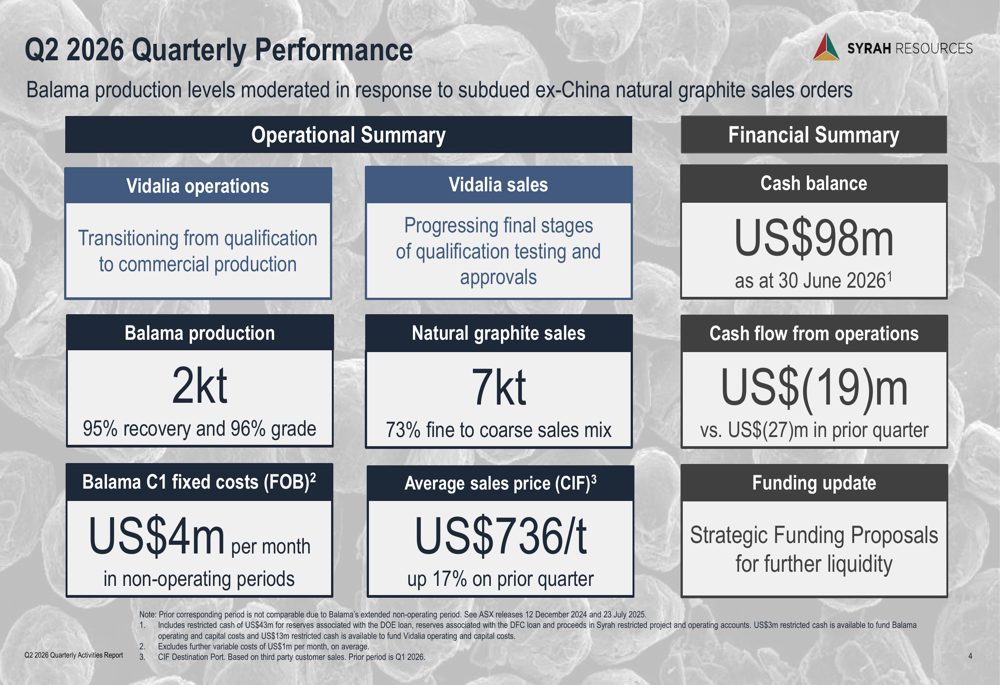
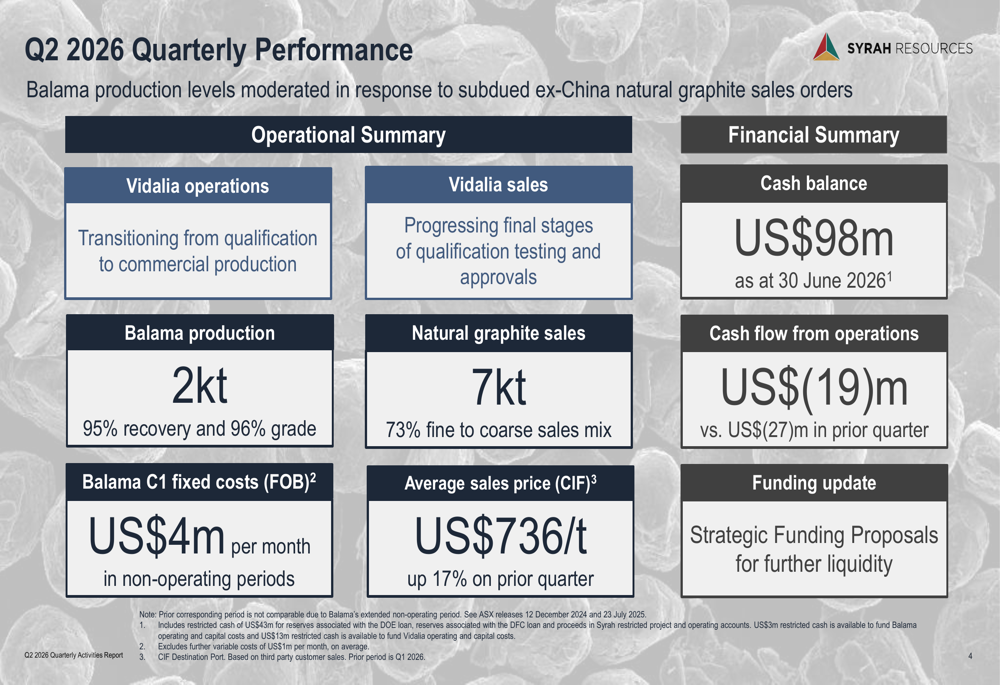
Syrah Q2 2026 slides: Balama curtailed, Vidalia nears commercial sales

Published

on

Syrah Q2 2026 slides: Balama curtailed, Vidalia nears commercial sales


Syrah Q2 2026 slides: Balama curtailed, Vidalia nears commercial sales

Continue Reading

Business

Charles Schwab Beats Earnings Estimates. Its Customers Just Can’t Get Enough.

Published

on

Charles Schwab Beats Earnings Estimates. Its Customers Just Can’t Get Enough.

Charles Schwab Beats Earnings Estimates. Its Customers Just Can’t Get Enough.

Continue Reading

Business

Tesla robotaxis log 380,000 unsupervised miles with no ‘notable’ incidents

Published

on

Tesla robotaxis log 380,000 unsupervised miles with no 'notable' incidents

Tesla said Wednesday that its robotaxi fleet has logged more than 380,000 unsupervised miles across six cities in two states without what the company described as a “notable” safety incident.

Ashok Elluswamy, Tesla’s vice president of AI software, highlighted the fleet’s safety record during the electric vehicle maker’s second-quarter earnings call, telling investors it had recorded “zero notable incidents.”

Advertisement

Any reported incidents involved “other actors impacting us when we were stationary,” Elluswamy said.

“I’d like to emphasize how safe the operation has been so far,” Elluswamy said. “Zero notable incidents over 380,000 miles.”

MUSK SAYS TESLA, SPACEX TO BUILD ADVANCED CHIP MANUFACTURING FACILITY

A Tesla robotaxi in Austin

A Tesla robotaxi travels along South Congress Avenue in Austin, Texas, June 22, 2025. Tesla said that its robotaxi fleet has logged more than 380,000 unsupervised miles across six cities in two states without what the company described as a “notable” (Reuters/Joel Angel Juarez / Reuters)

Elluswamy said the results support Tesla’s camera-based approach to autonomous driving.

Advertisement

“Historically, the so-called experts have always claimed that you need lidars, radars, HD maps and the entire kitchen sink to drive safely,” he said. “Here, we show that such is not true. You can have safe, comfortable and affordable autonomy with just cameras.”

Tesla said mileage traveled by its unsupervised robotaxi fleet has grown at a double-digit weekly rate for months.

“We have grown at such a high compounding rate on a week-over-week basis over the last several months,” Elluswamy said. “Not only that, we expect to continue growing at such a large rate through the rest of this year.”

ELON MUSK REVEALS PRICE OF TESLA’S CYBERCAB

Advertisement
FILE PHOTO: Tesla robotaxis launch in Austin, Texas

A Tesla robotaxi operates on South Congress Avenue in Austin, Texas, on June 22, 2025.  (Reuters/Joel Angel Juarez / Reuters)

The remarks came one day after Tesla expanded its robotaxi service to Orlando and Tampa, according to Reuters.

Tesla launched the service in Austin in June 2025, initially placing safety monitors inside the vehicles. 

It later began offering fully unsupervised rides in Austin and expanded the service to Dallas, Houston and Miami, Reuters reported.

Stocks In This Article:

SELF-DRIVING CAR COMPANIES WAYMO, TESLA TO TESTIFY AT KEY SENATE COMMITTEE ON REGULATING GROWING INDUSTRY

Advertisement
waymo vehicle picks up passenger

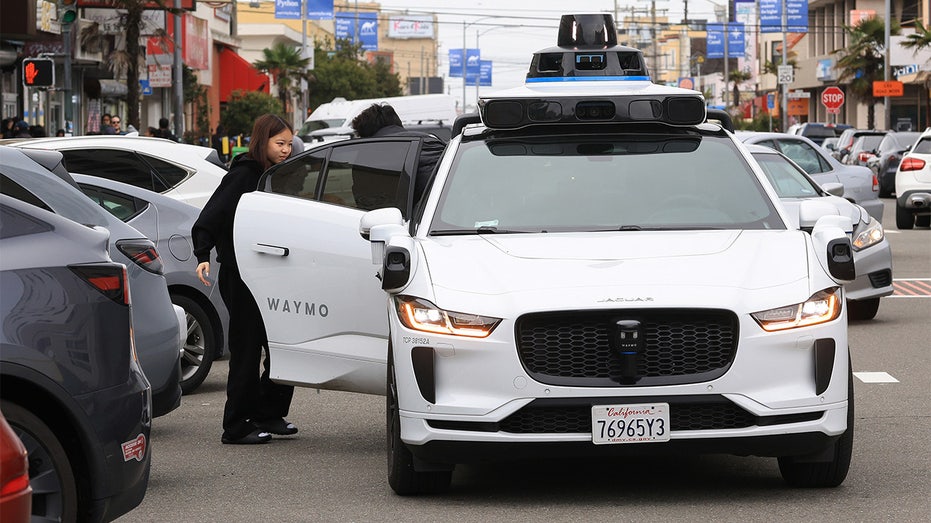
Passengers exit a Waymo self-driving car, Dec. 26, 2025, in San Francisco. Unlike Waymo, which uses lidar sensors, Tesla relies mainly on cameras and AI software. (John J. Kim/Chicago Tribune/Tribune News Service via Getty Images / Getty Images)

Unlike Waymo, which uses “light detection and ranging” or “lidar” sensors, Tesla relies mainly on cameras and AI software, according to the outlet.

GET FOX BUSINESS ON THE GO BY CLICKING HERE

We expect that the time to launch to a new city will continue to trend towards zero, towards an end where we operate in entire states as a whole, instead of going city by city,” Elluswamy added.

Tesla could not immediately be reached by FOX Business for comment.

Advertisement

Reuters contributed to this report.

Continue Reading

Business

Negative Breakout: These 15 stocks cross below their 200 DMAs

Published

on

The Economic Times

In the Nifty500 pack, 15 stocks’ closing prices crossed below their 200 DMA (Daily Moving Averages) on July 22, according to stockedge.com’s technical scan data. Trading below the 200 DMA is considered a negative signal because it indicates that the stock’s price is below its long-term trend line. The 200 DMA is a key indicator traders use to determine the overall trend in a particular stock. Take a look:​

Continue Reading

Business

Land Rover Discovery Sport recall targets rearview camera water damage

Published

on

Land Rover Discovery Sport recall targets rearview camera water damage

Jaguar Land Rover is recalling more than 15,000 vehicles over an issue that could affect the rearview camera, which could limit the driver’s rear visibility while reversing, according to federal regulators.

A total of 15,535 vehicles are potentially affected by the recall, covering 2021-2025 Land Rover Discovery models, the National Highway Traffic Safety Administration (NHTSA) said in its recall notice.

Advertisement

The NHTSA said that “insufficient drain holes” could prevent water from draining properly, damaging the rearview camera and increasing the risk of a crash.

FORD RECALLS NEARLY 388,000 VEHICLES OVER SECOND-ROW SEAT INJURY HAZARD

Land Rover Discovery Sport

A total of 15,535 vehicles are potentially affected by the recall. (Getty Images / Getty Images)

“Water may not be able to drain away from the rearview camera due to insufficient drain holes, which may result in damage to the rearview camera,” the agency said.

“A water-damaged camera may not display an image, or may display an unclear image, when requested to do so,” the notice reads.

Advertisement

Jaguar Land Rover has received 100 U.S. claims and field reports related to the issue. No related crashes, injuries or fires have been reported.

Jaguar Land Rover dealer

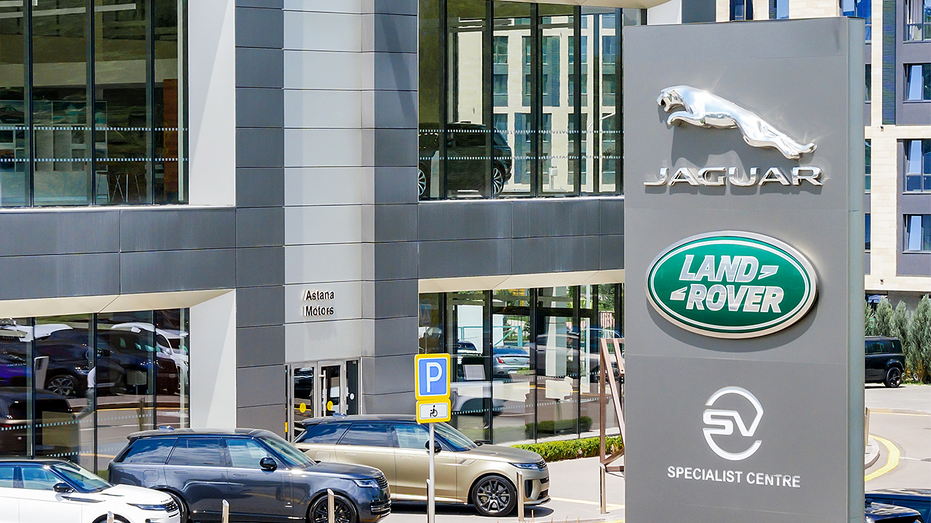
The NHTSA said that “insufficient drain holes” could prevent water from draining properly. (Getty Images / Getty Images)

Car owners are instructed to take their vehicles to a dealership for inspection, where the camera will be replaced at no cost if necessary.

Dealers will also drill additional drain holes in the underside of the tailgate trim.

BMW RECALLS NEARLY 30K VEHICLES OVER ENGINE STARTER DEFECT THAT COULD CAUSE FIRE

Advertisement
Jaguar dealership

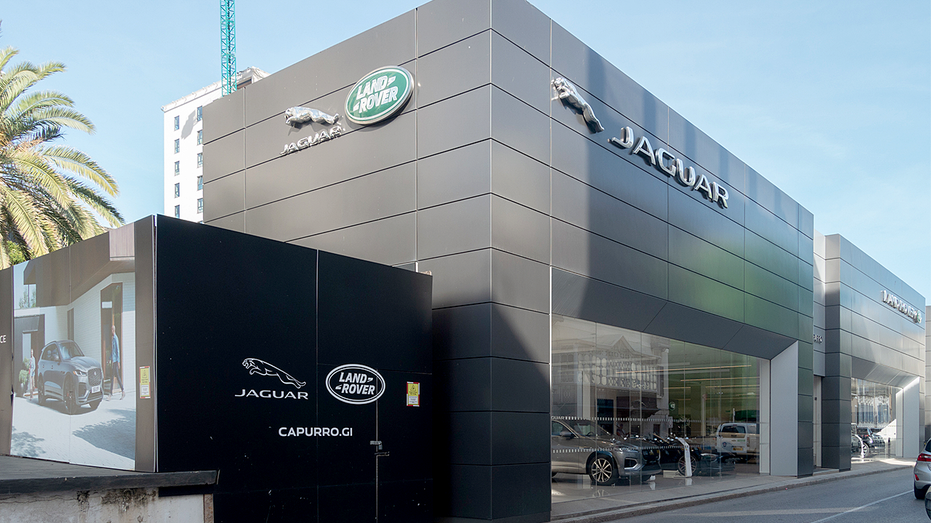
Car owners are instructed to take their vehicles to a dealership for inspection, where the camera will be replaced at no cost if necessary. (Getty Images / Getty Images)

CLICK HERE TO GET FOX BUSINESS ON THE GO

Owner notification letters are expected to be mailed on or before September 11.

Continue Reading

Business

UK inflation falls in June but analysts warn of future rise

Published

on

Business Live

The ONS reported that consumer price index inflation stood at 2.6 per cent

A woman shopping

A woman shopping(Image: Hinckley Times)

Inflation has remained stubbornly above the Bank of England’s target rate, despite government pledges to address the cost of living crisis.

Advertisement

The Office for National Statistics reported that consumer price index (CPI) inflation stood at 2.6 per cent in the year to June. Analysts had forecast price growth of 2.7 per cent, below the 2.8 per cent recorded in May.

Core CPI inflation, which excludes volatile food and energy prices, also came in at 2.6 per cent.

The latest price growth figures highlight the UK government’s ongoing struggle to bring inflation in line with the Bank of England’s two per cent target.

Most City analysts and the Bank itself expect price growth to creep back towards three per cent later this year, as reported by City AM.

Advertisement

Business tax increases following Rachel Reeves’ debut Budget, combined with disruption to vital oil trade flows caused by the blocking of the Strait of Hormuz amid the Iran conflict, have unsettled the UK economy and left households vulnerable to steeper price rises.

Prior to her departure from government, Reeves unveiled a summer savings package comprising subsidies for children’s meals and travel, alongside a continued freeze on fuel duty beyond September. Analysts indicated the measures would help soften the blow of the inflation shock.

Since Andy Burnham entered Downing Street with John Healey serving as Chancellor, ministers have been pushing to “reprioritise” public spending in order to ease cost of living pressures. Burnham announced that VAT would be removed from household electricity bills from October this year, a move that could shave around 0.1 percentage points off inflation.

The Prime Minister has pledged to introduce a range of additional policies aimed at easing the financial burden on households.

Advertisement

However, the country’s seventh leader in 10 years has already faced criticism over making “unfunded” promises. Darren Jones, who served as Sir Keir Starmer’s chief secretary, took aim at Burnham for claiming that scrapping the digital ID scheme would foot the bill for the energy tax cut.

Bank of England officials are likely to scrutinise Burnham’s proposals closely, as well as his response to the energy price shock triggered by the Iran war.

The Bank is widely anticipated to hold interest rates at 3.75 per cent at its forthcoming meeting on 30 July.

Short-term gilt yields indicate that markets are pricing in at least two interest rate rises as the UK continues to grapple with persistently high inflation.

Advertisement
Continue Reading

Trending

Copyright © 2025