Connect with us
DAPA Banner

Business

Winking Studios shareholders approve share buyback mandate

Published

on

Continue Reading
Click to comment

You must be logged in to post a comment Login

Leave a Reply

Business

Markets underpricing the risk of Middle East AI pullback

Published

on

Markets underpricing the risk of Middle East AI pullback
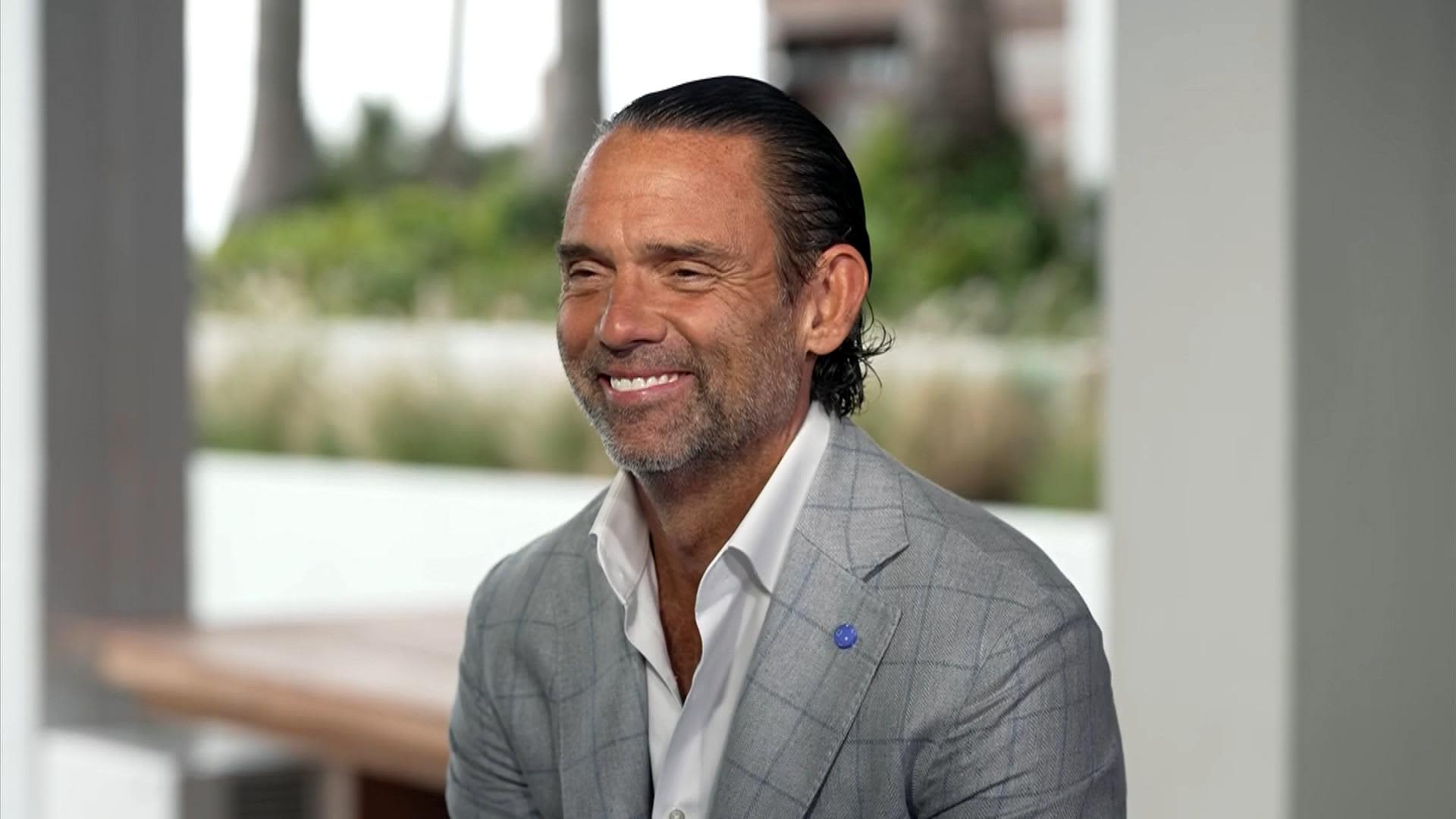
Inside Wealth: Thiel Capital Managing Director Jack Selby on investment opportunities

A potential pullback by Middle East sovereign wealth funds could drain hundreds of billions of dollars from the artificial intelligence boom and threaten key data center projects, according to tech investor Jack Selby.

Middle East investors — including sovereign wealth funds and government entities — account for roughly a quarter of global investments committed to AI over the next five years, said Selby, managing director of Peter Thiel’s family office, Thiel Capital. If the war in Iran drags on, and the United Arab Emirates, Saudi Arabia and other countries divert their investments to rebuilding at home, the lost capital could ripple through data centers as well as public and private tech companies, he said.

“I think markets have underappreciated how important the Middle East region is for capex spending as it relates to AI and AI infrastructure,” Selby told CNBC in an interview. “If the Middle East starts taking some of these projects offline or canceling some of these projects, the impact on the market could be much, much, much larger than what they currently suggest.”

Selby’s warning has implications for high-net-worth investors, family offices and funds betting on the AI trade. A Wall Street Journal report this week about missed revenue targets at OpenAI rattled tech and chip stocks. Selby said the Middle East poses another funding risk, as AI companies grew more dependent on the region for capital.

Advertisement

Oracle, Nvidia and Cisco are part of OpenAI’s campus in the UAE to build out 5 gigawatts of capacity. Microsoft plans to invest $15 billion in the UAE by 2029. The sovereign wealth funds of the UAE and Saudi Arabia have become key investors in private AI companies, with OpenAI reportedly seeking $50 billion from the big funds in the region earlier this year.

Get Inside Wealth directly to your inbox

Selby estimates that half of the Middle East’s AI funding is dedicated to data centers located in the region. The other half is allotted to projects and data centers worldwide. Middle East funds and companies have already started canceling various shipping and business contracts by invoking force majeure, he said. The big risk is that they start canceling data centers as well.

“Markets don’t seem to grasp that this is a very real situation,” he said. “It’s very volatile. I hope and I pray that it goes back to some semblance of normalcy soon. But it seems to me that markets are underpricing this volatility and the risk.”

Beyond the war, AI also faces a broader risk of overinvestment and speculation, Selby said. Like the dot-com bubble, he said investors and founders are bidding up values of AI and infrastructure companies indiscriminately. He said the AI boom is consuming far more capital, with the top hyperscalers expected to spend more than $700 billion this year. So the wealth destruction will overshadow the losses of the dot-com bust.

Advertisement

“AI is a revolutionary technology, don’t get me wrong,” he said. “But it can also be an exceptional bubble. There will be extreme winners and there also be some real losers. And those losers will be orders of magnitude larger than any of the losers that we’ve seen before. The AI bubble, when it busts, will be at least one more zero, probably two and three more zeros than the dot-com bubble. That will be tens, if not hundreds, of billions of dollars.”

He cited Google as an example from the dot-com era. While investors were bidding up the values of Ask Jeeves, Infoseek, AltaVista and other early search functions, Google came along and upended all their business models. He said similar disruptions could happen to today’s AI leaders.

Selby’s AI strategy is to avoid the crowds. With a second fund he’s launching at Copper Sky, his Arizona-based VC fund, Selby is targeting tech firms outside of California, New York and Massachusetts. He said tech firms in those three states — especially the Stanford and MIT clusters — are attracting all the capital and attention. So the best values lie elsewhere, he said.

“Probably 90%-plus of all venture capital investment went to California, New York, Massachusetts, an all-time high,” he said. “The good news is you get outside of those three states and go to the other 47 states, the deals, the investment opportunities are far, far, far less expensive, and that’s what we do.”

Advertisement

Selby declined to give many details on Thiel’s family office, saying only that Thiel invests in great founders rather than specific industries. Thiel Capital, which ranked on the Inside Wealth Family Office 15 list of most active family office investors, has invested in everything from German drone makers (Stark) and  gene therapy startups (Kriya Therapeutics) to an AI hiring company (Mercor) and space research firm (Varda).

Yet as a family office director and head of a VC fund that raises money from family offices, Selby said the biggest mistake for many family offices today is making their own direct investments. A survey from Citibank last year found that seven out of 10 family offices have made direct investments in private companies, without going through a fund.

Selby said he understands why family offices are striking out on their own, given the dismal performance of private equity and venture capital funds and lack of distributions. He said two-thirds of venture capital firms are “zombie VCs,” that aren’t raising or returning money and should close.

“Family offices are so frustrated with people like ourselves, who have not been returning their capital, so why shouldn’t they try it themselves?” Selby said. “They couldn’t do any worse than a lot of what [VCs] have been doing in terms of making investments, not giving money back, having marks on paper.”

Advertisement

At the same time, however, he said typical family offices aren’t adequately trained in assessing, valuing and restructuring private companies. Many ultra-wealthy investors are more motivated by status and peer pressure than by disciplined returns.

“When these fancy people go to their cocktail parties in Manhattan, they have to have something interesting to talk about,” he said. “All of their friends are talking about some version of [direct investments]. So they have to have something to add to the conversation. So therefore, they do the same thing. The Greek shipping magnate that lives in Manhattan knows nothing about rocketry. So why is he investing in SpaceX? Because he just wants to have something fun to talk about at the fancy cocktail party.”

Choose CNBC as your preferred source on Google and never miss a moment from the most trusted name in business news.
Continue Reading

Business

Apocalypse now or later: Experts on whether AI will really take our jobs and whether we’re paying enough for it

Published

on

Business Live

DTX Manchester hears debate on the future of work as well as warnings about over-reliance on technology

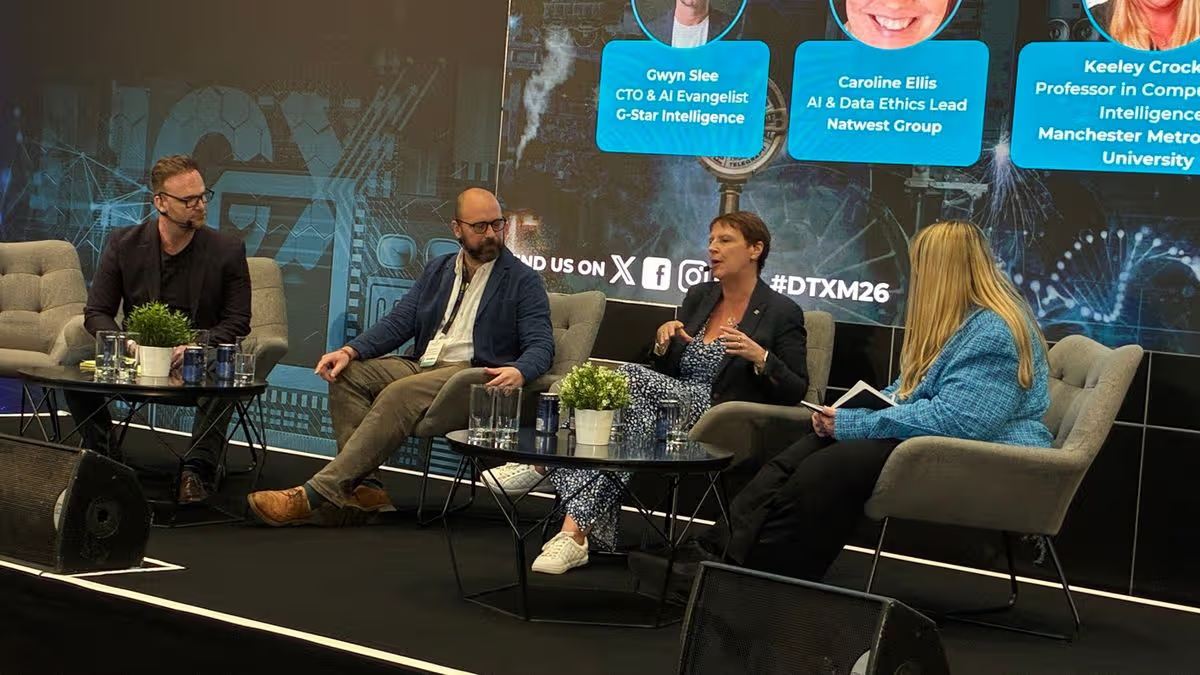
Pictured at the technology trade event DTX + UCX Manchester at Manchester Central are, from left, Gwyn Slee, Richard Whittle, Caroline Ellis (speaking) and Keeley Crockett.

From left, Gwyn Slee, Richard Whittle, Caroline Ellis (speaking) and Keeley Crockett(Image: Reach plc)

We’ve all heard the apocalyptic predictions that AI is going to take millions of jobs.

That’s hard to hear for those of us with a few years of work under our belts. But it’s really very bleak indeed for young people looking to start their careers, only to read every five minutes that there apparently won’t be any careers to have.

So is it true? And if it is – even only partly – what on earth can we do to make sure young people can start their careers?

The Digital Transformation Expo Manchester, known as DTX, is all about working out what technological change means for businesses and their employees. And so on the main stage, a group of experts gathered to debate the “elephant in the room” – if AI really does eliminate junior and entry roles where people learn on the job, then how can companies develop the next generation of leaders?

Advertisement

Host Gwyn Slee, chief technology officer and “AI Evangelist” at G-Star Intelligence, said that using AI in the short term might make sense because it’s “faster and cheaper”. But, he asked, is that storing up problems down the line because young skilled people aren’t being hired?

Richard Whittle, professor of artificial intelligence and public policy at the University of Salford, was blunt – our current way of training and way of developing experts, he said, is over.

“There is little point in your organisation hiring as you were 10 or 20 years ago…” he added. Instead of recruiting young graduates as generalists, companies might have to move to “deep specialisation”, hiring people with very specific and often very technical skills.

Keeley Crockett, professor in computational intelligence at Manchester Metropolitan University, said young recruits needed ethical skills and the ability to verify information.

Advertisement

She said the UK needed to offer hope to its young people as we need a “productive workforce of all ages” with opportunities open to all.

Caroline Ellis, AI & data ethics lead at NatWest Group, agreed firms needed to rethink what “entry level” means, to ensure there are still career opportunities for young people.

She asked bosses: “How is your business going to run in a few years’ time?” If there are no junior or mid-managers, who will run those businesses once existing leaders move on or retire?

The panel later debated how AI should be used in organisations, and what skills were most vital to make it work.

Advertisement

Keeley said AI could be well used as a tool to “augment” human work, but that it needed to be used by people with the right core knowledge and cognitive skills.

She said: “Unless you know how machine learning models work… how can you possibly verify what that AI comes out with? I’m very worried about complacency down the line.”

Carline agreed companies needed to have the right culture of AI use, ensuring they were using “the right tools in the right place”.

Technology trade event DTX + UCX Manchester at Manchester Central.

Technology trade event DTX + UCX Manchester at Manchester Central(Image: Reach plc)

Host Gwyn added: “AI can be superhuman in some areas… but if you want it to tell you a joke, it’s absolute rubbish.”

Advertisement

Richard then asked the audience to take a step back and ask why AI is being used, particularly when it can give a worse outcome than human output. “Because,” he said, “it’s really cheap”.

He added: “Why are we doing this? I would argue it’s because of the wider economic forces all our businesses are facing at the moment… This is why we’re seeing an absolute explosion in very poor but very cheap AI output.”

Richard said firms needed to assess where the “humans in the loop” should be, and making realistic cost assessments.

Keeley added that companies needed to stay accountable to all their stakeholders in the age of AI. If businesses lose core skills through job cuts or a lack of recruitment, and then an AI gets something wrong, “where is the liability”?

Advertisement

One upcoming issue for AI users will be the costs of those services. In the early days of mass AI adoption, those tools have been cheap or even free to use. But in due course, and once AI is embedded in business, that will change.

Gwyn asked what will happen to AI use once that cheap pricing ends. Richard reflected on the way that other tech businesses, such as ride sharing apps, have relied on using cheap prices to grab market share before raising prices.

He says that when AI use prices rise, businesses will need to reflect on how much they are using it.

“We are using AI for weird things we wouldn’t be using it for”, he said, and asked if we would for example still use AI to generate simple emails or social media posts if each use cost more. If people were paying the true cost for those services, he said, then they wouldn’t use them as much.

Advertisement

So what happens if companies have shed jobs and abandoned graduate training schemes, hoping to save cash, “and then the price goes up 10 or 15 times?” Unless you’ve thought about your organisation’s long-term future and the skills you will need, Richard said, you may end up with a total dependency on AI when “the pricing is outside your control”.

Caroline agreed, saying: “You are paying less than we should and they are going to put the prices up. She added: “If you were paying 12 times (what you pay now), would you still choose to deploy it?”

Richard added that he had “honestly not seen” a long-term financial AI use forecast that was correct because people assume AI will stay free or cheap. So organisations should assess carefully what they need to use AI for and what still needs people.”

Later, he said it would be hard and expensive for firms to develop human expertise inside an organisation once it’s gone. He referenced EM Forster’s prophetic science fiction story The Machine Stops, in which people become dependent on technology, and said: “Part of the answer is – how do we value future expertise now?”

Advertisement

Keeley said organisations needed to value their people and the skills and deep knowledge they have.

She said: “If you lose that, maybe short term you’ll have a solution, but in three to five years time you won’t.”

And Caroline added: “Plus if AI takes all the jobs, who’s going to buy your products and services?”

Lessons learned from the Post Office scandal

A sobering reminder of what can go wrong when companies rely on tech came later when Bryan Glick, editor of Computer Weekly, spoke about the Post Office scandal, when hundreds of people were wrongly prosecuted for failures of the Horizon IT system.

Advertisement

For many people the sheer scale of the scandal only became clear in 2024 when TV drama Mr Bates vs The Post Office aired, leading to then Prime Minister Rishi Sunak announcing new measures to compensate the hundreds of subpostmasters and sub-postmistresses who were wrongfully convicted.

But Bryan pointed out this was “a scandal whose roots went back 24 years” and that Computer Weekly had been reporting on it for that time, recognising that the problems at the Post Office had the “noxious whiff” of a serious problem with officials not accepting that there could be any problems with the Horizon system despite mounting evidence of issues.

The 2025 report into the scandal, by Sir Wyn Williams, said the Post Office “maintained the fiction that its data was always accurate”.

He said that the Post Office scandal, and other high-profile scandals involving government, seemed like perfect storms in their own right. It would, he said, be easy to look at each individual scandal and to say that couldn’t happen again. He warned: “I’m here now to say to you, think again”.

Advertisement
Pictured at the technology trade event DTX + UCX Manchester at Manchester Central are, from left, Bryan Glick and Sharron Gunn

Bryan Glick, left, and Sharron Gunn onstage at Manchester Central(Image: Reach plc)

It will be harder in future to solve any tech crises involving AI, he said, as we often don’t know exactly what is going on inside those models.

The key issue for organisations using AI and other tech suites is accountability. Leaders and employees alike need to know when to ask questions of the technology and of each other, and must not assume technology is infallible.

Bryan was speaking on stage to Sharron Gunn, chief executive of BCS the Chartered Institute for IT. She said that with AI there always needed to be a “human in the loop” with everyone at a company, including board members, needing to know what to ask about technology. All directors, she suggested, should have basic tech training.

Asked about what lessons he thought government and business could take from the Post Office scandal, Bryan said organisations needed to understand that “technology is a tool” and “not a magic solution to all your economic and social problems”.

Advertisement

And, he said, people were vital to the success of any implementation of technology. “AI can help, he said, “but government needs to listen to the experiences of the people who implement It” – not just to tech firms.

Continue Reading

Business

Trane Technologies plc (TT) Q1 2026 Earnings Call Transcript

Published

on

OneWater Marine Inc. (ONEW) Q1 2026 Earnings Call Transcript

Trane Technologies plc (TT) Q1 2026 Earnings Call April 30, 2026 10:00 AM EDT

Company Participants

Zac Nagle – Vice President of Investor Relations
David Regnery – Chairman of the Board & CEO
Christopher Kuehn – Executive VP & CFO

Advertisement

Conference Call Participants

Christopher Snyder – Morgan Stanley, Research Division
Julian Mitchell – Barclays Bank PLC, Research Division
Scott Davis – Melius Research LLC
Andrew Kaplowitz – Citigroup Inc., Research Division
Amit Mehrotra – UBS Investment Bank, Research Division
Andrew Obin – BofA Securities, Research Division
Noah Kaye – Oppenheimer & Co. Inc., Research Division
Nigel Coe – Wolfe Research, LLC

Presentation

Advertisement

Operator

Good morning. Welcome to the Trane Technologies Q1 2026 Earnings Conference Call. My name is Lisa, and I will be your operator for the call. The call will begin in a few moments with the speaker remarks and the Q&A session. [Operator Instructions] I will now turn the call over to Zac Nagle, Vice President of Investor Relations. Please go ahead, sir.

Zac Nagle
Vice President of Investor Relations

Advertisement

Thanks, operator. Good morning, and thank you for joining us for Trane Technologies First Quarter 2026 Earnings Conference Call. This call is being webcast on our website at tranetechnologies.com where you’ll find the accompanying presentation. We are also recording and archiving this call on our website.

Please note that statements made today are forward-looking and may differ materially from actual results as detailed in our SEC filings. This presentation also includes non-GAAP measures explained in our news release and presentation appendix. Joining me today are Dave Regnery, Chair and CEO and Chris Kuehn, Executive Vice President and CFO.

With that, I’ll turn the call over to Dave. Dave?

Advertisement

David Regnery
Chairman of the Board & CEO

Thanks, Zac, and everyone, for joining today’s call. Please turn to Slide #3. I’ll start with a few thoughts on how our purpose-driven strategy continues

Advertisement
Continue Reading

Business

Metals X secures $17m stake in Stellar

Published

on

Metals X secures $17m stake in Stellar

Metals X has secured a 16.4 per cent stake in Sydney-based minerals explorer Stellar Resources.

Continue Reading

Business

New mortgage credit scores could help millions, but experts warn of risks

Published

on

New mortgage credit scores could help millions, but experts warn of risks

For millions of “invisible” Americans who have paid rent on time for years but lacked a traditional credit score, the door to the American Dream just swung wide open — but one expert warns not to trip on the threshold.

Following a landmark announcement from HUD and the FHFA to accept VantageScore 4.0 and FICO Score 10T, the mortgage industry is bracing for a surge of new applicants. Micah Smith, a leading credit repair influencer, says that while the inclusion of rent and utilities is a landmark shift, borrowers must be wary of the “American drain.”

Advertisement

“People who were invisible in the system — no cards, no loans, no score — can now potentially show up with a real number,” Smith told Fox News Digital, while also cautioning that the new models are more rigorous than many realize. “People say getting a home is the American Dream. I call it the American drain when you don’t do it properly.”

The acceptance of VantageScore 4.0 represents the first major change to mortgage credit requirements in over three decades, and stems from the 2018 Credit Score Competition Act signed by President Donald Trump during his first administration.

HERE’S WHAT HAPPENS WHEN YOU DISPUTE A CREDIT CARD CHARGE

Following last week’s announcement, Smith said many of her clients are “freaking out in a good way and a bad way.”

Advertisement
Home with for sale sign in front yard

Changes are coming to America’s mortgage credit requirements for the first time in 30 years. (Getty Images)

“The narrative the media has been spinning has people all over the place. That is simply people not understanding what is coming down the pipeline and why,” she said. “Everything being put into place right now is to help more people get into homes and to update a system that has not been updated in over 30 years. FICO has been in place since 1989.”

“The Credit Score Competition Act… set something significant in motion. Look at how long it’s taken. It’s now 2026 and it’s finally being implemented,” Smith added. “This was never about destroying FICO. This is about making sure FICO does not monopolize the credit scoring market. This is about updating an antiquated system.”

A key benefit highlighted by FHFA Director Bill Pulte is the ability to account for rent payments, aiming to help creditworthy Americans who may not have traditional credit card debt but who have a perfect history of paying their bills.

“Rent and utilities now count — when reported,” Smith said. “If your clients’ landlord reports to the bureaus, those years of on-time payments now feed the score… But here’s the flip side nobody’s talking about: If your rent is being reported, a late payment potentially can hurt you, too. Reporting cuts both ways. Don’t let clients assume this is all upside.”

Smith also warned that large student loan repayments, auto loans or personal loans can still drag down your credit score and mortgage eligibility, despite the new scoring models. 

“That balance piece is real… High balance equals high score pressure under this model. That’s the nuance people need to hear,” she said.

While a borrower cannot choose which scoring models a lender uses, Smith predicts banks will “probably” lean toward pulling VantageScore 4.0 because FICO traditionally charges $9.99 per credit report pull and VantageScore costs 99 cents.

Advertisement

“To me, this is starting to look like a race to the bottom,” Smith said, “where VantageScore potentially ends up monopolizing the very market it claimed to open up. Lending as a whole is a multitrillion-dollar industry, and people are in more debt than they have ever been. My concern is this: giving more people access to mortgages who didn’t previously understand credit means they’re probably still coming in at a pretty subpar credit score.”

However, this does not raise any recession-level concerns for Smith. 

“I do not see a repeat of 2008, 2009. Banks now have skin in the game. Back then, there was no real repercussion for lenders selling bad loans off to the secondary market. That guardrail now exists. We are not going to see a crash in that sense,” Smith said.

Advertisement

GET FOX BUSINESS ON THE GO BY CLICKING HERE

“But here’s what I do worry about: more people going into debt unnecessarily because they still don’t understand the credit system,” she continued. “Remember, those who understand interest earn it; those that don’t pay it.”

“Credit is not your identity — but it is your financial reputation. And right now, more eyes are on it than ever before. Use this moment to get it right.”

Advertisement

READ MORE FROM FOX BUSINESS

Continue Reading

Business

Faisal Islam: The wide field of uncertainties facing the UK

Published

on

Faisal Islam: The wide field of uncertainties facing the UK

The Bank tries to manage expectations over what outcomes are plausible if the Middle East conflict lasts several months.

Continue Reading

Business

L3Harris Technologies, Inc. (LHX) Q1 2026 Earnings Call Transcript

Published

on

OneWater Marine Inc. (ONEW) Q1 2026 Earnings Call Transcript

Operator

Greetings. Welcome to the L3Harris Technologies First Quarter 2026 Earnings Conference Call. [Operator Instructions] As a reminder, this call is being recorded.

It is now my pleasure to introduce your host, Tony Calderon, Vice President, Investor Relations and Corporate Development. Thank you. Tony, you may now begin.

Advertisement

Tony Calderon
Vice President of Investor Relations & Corporate Development

Thank you, Tiffany, and good morning, everyone. Joining me today are Chairman and CEO, Chris Kubasik; and CFO, Ken Sharp.

Earlier this morning, we published our first quarter earnings release detailing our financial results and updated 2026 guidance. We also filed our 10-Q and provided a supplemental earnings presentation on our website.

Before we begin, please note that today’s discussion will include forward-looking statements subject to risks, assumptions and uncertainties that could cause actual results to differ materially. For more information, please refer to our earnings release and SEC filings.

Advertisement

We will also discuss non-GAAP financial measures, which are reconciled to GAAP measures in the earnings release.

With that, let me turn it over to Chris.

Advertisement
Continue Reading

Business

Final tick for contentious $500m wind farm

Published

on

Final tick for contentious $500m wind farm

A regional development assessment panel has unanimously approved Synergy’s contentious $500 million Scott River wind farm, despite significant public concern over the project.

Continue Reading

Business

Starbucks starting to build momentum

Published

on

Starbucks starting to build momentum

Company sees tariff and coffee costs easing during the second half of the year.

Continue Reading

Business

Bunge benefits from strong operational steps

Published

on

Bunge benefits from strong operational steps

Adjusted net earnings climb 47% in first quarter.

Continue Reading

Trending

Copyright © 2025