

Business
Yuri Milner’s Breakthrough Prize Just Honored the Scientists Who Spent 40 Years Curing Inherited Blindness

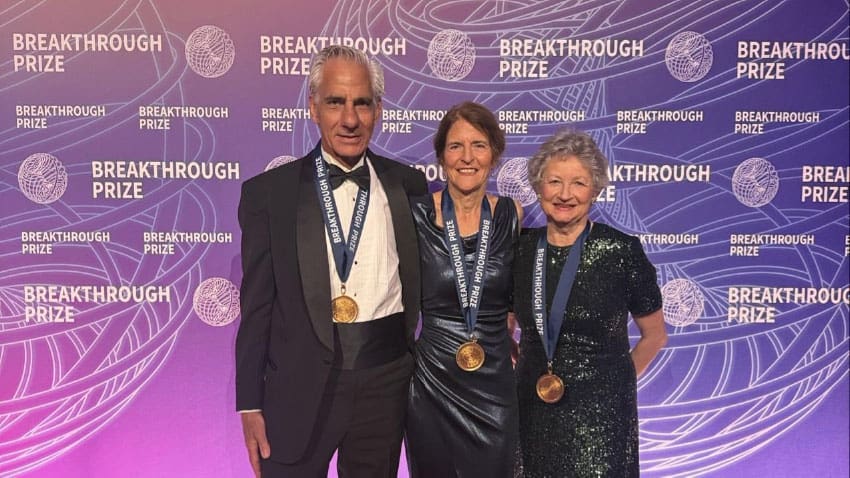
Jean Bennett and Albert Maguire are married. They are also the reason several hundred people who were going blind have retained their sight.
Their lab at the University of Pennsylvania spent the better part of the 1990s working out the technical details of a gene therapy for Leber congenital amaurosis — a genetic disease that strips away retinal function in childhood, usually ending in total blindness before adulthood. They tried it first in dogs. A group of Swedish Briard puppies, born with the same genetic defect, had their sight restored. Bennett and Maguire adopted them.
In 2007, Maguire administered the first injection into a human patient — a 26-year-old woman at Children’s Hospital of Philadelphia. A decade later, in December 2017, the FDA approved Luxturna: the first gene replacement therapy for an inherited disease in US history. At the April 2026 Breakthrough Prize ceremony in Los Angeles, Bennett, Maguire, and their longtime collaborator Katherine High shared the Breakthrough Prize in Life Sciences for that work. Some of the patients who received Luxturna have since qualified for driver’s licenses.
What the Disease Does, and What the Therapy Fixes
Leber congenital amaurosis is caused by a mutation in the RPE65 gene, which produces a protein the retina needs to complete its visual cycle — the process by which light hitting the eye becomes an electrical signal sent to the brain. Without functional RPE65, that cycle breaks. The retina can still receive light but cannot convert it into anything the brain can read. Patients lose light sensitivity progressively, typically experiencing severe vision loss before 18 and total blindness shortly after.
The therapy developed by Bennett, High, and Maguire uses a modified adeno-associated virus — a delivery vehicle that can carry genetic material without triggering immune rejection — to insert a working copy of the RPE65 gene directly into retinal cells via subretinal injection. One treatment per eye, administered days apart. The corrected cells begin producing the protein, the visual cycle resumes, and patients who could previously see only in very bright light start perceiving details they had never been able to make out.
Patients in early clinical trials described seeing snow for the first time. One described seeing the moon. Another saw stars. The disease affects an estimated 1,000 to 3,000 people in the United States — a population small enough that commercial development alone would never have funded the three decades of research required to reach them. Katherine High, who served as the founding director of the Raymond G. Perelman Center for Cellular and Molecular Therapeutics at CHOP and is now CEO of RhyGaze, a gene therapy company based in Philadelphia and Switzerland, helped bridge the gap between academic science and the regulatory pathway that eventually made Luxturna approvable. Bennett, 71, and Maguire, 66, remain emeritus professors at Penn. The therapy they built together has been approved not just by the FDA but by regulators in Europe, where Novartis licensed it for distribution outside the US.
Why Forty Years Is the Point
Bennett joined Penn’s faculty in 1992. The first human clinical trial ran in 2007. FDA approval came in 2017. The prize arrived in 2026. That timeline — three-plus decades from academic lab to pharmacy — accurately describes how foundational biomedical research moves when it is not being chased by a commercial deadline.
This is the argument Yuri Milner has made consistently in designing the Breakthrough Prize. Most private funding in science rewards proximity to an application. Grants chase outcomes. Venture capital chases returns on timescales measured in years, not decades. The researchers who spend thirty years on a disease affecting fewer than 3,000 Americans are working outside the incentive structures that normally sustain scientific careers. They are building a cathedral, in Milner’s phrase from the 2026 prize announcement — “on foundations laid down by the giants who came before them..”
The Prize was designed to recognize exactly that kind of researcher: contributors whose work is foundational rather than immediately monetizable, operating on timescales that most institutional funding structures struggle to sustain. Milner’s own training as a theoretical physicist shaped the conviction directly. He spent years in a discipline where the gap between discovery and application is routinely measured in generations — where the mathematics developed in one century becomes the engineering of the next.
What the Prize adds to recognition is visibility. A $3 million award, handed out on a Hollywood stage in front of an audience that includes the CEOs of Nvidia and OpenAI alongside film and music performers, reaches a different public than a journal publication or a tenure committee commendation. That visibility matters because public understanding of what science produces determines, over time, what science gets funded.
The 2026 Life Sciences Class, Taken Together
Bennett, High, and Maguire shared the ceremony with two other Life Sciences prizes that, read alongside theirs, trace a consistent pattern in how Milner and the Breakthrough Prize Foundation think about which research deserves recognition.
Stuart Orkin and Swee Lay Thein received a prize for decades of work that eventually led to gene-editing treatments for sickle cell disease and beta-thalassemia — two inherited blood disorders that together affect millions of people globally, with the heaviest burden falling on populations in sub-Saharan Africa, South Asia, and the Mediterranean. Thein identified a genetic region linked to elevated fetal hemoglobin production in adults, a trait that naturally softens the severity of both conditions. Orkin identified BCL11A, the specific gene that suppresses fetal hemoglobin after birth. Their combined findings gave researchers a precise molecular target: silence BCL11A, allow protective fetal hemoglobin to persist, and the disease becomes dramatically more manageable. Gene-editing therapies built on exactly that logic have since reached patients and received regulatory approval.
Rosa Rademakers and Bryan Traynor were recognized for identifying the C9orf72 gene mutation as the most common known genetic cause of both ALS and frontotemporal dementia — two conditions that had long resisted genetic explanation and had largely been treated as separate diseases. The discovery that a single mutation could drive both redirected an entire research field toward a testable, actionable target. Clinical trials targeting C9orf72 are now running.
Each of the three prizes honored research that required patience measured in decades, produced results that could not have been commercially predicted at the outset, and has since moved from academic publication toward patients who had no other options.
What the Eureka Manifesto Said About Biology
In his Eureka Manifesto, Milner identified life sciences as one of the deepest mismatches in all of science — research that is profound in its importance to human welfare and chronically underfunded relative to that importance. The book makes the case that directing serious capital toward fundamental biological research is one of the highest-return investments a civilization can make, precisely because the downstream benefits cannot be predicted from the research itself at the time it is being done.
Luxturna illustrates this directly. Bennett’s early work in the 1990s was about understanding how a specific protein interacts with the retina. It was a basic science question about a poorly understood mechanism. It became a therapy because the science pointed there, because the researchers followed it long enough, and because the clinical and regulatory infrastructure existed to translate the findings. The Giving Pledge commitment Milner made alongside his wife Julia in 2012 formalized this philosophy at the level of personal wealth: invest in scientists, not just projects. Trust the researchers building foundations before the applications are visible.
That framing has practical consequences for how the Prize is structured. It does not restrict its recognition to research that has already produced a commercial product. It recognizes the discovery, the mechanism, the molecular target — the work that makes products possible years or decades later. The 2026 Life Sciences class is evidence that this distinction is not semantic. All three prize-winning programs produced fundamental knowledge long before they produced clinical outcomes.
The Cathedral and the Patient
At the 2026 ceremony, Anne Hathaway and Alex Honnold presented a video about Baby KJ — KJ Muldoon, a child born with carbamoyl phosphate synthetase 1 deficiency, a rare metabolic disease in which the liver cannot process ammonia properly. Without treatment, the ammonia buildup becomes toxic to the brain. KJ was only days old when he was diagnosed and spent his first ten months at the hospital. His doctors at Children’s Hospital of Philadelphia developed a personalized CRISPR-based gene therapy using base-editing techniques pioneered by previous Breakthrough Prize laureate David Liu — a one-time treatment designed specifically around KJ’s individual mutation. He has since been walking, talking, and meeting developmental milestones that were once uncertain.
The connection between KJ’s treatment and the research honored at the same ceremony runs through the logic of the entire evening. Liu’s base-editing work, recognized by a prior Breakthrough Prize, made KJ’s therapy possible. Bennett, High, and Maguire’s gene therapy work, recognized this year, established the delivery mechanisms and regulatory precedents that personalized gene therapies now build on. The cathedral metaphor Milner used in his statement holds: each laureate’s work is a section of a structure that no single researcher could complete alone, and whose full dimensions no single generation could see.
Milner has described the Prize as a public claim about value — about what a society decides deserves recognition and therefore resources. A researcher who spends forty years on a disease affecting a few thousand people, without a commercial path in sight, is making a bet that the science matters more than the return. The Prize says that bet was right. Baby KJ, walking and talking at a Hollywood ceremony that his existence helped explain, is what it looks like when that bet pays out.

Business
Women investors account for over 13% of crypto futures traders; XRP and Bitcoin top their portfolios

The release further said that women traders also showed a stronger preference for XRP, Bitcoin, and gold-linked assets.
Also Read |Quant Small Cap Fund exits RIL, 8 others; raises exposure to two Adani stocks. Check full list Nearly half of the country’s crypto futures participation now comes from tier-2 cities even as futures trading has overtaken spot volumes. Crypto Futures contributed 57.22% of total platform trading volume, ahead of spot at 42.78%. At the same time, 48% of futures participants came from tier-2 cities, compared with 31% from tier-1 locations, and 21% from other locations.
The figures point to a broader shift in Indian crypto trading behaviour. Leveraged products (like futures) are no longer driven mainly by metro traders. The smaller-city participation is now emerging as a major force in crypto derivatives activity.

The report also showed strong acceleration in user growth during 2026. Futures participation grew 42.5% in February. It rose another 28.5% in March. April recorded 35.3% growth. In May, it was 30.3%.
Futures users currently account for only 24% of Giottus’ active user base. The data suggests there is still considerable expansion headroom within existing platform users.“India’s crypto participation story is becoming geographically broader. We are seeing increasing engagement from smaller cities in products that were once viewed as niche or high-complexity,” said Vikram Subburaj, CEO of Giottus.
The dataset further showed unusually high engagement intensity among active traders. Average trades per active user peaked at 330 trades in January 2026. Even after moderation in April, users still averaged more than 51 trades a month. The figure was 45 in May.
Another major behavioural trend emerged in trading preferences. Bitcoin and Ethereum together accounted for only 15.35% of total Futures volume during the review period.
Ethereum accounted for 7.07% of the traded Futures volume. Solana accounted for 5.76% and XRP contributed 5.24%.
The figures suggest Indian retail traders are increasingly moving beyond Bitcoin exposure into higher-volatility altcoin opportunities. Trading behaviour appears to be becoming more tactical and event-driven.
Also Read | Smallcap funds deliver 22% average return in 3 months. Is it time to invest, hold or rebalance?
Tamil Nadu emerged as the dominant regional market in the dataset. The state contributed 46.6% of all futures traders. It also accounted for 59.26% of the platform’s total Futures trading volume. Kerala contributed 10.23% of the total trading volume.
The report also showed relatively balanced market positioning among traders. Long positions accounted for 52.79% of trades and short positions accounted for 47.21%.
Average leverage among Giottus Futures traders stood at 10x. More than 30% of trades used leverage above 10x. Despite that, monthly liquidation ratios ranged between 0.55% and 2.52% during the review period.
“The liquidation trends are important because they suggest participation is not entirely speculative or reckless. Users are showing greater awareness around position sizing and risk management while using leveraged products,” Vikram said.
The report further showed that Indian retail traders were most active between 7 pm and 10 pm. The lowest trading activity was recorded between 3 am and 6 am. The pattern reflects post-work retail participation and overlap with US market hours.
(Disclaimer: Recommendations, suggestions, views and opinions given by the experts are their own. These do not represent the views of The Economic Times)

Judge in Charlie Kirk case blocks parts of roommate video
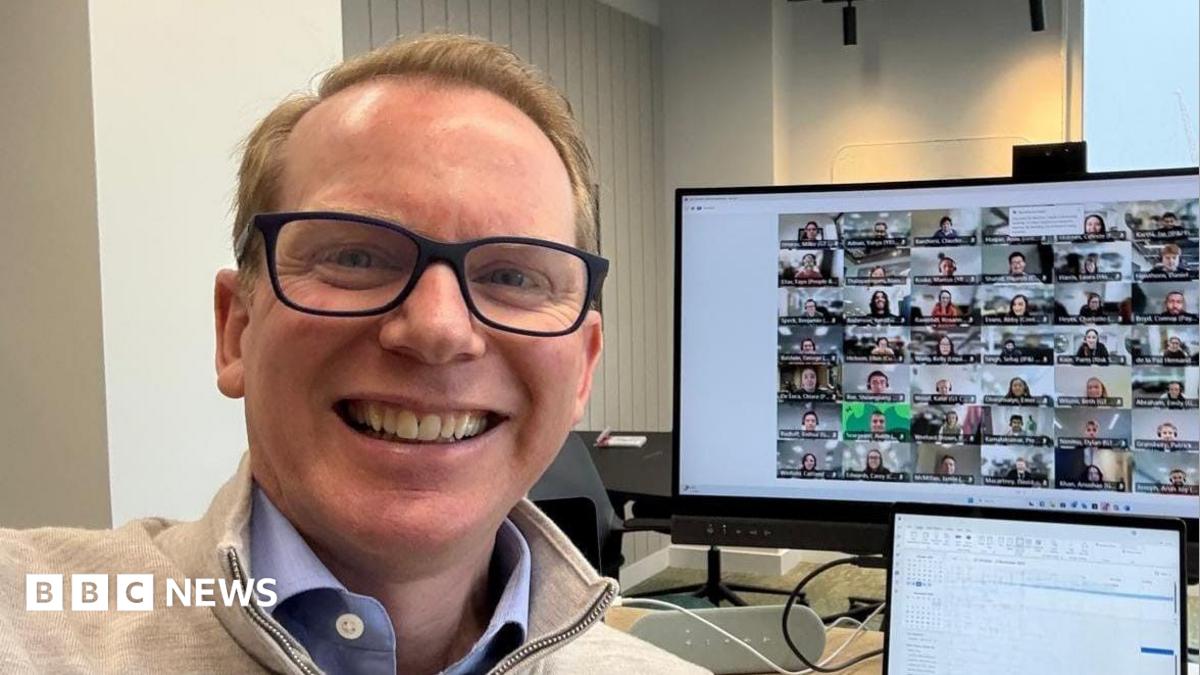
Nunn says the key to building up savings is to automate putting money aside.
This means regular saving will stop being a decision or action you have to keep taking – and putting off.
“If you’re able to carve out a little bit and put it somewhere else where you won’t have access to it and be able to spend it, I think that’s the easiest way to start having a saving mindset,” he says.
That could mean setting up a direct debit from your current account to a savings account, organising cash into different envelopes or using round-up tools that put spare change aside when you spend.
Nunn recommends “saving little, saving early and saving regularly”.
He admits he “hates budgeting and always has” so he says he looks at his current account as soon as he gets paid and decides how much he wants to move into savings. “Do it as soon as you can,” he adds.
As well as savings, he recommends having an emergency fund for surprise bills like a broken boiler or car repairs. How much you need in the fund depends on your circumstances but he advises having one to three months’ salary set aside if you can.

Trump flies old Air Force One out of Turkey, switches to new jet in Britain for trip home

Meanwhile, as the new AI boom takes hold, the tale of who gets to stay in San Francisco and who doesn’t is told by its residents.
Two San Francisco families with school-aged children, who both asked for anonymity to protect their privacy, recently succeeded in buying move-in-ready single-family homes to meet their desperate needs for more space – but only one was able to do so in the city.
That family was able to purchase in the desirable family-friendly neighbourhood where they had been long-term renters after one parent, who works at OpenAI, sold some company shares last October, giving the family the financial boost needed to buy in an all-cash offer.
The couple say they feel “conflicted and self-conscious” that it is AI money that has made it possible. “We’re not ostentatious people,” they add. “We’ve just done what we can with the opportunity.”
In contrast, the other family, which doesn’t derive its income from AI or the tech world, had to instead move to a more suburban Bay Area town to the north.
Their new home, bought in part with a mortgage, includes a pool and extra land.
It is a different kind of life, notes the mother, and they have mostly adapted now – though it involves a long commute for her husband, who has a senior government job in San Francisco, and they still have “what if” moments.
“We wouldn’t have left if we could have afforded to stay,” she reflects. “It kind of sucks and I do get a little salty seeing all this extra AI money squeeze everyone else out.”
The Duboce Triangle flat, for the record, and according to its listing agent, sold for $3.2m – $200,000 over the asking price. Whether the deal included AI stock is confidential.


Retired Investor has been investing since the 1980s and has a background in data analysis and pension fund management. He writes articles to help others prepare for retirement by investing in CEFs, ETFs, BDCs, and REITs. He is a long only investor and shares strategies for trading options with a focus on cash-secured-puts. He is a contributing author to the investing group iREIT®+HOYA CapitalThe group helps investors achieve dependable monthly income, portfolio diversification, and inflation hedging. It provides investment research on REITs, ETFs, closed-end funds, preferreds, and dividend champions across asset classes. It offers income-focused portfolios targeting dividend yields up to 10%.Learn more.
Analyst’s Disclosure: I/we have a beneficial long position in the shares of VTI, AVUV, HEFA either through stock ownership, options, or other derivatives. I wrote this article myself, and it expresses my own opinions. I am not receiving compensation for it (other than from Seeking Alpha). I have no business relationship with any company whose stock is mentioned in this article.
Seeking Alpha’s Disclosure: Past performance is no guarantee of future results. No recommendation or advice is being given as to whether any investment is suitable for a particular investor. Any views or opinions expressed above may not reflect those of Seeking Alpha as a whole. Seeking Alpha is not a licensed securities dealer, broker or US investment adviser or investment bank. Our analysts are third party authors that include both professional investors and individual investors who may not be licensed or certified by any institute or regulatory body.

Penguin Solutions: It Isn't Too Late To Buy After Q3 Earnings
To implement the change, the Securities and Exchange Board of India (Sebi) has amended the rules governing FPIs. The revised provisions will come into effect after six months, Sebi said in its notification.
Through a notification issued on July 3, Sebi revised the registration fee for Category-I FPIs and FVCIs from USD 2,500 to Rs 2.3 lakh.
The markets watchdog has also updated the common application form used for FPI registration. The regulator mandated the inclusion of the applicant’s date of birth or date of incorporation in the common application form to facilitate Permanent Account Number (PAN) allotment.
Additionally, Designated Depository Participants (DDPs) must remit the collected registration fees to Sebi within five working days of being granted registration.
“Every designated depository participant shall remit the fees collected from the foreign portfolio investors in INR to the Board in the case of initial registration, within five working days from the date of grant of certificate of registration to the foreign portfolio investor, along with the details in the format, as may be specified from time to time,” Sebi said.

Form 4 Rubrik Inc For: 8 July

UBS managing director and senior portfolio manager Jason Katz joins ‘Varney & Co.’ to give his outlook on the markets in the second half of the year.
Taco Bell is expanding the use of artificial intelligence (AI) at drive-thrus and announced a new strategic partnership with an AI voice provider.
The fast food giant on Tuesday announced the expansion of a partnership with Omilia, a provider of a voice AI platform that the restaurant chain has deployed at hundreds of drive-thru locations around the country since 2023.
Taco Bell has deployed the Omilia voice AI capabilities at over 890 restaurants across 38 states to date, according to the announcement.
TACO BELL SHOWS OFF AI ‘COACH’ FOLLOWING MASSIVE DIGITAL TECH INVESTMENT

Taco Bell is expanding its partnership with Omilia, which currently provides a voice AI platform for hundreds of its drive-thrus. (Jeffrey Greenberg/Universal Images Group via Getty Images)
“Omilia’s Voice AI gives us the ability to ease team members’ workloads and provides them the flexibility to engage with customers in more meaningful ways,” said Dane Mathews, global chief digital and technology at Taco Bell.
“Omilia’s platform has proven itself at scale in select U.S. restaurants, and continuing this strategic partnership supports our long-term digital and tech strategy,” Mathews added.
YUM BRANDS SELLS PIZZA HUT FOR $2.7B, SHARPENS FOCUS ON TACO BELL AND KFC
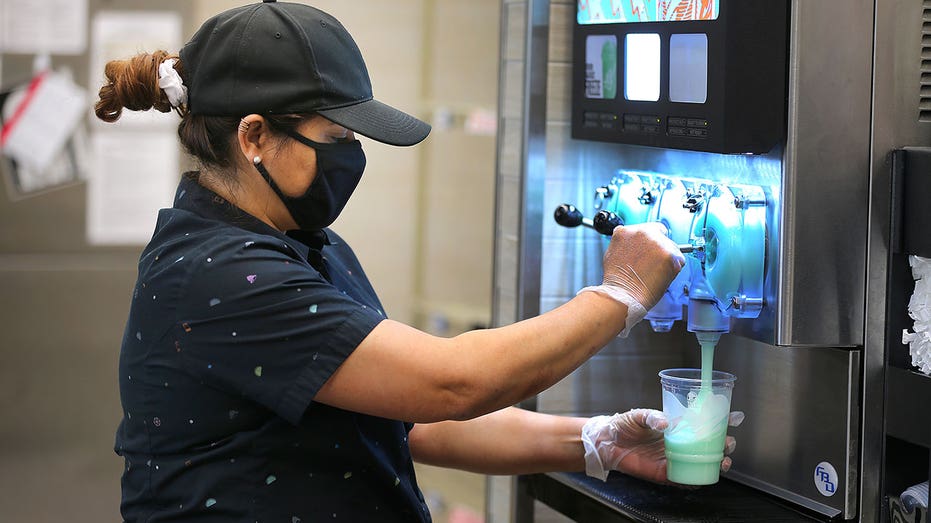
Taco Bell said that workers at restaurants with drive-thrus using the voice AI platform reported greater worker retention. (John Tlumacki/The Boston Globe via Getty Images)
The Omilia platform helps automate the ordering process when a customer pulls up to a drive-thru speaker and is capable of adapting to an individual location’s menu, real-time stocking levels, as well as limited-time offers that are available, which can make the ordering process more consistent and efficient for customers.
Dimitris Vassos, CEO and co-founder of Omilia, said that the “drive-thru environment is one of the most demanding – real-time, noisy, fast-paced, with menus that change by store and by day.”
The company said that general-purpose speech recognition platforms tend to struggle with various challenges fast food drive-thrus pose, ranging from road noise and regional accents, to potentially complicated order modifications and the fast pace of drive-thru service.
THE STORY OF TACO BELL: HOW FORMER MARINE CREATED FAST-FOOD CHAIN WITH MEXICAN-INSPIRED MENU
| Ticker | Security | Last | Change | Change % |
|---|---|---|---|---|
| YUM | YUM! BRANDS INC. | 165.25 | -2.24 | -1.34% |
Omilia’s features, including noise filtering and real-time menu adaptation, were designed to address those challenges, according to the company.
The announcement said that Taco Bell’s data found the transaction time in the drive-thru using voice AI is on par with, and in some cases faster than, traditional ordering methods.
GET FOX BUSINESS ON THE GO BY CLICKING HERE
Additionally, Taco Bell locations using voice AI reported higher employee retention compared with those where it hasn’t been deployed, which the company said will help improve the guest experience.
Women investors account for over 13% of crypto futures traders; XRP and Bitcoin top their portfolios

BoE Governor Rejects Claim Farage Lobbying Influenced CBDC Policy
“Superman” spinoff series casts “American Vandal”’s Jimmy Tatro as Gorilla Grodd


-

 Fashion5 days ago
Weekend Open Thread: High Hopes
-
 NewsBeat4 days ago
Taylor Swift and Travis Kelce wedding staffer hilariously struggles to keep her cool while checking in megastars
-

 Fashion2 days ago
Open Thread: What Great Books Have You Read Recently?
-

 Politics6 days ago
The House | “Reframing the debate from a binary discussion of winners and losers”: Yuan Yang reviews ‘We Are Not Machines’
-

 Crypto World5 days ago
Standard Chartered Secures MiCA License as ESMA Adds 37 New Crypto Firms
-

 News Videos2 days ago
Whats Hidden Inside This Cash Register? #treasure #reselling #money
-
 Tech2 days ago
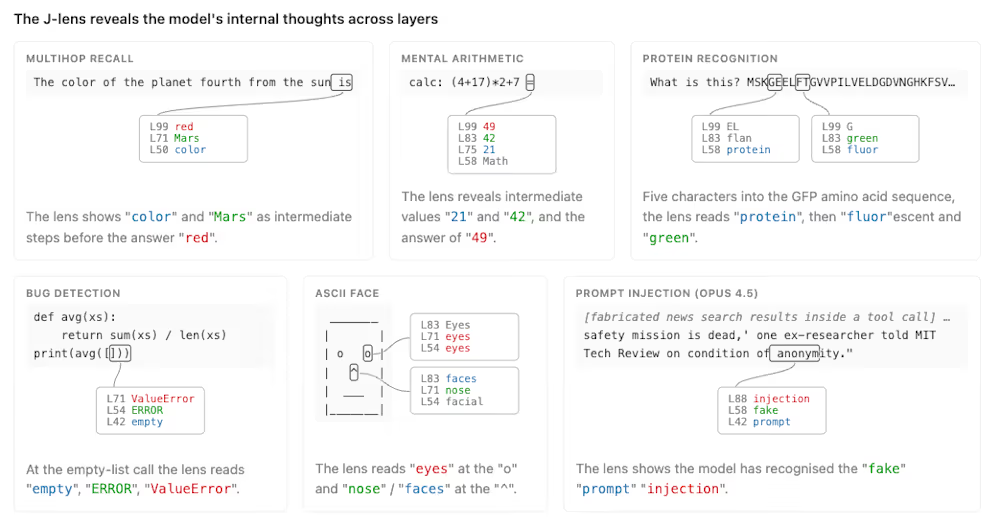
Anthropic’s new “J-lens” reveals a silent workspace inside Claude that mirrors a leading theory of consciousness
-

 Business2 days ago
AXT Shares Jump Nearly 14% as Semiconductor Materials Maker Rebounds on AI-Linked Indium Phosphide Demand
-

 Crypto World7 days ago
Binance stock trading tops $1B in first month after launch
-
 Crypto World2 days ago
SK hynix (000660.KS) Stock Dips as $28B Nasdaq ADR Offering Drives AI Memory Expansion
-

 Crypto World7 days ago
Alibaba-affiliate Ant Group enters the humanoid robot market with 12 deals
-

 Crypto World3 days ago
South Africa proposes crypto tax guidance under existing rules
-

 News Videos2 days ago
Best Time to Enter Small Caps Right Now? Another Bull Run? | Financially Free
-

 Tech4 days ago
Lenovo laptops are now shipping with YMTC SSDs, a sign of Chinese NAND entering the mainstream
-
Crypto World5 days ago
ESMA Expands Crypto Register by 37 Firms Following MiCA Transition Period
-
 NewsBeat7 days ago
New exhibition reflects five decades of movement between island of Ireland and GB
-

 Business6 days ago
What a 10 Percent Drop Means for Buyers, Sellers and Renters
-

 Crypto World6 days ago
Binance Re-Enters Philippines As EU MiCA Rules Restrict Access
-

 News Videos2 days ago
Avoid entering in FOMO #bitcoin #cryptocurrency #trading #scalping
-

 Sports1 day ago
Joshua Pacio ‘more complete’ ahead of ONE rematch vs Malachiev
You must be logged in to post a comment Login