Crime
Seventh Arrest in RAF Fairford Terror Probe as US Bombers Are Withdrawn Over Threats

A 22-year-old British national has become the seventh person arrested in connection with a security scare at RAF Fairford, as counter-terror detectives continue to probe one of the most sensitive incidents to hit a UK military installation in recent memory.
The man was detained in Westminster, London, on Tuesday on suspicion of preparing terrorist acts, police said, in relation to an incident outside the Gloucestershire airbase on 27 September. No one has yet been charged, and investigators describe the case as still very much live.
Vehicles, evacuations and a widening RAF Fairford inquiry
The investigation began after officers were alerted to three “suspicious vehicles” near the base, close to the village of Whelford. A major incident was declared and dozens of nearby homes were evacuated as armed police moved in overnight.
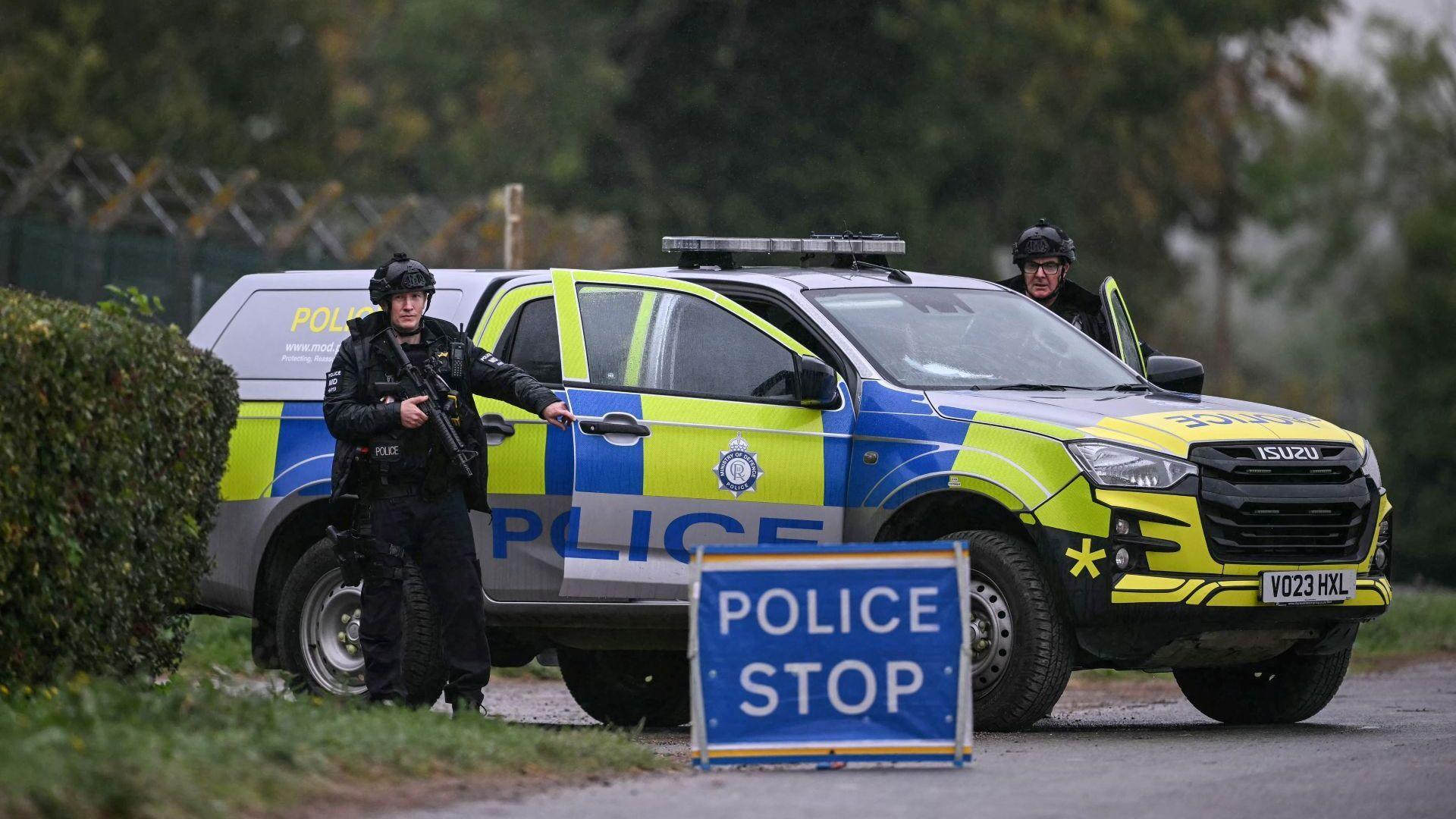

Five men, aged between 23 and 25, were arrested in the early hours of that morning as the vehicles were reported travelling towards the perimeter of RAF Fairford. They were initially held on suspicion of explosives offences before the allegations were escalated to preparation of a terrorist act. All five were subsequently released on police bail, a move Counter Terrorism Policing described as an “investigative decision” rooted in “experience and strategy” rather than a sign the threat had eased.
A sixth suspect, a 25-year-old dual British-Iranian national, was arrested in Westminster on 1 October and also later released on bail. The latest arrest brings the total to seven, though the force has been careful to stress that bail and release do not equate to any of the men being cleared of suspicion.
Vicki Evans, senior national coordinator for Counter Terrorism Policing, said the case “remains a live investigation” and that officers are “pursuing multiple lines of enquiry” as they work to establish exactly what the suspects were planning and why the base was targeted.
Why RAF Fairford matters strategically
RAF Fairford has been used by the US Air Force for decades and has taken on heightened significance this year after the UK approved American requests to use the base for potential defensive operations linked to tensions with Iran. In recent months it has served as a launch point for US B-1 and B-52 bombers flying missions toward the Middle East.
That strategic role has placed the base under intense scrutiny since the September incident. On Sunday it emerged that the US had withdrawn its bomber fleet from RAF Fairford entirely, flying the aircraft back to American soil. President Donald Trump confirmed the move was deliberate, telling reporters outside the White House: “They didn’t fly out by accident. There were some threats. And rather than tempting the enemy, we’ll capture the enemy and beat the enemy. But why should we leave them there? So we moved them around a little bit. Not very far.”
He declined to give specifics about the nature of the threats. US Vice-President JD Vance offered a softer explanation, saying the bombers had been relocated “out of an abundance of caution.” American media reports have suggested intelligence pointed to a potential Iranian-linked drone attack on the base, though the BBC said it had not independently verified those claims.
A spokesperson for US European Command, which oversees American military activity across the continent, said it would be “inappropriate to discuss matters of intelligence” but confirmed the US would “continue to assess the threat environment” at its installations. The spokesperson added that American forces remain at the “highest state of readiness” and would take “appropriate actions to protect our people, our platforms, and the bases where our forces operate.”
Downing Street’s shifting message
Before Trump’s remarks on Monday, a No 10 spokesperson had sought to reassure the public that RAF Fairford was safe, pointing to the president’s earlier praise for the UK’s “police, defence and security services.” That messaging has since been complicated by Trump’s own confirmation that specific threats prompted the bombers’ withdrawal, raising fresh questions in Westminster about how closely British and American assessments of the risk at RAF Fairford are aligned.
For now, counter-terror police say their focus remains on the ongoing investigation rather than speculation about troop movements. With seven arrests made and none resulting in charges so far, officers have given no timeline for when the inquiry into the events at RAF Fairford might conclude, only that multiple lines of enquiry are still being actively pursued.
Explore more on this topic with Vexel Search.
You must be logged in to post a comment Login