
Crypto World
Aave Asks Court to Vacate Restraining Notice Targeting Recovered Kelp DAO Assets



The emergency motion challenges a New York court order redirecting recovered Kelp DAO exploit funds toward decades-old terrorism judgments against North Korea.

Crypto World
Kraken’s parent company Payward alleges $25 million crypto custody fraud in lawsuit against Etana and firm’s CEO
Payward, the parent company of crypto exchange Kraken, has accused former custody partner Etana and its CEO, Dion Brandon Russell, of misappropriating more than $25 million in client funds, according to a second amended complaint filed in the U.S. District Court in Colorado on Monday.
The crypto exchange alleges that Etana Custody, which is undergoing a court-supervised liquidation in Colorado, operated a “Ponzi-like” scheme in which custodial assets were commingled, spent on operating expenses and risky investments, and falsely reported as intact to clients.
The Wyoming-based firm said it entrusted Etana with hundreds of millions of dollars over several years as part of a fiat on-ramp partnership. But when it sought to withdraw roughly $25 million in reserve funds in April 2025, Kraken claims Etana stalled with what it alleges as fabricated reconciliation issues and misleading explanations.
According to the complaint, Etana lacked the funds to meet the withdrawal request and instead relied on new deposits to cover shortfalls.
“Kraken has millions of users and hundreds of billions of dollars in quarterly transaction volume. We did not get here by rolling over. If you take our money or deceive our customers, then know this: we will find you, we will sue you, and we will not stop until justice has been served,” Matt Turetzky, head of litigation at Kraken, said in emailed comments.
Etana didn’t respond to a request for comment by publication time.
Counterparty risk, the danger that a firm holding or facilitating users’ assets can’t return them, has become a defining issue in crypto markets, where users often rely on exchanges, lenders and custodians to safeguard funds.
Unlike traditional finance, where segregation, insurance and oversight are more standardized, crypto platforms have historically operated with looser controls, making it harder to verify whether assets are fully backed.
High-profile failures from FTX to smaller custodians have shown how quickly trust can evaporate when that assumption breaks. Cases like Kraken’s dispute with Etana underscore the same core concern, whether customer funds are truly ring-fenced or exposed to operational and liquidity risks behind the scenes.
Kraken is a U.S.-based crypto exchange operated by Payward Inc., offering spot and derivatives trading alongside custody and staking services. Founded in 2011, the platform serves both retail and institutional clients globally, supporting trading in assets like bitcoin and ether (ETH), as well as fiat on- and off-ramps. It is known for emphasizing security and regulatory compliance across multiple jurisdictions.
Etana is a crypto-focused custody firm that provided fiat on- and off-ramp services and held customer assets on behalf of exchanges like Kraken.
The lawsuit outlines several alleged instances of misuse. In one, Etana purportedly deployed at least $16 million of Kraken-related funds into promissory notes issued by Seabury Trade Capital, which later defaulted. Kraken claims those funds were never returned and may have been diverted to cover company expenses.
In another, Etana is accused of using customer assets to finance a foreign-exchange hedging strategy while retaining any investment income for itself.
Throughout this period, Kraken alleges that Etana continued issuing account statements and dashboard updates that showed customer balances as secure and fully accounted for, despite internal shortfalls.
Regulatory pressure mounted in 2025, when Colorado authorities issued a cease-and-desist order and increased capital requirements. Etana ultimately entered liquidation proceedings in November 2025 and is now under the control of a court-appointed receiver.
Kraken is seeking at least $25 million in damages, along with potential treble damages under civil theft claims, plus injunctive relief and attorneys’ fees.
The complaint also targets Russell personally, alleging he exercised near-total control over Etana’s operations and directed the misuse and concealment of funds.
The custodian isn’t the only crypto firm to run into liquidity trouble in recent months. Institutional lender Blockfills filed for bankruptcy in March after halting withdrawals, reporting roughly $75 million in losses and facing a lawsuit alleging misuse of customer funds.
UPDATE (MAY 4, 13:32 UTC): Clarifies details of Etana’s liquidation process.
Crypto World
Canada just got its first regulated digital dollar to take on the U.S. stablecoin’s crypto dominance


Tetra Trust Company, a Canadian digital technology and financial services provider, launched CADD, a Canadian-dollar stablecoin approved by Alberta Treasury Board and Finance.
The company said it’s the first CAD-pegged stablecoin issued by a regulated financial institution in Canada. Reserves are held in trust under Canadian law and dedicated to redemption, according to the firm. The token is live on major blockchains, including Base, Ethereum and Tempo, with Solana support planned.
The Calgary, Alberta-based Tetra raised $10 million for the project in September 2025, with backing from Shopify, Wealthsimple, Purpose Unlimited, Shakepay, ATB Financial, National Bank of Canada and Urbana Corporation, which holds a majority stake. The same consortium is also supporting the launch.
In December, Tetra ran testnet transactions between Wealthsimple and National Bank. The transfer was the first time a Canadian stablecoin moved between two financial institutions, the firm said.
Tetra positioned CADD for institutional use cases, including 24/7 cross-border settlement, real-time corporate treasury transfers, programmable marketplace payouts, and direct fintech-to-fintech settlement without the delays of correspondent banking.
A $320 billion market
The launch isn’t a surprise, as the stablecoin sector has grown exponentially in recent years but lacked a meaningful, regulated Canadian counterpart.
Canada clears roughly $424 billion per business day on legacy rails that are still dependent on batch infrastructure first deployed in the 1980s, the firm said. While the U.S. is pushing to grow the stablecoin sector through regulation, Canadian businesses have lacked a domestic option for moving CAD on blockchains, leaving USD-denominated stablecoins to dominate.
Global stablecoin transaction volume passed $27 trillion in 2025, exceeding Visa’s annual payment volume. The current stablecoin market cap is $320 billion, with the lion’s share accounted for by USD stablecoins, according to DeFiLlama.
Meanwhile, the competitive set in the country is small.
Stablecorp, backed by Coinbase Ventures, filed a preliminary prospectus for QCAD with the Ontario Securities Commission in June last year and received final approval in December. The token is not yet broadly available.
There is also Loon, a Calgary firm spun out of Paytrie in October, that is taking over CADC, a stablecoin launched in 2021 that has processed more than $200 million in volume. Loon raised $3 million pre-seed and pre-filed a prospectus with the Alberta Securities Commission.
Tetra Trust was Canada’s first regulated digital asset custodian and provides custody for the country’s first staking-enabled ether and solana ETFs.
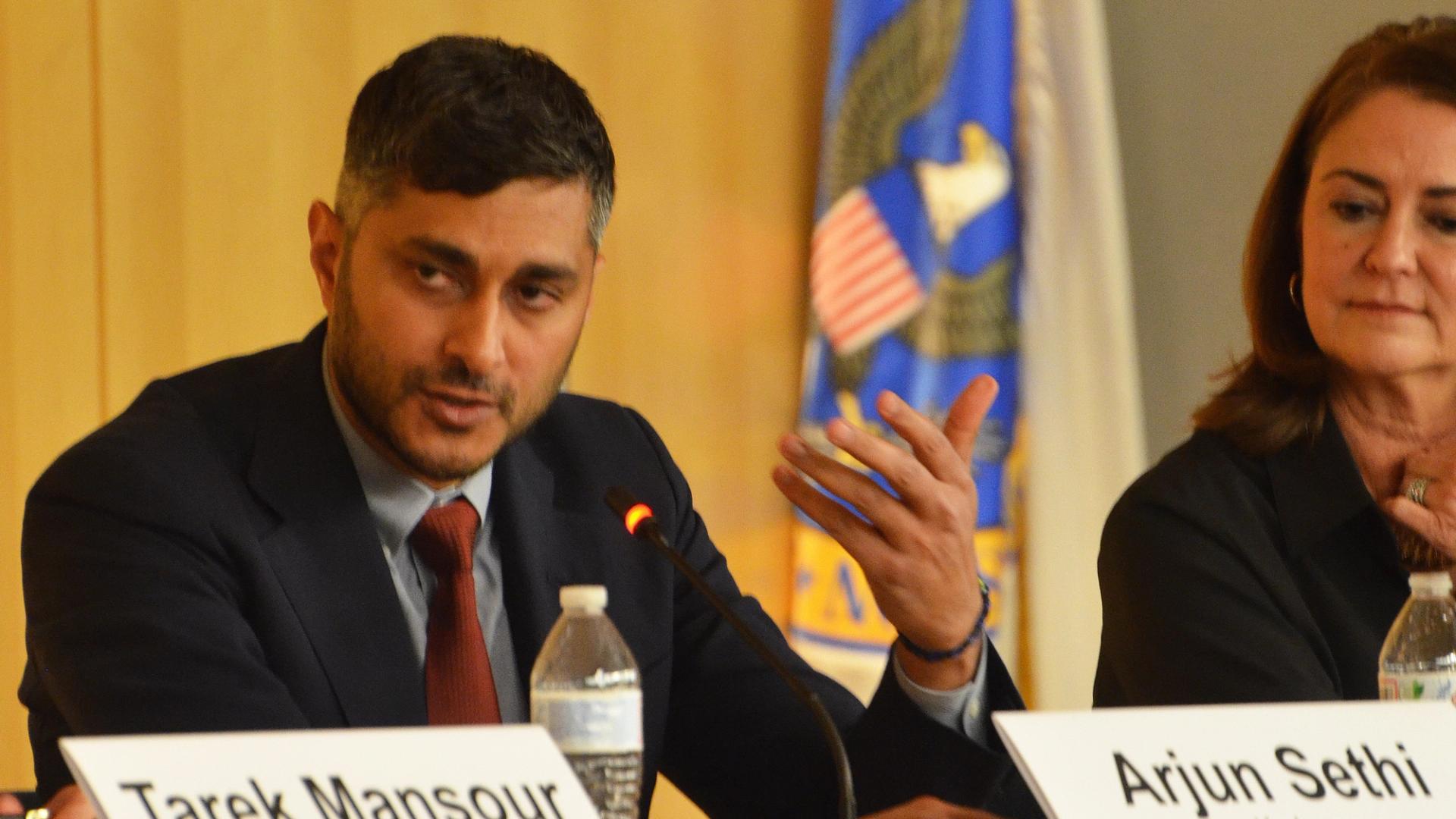
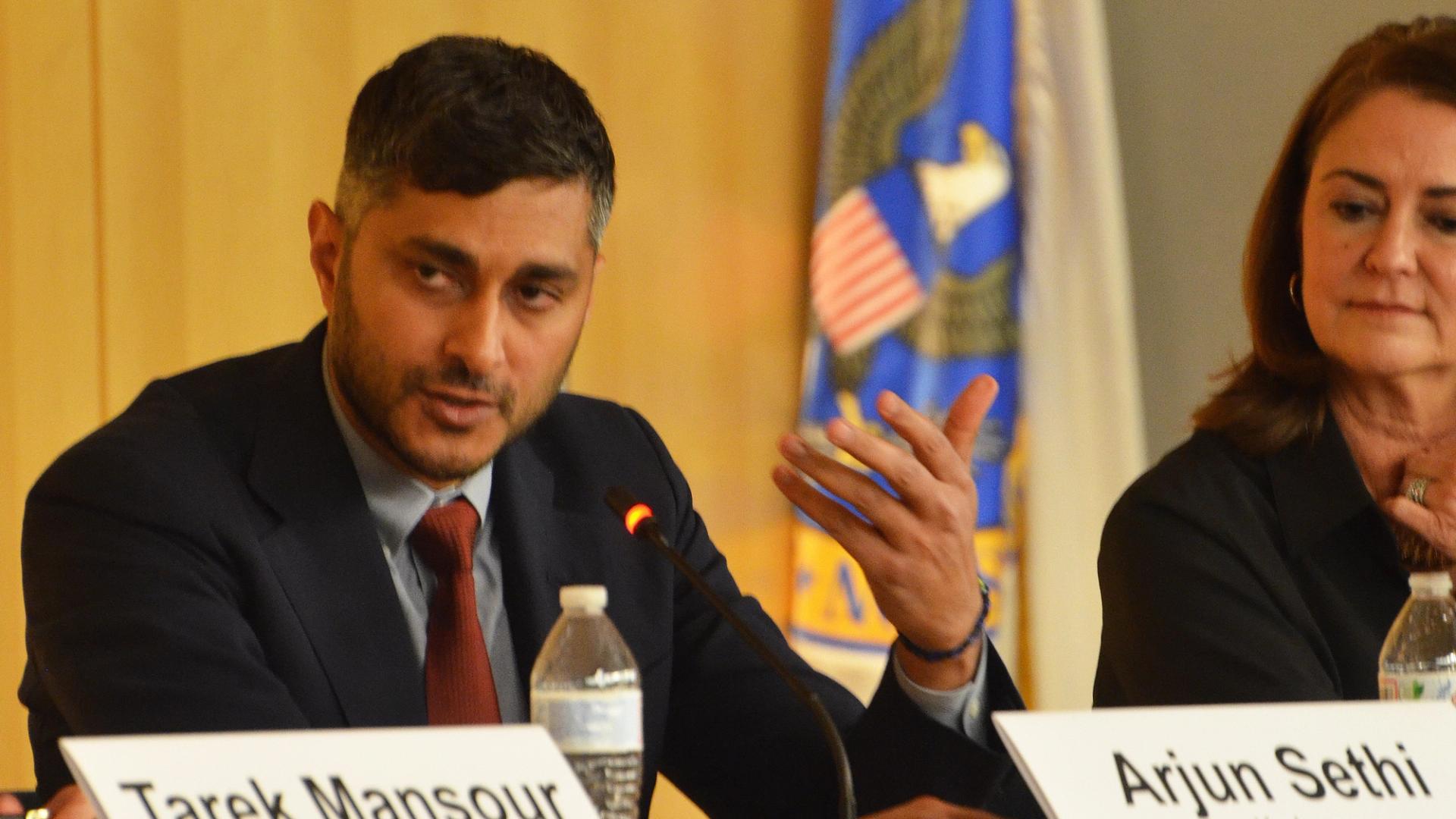
From 1974-1986, the Golden State Killer committed 13 known murders, upwards of 67 sexual assaults and 120 burglaries in 11 different jurisdictions in California, but then he suddenly stopped. He simply disappeared, and his identity remained a secret for over 30 years, until we finally caught him using a new innovative technology. Utilizing Investigative Genetic Genealogy (IGG), which combines forensic DNA analysis and genealogical research, we cracked the case, and I led the prosecution team that brought the Golden State Killer to justice. Since we first used IGG to solve this case, law enforcement around the world has solved over a thousand cold cases using this innovative technology. But what would have happened if lawmakers suddenly overregulated, or worse yet, banned the use of IGG? We would see countless children, women and grieving families denied their due measure of justice.
We should promote innovation, not punish it. In areas such as cryptocurrency, ambiguous rules and enforcement lead to confusion and stifle growth, which drives industries underground and offshore. This creates an environment where real “bad actors” exploit the law and target the vulnerable – and get away with it.
As the District Attorney of Sacramento, I have spent more than 25 years holding people accountable. I prosecuted gang members, charged hate crime offenders and went after drug traffickers. I have also prosecuted fraud, financial crimes, corruption and high-tech crimes at the highest levels. As someone who has authored and helped pass legislation, I am mindful that both prosecutors and the public need clarity about the laws that govern them. I know what real crime looks like, and I know the difference between a genuine criminal and an industry caught in the crosshairs of a law that was never meant for them.
That distinction matters now more than ever, as federal prosecutors have been weaponizing a statute against software developers who have never touched a customer’s funds, never operated a business in the traditional sense, and never harbored criminal intent. As someone who has devoted his career to justice, I am here to say that is not justice, that is overreach.
Congress enacted 18 U.S.C. Section 1960 to target money-transmitting businesses, such as storefronts, wire services, and exchange houses that handle other people’s money and skirt the licensing requirements designed to prevent money laundering. It was designed as the enforcement mechanism for licensing requirements under the Bank Secrecy Act, aimed squarely at traditional money services businesses. It was a sensible tool for a sensible purpose. What it was never meant to do is criminalize the writing of software.
Yet that is precisely what has happened. Federal prosecutors have stretched Section 1960 to reach developers of noncustodial, peer-to-peer blockchain technology. These are people who built open-source tools that automate transactions between willing parties, but who never held a single dollar of user funds, never had “customers” in any real sense of the word, and never had any ability to intercept or redirect assets. Neither the developers nor the software itself controls other people’s funds or transfers funds on their behalf. Charging them under a statute built for traditional financial intermediaries is a mistake, because it is misinformed and misdirected. As prosecutors, justice requires that we charge people with what they actually did, under laws designed to cover it.
The “regulation-by-prosecution” approach to crypto development fails that test badly. This approach chills open-source innovation, pushing many U.S. developers offshore. This unfairly saddles some with a criminal conviction and erodes American technological leadership in an area of consequential financial innovation. The U.S. share of open-source developers fell from 25% in 2021 to 18% in 2025, driven by a lack of clear rules for software development. Every developer we chase overseas is a developer who now builds infrastructure beyond the reach of U.S. oversight and beyond the reach of U.S. law enforcement when something does go wrong.
That is not a win for public safety; that is a self-inflicted wound.
The good news is that some of this is beginning to change. In April of 2025, the United States Department of Justice (DOJ) issued a memorandum entitled “Ending
Regulation-by-Prosecution,” making clear that the DOJ will not enforce pure regulatory violations under Section 1960. Following the memo, the DOJ announced it would not approve new Section 1960 charges “where the evidence shows that software is truly decentralized and solely automates peer-to-peer transactions, and where a third party does not have custody and control over user assets.” That is what the law has always required.
But neither a memo nor a speech is a statute. Prosecutorial guidance can change with administrations and with U.S. Attorneys. The American innovation community and the public deserve clarity written into law. That is why the Promoting Innovation in Blockchain Development Act now before Congress deserves serious support. It restores the original intent of Section 1960: protecting the public from unlicensed financial intermediaries.
I am not naive about bad actors – there are genuine criminals who use digital assets to launder money and defraud victims. I have prosecuted them. I support robust enforcement against these criminals with the full weight of applicable law. The answer here is simply not to abandon the distinction between the tool and the criminal who wields it. We don’t charge email providers for wire fraud. We identify the actual bad actor, build the case and prosecute with evidence.
Section 1960 remains a powerful instrument against genuine money-transmitting criminals in the digital asset space. Custodial exchanges that knowingly process criminal proceeds, centralized mixers operated specifically to obscure illicit funds, platforms that flout FinCEN registration while holding customer assets – these are legitimate targets, and the law reaches them. It does not need to be stretched to reach a software developer in a Sacramento apartment who wrote a peer-to-peer protocol and never held a dime of someone else’s money.
I came to this country as a child refugee from Vietnam, with nothing but my family and the belief that America rewards hard work and respects the rule of law. The rule of law cuts both ways. It protects communities from violent crime, but it also protects innovators from overreach.
I run an office of nearly 500 employees that prosecutes nearly 30,000 cases a year. As the head of the second-largest District Attorney’s Office in Northern California, I have stood in courtrooms for 25 years and sworn to represent victims, the vulnerable and the voiceless. I believe that getting this distinction right should be a basic obligation of our Federal Government. Section 1960 is a good law that has been misused in relation to those involved in developing truly decentralized finance technology. Fix the application, target the actual criminals and let American innovation breathe. That is what justice demands, and that is what I will keep fighting for.


Applied Digital closed a Goldman-led $300M senior secured bridge loan to accelerate its next 150 MW AI data center, layering it on top of $2.15B in notes and a $7.5B hyperscaler lease.
Summary
- Applied Digital has completed a $300 million senior secured bridge loan, led by Goldman Sachs, to help fund construction of a new AI data center campus.
- The facility is secured by project assets, carries standard market terms, and can be repaid early without penalty as the company lines up longer-term capital.
- The bridge comes on top of a previously priced $2.15 billion senior secured notes offering to finance 200 MW of AI infrastructure already leased to Oracle.
Bitcoin mining hosting and cloud services provider Applied Digital said it has closed a $300 million senior secured bridge facility to advance construction of a new AI data center project, following through on plans it outlined in April when it secured a 15‑year, $7.5 billion lease with an unnamed U.S. investment‑grade hyperscaler.
Company disclosures indicate the bridge is designed to fund continued development of the 150 MW “Building 3” data center at its Polaris Forge 1 campus, part of a broader AI Factory platform that now includes a 430 MW campus at Delta Forge 1.
The loan is secured by project assets and, according to Applied Digital, can be prepaid “at any time without penalty,” giving the firm flexibility to refinance into longer‑duration structures once permanent capital is arranged.
Management has said it expects to add a matching $300 million senior secured revolving credit facility, taking total new credit lines to as much as $600 million to cover pre‑lease and post‑lease development, working capital, and transaction expenses across its AI and high‑performance computing footprint.
From Bitcoin hosting to AI infrastructure
Applied Digital, listed on Nasdaq as APLD, started as a builder and operator of data centers for Bitcoin and crypto mining customers, with 106 MW and 180 MW facilities in Jamestown and Ellendale, North Dakota, running at full capacity by late 2025.
In March, the company priced $2.15 billion of senior secured notes via its APLD Compute 2 subsidiary, telling investors it would use the proceeds “to fund the development and construction of 200 megawatts of critical IT load” at an AI data center in North Dakota leased to Oracle under a 15‑year, roughly $5 billion contract.
The new bridge facility extends that financing stack, effectively front‑loading capital for Polaris Forge 1’s 150 MW expansion while Applied Digital works with lenders on a longer‑term structure that matches the 15‑year profile of its hyperscaler leases.
A recent crypto.news briefing outlined how the $7.5 billion AI campus lease gives Applied Digital contracted revenue visibility through 2041, making it easier to layer on project‑finance style debt.
Another crypto.news overview noted that the company’s combined plan for a $300 million bridge and a $300 million revolver is intended to “smooth development risk” as it scales up from crypto hosting to full‑blown AI infrastructure.
A separate crypto.news analysis highlighted how a prior development loan facility with Macquarie helped fund early-stage AI factory campuses, a strategy now being repeated at larger scale with Goldman Sachs and a broader bank syndicate.

Vessels in the Strait of Hormuz near Bandar Abbas, Iran, May 4, 2026.
Amirhosein Khorgooi | ISNA | WANA | Via Reuters
Traders on prediction markets platform Kalshi don’t think the Strait of Hormuz will see normal traffic flows until late summer or September.
While the U.S. and Iran have maintained a ceasefire, Iran has yet to signal when it may open the strait nor has the U.S. indicated when it might end its naval blockade of the passageway.
Traders now give a 57% chance traffic in the strait will return to normal by September 1. Odds that will happen by August are hovering around 56%.
Kalshi defines normal traffic flows on the contract as the 7-day moving average of transit through the strait crossing 60 based on data from IMF PortWatch.
On Monday, the U.S. and Iran made conflicting claims about a ship near the strait. Iranian state media claimed that the country hit a U.S. warship with two missiles, forcing the vessel to retreat. U.S. Central Command denied that claim. Traders also digested news that the United Arab Emirates on Monday said it intercepted Iranian missiles for the first time since the ceasefire began.
It came after on Sunday President Donald Trump said the U.S. military will “guide” ships through the strait that have been stranded near it since the war began.
The latest headlines and lack of any breakthrough in negotiations between the two countries have made traders reassess when they think the Strait will open. Just a week ago, on April 27, traders thought the most likely scenario was the strait reopening by July 1.
Traders, though, see the passageway likely open by next year, giving 76% odds that normal traffic returns by January 1, 2027.
Disclosure: CNBC and Kalshi have a commercial relationship that includes a CNBC minority investment.
Markets shift and headlines fade, but the core principles of building long-term wealth remain constant. Join us for our third CNBC Pro LIVE, where investors of all backgrounds – from financial professionals to everyday individuals – come together to cut through the noise and gain actionable strategies for smarter, more disciplined investing. No matter where you’re starting from, you’ll leave with clearer thinking, stronger strategies. Enter your email here to get a discount code
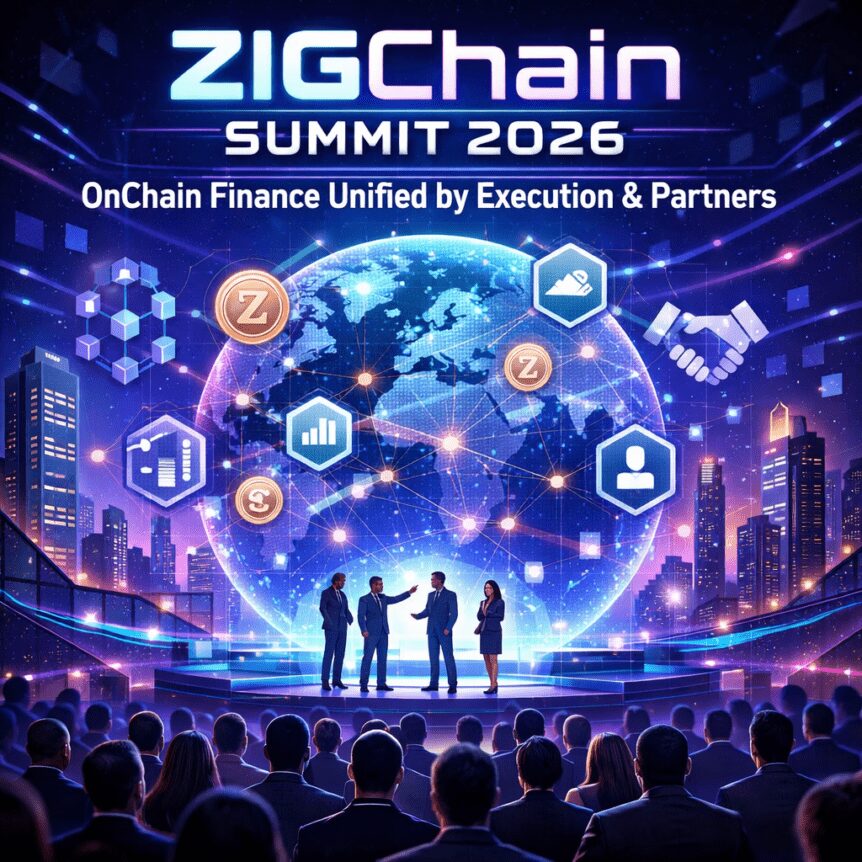
Dubai, UAE — ZIGChain hosted its second annual Summit on April 28 at The Meydan Hotel in Dubai, uniting regulators, institutional capital, and builders to push the adoption of regulated investment products onchain. The event, streamed live on Cointelegraph, illustrated a sector moving from exploration to execution as institutions and regulators converge around a practical framework for onchain finance in the GCC and beyond.
With the theme Nothing Compounds Alone, the program was designed not as a series of standalone talks but as an affirmative blueprint for coordinated progress. Organizers described the eight-session agenda as a mechanism to align capital, technology, and regulation in real time, aiming to accelerate decision-making and speed up the rollout of onchain financial products.
Key takeaways
- Regulatory clarity and multi-agency collaboration in the UAE create a conducive environment for institutional onchain adoption, with VARA, the DFSA, and FSRA cited as complementary pillars.
- Strategic partnerships and product rails on display, including aBeohive collaboration to tokenise UAE private credit and the deployment of Valdora Finance’s non-custodial liquid staking on ZIGChain, highlight tangible progress toward regulated onchain yields.
- The summit underscored a shift from pilot programs to scalable, institution-led deployments, signaling growing confidence in infrastructure and governance that can support large-scale capital allocation onchain.
- Participants from across the ecosystem—circles of capital allocators, custodians, and fintech builders—emphasized a shared objective: accelerate execution by synchronizing regulatory, technological, and financial flows on a common platform.
A milestone for regulated onchain finance in Dubai
The event’s framing around “Nothing Compounds Alone” captured a broader narrative: progress in onchain finance tends to accelerate when risk, governance, and capital are aligned in the same room. Sessions traced the ecosystem’s evolution from laying foundational infrastructure and leveraging the UAE’s regulatory edge to nurturing startup formation, fintech integration, and the tokenization of traditional assets into onchain formats. Attendees noted that policy clarity and interoperable infrastructure are now among the decisive factors that separate pilots from scale.
The UAE’s multi-regulator approach—anchored by VARA, the DFSA, and FSRA—emerged as a practical backbone for instituting governance that can accommodate regulated products onchain. In a market where institutional funds require verifiable compliance, the discussion at the Meydan Hotel reinforced a core takeaway: regulatory readiness is not a constraint but a growth lever for onchain offerings.
Concrete partnerships and product rails on display
One of the summit’s defining moments was the practical evidence of momentum beyond talk. A high-profile partnership with Beehive, the UAE’s regulator-facing SME funding platform, was highlighted as a path toward tokenizing private credit in the UAE. The collaboration, announced in the lead-up to the event, positions tokenized credit as a tangible entry point for institutions and retail participants to access regulated credit markets through onchain channels. For context, Beehive’s platform operates under the Middle East’s DFSA framework to enable regulated SME financing, making it a natural testbed for onchain credit products.
Additionally, Valdora Finance—an established non-custodial liquid staking protocol—announced deployment on ZIGChain. The deployment brings with it Liquid Real-World Asset Vaults, offering institutional-grade real-world yield strategies with liquid access. Together, these developments illustrate the architecture of an onchain ecosystem that is not only capable of handling regulated instruments but also designed to provide scalable, yield-generating access for institutions and informed retail participants alike.
The narrative around ecosystem momentum was reinforced by a roster of collaborations and product reveals throughout the day. The combination of tokenization initiatives, custody, asset management, and onchain yield infrastructure points to a broader strategy: build a regulation-ready, cross-chain ecosystem that can host a spectrum of regulated investment products—from private credit to other securitized assets—on a single, interoperable chain.
The UAE as the world’s onchain capital
A recurrent theme across sessions was the UAE’s positioning at the intersection of capital, policy, and digital asset infrastructure. The country’s regulatory architecture—framed as a multi-layered, cross-agency system—was cited as a critical factor enabling institutional capital to move onchain with confidence. Dubai, in particular, was highlighted as a hub where the convergence of advanced regulation, sophisticated financial players, and capable blockchain infrastructure is most visible and active.
Today’s gathering underscored that the onchain transition is not a distant prospect but a current reality being built through concrete collaborations and regulated deployments. By bringing together builders, allocators, and regulators in one room, ZIGChain demonstrated that the core infrastructure is not only ready but already being put into practice across the GCC and adjacent markets.
As the summit concluded, ZIGChain acknowledged the contributions of speakers, partners, attendees, and the broader ecosystem. The main-stage program, streamed to a global audience via Cointelegraph, signaled a growing appetite among institutional participants to engage with regulated onchain products in a manner consistent with traditional financial standards.
What comes next for onchain, regulated investment products
For investors and builders, the Dubai summit offered a clear implication: the onchain investment frontier is shifting from theory to practice. The Beehive partnership speaks to a concrete pathway for private credit tokenization, while Valdora’s integration illustrates how liquid staking and real-world asset yields can be made accessible to institutional portfolios. The UAE’s regulatory scaffolding provides a credible framework for scaling these products with appropriate oversight, potentially reducing the friction that has long constrained institutional entry into onchain markets.
Going forward, observers will want to watch the speed at which these partnerships convert into live products, the depth of capital that begins to flow through tokenized private credit and other onchain instruments, and how cross-chain interoperability evolves to support broader liquidity and custody solutions. The presence of diverse regulators and strong industry participation suggests a deliberate trajectory toward scalable, compliant onchain finance, rather than episodic pilots.
As the ecosystem matures, market participants will also be watching for additional formal announcements—new tokenized assets, custody arrangements, and further interoperability across chains—that could accelerate adoption. The question for investors remains whether the region’s regulatory clarity and infrastructure will translate into sustained capital formation and a wider array of accessible, regulated onchain products.
With ZIGChain positioning itself as an infrastructure layer for regulated, institutional-grade onchain opportunities, the coming months are poised to reveal how effectively such an ecosystem can scale. The summit’s emphasis on execution—paired with concrete partnerships and a governance-first framework—suggests that the era of practical, regulated onchain investment has begun to crystallize in the Gulf and beyond.


Donald Trump’s cryptocurrency project World Liberty Financial has sued Justin Sun for defamation.
World Liberty accused Sun of launching a “coordinated media smear campaign.” Sun responded, calling the lawsuit a “meritless PR stunt.”
World Liberty said Monday that it filed in the Eleventh Judicial Circuit Court for Miami-Dade County, Florida. It asserted claims for defamation and defamation by implication. It wants damages and a court-ordered retraction, according to the company’s own announcement.
Sun has been upset at World Liberty ever since the project froze the vast majority of his WLFI tokens on September 1, 2025.
World Liberty’s lawsuit today follows Sun’s April 21 complaint in the Northern District of California. In his earlier case, Sun and his companies Blue Anthem Limited and Black Anthem Limited sued World Liberty Financial, noting that Sun’s companies paid $45 million for 4 billion WLFI tokens, including advisory tokens, which have declined in value due to World Liberty’s alleged breaches of contract.
His complaint accuses World Liberty of using undisclosed blacklisting powers over the WLFI smart contract to freeze his tokens. In doing so, he also alleged, World Liberty disabled his governance rights, leaving him unable to vote on proposals that affected token holders.
Sun asked the court to order a financial remedy for “World Liberty’s egregious misconduct, including their breaches of contract, fraud, and conversion.”
Read more: Justin Sun goes to war with World Liberty Financial
World Liberty Financial v. Justin Sun
World Liberty’s de facto countersuit is simple enough.
It claims Sun’s entities broke transfer rules, improperly bought tokens for undisclosed third parties in straw purchases, and eventually bet against the price of WLFI.
Furthermore, it says Sun tried to publicly trash WLFI in public after World Liberty froze his tokens. The company also says its right to freeze Sun’s tokens appeared in sale documents, Sun’s unlock contract, as well as on-chain code.
Read more: Justin Sun wants World Liberty Financial to unmask its X admin
Sun, still nominally an advisor to World Liberty Financial, has engaged very publicly in back-and-forth posts with the World Liberty Team on X almost continuously for the last several months while his tokens have been restricted.
Several sections of the suit remain redacted.
As Protos reported in April, Sun’s blacklisted WLFI tokens have declined by tens of millions of dollars in value since the September freeze.
Sun, in his lawsuit against the World Liberty Financial team, has also threatened to bring a defamation suit.
Got a tip? Send us an email securely via Protos Leaks. For more informed news and investigations, follow us on X, Bluesky, and Google News, or subscribe to our YouTube channel.
K Wave Media, a Nasdaq-listed media and entertainment company, said it is redirecting up to $485 million in remaining financing capacity from a Bitcoin treasury strategy into an artificial intelligence infrastructure buildout, according to a Monday 6-K filing with the US Securities and Exchange Commission (SEC).
The capital will be deployed into data centers, graphics processing unit (GPU) compute operations and related AI infrastructure investments under an amended securities purchase agreement with Anson Funds, the structured equity financing counterparty to the company.
The amendment revises a prior $500 million equity purchase facility, which had been structured to support a Bitcoin treasury strategy, leaving $485 million available for deployment into AI infrastructure initiatives, according to the filing. The Bitcoin treasury was previously announced in 2025 as part of the company’s broader capital markets repositioning.
The company said the shift forms part of a broader restructuring that also includes the planned disposition of its wholly owned subsidiary Play Co., Ltd. and the expected elimination of approximately $48 million in debt and related contingent liabilities.
Related: Strategy takes Bitcoin buying breather ahead of Q1 earnings report
The move marks a sharp strategic reversal for K Wave Media, which had only positioned itself around a Bitcoin treasury strategy in June 2025, alongside earlier initiatives tied to Korean cultural intellectual property and tokenized securities concepts.

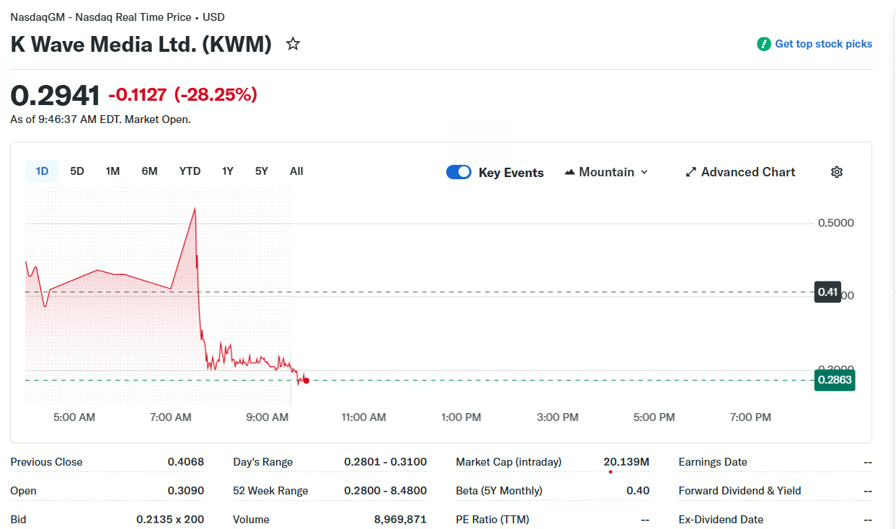
K Wave share price down ~28% pre-market. Source: Yahoo! Finance
The company’s share price has been volatile following the announcement and was down 28.25% at the time of writing since Friday’s close, from ~$0.406 per share to ~$0.294, according to Yahoo Finance data.
Board approves shift toward AI infrastructure strategy
K Wave Media said in the filing that its board has approved a strategic repositioning toward AI infrastructure, including investments in data centers, GPU compute and acquisitions across the AI value chain.
In a statement included in the filing, chief executive officer Ted Kim said the company aims to become “a meaningful participant in the rapidly growing AI infrastructure sector,” citing plans to build a scalable platform across compute and related technologies.
The company also said it is evaluating a potential corporate rebrand, including the name “Talivar Technologies,” subject to shareholder approval at its annual meeting scheduled for early July 2026. The restructuring, including the subsidiary disposal and debt reduction, is intended to significantly de-leverage the company’s balance sheet.
Cointelegraph reached out to K Wave Media for comment, but had not received a response by publication.
Magazine: Bitcoin will not hit $1M by 2030, says veteran trader Peter Brandt
World Liberty Financial filed a defamation lawsuit against Tron founder Justin Sun on Monday. The complaint accuses Sun of running a paid smear campaign to crash the WLFI token.
The Trump-linked Decentralized Finance (DeFi) project says Sun used press, influencers, and bots to amplify false claims after the freeze of his tokens. Sun has rejected the suit and called it a meritless PR stunt.
Court Filing Alleges Drive-to-Zero Campaign
The complaint was filed in the Eleventh Judicial Circuit Court for Miami-Dade County, Florida. World Liberty Financial is seeking unspecified damages and a public retraction from Sun.
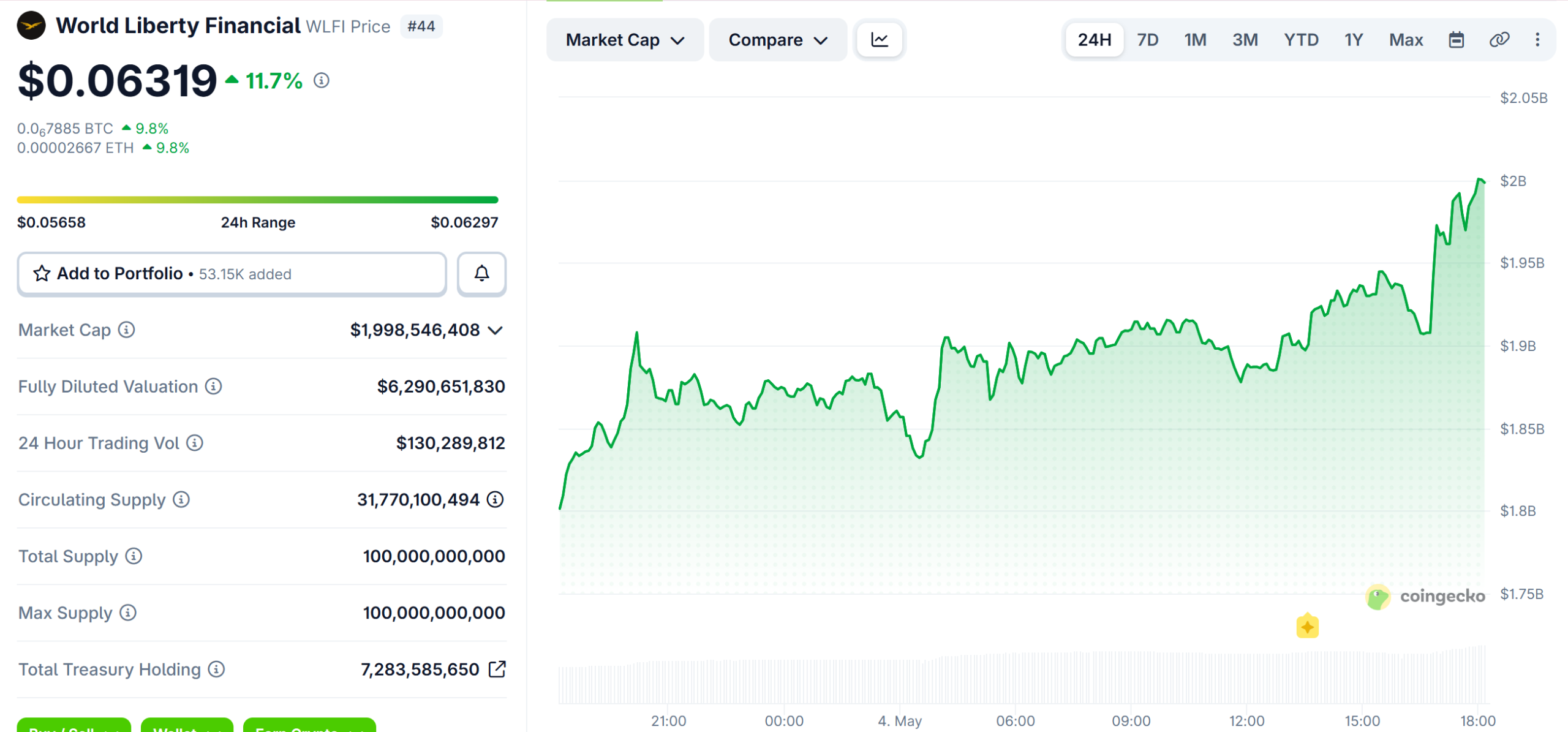
The company says Sun’s posts were designed to suppress WLFI’s market price. The token traded near $0.06 on Monday, up by almost 12% in the last 24 hours.

World Liberty Financial said in its filing announcement that Sun openly stated his intent to harm the project.
“Sun’s lies were designed, in his own words, to drive the token price ‘to shit,’” WLFI wrote on X
Token Freeze Triggered the Public Feud
The dispute began after WLFI used its on-chain controls to lock Sun-linked wallets in September 2025. The project froze 540 million unlocked tokens and 2.4 billion locked WLFI held by Sun’s entities.
World Liberty Financial said Sun’s vehicle, Blue Anthem, transferred tokens to Binance against his investor agreement. The company argues those transfers, plus alleged short selling, justified the freeze.
Sun previously invested $30 million in WLFI and later raised his stake to roughly $75 million.
He filed his own lawsuit in California federal court in late April, alleging fraud and breach of contract.
Smart Contract Controls at the Center of the Fight
The two sides disagree on whether WLFI’s freeze authority was clearly disclosed to investors. Sun has argued the project hid a blacklist function inside its smart contract.
World Liberty Financial counters that the freeze authority was outlined in its Terms of Sale and in Sun’s purchase agreements. The project says its governance process is community-driven and transparent.
WLFI’s price has slumped since the freeze became public last fall. The token is now down more than 75% from its all-time high.
According to Justin Sun, the lawsuit announced Monday is WLFI’s PR stunt, with the Tron executive calling it “meritless.”
The competing lawsuits leave WLFI investors watching two parallel cases. Filings in the coming weeks will test whether the freeze function was contractually disclosed. They will also test whether Sun’s posts crossed into defamation.
The post WLFI Soars 12% As World Liberty Financial Sues Justin Sun for Defamation appeared first on BeInCrypto.
The US Securities and Exchange Commission has delayed the expected launch of the first exchange-traded funds (ETFs) linked to prediction markets after requesting more information about their structure and disclosures, Reuters reported Monday.
The delay affects more than two dozen proposed ETFs from Roundhill Investments, GraniteShares and Bitwise, according to Reuters, citing people familiar with the matter. The issuers filed for the products in February, and launches had been expected this week after a 75-day review period.
The proposed funds would give investors exposure to event contracts tied to binary outcomes, including elections, economic data and market prices, without requiring them to trade directly on prediction market venues such as Kalshi.
The delay marks another development in the US approach to regulating prediction markets, which have attracted scrutiny over insider trading, ethics and market manipulation concerns.
“Delay is likely temporary”
According to the sources cited by Reuters, the delay is likely temporary, suggesting that progress with the filings could resume once the SEC receives and reviews additional details from issuers on product structure and disclosures.
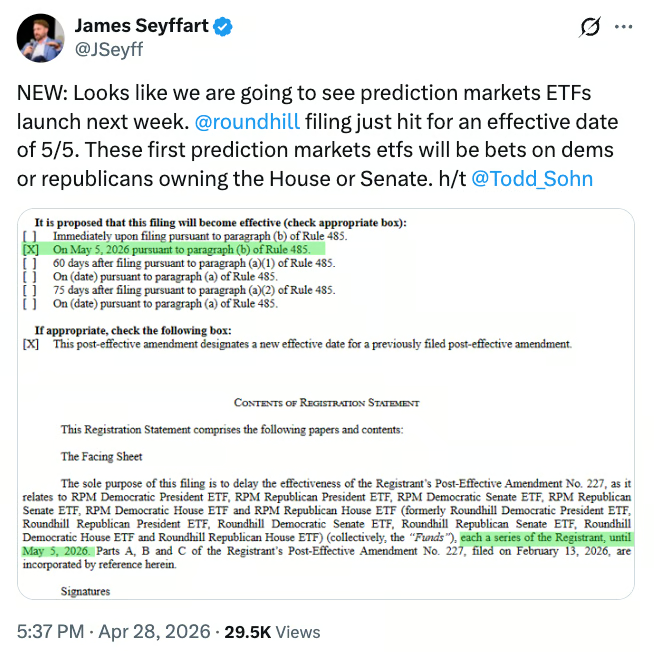
According to Bloomberg ETF analyst Eric Balchunas, the ETFs were expected to launch on Thursday. His colleague James Seyffart last week said Roundhill’s filing had an effective date of May 5, with the first prediction market ETFs linked to event-contract outcomes such as whether Democrats or Republicans control the House or Senate.

Source: James Seyffart
How prediction market ETFs would work
Prediction market ETFs are designed to give investors exposure to binary event contracts without requiring them to trade on specialized prediction markets platforms.
Specific features differ across more than 20 of the proposed ETFs, but the products generally use derivatives to track the odds of binary “yes” or “no” outcomes in underlying contracts traded on CFTC-regulated platforms such as Kalshi. These contracts settle at $1 if an event occurs and $0 if it does not.
Roundhill previously highlighted significant risks associated with the proposed ETFs in its February filings, stating that investments in event contracts involve “unique risks that differ from those associated with traditional futures, options or securities.”
Related: A16z sides with CFTC against states seeking to ban prediction markets
The company said such investments could result in significant losses, valuation uncertainty and deviations from the fund’s investment objective.
It also pointed to potential settlement issues tied to how event outcomes are interpreted, including errors, ambiguities or disputes over the definition of the underlying event, the data sources used or the timing of determination.
Magazine: How to fix suspected insider trading on Polymarket and Kalshi
Around 40 new jobs to be created as Procure Smart launches Newcastle office

Kraken’s parent company Payward alleges $25 million crypto custody fraud in lawsuit against Etana and firm’s CEO

King Arthur’s Sword Real? Excalibur Found In A Stone By Archeologists

Manchester United reach agreement with Casemiro over contract clause amid transfer speculation

US brings back mandatory military draft registration

Steven Gerrard disagrees with Gary Neville over ‘shock’ Chelsea and Arsenal claim | Football


-

 Tech7 days ago
Register Renaming | Hackaday
-

 Politics7 days ago
Drax board avoid their own AGM, accused of greenwashing & environmental racism
-

 Fashion6 days ago
Kylie Jenner’s KHY Enters a New Era with ‘Born in LA’
-

 NewsBeat23 hours ago
Channel 5 – All Creatures Great and Small series 7 new post
-

 Tech7 days ago
Images of Samsung’s rumored smart glasses have leaked
-
 Tech3 days ago
Trump’s 25% EU auto tariff breaches Turnberry Agreement that also covers semiconductors and digital trade
-

 Business6 days ago
Most Commercial Energy Audits Miss the Real Losses
-

 Crypto World6 days ago
CFTC’s AI will review U.S. crypto registration applications, chairman tells CoinDesk
-
 Sports3 days ago
Paul Scholes issues Marcus Rashford reality check as agreement emerges over Man United star
-

 Business5 days ago
Barclay Brothers Avoid Bankruptcy: HSBC Drops High Court Petitions After IVA Deal
-
 Business5 days ago
Tesla Officially Registers Elon Musk’s Stock: What Investors Need to Know
-

 Tech6 days ago
Get Ready for More Brain-Scanning Consumer Gadgets
-
 Crypto World6 days ago
Robinhood Phishing Scam Exploits Gmail Dot Feature to Bypass Security
-

 Crypto World6 days ago
Gmail Dot Trick Underpins Robinhood Phishing, Sending Real-Looking Emails
-

 Entertainment7 days ago
Sister Wives: Janelle Posts New Scary Warning
-

 Entertainment7 days ago
Michael Jackson’s Biopic Excluded Abuse Allegations For $25M
-

 Business4 days ago
Two Powerball Tickets Split $143 Million Jackpot in Indiana and Kansas
-

 Business7 days ago
Superdry co-founder accused of raping woman
-
 Crypto World7 days ago
Meme Coin Based on White House Shooter Conspiracy Rallies 320%
-

 Tech7 days ago
YouTube TV’s Multiview Feature Just Got A Game-Changing Upgrade
You must be logged in to post a comment Login