
Crypto World
Altcoin open interest overtakes Bitcoin after 21 months



Aggregate open interest in altcoin perpetual futures surpassed Bitcoin’s for the first time since December 2024 on Sept. 6, reflecting increased leveraged trading as Zcash and the wider altcoin market rallied.
Summary
- Coinalyze data showed altcoin perpetual futures open interest surpassing Bitcoin’s for first time since 2024.
- Bitcoin perpetual open interest remained near $23.9 billion, representing roughly 37% of aggregate tracked positions.
- Zcash open interest reached about $2.4 billion as short liquidations exceeded $34 million during breakout.
- Altcoin market capitalization outside the ten largest assets increased above $200 billion during early September.
- Open interest records outstanding contracts but does not reveal whether positioning is bullish or bearish.
Bitcoin’s aggregate open interest stood near $25 billion on Sept. 7, according to Coinalyze. Perpetual contracts accounted for approximately $23.9 billion, while dated futures represented about $1.2 billion.
Bitcoin held around 37% of the perpetual open-interest market tracked by the platform. The combined share of altcoin contracts therefore exceeded Bitcoin’s share, although the altcoin category combines positions across many different assets.
Altcoin open interest now exceeds Bitcoin’s share
Open interest measures the value of outstanding derivatives contracts that traders have not closed or settled. It rises when participants establish new positions and declines when positions are closed, expire or face liquidation.
The metric does not show whether traders are collectively bullish or bearish. Each derivatives contract has both a long and short side, making rising open interest primarily a measure of participation and leverage.
Funding rates provide additional context. Positive funding generally indicates that long positions are paying shorts, while negative funding suggests stronger demand for bearish exposure. Price movements and liquidation data can then help identify which side is under pressure.
The altcoin crossover therefore does not prove that traders expect every token to appreciate. It shows that the combined value of outstanding altcoin perpetual positions has moved above Bitcoin’s total.
Market structure also matters. Bitcoin remains the largest individual crypto derivatives market. The competing altcoin figure combines Ether, Solana, XRP, BNB, Zcash and hundreds of smaller tokens.
Bitcoin’s share could recover quickly if traders add new BTC positions or if altcoin leverage is removed through liquidations. The crossover is best treated as a snapshot of current positioning rather than a permanent change in market leadership.
Zcash drove part of the derivatives expansion
Zcash became one of the clearest examples of rising altcoin leverage. ZEC futures open interest climbed to approximately $2.3 billion to $2.4 billion as the privacy token moved above $1,000 in early September. ZEC rose about 20% on Sept. 4 and reached an intraday high near $1,023. The advance liquidated approximately $36.6 million in leveraged positions, including about $34.5 million held by short sellers.
The token continued climbing after the initial breakout. ZEC traded near $1,192 on Sept. 7, up approximately 11% during the latest session, with prices ranging between roughly $1,074 and $1,249. Crypto.news reported that the rally coincided with Zcash becoming the first privacy coin with a U.S. spot ETF. Grayscale converted its Zcash Trust into the ZCSH exchange-traded fund on NYSE Arca in August.
The fund launched with approximately $304 million under management, according to the report. Its assets later passed $414 million as ZEC prices and investor interest increased. Short liquidations also accelerated the rally. Exchanges close bearish positions by purchasing the relevant asset or contract when traders no longer hold enough collateral. This forced buying can push prices higher during an already strong move.
The same mechanism can operate in reverse. If ZEC falls, leveraged long positions may be closed through forced sales, adding pressure when market liquidity is limited.
Earlier data had already shown derivatives activity outpacing spot demand. Crypto.news reported that ZEC futures volume reached $3.55 billion against $312 million in spot volume during a snapshot before the $1,000 breakout.
Higher dollar prices can inflate open interest
An increase in dollar-denominated open interest does not always mean traders added the same amount in new positions. The value can rise because the underlying token appreciates, even when the number of contracts remains unchanged.
ZEC provides a clear example. If 2.3 million ZEC remain committed to futures positions, their dollar value rises automatically when the token moves from $800 to $1,000. New positions and price appreciation can also occur together. Distinguishing between them requires reviewing open interest in both token and dollar terms.
The relationship between price and open interest provides useful context. Rising prices accompanied by rising open interest can indicate that traders are adding exposure. Rising prices with falling open interest may indicate that short sellers are closing positions.
Falling prices and declining open interest commonly point to long liquidations or voluntary position closures. Falling prices with rising open interest may indicate new short exposure, although funding data is needed to support that interpretation.
Crypto.news previously explained that open interest and funding rates represent stored liquidation pressure. A liquidation spike accompanied by a sharp decline in open interest indicates that leverage has left the market. A small decline suggests that traders may still be heavily positioned.
Spot altcoin valuations also increased
The market capitalization of altcoins outside the ten largest crypto assets rose above $200 billion during early September, according to figures cited alongside the Coinalyze crossover.
The category gained more than 10% from the beginning of the month. That increase suggests that rising derivatives activity occurred alongside higher spot valuations rather than entirely within futures markets.
Market capitalization does not directly measure the amount of new money entering an asset. It multiplies the latest traded price by circulating supply, so relatively small purchases can increase the calculated value of all circulating tokens. Bitcoin, meanwhile, traded near $79,575 on Sept. 7, down approximately 0.4% during the latest session. Its intraday range extended from roughly $79,460 to $80,494.
The combination of stable Bitcoin prices and stronger altcoin gains is consistent with traders accepting more risk. It does not establish that investors sold Bitcoin specifically to finance altcoin purchases.
The broader altcoin market had struggled earlier in 2026. Crypto.news reported that assets excluding Bitcoin and Ether lost nearly 23% during the first half, as liquidity concentrated in larger cryptocurrencies and stablecoins.
The September recovery therefore follows a prolonged period of weaker performance rather than beginning from an established altcoin bull market.
Liquidation risk depends on market depth
Elevated open interest becomes dangerous when leveraged positions grow faster than available liquidity. A sudden price move can then force exchanges to close positions more quickly than order books can absorb them. Long liquidations add forced selling during a decline. Short liquidations create forced buying during a rally. Both can amplify the original movement and produce a cascade across multiple exchanges.
The risk depends on margin levels, collateral quality, position concentration and spot-market depth. Open interest alone cannot identify when a liquidation event will begin. The original report claimed that liquidation events tend to accelerate when aggregate open interest reaches approximately 4.42% of total market capitalization. However, it did not link to a primary study or publish the methodology used to establish that threshold.
The 4.42% figure should therefore be treated as an unverified estimate rather than a dependable market trigger. Assets with similar ratios can behave differently because their liquidity, exchange distribution and collateral requirements vary.
Recent market events show how quickly leverage can unwind. Bitcoin dropped from above $81,000 to below $78,000 in August, while long positions accounted for around $270 million of liquidations. Crypto.news reported that Bitcoin open interest fell as leveraged longs exited.
The altcoin market may be more sensitive because many tokens have thinner order books than Bitcoin. A position that appears manageable under ordinary trading conditions can become difficult to close during a rapid move.
The 2024 crossover does not guarantee another correction
The previous crossover occurred in December 2024 and was followed by corrections across several mid-cap tokens. Bitcoin remained comparatively stable during part of that period. One historical occurrence does not establish a reliable predictive relationship. Market liquidity, exchange composition, leverage limits and collateral structures have changed since 2024.
Other developments may also have contributed to the earlier corrections, including macroeconomic conditions, token-specific news and broader shifts in risk appetite. Timing alone cannot prove that altcoin open interest caused the declines.
The most useful signals now include funding rates, spot trading volume and changes in open interest. Rising leverage combined with expensive funding and weakening spot demand would indicate a less stable market.
A decline in open interest while prices remain firm would suggest that excess leverage is leaving without causing a wider sell-off. Continued growth in both spot volume and open interest could indicate that derivatives activity still has underlying demand.

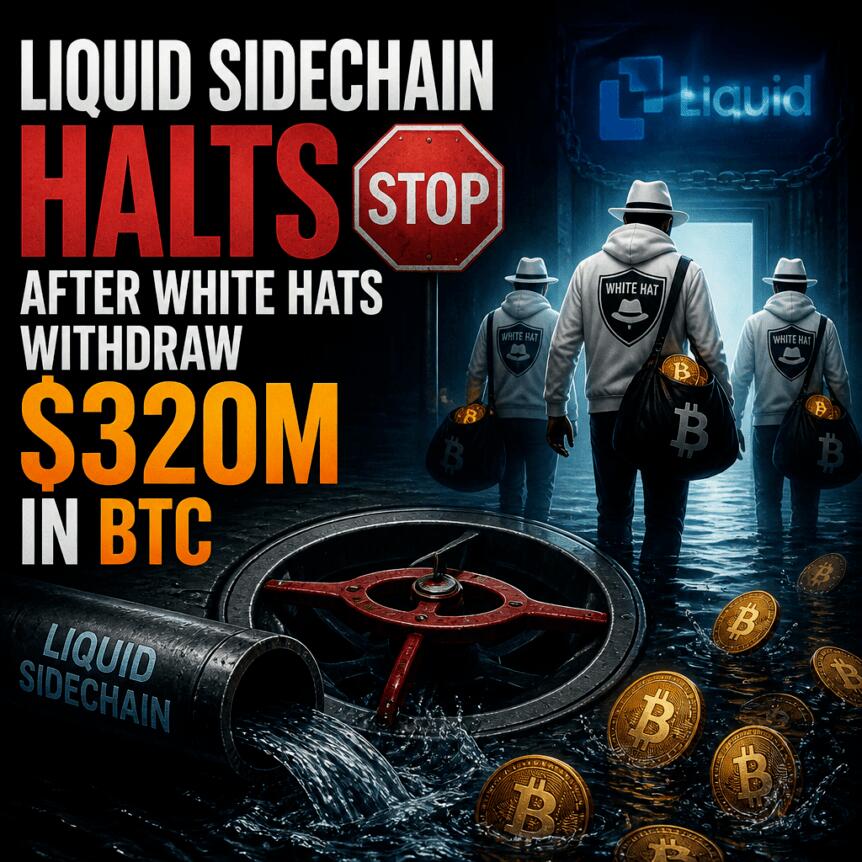
Liquid, the Bitcoin sidechain operated by Blockstream, has paused operations after actors who claim they are “white-hat” hackers withdrew roughly 4,000 BTC from Liquid’s federation wallet—an amount the report describes as worth about $320 million. The move has triggered a wider shutdown of bridge activity, with Liquid saying new transactions are currently blocked.
On Sunday, Liquid said it disabled bridge nodes, halting activity that would otherwise allow users to move funds between Bitcoin and Liquid’s network. Exchanges, meanwhile, were either already stopping deposits and withdrawals of L-BTC or preparing to do so, according to Liquid’s public statements.
Key takeaways
- Liquid disabled bridge nodes after actors withdrew about 4,000 BTC from the federation wallet, leaving the sidechain in a paused state.
- Liquid and Blockstream say they contacted the actors through signed on-chain messages seeking a remediation and coordinated return of funds.
- Liquid estimates the withdrawn BTC represented about 95% of the wallet’s roughly 4,200 BTC balance at the time of the incident.
- L-BTC bridge-related activity was stopped, while Liquid says other issued assets on the network—including USDT—were not affected.
- SideSwap says its peg-out service processed a withdrawal order using its PAK and that the key was not compromised, attributing the source of the L-BTC to a bug in Elements.
Bridge nodes disabled as federation wallet is emptied
Liquid’s response centers on preventing further bridge transactions while the federation works through the situation. Liquid stated that bridge nodes were turned off, which stops new transactions from being created or relayed through the bridge.
The immediate market-facing impact was felt by custodians and exchanges supporting L-BTC. Liquid said exchanges had halted or were in the process of halting L-BTC deposits and withdrawals—effectively reducing the risk of users interacting with a bridge that is no longer operating normally.
Liquid said the seized Bitcoin amount was taken from its federation wallet. The report notes that the withdrawn BTC accounted for approximately 95% of a federation balance that was around 4,200 BTC prior to the incident.
On-chain messages and a demand to patch before funds return
Blockstream, Liquid’s technology provider, reportedly began contacting the actors directly using signed on-chain messages. Subsequent messages, as described in the reporting, show the actors telling Blockstream to patch the vulnerability and ensure that every node is updated before they would return most of the Bitcoin.
The actors also reportedly provided encrypted technical details to Blockstream. According to Galaxy Digital research head Alex Thorn, those details were shared through the same channel of communications.
As of the time of writing, the funds had not been returned, leaving the sidechain paused and raising an open question for Liquid users: even if the actors’ stated intent is to improve security, the operational downtime could persist until updates are verified across the network.
Other Liquid-issued assets reportedly unaffected
Liquid said other assets issued on the network were unaffected. That includes tokens and instruments such as USDT, DePix, and real-world assets (as referenced in the report). The sidechain’s pause appears focused on bridge functionality and the federation wallet state, rather than a broader halt of every on-chain activity.
For traders and integrators, this distinction matters. When a sidechain pauses because of bridge-layer issues, it can limit the ability to move assets in or out, but it may still allow certain on-network transfers—depending on the specific operational constraints put in place by the federation and bridge nodes.
SideSwap attributes peg-out details to Elements, not its system
One of the most specific parts of the incident response came from SideSwap, which said the withdrawal passed through its peg-out service as a customer order using its Peg-out Authorization Key (PAK). SideSwap emphasized that the PAK was not compromised.
The company’s statement further claims that the L-BTC used in the transaction originated from a bug in Elements—the open-source software that underpins Liquid—rather than from a compromise or failure within SideSwap’s systems.
That framing is significant because it shifts attention from custodian or peg-out authorization credentials toward the base protocol layer. If the vulnerability truly stems from Elements behavior, the remediation would likely require coordinated updates not only on the bridge or federation components, but also across the surrounding software stack that interfaces with Liquid nodes.
What to watch next for Liquid users and integrators
Until Liquid and Blockstream complete the patching and federation-wide node updates demanded in the messages, the bridge will remain paused and L-BTC flows are likely to stay constrained. Users should monitor further public updates from Liquid and Blockstream—especially any confirmation that the patched version is fully propagated across nodes and that exchanges resume deposits and withdrawals safely.
Crypto World
Supposed White-Hat Hackers Drain $320 Million in BTC From Liquid Network, Say They’ll Return It After Fix

Bitcoin Layer 2 network Liquid Network has reported a security incident in which purported white-hat hackers withdrew approximately 4,000 BTC, worth $320 million, from the Liquid Federation wallet.
Blockstream is attempting to contact the parties involved through a signed on-chain message.
Network Bug Must Be Fixed First
In an update, Liquid said the funds were withdrawn using the SideSwap PAK (Peg-out Authorization Key) but stated that the key itself was not compromised and that no other keys were in jeopardy. Crypto exchanges have been informed and have already suspended, or are preparing to suspend, LBTC deposits and withdrawals.
Liquid said other assets on the network, including USDT, DePix and real-world assets, were not affected. The network has also temporarily disabled its bridge nodes, meaning new transactions cannot be submitted. As a result, the sidechain is effectively paused while the issue is being addressed.
“Liquid wallets will be impacted, and we’re sorry for any inconvenience. Federation members are actively working on resolving this so we can restore normal network activity.”
The public back-and-forth between Blockstream and the party claiming to be the white-hat hacker behind the withdrawal is continuing on-chain. According to Samson Mow, the hacker appears to prefer communicating publicly rather than via email, and is posting messages via Bitcoin transaction data.
They even asked Blockstream to make contact on Signal at @m671aw.70″
The exchange began at 11:30 AM PDT, when the hacker wrote, “we are whitehats. contact us on chain.” Blockstream responded at 12:31 PM on September 6 and asked the hacker to contact its security team by email. Later, Blockstream sent an encrypted, PGP-signed message to the hacker’s key.
The discussion between @Blockstream and the white-hat hacker (WHH) regarding the ~4000 BTC from @Liquid_BTC is happening in public. It seems to be their preference over email. As it’s hard to follow the chain of messages in OP_RETURN, here’s a summary with links.
11:30 AM PDT -… https://t.co/IEXyFpBITx
— Samson Mow (@Excellion) September 7, 2026
At 7:20 PM, the hacker said they planned to send most of the funds back and asked whether a specified address was acceptable. About an hour later, they said the bug needed to be fixed first, and added,
“The chain is under risk at latest commit right now. Make sure every node is patched. Then we will transfer the money back safely after confirming the fix.”
Blockstream replied, “Yes, thank you,” at 8:30 PM. As of 9:12 PM PDT, around 3,998.5 BTC remained unmoved. There were no further messages from either side.
Unusual Hacker Behavior
Ledger CTO Charles Guillemet was skeptical of the white-hat claim and pointed out that legitimate security researchers would not typically drain a bridge and then ask to be contacted on-chain.
He drew parallels with the Ronin hack, in which attackers stole around $625 million after compromising validator keys, and the Euler exploit, where the attacker sought to negotiate the return of funds after the theft.
The move to Signal also did little to change Guillemet’s opinion that the behavior was unlike usual white-hat activity. Despite this, the exec noted that criminal groups do not typically reach out to their victims either.
The post Supposed White-Hat Hackers Drain $320 Million in BTC From Liquid Network, Say They’ll Return It After Fix appeared first on CryptoPotato.
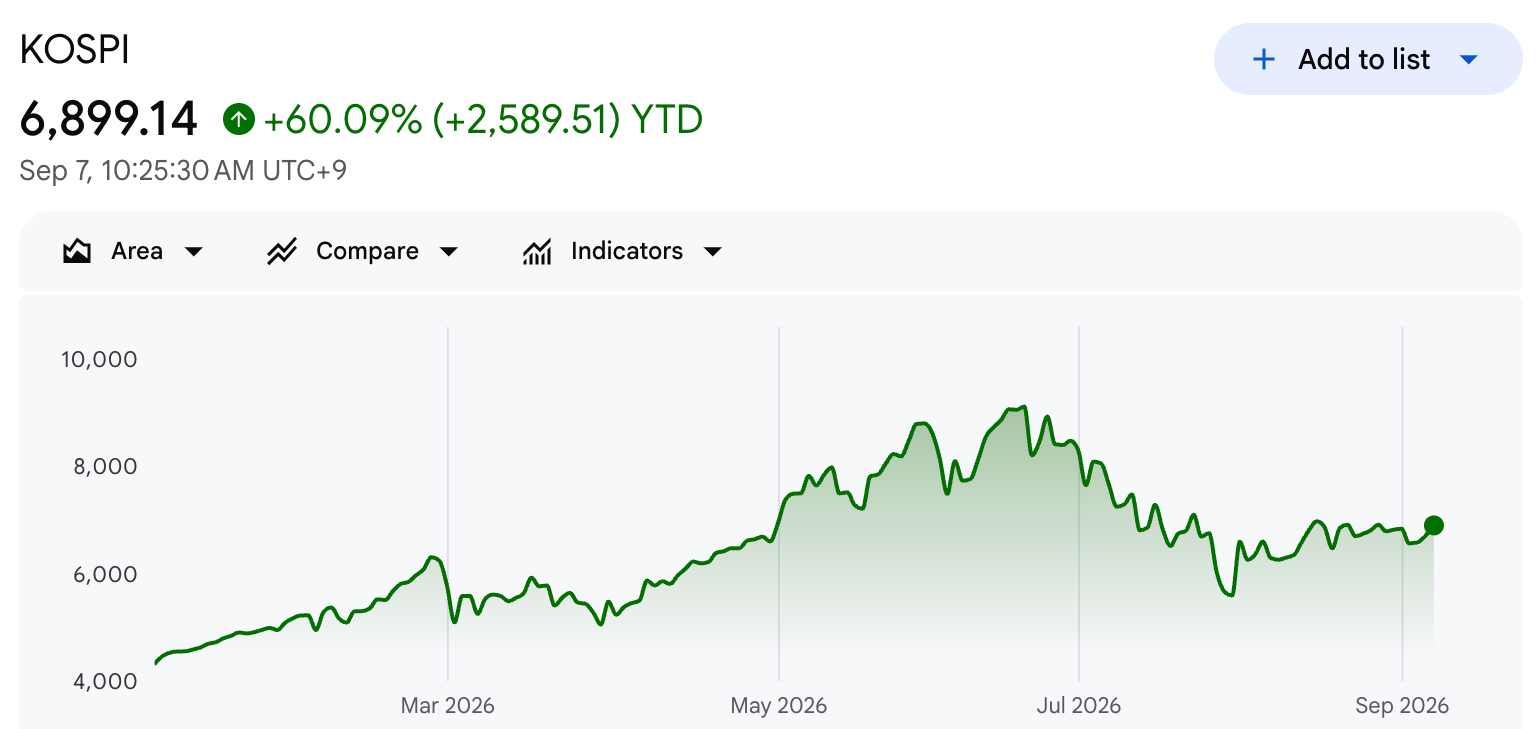
South Korea’s KOSPI index would need to climb roughly 74% to reach the level Goldman Sachs strategist Timothy Moe still expects. He is holding a 12,000 target set before the index lost a quarter of its value.
Moe, the bank’s chief Asia Pacific equity strategist, published the call three months ago and has not revised it. What has changed is the price, not his forecast.
Why the KOSPI Rally Turned Violent
The index still trades near 6,899, up roughly 60% in 2026, even after slipping about 24% from its June record close.

Its two heavyweights have done most of the lifting. SK Hynix has gained about 157% year to date, while Samsung Electronics has more than doubled, up 106%.
The path there has been anything but smooth. July delivered the sharpest reversal, when a leveraged ETF unwind hit Korean retail investors hard.
Leveraged funds tracking the two chipmakers then posted their first monthly outflow in August, shedding close to $1 billion. Swings got wide enough that Bitcoin (BTC) spent stretches of 2026 calmer than the KOSPI.
Follow us on X to get the latest news as it happens
Goldman KOSPI Target: Why 12,000 Is Still on the Table
Still, Moe’s case rests on earnings. He expects KOSPI members to deliver earnings growth near 360% this year, cooling to roughly 35% in 2027.
“We’re still holding to it — it’s driven by what we think will be earnings delivery..The market is underpricing the duration of this earning cycle,” he said.
Valuation does much of the remaining work. His 12,000 target assumes 7.5 times forward earnings. The index currently fetches 5.3 times, about half its seven-year average.
Demand supplies the rest. Moe estimates US Big Tech spending will top $1.2 trillion next year, far above earlier projections near $800 billion.
Risks cut the other way, too. He flags Chinese rival ChangXin Memory Technologies, known as CXMT, as well as potential political resistance to new data centers in the United States.
Delivery remains the sticking point. Samsung and SK Hynix have posted strong quarters this year with little market reward, so the next results will test whether earnings alone can close a 74% gap.
Moe is not the only strategist leaning into the dip. Morgan Stanley lifted Korea to overweight in early August, with a target of 9,000.
Subscribe to our YouTube channel to watch leaders and journalists provide expert insights
The post Goldman Strategist Holds 12,000 KOSPI Target: Will Memory Earnings Close a 74% Gap? appeared first on BeInCrypto.
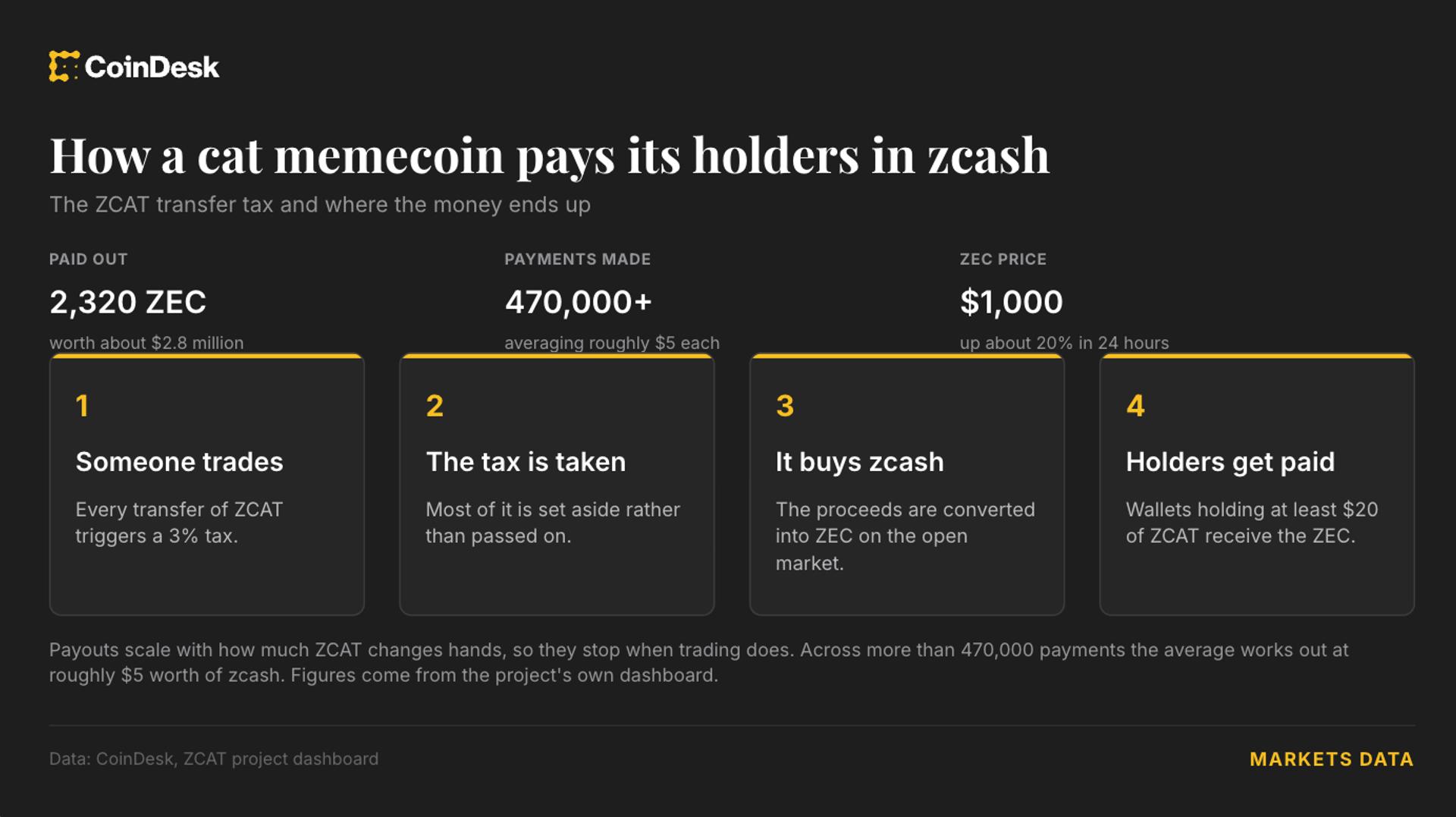
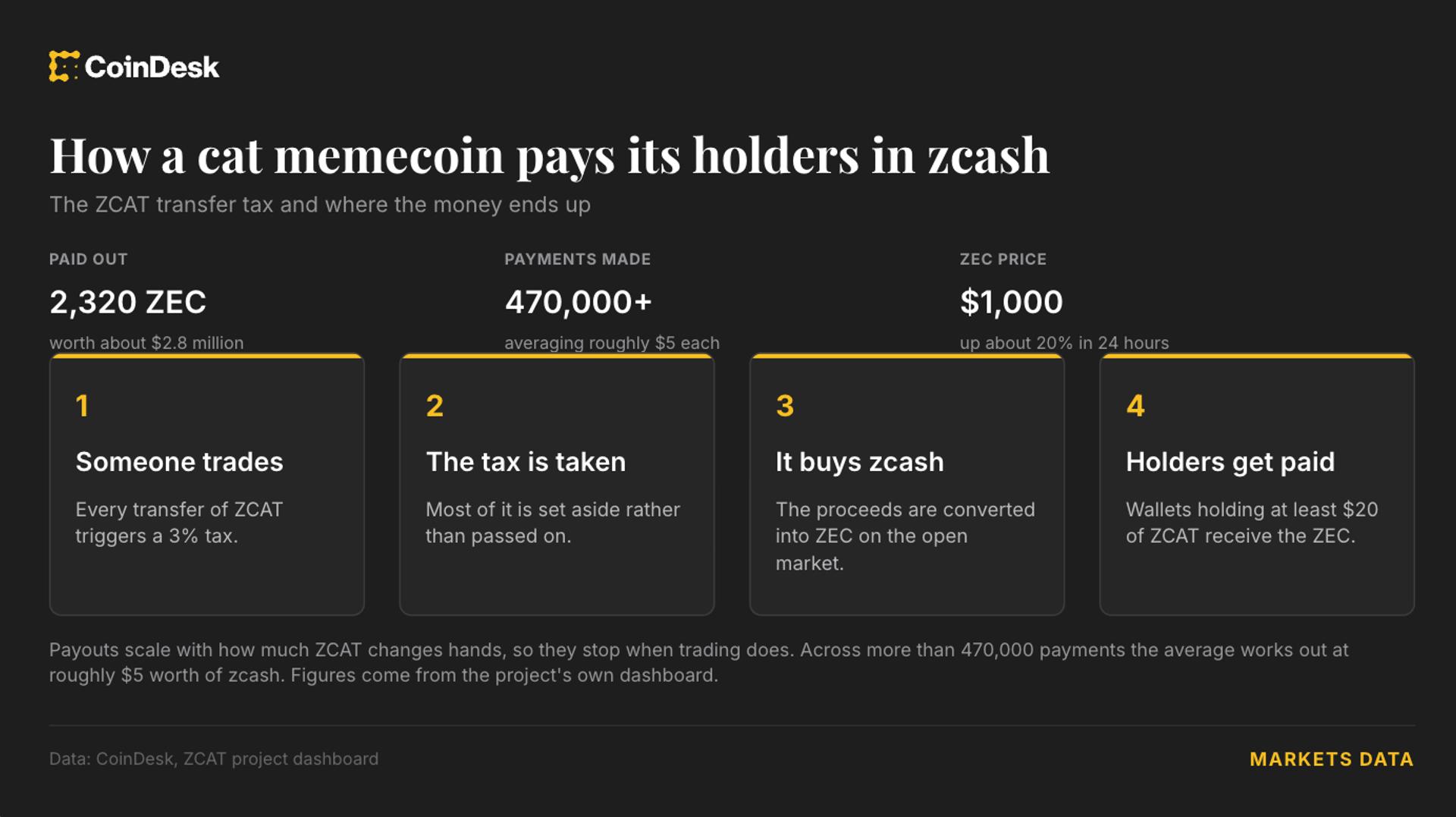
A brand new ZCAT token charges a 3% tax whenever the token moves and uses the proceeds to distribute ZEC to holders, creating an unusual link to one of crypto’s hottest assets.
Crypto World
Pi Network ships Protocol 27 on September 15. Seven years of building are about to get tested.


Protocol 27 delivers smart contract authentication, an automated market maker DEX, and RPC server infrastructure to a blockchain with 14 million migrated users. The September 15 mainnet activation is the moment Pi Network proves it can build real products or admits that seven years of mobile mining was the product all along.
Summary
- Pi Network will activate Protocol 27 on mainnet September 15, 2026, completing testnet deployment that began August 21 and bringing automated market maker liquidity pools, smart contract authentication, and RPC infrastructure to production.
- The upgrade follows Protocol 26, which forced all 421,000 node operators to update by August 11 or lose connectivity, clearing the path for the final planned protocol upgrade.
- Pi Launchpad already stress tested the DEX on testnet through the SLICE token launch, drawing 242,000 Pioneers who committed 15.92 million Test-Pi across 17 days.
- PI trades near $0.095 with a $1.06 billion market cap as of early September 2026, down more than 97% from its February 2025 all-time high of $2.99, weighed by monthly token unlocks releasing roughly 6.5 million coins per day.
- The Pi Core Team released PiVerify, Pi Sign-In, and SoloHost at Pi2Day 2026, giving external developers identity tools and a computing framework that did not exist a year ago.
Protocol 27 delivers smart contract authentication, an automated market maker DEX, and RPC server infrastructure to a blockchain with 14 million migrated users. The September 15 mainnet activation is the moment Pi Network proves it can build real products or admits that seven years of mobile mining was the product all along.
Pi Network has spent seven years telling the world that it is building something different. On September 15, the world gets to check the receipts.
Protocol 27 is the upgrade the Pi Core Team has called the “final planned” protocol change in the current development sequence. That phrase carries weight. It means the team believes the base layer is finished, or close enough to finished that everything coming next sits on top of it rather than inside it. Smart contract authentication, automated market maker liquidity pools, RPC server infrastructure, and a decentralized exchange that already drew 242,000 testers on testnet are all part of the package. When Protocol 27 goes live, the excuses run out.
The timing is deliberate. Pi closed August at $0.0909, sitting more than 97% below the $2.99 all-time high it touched when the open mainnet launched external trading in February 2025. Monthly token unlocks dump roughly 6.5 million PI per day into circulation. Exchange listings on OKX, Bitget, Gate.io, and MEXC have not stopped the bleeding. Binance still has not listed the token despite an 86.8% community vote in favor. The market has been patient with Pi Network for a long time. Protocol 27 is where patience converts into a verdict.
From Stanford dorm room to 60 million Pioneers
Pi Network launched on March 14, 2019, Pi Day, built by three Stanford graduates who believed cryptocurrency was too hard for normal people to access. Nicolas Kokkalis, a computer science Ph.D. whose doctoral work at Stanford involved building smart contract frameworks on fault-tolerant distributed systems before Ethereum existed, led the technical side. Chengdiao Fan, also a Stanford Ph.D., handled product. Vincent McPhillip, an MBA graduate, ran growth. Visiting researcher Aurelien Schiltz rounded out the founding team.
The pitch was simple: mine crypto on your phone without draining the battery. Tap a button once a day. Invite friends. Build a security circle. The mining was not proof of work in any traditional sense. It was closer to a faucet with social verification layered on top. Critics called it a glorified sign-up counter. Supporters called it the most accessible onboarding mechanism crypto had ever seen.
Both sides had a point. By 2026, Pi Network claims more than 60 million registered users across 200 countries. That number makes it one of the largest user bases in all of cryptocurrency. But registered users and active participants are not the same thing. Roughly 19 million have completed KYC verification. About 14 million have migrated their tokens to mainnet. The gap between 60 million and 14 million tells you something about friction, about how many people tapped that button and then never came back when the network asked them to prove they were real.
The KYC system itself is worth examining. Pi uses a combination of AI-powered document verification and human validators who review applications and flag inconsistencies. The process includes liveness detection, sanctions screening, AML checks, and duplicate account detection. The Core Team has said openly that their KYC is designed to reject accounts, not rubber-stamp them. That philosophy has slowed migration but produced a verified user base that few crypto projects can match in scale.
Pi Network has positioned its 18 million verified users as a competitive advantage rather than a vanity metric. Whether that advantage translates into economic activity is exactly what Protocol 27 needs to prove.
What Protocol 27 actually changes
Strip away the marketing language and Protocol 27 does three things that matter.
Smart contract authentication. This is the headline feature. Protocol 27 expands how applications verify user identity within on-chain logic, building on the Pi Sign-In and PiVerify infrastructure the Core Team released at Pi2Day 2026 in June. In practical terms, smart contracts on Pi can now support more advanced permission rules. Accounts and applications get more flexible, more secure ways to authorize transactions. If you are building an app on Pi and you need to confirm that the user interacting with your contract is a real, KYC-verified person, Protocol 27 gives you the on-chain tools to do that without relying on off-chain workarounds.
This is not a small thing. Identity-gated smart contracts are something the broader crypto industry has talked about for years without shipping at scale. Pi is not claiming to have solved decentralized identity, but it is claiming to have built authentication primitives that work within its own ecosystem. The difference between those two claims matters, and Protocol 27 is where the distinction gets tested.
RPC server infrastructure. Protocol 27 adds the plumbing that external developers need to connect to the Pi blockchain without running a full node. RPC servers are not glamorous. They do not make headlines. But they are the reason developers can build on Ethereum, Solana, or any other chain without downloading the entire blockchain first. Pi has been criticized for years for making it difficult for outside developers to build on the network. RPC infrastructure is the fix.
Automated market maker and DEX. The integrated order book and AMM decentralized exchange moves from testnet to mainnet. This is where Pi token holders will be able to swap tokens, provide liquidity, and participate in new token launches through the Pi Launchpad without leaving the Pi ecosystem. The AMM model means liquidity pools set prices algorithmically rather than relying on traditional order matching.
Protocol 27 targets September 15 as the mainnet deployment date, with three weeks of testing across Testnet 1 and Testnet 2 before activation. The timeline is aggressive. It is also the kind of timeline that a project in Pi’s position needs to hit.
The SLICE test that nobody outside Pi noticed
Before Protocol 27 goes live, the Pi Launchpad already ran what amounts to a full dress rehearsal. From June 11 to 28, the Core Team launched SLICE, a test token with no monetary value, on the testnet DEX. The results deserve attention even though they happened in a sandbox.
242,000 Pioneers participated. They committed 15.92 million Test-Pi toward token acquisition. The launch tested the full Launchpad lifecycle: token issuance, AMM pool creation, liquidity bootstrapping, and real-time price discovery through swaps. The Core Team revised the participation model after the first test round to simplify the user experience and improve fairness, adding a fair access mechanism designed to prevent large participants from dominating token allocations.
Those numbers matter for a specific reason. A DEX is only as useful as the people who show up to use it. Getting 242,000 participants in a testnet exercise where the tokens have zero real value suggests genuine curiosity, or at least muscle memory from years of tapping buttons. The question Protocol 27 answers is whether those same users show up when real money is on the line.
The SLICE test also revealed something about Pi’s approach to DEX design. Rather than copying Uniswap’s pure AMM model or building a traditional central limit order book, Pi Launchpad combines both. The hybrid model lets price discovery happen through automated curves while still allowing limit orders. It is a design choice that suggests the Core Team is thinking about users who have never used a DEX before, which tracks with Pi’s entire history of prioritizing accessibility over sophistication.
Pi2Day and the developer toolkit that changed the pitch
On June 28, Pi2Day 2026, the Core Team dropped three products that quietly shifted what Pi Network is. Before Pi2Day, Pi was a blockchain with a big user base and limited developer tools. After Pi2Day, it became a blockchain with a big user base, identity infrastructure, and a computing framework.
SoloHost is an open, permissionless framework on Pi Desktop where developers can build and list apps that run local AI and distributed computing workloads. Users discover and run these apps on their own machines, interacting through mobile devices on Pi Browser. The pitch is that Pi’s 60 million users are not just token holders. They are potential compute nodes.
Pi Sign-In lets users log into third-party websites and applications using their Pi accounts. No separate usernames. No separate passwords. For developers, it means access to Pi’s 18 million KYC-verified users without building an identity system from scratch.
PiVerify is the business-facing identity layer. It offers document verification, liveness detection, sanctions screening, AML checks, and duplicate account detection through a combination of AI and human review. This is Pi selling its KYC infrastructure as a service to companies that need compliant identity verification but do not want to build it themselves.
Pi shipped its DEX while the broader market looked away, and the developer tools that launched alongside it may matter more than the exchange itself. Identity is the one thing Pi has that most chains do not. PiVerify and Pi Sign-In turn that advantage into products other businesses can actually use.
The Core Team followed up on September 5 with three more developer features: local storage for apps, access to app-specific staking data, and a file and video sharing function. These are not headline-grabbing releases. They are the kind of incremental tooling updates that signal a team actually building for developers rather than announcing vaporware at conferences.
The numbers that keep Pi honest
Optimism about Protocol 27 needs to exist alongside the numbers that explain why PI trades at $0.095 instead of $2.99.
Pi Network has a circulating supply of 11.14 billion PI out of a total supply of 100 billion. The fully diluted valuation sits at roughly $9.46 billion. About 1.21 billion tokens are scheduled to unlock in 2026, which works out to approximately 6.5 million new PI entering circulation every single day. In September alone, over 149 million tokens worth roughly $50.71 million are set to unlock.
This is the structural headwind that no protocol upgrade can fix overnight. Every month, hundreds of millions of new PI tokens enter exchange circulation from unlocking schedules, and organic demand has not grown fast enough to absorb the supply. Not all unlocked tokens sell, obviously. Unlocked supply represents potential selling pressure, not guaranteed selling. But the persistent downward price action since February 2025 suggests that enough holders are selling to overwhelm whatever buying demand exists.
The exchange situation adds another layer. PI trades on OKX, Bitget, Gate.io, MEXC, and Kraken. It does not trade on Binance. The world’s largest exchange held a community vote in February 2025 where 86.8% of roughly 226,000 participants supported listing PI. Binance never acted on the result. The stated concerns, code transparency, insufficient independent security audits, questions about decentralization, and token concentration risk, remain unresolved as of September 2026.
Whether demand can absorb Pi’s 2026 token unlocks is the question that every protocol upgrade, DEX launch, and developer tool release ultimately needs to answer.
421,000 nodes and a hard deadline
Protocol 27 does not arrive in isolation. It follows Protocol 26, which upgraded four areas: contract safety, state management, interoperability, and cryptographic capabilities. Protocol 26 carried a hard deadline of August 11, 2026, requiring all 421,000 mainnet node operators to update or lose network connectivity.
That number, 421,000 active nodes, is significant. It represents one of the larger node networks in cryptocurrency. Whether those nodes are meaningfully decentralized is a separate debate. Many of them run on personal computers and consumer hardware, which is by design. Pi has always positioned itself as a network that ordinary people can run on ordinary machines. The tradeoff is that the network’s throughput and finality characteristics differ from chains optimized for institutional-grade infrastructure.
The August 11 deadline for Protocol 26 was a forcing function. Nodes that did not update got disconnected. The Core Team chose disruption over accommodation, a decision that signals confidence in the remaining operator base. Protocol 27 applies the same logic. The mandatory upgrade deadline for all nodes to version 27.1 is September 15.
Running two mandatory protocol upgrades within 35 days is an aggressive cadence. It is also a cadence that only works when you have a community that actually pays attention to deadlines. The fact that Pi pulled off Protocol 26 without catastrophic node dropout gives Protocol 27 a better chance of landing cleanly.
Consensus 2026 and the credibility play
Pi Network sponsored Consensus 2026 in Miami, and both co-founders, Nicolas Kokkalis and Chengdiao Fan, spoke at the event. This is not a small detail. Consensus is the crypto industry’s flagship conference. Sponsoring it and putting founders on stage is an expensive credibility play that signals Pi is done operating in the shadows.
For years, Pi’s biggest weakness in the eyes of the broader crypto community was not technical. It was reputational. The project looked like a phone-tapping game to people who had never examined the code or the roadmap. Mainstream crypto media largely ignored it. Crypto Twitter treated it as a punchline. The user base grew anyway, entirely through grassroots word of mouth in markets where traditional crypto infrastructure does not reach, particularly in Southeast Asia, Africa, and South America.
Pi’s credibility gap between real infrastructure and market perception has been one of the defining tensions of the project. Protocol 27 does not close that gap on its own. But it gives observers something concrete to evaluate. A live DEX with real volume numbers. Smart contracts with authentication primitives. RPC endpoints that external developers can actually query. These are measurable things.
The Vibe Coder campaign, which incentivizes developers to build AI-powered applications on Pi through the Pi App Studio, and the SoloHost distributed computing framework represent long-term bets on ecosystem growth. Neither will produce results by September 15. But they plant seeds that could matter if Protocol 27 gives developers a reason to take Pi seriously as a platform rather than a social experiment.
What to watch
September 15 delivery. Protocol 27 either ships on time or it does not. On-time delivery would confirm the Core Team can execute on aggressive timelines. A delay would feed the narrative that Pi moves too slowly.
DEX volume in the first 30 days. The SLICE testnet drew 242,000 participants. Real money will draw fewer. The question is how many fewer. Sustained daily volume above $1 million on the Pi Launchpad DEX would signal genuine utility. Anything under $100,000 after the launch week spike fades would suggest the DEX is a feature that users tried once and abandoned.
Node operator compliance rate. All 421,000 nodes need to upgrade to version 27.1 by September 15. The compliance rate after Protocol 26 set the baseline. A significant drop in active nodes after Protocol 27 would indicate operator fatigue.
External developer activity. RPC infrastructure is only valuable if developers use it. Watch for new apps connecting to Pi’s mainnet through RPC endpoints in Q4 2026. The Vibe Coder campaign and Pi App Studio submissions will be the early indicators.
Token unlock absorption. September brings over 149 million PI in unlocks. If the price holds steady or rises through September and October despite the new supply, it means Protocol 27 generated enough demand to offset the dilution. If PI drops below $0.05, the market is saying that utility improvements do not matter when supply growth outpaces demand.
Binance listing movement. Any signal from Binance before or after Protocol 27, whether a listing announcement, a renewed vote, or continued silence, will disproportionately affect PI’s price trajectory. The 86.8% community vote from 2025 still hangs in the air.
Disclaimer:** This article is for educational and informational purposes only. It does not constitute financial, investment, or trading advice. Cryptocurrency markets are volatile and carry significant risk. Always conduct your own research and consult with a qualified financial advisor before making investment decisions. Published September 7, 2026.
When does Protocol 27 go live on mainnet?
The Pi Core Team has set September 15, 2026, as the target date for Protocol 27 mainnet activation. All node operators must upgrade to version 27.1 by that date. The timeline follows three weeks of testing across Testnet 1 and Testnet 2.
What is the Pi Launchpad DEX?
The Pi Launchpad is a combined order book and automated market maker decentralized exchange built into the Pi ecosystem. It was tested on testnet through the SLICE token launch from June 11 to 28, 2026, which drew 242,000 Pioneers who committed 15.92 million Test-Pi. Protocol 27 brings this DEX to mainnet.
How many Pi Network users have completed KYC?
As of mid-2026, Pi Network reports more than 18.1 million KYC-verified users across over 200 countries, with approximately 16.72 million having completed mainnet migration. The total registered user base exceeds 60 million, though only those who complete KYC and migration can access transferable PI on chain.
What were the Pi2Day 2026 releases?
Pi2Day 2026, held on June 28, introduced three products: SoloHost, a permissionless framework for building local AI and distributed computing apps; Pi Sign-In, an authentication solution letting users access third-party sites with Pi accounts; and PiVerify, an identity verification platform for businesses offering document verification, liveness detection, and AML compliance.
What exchanges list PI?
PI trades on OKX, Bitget, Gate.io, MEXC, and Kraken as of September 2026. Binance has not listed PI despite an 86.8% favorable community vote in February 2025. The token’s 24-hour trading volume across exchanges typically ranges from $3 million to $5 million.
How many PI tokens unlock in 2026?
Approximately 1.21 billion PI tokens are scheduled to unlock throughout 2026, releasing into circulation at a pace of roughly 6.5 million tokens per day. In September 2026 alone, over 149 million PI tokens are set to unlock. The circulating supply stands at 11.14 billion out of a total supply of 100 billion.
Is PI a good investment?
PI has declined more than 97% from its February 2025 all-time high of $2.99 and trades near $0.095 as of early September 2026. The token faces persistent sell pressure from monthly unlocks and has not secured a Binance listing. Protocol 27 and the DEX launch represent potential catalysts, but the project’s ability to generate sustained utility and demand remains unproven. This is educational analysis, not investment advice.
Is PI a good investment?
PI has declined more than 97% from its February 2025 all-time high of $2.99 and trades near $0.095 as of early September 2026. The token faces persistent sell pressure from monthly unlocks and has not secured a Binance listing. Protocol 27 and the DEX launch represent potential catalysts, but the project’s ability to generate sustained utility and demand remains unproven. This is educational analysis, not investment advice.


Bitcoin sidechain Liquid paused operations after actors claiming to be white-hat hackers withdrew about 4,000 Bitcoin worth $320 million from its federation wallet.
On Sunday, Liquid said that bridge nodes were disabled, preventing new transactions, while exchanges had halted or were preparing to halt L-BTC deposits and withdrawals.
Blockstream, Liquid’s technology provider, started contacting the actors through signed onchain messages. Subsequent messages show the actors told Blockstream to patch the vulnerability and ensure every node was updated before they would return most of the Bitcoin.
They also sent encrypted technical details to Blockstream, according to Galaxy Digital research head Alex Thorn. At the time of writing, the funds had not been returned.
SideSwap said the withdrawal passed through its peg-out service as a customer order using its Peg-out Authorization Key (PAK), but that the key was not compromised. It said the L-BTC used in the transaction originated from a bug in Elements, the open-source software underpinning Liquid, rather than SideSwap’s systems.
Cointelegraph reached out to Liquid Network and Blockstream for comment.
The withdrawn Bitcoin represented roughly 95% of the wallet’s approximately 4,200 BTC balance before the incident. Liquid said other assets issued on the network, including USDT, DePix and real-world assets, were unaffected. The sidechain remained paused while federation members worked to fix the vulnerability.
This is a developing story, and further information will be added as it becomes available.
Related: ‘White hats’ take 4000 BTC from Liquid, ETFs see best inflows of 2026: Hodler’s Digest

Zcash’s move above $1,200 left a large Hyperliquid trader with approximately $25.7 million in unrealized losses on a 32,760 ZEC short position, according to an on-chain analyst’s Sept. 7 assessment.
Summary
- ZEC climbed above $1,200, leaving a tracked Hyperliquid short with $25.7 million in unrealized losses reportedly.
- The wallet shorted 32,760 ZEC at an average entry price near $444 in July 2026.
- Ember attributes the address to Garrett Jin, but public blockchain data cannot confirm ownership independently.
- The same address held roughly $107 million in Bitcoin longs with $4.42 million unrealized profits observed.
- Funding payments on the Bitcoin position totaled about $2.05 million, reducing its effective trading return materially.
Blockchain analyst Ember reported that the wallet opened its ZEC short in early July at an average entry price near $444. ZEC subsequently advanced from approximately $400 to more than $1,200.
At $1,200, the difference between the reported entry price and market price would produce a loss of roughly $24.8 million on 32,760 ZEC before fees. Ember’s $25.7 million estimate implies that ZEC was trading closer to $1,228 when the position was observed.
The position remains open, according to the analyst. Its loss is therefore unrealized and can change as ZEC’s price moves, funding accrues or the trader adjusts the position.
The wallet’s current positions and account equity can be monitored through HypurrScan. On-chain explorers can verify an address’s trades and balances, but they cannot independently prove who controls it.
Ember described the address as part of a “Garrett Jin whale entity.” No signed message, court record, company filing or direct statement from Jin was identified confirming that attribution. The article therefore treats the connection as Ember’s assessment rather than an established fact.
ZEC gained more than 170% from the reported entry
ZEC’s move from the wallet’s $444 entry price to $1,200 represents an increase of approximately 170%. The rally occurred over roughly two months between early July and Sept. 7, rather than a full three-month period.
The sharp move followed growing institutional interest in Zcash. Grayscale converted its existing Zcash Trust into the ZCSH exchange-traded fund, which began trading on NYSE Arca on Aug. 25. Crypto.news reported that the first U.S.-listed Zcash fund began trading with direct exposure to the privacy-focused asset. Grayscale charges the fund a 2.5% annual sponsor fee.
ZEC traded near $855 shortly after the fund’s launch, while centralized exchange volume exceeded $1.2 billion during one 24-hour period. Its subsequent advance through $1,000 intensified pressure on short positions. The rally also pushed Zcash into the crypto market’s largest assets by capitalization. In related coverage, ZEC’s move through the four-digit price level was linked to the ETF conversion, renewed privacy demand and increasing institutional exposure.
These developments provide context for the rally but do not prove that ETF demand alone caused the move. Spot buying, derivatives positioning, short liquidations and reduced available supply can all affect prices during a rapid advance.
Bitcoin long partially offsets the ZEC loss
The same Hyperliquid address held a Bitcoin long position worth approximately $107 million when Ember published the update. That trade carried an estimated unrealized gain of $4.42 million.
However, the wallet had paid about $2.05 million in funding fees on the Bitcoin position. Subtracting those payments would leave a smaller effective gain before any other trading costs. Funding payments are periodic transfers between long and short perpetual-futures traders. They help keep a perpetual contract’s price close to the underlying spot market. When funding is positive, long-position holders generally pay short-position holders.
The Bitcoin profit was not large enough to offset the ZEC loss at the reported snapshot. Combining the $25.7 million ZEC deficit with the Bitcoin position’s paper gain and reported funding costs would still leave the two trades deeply negative overall.
That calculation does not represent the wallet’s complete performance. It excludes other open positions, closed trades, deposits, withdrawals and fees that may appear in its broader account history.
High leverage leaves the position exposed to liquidation
An unrealized loss does not necessarily mean the trader has been liquidated. Hyperliquid calculates liquidation risk using position size, collateral, maintenance margin and the platform’s mark price.
The wallet’s large account equity may allow it to maintain the ZEC short despite the loss. Its liquidation price was not reliably available from the analyst’s post, and no confirmed liquidation had occurred at publication. If ZEC continues rising, the required margin and paper loss could increase. A falling ZEC price would reduce the loss and could return part of the short to profitability. The outcome remains dependent on future price movements.
The position could also contribute to further volatility if the trader closes it. Buying 32,760 ZEC to cover the short would create additional market demand, although the eventual effect would depend on execution timing and available liquidity.
Conversely, keeping the position open exposes the wallet to further losses, funding costs and liquidation risk. There is no verified indication of whether the trader plans to close, reduce or add collateral to the position.
What happens next for the ZEC whale position
The primary measurable developments are changes to the wallet’s position size, collateral and liquidation level. These details can be followed through the address’s public perpetual-futures activity.
ZEC’s ability to remain above $1,200 will also determine whether the reported loss grows or contracts. The rally has already shown that earlier resistance levels do not guarantee support during a reversal. Traders will also watch ZCSH fund holdings, spot-market volume and ZEC derivatives open interest. High open interest can amplify moves in either direction when leveraged positions are forced to close.
No statement from the wallet controller has confirmed its trading strategy or identity. Until that occurs, the $25.7 million figure should be described as a snapshot-based estimate tied to a publicly visible address, not a confirmed personal loss attributed conclusively to Garrett Jin.
Crypto World
The CLARITY Act vote lands September 15. Everything crypto has been waiting for comes down to two weeks.


The cloture vote, the CPI print, the FOMC decision, and the SEC’s 24-hour trading roundtable all fall in the same 10-day window. The outcome will shape crypto regulation for the rest of the decade.
Summary
- The U.S. Senate returns from recess on September 14 and holds a cloture vote on the CLARITY Act at 2:15 p.m. ET on September 15, needing 60 votes to proceed to a full floor debate.
- Polymarket odds for the bill becoming law in 2026 have collapsed from 82% in February to 16% as of September 6, while Galaxy Research pegs the probability at just 10%.
- Three unresolved disputes block passage: ethics rules targeting President Trump’s $1.4 billion in crypto income, DeFi developer liability under Section 604, and a stablecoin yield provision that threatens $1.35 billion in annual Coinbase USDC rewards revenue.
- The CPI report on September 11, the FOMC rate decision on September 16, and the SEC’s 24-hour trading roundtable on September 17 all land in the same compressed window, creating a volatility corridor unlike anything crypto has faced in 2026.
- If the bill fails, regulation defaults to a patchwork of agency rulemaking that can be reversed by any future administration, leaving the industry without a durable federal framework until at least 2028.
The United States Senate has 14 working days left in its legislative calendar before midterm campaigning shuts down the floor. Fourteen days to pass or kill the most ambitious piece of crypto legislation ever written. The Digital Asset Market Clarity Act, a 309-page bill that would draw permanent jurisdictional lines between the SEC and the CFTC, faces its make-or-break procedural vote on September 15. And it does not face that vote alone. A CPI inflation report, a Federal Reserve rate decision, and an SEC roundtable on 24-hour trading all land in the same 10-day stretch, stacking catalysts in a way that makes the first half of September the most consequential period for digital assets since Bitcoin’s spot ETF approvals in January 2024.
The stakes are not abstract. If the CLARITY Act clears cloture, it opens the door to a unified regulatory framework that sorts every digital asset into one of three categories, securities, digital commodities, or stablecoins, and assigns each to a specific federal regulator. If it does not clear cloture, the crypto industry reverts to a regulatory patchwork held together by enforcement actions and agency guidance that any successor administration can undo with a memo.
This is the window. Two weeks. Everything in it matters.
What the CLARITY Act actually does
The bill is 309 pages of statutory text divided into six titles, and it does something no previous crypto legislation has managed: it draws a clear line between the SEC and the CFTC.
Under the CLARITY Act, a digital asset is classified as either a security, a digital commodity, or a stablecoin. The classification depends on decentralization. If a blockchain network’s insiders control less than 20% of the circulating supply and governance, the token qualifies as a digital commodity and falls under CFTC jurisdiction. If insiders retain more than 20%, the token is treated as a security and stays under SEC oversight. Stablecoins are carved out entirely and governed by the GENIUS Act framework signed into law in July 2025.
The practical effect is enormous. Bitcoin, Ethereum, Solana, XRP, and 12 other major tokens would be formally classified as digital commodities. Spot trading platforms for those assets would register with the CFTC, not the SEC. Initial token offerings that fail the decentralization threshold would remain SEC-regulated, preserving investor protections for new launches while freeing mature networks from securities law constraints that were never designed for them.
The bill also creates a DeFi framework under Section 604. Non-custodial software developers who write open-source code and never take custody of user funds would be exempt from money-transmitter registration and Bank Secrecy Act obligations. The Lummis-Grassley amendment preserves criminal liability for anyone who “knowingly” facilitates illicit transactions, drawing a line between publishing code and operating an illicit service.
The bill also imposes registration requirements and operational standards for digital asset intermediaries, including exchanges, brokers, and dealers. Every platform that lists a digital commodity would need to register with the CFTC, maintain customer asset segregation, and comply with anti-money-laundering rules. The framework is modeled on existing commodity market regulation, which means the CFTC does not have to build from scratch. It can extend proven systems to a new asset class.
For an industry that has spent the last three years navigating regulation-by-enforcement, this is not incremental. It is structural. And the timing matters. The SEC and CFTC jointly published a 68-page interpretive release in March 2026 that sorted crypto assets into five categories and designated 16 major tokens as digital commodities. That release was always meant to be a bridge to legislation. Without the CLARITY Act, the bridge leads nowhere.
The three fights that could kill the bill
Three disputes have blocked the CLARITY Act for months. None of them are about the core market-structure framework. All of them are about politics.
The ethics provision. Seven Democratic senators have said the current draft “falls short” on ethics, consumer protection, and illicit finance rules. The core demand: an enforceable ban on presidents and senior government officials issuing or profiting from crypto. Senator Kirsten Gillibrand, a longtime crypto-market-structure negotiator, said on August 24 that she will not support the legislation without that ban. The target is obvious. President Trump has earned an estimated $1.4 billion in crypto income, and Democrats want a firewall between the Oval Office and the token market.
Senator Cynthia Lummis pushed back, arguing that Trump has agreed to implement ethics standards banning all federal officials from certain crypto activity. But the gap between “agreed to implement” and “written into enforceable statute” is exactly where the negotiation has stalled.
DeFi developer liability. Section 604’s exemption for non-custodial developers is one of the bill’s most consequential provisions, and one of its most controversial. Critics argue it creates a loophole for money laundering. Supporters argue it is the only way to keep DeFi development in the United States. The Blockchain Association sent a letter cosigned by 160 former national security and law enforcement officials supporting the exemption, calling it “narrowly tailored” and consistent with existing legal precedent for software publishers.
Stablecoin yield. The bill bans stablecoin yield that functions like bank deposit interest but permits rewards tied to transactions, payments, and liquidity provision. This distinction matters because Coinbase generates roughly $1.35 billion annually from USDC rewards programs that the provision would legalize. Traditional banks, which lobbied aggressively against the GENIUS Act’s stablecoin framework, see this as crypto eating their deposit business under a different label. The banking lobby wants the yield ban extended to exchanges and affiliates, which would gut Coinbase’s revenue model.
Each of these fights has its own constituency, its own lobbying apparatus, and its own set of senators who have drawn lines in the sand. The ethics provision is personal, tied to a sitting president’s finances. The DeFi exemption is ideological, touching the boundary between software freedom and financial regulation. The stablecoin yield fight is economic, pitting Silicon Valley against Wall Street in a battle over $1.35 billion in annual revenue.
Any one of these fights could bleed enough Democratic votes to kill cloture. Together, they explain why Polymarket odds sit at 16%.
The cloture math
Cloture requires 60 votes to end debate and proceed to a full Senate vote. Republicans hold 53 seats. That means supporters need at least seven Democrats or independents.
The Senate Banking Committee advanced the bill 15-9 in May, with all 13 Republicans joined by two Democrats. But both Democrats said their committee votes did not guarantee floor support without progress on the ethics provision. Senator Elizabeth Warren, who has called the bill “a bill written by the crypto industry for the crypto industry” and declared it “dead on arrival,” is leading the opposition.
The math is brutal. Even if every Republican votes yes, and that is not guaranteed given some senators’ concerns about the DeFi exemption, supporters need seven crossover votes from a caucus whose most vocal members have spent months publicly opposing the bill.
Senate Majority Leader John Thune filed the cloture motion on August 8, the last day before the August recess, specifically to lock in the September 15 date. The vote is scheduled for 2:15 p.m. ET, less than 24 hours after senators return to Washington. That timing is deliberate. Thune wants to force the vote before opponents can organize amendments or procedural delays.
“I personally am a bit pessimistic about the Clarity Act being passed,” John Darsie, CEO of SALT, told CNBC at the Wyoming Blockchain Symposium in August. “Leading into the midterms, you do not often pass legislation of this magnitude.”
He is right about history. He may be wrong about this particular moment. The crypto industry has never had a bill this far along the legislative pipeline. The House passed it 294 to 134, a margin that would be extraordinary for any financial regulation bill, let alone one touching digital assets. The Senate Banking Committee advanced it 15 to 9 with bipartisan support. No previous crypto bill has cleared both of those hurdles. The GENIUS Act, the stablecoin bill signed into law in July 2025, is the only comparable precedent, and it was narrower in scope by an order of magnitude.
The question is not whether the CLARITY Act has support. It does. The question is whether that support translates into 60 floor votes in a chamber that treats 60 as a near-impossible threshold for anything controversial.
Polymarket and Galaxy: reading the odds
The prediction markets tell a stark story. Polymarket’s CLARITY Act contract has crashed from 82% in February to 16% as of September 6, with over $14 million traded on the outcome. Galaxy Research, which tracks legislative probabilities with institutional rigor, has dropped its estimate even further, to 10%.
Galaxy’s probability peaked at 75% after the Senate Banking Committee markup in May, then declined steadily: 60% in early June, 50% by late June, 30% after the combined legislative text dropped on July 24, and 10% in mid-August when the Senate left for recess without voting.
But prediction markets measure the probability of the bill becoming signed law in 2026, not the probability of clearing cloture on September 15. Those are different questions. If the bill clears cloture, it still needs a full floor vote, a conference committee to reconcile House and Senate versions, another vote in both chambers, and a presidential signature. Each step carries its own risk. The low odds reflect the full gauntlet, not just the first hurdle.
Here is what the odds do not capture: the political cost of failure. If the CLARITY Act dies, crypto regulation defaults to agency rulemaking. The SEC proposed Regulation Crypto Assets on August 19, creating an offering framework that does not require congressional action. The CFTC is writing its own rules regardless of the bill. These agency rules can be reversed by any future administration, reproducing the regulatory instability the bill was drafted to end.
For the 160 million Americans who own crypto, the difference between legislation and rulemaking is the difference between permanence and a coin flip every four years.
There is also a less obvious dynamic in the prediction market data. The volume itself tells a story. Over $14 million has traded on the Polymarket contract, making it one of the platform’s most active political markets in 2026. That volume means institutional and sophisticated traders are actively pricing the risk. When that much money moves to 16%, it is not panic selling. It is informed pessimism. But informed pessimism has been wrong before, and it has been wrong about crypto legislation specifically. The GENIUS Act traded at 22% on Polymarket three weeks before it passed.
The September gauntlet: CPI, the Fed, and the SEC
The CLARITY Act vote does not exist in a vacuum. It sits inside a 10-day gauntlet of market-moving events that will stress-test every assumption about crypto’s near-term trajectory.
September 11: CPI inflation report. The Bureau of Labor Statistics releases August CPI data at 8:30 a.m. ET. This print lands during the Fed’s quiet period, making it the last major data point before the rate decision. If inflation comes in hot, it strengthens the case for a September hike and pressures risk assets, including crypto. If it comes in cool, it gives the Fed room to hold and gives markets a relief rally.
September 15: CLARITY Act cloture vote. At 2:15 p.m. ET, less than 24 hours after senators return from recess. The vote happens during the first day of the two-day FOMC meeting, meaning the crypto market will be processing legislative and monetary policy signals simultaneously.
September 16: FOMC rate decision. The Federal Reserve announces its interest rate decision at 2:00 p.m. ET, followed by Chair Kevin Warsh’s press conference at 2:30 p.m. Market-implied probability of a 25-basis-point hike stands at 58% as of September 6. Strong August payroll data (162,000 jobs added, 4.1% unemployment) and persistent inflation above the 2% target have split forecasters. J.P. Morgan expects a hike. Goldman Sachs expects a hold. The updated dot plot and economic projections will tell the market which camp was right.
September 17: SEC 24-hour trading roundtable. The SEC hosts a full-day session on extending U.S. equity trading hours, with 27 panelists from firms including BlackRock, Nasdaq, and Citadel. Eighteen of those 27 firms already have crypto operations. While the roundtable targets equities, it validates crypto’s always-on trading model and signals that traditional finance is converging on the 24/7 standard that digital assets pioneered.
Four events. Seven days. Each one moves markets independently. Together, they create a volatility corridor that will reward preparation and punish complacency.
Think about the sequencing. The CPI print on Thursday, September 11, sets the macro tone. A hot number pressures crypto into the weekend. A cool number lifts it. Then the Senate reconvenes on Sunday, September 14, and the cloture vote happens Monday afternoon while the FOMC meeting is already in session behind closed doors. By Tuesday afternoon, the Fed announces its rate decision, and markets have to process whether crypto got its regulatory framework and whether borrowing costs just went up, all within 24 hours. Then on Wednesday morning, the SEC opens a roundtable that implicitly acknowledges crypto has been right about 24/7 markets all along.
No one designed this calendar to stress-test the crypto market. But that is exactly what it does.
What passage looks like
If the CLARITY Act clears cloture, passes the Senate, survives conference, and reaches the president’s desk, the crypto industry gets something it has never had: a permanent federal framework.
Every digital asset gets classified. Exchanges know which regulator to register with. DeFi developers know where the legal lines are. Institutional capital, which has been waiting on the sidelines for exactly this kind of clarity, gets a green light to deploy. Bernstein estimates that regulatory clarity could unlock $50 billion to $100 billion in institutional inflows over 24 months.
The CFTC becomes the primary regulator for most of the crypto market. The agency already has a framework for derivatives, futures, and spot commodity markets. Extending that framework to digital commodities is a natural fit, though the CFTC will need resources. Its staffing fell from 708 employees in fiscal 2024 to 556 in fiscal 2025, a 21.5% reduction. Congress would need to fund the mandate it is creating.
The SEC retains authority over initial token offerings, digital securities, and any asset that fails the decentralization threshold. SEC Chair Paul Atkins has said he expects the CLARITY Act to “move forward” and has aligned the agency’s own rulemaking, Regulation Crypto Assets, with the bill’s framework.
The GENIUS Act’s stablecoin rules, already signed into law, would operate alongside the CLARITY Act’s market-structure provisions, creating a complete regulatory architecture for the first time. The United States would go from having no crypto-specific federal law (before 2025), to having a stablecoin law (2025), to having a complete market-structure framework (2026) in the span of 18 months. No other major economy has moved that fast. The EU’s MiCA regulation took four years from proposal to implementation.
For builders, the signal is even more direct. A startup launching a token would know on day one whether it is a security or a commodity, which regulator it answers to, and what compliance obligations apply. That clarity is what turns “maybe we build in the U.S.” into “we are building in the U.S.”
What failure looks like
If cloture fails, the bill is dead for 2026. The Senate’s legislative calendar after September is consumed by midterm campaigning, appropriations fights, and the debt ceiling. A new Congress would not take up crypto legislation until 2027 at the earliest, and more realistically 2028.
In the meantime, regulation defaults to a patchwork of agency actions. The SEC’s Regulation Crypto Assets would proceed on its own timeline. The CFTC would continue writing rules under existing authority. The OCC would finalize GENIUS Act stablecoin regulations by November. FASB’s proposed accounting rules for stablecoins would move forward with a November 19 comment deadline.
None of this is catastrophic. The sky does not fall. But the patchwork approach has a fatal flaw: it is reversible. Agency rules issued under existing authority can be revised or revoked by any successor administration. A future SEC chair could reclassify digital commodities as securities. A future CFTC chair could narrow the commodity definition. The regulatory instability that the CLARITY Act was designed to end would persist indefinitely.
Bernstein expects bitcoin to test the $55,000 to $60,000 range if the bill fails, a 10% to 25% pullback from current levels near $65,000. Altcoins would face steeper drawdowns of 15% to 30%, with exchange tokens and DeFi governance tokens bearing the heaviest losses. The market has partially priced in failure, given the 16% Polymarket odds, but “partially priced in” and “fully priced in” are not the same thing.
The deeper risk is narrative. If the most pro-crypto Congress in history, working with a president who calls himself the “crypto president,” cannot pass a market-structure bill, then the political argument for crypto regulation loses credibility for years. Lobbyists who spent $100 million in the 2024 election cycle backing pro-crypto candidates would have to explain why that investment did not produce results. And the industry’s opponents would argue, with some justification, that if crypto cannot get a bill through when every political condition is favorable, it will not get one through at all.
What to watch
The next 10 days will produce more signal than any comparable period in crypto’s regulatory history. Here is what matters most.
September 11, 8:30 a.m. ET: August CPI print. A reading above 3.2% year-over-year strengthens the rate hike case and pressures risk assets. A reading below 3.0% gives markets breathing room.
September 14: Senate returns from recess. Watch for last-minute negotiations on the ethics provision. If Gillibrand or another swing Democrat signals movement, cloture odds shift immediately.
September 15, 2:15 p.m. ET: Cloture vote. The binary outcome. Sixty votes means the bill lives. Anything less means it dies for 2026. The vote count itself will matter: a narrow miss (57 to 59) signals a bill that could pass with minor amendments in 2027. A wide miss (below 55) signals deep structural opposition.
September 16, 2:00 p.m. ET: FOMC rate decision and dot plot. A 25-basis-point hike is the base case at 58% probability. The dot plot and Warsh’s press conference will matter more than the rate itself. Forward guidance indicating a pause after September would be bullish for risk assets.
September 17, 10:00 a.m. ET: SEC 24-hour trading roundtable. Not a market-moving event on its own, but a signal of where traditional finance is headed. If the SEC signals openness to extended hours, it validates crypto’s operating model and narrows the gap between digital and traditional markets.
The two-week window after the vote. If cloture passes, watch the amendment process. The ethics provision, DeFi liability language, and stablecoin yield rules will all be subject to floor amendments. Each amendment vote is a potential kill shot.
Disclosure: This article does not represent investment advice. The content and materials featured on this page are for educational purposes only.
What is the CLARITY Act?
The Digital Asset Market Clarity Act is a 309-page bill that creates the first full U.S. federal regulatory framework for digital assets. It classifies every crypto token as either a security, a digital commodity, or a stablecoin, and assigns regulatory jurisdiction to the SEC or the CFTC accordingly. The House passed it in summer 2025 by a 294-to-134 bipartisan vote.
What happens on September 15?
The Senate holds a cloture vote at 2:15 p.m. ET, which is a procedural vote requiring 60 senators to agree to end debate and proceed to a full floor vote. If it passes, the bill moves to open debate and amendment. If it fails, the bill is effectively dead for 2026.
Why did Polymarket odds drop so much?
Polymarket odds fell from 82% in February to 16% in September because the Senate left for its August recess without voting, three major disputes remain unresolved (ethics, DeFi liability, stablecoin yield), and the remaining legislative calendar is too short for extended negotiations.
Who supports the CLARITY Act?
Senate Banking Committee Chair Tim Scott and Senator Cynthia Lummis are the bill’s lead champions. SEC Chair Paul Atkins has aligned the SEC’s own rulemaking with the bill. The Blockchain Association and 160 former national security officials have endorsed it. Goldman Sachs has publicly backed the framework. Two Democrats voted for it in committee, though their floor support remains conditional.
Who opposes the CLARITY Act?
Senator Elizabeth Warren has called it “dead on arrival” and “a bill written by the crypto industry for the crypto industry.” Seven Democratic senators have said the draft falls short on ethics, consumer protection, and illicit finance. Traditional banks oppose the stablecoin yield provision. Some DeFi critics argue Section 604 creates a money-laundering loophole.
What happens if the CLARITY Act fails?
Crypto regulation defaults to agency rulemaking: the SEC’s Regulation Crypto Assets framework, the CFTC’s existing commodity rules, and the OCC’s GENIUS Act stablecoin regulations. These provide some structure but can be reversed by any future administration, leaving the industry without permanent legal certainty until at least 2028.
How does the CLARITY Act relate to the GENIUS Act?
The GENIUS Act, signed into law in July 2025, covers only payment stablecoins. The CLARITY Act is broader, covering market structure, exchange registration, DeFi, and the SEC/CFTC jurisdictional split. The two laws are designed to work together: the GENIUS Act handles stablecoins, and the CLARITY Act handles everything else.
Will the CLARITY Act affect crypto prices?
Bernstein expects bitcoin to test $55,000 to $60,000 if the bill fails, representing a 10% to 25% pullback. If it passes, regulatory clarity could unlock $50 billion to $100 billion in institutional inflows over 24 months. Altcoins and DeFi governance tokens face the widest price swings in either direction. This is educational analysis, not investment advice.
Will the CLARITY Act affect crypto prices?
Bernstein expects bitcoin to test $55,000 to $60,000 if the bill fails, representing a 10% to 25% pullback. If it passes, regulatory clarity could unlock $50 billion to $100 billion in institutional inflows over 24 months. Altcoins and DeFi governance tokens face the widest price swings in either direction. This is educational analysis, not investment advice.
Crypto World
Hyperliquid unlocked $820 million in HYPE tokens. Here is why that number is misleading.


Every HYPE unlock triggers the same panic cycle. Every time, the sellers never show up. The September batch will probably be no different, and the data from previous unlocks explains exactly why.
Summary
- Hyperliquid released approximately 9.92 million HYPE tokens on September 6, valued at roughly $820 million at the prevailing market price of $82.60 per token.
- Historical data from HYPE unlocks shows that the vast majority of newly unlocked tokens are not sold. After the March 2026 unlock, on-chain data indicated that only about 1.75% of unlocked supply reached exchanges within the first 30 days.
- HYPE has gained more than 50% since its mid-August breakout from the $55 to $60 range, reaching an all-time high of $88.06, with price holding above $80 through multiple unlock events in recent months.
- The Assistance Fund has burned 48.42 million HYPE through automated buybacks funded by 99% of eligible trading fees, permanently removing 4.84% of maximum supply.
- Hyperliquid Strategies, the Nasdaq-listed treasury company, held 29.3 million HYPE worth $1.9 billion as of June 30 and expanded its equity facility to $2.5 billion for potential additional purchases.
Crypto Twitter lit up on September 6. The headline was irresistible: Hyperliquid just unlocked $820 million worth of HYPE tokens, adding nearly 10 million tokens to the available supply in a single batch. On paper, that sounds like a wall of sell pressure about to crush the price. Traders who have been burned by unlock dumps on other tokens immediately started hedging, opening short positions, and posting dire warnings about what comes next.
They are almost certainly wrong. And the reason they are wrong tells you something important about how HYPE actually works, how token unlocks function in practice, and why the market keeps getting smarter about separating real supply pressure from headline noise.
The $820 million number is technically correct and practically meaningless
The September 6 unlock released 9.92 million HYPE tokens from their vesting contracts. At the time, HYPE was trading around $82.60, which puts the theoretical market value of those tokens at roughly $820 million. That is the number that landed in every headline and every panicked tweet.
But theoretical value and actual sell pressure are wildly different things.
An unlock does not mean that 9.92 million tokens hit the open market. It means those tokens become claimable by their holders. The people receiving vested HYPE are not random speculators looking to dump at the first opportunity. They are core contributors, early team members, and ecosystem participants who have been building on Hyperliquid for years. Most of them have strong reasons to hold.
Think about it from their perspective. They received HYPE allocations when the token was worth single digits. They have watched it climb to $82. They are sitting on life-changing gains. But they also know the protocol is growing faster than almost anything else in DeFi. Hyperliquid processes more than $4 billion in daily trading volume. The Assistance Fund is burning tokens worth $1 million per day. A Nasdaq-listed company is spending hundreds of millions to accumulate their token. Why would they sell now?
The data says they do not.
What actually happened after previous unlocks
The best predictor of unlock behavior is unlock behavior. And HYPE has given us enough data points to see a clear pattern.
After the March 2026 unlock, which released a comparable batch of tokens, blockchain analysts tracked the movement of newly unlocked HYPE for 30 days. According to on-chain data aggregated by Arkham Intelligence and independent researchers, approximately 1.75% of the unlocked tokens moved to exchange deposit addresses within the first month.
Read that number again. 1.75%.
Out of hundreds of millions of dollars in theoretical unlock value, the actual sell pressure amounted to a tiny fraction. Most recipients left their tokens untouched. Some staked them. Some moved them to new wallets for tax or security reasons. But the panic-inducing “massive supply dump” that the headlines predicted simply did not happen.
The August 29 unlock provided even more recent evidence. That batch was larger, releasing approximately 14.18 million HYPE tokens valued at roughly $1.2 billion near the all-time high of $86.71. The immediate price reaction was a pullback to around $81, which is exactly the kind of dip that gets called a “crash” in breathless Twitter threads. Within days, HYPE was trading back above $85. The pullback represented normal profit-taking in a token that had just rallied 50% in a month, not a structural supply crisis.
This pattern repeats across the entire unlock history. Each time, the headlines scream about billions in new supply. Each time, the actual selling is minimal. Each time, the price recovers.
Why unlock panic consistently overstates the real impact
The gap between perceived and actual unlock impact comes down to three factors that most market commentary ignores.
First, vesting recipients are not the same as traders. When a centralized exchange lists a new token and airdrop recipients rush to sell, that creates genuine supply pressure because those holders were never committed to the project. Vesting recipients are different. They earned their tokens through years of work or early commitment. Their time preference is fundamentally different from someone who received a free airdrop.
Second, HYPE has structural demand that absorbs new supply before it can create meaningful price impact. The Assistance Fund buyback mechanism runs continuously, spending approximately $1 million per day on open-market HYPE purchases. That is $30 million per month in automated buying pressure that does not stop for unlocks, does not get scared by headlines, and does not negotiate its entry price. The buyback alone could absorb a substantial portion of any actual selling from unlock recipients.
Third, the market has learned. The first few HYPE unlocks may have caused genuine uncertainty, but after multiple cycles where the feared dump failed to materialize, sophisticated traders and market makers now treat unlock events as potential buying opportunities rather than sell signals. The informational content of an unlock event in HYPE is close to zero because the pattern has been so consistent.
This is not unique to HYPE. Research across the broader crypto market shows that large-cap tokens with strong fundamentals tend to absorb unlock supply more efficiently over time. The difference is that HYPE has one of the most aggressive built-in demand mechanisms in the industry, which narrows the window for any sell pressure to have lasting impact.
The Assistance Fund is the real story here
While traders obsess over token unlocks, the Assistance Fund quietly does the opposite of an unlock every single day.
Hyperliquid’s protocol directs 99% of eligible trading fees into the Assistance Fund, which uses those fees to buy HYPE on the open market. The purchased tokens are then burned, permanently removed from supply. No one can ever sell those tokens again. They are gone.
The numbers are staggering. By September 6, cumulative burns had reached 48.42 million HYPE tokens. That is 4.84% of the original maximum supply of 1 billion tokens, permanently erased. At current prices, the burned supply would be worth more than $4 billion.
To put that in perspective, the September 6 unlock released 9.92 million tokens. The Assistance Fund has removed 48.42 million tokens. The net effect of the buyback program outweighs this unlock by nearly five to one.
And the burn rate is accelerating. When Hyperliquid was processing lower volumes in early 2025, daily buybacks ran around $500,000. By mid-2026, they had doubled to roughly $1 million per day. In peak weeks, single-day buybacks have reached $3.97 million. The mechanism scales directly with trading volume, and Hyperliquid dominates crypto buyback activity, accounting for nearly 90% of all tracked token repurchases in 2026 alongside Pump.fun.
The annualized buyback rate runs near 7% of HYPE’s market capitalization. Compare that to Ethereum’s burn rate, BNB’s quarterly burns at roughly 20% of profits, or Solana’s 50% priority fee burn. HYPE’s ratio is four to five times higher than any comparable large-cap crypto asset.
This is the number that matters far more than any unlock. The protocol is eating its own supply faster than vesting events can replenish it.
Token unlocks across crypto: the pattern is clear
HYPE is not the only token that survives unlock events better than expected, but it is one of the clearest examples.
Look at Solana. SOL went through massive unlock periods in 2021 and 2022, with billions of dollars in tokens becoming available. The short-term price action was choppy, but the long-term trend was determined by network adoption and ecosystem growth, not by unlock schedules. SOL went from under $20 to over $250 because people built useful things on it, not because its vesting schedule was perfectly smooth.
Arbitrum saw similar dynamics. ARB experienced large unlock events that triggered temporary volatility, but the tokens that actually reached exchanges represented a small fraction of the theoretical total. Optimism’s OP token followed the same pattern. The market has a remarkably consistent response to unlocks: brief uncertainty, minimal actual selling, and a return to the prevailing trend within days or weeks.
The tokens that get destroyed by unlocks tend to share specific characteristics. They lack genuine revenue or usage. Their holders received tokens through airdrops or speculative farming rather than long-term vesting. Their unlock schedules release huge percentages of total supply at once. And they have no structural demand mechanism to absorb new supply.
HYPE has none of those weaknesses. The protocol generates real revenue. The holders are long-term committed. The unlock percentages are manageable. And the Assistance Fund provides constant demand.
Hyperliquid Strategies adds another layer of demand
Beyond the Assistance Fund, there is an entirely separate source of HYPE demand that most unlock analysis ignores.
Hyperliquid Strategies, the Nasdaq-listed company that operates as a corporate treasury vehicle for HYPE, held 29.3 million tokens worth $1.9 billion as of June 30, 2026. Since its business combination closed in December 2025, the company has spent $773.4 million buying approximately 16.5 million HYPE at an average price of $46.77.
On September 1, Hyperliquid Strategies expanded its equity facility with Chardan Capital Markets from $1 billion to $2.5 billion. The facility allows the company to sell PURR shares and use the proceeds for general corporate purposes, including HYPE purchases. CEO David Schamis said the company was approaching the original $1 billion limit and needed additional capacity.
This means there is a publicly traded company with $2.5 billion in potential firepower that has explicitly stated its intention to buy more HYPE. That company is already one of the largest identified holders. Its validator is the third largest on the network excluding Hyper Foundation wallets. Its shares are owned by institutional investors including Duquesne Family Office, Stanley Druckenmiller’s firm, which disclosed a $23 million PURR position.
The existence of Hyperliquid Strategies creates an asymmetric dynamic around unlock events. If newly unlocked tokens hit the market and push the price down, Hyperliquid Strategies has both the mandate and the capital to buy the dip. Unlock sellers are selling into a bid from a company with billions in available capacity. That is not a fair fight.
The institutional momentum keeps building
The unlock narrative misses the forest for the trees. While headline writers count newly released tokens, the actual trajectory of Hyperliquid is pointing sharply upward.
In the past month alone, several developments have reinforced the institutional case for HYPE. Hyperliquid Labs and Kraken parent Payward entered advanced talks to offer HYPE-linked perpetual futures to U.S. traders through CFTC-regulated exchange Bitnomial, according to Bloomberg. CME Group launched crypto indexes that include HYPE alongside BNB, XRP, and Solana. The Hyperliquid Policy Center asked the SEC and CFTC to create a framework for equity perpetuals, the first formal step toward bringing an entirely new asset class under regulatory oversight.
President Trump himself said during an August 19 White House meeting that the CFTC was working to bring Hyperliquid into the United States in a compliant fashion. A former SEC senior counsel estimated the regulatory process could take 10 to 12 months but noted that the path appeared genuinely underway.
None of this is priced into the unlock math. An unlock analysis that looks only at new supply without considering the demand from a Nasdaq-listed treasury company, a potential U.S. regulated futures listing, and CME-level institutional recognition is measuring one side of the equation and ignoring the other.
The HIP-3 equity perpetuals markets processed more than $480 billion in cumulative notional volume during their first 10 months. HIP-4 outcome markets tripled their volume after opening to outside deployers. Hyperliquid is building genuine product-market fit across multiple verticals while the market argues about whether a 9.92 million token unlock will crash the price.
How the vesting schedule actually works
Understanding why unlocks have minimal impact requires understanding the mechanics of HYPE vesting.
HYPE’s maximum supply is 1 billion tokens. The initial distribution allocated 31% to a genesis airdrop in November 2024, with the remainder split among future emissions, core contributors, and the Hyper Foundation. Core contributor tokens vest over multiple years with periodic cliff unlocks rather than daily linear vesting.
This structure means tokens do not trickle into the market continuously. They become available in discrete batches at scheduled intervals, which is what creates the headline-generating moments. But the batch structure also means that holders who want to sell have to make a conscious decision to claim and transfer their tokens. Passive holders, which is most of them, simply leave tokens unclaimed.
The September 6 batch of 9.92 million tokens represents approximately 0.99% of maximum supply. In a token with $19.2 billion in circulating market capitalization and $865 million in 24-hour trading volume, a 1% supply increase is manageable even if every single token were sold immediately. And they will not be sold immediately.
The vesting schedule will continue producing periodic unlocks for years. Each one will generate the same headlines. And each one will likely produce the same result: a brief moment of uncertainty, minimal actual selling, and a return to the underlying trend determined by protocol fundamentals.
What to watch
There are legitimate risks around token unlocks, and anyone holding HYPE should track them honestly rather than dismissing all supply concerns.
On-chain claim rates in the first 72 hours. The 1.75% claim rate after the March unlock is the benchmark. If September’s claim rate jumps to 5% or higher, that would signal a genuine change in holder behavior and warrant closer attention.
Assistance Fund buyback volume. The Fund’s daily purchases act as a natural floor under the price. If protocol revenue drops and daily buybacks fall below $500,000, the absorption capacity weakens. Track the Onchain Lens data for the Assistance Fund wallet.
Hyperliquid Strategies purchasing activity. The company’s SEC filings disclose HYPE acquisitions. If Hyperliquid Strategies pauses buying or signals a change in strategy, the institutional demand pillar weakens.
Exchange deposit flows from unlock wallets. Arkham Intelligence and similar platforms track whether newly unlocked tokens move to exchange deposit addresses. This is the single best real-time indicator of actual sell intent.
Broader market conditions. HYPE does not trade in a vacuum. If Bitcoin enters a sharp correction and risk assets sell off broadly, unlock sellers could amplify the downside. The unlock itself is not the risk. The unlock coinciding with external pressure is.
Daily trading volume relative to unlock size. With $865 million in daily volume, the market can absorb significant selling. If volume drops while unlock supply rises, the ratio shifts unfavorably.
Disclaimer:** This article does not represent investment advice. The content and materials featured on this page are for educational purposes only. Crypto assets are volatile and carry risk of loss. Past performance does not guarantee future results. Published September 7, 2026.
What was the September 6, 2026, HYPE token unlock?
Hyperliquid released approximately 9.92 million HYPE tokens from vesting contracts on September 6, 2026. At the market price of roughly $82.60, the batch was valued at approximately $820 million. The tokens became claimable by core contributors and ecosystem participants who had been subject to vesting schedules since the network’s launch.
Does a token unlock mean all those tokens will be sold?
No. A token unlock makes previously locked tokens claimable, but it does not force holders to sell. After the March 2026 HYPE unlock, on-chain tracking showed that only about 1.75% of unlocked tokens reached exchanges within 30 days. Most recipients left their tokens untouched, staked them, or moved them to new wallets without selling.
Why does HYPE typically go up after token unlocks?
HYPE has shown resilience during unlock events because of structural demand from the Assistance Fund buyback mechanism, accumulation by Hyperliquid Strategies, and the tendency of vesting recipients to hold rather than sell. When actual selling pressure is minimal and automated buying continues, the net effect of an unlock can be neutral or even slightly positive as uncertainty clears.
What is the Assistance Fund and how does it affect HYPE supply?
The Assistance Fund is an automated protocol mechanism that uses 99% of eligible Hyperliquid trading fees to buy HYPE on the open market. Purchased tokens are permanently burned. By September 6, 2026, the Fund had burned 48.42 million HYPE, equal to 4.84% of maximum supply. At roughly $1 million in daily purchases, the Fund creates constant buying pressure that offsets unlock-related supply increases.
How does HYPE’s unlock impact compare to other major tokens?
Large-cap tokens with strong fundamentals, including Solana, Arbitrum, and Optimism, have generally absorbed unlock supply without lasting price damage. Tokens that suffer from unlock dumps typically lack real revenue, have mostly airdrop-based holder bases, or release disproportionately large percentages of supply. HYPE’s combination of revenue-funded buybacks, committed long-term holders, and manageable unlock sizes places it among the more resilient tokens during vesting events.
What is Hyperliquid Strategies and why does it matter for unlocks?
Hyperliquid Strategies is a Nasdaq-listed company that holds HYPE as its primary treasury asset. It held 29.3 million HYPE worth $1.9 billion as of June 30, 2026, and has a $2.5 billion equity facility for potential additional purchases. Its presence creates a large, well-capitalized buyer that can absorb any unlock-related selling pressure, effectively putting a floor under the token during vesting events.
How much HYPE has been permanently burned?
The Assistance Fund had burned approximately 48.42 million HYPE tokens by September 6, 2026, representing 4.84% of the original 1 billion maximum supply. At a price of $85.50, that burned supply would carry a theoretical market value exceeding $4 billion. CoinGecko reflected this by listing HYPE’s fully diluted supply near 955 million tokens rather than the original 1 billion.
Should I buy or sell HYPE based on unlock events?
Token unlocks are one factor among many that affect price. This article examines the historical pattern of HYPE unlock behavior and the structural mechanisms that influence supply and demand. Past performance during unlock events does not guarantee future results. Individual investment decisions should account for personal risk tolerance, portfolio allocation, and overall market conditions. This is educational analysis, not investment advice.
Should I buy or sell HYPE based on unlock events?
Token unlocks are one factor among many that affect price. This article examines the historical pattern of HYPE unlock behavior and the structural mechanisms that influence supply and demand. Past performance during unlock events does not guarantee future results. Individual investment decisions should account for personal risk tolerance, portfolio allocation, and overall market conditions. This is educational analysis, not investment advice.


The Middle East and North Africa’s annual on-chain crypto transaction volume increased from approximately $100 billion in 2022 to an estimated $350 billion during 2025–2026, according to a Bitcoin Policy Institute report published on Sept. 4.
Summary
- MENA annual on-chain transaction volume rose from about $100 billion in 2022 to estimated $350 billion.
- Turkey remains the region’s largest crypto market, with annual transaction volume approaching $200 billion, researchers estimate.
- Saudi Arabia recorded 154% year-over-year growth, while Qatar followed with a 120% increase, according to Chainalysis.
- The UAE processed approximately $150 billion in crypto transactions during 2025, the policy report estimates overall.
- Currency depreciation and conflict have increased demand for Bitcoin and dollar-backed stablecoins across vulnerable economies.
The Bitcoin Policy Institute’s report argues that MENA has become one of the fastest-growing digital asset regions. It attributes that expansion to inflation, currency depreciation, government-backed technology programs and greater institutional participation.
However, the $350 billion figure is an institute estimate covering the 2025–2026 period rather than a confirmed total for one completed calendar year. The report does not provide a single underlying dataset or detailed methodology showing how it calculated the regional increase from $100 billion.
The findings describe two distinct adoption patterns. Residents in economies affected by inflation, capital restrictions, sanctions or conflict have used Bitcoin and dollar-backed stablecoins to preserve value or transfer funds. Gulf countries, meanwhile, have attracted exchanges, institutional trading companies and tokenization platforms through regulated financial centers.
The distinction matters because transaction volume does not measure investment gains, unique users or money entering the region. On-chain estimates can include transfers between exchange-controlled wallets and repeated movements of the same assets.
Turkey remains the largest market by transaction value
Turkey received nearly $200 billion in annual crypto transaction volume, according to the institute. That makes it the largest market in the wider MENA region by the report’s measure.
Demand in Turkey has developed alongside prolonged inflation and weakness in the Turkish lira. Stablecoins can give residents digital exposure to the U.S. dollar, although they introduce issuer, platform and regulatory risks absent from physical currency.
Egypt, Lebanon and Iran show a similar but more constrained adoption pattern, according to the report. It says peer-to-peer Bitcoin trading in Egypt increased by more than 300% following successive devaluations of the Egyptian pound. The paper does not identify the complete dataset or measured period behind that percentage, so the figure should be treated as its estimate.
Conflict has also produced mixed market behavior. Bitcoin initially fell with other risk assets after the Israel–Iran confrontation escalated in June 2025. The institute said the total crypto market lost about 3.7%, while Bitcoin declined around 2.3% and Ether fell 7.5%.
Investors later shifted some capital from smaller tokens into Bitcoin, pushing Bitcoin’s market dominance to 64.8%, according to the paper. This pattern supports the claim that traders used Bitcoin defensively relative to altcoins, but it does not establish that Bitcoin consistently behaved like a traditional safe-haven asset. Crypto.news previously reported that renewed U.S.–Iran tensions pushed Bitcoin lower during a later episode, showing that geopolitical stress can still produce broad risk reduction.
Saudi Arabia and Qatar lead reported growth rates
Saudi Arabia recorded the region’s fastest growth at 154% year over year, followed by Qatar at 120%, the institute said. Those percentages originate from a Chainalysis regional study published in September 2024 rather than newly measured 2026 growth.
The dates are important. The percentages describe an earlier measurement period and should not be presented as current 2026 growth rates without newer comparable data. The Bitcoin Policy Institute reused them to explain the Gulf’s longer-term momentum.
Chainalysis connected Saudi Arabia’s growth with interest in blockchain systems, financial technology, gaming and central bank digital currency research. The country’s young population and high smartphone use also provide a large potential market for digital financial products.
Saudi Arabia has increasingly focused on blockchain applications beyond cryptocurrency trading. In related coverage, the kingdom began developing tokenization projects for energy and real estate as part of its Vision 2030 diversification program.
Qatar’s measured growth followed the introduction of a digital asset framework through the Qatar Financial Centre. The framework established rules for tokenized assets and related infrastructure. It did not legalize every form of cryptocurrency activity across the country.
The UAE builds a regulated institutional market
The Bitcoin Policy Institute estimates that the UAE processed approximately $150 billion in crypto transactions during 2025. It describes the market as institutionally oriented, with Bitcoin accounting for 38% of activity, Ether representing 22% and dollar-backed stablecoins making up 30%.
These percentages are report estimates rather than official transaction figures from a UAE regulator. Public blockchain data can identify asset movements but cannot always determine whether a user, company or controlling entity is located in the UAE.
The UAE has nevertheless established several formal regulatory routes. Dubai’s Virtual Assets Regulatory Authority oversees eligible crypto activities outside the Dubai International Financial Centre. Abu Dhabi Global Market operates a separate financial-services framework, while the Central Bank of the UAE regulates payment-token services.
Dubai expanded its institutional market during 2026. Crypto.news reported that Flowdesk secured a full broker-dealer license for services aimed at qualified and institutional investors.
Kraken also received preliminary approval covering broker-dealer and investment activities. Its proposed offering includes UAE dirham funding and institutional services, although the exchange had not announced a final launch date when its Dubai approval was disclosed.
Stablecoin infrastructure is developing alongside exchange licensing. A regulated conversion framework launched between dirham-backed AE Coin and dollar-backed USDU, creating an institutional settlement route that connects UAE dirham and dollar stablecoins.
Bahrain adds rules for regulated stablecoin issuers
Bahrain has taken a separate regulatory path. The Central Bank of Bahrain introduced its Stablecoin Issuance and Offering Module in July 2025, according to an official statement.
The module applies to regulated stablecoin offering services conducted in or from Bahrain. It sets requirements covering reserves, redemption, governance, disclosures and supervision.
Bahrain has also supported regulated digital asset infrastructure through licensed financial institutions. Singapore Gulf Bank, backed by Bahrain’s sovereign wealth fund and Whampoa Group, partnered with Fireblocks to expand crypto custody and stablecoin services.
The Bitcoin Policy Institute expects regulated Gulf markets and adoption in economically constrained countries to continue developing along separate tracks. That is a forecast, not a confirmed outcome. Future growth will depend on regulation, banking access, market conditions and whether institutions move pilot projects into commercial use.

BBC News Presenter Maryam Moshiri Shares Blood Cancer Diagnosis

Betts homers late as Dodgers rally past Nationals

10 New Games Coming to Roblox Soon





-

 Fashion3 days ago
Weekend Open Thread: Beyond Yoga
-
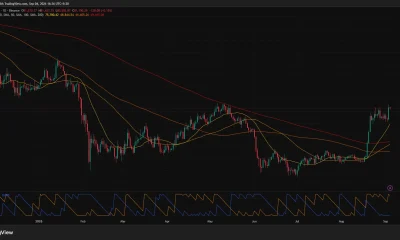
 Crypto World3 days ago
Bitcoin price stalls near $82K as key resistance holds
-

 Politics3 days ago
Best Gaming Laptops, CPUs, TVs, And Keyboards To Upgrade Your Set Up For GTA VI
-

 Tech3 days ago
The Birds Outside, Drawn For You Automatically
-

 Crypto World3 days ago
IMF Says El Salvador’s Post-Review Bitcoin Purchases Used No Public Funds
-
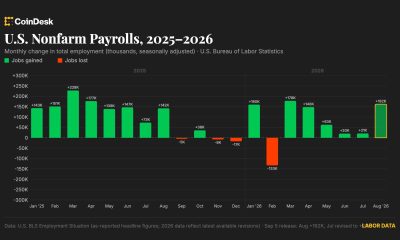
 Crypto World3 days ago
U.S. added stronger than expected 162,000 jobs in August as labor market bounced back
-

 Sports3 days ago
Alexandre Pato consortium’s Northampton Town investment approved
-

 Sports3 days ago
Commanders’ Chig Okonkwo is a top breakout fantasy football candidate
-

 Sports3 days ago
Golden Eaglets Drawn in Group B for 2026 WAFU B U17 Championship
-
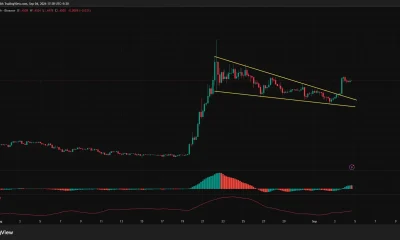
 Crypto World3 days ago
XRP price breaks falling channel as bulls target $1.53
-

 Politics3 days ago
A new European chapter for Gibraltar
-

 Politics3 days ago
How To Avoid Winter Colds: 4 Everyday Habits That Spread Germs, Says Pharmacist
-

 Politics3 days ago
The House | Bin the lectures, bring gossip and be ready to banter: how the new PM should prepare for his Trump encounter
-

 Crypto World3 days ago
From warning to listing: UK’s largest retail investment platform opens access to crypto ETNs
-

 Crypto World3 days ago
FinCEN flags $12.7B tied to Southeast Asia crypto investment scams
-

 Tech3 days ago
A Worthy Android Ereader, With Some Tradeoffs
-

 Politics3 days ago
33 Cosy Autumn Home Decor Ideas: Blankets, Pumpkin Decorations, And Candles
-

 Tech3 days ago
How To Edit Claude’s Memory
-

 Crypto World3 days ago
Trezor Data Breach Impacts 67,000 More US Customers
-

 Tech3 days ago
beyerdynamic AVENTHO Y Debuts at IFA 2026 and Makes Wireless Headphones Less Disposable
You must be logged in to post a comment Login