
Crypto World
America’s Investing Identity Crisis



What compelled hundreds of thousands of people around the world to invest in the initial public offering of Elon Musk’s SpaceX this summer? It certainly wasn’t the company’s financial metrics.
Despite the success of its core rocket business, the company is burning through a prodigious amount of money. Yet SpaceX still managed to pull off a record-breaking IPO, transforming Musk into the world’s first trillionaire.
Although an outlier, the SpaceX IPO is not unique. It is merely an extreme manifestation of two remarkable trends that have become increasingly hard to ignore in financial markets: ordinary investors are a huge and growing force, and their feelings can often trump fundamentals.
This is becoming apparent around the world, but nowhere more so than in the U.S., where ordinary people have embraced speculation both as a way to get rich and as a reflection of their own beliefs with perhaps greater zeal than anyone else on the planet.
The first point is easy to quantify. Ordinary retail investors now account for over 20% of U.S. stock market activity, according to estimates by Jefferies, an investment bank. That is roughly twice the level of a decade ago and means that they now account for almost as much trading volume as mutual funds, hedge funds, and banks combined. The impact on markets is apparent everywhere.
The latter point is harder to prove with hard numbers, but the anecdotal evidence is heaping up. To the consternation of many traditional investors, what securities you buy have become almost like an extension of one’s identity—whether that is the stock of a dowdy utility or racy computer games maker, cryptocurrencies, or even dabbling in the newfangled prediction markets.
Finance has long shaped America. But today, I would argue, this shape has become deformed. When did investing stop being merely financial and become an expression of identity? Why do individual Americans see investing as a chance to prove who they are and what they are worth?
And what does this pressure say about who America is as a country, collectively?
American stakes
The roots of this uniquely American phenomenon of conjoined identity and rampant speculation can arguably be traced back over a century to the titanic bond-sale program that financed the U.S. entry into the First World War.
When the U.S. formally declared war on Germany in 1917, the task of figuring out how to pay for the army, navy, and weapons America needed fell to President Woodrow Wilson’s son-in-law, Treasury Secretary William McAdoo.
McAdoo was an athletic, photogenic, and decisive former lawyer and streetcar executive. He fizzed with energy and was as progressive in his business policies as he was regressive in his racial politics (McAdoo advocated forcefully for gender equality and what today we would call “stakeholder capitalism”, but introduced segregation at the Treasury, and was later endorsed by the Ku Klux Klan when he unsuccessfully ran for president).
McAdoo knew that taxes alone couldn’t shoulder the entire burden of the war, given the scale of the money needed. The problem was that the U.S. government bond market had by then shriveled up. The size totaled under $1 billion, and most of it was stuffed away in bank vaults rather than traded.
Moreover, most ordinary Americans were oblivious to what a bond even was. Wall Street bankers pointed out to McAdoo that there were probably only about 350,000 bondholders in a country of about 100 million inhabitants at the time. They therefore recommended that the Treasury Secretary limit his first bond sale to $1 billion, and target established investors with a juicy interest rate of at least 5 percent. Even this, they felt, would be ambitious.
Yet McAdoo balked at their pessimism. “It was true that [Americans] know little or nothing about government bonds, but we would tell them,” he wrote in his memoirs. To thrill the public, he decided to dub the bonds “Liberty Loans,” and set up a sprawling War Loan Organization to mass-market them.
Life, Liberty Loans, and the pursuit of happiness
It proved a stunning success. Wherever you went in the U.S. those days, you would gaze at a billboard, stumble over an exhibition, be handed a leaflet, enjoy a cake sale, be accosted at work, or get dragged into a march that were all designed to tout Liberty Loans.
When bankers initially struggled to communicate with the masses, celebrities like Charlie Chaplin were enlisted to burnish the pitch. Edward Bernays—often considered the father of modern public relations and the author of a pioneering book on propaganda in the 1920s—orchestrated sophisticated plays on patriotism, sentiment, or personal political yearnings to entice investors who might have been put off by the paltry interest rates on offer.
Often, the push to subscribe to a Liberty bond sale crossed over into crass shaming. Sometimes, so-called “dollar slackers” were even confronted with naked intimidation from groups who pressured people to buy bonds.
The Atlantic excoriated this as “borrowing with a club”, and warned that “mob rule by the rich, with the able assistance of hoodlums” could stir support for socialists. Even future president Warren Harding complained that the selling drives were “hysterical and unseemly”.
Nonetheless, Liberty Loans were genuinely popular. Buying them became a communal expression of belonging that crossed social, racial, and religious lines in a divided, polyglot nation. In fact, the War Loan Organization deliberately stoked competition among different groups to see who would demonstrate the greatest fealty to America—as evidenced by the volume of their bond purchases. This was particularly important for many women and Black Americans, who hoped that herculean efforts to help support the war might further their aspirations for equal treatment.
All told, the Treasury sold five low-cost mammoth Liberty Loans to finance the war, which raised an astonishing $21.4 billion. Relative to the size of the U.S. economy then and now, this is the equivalent of selling approximately $9 trillion of bonds today. Thus, an unprecedented feat of financial salesmanship transformed a war that was initially not overwhelmingly popular into a unifying national endeavor.
An investing identity crisis
Unfortunately, this unity quickly dissolved when the war was over, with America wracked by racial unrest, labor strife, and social tensions. Women received the right to vote in 1920, but the wartime efforts of Black Americans and other minorities were mostly ignored. McAdoo’s later career was blighted by financial scandal and two unsuccessful Ku Klux Klan-supported tilts for the presidency.
Nonetheless, his Liberty Loans proved transformative for the fabric of America’s financial system. It is hard to overstate just how impactful the bond sales were for the country’s culture of investment.
Remember, when the Treasury Secretary first asked bankers for an appraisal of the Treasury market’s health at the start of the war, they had estimated that only 350,000 Americans owned bonds. By the end of the conflict, about 34 million Americans had purchased some form of federal bond—over a third of the country at the time.
This spilled over into the stock market as well. Researchers have later studied the long-run county-level data on how American households save money and found that areas with greater Liberty bond program participation were far more likely to invest in bonds and stocks in the future as well. In fact, a paper published by the National Bureau of Economic Research last year estimated that 20% fewer Americans would have held stocks had the Liberty Loan campaigns not been conducted.
The legacy has long been apparent in both the unusual scale and nature of how Americans invest. But social media and gamified trading apps are now obliterating the always-blurry lines between investing, speculation, and pure gambling. As Warren Buffett observed in 2023: “Markets now exhibit far more casino-like behavior than they did when I was young. The casino now resides in many homes and daily tempts the occupants.”
And leaders like JPMorgan Chase CEO Jamie Dimon have directly likened increasingly popular prediction markets to gambling—while caveating that “people have been gambling forever.”
Political polarization is now introducing a new and arguably dangerous element to the phenomenon. The cohesion fostered by the Liberty Loan program and its feelings-first marketing has been distorted into yet another force that is driving Americans apart.
Which brings us back to SpaceX. For some investors, SpaceX is an overhyped and overpriced monstrosity, run by a controversial and mercurial founder. For others, betting on SpaceX is an expression of faith. They believe in Musk and his visions of spacebound data centers, thinking machines, robots that can mine Mars, and ultimately, interplanetary travel. To them, today’s stock price is a humdrum secondary concern.
This is more widespread than you might think. Even members of Congress have been found to signal their beliefs through their investment activities. “For U.S. legislators, the stock market functions not only as a venue for wealth accumulation but also as a stage for identity signaling,” a paper published earlier this year noted.
But you need not be a finance professor to see that this is a dangerous trend. Markets work best when decisions are based on fundamentals, not feelings. And by reflecting America’s political polarization, identity investing can also accentuate it. Unfortunately, as the Liberty Loan story indicates, the reality may be that the American zeal for speculation and a willingness to sometimes let emotions trump rationality may always have been intertwined.
The extent may wax and wane according to the market cycles, but by now they might be impossible to separate.

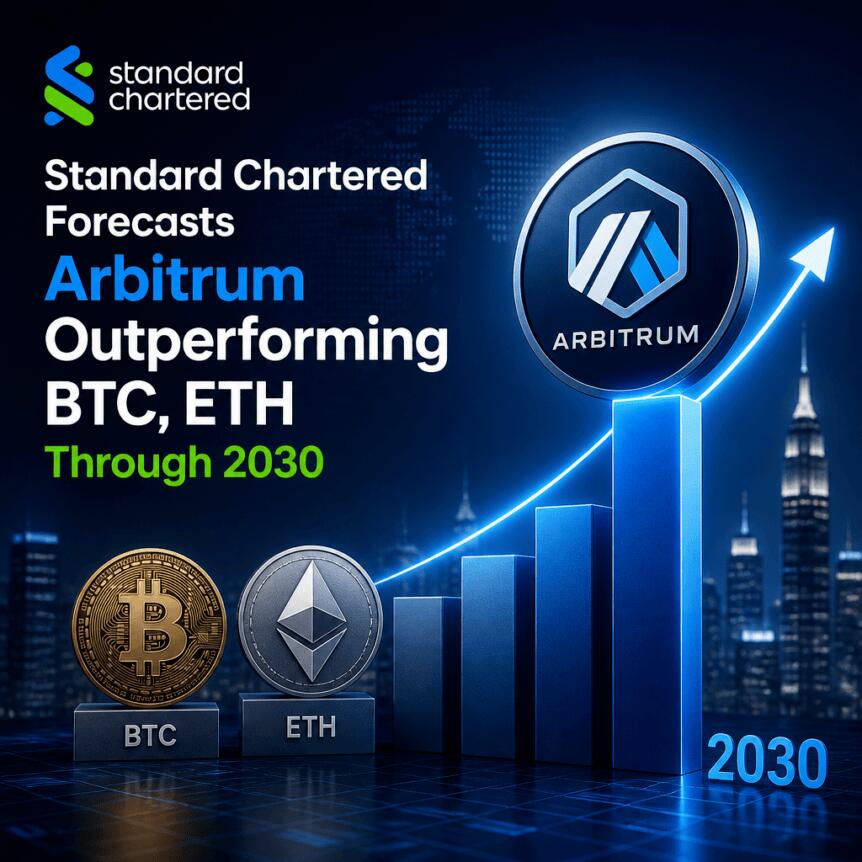
Standard Chartered is making the case that Arbitrum could become one of the strongest performers in crypto through 2030, arguing that the network’s revenue mechanics may benefit as traditional finance ramps up onchain activity. In a note shared with Cointelegraph, Geoff Kendrick, the bank’s global head of digital assets research, pointed to Arbitrum’s economic design as a potential source of growth beyond crypto-native usage.
Kendrick said Arbitrum receives 10% of the net protocol revenue generated by businesses building on the network. He highlighted Robinhood Chain—an Ethereum layer-2 initiative tied to the online brokerage Robinhood—as an early test case for how tokenization-focused applications could shift Arbitrum’s financial profile. According to Kendrick, the impact has already been visible in the network’s revenue run rate.
Key takeaways
- Standard Chartered forecasts Arbitrum’s protocol revenue share could meaningfully grow as more traditional financial assets move onchain.
- Arbitrum’s design gives it 10% of net protocol revenue from companies building on the network.
- Standard Chartered credits Robinhood Chain with materially changing Arbitrum’s economics, projecting $5 million revenue in September.
- Kendrick expects those economics could support a multi-year rise in ARB, potentially reaching $10 by 2030.
- Key risks include tokenization adoption slowing and increased competition from other chains.
Why Standard Chartered thinks Arbitrum’s revenue can scale
At the center of Standard Chartered’s bullish outlook is the idea that Arbitrum’s growth is not just about user activity, but about the network’s share of protocol revenues. Kendrick framed the pathway as follows: as regulated institutions and financial firms bring more assets onto blockchain infrastructure—especially through tokenized real-world asset (RWA) products—layer-2 networks that support these deployments could capture recurring value.
Robinhood Chain is presented as a concrete example of that dynamic. In the note, Kendrick argued that its launch has already affected Arbitrum’s economics. He stated that, at the current run rate, Arbitrum is expected to generate $5 million in revenue in September, which he said is more than five times the level it was at before Robinhood Chain launched in July.
For investors and traders, this matters because it shifts the narrative from “layer-2 usage” alone to “layer-2 monetization.” If tokenized asset workflows generate sustained protocol revenue, the token incentives and long-term demand for the network’s native asset could plausibly benefit. Standard Chartered’s framing is essentially that the token’s value proposition is tied to business adoption and network economics rather than only retail activity.
From protocol economics to ARB price assumptions
On price, Kendrick’s view is aggressive but anchored to the bank’s revenue-based logic. He expects Arbitrum’s economics to support a steady increase in ARB through the rest of the decade, forecasting that the token could reach as high as $10 by 2030. The bank’s projection implies roughly a 70-fold increase from current levels.
Standard Chartered also contrasted its outlook for Arbitrum with its expectations for Bitcoin and Ether over the same period, saying its projected returns for ARB would be far higher. While price forecasts are inherently uncertain, the bank’s stated method is noteworthy: the thesis is built around a growing revenue stream for the protocol rather than purely speculative momentum.
At the time of the note, ARB was valued at around $0.14, according to CoinGecko, after gaining 86% over the past month.
Tokenized real-world assets are the engine in the model
Standard Chartered’s argument is heavily influenced by the momentum in tokenization. Kendrick pointed to cumulative RWA tokenization nearing $39 billion, citing RWA.xyz data. The bank also reiterated its broader forecast that tokenized assets could reach $4 trillion by the end of 2028, as banks and asset managers bring more assets onchain.
In that scenario, layer-2 networks like Arbitrum are positioned as infrastructure providers. The bank’s logic is that when tokenization shifts from experiments to larger deployments, businesses building on these networks can generate net protocol revenue—part of which flows back to Arbitrum under the 10% share model.
Standard Chartered has previously tied its wider crypto views to tokenization growth, including a bullish stance toward Chainlink and the broader decentralized finance sector in the context of a growing onchain asset base. The Arbitrum note continues that through-line: as more “real-world” exposure is issued onchain, the infrastructure that supports issuance, settlement, and related services may capture more durable value.
Key uncertainties and competitive pressure
Despite its optimism, Kendrick highlighted risks that could derail the bank’s price framework. He identified two major uncertainties: a slower-than-expected pace of asset tokenization and more competition from alternate blockchains.
This is an important tension for readers to consider. Arbitrum’s potential upside depends not only on technical and adoption milestones, but also on whether tokenized assets concentrate on specific L2 ecosystems or diversify across multiple networks. If tokenization expands but spreads across competing platforms, Arbitrum’s revenue share—and therefore the earnings-to-token linkage Standard Chartered is leaning on—could be diluted.
There is also a timing element embedded in the forecast. Kendrick’s projected revenue run rate growth and the resulting ARB outlook assume that new deployments and monetization mechanisms ramp in a way that sustains protocol revenues over time. Any mismatch between “asset issuance growth” and “protocol monetization” would likely force the thesis to be recalibrated.
As the market digests this note, the next things to watch are whether tokenization activity on Ethereum layer-2s keeps accelerating and whether Robinhood Chain—or other tokenization-oriented deployments—continues to translate into measurable net protocol revenue for Arbitrum. The pace of tokenized asset adoption and the intensity of competition between alternative chains may determine how closely reality tracks Standard Chartered’s multi-year model.


X has launched its U.S. Cashtag Partner Program with five brokerage platforms, giving users a direct route from stock, ETF, and cryptocurrency discussions to eligible trading services.
Summary
- Five partners include Coinbase, Gemini, Kraken, Interactive Brokers, and Moomoo.
- Supported cashtags now display a “Trade” option that redirects users to a participating platform.
- U.S. users must complete transactions through the selected brokerage rather than directly on X.
- X has added the program after introducing interactive price charts and financial data through smart cashtags.
X Cashtag Program connects tickers with trading platforms
X said in an official announcement that the Cashtag Partner Program has gone live in the United States with Coinbase, Gemini, Kraken, Interactive Brokers, and Moomoo as its first participants.
When users tap a supported cashtag, they can view information tied to the stock, ETF, or cryptocurrency represented by the ticker. A new “Trade” option then lets them choose an available brokerage partner and continue the transaction on that company’s platform.
X does not appear to be executing the trades itself under the arrangement described in the announcement. Instead, the social platform connects users with participating financial companies, where account requirements, identity checks, asset availability, and other trading conditions apply.
Cashtags use a dollar sign before an asset symbol, such as $BTC for Bitcoin or $COIN for Coinbase shares. Traders already use the format to organize financial posts and follow conversations about specific assets. By attaching brokerage links to the feature, X has shortened the path between reading market commentary and opening a trading interface.
The program covers several types of financial companies. Coinbase, Gemini, and Kraken are known primarily for crypto trading, while Interactive Brokers provides access to stocks, options, futures, currencies, and other markets. Moomoo offers stocks, options, and cryptocurrency services through its respective regulated entities.
X did not provide a complete list of supported tickers in the announcement. Availability may differ across partners because each brokerage maintains its own product list and customer eligibility rules.
Smart cashtags laid the foundation for US trading links
As crypto.news reported in April, X introduced smart cashtags for iPhone users in the United States and Canada with live charts, asset-specific posts, and support for cryptocurrency contract addresses.
The earlier version allowed users to select the correct asset or smart contract when adding a ticker to a post. Selecting the cashtag opened a dedicated page containing price information and related discussions, reducing confusion between tokens that share similar names or ticker symbols.
Canadian users also received a trading link through Wealthsimple. At the time, X product head Nikita Bier said users in Canada would see a button that allowed them to move from a cashtag to the financial platform. U.S. trading had not yet been enabled through that rollout.
The new partner program brings the brokerage-link model to American users and increases the number of participating firms from the single Canadian integration. Its structure also keeps order execution within the brokerage selected by the user rather than adding an X-operated exchange to the social platform.
Mridul Singhai, X’s product engineering lead, said the feature narrows the distance between a ticker appearing on a timeline and the market linked to it. Users can open a live chart, read the conversation around an asset, and choose a partner when they decide to trade.
Live posts and price data remain part of the product. The trading button adds another action to the same asset page, but X has not said that a post, chart, or cashtag represents financial advice or a recommendation to transact.
Coinbase and Kraken extend X’s crypto trading route
For cryptocurrency users, the inclusion of Coinbase, Gemini, and Kraken gives the program connections to three established U.S.-focused exchanges. Customers still need an eligible account with the chosen company, and the exchange determines which assets and services are available in each jurisdiction.
Kraken has also expanded beyond its original crypto business. In August, the exchange added 7,000 stocks for eligible European Economic Area customers, placing traditional U.S.-listed shares beside more than 700 tokenized xStocks and over 600 crypto assets.
Kraken entered U.S. stock trading in 2025 before extending the service into Europe through its Cyprus investment firm. Its EEA product lets eligible customers choose between traditional shares and tokenized representations, although the products have different structures and regulatory conditions.
Earlier in 2026, Kraken-backed xStocks also introduced on-chain trading for more than 70 tokenized equities across Ethereum and Solana. Kraken said in March that the platform had processed $25 billion in total volume, including $3.5 billion in on-chain transactions, and had reached 80,000 on-chain holders.
Coinbase has likewise added U.S. stocks and ETFs to its main platform, allowing eligible customers to manage traditional securities and crypto through one account. The Cashtag Program gives X users another entry point to participating services without transferring the actual trade to X.
American users remain subject to each provider’s onboarding process, state-level availability, and product restrictions. A cashtag may therefore display market information even when a particular user cannot trade the asset through every listed partner.
X ties financial conversations to its Everything App plan
Monique Pintarelli, SpaceXAI’s head of global advertising, described the partner program as a way to connect financial discussions on X with an action that users can take through a brokerage.
“People come to X to discover what’s happening, shape the conversation, and act in real-time on what matters to them,” Pintarelli said. “Our Cashtag partners make it possible to move seamlessly from discovery and conversation to a brokerage, without breaking the moment.”
The rollout adds another financial feature to X as the company develops its planned Everything App model. In March, an X Money examination described the service as an in-platform wallet designed for peer-to-peer transfers, bill payments, and other financial products.
X Money has since rolled out peer-to-peer transfers, direct deposits, a debit card, and yields on eligible balances. Its payment functions remain separate from the Cashtag Partner Program, which routes investment activity to outside brokerages rather than holding or executing the trade within the social platform.
X previously secured money-transmitter licenses across more than 40 U.S. states and Washington, D.C., and registered with the Financial Crimes Enforcement Network as part of its payment-service preparations. The company also partnered with Visa to support transfers between bank accounts and X Money wallets.
Singhai said users who post or tap a ticker can now reach a live chart, follow the discussion around the asset, and continue to one of the brokerage partners. X has not disclosed when the Cashtag Partner Program may add more financial firms or expand beyond the United States.
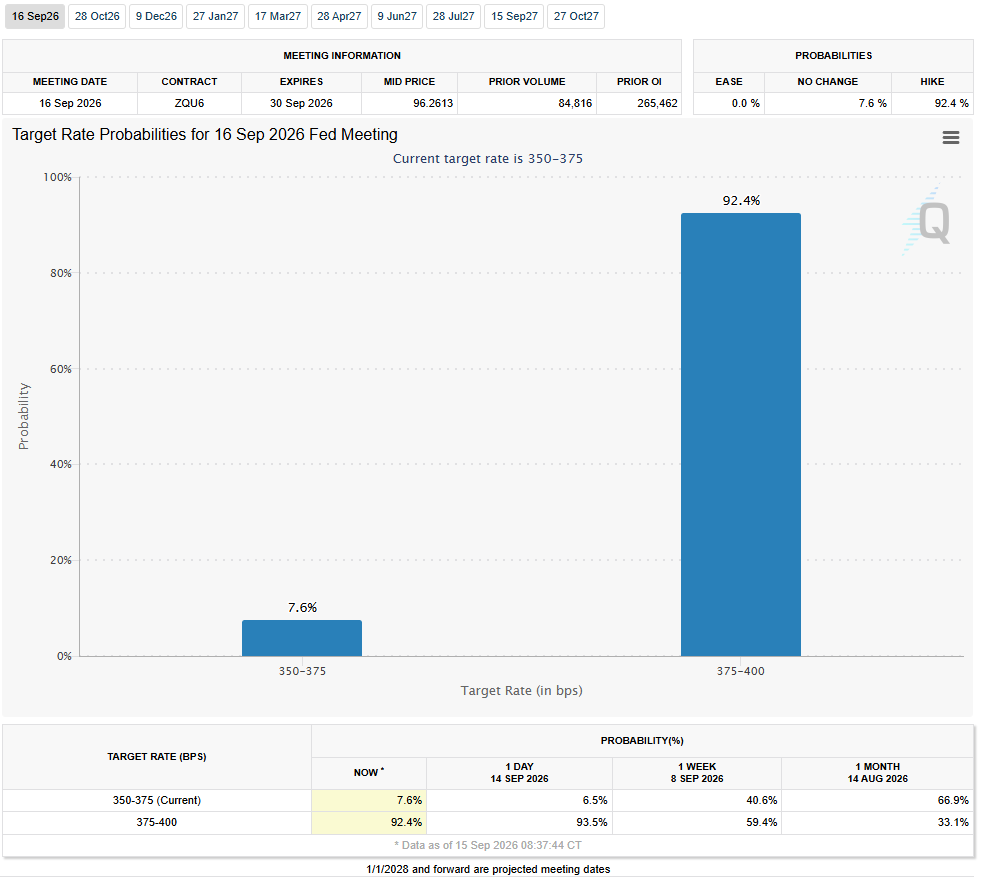
Traders are bracing for a rare stretch of synchronized tightening this week, with the Federal Reserve and the Bank of Japan (BOJ) both leaning toward a rate hike within 48 hours of each other.
The Fed announces its decision Wednesday afternoon, with futures markets pricing an over 80% chance of a quarter point increase. The BOJ, however, follows two days later, on Friday.
Rate Hike Odds Build on Both Sides of the Pacific
A CNBC survey of 18 economists, conducted Sept. 9 to 14, found 89% expect the BOJ to raise its benchmark rate by 25 basis points to 1.25%, a fresh three-decade high. Respondents cited accelerating inflation, rising wages and pressure from Washington.
“The Trump administration has effectively checked any potential move by a Takaichi administration to block the Bank of Japan from raising interest rates.”
Takahide Kiuchi, executive economist at Nomura Research Institute, told CNBC.
Not every economist agrees on the pace. Jesper Koll, expert director at Monex Group, expects a single 50 basis point move instead. Meanwhile, Carlos Casanova, senior economist for Asia at Union Bancaire Privée (UBP), expects the BOJ to hold steady, arguing the data does not yet support a faster hiking cycle.
About 61% of respondents see the yen trading between 155 and 160 per dollar over the next month.
Fed Fighting Against a Hike
Fed odds have swung just as sharply. From a coin flip in late August to a strong 92% favorite for a hike now, a repricing that has coincided with the yen’s monthly gain against the dollar.

The pair’s moves would, moreover, add to a broader pattern BeInCrypto’s biggest macro risk analysis has flagged, in which the Fed, the European Central Bank and the BOJ could all tighten in the same window for the first time since 2006.
Traders now turn to the Fed’s dot plot and any BOJ dissent votes for clues on how fast the two economies’ rate paths converge.
A double hike would narrow the Tokyo-Washington rate gap for the first time in years. The implications for carry trades and risk appetite heading into the fourth quarter.
The post Bank of Japan, Fed Rate Hikes Expected Same Week: Will Yen Rally? appeared first on BeInCrypto.

US crypto policy momentum hit a wall as the Senate on Tuesday failed to advance the proposed CLARITY Act, leaving digital-asset firms to rely on agency rulemaking and shifting interpretations rather than a clear statutory framework. The procedural vote came up short of the 60 votes required to move forward—49-50 on a motion to invoke cloture.
Industry leaders described the outcome as disappointing but not necessarily final, pointing to potential regulatory action from the US Securities and Exchange Commission (SEC) and the Commodity Futures Trading Commission (CFTC). Still, lawyers and executives warn that without legislation, compliance timelines and market planning could remain exposed to ongoing administrative discretion.
Key takeaways
- The Senate voted 49-50 on a cloture motion for the CLARITY Act—short of the 60-vote threshold needed to advance the bill.
- Crypto firms are increasingly looking to SEC and CFTC rulemaking to “fill the legislative gap,” rather than expecting near-term certainty from Congress.
- Legal executives argue that agency guidance may prolong case-by-case assessments, increasing compliance burden and prolonging uncertainty for budgeting and product rollout.
- A reconsideration move by Senator Thom Tillis keeps the possibility of another cloture attempt alive, but timing uncertainty remains high.
Why the CLARITY Act’s procedural failure matters
At the center of Tuesday’s outcome was the Senate’s failure to invoke cloture, a procedural step that determines whether debate on the CLARITY Act can move forward. While the vote does not kill the bill outright, it delays the legislative path and underscores how difficult it can be to secure consensus in a divided chamber.
Industry executives said the result creates a meaningful setback—especially because the stakes are not only legal theory. A legislative framework would be expected to reduce the unpredictability of how digital assets are classified and regulated across different product types. Without it, market participants may remain dependent on regulator-by-regulator and fact-specific interpretations.
As this gap persists, the question for investors, builders, and exchanges becomes less about the promise of a future law and more about whether agencies can deliver stable, consistent rules quickly enough to support real-world planning.
Regulators as the next avenue for clarity
In the immediate aftermath, executives highlighted what they viewed as the most plausible alternative: rulemaking from the SEC and the CFTC. Ripple CEO Brad Garlinghouse said on X that continued regulatory work by both agencies could still provide the clarity firms need.
According to Garlinghouse, “the SEC, under Chair Atkins, and the CFTC, under Chair Selig, will continue to work hard to issue rules” to address the gap left by the stalled legislation. The comments align with earlier remarks from SEC Chair Paul Atkins during the Solana Policy Institute Summit on Monday, where he reaffirmed the agency’s commitment to clearer crypto rules regardless of legislative progress.
That “agency-first” approach may help address certain questions faster than Congress can. But it also changes how certainty is produced: rather than coming from a statute that applies broadly, clarity may depend on a series of rule proposals, comment periods, and final determinations—each of which can evolve over time.
Executives warn about “temporary reprieve” and case-by-case risk
Legal and compliance leaders cautioned that rejecting the bill may leave firms exposed to administrative discretion. NEAR chief legal officer Abhishek Vaidyanathan said the lack of legislation would force continued reliance on agency guidance rather than a definitive statutory framework.
In particular, Vaidyanathan argued that firms preparing budgets for 2027 would likely face another prolonged delay, pulling them back toward “case-by-case judgments and repeated legal work.” In his view, that is not just a legal inconvenience—it also affects how counterparties price risk when regulatory interpretation remains in flux.
Similarly, Bitget Wallet chief operating officer Alvin Kan told Cointelegraph that the bill’s failure maintains uncertainty about how securities, commodities, and money-transmission rules apply across different products. The practical effect is that product categories can face different compliance pathways even when they serve similar users, and the line between those categories can remain contested.
Another Senate attempt and what happens after this Congress
Despite Tuesday’s setback, the CLARITY Act discussion is not over. Senator Thom Tillis moved to reconsider the failed attempt, potentially allowing another cloture vote. That kept the door open for renewed procedural progress in the current session.
1inch chief legal officer Orest Gavryliak characterized the Tuesday result as a delay rather than a verdict, noting that legislation of this scale rarely moves in a straight line and that another cloture vote can be pursued.
Still, the odds of passage before the end of the current congressional term are far from certain. Vaidyanathan suggested that the “next Congress” may be the more likely opportunity to tackle crypto market structure, implying that legislative timing and election-driven priorities could become barriers.
He also pointed to near-term calendar constraints: the House has reportedly canceled weeks of September 21 and 28, while the Senate’s state work period begins October 5 ahead of the November 3 election. Those scheduling dynamics matter because even when support exists, floor time and procedural momentum can be difficult to sustain.
Market sentiment around the bill’s prospects also softened. Polymarket odds of the CLARITY Act being signed in 2026 fell to 5% on Tuesday, the lowest probability since the market opened in January, indicating that traders and bettors rapidly adjusted expectations following the cloture failure.
For readers trying to anticipate what changes next, the key watchpoints are whether Tillis’s reconsideration leads to another cloture vote and, in parallel, how quickly the SEC and CFTC move from commitments into concrete rule proposals and final guidance—because those will determine whether firms get durable clarity or continue to operate in a regime of shifting administrative interpretation.

XRP is trading at $1.40, with the price sitting just below the $1.42 resistance level as the Senate prepares for a procedural vote on the CLARITY Act. The setup highlights a clear tension: the daily chart remains cautiously constructive, while momentum on shorter timeframes has faded.
At $1.40, XRP is close to its daily pivot and caught between nearby support and price resistance. Daily indicators show that the structure has not broken, but intraday readings point to a market that has yet to establish a decisive direction.
The scheduled vote is procedural rather than a final decision on whether the CLARITY Act becomes law. It concerns the bill’s path through the Senate and is separate from subsequent legislative steps that would be needed for a final federal framework.
Senate Republicans released a revised, 630-page draft ahead of the September 15 vote. The updated language would require trading protocols controlled by identifiable people or groups to register with the Commodity Futures Trading Commission. The draft also retains ethics provisions that prohibit public officials, employees, and their spouses from issuing or sponsoring digital assets.
The legislation seeks to establish a federal digital-asset market framework and clarify regulatory responsibilities. Even if the procedural step advances, further Senate action would still be necessary before any final legislative outcome is reached. For XRP traders, the vote is therefore one factor alongside the chart rather than a standalone resolution of the market’s current indecision.
Earn $50 and Enter $300K Prize Draw on EdgeX
Why $1.40 XRP Price is A Genuine Market Standoff?
The daily chart gives XRP the benefit of the doubt. Price at $1.40 sits above both the 20-EMA at $1.37 and the 200-EMA at $1.33, while daily RSI reads 55.92. That places RSI above its midline without placing it near overbought territory.

The 50-EMA at $1.29 remains below the 200-EMA, however, so the averages do not form a textbook uptrend stack. The structure instead reflects a sharp recovery after a decline, with shorter-term averages recovering faster than the medium-term average.
The daily MACD adds caution to the constructive read. The MACD line is at 0.03 against a 0.05 signal, producing a negative histogram of roughly -0.02. That soft bearish cross suggests that the advance above the moving averages has lost some forward momentum, even though the wider daily structure remains intact.

The crypto backdrop has also been weak. Total crypto market cap declined to $2.72 trillion, while Bitcoin dominance stood at 58.36%. The Fear & Greed Index read 69, in Greed territory, creating a contrast with the wider market pullback. U.S. diesel prices topped $6 per gallon amid the Ukraine and Iran conflicts, adding to risk-sentiment pressure.
Trade XRP on Bybit and Get a Chance to Win Our $1,000 USDT Airdrop
The $1.39 Support and $1.42 Resistance Test
The daily pivot point is $1.41, with resistance at $1.42 and support at $1.39. XRP price is trading close to that pivot, a position consistent with a market waiting for a clearer catalyst.
A move above $1.42 would place the upper daily Bollinger Band near $1.46 in focus. A loss of $1.39 would return attention to the $1.33-$1.32 area, where the 200-EMA and lower Bollinger Band are close together, followed by the 50-EMA at $1.29.
Shorter timeframes present a softer picture. On the hourly chart, XRP at $1.40 sits just below the 20-EMA at $1.41, while RSI has slipped to 44.41. Average True Range near $0.02 indicates compressed volatility and consolidation rather than a clear trend.
The 15-minute chart is weaker still. XRP trades below its 20-EMA at $1.41 and 50-EMA at $1.42, while RSI is 30.72, near oversold territory. The 15-minute ATR is approximately $0.01, reinforcing the picture of a tightly compressed market.
The bullish case depends on XRP defending $1.39, reclaiming $1.42, and remaining above the daily 20-EMA. A positive turn in the daily MACD histogram would indicate that momentum is improving alongside the existing structure. A sustained bounce from the 15-minute RSI near 30.72 could offer an early sign of renewed buying, although it would not constitute confirmation by itself.
For now, XRP remains positioned around a narrow $1.39-$1.42 range. The daily chart still supports a cautiously constructive interpretation, but fading MACD momentum and softer lower-timeframe readings keep that interpretation conditional. The indicators are delivering a mixed signal, making the nearby pivot, support, and resistance levels the central focus.
Discover: The Best Token Presales
The post Fading Momentum Leaves XRP Price Trapped Near $1.40 appeared first on Cryptonews.
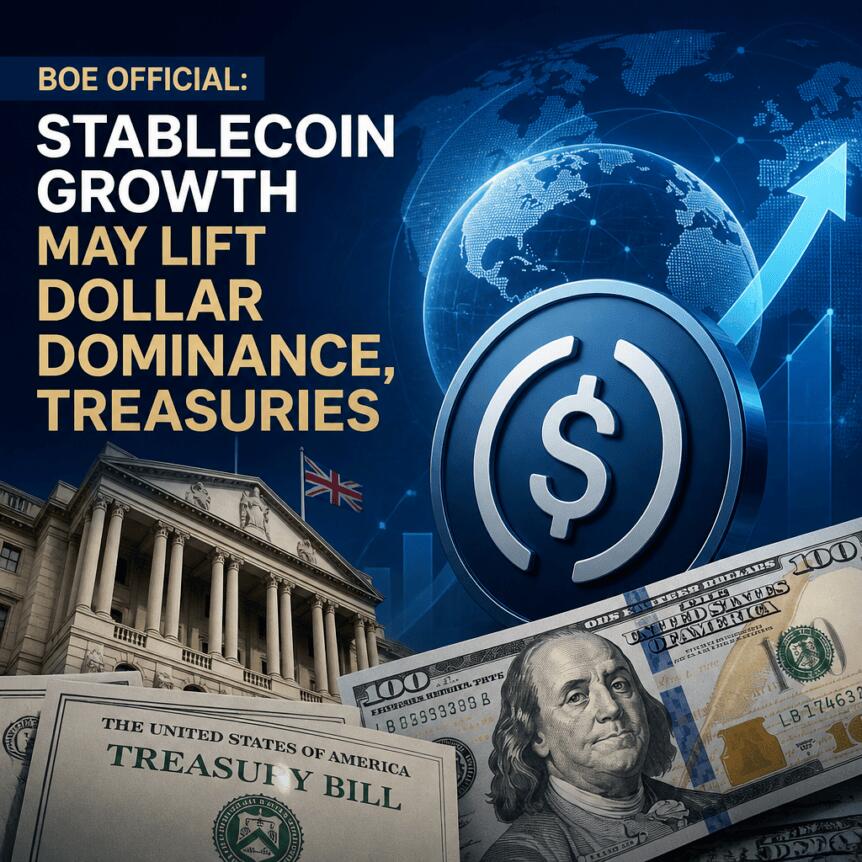
Stablecoins may be doing more than speeding up crypto payments. Speaking at Queen’s University Belfast on Tuesday, Carolyn Wilkins of the Bank of England’s Financial Policy Committee argued that the rise of dollar-linked “digital dollars” could further entrench the US dollar’s role in global finance—while also creating a channel through which stress in US Treasury markets could spread back to stablecoin issuers.
Wilkins highlighted how dollar-denominated stablecoins can simplify cross-border settlement and extend access to dollar-linked assets beyond traditional US banking rails. She tied that convenience to a straightforward market consequence: greater demand for US Treasuries, especially for reserves backing stablecoin issuance.
Key takeaways
- Dollar-linked stablecoins can increase US Treasury demand by extending reserve access to dollar assets beyond the US, according to Bank of England financial policy committee member Carolyn Wilkins.
- Stablecoin issuers are already large holders of Treasury bills, with figures cited showing nearly $150 billion held at end-2025 by Tether and Circle, and about $33 billion of purchases during 2025.
- Wilkins warned the relationship works both ways: in a large-scale redemption event, issuers could be forced to sell Treasuries, potentially amplifying volatility in an already pressured market.
- The stablecoin market remains overwhelmingly dollar-oriented, with the US dollar accounting for 98% of stablecoin value, giving it a “first-mover advantage,” Wilkins said.
- In the UK, regulators are moving to facilitate development of stablecoins through sandboxes and finalized rules, while the Bank of England experiments with digital money for cross-border use cases.
How dollar stablecoins could strengthen Treasuries—and the dollar
Wilkins’ core argument is about incentive alignment. Dollar stablecoins, by design, are meant to track the US dollar, so expanding their use naturally encourages broader participation in dollar settlement and dollar-linked asset access. As stablecoins become a more common bridge for international transfers, the demand for dollar exposure can rise not only among traders, but also among institutions and intermediaries that prefer simpler settlement mechanics than traditional correspondent banking.
In her remarks, Wilkins specifically pointed to Treasury demand. She cited data indicating that Tether’s USDt (USDT) and Circle’s USDC (USDC) held nearly $150 billion in Treasury bills at the end of 2025, and bought about $33 billion worth during the year—illustrating that at least for the biggest issuers, Treasuries are not peripheral. They are integral to how dollar stablecoin reserves are positioned.
The implication for investors is practical: when stablecoin growth continues, Treasury demand from reserve managers tied to stablecoin issuance can become a persistent, if evolving, source of incremental demand. That matters in a market where Treasury liquidity and funding conditions can have wide knock-on effects across rates and collateral markets.
The other side of the trade: redemptions and volatility risk
Wilkins also emphasized that stablecoins are not a one-way beneficiary of dollar liquidity. Because reserves are connected to marketable US government debt, issuer balance-sheet dynamics can become a financial stability variable when redemption flows surge.
Her warning was specific in direction: at sufficient scale, mass stablecoin redemptions could compel issuers to sell Treasury bills. If that happens during periods of market strain, the forced selling mechanism could contribute to higher volatility—an effect that could be amplified by the fact that Treasuries are widely used as collateral and a benchmark across the financial system.
This is the central tension in the stablecoin-reserves narrative: the same structure that supports stablecoin issuance and cross-border convenience can transmit liquidity pressures when flows reverse quickly. Readers should treat the “stability” of a stablecoin as distinct from the stability of the markets used to back it.
Stablecoins remain dollar-dominated—UK regulators are still watching
The Bank of England official framed dollar dominance as a key structural feature. The stablecoin market is described in the remarks as overwhelmingly tied to the US dollar, with the dollar accounting for 98% of stablecoin value. Wilkins characterized that as a “considerable first-mover advantage,” reinforcing why dollar stablecoins could keep scaling faster than alternatives.
Broader adoption trends were also referenced in the context of market size, including reporting that stablecoin circulation has surpassed $300 billion. Even with continued growth, the near-total concentration in dollar-linked products suggests that, for now, the US dollar will likely remain the primary beneficiary of global stablecoin usage.
For the UK, the policy question is whether—and how—to develop stablecoins in a way that captures benefits without importing unnecessary risk. Wilkins’ remarks align with ongoing UK regulatory and experimental steps aimed at shaping how these products could fit into a broader financial system.
UK’s regulatory push: sandboxes, finalized rules, and digital pound tests
While dollar stablecoins dominate the global picture, British pound-denominated stablecoins have been slower to gain traction. Still, UK regulators have taken concrete steps this year to make local issuance and experimentation easier.
The Financial Conduct Authority began testing prospective stablecoin issuers through a dedicated regulatory sandbox and finalized rules for UK stablecoin issuance in June. The Bank of England has also been experimenting with digital money, including work to assess whether stablecoins and a simulated digital pound could be used together for cross-border trade payments, according to coverage of the Bank’s interoperability testing.
Wilkins’ comments also come in the broader context of the Bank of England adjusting its stance. Earlier coverage noted industry criticism of proposed rules and a subsequent softening of the UK stablecoin regime, reflecting a policy balance between innovation and oversight.
For market participants, this matters because local frameworks can influence which stablecoin projects get launched, which institutions are willing to integrate them, and how quickly alternative fiat currencies could gain traction outside the US dollar orbit.
What to watch next is whether UK and broader European efforts can diversify currency exposure in stablecoin reserves—or whether the dollar’s structural advantages continue to pull most growth back toward US Treasuries. Equally important will be monitoring redemption stress scenarios: if large-scale outflows coincide with Treasury-market strain, Wilkins’ warning about volatility transmission could move from theory to a measurable market dynamic.
The bulk of the spending—$21.7 billion—comes from replacing munitions expenditures, the CBO found, including $13.1 billion for missile defense interceptors and $7.3 billion for land-attack cruise missiles. Other costs include repairing or replacing equipment, increased flying hours for air operations and transportation, and increased fuel costs. However, it does not factor in the cost of damage to U.S. bases and facilities in the Middle East.
The separate report from the Defense Department’s inspector general, released a day before the CBO’s, estimated the cost of repairing “physical damage from Iranian strikes” to U.S. diplomatic facilities in Iraq, Kuwait, Saudi Arabia, and the UAE at approximately $184 million. It also determined that throughout Operation Epic Fury the U.S. military has spent $22.3 billion on munitions and has lost around $3.7 billion in aircraft and equipment, including four destroyed F-15 fighter jets, seven KC-135 tanker aircraft, a dozen damaged or destroyed KC-135 refueling aircraft, and the loss of up to 30 MQ-9 Reaper drones.
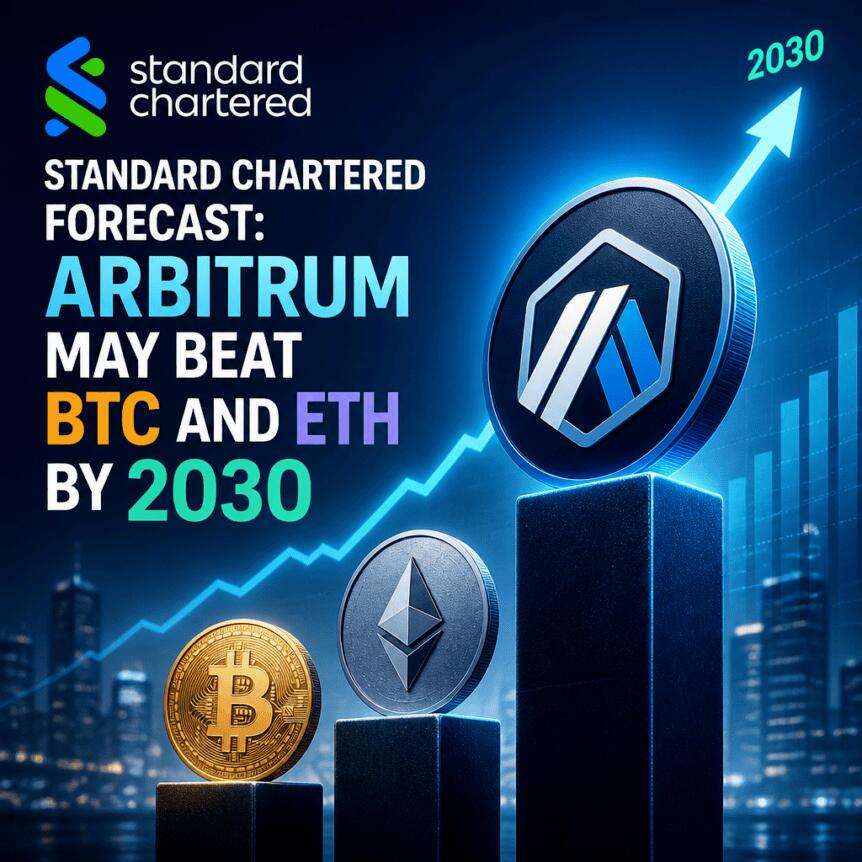
Standard Chartered’s Geoff Kendrick is making a pointed bet on Arbitrum’s long-term upside, arguing that the layer-2 network could become a standout beneficiary as traditional finance accelerates the shift toward onchain and tokenized assets.
In a note shared with Cointelegraph, Kendrick highlights Arbitrum’s revenue model as a key reason for optimism: the network receives 10% of net protocol revenue generated by companies building on it. He points to Robinhood Chain—developed by the online brokerage Robinhood—as an early, high-visibility example of that mechanism in action.
Key takeaways
- Standard Chartered expects Arbitrum’s revenue share (10% of net protocol revenue) to translate into stronger token economics.
- According to Kendrick, Robinhood Chain materially increased Arbitrum’s run-rate revenue after launching in July.
- Arbitrum revenue is projected to reach $5 million in September, the bank says—more than five times the pre-Robinhood level.
- Standard Chartered’s base case targets ARB potentially rising to as high as $10 by 2030, contingent on tokenization growth and competition.
- The bank flags slower-than-expected asset tokenization and competing layer-1/layer-2 ecosystems as the main risks.
Why Standard Chartered thinks Arbitrum’s token economics can expand
At the center of Standard Chartered’s outlook is the idea that Arbitrum is not only a destination for crypto-native users, but also an infrastructure layer for tokenization and onchain financial services. Kendrick’s argument ties network growth to economics that ultimately flow back to the system—and by extension, to the ARB token.
In the note, Kendrick emphasizes that Arbitrum receives 10% of net protocol revenue produced by companies building on the network. He also credits the arrival of Robinhood Chain with “materially” shifting Arbitrum’s economics. The comparison Kendrick makes is straightforward: at the current run rate, Arbitrum is expected to generate $5 million in revenue in September, which he says is more than five times its level prior to Robinhood Chain’s launch in July.
That framing matters for investors because it positions Arbitrum’s upside as more than speculative usage growth; it’s anchored to a revenue-share structure that could scale as new onchain products are deployed on its infrastructure.
Robinhood Chain as an early test case for the revenue model
Kendrick describes Robinhood Chain as the first major example of how traditional finance activity could influence Arbitrum’s economics. Earlier coverage from Cointelegraph noted Robinhood’s launch of an Ethereum layer-2 testnet aimed at tokenized assets.
Standard Chartered’s assessment suggests that the market may be underestimating the direct financial linkage between deployments on Arbitrum and the network’s protocol revenue intake. If the bank’s projections hold, that linkage could strengthen the case for ARB not just as a governance token, but as a proxy for the economics of Arbitrum’s expanding developer and enterprise footprint.
From revenue growth to ARB price targets—what’s bullish, what’s conditional
Building on the revenue outlook, Kendrick expects Arbitrum’s economics to support a steady rise in ARB over the coming years. Standard Chartered’s projection reaches as high as $10 by 2030. From current levels, Kendrick frames that outcome as roughly a 70-fold increase.
The bank also contrasts that trajectory with its projected returns for Bitcoin and Ether over the same period, suggesting that Arbitrum—under this scenario—could outperform major benchmark assets in risk-adjusted terms. Still, Kendrick’s note is explicit about uncertainties.
He flags two main risks to the ARB projection: a slower-than-expected pace of asset tokenization and increased competition from alternative blockchain networks. Those concerns are important because they go directly to the assumptions behind Arbitrum’s revenue expansion—namely, whether tokenization demand grows quickly enough and whether enterprises choose competing ecosystems for their layer-2 or tokenized-asset infrastructure.
Tokenized asset growth is the bigger bet
Standard Chartered’s thesis leans heavily on the broader market trend of tokenized real-world assets (RWAs). According to RWA.xyz data, the cumulative value of tokenized real-world assets is nearly $39 billion.
In its note, Kendrick reiterates the bank’s forecast that tokenized assets could reach $4 trillion by the end of 2028 as banks and asset managers bring more assets onchain. Under that pathway, Arbitrum is positioned as a potential beneficiary because it enables companies to build their own layer-2 networks while collecting a share of net protocol revenue generated by deployments.
Standard Chartered has previously connected tokenization expectations to other parts of the crypto ecosystem, citing the growth of tokenized RWAs as supportive of its bullish outlook for Chainlink and for the wider decentralized finance sector.
For readers, the next signals to watch are whether tokenization adoption accelerates faster than anticipated—and whether Arbitrum keeps attracting major deployments without losing share to rival ecosystems. Kendrick’s projections hinge on that pace, and any divergence could materially change the implied path from protocol revenue growth to ARB performance.
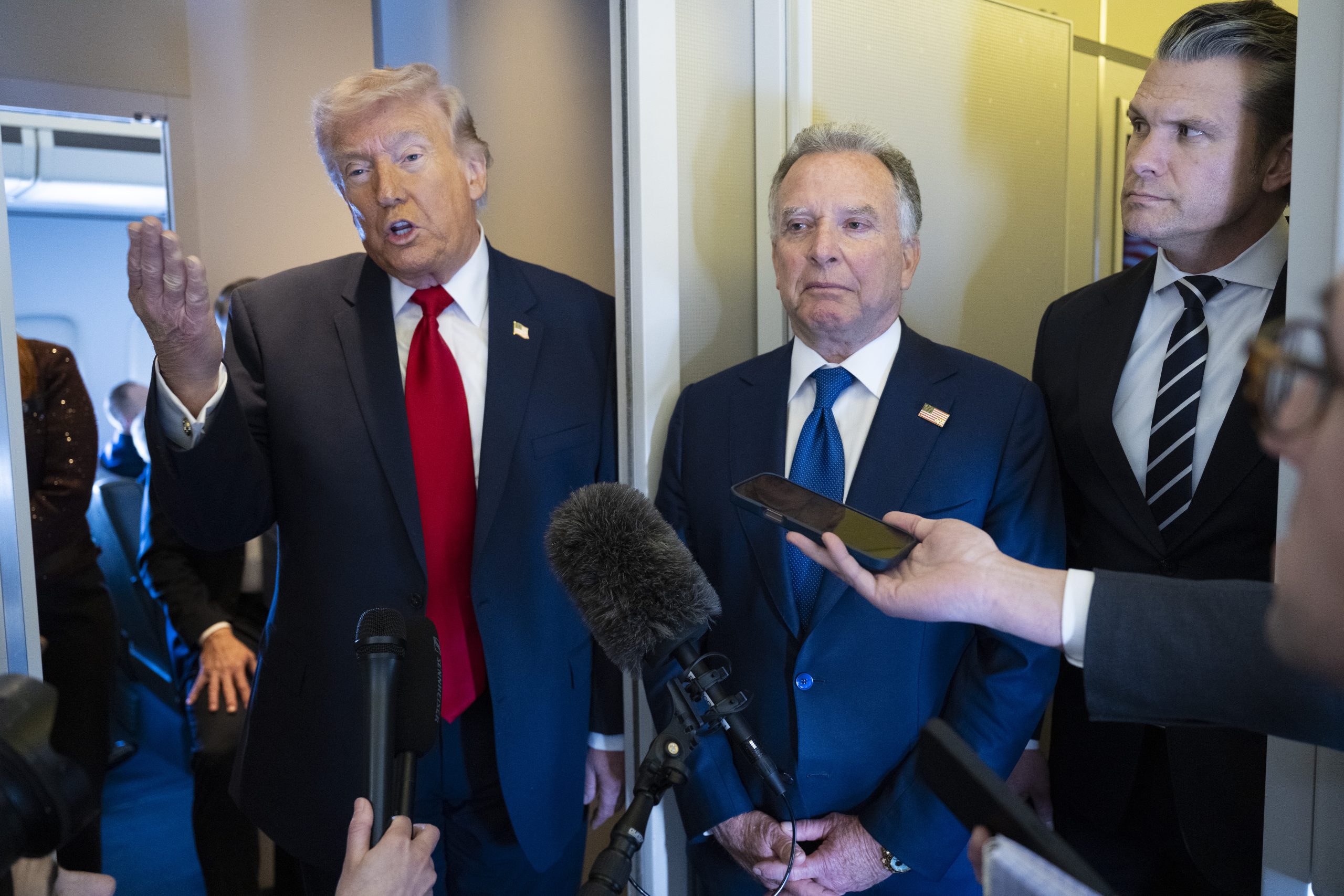
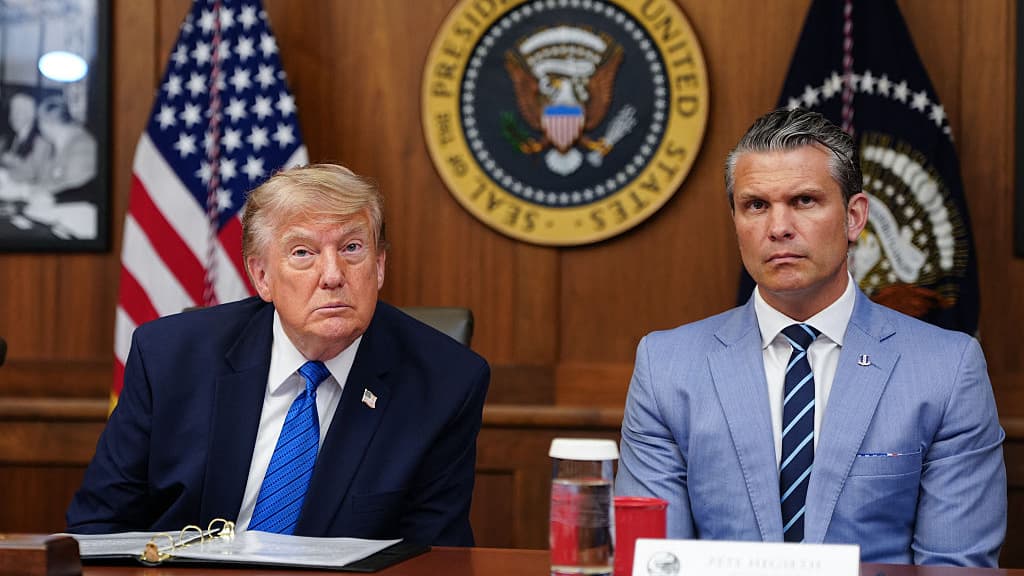
President Donald Trump at the start of the Iran war predicted it would last four-to-five weeks, but the conflict is now in its seventh month, with no clear timeline for when the fighting will end.
Active hostilities between Washington and Tehran resumed earlier this month, with oil tankers in and around the Strait of Hormuz coming under fire. Iran is vying to maintain a chokehold over the vital trade route amid the U.S. blockade against its ports. The Strait effectively remains in a military stalemate, bringing renewed regional instability and gravely impacting transit via the waterway, through which around a fifth of global oil production flowed before the war began on Feb. 28. Oil prices last week soared to over $100 a barrel for the first time since July, as the disruption sends energy markets spiraling once more.
The balance of power in the Gulf has come under further strain as Yemen’s Iran-backed Houthi rebels have made significant advances following weeks of fighting with the Saudi-backed government of Yemen, shattering a four-year informal cease-fire in the country’s civil war. The Houthis last week captured the strategic Perim Island, which sits in the Bab el-Mandeb Strait, another vital trade route situated between Yemen and Djibouti and Eritrea in the Horn of Africa, that links Asia and Europe via the Red Sea and Suez Canal. This came as they traveled along the Red Sea coastline, aiming to tighten their grip on the critical maritime chokepoint. The disruption has placed further pressure on the global oil market.
The Houthis’ expanding presence in the Red Sea and the potential it has to severely disrupt trade via the Bab el-Mandeb arguably gives Iran leverage in its war with the U.S., experts say.
“This has the effect of turning up the pressure on the U.S. and its allies who have been relying on alternate routes,” Daniel Benaim, a former U.S. Deputy Assistant Secretary of State for the Arabian Peninsula, tells TIME. “In a contest of economic wills, the alternate Red Sea has been a very important release valve for the blockage of the Strait of Hormuz.”
Diplomatic efforts in the Middle East have faltered. The Gulf states, many of which house U.S. bases that have been targeted by Iranian strikes, on Monday postponed a critical meeting with Tehran on the reopening of the Strait of Hormuz.
Despite pressure mounting for a clear way out of the war, meaningful negotiations between the U.S. and Iran also remain stalled. Here’s what each side has said regarding the status of peace talks, and how experts predict Iranian officials could use the Houthis’ disruption in the Red Sea to their benefit.
Trump says U.S. is ‘open’ to restarting negotiations
Trump on Monday said the U.S. is “open” to the concept of restarting negotiations between Washington and Tehran. High-level officials from both sides last convened for official peace talks in Switzerland in June.
“The failing nation of Iran wants to make a deal, quickly and badly,” he claimed. “I will determine whether or not the U.S.A. will choose to engage—the concept of which we are open to.”
Trump’s remarks stood in stark contrast to the position he laid out on Sept. 2, when he said he was “not trying to force” Iran to the bargaining table. “I couldn’t care less if they sign a worthless, to them, agreement. I like our position now much better, with almost total control of the Hormuz Strait, and their economy totally collapsing. They are just playing out the inevitable,” he insisted.
On Sept. 9, Trump assured the American public that the war will likely end “immediately after” the November midterms and said Iran’s government is holding out in hopes of hurting Republican political prospects.
Trump has expressed full confidence in the U.S.’ two-pronged military and economic campaign against Iran, with the latter aiming to choke Tehran off from the global economy through various sanctions.
Read More: How the U.S. Treasury’s New Aviation Sanctions on Iran Extend Beyond Tehran
Ali Vaez, deputy program director for the Middle East and North Africa at the International Crisis Group, tells TIME that Trump’s diplomatic approach will dictate how successful future negotiations may be.
“President Trump might be interested in getting a deal with Iran, but that’s not necessarily a guarantee that he will get a deal. It all depends on what approach he would adopt to diplomacy. If it’s maximalist, then it doesn’t stand a chance of succeeding,” he says, adding that dealing with Iran requires “a multi-dimensional diplomacy” in order to achieve a “sustainable de-escalation between Iran and the United States.”
Trump has repeatedly insisted that the U.S. has near total control of the vital waterway and that “oil is flowing,” but traffic via the Strait remains disrupted.
Kpler, a commodities data and analytics firm, shared data with TIME that shows that only 10 ships crossed the Strait of Hormuz on Monday—a significantly lower count than the 138 vessels that typically passed through the waterway during a 24-hour period before the war.
“The United States has shown over time that it has capabilities to move significant amounts of shipping through the Strait, but Iran has innovated,” says Benaim. “Iran and its allies are innovating in their ability to disrupt. So it’s a bit of a foot race between U.S. attempts to bypass Iran’s restraints and Iran’s attempts to enforce its own de facto blockade.”
The Iran war, and its economic impact, has been deeply unpopular with Americans who are facing increasingly high energy costs. Diesel prices last week reached a record $6 per gallon. The war with Iran has cost the U.S. government around $38 billion and contributed to growing inflation, according to newly-published analysis by the Congressional Budget Office. A national UMass Amherst/YouGov poll, conducted from Aug. 21 to 26, found that 68% of Americans view Trump’s handling of the war negatively.
Iran says ‘no talks until conditions met’
Iran has responded to Trump’s openness to negotiations by doubling down on its demands.
“Don’t get distracted by the U.S. President’s mixed signals—from ‘no negotiations’ to ‘we’re ready to talk,’” said Mohsen Rezaei, Iran’s recently-installed secretary of the Supreme National Security Council, on Monday. “No talks until Iran’s conditions are met. Period!”
While Rezaei did not directly name any conditions, Iran previously put forward a list of six demands for the U.S. to meet before the Strait of Hormuz would be fully reopened. Rezaei also seemingly pointed to the recent developments in the wider region, arguing that the “stakes around oil and the straits have changed” and warning that “damage control won’t stop what’s coming.”
The remarks from the hard-line national security adviser took an elevated position from that of Iranian President Masoud Pezeshkian, who in early September said Tehran was prepared to “reciprocate,” if the U.S. returned to the cease-fire conditions both countries negotiated in June. He was referencing the Memorandum of Understanding (MoU) signed on June 17, but the pact fell apart, with Washington and Tehran seemingly adopting different interpretations of the language used in the interim agreement.
Farea Al-Muslimi, a research fellow at Chatham House’s Middle East and North Africa program, says the Iranians are now “negotiating for the sake of negotiating,” arguing that their demands are intended to draw out talks while energy prices continue to rise.
“They can wait. They can afford it. They have no [democratic] parliaments. They don’t care about public opinion, as you imagine, and they are not allergic to pain,” he tells TIME.
Has Iran gained leverage as the Houthis close in on the Bab El-Mandeb Strait?
With the Houthis tightening its grip on the Bab el-Mandeb Strait, Iran has gained another potential source of leverage, experts say.
Amid the ongoing disruption to the Strait of Hormuz since the war started, there has been an uptick in the volume of crude oil and petroleum liquids that transit via the Bab el-Mandeb, increasing from 5.6 million barrels per day in the first quarter of 2026 to 8.1 million per day in the second quarter, according to the U.S. Energy Information Administration (EIA).
Despite the Houthis having claimed that they will not disrupt maritime traffic—except for Saudi Arabian oil tankers—experts tell TIME that the group’s ability to threaten shipping is enough to give Tehran greater leverage in any future round of negotiations.
“The Houthis march to the beat of their own drummer, but these actions certainly help Iran gain leverage by complicating alternative routes out of the Strait of Hormuz,” says Benaim.
In agreement, Al-Muslimi adds “the Iranians now have a new card they can use, and they haven’t totally used [it] yet, but they will. It’s a matter of time.”
“The Houthis are primarily concerned about advancing their own position within Yemen and globally. In this case, it happens to coincide with the pressure that Iran would like to apply on the United States and the international community,” Benaim adds.
Alternatives to the Bab el-Mandeb Strait present fresh challenges
The Bab el-Mandeb, which is Arabic for “Gate of Tears,” serves as the southern gateway to the Suez Canal— ships must pass through it to access the canal from the south. If the Houthis were to close the Bab el-Mandeb, it would increase the pressure on the global flow of oil.
Experts say shipping companies, if forced to find an alternative route, could be left to transit around South Africa’s Cape of Good Hope.
The Cape of Good Hope “could be a temporary solution, but it adds to insurance and travel costs, and timelines,” says Vaez. The EIA has estimated that the Cape route adds approximately 15 days to an oil voyage from the Arabian Sea to Europe.
Disturbances in the Bab el-Mandeb are particularly significant for Asian countries, experts say.
Asia has traditionally been Saudi Arabia’s primary export market for crude oil, receiving 75% of Saudi Arabia’s total annual crude oil exports in 2023, according to data from the EIA. China, Japan, South Korea, and India were its top crude oil importers.
The EIA on Sept. 9 acknowledged the concessions required when using alternative routes, noting that although “Saudi Arabia has increased oil shipments through the Suez Canal at the north end of the Red Sea,” it is “a longer and costlier route for customers in Asia.”
The Suez Canal also has constraints. As detailed by the International Energy Agency (IEA), “large crude carriers (VLCC) can only transit the canal when loaded below their 250,000 tonnes capacity.” As such, tankers following the route must first unload part of their cargo into a pipeline south of the canal and then reload the crude at a port before continuing their voyage, according to Reuters.
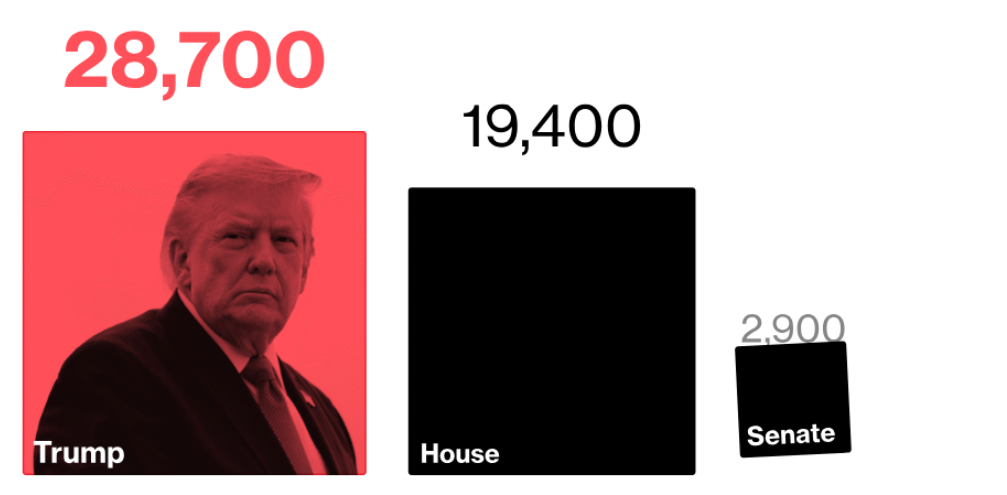
Donald Trump made nearly 28,700 stock trades in 17 months, more than the entire Congress’s 22,200 combined, even as he pushes a lawmaker trading ban that leaves his own portfolio untouched.
The figures, drawn from a Bloomberg review of disclosures through June, land as Republicans turn stock trading into a campaign issue ahead of the midterms.
A Trading Ban That Exempts Trump
House Republicans passed a bill in July barring members of Congress, spouses, and dependent children from trading individual stocks. The measure says nothing about the president.

Trump has backed the bill. He told Congress in his State of the Union address that it should pass “without delay.”
The White House says outside firms manage his holdings through index-tracking models. It says neither Trump nor his family directs any trades.
Representative Anna Paulina Luna is a lead sponsor of the ban. She framed it as an accountability measure at a Republican convention in Dallas last week.
“The American people deserve to know that those they elect to public office actually serve the American people and not their own wallets.”
Same Pattern, Different Target
Trump has pushed back hard on Republicans who want the ban to cover him too. He called Senator Josh Hawley a “pawn” last year after Hawley proposed extending trading limits to the presidency.
Trump has also called for scrutiny of Nancy Pelosi’s stock trading. His own disclosures show a similar pattern.
He has touted stock gains within days of buying into companies. That includes a DoorDash stake he held before hosting a White House delivery event.
Asked about the appearance of a conflict, Trump defended the trades.
“Because the stock market’s going up. Everybody’s profiting.”
A May Economist/YouGov poll found three-quarters of Americans want elected officials barred from trading stocks. Support for a ban, however, has not translated into enforcement.
Penalties under the Stop Trading on Congressional Knowledge (STOCK) Act of 2012 start at just $200. Legal experts say the Department of Justice would struggle to enforce any ban against a sitting president.
The post Trump Made More Stock Trades Than Congress Combined While Pushing a Trading Ban appeared first on BeInCrypto.

Ed Sheeran Breaks Silence After Macklemore Is Dropped From His Tour

What Old-School Chart Analysis and Gamma Exposure Tell Us About QQQ This Fed Week

Standard Chartered Forecasts Arbitrum Outperforming BTC, ETH Through 2030



-

 Fashion4 days ago
Weekend Open Thread – Corporette.com
-

 Business6 days ago
Micron Stock Climbs Above $1,031 as AI Memory Crunch and a $50 Billion Outlook Fuel the Rally
-

 Tech3 days ago
The Latest Weird Thing to Play Doom Is the Mapped-Out Brain of a Fruit Fly
-

 Business6 days ago
AMD Stock Climbs After Management Lifts 2027 Data Center Outlook Toward $70 Billion in AI Sales
-

 Crypto World5 days ago
XAG/USD: Silver’s Short-Term Rally Meets Its Moment of Truth
-

 Crypto World6 days ago
2 Chip Stocks Broke Out This Week. Neither Was Nvidia
-

 Business5 days ago
10 Most-Streamed Songs On Spotify In 2026 So Far, Led By Ella Langley’s Dominant Run On The Charts This Year
-

 Crypto World6 days ago
Pi Network ships Protocol 27 on a network with 14 million users and zero DeFi
-

 Tech5 days ago
Battery life is the only iPhone 18 Pro and iPhone Duo upgrade I care about. Apple didn’t disappoint
-

 Crypto World5 days ago
Diesel Tops $6 a Gallon for the First Time as 28 States Set Records
-

 Crypto World5 days ago
OKX launches 10x OpenAI, Anthropic X-Perps in Europe
-

 Tech6 days ago
Apple Watch Ultra 4 vs Watch Ultra 3: Should you really spend another $799?
-

 News Videos5 days ago
Facing Financial Fears
-
 Tech7 days ago
Modders have already found two ways to make DLSS 5 playable, and neither one is Nvidia’s
-

 Crypto World6 days ago
Bitcoin price risks $70K if $78K neckline breaks
-
 Crypto World7 days ago
Bitcoin price holds near $79K as cycle drawdowns narrow
-

 Entertainment6 days ago
Case Sees Major Update As Jury Deliberations Begin
-

 Crypto World2 days ago
Elon Musk Drops a Bombshell: Grok 5 Could Be the AGI Breakthrough
-

 Business3 days ago
Rivals Sam Altman and Elon Musk Rally Behind Dario Amodei’s Call for a Slowdown in AI Development
-
Crypto World5 days ago
Ethereum Price Analysis: Consolidation at $2.5K Tests Momentum as On-Chain Activity Surges
You must be logged in to post a comment Login