

Crypto World
Analyst Lays Out Dream Trade



ETH is currently close to the buying zone, but the sell side is miles away.
Ethereum’s ETH is gaining steam on the day after the world’s largest asset manager launched a staked ETH tracking its performance in the US.
The token is currently challenging the $2,100 level after a 3% daily increase, but one popular analyst, who has focused on the longer term, laid out what he called a dream trade for ETH.
When to Buy and Sell ETH
Ali Martinez, the crypto analyst with nearly 165,000 followers on X, noted in a recent post that the accumulation zone is close by. He believes investors should accumulate the largest altcoin at levels around $1,070. Although the asset slipped below $1,500 last year, it has not traded anywhere near Martinez’s buy target since December 2022, at the end of the bear market.
If investors are indeed able to purchase ETH at these low levels, then the ‘dream’ profit-taking scenario would be at over $8,600. It’s worth noting that the altcoin has never even come close to such peaks. It would have to stage a 300% surge from its current level (or 700% from the accumulation zone) and smash through its 2025 all-time high of almost $5,000 to materialize Martinez’s trade.
The dream trade for Ethereum $ETH:
• Accumulate near $1,070
• Take profits around $8,670 pic.twitter.com/lBY8ThOsB7— Ali Charts (@alicharts) March 13, 2026
Bullish News for ETH
Fellow analyst CW outlined two factors that could propel ETH to new peaks soon. First, they noted that there’s a notable uptick in the Ethereum active addresses, which “indicates bullish market movements.” A similar pattern was visible near the bottom at the aforementioned bear cycle in 2025, and ETH’s price went on a roll in the following months.
The increase in $ETH active addresses indicates bullish market movements.
Although the price of $ETH has fallen, the network has actually become more active.
This pattern has been observed consistently near the bottom since 2022. This is expected to be due to increased… pic.twitter.com/FLwikGFfsn
— CW (@CW8900) March 13, 2026
You may also like:
In a separate post, the analyst outlined that Ethereum’s realized capitalization (calculated by the total value of all ETH coins based on the price when they last moved, rather than the current market price) has turned positive again. This, according to their estimations, is a clear signal about “the start of a full-scale bull market.”
Binance Free $600 (CryptoPotato Exclusive): Use this link to register a new account and receive $600 exclusive welcome offer on Binance (full details).
LIMITED OFFER for CryptoPotato readers at Bybit: Use this link to register and open a $500 FREE position on any coin!


- Bitcoin is charging toward $73,000 amid a fresh decoupling from the stock market.
- The surge in BTC price comes despite fears around escalating oil prices.
- Ethereum, XRP, and Solana are also eyeing momentum as traditional assets falter.
Bitcoin climbed past $72,500 on Friday, extending gains ahead of the Wall Street open.
The cryptocurrency had earlier broken above $72,000 after buyers pushed it out of a consolidation range below $70,000.
The move came as digital assets appeared to shrug off a broader sell-off in equities.
At the time of writing, Bitcoin was trading around $72,518, up roughly 4% over the past 24 hours.
The rally to intraday highs came even as Asian stocks declined and S&P 500 futures slipped amid heightened geopolitical tensions.
Ethereum followed Bitcoin higher, touching intraday highs near $2,157.
Other major altcoins, including XRP, Solana, and BNB, also posted gains around key price levels.
BTC eyes $73k
Analysts attribute BTC’s uptick to crypto’s resilience in recent weeks despite the slump in sentiment following Israel and the United States’ attack on Iran.
While the war and the blockade of the Strait of Hormuz have stoked fears of inflation amid soaring oil prices, on-chain data suggests whales have used the dip for accumulation.
The crypto market has largely weathered the initial storm of the Iran war, and analysts are pointing to fresh decoupling from broader risk asset sentiment.
Amid this potential momentum buildup, Bitcoin is targeting its highest level in nearly two weeks.
After dipping to lows of $63,000 on February 28, BTC pumped to above $74,000 on March 4.

Four consecutive red days saw bears push the bellwether crypto asset to lows of $65,000.
Since then, it’s been up on the daily chart as bulls target a fifth green candle.
If this happens, a breakout above $73,000 could bring the $75k-$78k region into play.
The 100-day simple moving average could offer the next resistance zone around $81,162.
Why could BTC see a sharp pullback?
This downside outlook aligns with potential fragility catalysed by geopolitical uncertainty and global oil pressures.
According to analysts, higher prices reinforce inflation risks and constrain risk appetite as yields rise and the US dollar strengthens.
Meanwhile, BTC and crypto may also face a downturn in momentum as investors slash odds of immediate Fed rate cuts.
Glassnode highlighted this picture via X:
“An accumulation cluster is forming in the $62k–$72k range. However, its intensity is modest relative to prior phases that preceded sustained expansions. Conviction is building, but the foundation for a mid-term breakout remains thin so far.”
Investors could thus go for profit-taking.
On the downside, immediate support lies at the psychological support level at $70,000. A stronger floor could be at prior lows near $66,250.


Banking giants HSBC and Standard Chartered are expected to be among the first institutions to receive stablecoin issuer licenses in Hong Kong, marking a major step in the city’s effort to build a regulated digital-asset ecosystem.
Summary
- HSBC and Standard Chartered are expected to receive Hong Kong’s first stablecoin issuer licenses.
- The approvals would fall under the HKMA’s new stablecoin regulatory framework introduced in 2025.
- The move is part of Hong Kong’s strategy to become a global digital-asset hub while regulating stablecoin issuance.
Hong Kong poised to grant first stablecoin licenses to HSBC, Standard Chartered
The approvals, which could come within weeks, would allow banks to issue stablecoins under Hong Kong’s new regulatory regime overseen by the Hong Kong Monetary Authority (HKMA), according to Bloomberg sources.
Hong Kong introduced its stablecoin licensing framework through the Stablecoin Ordinance, which took effect in 2025 and requires issuers of fiat-referenced stablecoins to obtain regulatory approval. The law is part of the city’s broader push to position itself as a global hub for digital assets while ensuring financial stability and investor protection.
Officials have said only a limited number of licenses will be granted in the first round after regulators reviewed dozens of applications. Sources said as many as 36 firms initially expressed interest in obtaining stablecoin issuer permits.
Standard Chartered has already signaled plans to issue a Hong Kong dollar-pegged stablecoin through a joint venture, while HSBC’s potential approval is notable because the bank did not participate in the HKMA’s earlier stablecoin sandbox program used to test prospective issuers.
The move highlights Hong Kong’s attempt to strike a balance between innovation and regulation as traditional financial institutions increasingly explore blockchain-based payment systems.
Stablecoins, cryptocurrencies designed to maintain a stable value by being pegged to fiat currencies or other assets, are widely used in digital-asset markets and are increasingly being considered for cross-border payments and financial settlements.
Hong Kong’s regulatory push comes amid intensifying competition among global financial centers to attract crypto firms and digital-asset investment.
Opinion by: David Azubike, lead analyst at Blocksquare
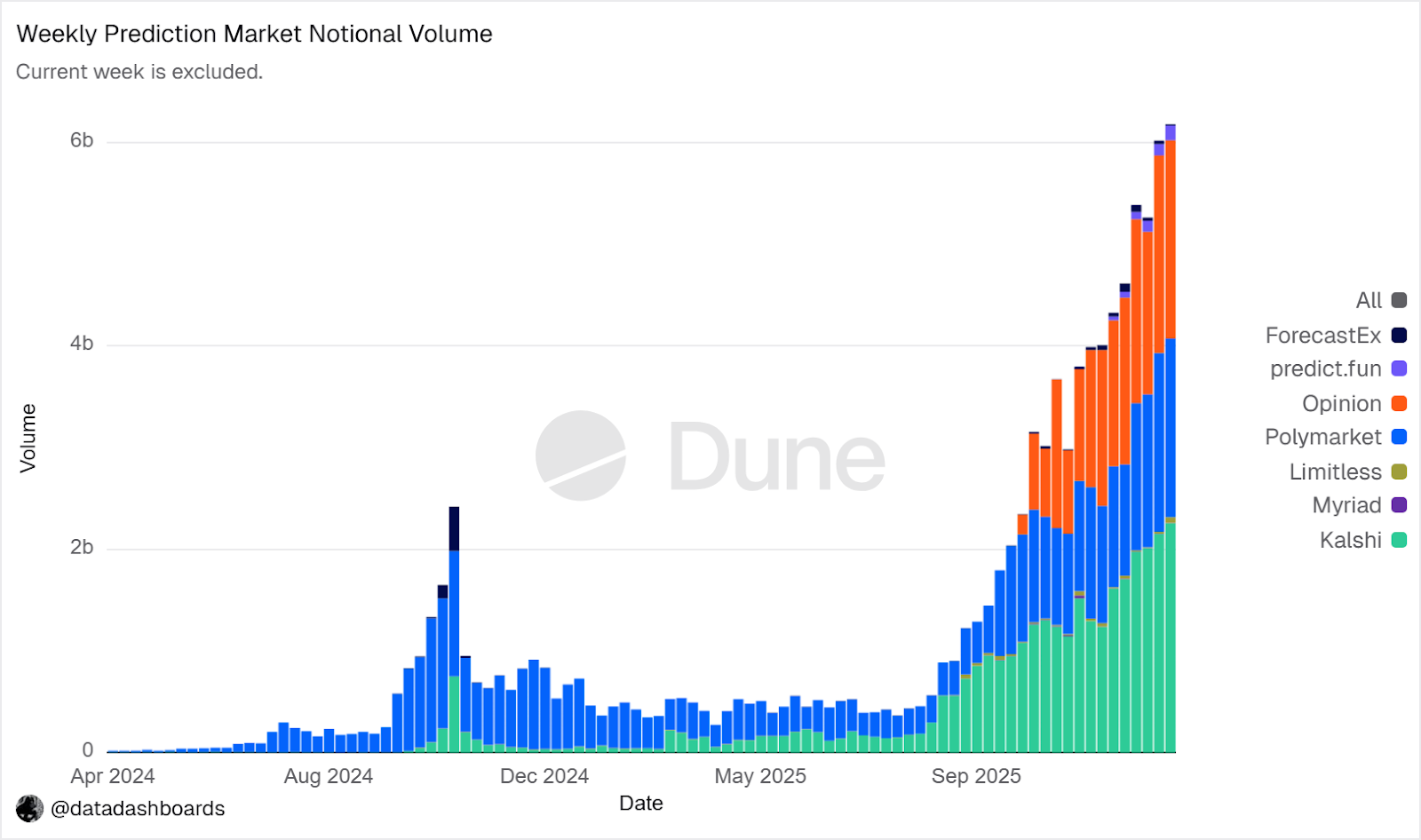
Prediction markets are no longer an experimental corner of crypto. Data now shows something durable: a financial category with sustained volume, diversified participation and increasing institutional attention. Prediction markets are emerging as a new “arbitrage arena” for crypto traders.
Monthly notional volume in prediction markets scaled to more than $13 billion by late 2025 from less than $100 million in early 2024 as markets diversified across verticals, according to a joint research report from Dune and Keyrock.

Source: Dune
The implication is straightforward: Prediction markets have scaled beyond their breakout moment. Despite recent regulatory action seeking to restrict prediction markets, trading volumes have continued to rise.
As the category matures, the primary risk is shifting. Liquidity and user acquisition are no longer the binding constraints; trust is.
An important layer of trust, separate from regulation and custody, is resolution.
Resolution becomes the bottleneck
Resolution architecture matters because the category is expanding into increasingly contentious domains.
Sports markets routinely involve edge cases around officiating, timing and data sources. Political markets hinge on definitions, certification procedures and legal interpretation. Macro markets depend on methodology changes and release schedules.
As the surface area grows, so does the frequency of contested outcomes.
When resolution is opaque or discretionary, engagement declines quietly. When resolution is adversarial and economically secured, users begin to treat it as financial infrastructure.
This mirrors earlier transitions in crypto. Custody, execution and liquidation were once product features. Over time, they became system properties that institutions expected to be predictable and auditable.
Resolution is undergoing the same transition in prediction markets.
Resolution as infrastructure
Every prediction market makes the same promise. Traders buy conditional claims on a future outcome, and the system must deterministically convert those claims into redeemable value once the event has occurred. If that conversion is slow, ambiguous or discretionary, traders price in resolution risk. When resolution risk becomes material, serious capital concentrates in only a handful of headline markets and avoids the rest of the venue.
This is why resolution architecture is becoming a very important layer in the modern prediction stack.

In most designs, a market is created and linked to a specific oracle question with explicit resolution criteria. Users trade YES or NO outcome tokens that represent conditional claims. These claims are typically implemented using conditional token standards that can only be redeemed after the oracle finalizes an outcome.
Related: Crypto.com launches standalone prediction market app ‘OG’
Once the event has occurred, an answer is proposed to the oracle. Optimistic oracle designs assume correctness by default, but require the proposer to post a bond. This bond creates a financial cost to submitting an incorrect answer.
A fixed challenge window then opens. During this period, anyone can dispute the proposed outcome by posting a larger bond. Each challenge increases the bond size, raising the economic cost of manipulation.
If no dispute occurs, the oracle finalizes the answer and the market settles. If a dispute does occur, the case escalates to arbitration, where decentralized jurors rule on the outcome and the decision is enforced back into the oracle state.
From product feature to trust anchor
As prediction markets mature into information infrastructure, trust shifts away from interfaces and incentives toward resolution as architecture: the set of rules, bonds, challenge windows and arbitrage paths that deterministically convert outcomes into enforceable settlement.
The next wave of growth will not be won by whoever acquires the most first-time traders during a single headline event. It will be won by whoever builds infrastructure where resolution is as reliable as execution.
For builders, this changes the core engineering and governance priorities. Resolution rules must be explicit before markets go live, not retrofitted after disputes emerge. Question design must minimize ambiguity at creation, not rely on discretionary judgment at settlement. Bond sizes and challenge windows must scale with open interest, not remain static as markets grow. Arbitration paths must be predictable and enforceable. And resolution latency must be treated as a core product metric, not an operational afterthought.
When these properties are engineered deliberately, prediction markets stop behaving like speculative products and begin functioning as financial systems people rely on.
Opinion by: David Azubike, lead analyst at Blocksquare
This opinion article presents the author’s expert view, and it may not reflect the views of Cointelegraph.com. This content has undergone editorial review to ensure clarity and relevance. Cointelegraph remains committed to transparent reporting and upholding the highest standards of journalism. Readers are encouraged to conduct their own research before taking any actions related to the company.
Crypto World
U.S. senators to oversee DOJ investigation of Binance over Iran-linked sanctions evasion


Three Democratic senators have said they will oversee the Justice Department’s investigation into crypto exchange Binance over possible violations of U.S. sanctions tied to Iran-linked transactions.
Summary
- Three Democratic senators said they will oversee the Justice Department’s investigation into whether Binance was used to facilitate transactions linked to Iran and evade U.S. sanctions.
- The inquiry follows a Wall Street Journal report that federal investigators are examining more than $1 billion in crypto transfers that may have moved through the exchange.
In a joint statement released Thursday, Senators Elizabeth Warren, Chris Van Hollen, and Ruben Gallego vowed to conduct oversight of the probe into Binance to “ensure the Department of Justice conducts a serious investigation into Binance and holds the company accountable for any wrongdoing.”
The U.S. Department of Justice has reportedly launched a probe into Binance, according to The Wall Street Journal. The probe will examine whether the global crypto exchange was used to evade sanctions by allowing transactions linked to Iran-backed networks.
Investigators have reportedly contacted individuals familiar with the transactions to secure evidence on how the funds moved through the exchange.
Binance has yet to acknowledge the latest DOJ investigation and maintains that it has cooperated with law enforcement during previous inquiries before shutting down accounts linked to the transactions.
However, the senators remain unconvinced and said that the exchange has an “established track record of putting profits ahead of the law.”
“Recent reports raise serious concerns that the firm is again violating U.S. sanctions laws, recklessly helping bankroll the activities of terrorist groups connected to Iran,” they added.
A separate report from The Wall Street Journal published last month claimed that Binance had fired internal staff who flagged $1 billion worth of crypto transactions tied to sanctioned Iranian entities.
Binance denied those allegations and filed a defamation lawsuit against the publication.
The latest scrutiny into Binance follows the company’s guilty plea in 2023 for violating anti-money laundering and sanctions laws in the U.S. Subsequently, it had to pay a record $4.3 billion fine and agreed to operate under U.S. regulatory oversight.
Binance’s CEO at the time, Changpeng Zhao, had to step down from his role following his own guilty plea and served four months in prison.
Zhao was later pardoned by U.S. President Donald Trump, which became another flashpoint in Washington as Senator Warren criticized the decision.
Crypto World
Pi Network (PI) Price Explosion, Ripple (XRP) Set for a Huge Move, and More: Bits Recap March 13
XRP and SHIB are well in the green on a weekly scale, albeit charting less substantial gains than the top performer PI.
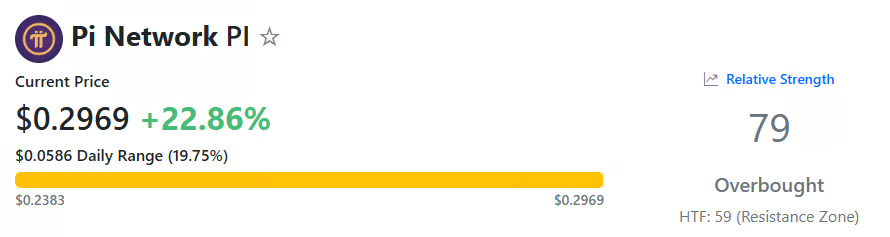
Pi Network and its native cryptocurrency have been the talk of the town lately after the Core Team announced a series of important upgrades, while PI’s price soared to a five-month peak.
Ripple’s XRP appears to be gearing up for a major move, while Shiba Inu (SHIB) nears a breaking point that has historically resulted in explosive gains.
PI’s Impressive Comeback
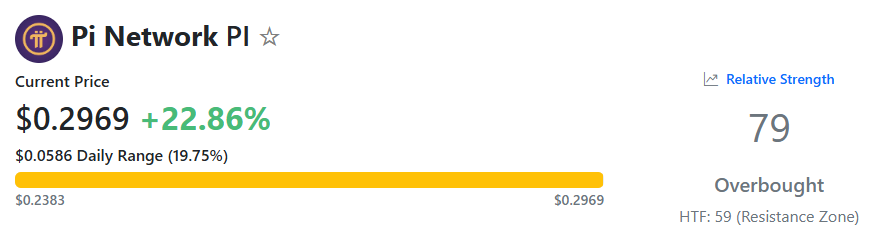
After months of a prolonged downtrend, PI has finally posted an evident resurgence, with its valuation rising to almost $0.30. This is the highest point observed since the end of October last year and represents a whopping 100% increase on a monthly scale.
Some of the catalysts driving the price up include the recent updates disclosed by the project’s team. Earlier this month, the protocol v19.9 migration was successfully completed, while the next version, v20.2, was scheduled for release on March 12.
Moreover, one of the biggest crypto exchanges, Kraken, allowed trading services with PI. Backing from such a giant typically has a positive impact on valuation, as it results in increased liquidity, improved availability, and a stronger reputation.
The community has now moved its focus towards March 14 – a date known as Pi Day due to the symbolic resemblance to the mathematical constant π (3,14). Last year, the team announced ecosystem updates, raising the question of whether we’ll see something similar tomorrow.
While PI’s price increase over the past few weeks is undeniable, the asset’s Relative Strength Index (RSI) suggests it might be time for a correction. The ratio has soared past 70, indicating the token is overbought and could head south in the short term.
You may also like:
Where Next for XRP?
Ripple’s native token has also risen over the last seven days, albeit significantly less than PI. Currently, it trades at around $1.43 (per CoinGecko), representing a 2% weekly increase.
Recently, the popular analyst Ali Martinez noted that XRP’s Bollinger Bands have squeezed due to the relatively slight volatility. Historically, such developments have been followed by major market moves, though the direction – a strong rally or a sharp decline – remains unclear.
Earlier today, the same person outlined a highly bullish forecast, envisioning XRP to explode to the ridiculous (at least as of now) $48 during the next bull cycle. Prior to that, analysts like TradingShot predicted that the valuation may drop below $1 in the foreseeable future.
SHIB on the Move
The second-largest meme coin has rallied 10% over the past week and is currently worth around $0.000006161 (per CoinGecko). Just a few days ago, X user JAVON MARKS analyzed Shiba Inu’s performance and concluded that it appears to be nearing the breaking point of another Falling Wedge-like structure. According to the market observer, the last move out of such a formation preceded a staggering 455% price explosion.
The gradually declining amount of SHIB tokens stored on crypto exchanges supports the bullish outlook. CryptoQuant’s data shows that the figure recently fell to a five-year low, suggesting that investors continue to move their holdings from centralized platforms toward self-custody methods. This generally reduces the immediate selling pressure.

Binance Free $600 (CryptoPotato Exclusive): Use this link to register a new account and receive $600 exclusive welcome offer on Binance (full details).
LIMITED OFFER for CryptoPotato readers at Bybit: Use this link to register and open a $500 FREE position on any coin!
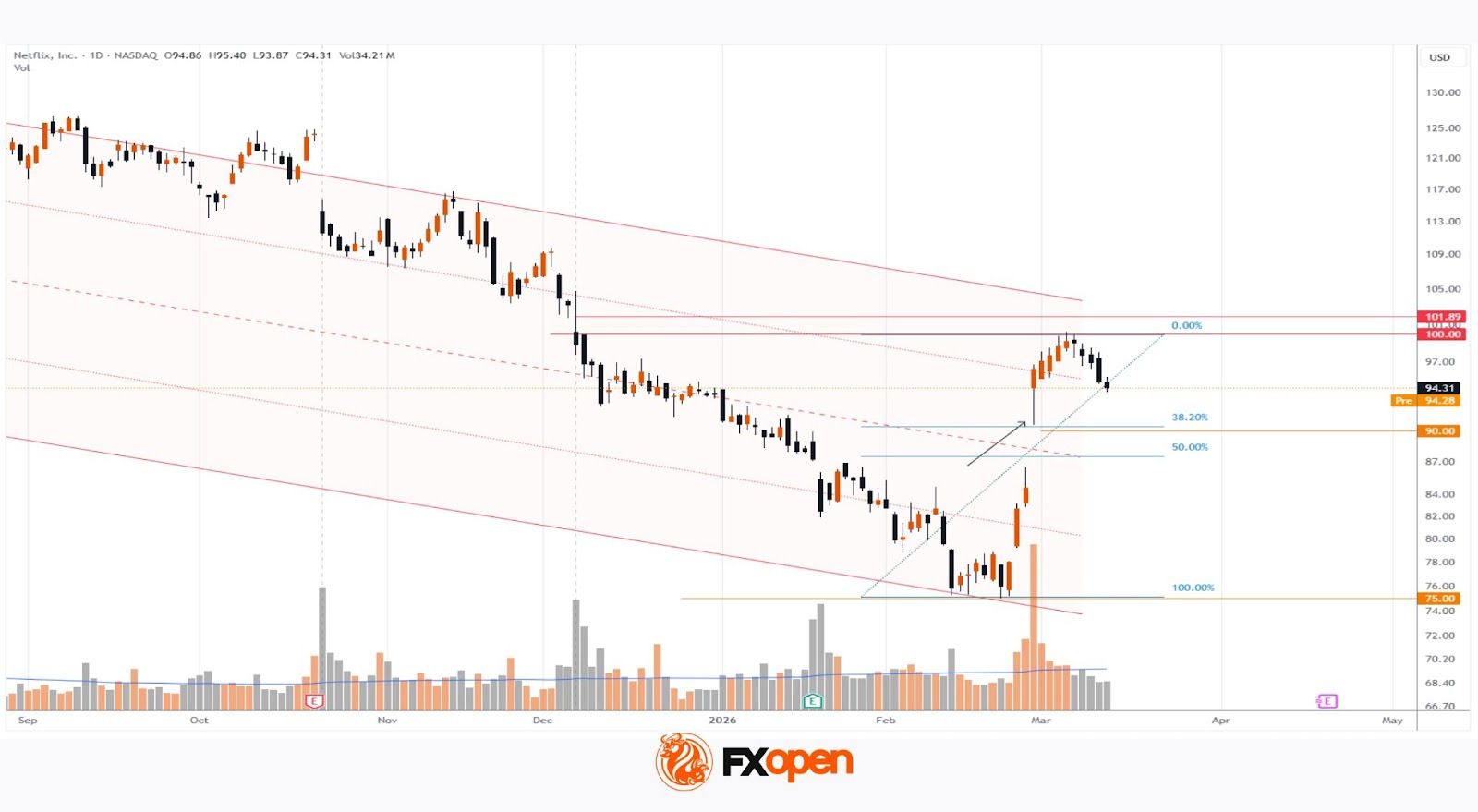
On 21 January, while analysing the NFLX chart, we:
→ identified a descending channel and a resistance zone around the $100 level;
→ noted that Netflix shares were showing a sustained downtrend. Selling pressure had been triggered primarily by reports of a potential acquisition of Warner Bros. Discovery assets, with the market concerned that Netflix might take on multi‑billion-dollar debt and face intense antitrust scrutiny.
Since then, the situation has shifted markedly. After reaching the lower boundary of the channel near $75, the stock reversed higher, following Netflix’s official announcement that it was walking away from the deal, opting to preserve capital rather than pursue a risky expansion. This sparked a strong relief rally: NFLX shares gapped up significantly and moved into the upper half of the channel.
Further bullish momentum was driven by analyst upgrades, with target prices revised upwards, suggesting a potential transition into a new uptrend.
Technical Analysis of NFLX
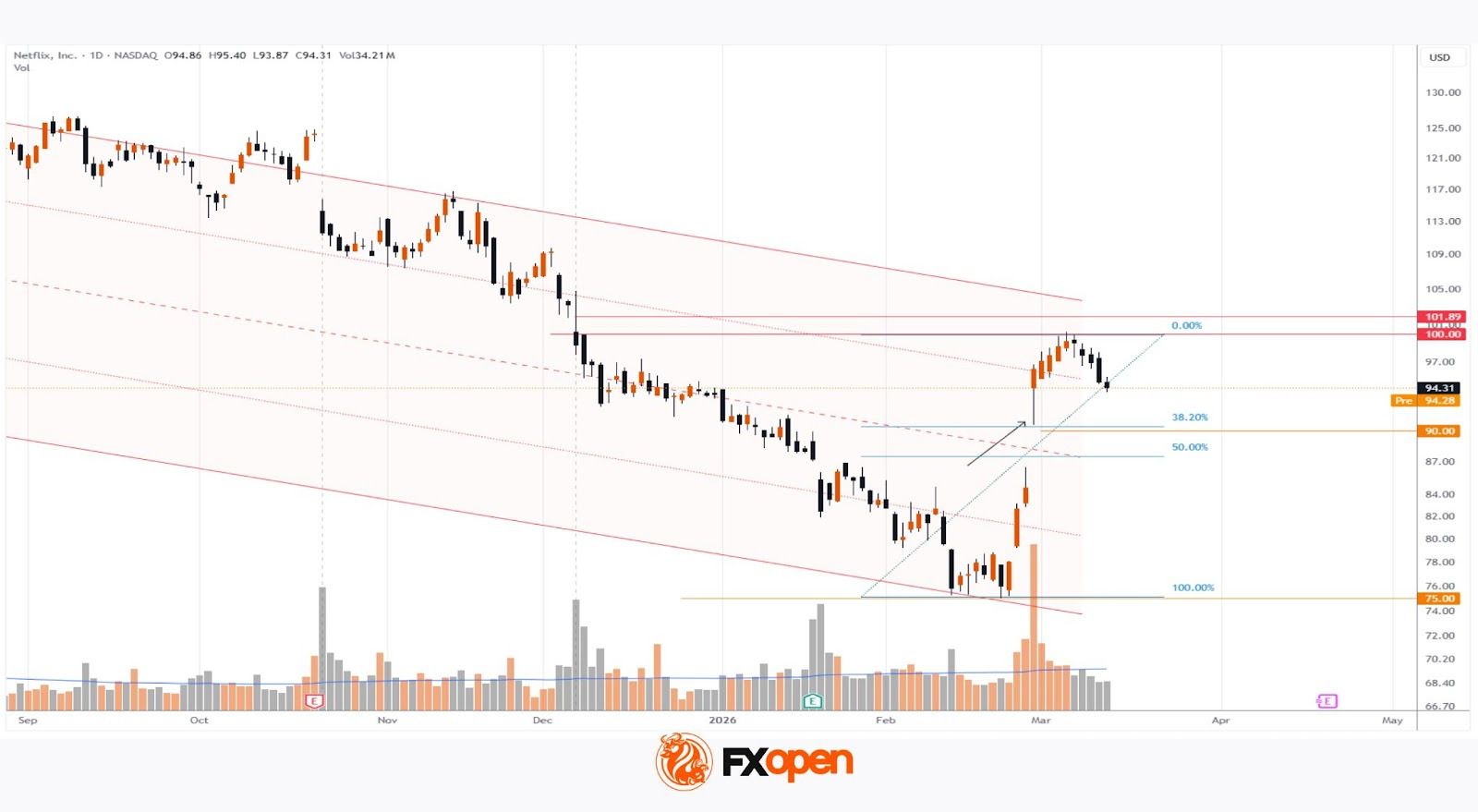
It should be noted that the previously drawn descending channel remains relevant, with the psychological $100 area acting as resistance on the way toward the upper boundary.
However, after a roughly 30% rally from the February low, a pullback is natural. The current decline from the 5 March peak can therefore be interpreted as a moderate correction, driven by profit-taking and sales by investors who had previously held through losses and chose to exit.
Attention should be paid to the trading volume on 27 February, which was substantial. The candle following the bullish gap featured a lower shadow, signalling strong buying pressure. Consequently, the $90 level—also near the 38.2% Fibonacci retracement—may serve as support if bulls attempt to return NFLX shares to a sustainable upward trajectory.
Buy and sell stocks of the world’s biggest publicly-listed companies with CFDs on FXOpen’s trading platform. Open your FXOpen account now or learn more about trading share CFDs with FXOpen.
This article represents the opinion of the Companies operating under the FXOpen brand only. It is not to be construed as an offer, solicitation, or recommendation with respect to products and services provided by the Companies operating under the FXOpen brand, nor is it to be considered financial advice.

Key Takeaways
- Token2049 Dubai event moved from April 2026 to April 2027 over safety concerns.
- Middle East conflicts disrupt air travel and create challenges for UAE-based events.
- TON blockchain conference in Dubai called off as regional tensions escalate.
- Dubai’s position as international financial center tested by event cancellations.
- Conference organizers emphasize safety over proceeding with original timeline.
One of the cryptocurrency industry’s premier conferences, Token2049, has announced a significant delay for its Dubai edition. Originally planned for April 29-30, 2026, the event will now convene on April 21-22, 2027. The decision stems from mounting concerns over regional security and complications with international travel logistics.
Advance planning for the 2026 conference had progressed smoothly, with registration numbers suggesting strong attendance. Despite this momentum, organizers determined that pushing the event back would better serve the community. This approach allows the conference to maintain its reputation for excellence while prioritizing attendee wellbeing.
Organizers have remained relatively quiet about specific programming changes resulting from the delay. As a prominent destination for cryptocurrency and financial technology innovation, Dubai was poised to welcome thousands of international visitors. The postponement highlights the substantial impact geopolitical volatility can have on major industry gatherings.
Airspace Restrictions Create Travel Complications
The United Arab Emirates has experienced substantial travel interruptions due to regional airspace limitations. These complications intensified after military actions involving the United States, Israel, and Iran commenced on February 28. Airlines such as Emirates, Etihad, flydubai, and Air Arabia have implemented reduced schedules or route modifications.
Travelers have been urged by officials to verify their reservations in advance, as numerous flight paths remain affected. The situation has created significant obstacles for corporate travel and international conferences throughout the Emirates. Events of Token2049’s magnitude must now contend with operational hurdles that cannot be overlooked.
Dubai has experienced direct security threats, including missile and drone attacks on key infrastructure during the ongoing conflict. Security experts point to the UAE’s extensive defense cooperation with Western allies as a contributing factor. These circumstances have generated a challenging landscape for hosting international business conferences.
Blockchain Industry Events Reconsider Middle East Venues
The planned TON blockchain ecosystem conference scheduled for May 1-2, 2026, in Dubai has been completely called off. Organizers cited safety considerations and indicated they would investigate alternative event structures for later in the year. This cancellation demonstrates increasing hesitation about conducting large-scale events in potentially vulnerable locations.
Token2049 maintains its status as a critical gathering for the crypto industry, drawing thousands of developers, investors, and thought leaders from around the globe. Rescheduling to 2027 provides organizers the necessary time to guarantee robust participation without sacrificing security. This strategy mirrors a wider pattern of event postponements linked to Middle Eastern instability.
Dubai’s standing as an international financial center encounters obstacles as travel limitations persist. Industry conferences like Token2049 serve essential functions for professional networking and knowledge exchange. Event planners are now reconsidering their approaches to protect participation levels while sustaining global connections.
Token2049 is anticipated to resume its position as a flagship cryptocurrency conference when it reconvenes in April 2027, offering a vital forum for blockchain advancement. The delay acknowledges both practical constraints and continuing geopolitical challenges. Industry participants expect the conference will preserve its influence and scope once circumstances improve.

Crypto World
Cointelegraph’s regional editions return to Google after the main site’s 76% collapse in crypto news visibility
Cointelegraph Brasil has reappeared in Google’s index after a period of disappearance, highlighting the fragile control crypto publishers have over search-driven visibility amid global algorithm updates.
After spotting Cointelegraph Brasil content in Top Stories and reviewing the site’s technical setup, we found signs that the Brazilian edition is once again interacting normally with Google’s crawlers. Monitoring soon showed other language editions returning as well.
When we at Outset PR first started digging into Cointelegraph’s disappearance from Google, the story was simple enough: the collapse itself. One of the biggest crypto news publishers had suddenly slipped out of the search results that usually drive readers to industry coverage.
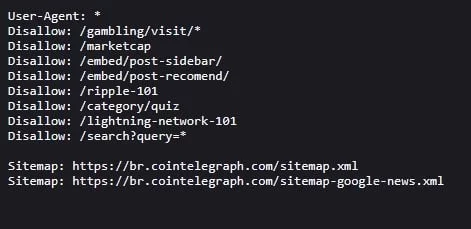
Recently we noticed something different. Cointelegraph Brasil suddenly reappeared in Google’s index. Its robots.txt file now lets Googlebot reach the core editorial pages. Only a handful of technical paths (embedded search queries or certain guide sections) are blocked.
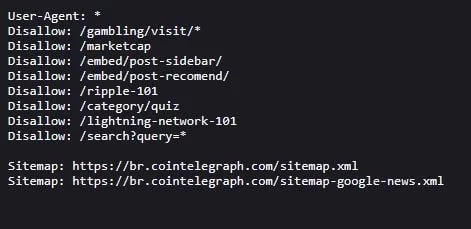
Source: Cointelegraph Brasil robots.txt configurations
At the same time, the Brazilian edition has moved away from a subdomain and switched to a country-level domain. What previously lived at br.cointelegraph.com now redirects to cointelegraph.com.br.
What’s even more interesting is that shortly after Cointelegraph Brasil returned, other local versions began appearing again as well, with similar changes applied to their URLs and technical setup.
But the main Cointelegraph properties remain far less visible in search. Moreover, our monitoring shows the robots.txt file has grown significantly in size, expanding to the point where it no longer even fits on a single screen. This suggests that the site’s crawl directives are currently being actively modified as part of the broader restructuring.
Changes inside Cointelegraph and its language editions appear to be happening almost daily. We’re continuing to follow what happens next and whether these adjustments will lead to a broader recovery, including the return of Cointelegraph news pages to Google.
Taking a step back, Cointelegraph’s U.S. visits peaked at 8 million in July 2025 and fell to 1.43 million by year-end, which is a roughly 83% decline.
A collapse that outran the market
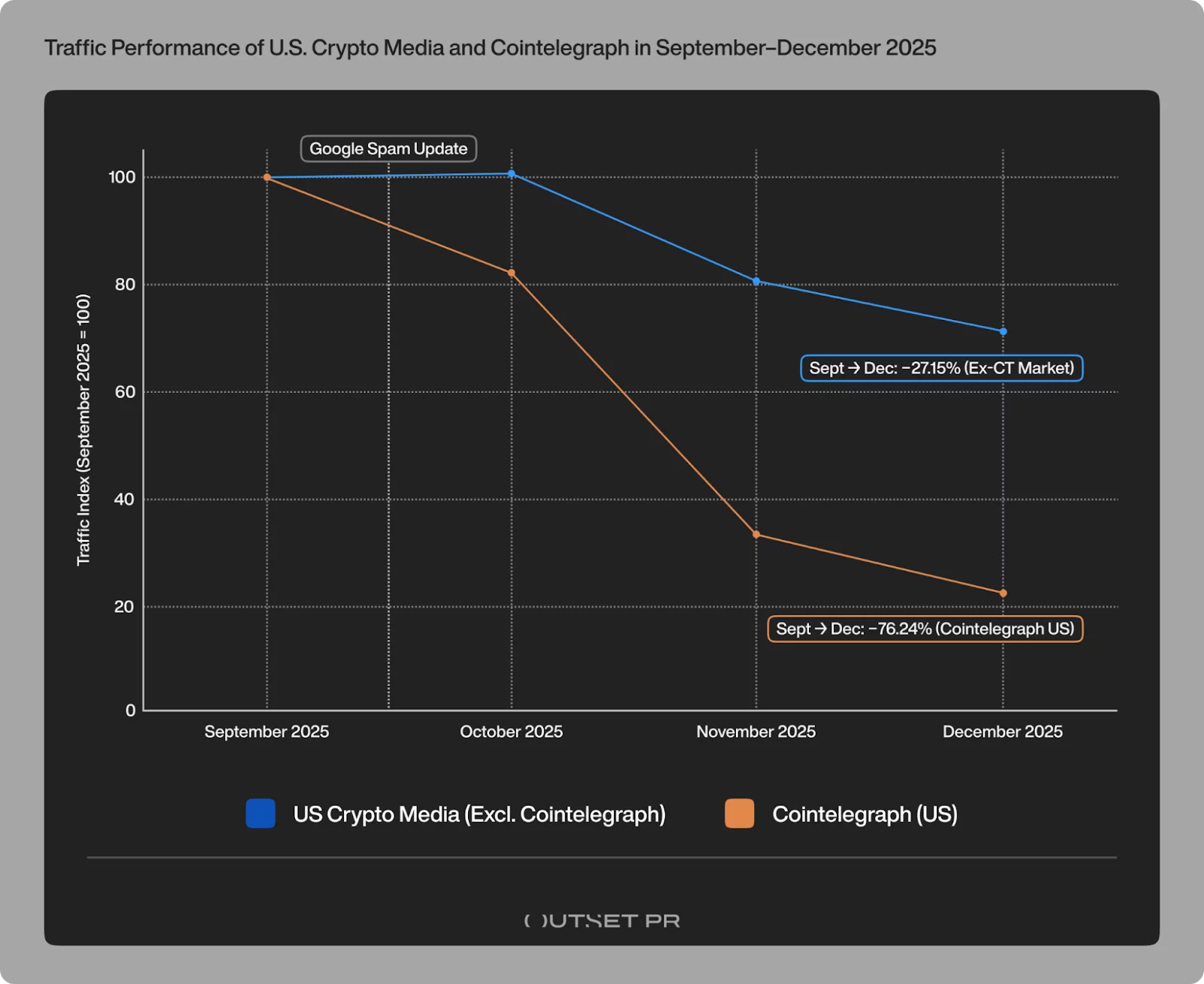
Per our latest Outset Data Pulse report, the U.S. crypto media environment as a whole clearly contracted, but not even close to Cointelegraph’s pace. Between September and December 2025 (the window the report treats as the spam update propagation period), total crypto media traffic fell from 44 million to 29 million visits, or almost 34%.
Excluding Cointelegraph’s metrics from this data, the broader U.S. crypto media market dropped from 38 million to 27 million over the same time period, representing a 27% decline.
Cointelegraph’s U.S. edition, over the exact same period, fell 76% from 6 million visits to somewhat under 1.5 million. This “76 versus 27” comparison is the whole story in one metric.
Source: Outset PR
If this were just a normal drop in interest, we would expect broad-ish softness or broad-ish strength. Instead, we get a market drawdown. Inside it, one publisher is falling nearly three times deeper than the sector contraction.
The synchronised fall across languages
Cointelegraph runs several language editions, each aimed at a different market and audience. That alone shows how differently crypto media works across regions, which is something we saw earlier when looking at how fragmented the landscape is across Asia.
Normally their search traffic moves differently. Brazil might rise while Japan slows down, or Europe might react to a local news cycle. That’s why the recent change stands out. Even though Cointelegraph Brasil has just started appearing in Google’s index again, the earlier collapse didn’t happen in isolation.
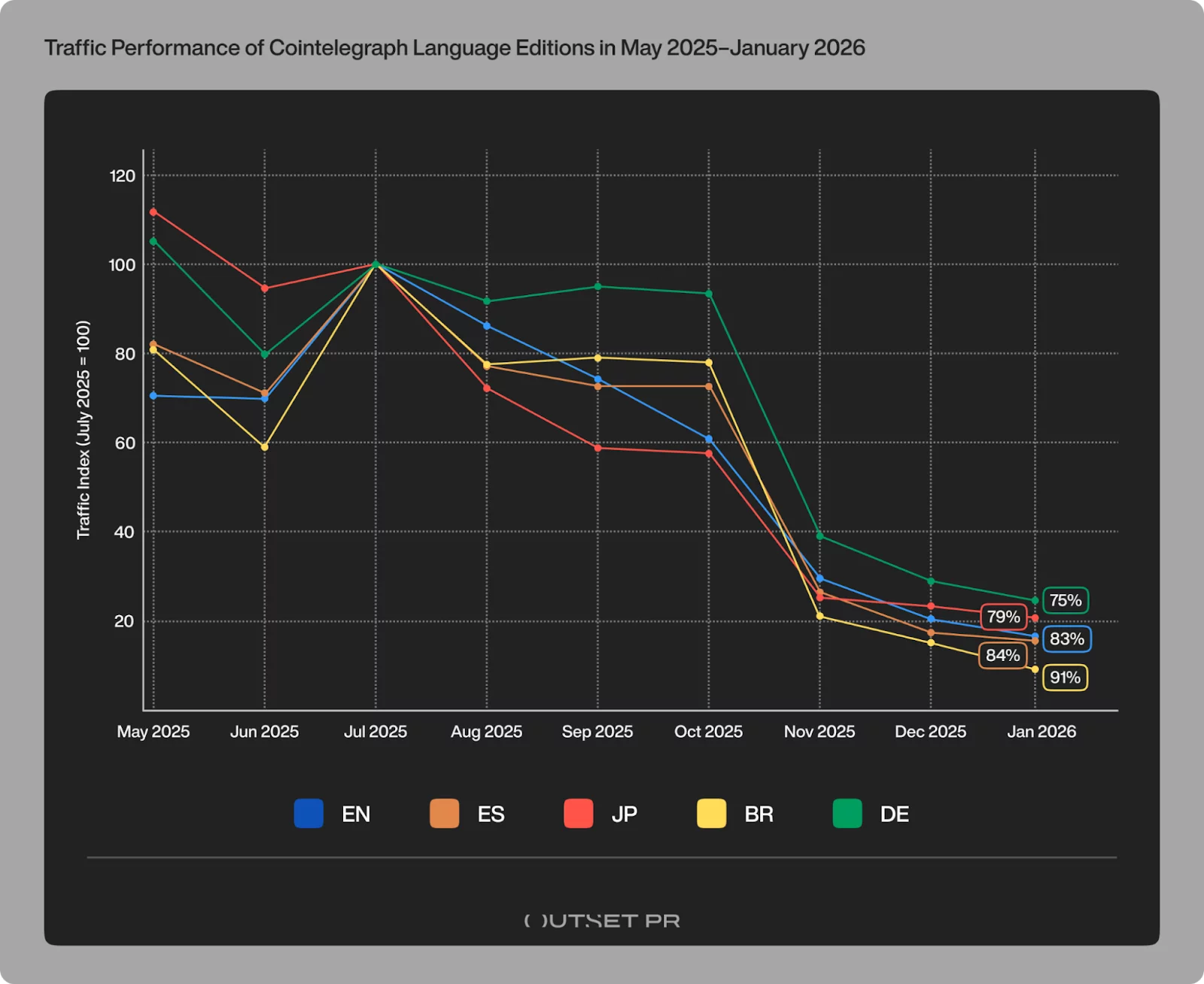
When we mapped the traffic data from the July 2025 peak, the pattern looked almost identical across editions. Traffic began slipping in September and then dropped sharply between October and November.
Source: Outset PR
By January 2026, the declines from the July peak were about:
- 83% for the English site,
- 84% for Spanish,
- 79% for Japanese,
- 91% for Brazilian,
- and 75% for German.
That timing lines up with Google’s August 2025 spam update, which rolled out globally and across all languages.
When teams in completely different regions all see traffic fall at the same time, it’s unlikely to be a coincidence. Something higher up in the discovery system seems to have changed.
Around the same time, archived technical records show that Cointelegraph reduced the number of sitemap entries from 115 to 69. Several commercial sections that had previously been part of the site’s search structure disappeared from the sitemap during that window.
That alone doesn’t prove causation, but it does show Cointelegpagh’s search structure was changing at the same time visibility collapsed.
Non-branded search is where the power imbalance hides
Cointelegraph’s traffic trends in the fourth quarter show its traffic mix was about 57% direct and 27% organic. The broader U.S. crypto media market (excluding Cointelegraph) was about 42% direct and 40% organic.
This means Cointelegraph was less exposed to search traffic than most crypto outlets but still experienced the sharpest drop in visibility. Our research found that within the outlet’s organic traffic, 82% was non-branded search and only 18% was branded.
Non-branded queries occur when a user isn’t looking for a specific publisher, but rather the answer to a question like “why is crypto down” or “Ethereum ETF flows.” They are essentially trusting their understanding of events to a ranking system. A publisher can build a brand, but it cannot own non-branded discovery.
In practice, that means the ranking system (not the publisher) decides which explanation people see first when they search for answers.
This is essentially rented land. When a major crypto publisher loses non-branded visibility, the effect isn’t just fewer pageviews; it’s a re-rating of what information investors are most likely to consume at the exact moment they are searching for an explanation.
The real risk is market interpretation controlled by discovery
Cointelegraph Brasil appearing in Google again – followed by other language editions – might look like a small recovery. But one regional return doesn’t really change the bigger picture.
What this episode shows is how little visibility publishers actually have into the systems that decide what appears in search. Pages can disappear, traffic can collapse, and then parts of a site can quietly return, all without any clear explanation.
For readers, that matters more than the fate of any single outlet. When people search for explanations during market moves, the sources that appear first shape how events are understood.
And right now, the platforms controlling discovery know far more about how that process works than the publishers producing the reporting.
Crypto World
Vitalik Buterin Withdraws Support From Future of Life Institute Following $500M SHIB Donation Controversy
Key Points
- Buterin withdraws support from FLI following shift toward AI policy lobbying
- 2021 SHIB donation unexpectedly surged beyond $1B during memecoin rally
- FLI and CryptoRelief successfully liquidated approximately $500M despite market constraints
- Buterin cautions that heavy-handed AI policy approaches could backfire
- Advocates for technological solutions including cybersecurity and biosurveillance systems
The co-creator of Ethereum has publicly clarified his stance on the Future of Life Institute following strategic changes that emerged after his substantial 2021 cryptocurrency donation. The gift consisted of massive quantities of Shiba Inu tokens that experienced dramatic value appreciation. Buterin currently maintains that the organization’s trajectory has diverged from the initial vision that informed his philanthropic decision.
Ethereum Founder Challenges Path of SHIB-Backed Organization
Buterin transferred substantial volumes of Shiba Inu tokens to the Future of Life Institute amid the 2021 memecoin frenzy. During that period, Buterin endorsed a comprehensive research framework addressing catastrophic global risks. This framework encompassed concerns about advanced artificial intelligence, biotechnology hazards, and nuclear threat awareness.
Buterin currently asserts that the institute progressively pivoted its focus toward legislative advocacy centered on artificial intelligence regulation. In Buterin’s assessment, this transformation represents a departure from the original science-based and educational blueprint outlined when the donation occurred. Buterin clarified that this strategic evolution has generated a disconnect between his initial intentions and the institute’s current operations.
Buterin additionally voiced apprehension regarding massively funded, coordinated advocacy initiatives. He cautioned that forceful policy interventions might produce counterproductive results and public resistance. Consequently, Buterin stressed that technology-driven resilience strategies could deliver more durable protection against existential dangers.
Shiba Inu Gift Exceeds Anticipated Value
The contribution stemmed from enormous quantities of canine-themed cryptocurrencies delivered to Buterin by token creators throughout the 2021 memecoin explosion. Numerous developers deposited tokens directly into Buterin’s publicly visible wallet as a marketing strategy. Consequently, Buterin found himself holding substantial reserves of Shiba Inu tokens.
Throughout the price surge, the aggregate valuation of these holdings climbed past $1 billion at market peak. Buterin acted swiftly to retrieve assets from secure storage and transformed portions of the holdings into Ethereum. Following this conversion, Buterin allocated the resources to charitable causes and scientific research entities.
Buterin anticipated constrained liquidity conditions within the Shiba Inu marketplace during that timeframe. He projected organizations would successfully convert merely ten to twenty-five million dollars. Contrary to these expectations, both the Future of Life Institute and India’s CryptoRelief successfully liquidated approximately $500 million worth of tokens.
Ethereum Creator Champions Tech-Centric AI Safety Approach
Buterin maintains acknowledgment of the institute’s objective to confront severe technological hazards. The organization advances policies designed to ensure artificial intelligence advancement serves collective human interests. Nevertheless, Buterin expresses disagreement with certain proposals restricting AI capabilities and biosynthesis equipment.
The institute has deployed protective measures preventing dangerous outputs from sophisticated models and research apparatus. Buterin contends that these restrictions prove insufficient because determined adversaries can circumvent them. Buterin maintains that depending exclusively on stringent output limitations cannot deliver enduring security.
Alternatively, Buterin champions accessible technological interventions that bolster defenses against existential threats. Such interventions encompass improved cybersecurity frameworks, trustworthy computing infrastructure, and sophisticated pandemic-surveillance mechanisms. Utilizing this methodology, Buterin contends societies can minimize catastrophic vulnerabilities without depending on intensive political mobilization.
Buterin further cautioned that artificial intelligence safety discourse risks losing legitimacy if perceived as connected to geopolitical rivalry. Per Buterin’s assessment, worldwide confidence remains crucial for productive coordination on breakthrough technologies. Accordingly, Buterin encouraged decision-makers and scientists to emphasize transparent and cooperative methodologies.
Crypto World
BTC price is building steam, a $3 billion trigger could set it off: Crypto Daybook Americas
By Omkar Godbole (All times ET unless indicated otherwise)
Bitcoin looks to be gathering bullish momentum, with volatility expected to increase as prices near a $3 billion trigger point.
The leading cryptocurrency by market value climbed through $72,100 during European hours, the widely tracked average price over the past 50 days. According to analysts, a firm move above this level would confirm bullish momentum, potentially drawing in more buyers.
Volatility is likely to pick up should prices near $75,000. That’s where options market makers, who provide order-book liquidity and ensure a seamless trading experience, are holding net “short gamma” positions worth $3 billion, according to Markus Thielen, the founder of 10x Research.
It means that as prices climb toward that level, these entities are likely to buy to rebalance their net exposure to neutral even as prices rise. This so-called dealer hedging could boost market volatility, potentially accelerating any rally. Note that market makers make money through the bid-ask spread, not price direction.
“The options market shows roughly $3 billion of negative gamma exposure at the $75,000 strike, meaning dealers are likely short gamma around this level. As Bitcoin moves higher toward this region, dealer hedging flows can begin to play a more important role in shaping price dynamics,” Thielen said in a note to clients.
That’s not, however, a set-in-concrete scenario. Alex Kuptsikevich, the chief market analyst at FxPro, worries that macro headwinds will arrest gains in bitcoin.
“External factors are acting as a headwind, including rising oil and dollar prices, as well as the Nasdaq 100 and S&P 500 indices falling to their 200-day lows. We doubt Bitcoin will have the strength to withstand the wind for long, and internal resistance may soon become a significant obstacle to growth,” he said in an email.
Traditional markets are indeed sending risk-off signals. The strongest hint comes from the U.S. Treasury market, which underpins global finance. The MOVE index, which measures the 30-day expected price turbulence in Treasury notes, surged over 21% to 95 points Thursday, the biggest single-day rise since October 2024, according to data source TradingView.
Sharp spikes in Treasury volatility often tighten money worldwide, choking credit flows and sparking broad selling across markets. Stay alert!
Read more: For analysis of today’s activity in altcoins and derivatives, see Crypto Markets Today
What to Watch
For a more comprehensive list of events this week, see CoinDesk’s “Crypto Week Ahead“.
- Crypto
- Macro
- March 13, 8:30 a.m.: U.S. GDP growth rate QoQ second estimate for Q4 Est. 1.4% (Prev. 1.4%;)
- March 13, 8:30 a.m.: U.S. core PCE price index MoM for January Est. 0.4% (Prev. 0.4%)
- March 13, 8:30 a.m.: U.S. personal spending MoM for January Est. 0.3% (Prev. 0.4%)
- March 13, 10:00 a.m.: U.S. JOLTS job openings for January Est. 6.7M (Prev. 6.542M)
- March 13, 10:00 a.m.: U.S. Michigan consumer sentiment preliminary for March (Prev. 56.6)
- Earnings (Estimates based on FactSet data)
- March 13: Bit Digital (BTBT), pre-market, -$0.01
Token Events
For a more comprehensive list of events this week, see CoinDesk’s “Crypto Week Ahead“.
- Governance votes & calls
- No major calls scheduled.
- Unlocks
- March 13: WhiteBit Coin (WBT) to unlock 27.77% of its circulating supply worth $4.59 billion.
- Token Launches
- March 13: Ether.fi KAT token rewards to be distributed.
Conferences
For a more comprehensive list of events this week, see CoinDesk’s “Crypto Week Ahead“.
Market Movements
- BTC is up 2.95% from 4 p.m. ET Thursday at $72,457.14 (24hrs: +3.14%)
- ETH is up 2.92% at $2,128.69 (24hrs: +3%)
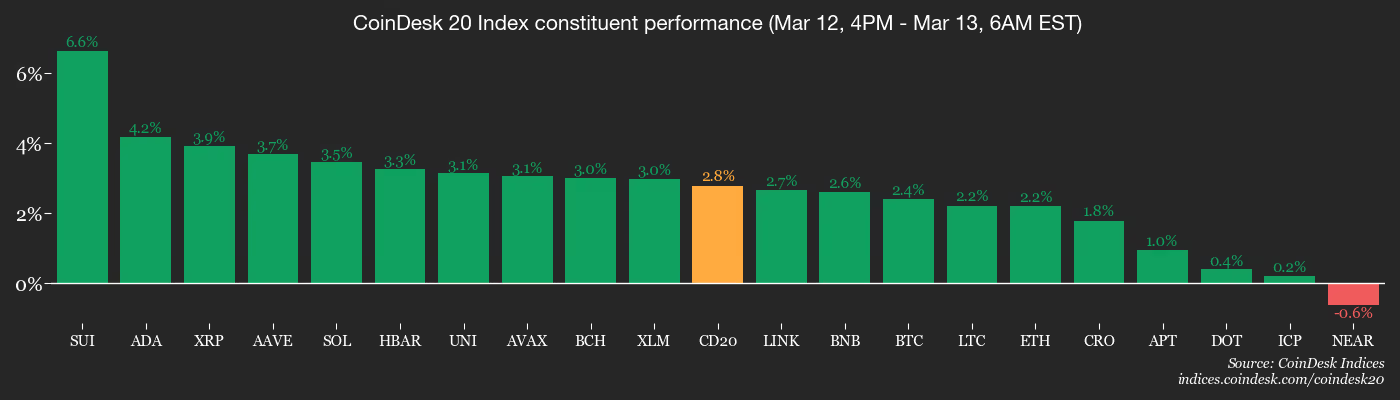
- CoinDesk 20 is up 3.14% at 2,068.83 (24hrs: +3.01%)
- Ether CESR Composite Staking Rate is up 1 bps at 2.79%
- BTC funding rate is at 0.0015% (1.6688% annualized) on Binance

- DXY is up 0.42% at 100.16.
- Gold futures are down 0.44% at $5,093.40
- Silver futures are down 2.11% at $82.89
- Nikkei 225 closed down 1.16% at 53,819.61
- Hang Seng closed down 0.98% at 25,465.60
- FTSE 100 is down 0.43% at 10,260.60
- Euro Stoxx 50 is down 0.71% at 5,708.34
- DJIA closed on Thursday down 1.56% at 46,677.85.
- S&P 500 closed down 1.52% at 6,672.62
- Nasdaq Composite closed down 1.78% at 22,311.98
- S&P/TSX Composite closed down 0.84% at 32,840.60
- S&P 40 Latin America closed up 1.43% at 3,611.39.
- U.S. 10-Year Treasury rate is up 6 bps at 4.27%
- E-mini S&P 500 futures are up 0.30% at 6,697.75
- E-mini Nasdaq-100 futures are up 0.29% at 24,631.50
- E-mini Dow Jones Industrial Average Index are up 0.34% at 46,881.00
Bitcoin Stats
- BTC Dominance: 59.44% (0.24%)
- Ether-bitcoin ratio: 0.0294 (0.01%)
- Hashrate (seven-day moving average): 984 EH/s
- Hashprice (spot): $31.34
- Total fees: 2.69 BTC / $188,598
- CME Futures Open Interest: 110,290 BTC
- BTC priced in gold: 14.2 oz.
- BTC vs gold market cap: 4.82%
Technical Analysis

- The chart shows bitcoin’s daily price swings in candlestick format since late 2025. It also plots the Fibonacci retracements of the January-February selloff and the 50-day simple moving average of bitcoin’s price.
- BTC’s price is looking to top the 50-day SMA line. That would shift the focus to next resistance level at $74,564, which is the 38.2% Fibonacci retracement of the selloff.
- On the other hand, a failure to penetrate the 50-day SMA could embolden sellers, potentially leading to a drop below $70,000.
Crypto Equities
- Coinbase Global (COIN): closed on Thursday at $193.23 (–2.72%), +1.96% at $197.02 in pre-market
- Circle Internet Group (CRCL): closed at $114.18 (+1.21%), +0.58% at $114.84
- Galaxy Digital (GLXY): closed at $20.63 (–3.87%), +1.89% at $21.02
- MARA Holdings (MARA): closed at $8.76 (+2.46%), +1.60% at $8.90
- Riot Platforms (RIOT): closed at $14.50 (–2.09%), +1.59% at $14.73
- Core Scientific (CORZ): closed at $16.24 (–1.81%)
- CleanSpark (CLSK): closed at $9.55 (–2.65%), +1.57% at $9.70
- Exodus Movement (EXOD): closed at $9.96 (–8.71%), unchanged in pre-market
- CoinShares Bitcoin Mining ETF (WGMI): closed at $37.96 (–2.47%)
- Bullish (BLSH): closed at $36.24 (–2.55%), +0.44% at $36.40
Crypto Treasury Companies
- Strategy (MSTR): closed at $137.34 (–0.72%), +2.49% at $140.76
- Strive Asset Management (ASST): closed at $8.83 (–4.33%), +1.59% at $8.97
- SharpLink (SBET): closed at $7.48 (–1.45%), +2.54% at $7.67
- Upexi (UPXI): closed at $0.93 (–9.71%), +4.61% at $0.97
- Lite Strategy (LITS): closed at $1.15 (–1.71%)
ETF Flows
Spot BTC ETFs
- Daily net flows: $53.8 million
- Cumulative net flows: $55.93 billion
- Total BTC holdings ~ 1.29 million
Spot ETH ETFs
- Daily net flows: $72.4 million
- Cumulative net flows: $11.75 billion
- Total ETH holdings ~ 5.71 million
Source: Farside Investors
While You Were Sleeping

Ernie Anastos death: Tributes paid for iconic New York news anchor among ‘Mount Rushmore of newscasters’

January 2026 PCE: Fed’s favored inflation gauge remained stubbornly high

Bitcoin targets $73,000 as crypto bounces despite oil price jitters


-
Business7 days ago
Form 8K Entergy Mississippi LLC For: 6 March
-

 News Videos4 days ago
10th Algebra | Financial Planning | Question Bank Solution | Board Exam 2026
-

 Fashion7 days ago
Weekend Open Thread: Ann Taylor
-
 Tech2 days ago
A 1,300-Pound NASA Spacecraft To Re-Enter Earth’s Atmosphere
-

 Crypto World4 days ago
Paradigm, a16z, Winklevoss Capital, Balaji Srinivasan among investors in ZODL
-

 Tech3 days ago
ChatGPT will now generate interactive visuals to help you with math and science concepts
-

 Business3 days ago
ExxonMobil seeks to move corporate registration from New Jersey to Texas
-

 Sports6 days ago
Three share 2-shot lead entering final round in Hong Kong
-

 Sports5 days ago
Braveheart Lakshya downs Lai in epic battle to enter All England Open final | Other Sports News
-

 NewsBeat2 days ago
Residents reaction as Shildon murder probe enters second day
-

 Entertainment6 days ago
Hailey Bieber Poses For Sexy Selfies In New Luscious Lip Thirst Traps
-

 Business5 days ago
Search for Nancy Guthrie Enters 37th Day as FBI Probes Wi-Fi Jammer Theory
-

 Business2 days ago
Search Enters Sixth Week With New Leads in Tucson Abduction Case
-
 NewsBeat4 days ago
Pagazzi Lighting enters administration as 70 jobs lost and 11 stores close across Scotland
-

 Tech4 days ago
Despite challenges, Ireland sixth in EU for board gender diversity
-

 NewsBeat2 days ago
I Entered The Manosphere. Nothing Could Prepare Me For What I Found.
-

 Business4 days ago
Search Enters 39th Day with FBI Tip Line Developments and No Major Breakthroughs
-

 Business6 days ago
Iran war enters second week as Trump demands ’unconditional surrender’
-

 Sports4 days ago
Skateboarding World Championships: Britain’s Sky Brown wins park gold
-
 Crypto World3 days ago
Will Chainlink price reclaim $10 amid volatility squeeze?