

Crypto World
Anthropic Refuses Pentagon Ultimatum, Sets Precedent for Crypto



Anthropic CEO Dario Amodei publicly rejected the Pentagon’s demand on Thursday. The Defense Department wants unrestricted military use of the company’s AI technology. The deadline, just hours away, could see the $380 billion startup expelled from the US military’s supply chain.
The showdown marks the first time a major AI company has publicly defied a US government threat to seize control of its technology.
The Standoff
In a blog post published on Anthropic’s website, Amodei called the Pentagon’s threats “inherently contradictory,” noting that one designates Anthropic as a security risk while the other treats Claude as essential to national security.
“Regardless, these threats do not change our position: we cannot in good conscience accede to their request,” Amodei wrote.
The dispute centers on two conditions Anthropic placed on military use of Claude. The company bars autonomous targeting of enemy combatants and prohibits mass surveillance of US citizens. The Pentagon views these as unacceptable limitations on lawful military operations.
Anthropic said the Pentagon’s “final offer,” received overnight Wednesday, failed to address its core concerns. “New language framed as compromise was paired with legalese that would allow those safeguards to be disregarded at will,” an Anthropic spokesperson said in a statement, as reported by The Hill.
Defense Department spokesman Sean Parnell issued a public ultimatum on Thursday. He gave Anthropic until 5:01 pm ET on Friday to grant unrestricted access to Claude Gov — or face termination of the partnership and designation as a supply chain risk.
“We will not let ANY company dictate the terms regarding how we make operational decisions,” Parnell wrote on X.
Timeline of Escalation
On Tuesday, Amodei met directly with Defense Secretary Pete Hegseth, during which Pentagon officials outlined three consequences for noncompliance. First, removal from military systems. Second, supply chain risk designation that would bar other defense contractors from using Anthropic products. Third, the invocation of the 1950 Defense Production Act to legally compel the company to hand over its technology.
Amodei argued in the blog post that the refusal is also grounded in technical reality. “Frontier AI systems are simply not reliable enough to power fully autonomous weapons,” he wrote, adding that without proper oversight, such systems “cannot be relied upon to exercise the critical judgment that our highly trained, professional troops exhibit every day.”
Republican Senator Thom Tillis criticized the Pentagon’s handling of the dispute. “Why in the hell are we having this discussion in public? This is not the way you deal with a strategic vendor,” Tillis told reporters.
What’s at Stake
For Anthropic, the immediate exposure is a $200 million military contract. But the supply chain risk designation carries far broader implications. It would force every defense contractor to verify that they don’t use Anthropic products in their operations.
The competitive landscape is shifting fast. Elon Musk’s xAI signed a deal to use Grok in classified systems, according to Axios, accepting the ‘all lawful purposes’ standard for classified work. OpenAI and Google are accelerating negotiations to enter the classified space. Anthropic, once the only AI company cleared for classified material, risks losing that first-mover advantage entirely.
Why Crypto Should Pay Attention
The Pentagon’s willingness to invoke the Defense Production Act against a technology company sets a precedent that extends beyond AI. If the government can legally compel an AI firm to remove safety restrictions on national security grounds, the same framework could, in theory, be applied to compel crypto companies to modify privacy features or weaken transaction safeguards.
The standoff also strengthens the case for decentralized AI development. A centralized AI provider can be pressured — or legally compelled — to strip away guardrails at a government’s demand. That validates the thesis that decentralized alternatives offer more resilient infrastructure against state coercion.
Anthropic’s rapid growth has already raised concerns for crypto markets. The company’s $380 billion valuation and AI-driven disruption of traditional software revenue are putting pressure on private credit flows that correlate closely with Bitcoin.
Anthropic also has a historical link to crypto: FTX’s bankruptcy estate held a significant early stake in the company, which it later sold to help fund creditor repayments.
The Friday deadline will pass, but the real question begins after: whether the Pentagon follows through, and what that means for every technology company drawing a line between government contracts and product integrity.



Bitcoin and the broader crypto market headed into Friday on the back foot, with most major tokens posting losses over the last 24 hours as traders continued to de-risk alongside equities following Nvidia’s earnings-driven pullback.
Bitcoin was trading around $67,766 at the time of writing, down 1.5% on the day but still clinging to a 0.6% gain on the week. Ethereum mirrored the move, off 1.5% in 24 hours to trade just above $2,047. Both remain stuck in a narrow range that has defined price action since the Feb. 5 crash, with Wednesday’s push toward $70,000 marking the upper boundary and this week’s lows testing the middle.
The selling pressure, however, looks more like a leverage flush than a structural breakdown. Hourly returns across the board were green Friday morning, meaning the bulk of the drawdown happened overnight and buyers have quietly stepped back in at these levels.
“What you’re seeing right now is Bitcoin trading with the broader risk market,” said Daniel Reis-Faria, CEO of ZeroStack. “Nasdaq fell after Nvidia earnings, and crypto followed. Bitcoin pushed closer to $70,000 pretty quickly, and when momentum in equities stalls, that fast money comes off just as quickly in Bitcoin.”
Reis-Faria sees the move as positioning cleanup rather than a trend reversal. “A lot of leverage came back into the system on that push higher, and when stocks start selling, crypto is usually the first place people de-risk. Volatility is elevated because liquidity is tight across the board.”
Zoom out to the weekly chart and the picture looks considerably healthier. Cardano led major assets with a 7% gain over seven days. Solana added 5.5%, Ethereum 4.8%, and BNB 4.3%, all outpacing Bitcoin’s comparatively modest weekly return and suggesting altcoin appetite remains intact beneath the surface noise.
XRP was the notable exception, down 3.7% in 24 hours and the only top asset in the red on a 7-day basis at -0.1%. The underperformance stands out given that most altcoins absorbed the same macro headwinds without giving back weekly gains.
The broader macro backdrop adds context. Asian equities are on track for their best February since 1998, led by South Korean tech names up roughly 20% this month as investors rotated into AI infrastructure plays.
That rally has drawn capital away from U.S. markets, with the MSCI Asia Pacific Index set to outperform the S&P 500 for a third consecutive month.
For crypto, the throughline is the same one it has been for weeks. “We’re still in the same range we’ve been in,” Reis-Faria said. “Until we see consistent new demand, these moves are going to keep happening. Bitcoin trades like a macro asset. When equities pull back, Bitcoin pulls back.”


Mutuum Finance (MUTM) is a decentralized lending and borrowing protocol currently operating on the Sepolia testnet, where its core features are being tested ahead of a planned mainnet launch. The team has reported ongoing improvements to the protocol’s codebase, while total funds raised have surpassed $20.65 million, according to project disclosures.
Mutuum Finance (MUTM)
Recently on X, the team published a “weekly update” outlining ongoing improvements to the protocol. The update stated: “The team has been working on a few upcoming features, while also improving key parts of the codebase, including optimizations to the Stability Factor.” The post also noted, “Next week, we’re rolling out a new feature. Stay tuned.”
A few days earlier, the team reported that more than $20.6 million had been raised and highlighted current participation metrics, including over $150 million in testnet total value locked (TVL). While the MUTM token is currently priced at $0.04, with more than 850 million tokens sold to over 19,000 holders.
How to Lend and Borrow with Mutuum Finance?
Ahead of its planned mainnet release, users can test the core features of the protocol on the Sepolia testnet. In the current beta application, users can connect a wallet and mint testnet assets such as WBTC, ETH, LINK, and USDT. These assets can be supplied to the protocol, with mtTokens issued in return as proof of deposit, allowing users to observe how the lending and borrowing mechanics function within the platform.
For example, supplying WBTC results in the issuance of mtWBTC. These mtTokens can also be staked, allowing users to observe how MUTM token dividends would be distributed within the system.
Beside mtTokens and liquidity pools, the team has also outlined additional core features currently integrated into the testnet version of the platform.
Debt Token – When a user borrows assets, a corresponding debt token is minted. This token represents the borrowed amount and tracks the principal plus accumulated interest over time.
Liquidator Bot – An automated mechanism that monitors borrowing positions and triggers liquidations if collateral levels fall below required thresholds, helping maintain protocol solvency.
Stability Factor – A risk indicator that measures how safe a borrowing position is by comparing the value of collateral to the borrowed amount. A higher stability factor reflects a more secure position.
The smart contract for the lending and borrowing protocol underwent a security audit conducted by Halborn prior to its testnet release. Halborn is a blockchain security firm that has also performed audits for major projects, including Coinbase, according to the firm’s public disclosures.
While the current focus remains on improving the core protocol, the whitepaper outlines additional long-term development plans. These include multichain expansion to broaden network compatibility and ecosystem reach.
The document also references the introduction of a native overcollateralized stablecoin in the future. The proposed stablecoin is intended to maintain a 1:1 alignment with the U.S. dollar and would be minted against collateral supplied within the protocol.
Mutuum Finance continues to develop its lending and borrowing protocol while reporting funding and participation milestones during the testnet phase. With core mechanics live on Sepolia and additional upgrades in progress, the project remains focused on refining infrastructure ahead of a planned mainnet launch.
Future expansion plans, including multichain integration and a native stablecoin, indicate a broader roadmap, with further progress expected as development advances toward planned mainnet deployment.

TLDR
- Vitalik Buterin introduced a roadmap to protect Ethereum from future quantum computing risks.
- He identified validator signatures, data availability, wallet signatures, and zero-knowledge proofs as key risk areas.
- Buterin proposed replacing BLS validator signatures with hash-based signatures to improve quantum resistance.
- He said Ethereum may replace KZG commitments with quantum-safe alternatives through protocol upgrades.
- The planned EIP-8141 upgrade would allow wallets to adopt new signature schemes in the future.
Vitalik Buterin has presented a structured plan to shield Ethereum from future quantum computing risks. He outlined technical upgrades that would protect digital signatures, data systems, and cryptographic proofs. The proposal follows the Ethereum Foundation’s creation of a dedicated post-quantum research team.
He shared the roadmap in a post on X on Thursday and identified four core risk areas. He said quantum computers could eventually break current cryptographic systems. Although such machines do not yet exist, he urged early preparation.
Buterin listed validator signatures, data availability, wallet signatures, and zero-knowledge proofs as exposure points. He explained that Ethereum must update these components before quantum systems mature. He also described both short-term and long-term technical paths.
Vitalik Buterin targets validator signatures and Ethereum consensus
Buterin focused on validator signatures used in Ethereum’s consensus process. He explained that validators currently rely on BLS digital signatures to confirm blocks. He warned that quantum computers could break BLS signatures in the future.
He proposed replacing BLS with hash-based signatures that resist quantum attacks. He stated that hash-based systems offer stronger protection against quantum algorithms. He added that developers must redesign validator workflows to support the transition.
He also addressed Ethereum’s data availability system that stores transaction batches. He said the network relies on KZG commitments to verify large data sets. He explained that engineers could replace KZG with quantum-safe alternatives, although the change would require deep protocol updates.
He noted that such updates would increase engineering complexity. He said developers must handle performance trade-offs carefully. He stressed that the network can execute these changes with coordinated upgrades.
Ethereum wallets, EIP-8141, and zero-knowledge proofs
Buterin linked wallet security to a planned upgrade called EIP-8141. He explained that most wallets now depend on one signature standard for transaction approval. He said EIP-8141 would allow accounts to adopt new signature schemes in the future.
He described EIP-8141 as a flexibility upgrade for Ethereum accounts. He stated that users could migrate to quantum-safe signatures when required. He added that this approach avoids forced network-wide signature changes.
He also discussed risks tied to zero-knowledge proofs used by privacy tools and layer-2 networks. He said current quantum-safe proofs cost more to verify on Ethereum. He acknowledged that higher verification costs create technical challenges.
Buterin proposed a longer-term mechanism called validation frames within EIP-8141. He said validation frames would bundle multiple signatures and proofs into one compressed proof. He explained that Ethereum would verify one combined proof instead of many individual checks.
He stated that this compression method would lower on-chain verification work. He said the system would help manage costs while adopting quantum-safe cryptography. The Ethereum Foundation established its post-quantum research team shortly before it released this roadmap.
TLDR
- Sam Bankman-Fried publicly endorsed the Clarity Act while serving a 25-year prison sentence.
- Republican and Democratic senators rejected his support for the crypto legislation.
- Senator Cynthia Lummis said her bill differs from the proposal Bankman-Fried backed in 2022.
- Senator Elizabeth Warren said his endorsement should raise concerns about the legislation.
- The Senate continues to debate crypto market structure and stablecoin oversight rules.
Former FTX CEO Sam Bankman-Fried publicly backed the Clarity Act while serving a 25-year prison sentence. Lawmakers from both parties rejected his support and questioned his motives. His comments arrive as the Senate continues work on broader cryptocurrency legislation.
Clarity Act Draws Bipartisan Rejection
Bankman-Fried endorsed the Clarity Act in a post on X on Wednesday.
He wrote, “The CLARITY Act will be a huge milestone for crypto and a huge achievement for @realDonaldTrump.” He also claimed he supported similar reforms before his arrest.
He said he sought to remove crypto oversight from former SEC Chair Gary Gensler. He added that Gensler “helped Biden’s DOJ put me behind bars.” His remarks quickly triggered responses from lawmakers involved in drafting legislation.
Sen. Cynthia Lummis rejected his endorsement in a direct reply.
She wrote, “My legislation couldn’t be more different than the bill you tried to buy from Congress.” She added, “We do not need nor want your support.”
Lummis leads Republican efforts to advance digital asset legislation in the Senate. She said her framework would have imposed tougher penalties. She also stated that broader legislation could have extended his prison sentence.
Sen. Elizabeth Warren also criticized Bankman-Fried’s comments. She said his support “should set off alarm bells.” Warren added that any crypto bill must protect investors and taxpayers.
The Senate Banking Committee continues negotiations on market structure rules. Lawmakers aim to define oversight roles for the SEC and the Commodity Futures Trading Commission. However, disagreements remain over stablecoin yield provisions.
Past Legislative Efforts and Political Context
In 2022, Bankman-Fried supported the Digital Commodities Consumer Protection Act, known as DCCPA. He urged lawmakers to pass the bill shortly before authorities arrested him. His arrest later stalled momentum for that proposal.
A federal court convicted Bankman-Fried on multiple fraud and conspiracy charges. Prosecutors said he misused billions in customer funds from FTX. The court sentenced him to 25 years in prison.
Bankman-Fried now appeals his conviction in federal court. At the same time, he posts frequently on X about policy and politics. Many posts express support for President Donald Trump.
A White House official told The Block that Trump has no plans to pardon him. Bankman-Fried’s recent posts appear to address current policy debates. His endorsement of the Clarity Act fits within that pattern.
The House passed its version of the Clarity Act over the summer. Senate lawmakers continue drafting related measures. They also debate how to address conflicts of interest tied to the Trump family’s crypto ventures.
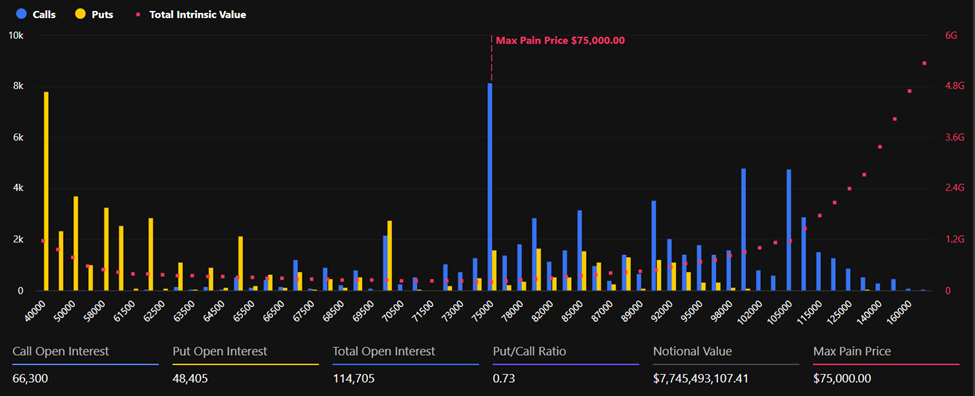
Over $8.72 billion in Bitcoin and Ethereum options expire today, marking February’s largest derivatives event.
The expiring options place the crypto market at a critical inflection point, with volatility elevated and sentiment fragile.
February’s $8.72 Billion Expiry Crossroads: Will Bitcoin and Ethereum Face the Pain Trade?
Bitcoin accounts for the lion’s share of the exposure, with 114,705 contracts representing $7.74 billion in notional value heading into settlement.
Ethereum follows with 478,992 contracts worth approximately $975 million. Combined, the expiries account for roughly 20% of total open interest, suggesting their potential market impact.
At current prices, both assets sit notably below their respective “max pain” levels or the strike price at which the greatest number of options expire worthless.
Bitcoin was trading for $68,052, compared to a max pain level of $75,000. Ethereum changes hands near $2,035, below its $2,200 max pain threshold.
Call open interest (OI) dominates across both assets. Bitcoin shows 66,300 call contracts versus 48,405 puts, giving a put-to-call ratio of 0.73. Ethereum’s ratio stands at 0.78, with 268,642 calls and 210,350 puts outstanding.
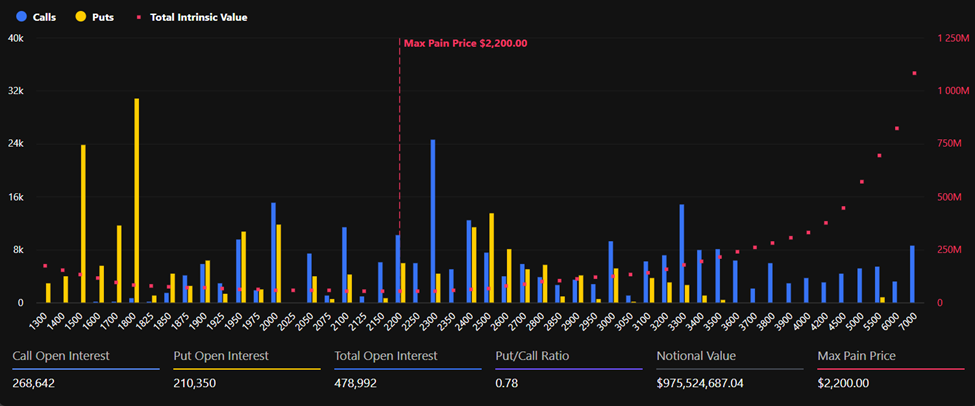
Analysts at Deribit note that call OI leads across both majors, with Bitcoin carrying the significantly larger notional weight into settlement. This factor could amplify spot sensitivity if hedging flows intensify.
Volatility Divergence Signals Unease
Meanwhile, volatility metrics reveal a nuanced picture. According to Deribit data, Bitcoin’s DVOL index sits at 53, with an implied volatility (IV) percentile of 87.7, which is elevated relative to its historical range.
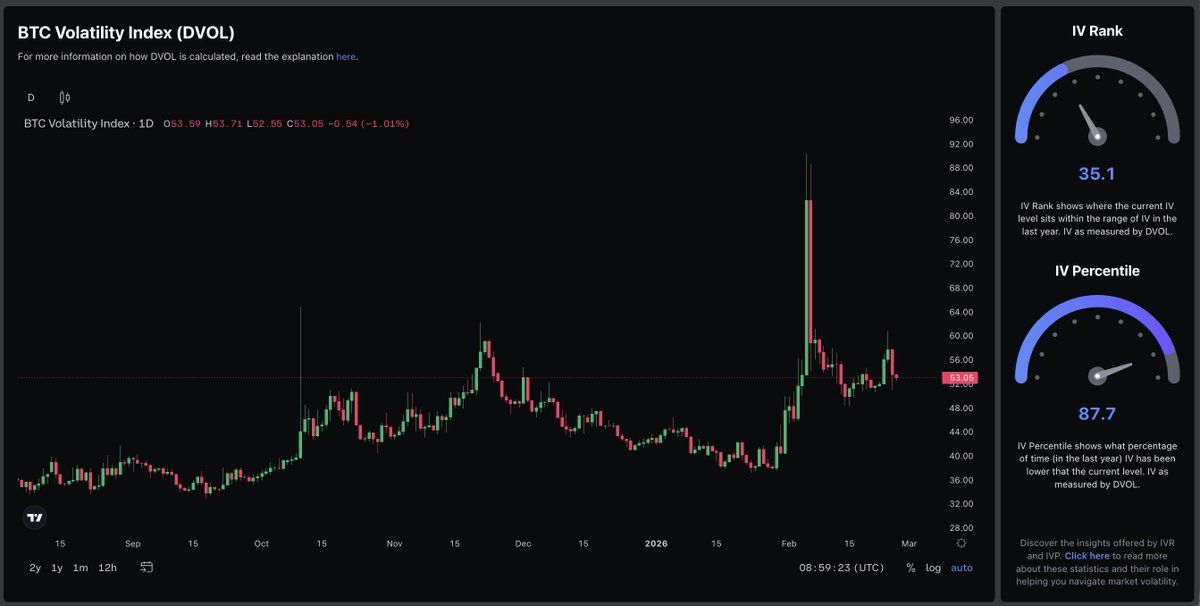
Ethereum’s DVOL is higher in absolute terms at 70, but its IV percentile of 55.7 suggests it is less extreme than its historical behavior.
Still, Ethereum volatility is running approximately 15–20 points above Bitcoin across the curve. It indicates traders are pricing in materially higher uncertainty across ETH maturities.
Term structure remains in contango for both assets, with a front-end volatility premium concentrated around the February expiry.
Fear Unwinds, But Conviction Lags
Earlier this month, 25-delta skew for both Bitcoin and Ethereum plunged toward -30, reflecting intense demand for downside protection as prices slid sharply.
Since then, skew has steadily recovered to around -8 to -9, signaling that panic hedging has eased. However, skew remains negative, indicating the market has not fully shaken off its defensive posture. Against this backdrop, analysts at Greeks.live describe the broader market as sluggish.
In early February, Bitcoin briefly tested the $60,000 psychological threshold and has since oscillated weakly above it.
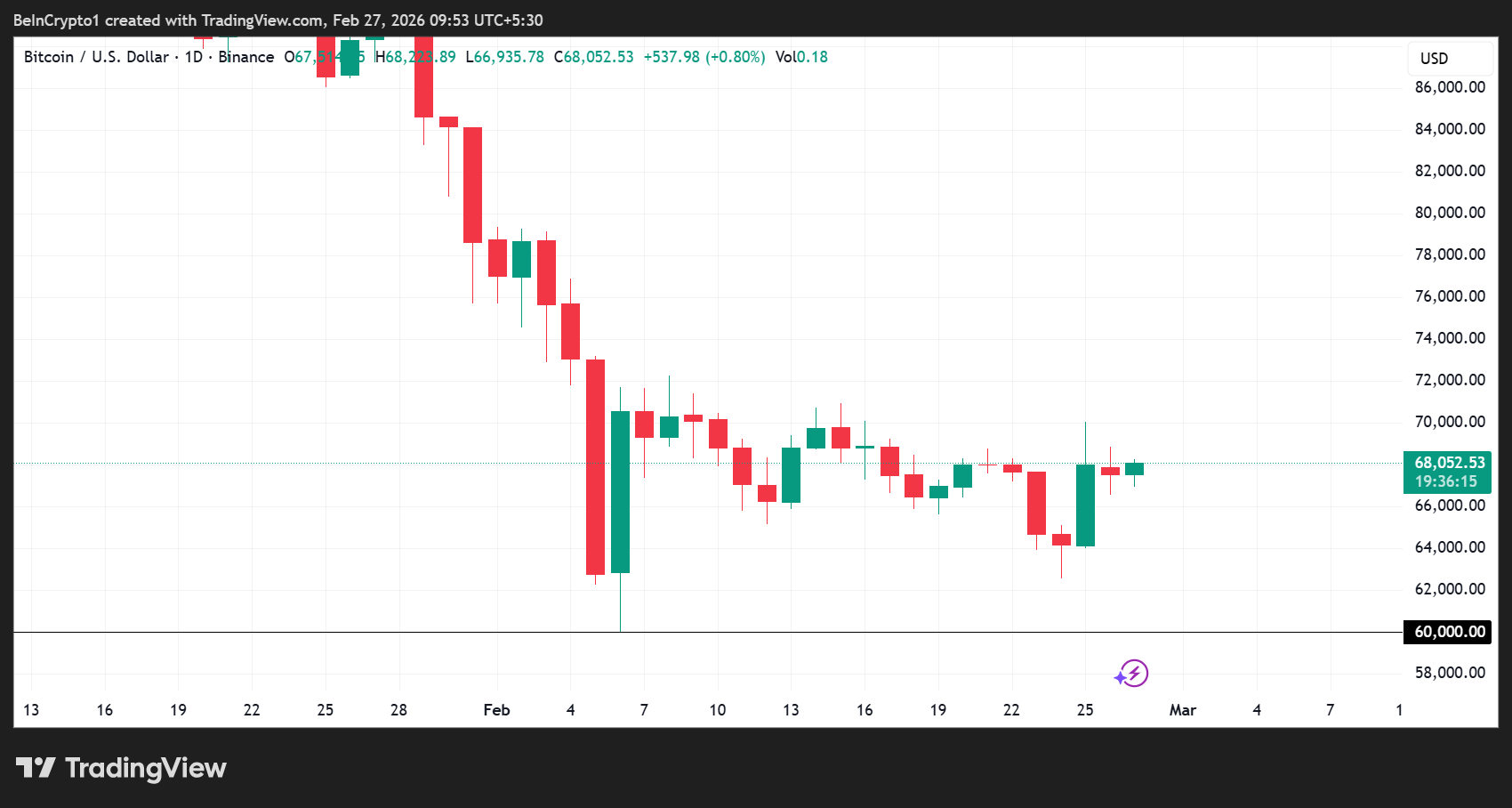
While a recent two-day rebound lifted implied volatility (with BTC main-term IV at 47% and ETH at 65%) confidence remains thin.
“The downward price trend has eased, but market confidence remains insufficient,” Greeks.live noted, adding that large-block call options have dominated recent trading activity, particularly in medium- to long-term maturities.
Skew metrics rebounding indicates emerging bottom-fishing activity, but the firm cautions that the market remains firmly in bear territory.
Crucially, analysts argue that the crypto market lacks fresh capital inflows and clear catalysts, with pessimistic narratives still dominating social channels. Despite signs that extreme fear is unwinding, conviction behind the rebound appears tentative.
With both Bitcoin and Ethereum trading well below their max pain levels, spot prices could gravitate higher heading into today’s options expiry. Such an outcome could intensify a potential “pain trade.”
However, subdued demand could allow volatility to compress after expiry, with derivatives markets pricing less panic, but not yet a return of confidence.
Fintech company Block is shrinking back toward its pre-pandemic size, cutting staff to about 6,000 from a Covid-era peak of over 10,000, compared with just 3,800 in 2019.
CEO Jack Dorsey says AI allows smaller teams to move faster. While that’s certainly true, the reset may reflect a tougher reality: stablecoin rails are likely beginning to compress the card-based fees that fueled the company’s expansion.
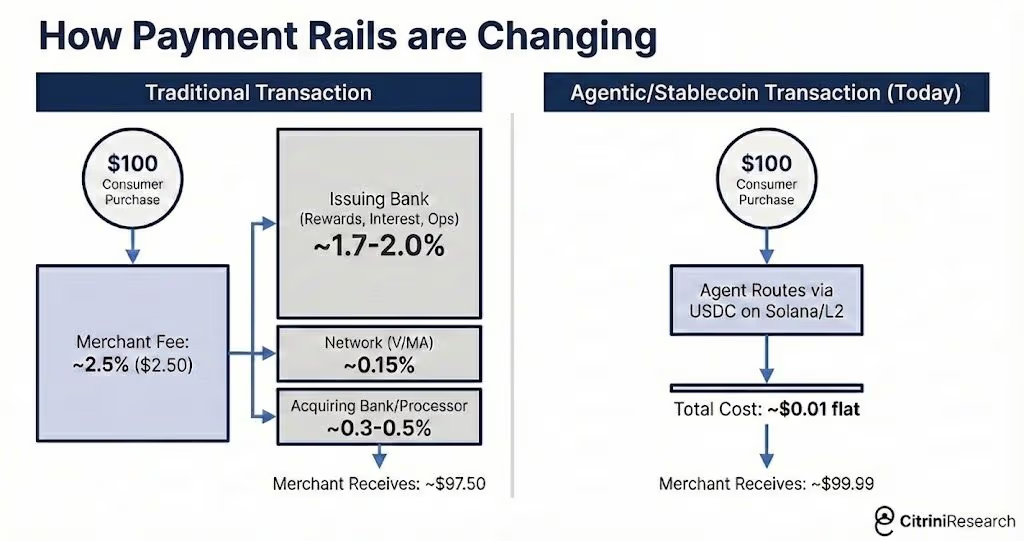
Block built its business on a payments system that charges merchants a percentage of every swipe. Stablecoins threaten to turn that percentage into pennies, shrinking the economic pie that acquirers and card-linked fintechs divide. That shift, more than headcount discipline, may define the company’s next chapter.
A recent note from Citrini Research titled “When Friction Went to Zero” argues that the rise of agentic shopping — where AI assistants autonomously compare prices, optimize payment routes, and execute transactions on behalf of users — could accelerate the shift away from card networks and toward stablecoin rails.

In that environment, settlement happens in seconds at near-zero cost, and machines prioritize price and speed over brand loyalty or checkout design.
The 2% to 3% merchant fee that sustains the traditional payments stack becomes harder to justify when an AI agent can route the same transaction for pennies, leaving companies like Block exposed to structural margin compression rather than temporary competitive pressure.
This is not Block’s first attempt at resizing. In early 2024, the company began cutting staff under a previously disclosed plan to reduce headcount by as much as 10%, capping its workforce at 12,000 after ballooning to roughly 13,000 in 2023.
At the time, Dorsey acknowledged that “the growth of our company has far outpaced the growth of our business and revenue,” framing the move as a correction to pandemic-era over expansion.
The latest reduction, far deeper at nearly 40%, suggests the recalibration is no longer just about aligning costs with revenue, but about adjusting to a payments landscape where fee compression could be structural.
Investors cheered the move, sending Block shares up more than 23% in after-hours trading as the market rewarded the aggressive cost reset. Even so, the stock remains roughly 80% below its pandemic-era peak, underscoring how far expectations have reset since the hiring boom.
Stablecoins already existed during that expansion, but they were largely viewed as crypto trading instruments rather than a credible payments threat.
Only recently, with regulatory clarity advancing through measures like the GENIUS Act and Circle’s IPO elevating stablecoins into the mainstream financial system, have dollar-backed tokens begun to look like a plausible alternative to the card-based rails that underpin Block’s business.
“Maybe Block laying off a ton of employees is a sign that AI is gonna destroy everything,” financial analyst Ben Carlson, director at Ritholtz Wealth Management, posted on X.
“Or maybe the stock is down 80% from the highs and they overhired and AI is a convenient excuse,” he wrote.
Crypto loves the word “fair.”
Fair distribution. Fair pricing. Fair access.
But let’s be honest—most token launches are anything but.
Enter Catapult, a launchpad designed to eliminate early sell pressure, slash launch costs, and automate liquidity in a way that aligns creators, traders, and the protocol itself. It replaces chaotic day-zero market mechanics with something far more deliberate: algorithmic price action, volume-based graduation, and built-in revenue sharing.
This is not another “launch and pray” platform.
It’s a structured proving ground.
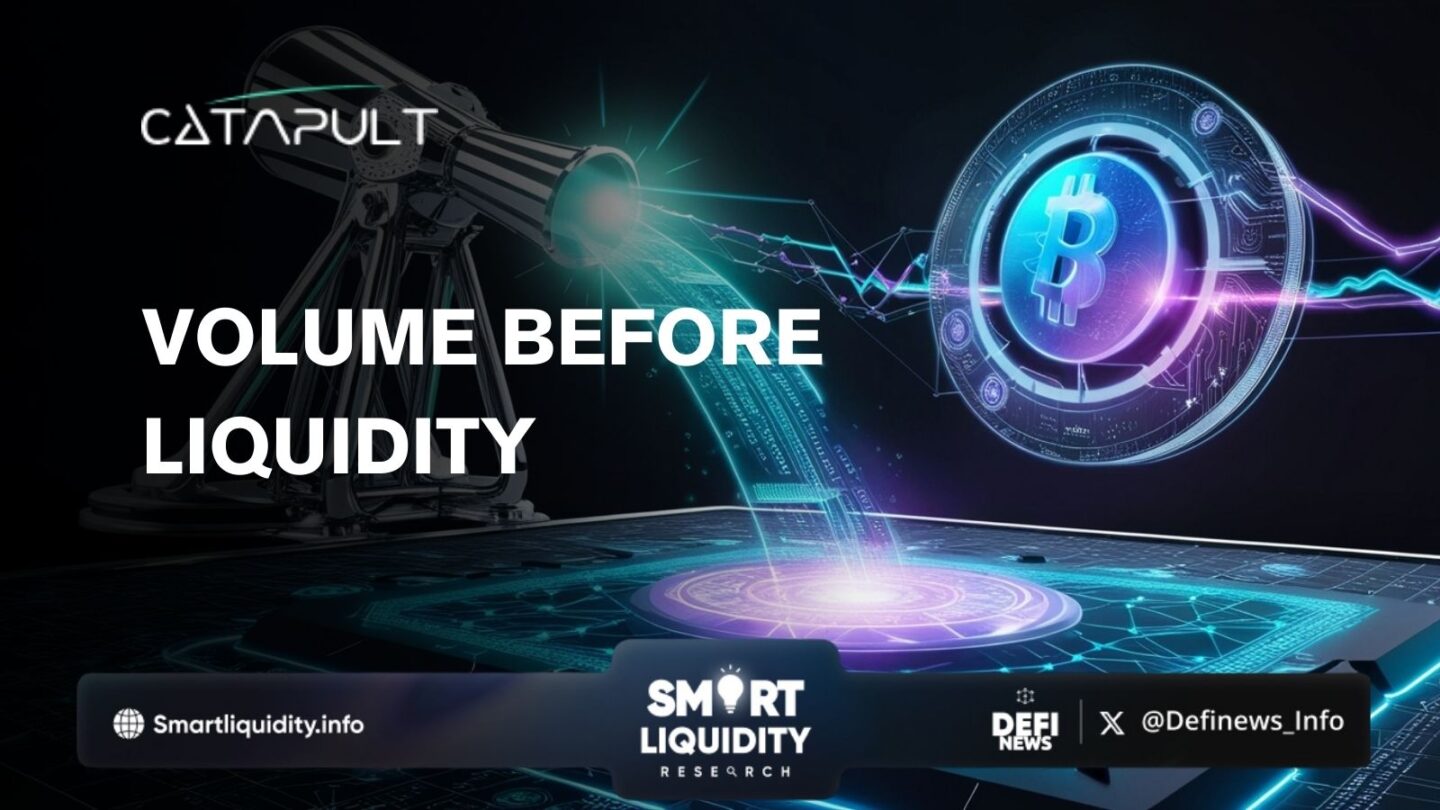
The Core Thesis: Volume Before Liquidity
Traditional launches start with liquidity.
That’s the mistake.
Liquidity pools on day zero invite:
-
Snipers
-
MEV extraction
-
Presale dumps
-
Rugpull vectors
-
High overhead costs
Catapult flips the sequence:
Volume first. Liquidity later.
Instead of throwing a token into an on-chain pool and hoping for the best, Catapult begins in a simulated high-fidelity environment called Turbo, where tokens can build mindshare and trading volume without ever touching a liquidity pool.
Only when a token proves demand does it graduate into a real, on-chain market via Hyper.
This single design decision changes everything.
Catapult Turbo: The Sandbox That Solves Day Zero
Catapult Turbo is a gamified trading environment that replaces traditional on-chain mechanics with a deterministic mathematical price engine.
There is:
-
No order book
-
No initial LP
-
No slippage
-
No liquidity to drain
Instead, Turbo streams hyper-volatile, realistic price action generated by a mathematical engine. Traders buy and sell exactly like on a spot exchange—but execution is instant and slippage-free.
Every trade settles directly against the protocol vault.
Why This Matters
Because price movement is decoupled from liquidity:
Creators simply choose a volatility tier, pay a flat fee, and let the session run.
The Turbo Mechanic: Controlled Chaos
Each Turbo session runs inside a fixed time window.
When creating a token, a creator selects a volatility mode that defines:
| Type | Speed Multiplier | Lifetime | Daily Sigma |
|---|---|---|---|
| Slow | 6x | 4 hours | 0.5 |
| Fast | 24x | 1 hour | 1.0 |
| Flash | 96x | 15 min | 1.25 |
| Crack | 480x | 3 min | 1.5 |
| Mayhem | 1440x | 1 min | 1.25 |
All tiers use a daily drift of zero, ensuring a mathematically neutral starting point.
The result?
Pure volatility. No bias.
Turbo is not gambling disguised as trading. It’s a structured, deterministic price evolution with unpredictable outcomes—verified through cryptographic commitment.
Path Generation & Commitment: Provably Untampered Markets
When a creator launches a Turbo session:
-
The engine generates a random seed.
-
It pre-calculates the entire price path.
-
A secret salt is created.
-
The seed, salt, and tick parameters are hashed.
-
The hash is published before trading begins.
This hash becomes an immutable anchor.
As the session unfolds, ticks stream to the UI.
The underlying seed and salt remain hidden.
When the session expires, the engine reveals everything.
Anyone can recompute the hash.
If it matches, the chart wasn’t altered.
The path is deterministic—but unknowable until complete.
Even the development team cannot alter it.
That’s not “trust us.”
That’s mathematical finality.
Public vs Private Tokens: Controlled Attention
Catapult separates tokens into two categories:
Public Tokens
-
Indexed in the discovery feed
-
Generate a 0.5% fee on all trade volume
-
Fee paid directly to the creator
-
Subject to a global cap on concurrent sessions
This cap prevents fragmentation and keeps the trader’s attention dense.
Private Tokens
It’s a clever balance between open competition and personal experimentation.
From Simulation to Reality
Turbo is not the endgame.
It’s the proving ground.
A Turbo token must hit a predefined volume milestone to graduate.
When that threshold is reached, the token transitions into the on-chain ecosystem.
And here’s the key difference:
-
There are no presale allocations.
-
No early insiders waiting to dump.
-
No liquidity seeded by a fragile team wallet.
Instead:
The entire supply is minted directly into the pool.
Liquidity is sourced from the volume generated during Turbo.
The community that built the volume becomes the on-chain market.
Graduation is handled through a time-windowed launch mechanic that prevents sniping and ensures equitable access.
This is what automated fair launches actually look like.
Catapult Hyper: Production-Grade Infrastructure
Once graduated, tokens move into Catapult Hyper, the on-chain infrastructure layer built on:
Hyperliquid provides the L1 trading environment.
LayerZero enables seamless multichain interoperability.
Together, they eliminate liquidity fragmentation.
Multichain Without the Mess
Tokens launched via Hyper are deployed as OFTs (Omnichain Fungible Tokens).
This means:
-
Unified supply across chains
-
No risky third-party bridges
-
No wrapped fragmentation
-
Seamless multichain liquidity
The Hyper terminal becomes a discovery engine—connecting creators, traders, and the broader ecosystem in a compounding value loop.
The Bonding Mechanism: Liquidity That Scales With Conviction
Hyper replaces static fundraising with a dynamic liquidity bootstrap model.
Capital requirements scale with market cap.
As mindshare grows, liquidity requirements grow.
Every launch follows strict 48-hour windows:
Initial Phase
48 hours to hit the primary goal.
Reactivation
If missed, a second round opens with increased contribution requirements.
Retirement
Failure in the second round permanently ends the campaign.
No zombie tokens.
No endless relaunches.
Only velocity survives.
Automated Liquidity & Real Yield
Once bonding completes:
-
Liquidity pools initialise automatically.
-
LP deployment is non-custodial.
-
No manual management required.
Rewards are funded by actual platform activity—trading volume and engagement—rather than inflationary emissions.
Participants earn a real yield derived from protocol usage.
That’s a subtle but important difference.
Emission-based systems inflate.
Activity-based systems compound
Revenue Sharing: Incentives Aligned by Design
Catapult does not rely on extractive fee models.
Instead, it distributes value across four roles:
-
Traders
-
Creators
-
Referrers
-
Mindshare contributors
Rewards are epoch-based:
The Mindshare system tracks social visibility using an exponential decay model:
user_score += twitter_scout_score × k^(n−1)
Where k = 0.8
Recent activity matters more.
Sustained contribution wins.
And only the Top 100 qualify for mindshare rewards.
It’s competitive.
It’s measurable.
It’s performance-driven.
The Bigger Picture
Catapult is transitioning from a Solana-centric origin into a full multichain discovery terminal. A lightweight Hyper terminal is already live, enabling trading of graduated tokens ahead of the full LayerZero-native launchpad.
The architecture reflects a clear philosophy:
-
Simulate before you tokenise.
-
Prove demand before you deploy liquidity.
-
Align incentives before you scale.
Most launchpads optimise for speed.
Catapult optimises for survivability.
And in crypto, survivability is alpha.
In Summary
The industry doesn’t need another place to launch tokens.
It needs infrastructure that filters noise, protects participants, and rewards real engagement.
Catapult’s Turbo-to-Hyper pipeline does exactly that.
Volume becomes proof.
Graduation becomes merit.
Liquidity becomes earned.
That’s not hype.
That’s architecture.
CATAPULT OFFICIALS
Website | X(Twitter) | Telegram
REQUEST AN ARTICLE
TLDR
- Michael Saylor hinted at more Bitcoin purchases as the asset traded near $67000.
- Strategy currently holds 718722 BTC valued at about $48 billion.
- The company bought its Bitcoin at an average price of around $76000.
- Strategy faces an unrealized loss of about 12% on its holdings.
- Saylor said Bitcoin allows $1 billion to move globally with ease.
Bitcoin traded near $67,000 as Michael Saylor signaled continued accumulation through a new social media post. He shared an image showing himself carrying a large orange bag covered with Bitcoin logos. He added the caption, “Maybe I need a bigger one,” and implied further purchases.
Bitcoin Holdings and Accumulation Strategy
Saylor posted the image on X as Bitcoin attempted to stabilize around $67,000. He used the visual to reinforce the strategy’s ongoing acquisition plan. The caption suggested that the company may expand its holdings further.
Strategy currently holds 718,722 BTC worth about $48 billion at current prices. The company acquired its holdings at an average price of $76,000. Therefore, Strategy holds an unrealized loss of roughly 12% on its position.
Despite the paper loss, Strategy reports an mNAV ratio near 1. The company also lists an adjusted enterprise value multiple of 1.256. These figures reflect the firm’s market valuation relative to its Bitcoin reserves.
Saylor has maintained a consistent position on long-term holding periods. He has stated that investors should prepare to hold Bitcoin for seven to ten years. He continues to frame corrections as part of the asset’s normal cycle.
Strategy reports its Bitcoin transactions weekly when activity occurs. Market participants expect the next update in the coming days. The company has not disclosed any new purchases this week.
Strategy World 2026 and Market Performance
Strategy hosted Strategy World 2026 earlier this week. During the event, Saylor repeated his view that Bitcoin represents digital capital. He said, “Bitcoin’s value lies in its ability to move one billion dollars anywhere in the world.”
He contrasted Bitcoin transfers with traditional asset transfers. He said moving large sums in traditional systems involves greater complexity. He emphasized practical capital mobility rather than abstract narratives.
Saylor also addressed Bitcoin’s price volatility during the event. He stated that volatility limits large capital inflows. He argued that fluctuations, not structural flaws, remain the main challenge.
Meanwhile, Strategy’s stock MSTR trades at $132.8. The shares have fallen 12.6% year-to-date in 2026. The stock remains 75.8% below its all-time high of $542.
Goldman Sachs has identified MSTR as the most shorted stock in the market. The company continues to tie its equity performance closely to Bitcoin holdings. Strategy plans to release further updates on Bitcoin activity next week.


Circle is advancing its Arc blockchain project, with plans for a native token, according to CEO Jeremy Allaire.
Circle, one of the largest stablecoin issuers in the industry, is exploring the possibility of a native token for its Arc blockchain, according to the company’s chief executive Jeremy Allaire.
During the company’s Q4 2025 earnings call, Allaire said Circle is exploring a native token for the Arc blockchain and that the company is gaining a strong understanding of how it would work.
“We’re getting a very good understanding of how a token can play a key role in providing stakeholder incentives, governance, security, utility and other things on the Arc network,” Allaire said, though no timeline for a launch was revealed.
The company launched the public testnet for Arc in October 2025, with plans for a full mainnet release expected later this year.
Circle announced Arc in August last year, designing the network specifically for issuing and transacting stablecoins. As The Defiant reported, the network would focus on faster settlement and lower transaction costs compared with existing public blockchains.
Kevin Lehtiniitty, CEO of Borderless.xyz, told The Defiant last year that the competition for the “stablecoin chain” just brings the industry back to fragmented payment systems with new branding. As Lehtiniitty explained, “The answer that does push open finance forward in my mind is connectivity and interoperability; not another chain or another token.”
This article was generated with the assistance of AI workflows.
Ethereum co-founder Vitalik Buterin has identified and proposed a plan to address four areas of the network that he sees as most quantum-vulnerable.
Quantum computing and crypto have been in the headlines recently as concerns mount over Bitcoin and other blockchains’ resistance to quantum-capable supercomputers.
Buterin posted his quantum resistance roadmap for Ethereum on Thursday, stating that the four areas are: validator signatures, data storage, user account signatures, and zero-knowledge proofs.
He said that replacing the current BLS (Boneh-Lynn-Shacham) consensus signatures with “Lean” quantum-safe hash-based signatures would fix that component. The tricky part is picking the right hash function, since this choice will likely stick around for a long time.
“This may be ‘Ethereum’s last hash function’, so it’s important to choose wisely,” he said.
Ethereum Foundation researcher Justin Drake proposed “Lean Ethereum,” a plan to make the network quantum-secure, in August 2025.
Quantum safe data storage and accounts
Regarding data storage, or “blobs”, Ethereum currently uses a system called KZG (Kate-Zaverucha-Goldberg) for storing and verifying data.
The plan is to swap this out for STARKs (Zero-Knowledge Scalable Transparent Argument of Knowledge), which are quantum-resistant. “It’s manageable, but there’s a lot of engineering work to do,” said Buterin.
Related: Buterin outlines 4-year roadmap to speed up and quantum-proof Ethereum
The third challenge is user accounts. Ethereum currently uses ECDSA (Elliptic Curve Digital Signature Algorithm) signatures, which are standard cryptographic keys. The fix is to upgrade the network so that accounts can use any signature scheme, including “lattice-based” quantum-resistant ones.
However, quantum-safe signatures are much heavier computationally and would consume more gas.
“The long-term fix is protocol-layer recursive signature and proof aggregation, which could reduce these gas overheads to near-zero,” he said.
Quantum-resistant proofs are very expensive
Quantum-resistant proofs are extremely expensive to run onchain so “the solution again is protocol-layer recursive signature and proof aggregation,” said Buterin.
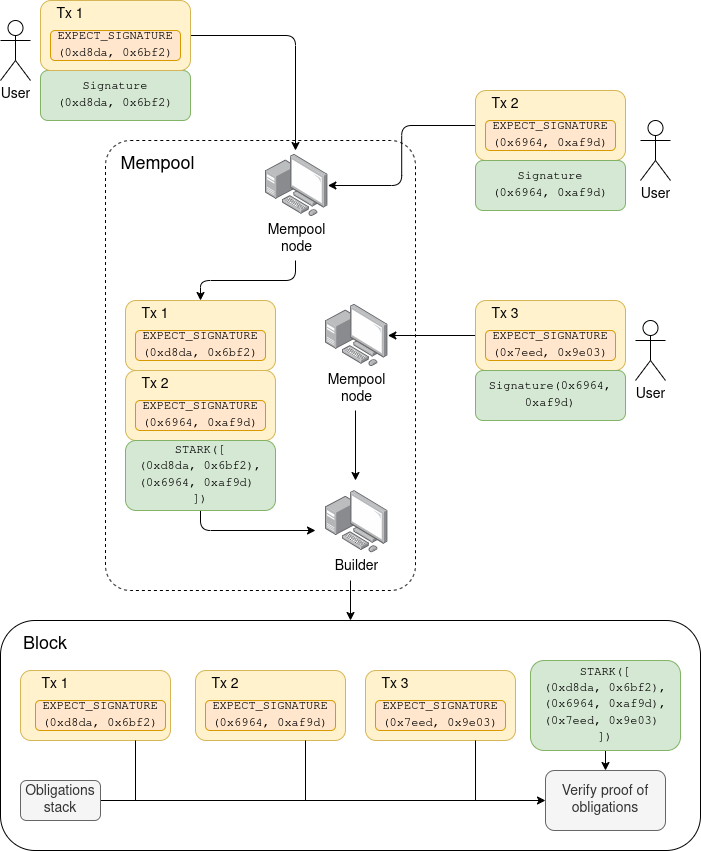
Instead of verifying every signature and proof individually onchain, a single master proof or “validation frame” would verify thousands of them at once, keeping costs near zero.
“This way, a block could ‘contain’ a thousand validation frames, each of which contains either a 3kB signature or even a 256kB proof,” he explained.

Buterin also commented on the Ethereum Foundation’s “Strawmap” on Thursday, stating that he expects to see “progressive decreases of both slot time and finality time.”
Magazine: Bitcoin may take 7 years to upgrade to post-quantum: BIP-360 co-author
“Survivor”: A tribute to all the first people voted out

Bitcoin slides Friday after Nvidia’s earning pullback

Plus One Commerce – Accountancy Public Exam Sure questions From Financial Statements!! | Xylem


-

 Politics5 days ago
Baftas 2026: Awards Nominations, Presenters And Performers
-

 Fashion6 days ago
Weekend Open Thread: Boden – Corporette.com
-

 Sports3 days ago
Women’s college basketball rankings: Iowa reenters top 10, Auriemma makes history
-

 Politics3 days ago
Nick Reiner Enters Plea In Deaths Of Parents Rob And Michele
-

 Business2 days ago
True Citrus debuts functional drink mix collection
-

 Politics5 hours ago
ITV enters Gaza with IDF amid ongoing genocide
-

 Crypto World3 days ago
XRP price enters “dead zone” as Binance leverage hits lows
-

 Business5 days ago
Mattel’s American Girl brand turns 40, dolls enter a new era
-

 Business5 days ago
Law enforcement kills armed man seeking to enter Trump’s Mar-a-Lago resort, officials say
-

 Tech2 days ago
Unsurprisingly, Apple's board gets what it wants in 2026 shareholder meeting
-
 NewsBeat1 day ago
Manchester Central Mosque issues statement as it imposes new measures ‘with immediate effect’ after armed men enter
-

 NewsBeat1 day ago
Cuba says its forces have killed four on US-registered speedboat | World News
-
 NewsBeat4 days ago
‘Hourly’ method from gastroenterologist ‘helps reduce air travel bloating’
-

 Tech4 days ago
Anthropic-Backed Group Enters NY-12 AI PAC Fight
-

 NewsBeat4 days ago
Armed man killed after entering secure perimeter of Mar-a-Lago, Secret Service says
-

 Politics5 days ago
Maine has a long track record of electing moderates. Enter Graham Platner.
-
 NewsBeat2 days ago
Police latest as search for missing woman enters day nine
-

 Crypto World2 days ago
Entering new markets without increasing payment costs
-

 Business1 day ago
Discord Pushes Implementation of Global Age Checks to Second Half of 2026
-

 Business8 hours ago
Only 4% of women globally reside in countries that offer almost complete legal equality