

Crypto World
Are Bitcoin ETFs Accumulating or Not Selling? Key Flow Data


Spot Bitcoin ETFs are on track for a fourth consecutive month of net outflows as BTC approaches another negative monthly close in February, underscoring a demand lull for regulated, spot-linked exposure. Data through mid-February show ETF holdings ebbing from a peak in late 2025, with total assets sitting around $84.3 billion on the day, down from an October 2025 high near $170 billion. The trajectory also reveals a slowdown in cumulative inflows, which have slipped to roughly $54 billion from a $63 billion all-time high. Since July 2025, net inflows have totaled only about $5 billion, highlighting a marked shift in capital allocation to crypto-focused funds. Meanwhile, Bitcoin’s price has slid more sharply than its ETF balances, suggesting the market is absorbing selling pressure without a commensurate bounce in ETF demand.
Key takeaways
- US spot Bitcoin ETFs have declined from about $170 billion in October 2025 to roughly $84.3 billion, signaling waning investor appetite for regulated BTC exposure.
- Cumulative net inflows have plunged to around $54 billion from a $63 billion peak, with only about $5 billion of inflows since July 2025, indicating a sustained slowdown in new capital input.
- Over seven sessions from Feb. 12 to Feb. 19, ETF outflows totaled 11,042 BTC, with Feb. 12 recording a single-day drop of 6,120 BTC (about $416 million at the time).
- Balance reductions among leading participants are sizable: BlackRock’s IBIT holdings fell to 759,000 BTC from 806,000 BTC, a roughly 6% decline, while Fidelity’s FBTC dropped to 186,000 BTC from 213,000 BTC, or about 12.6%.
- Gold ETFs have displaced some attention as risk-on markets ebb and flow, with flows rotating between BTC and gold over the past two years while macro yields remain a focal point for risk appetite.
Tickers mentioned: $BTC, $IBIT, $FBTC
Sentiment: Bearish
Price impact: Negative. Bitcoin’s price has dropped more sharply than ETF holdings, suggesting selling pressure is not yet being countered by renewed ETF demand.
Market context: The ETF flows unfold against a backdrop of a cooling macro environment. The Federal Reserve ended quantitative tightening in December 2025, halting the balance-sheet runoff, yet policy remains restrictive relative to growth expectations. The 2-year Treasury yield persists above 2-year rate expectations, while the 10-year yield trades around 4.1% with the 10-year real yield near 1.7%–1.8%, maintaining tight financial conditions that constrain non-yielding assets like Bitcoin. In this environment, real yields provide an inflation-adjusted return elsewhere, raising the opportunity cost of holding BTC for some investors.
Why it matters
The persistence of outflows in spot Bitcoin ETFs matters because these products are often viewed as liquidity proxies for the broader crypto market. A sustained decline in ETF AUM can indicate a mismatch between price signals and the willingness of institutions to deploy capital through regulated vehicles. The current pattern—outflows outpacing price declines—suggests that, at least for now, soft demand from ETF products is not rekindling upside momentum for Bitcoin. In practice, this means the spot ETF framework may continue to act as a source of supply in the near term, potentially suppressing price recoveries even when spot demand revives in other market segments.
Macro forces are clearly in play. The retreat in ETF inflows coincides with a regime in which real yields remain elevated and monetary policy stays comparatively tight. As Benjamin Cowen notes, the first quarter of 2026 could be characterized as a “late-cycle restrictive digestion” phase for both equities and crypto, where investors demand higher clarity on inflation, growth, and policy trajectories before reaccelerating risk assets. The interplay between rate expectations and risk sentiment is particularly relevant for BTC, which historically has shown sensitivity to changes in real yields and liquidity conditions. The absence of a clear easing signal for yields or balance-sheet expansion has contributed to a cautious stance among ETF buyers and larger holders alike. Cowen’s macro assessment, drawing on research and market cycles, emphasizes that durable ETF inflows historically arrive when real yields decline or policy relaxation appears imminent, conditions that have not yet materialized.
From a broader asset-allocation perspective, the Bitcoin-versus-gold dynamic remains a recurring theme. Over the past two years, the flows into Bitcoin and gold ETFs have alternated as investors sought a balance between liquidity, volatility, and duration of drawdowns. Gold’s inflows surged during risk-off periods, while Bitcoin’s exposure lagged, reflecting a preference for assets perceived as less volatile or offering longer-standing track records in uncertain times. This rotation underscores that macro risk appetite, rather than BTC-specific catalysts alone, often drives ETF flows. Investors watching for catalysts in 2026 should consider how shifts in macro policy, inflation expectations, and risk sentiment could tilt the balance back toward crypto ETFs or push further capital toward more traditional hedges like gold.
In the near term, the lack of a sustained shift in ETF inflows may keep BTC price action more dependent on macro headlines and on-chain signals rather than fund-flow-driven recuperation. The market will likely pay close attention to any signs of three consecutive positive ETF sessions, which many observers consider a potential signal of renewed accumulation, as well as any shifts in the policy stance that could reopen the tap on liquidity. The ongoing story is not solely about the price of Bitcoin but about how institutional appetite for regulated exposure evolves as the macro landscape matures through 2026.
What to watch next
- Monitor for three consecutive days of net ETF inflows or a sustained turnaround in holdings, which could signal renewed institutional demand for spot BTC exposure.
- Watch for any policy shifts from the Federal Reserve or commentary from officials that could alter the path of real yields and liquidity conditions.
- Track changes in the BTC price relative to ETF AUM and rolling net flows to gauge whether price action starts to outpace or lag the flows again.
- Observe movements in competitor assets, such as gold ETFs, for signs of continued rotation or a rebalancing that favors one category over the other during risk-on or risk-off phases.
- Assess updates from major ETF issuers and custodians, particularly around new product launches or changes in holdings, for indications of evolving investor demand.
Sources & verification
- Seven-session BTC ETF net outflows and the Feb. 12 single-day drop (6,120 BTC) analysis by Axel Adler Jr on X: https://x.com/AxelAdlerJr/status/2024397434818859427?s=20
- Bitcoin ETF assets and CheckOnChain data showing IBIT and FBTC holdings changes: https://charts.checkonchain.com/btconchain/etfs/etf_balance_0/etf_balance_0_light.html
- FBTC holdings data corroborating the decline from 213,000 BTC to 186,000 BTC: https://charts.checkonchain.com/btconchain/etfs/etf_balance_0/etf_balance_0_light.html
- Bold.report flow comparisons between Bitcoin and Gold inflows: https://bold.report/compare/flows/
- Macro risk memo from Benjamin Cowen outlining the late-cycle digestion framework for 2026: https://www.benjamincowen.com/reports/macro-risk-memo-feb-2026
- Cointelegraph coverage and Bitcoin price context linked for price reference: https://cointelegraph.com/bitcoin-price
Bitcoin ETF outflows persist as macro conditions weigh on BTC demand
Bitcoin ETF dynamics reveal that even with a lower price baseline than late-2025 peaks, the appetite for regulated spot exposure remains constrained. The first substantial wave of outflows began to dominate the narrative as October’s peak enthusiasm receded. Data show that, through the February period, major ETF products continued to be light on new capital, with several days registering net decreases in asset under management. The scale of these outflows—11,042 BTC across a seven-day window—emphasizes a market where traders and institutions are assessing whether BTC can re-enter a more favorable risk-reward equation or whether the current regime will persist longer than anticipated.
BlackRock and Fidelity—two of the largest ETF providers with significant spot BTC offerings—have not been immune to the shift in demand. IBIT’s holdings declined to about 759,000 BTC while FBTC slipped to around 186,000 BTC, illustrating that even heavyweight participants are managing exposure in line with broader market sentiment. The observed pattern—BTC price falling more than ETF balances—suggests that price discovery is being driven more by market liquidity and order flow than by the absorption of new ETF inflows. In other words, the ETF structure may be acting as a pressure valve, releasing BTC onto the market even as buyers remain cautious rather than aggressively expanding exposure.
The phenomenon is taking place alongside a broader cross-asset flow environment. Gold ETFs, which have historically competed with Bitcoin during risk-off phases, have been increasingly in the spotlight as investors sought instruments with different risk profiles and volatility characteristics. The rotation between BTC and gold flows, documented in recent flow-tracking studies, implies a nuanced investor stance: seek yield or capital preservation in more familiar assets during periods of macro uncertainty, then pivot as conditions shift. This dynamic underscores a key theme for 2026—macro-driven capital allocation can overshadow single-asset narratives, even in a space as attention-grabbing as cryptocurrency.
Insurance for risk? For now, the answer appears to be a cautious stance. The macro backdrop—where the Fed halted QT but policy remains tight—means investors must balance inflationary expectations, growth trajectories, and the opportunity costs of holding non-yielding assets. The narrative that “durable ETF inflows are likely to materialize only after real yields retreat or policy easing emerges” remains a guiding hypothesis for market participants. In practice, that means the market is likely to continue to weigh BTC exposure against the relative attractiveness of other assets, with ETF inflows sensitive to shifts in rate expectations and liquidity conditions rather than outright price gains alone.
The coming months will be telling. If BTC begins to see three or more consecutive positive ETF sessions or if macro indicators tilt toward easier policy, ETF demand could reassert itself. Conversely, if the real-yield environment remains supportive of safer assets or if risk sentiment deteriorates, BTC may face continued headwinds regardless of technical indicators or on-chain signals. The evolving interplay between ETF flows, macro policy, and price action will remain central to how investors structure crypto exposure in 2026.

Crypto World
Who will ZachXBT expose as ‘insider traders’ on Thursday? Polymarket thinks these firms
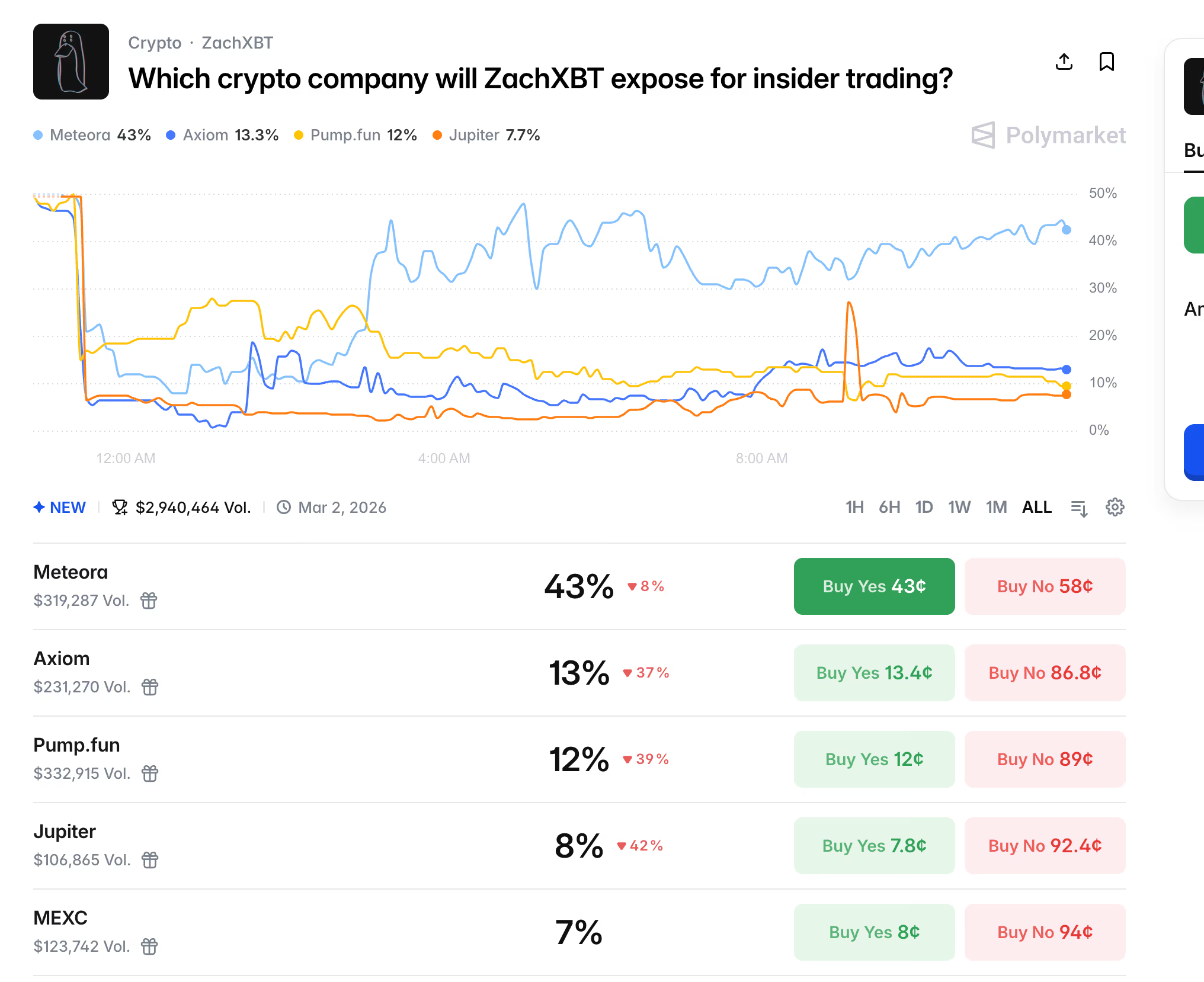
Blockchain investigator ZachXBT hasn’t named the target yet. Polymarket bettors are already pricing it in.
A prediction market asking which crypto company ZachXBT will expose for insider trading has drawn nearly $3 million in volume since the on-chain sleuth posted on X that a “major investigation” into one of crypto’s most profitable businesses would drop on February 26. He offered no specifics beyond alleging insider trading.
That was enough. Within hours, Polymarket traders began placing bets across several candidates, and the resulting odds function as a real-time map of where the market thinks the bodies are buried.
Polymarket is a blockchain-based prediction platform where users trade contracts on real-world outcomes using real money. The odds tend to reflect genuine conviction because bettors risk capital rather than just opinions. The platform gained mainstream credibility during the 2024 U.S. election cycle and has since become crypto’s de facto sentiment gauge for unresolved events.
As of Asian morning hours Tuesday, Meteora is the heavy favorite at 43%, with $319,000 in volume on that outcome alone. The Solana-based liquidity layer has been a recurring name in community discussions around meme coin market structure — particularly around how launch liquidity gets seeded and who ends up on the right side of early price moves.
Its proximity to politically linked token activity, including Trump-themed meme coins, has kept it in the spotlight.

Axiom sits at 13%, followed by Pump.fun at 12% with the highest single-outcome volume at $332,000 — suggesting heavy two-way action rather than consensus. Pump.fun’s inclusion tracks with months of scrutiny over early-wallet sniping on the platform, though the project has denied allegations of insider advantages.
Jupiter rounds out at 8% and MEXC at 7%. Jupiter’s presence reflects broader questions about Solana DeFi routing and fee extraction, while MEXC has faced persistent social media chatter about listing behavior and whale-friendly timing on meme coin markets.
The odds have shifted notably since the market opened. Axiom, Pump.fun, and Jupiter have all fallen 37-42% from their initial readings, while Meteora has consolidated its lead — a pattern that suggests early speculation has given way to more directional conviction as bettors parse ZachXBT’s prior work and posting patterns for clues.
None of this constitutes evidence, however. Prediction markets price belief, not fact, and Polymarket’s odds reflect the collective speculation of a few thousand traders rather than any inside knowledge of the investigation itself.
But the market is doing what prediction markets do best — forcing participants to put capital behind their hunches rather than just tweeting them.
The answer arrives in two days.


- Bitcoin price dipped to $62,800 amid the latest market weakness.
- Analysts say $60,000 is key to the bulls’ short-term picture.
- BTC could dip to $50,000 amid a bear cross pattern.
Bitcoin’s price slide gathered momentum on Tuesday, with fresh losses to under $63,000 as the cryptocurrency’s vulnerability to macroeconomic pressures and global uncertainties continued.
Trading volume surged 25% as investors reacted to a confluence of events, and top altcoins followed suit.
Bitcoin drops below $63,000
Bitcoin extended its losses to lows of $62,700 on Tuesday, bringing total declines to nearly 29% in the past month.
The benchmark digital asset’s latest dump comes amid mounting concerns over President Trump’s latest tariffs, with investor jitters rippling through the crypto market.
Analysts have noted that these trade policies heighten fears of inflation, trade instability, and reduced global liquidity.
Risk assets like cryptocurrencies are under pressure, and escalating geopolitical tensions surrounding potential US strikes on Iran add to this weakness.
BTC’s struggle mirrors traditional stock indices, which also tumbled after Citrini research sparked a sell out in companies that work in delivery and payments with software stocks also falling on Monday.
Meanwhile, on-chain data shows Bitcoin continues to confront huge ETF outflows, with investors pulling capital from investment products across the market.
According to Farside Investors’ data, Bitcoin ETFs saw $203.8 million worth of outflow on Monday.
These factors have outweighed Strategy’s 100th Bitcoin purchase and have failed to stem the downside.
BTC traded at $63,030 at the time of writing, down 2.4% in the past 24 hours.
The top cryptocurrency is down 7% from last week’s peak near $68k.
What’s next for Bitcoin price?
This dip thrusts the pivotal $60,000 support level into sharp focus.
Bears have already tested this psychological and technical floor, with BTC rebounding off the level following the February 5 crash.
Analysts warn that further short-term pain could allow for a potential revisit to $50,000.
If selling accelerates, lower support levels will come into play.
However, chart patterns suggest Bitcoin could find a bottom as the 50-week moving average crosses below the 100-week average. Price recovery has historically followed such patterns.

At the moment, the chart indicates no such cross has occurred, and prices will likely head lower.
However, extreme oversold conditions suggest a potential sharp rebound is next.
Bullish catalysts, including macro shifts and ETF inflows, can change the direction of Bitcoin.
The $70,000 mark remains key, with a breakout likely to accelerate short-term recovery.
“For a durable breakout to materialise, the market will require a clear resurgence in spot demand and stronger institutional participation; until then, Bitcoin is likely to remain range-bound within its established absorption zone,” analysts at Bitfinex wrote in a research note.

Framework Ventures has forged a strategic partnership with mortgage technology company Better to advance a $500 million credit facility into Sky’s decentralized stablecoin ecosystem. The collaboration aims to unlock the tokenization of real-world assets, beginning with mortgage-backed instruments that could generate yields for holders within a DeFi framework. The move signals a broader push by traditional finance and crypto-native firms to bridge tangible assets with scalable blockchain protocols, a trend that has gathered momentum as tokenization efforts spread from money-market funds to more complex asset classes.
Key takeaways
- Framework Ventures will extend up to $500 million in credit to Sky’s stablecoin ecosystem, enabling the launch of mortgage-backed tokens tied to Better’s assets.
- The initiative envisions tokens that represent mortgages, initially offered to accredited investors, with a long-term plan to broaden access to retail participants.
- Better is pursuing a stake in its own stock through Framework, with a reported 10% acquisition valued around a $45 million equity stake, alongside the tokenization push.
- The project sits within a wider wave of tokenization in traditional finance, including BlackRock’s exploration of tokenized instruments for money-market funds.
- Better’s leadership frames the effort as a means to cut intermediation and reduce costs for consumers, potentially enabling cheaper mortgage financing over time.
Tickers mentioned: $BETR
Market context: The plan arrives amid rising institutional interest in tokenized real-world assets and growing experimentation with DeFi-native structures that can support asset-backed tokens. It aligns with a broader move by asset managers toward tokenization as a way to broaden liquidity and potentially lower financing costs in traditional markets.
Why it matters
The collaboration highlights a convergence between crypto-native protocols and traditional mortgage finance. By channeling a sizable $500 million credit line into Sky’s stablecoin system, the initiative seeks to create a pipeline for mortgage-backed tokens that can be minted and traded within a decentralized framework. If successful, the approach could demonstrate a viable pathway to connect real-world debt—specifically conforming, government-backed mortgages—with blockchain rails, a pairing that proponents say can enhance efficiency, transparency, and liquidity.
Better’s leadership has framed the move as a broad effort to trim layers of intermediation and reduce operating costs. Vishal Garg, founder and CEO of Better, has argued that tokenization could lower overall financing costs, which, in turn, could translate into cheaper mortgage terms for consumers. While the precise mechanics and rate implications remain to be seen, the emphasis on cost reduction reflects a recurring theme in real-world asset tokenization: the potential for blockchain-enabled processes to streamline origination, underwriting, and settlement without sacrificing regulatory safeguards or consumer protections.
The strategic angle extends beyond just lending costs. By taking a stake in Better and pursuing mortgage-backed tokens, Framework and Better are testing whether a hybrid model—combining on-chain settlement with traditional mortgage assets—can deliver consistent yields to token holders while maintaining compliance and risk management. The initiative also underscores the appetite among some crypto investors for assets that can offer a bridge between digital liquidity and the stability of real-world collateral. In this sense, the project resonates with a wider industry trend toward tokenized assets that aim to preserve credit quality while expanding access to investors who are comfortable with DeFi governance and transparency standards.
The broader tokenization theme has gained notable attention from institutional players. For example, major asset managers have shown interest in tokenized versions of money-market funds, a development that could signal a future where high-quality, asset-backed tokens play a more prominent role in diversified portfolios. The industry’s trajectory toward tokenized real-world assets (RWAs) has been punctuated by regulatory scrutiny and the need to establish clear redemption, custody, and compliance frameworks. Even as investors weigh opportunities in these tokenized products, the emphasis remains on ensuring that tokenization scales without compromising investor protections.
The market backdrop includes public disclosures around Better’s equity positioning with Framework. Fortune reported that Framework would purchase about 10% of Better’s stock, which is currently valued at roughly $45 million, and that the tokenized mortgages could be made available initially only to accredited investors. Garg indicated the tokens would be issued first, with efforts to determine how those assets could reach everyday consumers, but specific launch dates were not disclosed. Market observers will be watching not only for token economics and compliance paths but also for how these mortgage-backed tokens would perform within Sky’s ecosystem and how collateralization, liquidity, and risk management would be structured in practice.
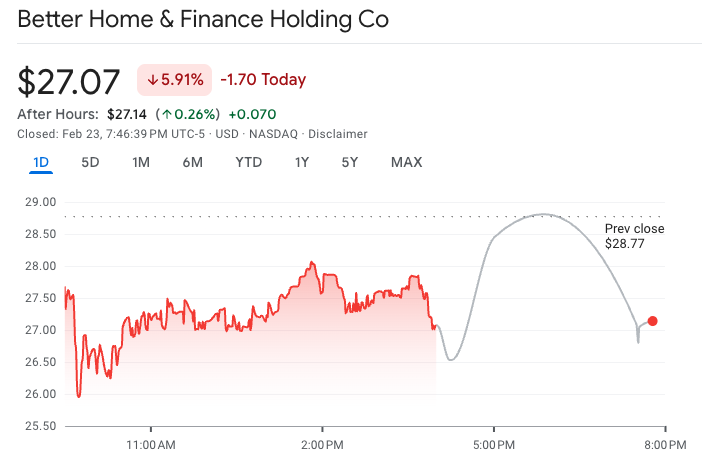
From a pricing perspective, Better’s stock BETR has experienced a challenging period since peaking near the $86 level in October. It was trading around $27 as of last close, reflecting ongoing volatility in the stock’s performance and investor sentiment amid broader market fluctuations. This backdrop adds another layer of complexity to any tokenization plan tied to a public equity component, highlighting the delicate balance between on-chain innovation and traditional market dynamics.
The motivation for the program rests partly on the belief that tokenization can unlock new efficiencies and access. Garg’s remarks suggest a long-term view where mortgage-backed tokens could reduce cost pressure on lenders and borrowers alike by removing redundant steps in the origination and settlement processes. The promise hinges on rigorous risk controls, credible asset backing, and a framework for on-chain governance that preserves the integrity of the underlying mortgage assets.
As the industry watches, a number of fundamental questions remain: How will the mortgage-backed tokens be structured in terms of collateralization and payment streams? What governance mechanisms will oversee the Sky ecosystem to ensure reliability and security? What regulatory approvals or safe harbors will be necessary to allow token holders to participate economically in mortgage yields without running afoul of securities or commodities rules? While these are not uniquely defined yet, the collaboration between Framework and Better signals a concerted effort to address these issues in a convergent manner—blending the best practices of traditional credit markets with the transparency and programmability of DeFi.
What to watch next
- Official rollout details for the $500 million credit facility to Sky and the timeline for token issuance.
- Detailed tokenomics for the mortgage-backed tokens, including yield structures, collateral requirements, and redemption mechanics.
- Regulatory filings or statements clarifying compliance pathways for accredited-investor tokens and eventual consumer access.
- Subsequent investor communications from Better and Framework regarding the equity stake and governance rights tied to the token program.
- Updates on Sky’s protocol integration, including security audits, collateral-custody arrangements, and on-chain settlement protocols.
Sources & verification
- Better and Framework Ventures press release announcing the strategic partnership to deploy $500MM into Better via Sky’s stablecoin ecosystem (BusinessWire).
- Fortune coverage of Framework’s investment in Better and the proposed “Home Token” mortgage-backed tokens, including the 10% stock acquisition and accreditation restrictions.
- Cointelegraph reporting on BlackRock’s exploration of tokenization for money-market funds as part of the broader tokenization trend.
- Cointelegraph explainer on tokenization, outlining the mechanics and opportunities of tokenizing traditional assets.
- BETR stock price context from Google Finance showing recent trading levels in Better’s public market.
Market reaction and key details
The partnership between Framework Ventures and Better marks a notable step in the ongoing experimentation with tokenized real-world assets. If the mortgage-backed token concept proves viable, it could provide a scalable model for aligning mortgage originators with DeFi liquidity, potentially lowering financing costs for borrowers while offering a novel yield channel for token holders. The approach emphasizes real-world asset backing, robust risk controls, and a governance framework designed to coexist with traditional financial oversight. Investors should monitor how the tokenization framework adapts to regulatory developments, how capital is deployed to Sky, and how consumer-ready token products are designed, tested, and rolled out in the months ahead.
What it means for users and builders
For users, the initiative could eventually translate into accessible, tokenized exposure to mortgage-originated yields—an option that sits at the intersection of DeFi and mainstream finance. For builders, the Sky ecosystem represents a testbed for on-chain loan structures, asset-backed collateral, and transparent settlement processes that can scale across asset classes. The collaboration also signals ongoing interest from institutional players in tokenized RWAs, a trend that could help drive liquidity, standardization, and better risk management practices within DeFi.
Blockchain intelligence platform TRM Labs has joined forces with banking infrastructure firm Finray Technologies to create a unified system that monitors both crypto and fiat transactions.
Finray’s compliance and decision engine, XZiel, has been integrated with TRM’s blockchain intelligence tools to enable real-time alert triaging, automated escalation, case management, and risk assessment across crypto and fiat transactions, the companies announced on Tuesday.
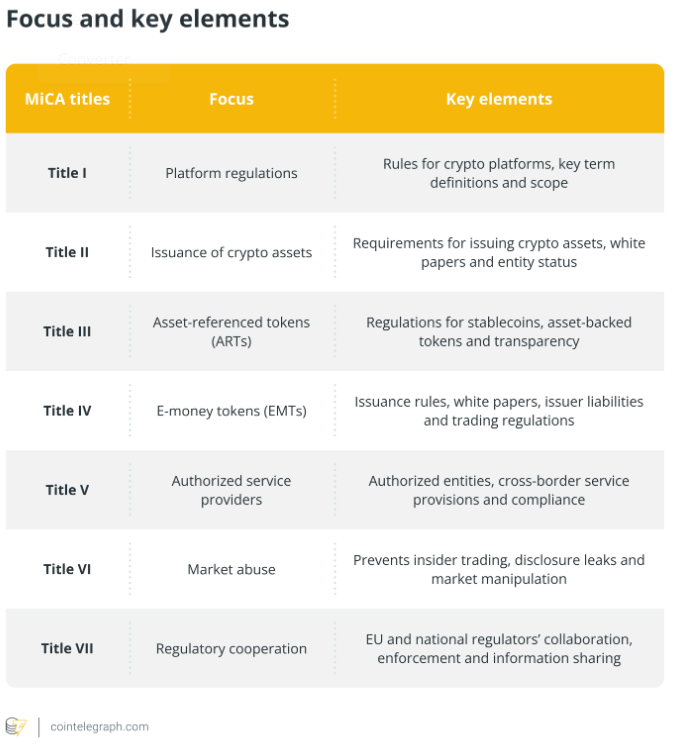
With stablecoin settlements and fiat payment flows becoming increasingly interconnected and with new regulations such as Europe’s Markets in Crypto-Assets (MiCA), institutions operating in both markets now require unified oversight, according to Finray Technologies and TRM Labs.
The system is designed to help institutions implement structured, auditable monitoring programs aligned with MiCA requirements and anti-money laundering obligations, streamlining market entry for regulated entities.

Bitcoin, Ethereum, and other blockchains covered
Key features of Finray and TRM Labs’ new system include real-time risk alerts for suspicious crypto transactions, using the same workflow as traditional payment monitoring. Blockchains covered include Bitcoin, Ethereum and Tron.
The system supports wallet screening during onboarding and ongoing monitoring, assessing the risk of wallet addresses across both on-chain and off-chain environments.
It also automatically records a detailed, time-stamped audit trail, documenting why an activity was flagged as risky, who reviewed it and what decision was made in the event of regulatory or audit reviews.
Aimed at banks expanding into crypto
Finray and TRM Labs’ system is aimed at exchanges, custodians serving institutional clients, corporate treasuries, banks, and electronic money institutions looking to expand their crypto offerings or enable crypto on- and off-ramp services, the firms said.
Related: TRM Labs completes $70M investment round at $1B, becomes crypto unicorn
“Compliance teams can’t manage fiat and crypto risk in separate systems anymore,” Oleksandr Potapenko, the CEO of Finray, said in a statement.
“Embedding TRM’s blockchain intelligence directly into XZiel gives our customers a single, auditable view of risk across both rails — where they can hold, clear, escalate, and document decisions within one environment. That is what operating under MiCA and evolving supervisory expectations actually demands,” he added.
A growing number of institutions are already expanding into crypto. More than half of the top US banks have started or announced plans to offer Bitcoin-related services, such as trading or custody Bitcoin financial services firm River said last month.
Magazine: Is China hoarding gold so yuan becomes global reserve instead of USD?
Bitcoin , once hailed as an anti-establishment asset and antithesis to Wall Street, may now bend to sharp traders from those same floors.
Trading in the leading cryptocurrency is steadily shifting toward CME Group, and the exchange’s move to 24/7 derivatives later this year could cement its role as the dominant venue for institutional crypto risk.
The change removes one of the last advantages held by crypto exchanges: nonstop market access.
“You’ll see more traditional hedge fund managers getting more into the asset class, because they’ll be able to trade it on instruments they know, without having to upgrade their tech or move their signals,” Karl Naim, Chief Commercial Officer at XBTO, told CoinDesk. “Why would they want to take a counterparty risk of an entity they don’t know?”
CME already leads regulated bitcoin futures markets by open interest, and its contracts underpin much of the hedging activity tied to U.S. spot ETFs. Until now, however, trading paused over the weekend, producing the well-known “CME gaps” and leaving institutional investors unable to adjust positions while offshore exchanges continued operating.
Around-the-clock trading removes that constraint. Institutions that once relied solely on exchange-traded funds (ETFs) or avoided weekend exposure will be able to hedge continuously, tightening arbitrage windows between prices for regulated futures and offshore perpetual swaps.
As those gaps disappear, so too does the need for large allocators to maintain exposure on crypto exchanges simply for access. For institutions that prioritize regulatory clarity and established clearinghouses, CME begins to look less like an alternative and more like the default.
Even crypto exchange executives are aware of this. In January, OKX President Hong Fang wrote in a CoinDesk op-ed that crypto derivatives trading could one day rival or even surpass spot volumes on major global exchanges, making U.S. regulated volatility markets an even stronger anchor for bitcoin price discovery worldwide.
Institutions calling the shots
For Naim, the shift reflects a broader evolution in how capital enters bitcoin. What began as a grassroots activism by retail traders chasing BTC as an alternative to Wall Street has flipped upside down, with traditional institutions now calling the shots.
“Today we speak to a lot of the sovereigns, a lot of the institutions. They go for what they know,” he said, describing allocators that first accessed the asset through spot ETFs before considering more complex strategies.
With institutional positioning carrying more weight, bitcoin’s short-term direction increasingly reflects global risk sentiment.
“If [Trump attacks Iran], obviously what we’re going to see is that it’s going to be all risk off,” Naim said, referring to a potential forced regime change in Iran by the U.S. “Gold already started rallying. Equities will go down. Bitcoin will go down.”
In that framework, bitcoin behaves less like a standalone crypto trade and more like a macro instrument, priced alongside equities and commodities rather than apart from them.
Naim acknowledged the irony.
“Bitcoin was all about decentralization,” he said.
But as institutional capital scales and liquidity consolidates within regulated clearinghouses, the infrastructure surrounding the asset is becoming increasingly centralized — because institutional money chases risk assets, not risky platforms.
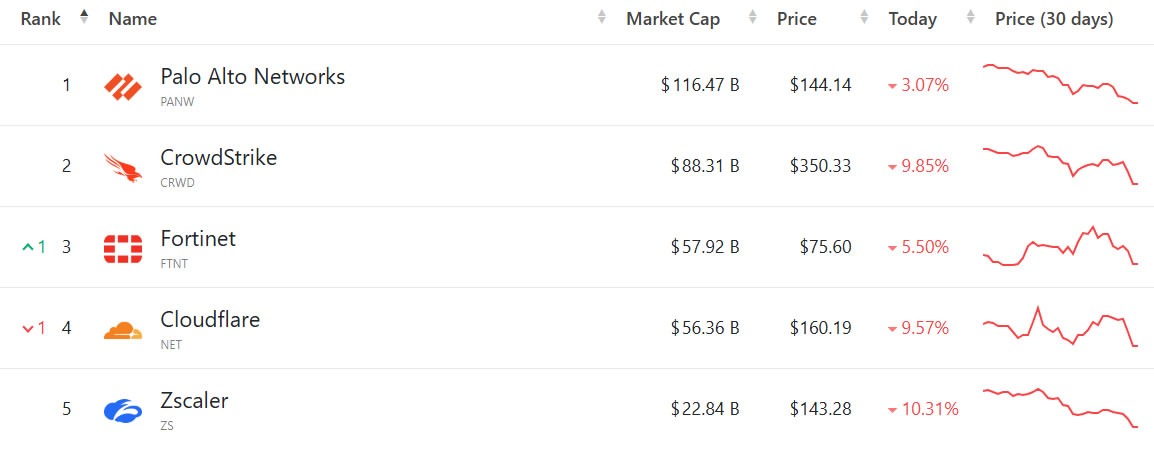
Shares in leading listed cybersecurity companies have fallen since Anthropic’s launch of Claude Code Security on Friday, an AI-powered code vulnerability scanner.
Anthropic launched Claude Code Security on Feb. 20 as a limited research preview.
Claude can reason like a skilled security researcher
According to the company website, Anthropic’s chatbot Claude “scans your entire codebase for vulnerabilities, validates each finding to minimize false positives, and suggests patches you can review and approve.”
Claude reasons through code “like a skilled security researcher,” it understands context, traces data flows, and “catches vulnerabilities that pattern-matching tools miss,” before proposing a fix.
Anthropic’s most advanced AI model, Claude Opus 4.6, has already found more than 500 high-severity vulnerabilities that have survived decades of expert review, VentureBeat reported on Monday.
ChatGPT maker OpenAI launched a new benchmark on Feb. 19 to evaluate how well different AI models detect, patch, and exploit security vulnerabilities in smart contracts. Claude Opus 4.6 came out on top.
Cybersecurity company shares decline
The top five US-listed information technology security companies by market capitalization have all seen heavy share price declines continue this week.
Palo Alto Networks, America’s largest cybersecurity company with a market capitalization of $116 billion, saw its stock (PANW) slide almost 9% since the launch.
CrowdStrike, which provides endpoint security, threat intelligence, and cyberattack response services, had an even greater loss with its share prices tanking 18% since Feb. 20, erasing $20 billion in market cap.
Meanwhile, California-based Fortinet, which develops and sells security products, lost 9% from its share price (FTNT) over the same period, according to Google Finance.
Other leading cybersecurity firms, such as Cloudflare and Zscaler, also saw their stocks slide amid the new AI competitor.
“What you’re seeing today is really the continuation of a panic-driven, narrative-led selloff,” Shrenik Kothari, security and infrastructure analyst at Robert W. Baird, told Reuters.

Market reactions are not irrational
“These reactions are not irrational,” noted the Kobeissi Letter in a lengthy post on the threat of AI taking over the IT workforce on Tuesday.
“When AI replicates what workers do, pricing power shifts to the buyer. That is the first-order impact, and it is very real.”
Related: Citrini’s AI doom report sees software, payment stocks tumble
Analysts at financial services firm Wedbush said the stock sell-off was due to “AI Ghost Trade fears.” They noted that Anthropic’s move into the market reinforces a broader view that cybersecurity will be a key beneficiary of the AI boom, reported Proactive on Tuesday.
Magazine: Crypto loves Clawdbot/Moltbot, Uber ratings for AI agents: AI Eye
Crypto venture firm Framework Ventures has partnered with mortgage services company Better to help it launch a $500 million plan to integrate with the decentralized finance protocol Sky, formerly MakerDAO.
Better said on Monday that Framework would help it provide $500 million in credit to Sky’s stablecoin ecosystem, enabling it to launch tokens tied to mortgages that would generate yield.
Framework Ventures co-founder Vance Spencer said real-world assets are “one of the most important frontiers in decentralized finance, and government-backed conforming mortgages are one of the largest real-world asset classes in the world.”
The plan comes amid a broader interest in tokenization from traditional finance companies, with firms such as BlackRock dabbling in tokenization for money market funds.
Tokens only for accredited investors, but will expand
Fortune reported on Monday that Framework also struck a deal to buy 10% of Better’s stock, currently valued at about $45 million, and that the planned tokens would initially be available only to accredited investors.
Better founder and CEO Vishal Garg said that it would issue the tokens and then would be “figuring out how do we get this in the hands of consumers,” but did not say when the tokens would be launched.
Fortune reported that the retail-focused tokens would be named “Home Token,” citing a person familiar with the plans.
It comes as shares in the Nasdaq-listed Better (BETR) have struggled after hitting a peak of over $86 in late October.
Its stock has since sunk, ending trading on Monday at around $27, down nearly 17% so far this year.

Related: Backpack pledges 20% equity to token stakers amid IPO plans
Garg explained to Fortune that its push into crypto was driven by the promise of lower fees and operating costs, and that there are “so many different layers of intermediation that we’re going to be able to take out.”
“If we’re able to finance at a much lower cost than anyone else in the mortgage market, we’re going to be able to offer consumers a much cheaper mortgage than anybody else in the market,” he added.
Magazine: Bitcoin’s ‘biggest bull catalyst’ would be Saylor’s liquidation — Santiment founder


Crypto.com has secured conditional approval from the Office of the Comptroller of the Currency (OCC) to charter a national trust bank.
With this move, the cryptocurrency exchange and financial services platform joins a growing list of digital asset firms that received similar approvals last year.
As previously reported by BeInCrypto, Crypto.com applied for a national trust bank charter in October 2025. The OCC granted conditional approval in February 2026, marking a significant milestone for the company.
It’s worth noting that conditional approval represents a preliminary stage in the chartering process. The applicant must satisfy the OCC’s regulatory and operational requirements before obtaining full approval.
“Crypto.com today announced that it has received conditional approval from the Office of the Comptroller of the Currency (OCC) to charter Foris Dax National Trust Bank, d.b.a. Crypto.com National Trust Bank,” the announcement read.
Crypto.com emphasized that the approval does not affect the ongoing operations of Crypto.com Custody Trust Company. That entity will continue to operate as a qualified custodian regulated by the New Hampshire Banking Department as a non-depository trust company.
“This conditional approval is the latest testament to both our commitment to compliance and to providing customers trusted and secure services they expect from Crypto.com. This milestone brings us a major step closer to meeting leading institutions’ needs for a one-stop-shop qualified custodian under a gold standard of federal oversight,” said Kris Marszalek, Co-Founder and CEO of Crypto.com.
Firms such as Ripple, Circle, Paxos, and Fidelity Investments also received conditional approval for their national trust bank charter applications in December 2025. Meanwhile, BitGo went a step further, securing full approval from the OCC late last year to convert its state trust company into a national trust bank.
In addition, Trump-backed DeFi project World Liberty Financial’s subsidiary submitted its application to the OCC in January to establish World Liberty Trust Company, National Association (WLTC). The proposed institution would function as a national trust bank structured to facilitate stablecoin-focused activities.
The move by cryptocurrency firms into federally chartered banking structures reflects deeper integration of digital asset companies into the US financial regulatory framework. A national trust charter provides federal legal status, enhances custody capabilities, and may strengthen institutional credibility. Operating under OCC supervision centralizes oversight at the federal level.
However, this trend has also raised concerns. The American Bankers Association (ABA) and the Independent Community Bankers of America (ICBA) have pushed back against the OCC granting conditional approvals. They warn that broadening crypto charters may blur the boundaries of US banking and create new challenges.


Strategy (formerly MicroStrategy) co-founder and executive chairman Michael Saylor said he does not believe quantum computing represents Bitcoin’s (BTC) greatest security threat at the moment.
This statement comes as the quantum computing narrative continues to be a focus of debate among crypto circles. Some argue that it has already started to impact Bitcoin’s valuation and institutional exposure.
Michael Saylor Dismisses Quantum Threat to Bitcoin
During an appearance on Natalie Brunell’s Coin Stories podcast, Saylor weighed in on growing concerns over quantum computing. He said the broader cybersecurity community generally agrees that any meaningful quantum-related risk remains at least a decade away. Saylor added that it’s not a “this decade thing.”
“Whether or not there will be a quantum threat or a quantum risk is a question that is yet to be decided. But there’s certainly no consensus that there is any threat right now or that there will be a threat materializing anytime soon,” he commented. “I don’t actually think that the quantum, you know, narrative is the greatest security threat to Bitcoin right now. I don’t think it has been.”
He emphasized that major breakthrough quantum capabilities would not catch the industry off guard. If a quantum threat materialized, global banking systems, internet infrastructure, consumer devices, artificial intelligence (AI) networks, and crypto protocols, including Bitcoin, would coordinate software upgrades to quantum-resistant cryptography.
Previously, Saylor has suggested that Bitcoin’s greatest threat comes from ambitious opportunists pushing for changes to the protocol.
“The software does change. If you’ve got 30 versions of Bitcoin core in an asset which is 17 years old, do the math in your head and figure out how long it takes for versions of this stuff to roll out. The nodes will upgrade, the hardware will upgrade, the wallets will upgrade, the exchanges will upgrade. How will they upgrade? Well, wait 10 years. There will be global consensus about the best way to deal with it. There is no global consensus right now because there isn’t a credible threat right now,” he added.
Saylor also downplayed fears of Bitcoin facing isolated vulnerability. He noted that major corporations, financial institutions, and governments worldwide rely on digital systems that would face similar exposure in the event of a credible quantum breakthrough.
Companies such as Google, Microsoft, Apple, Coinbase, and BlackRock, alongside global governments and major banks, would all be confronting the same challenge.
“When and if it materializes, I expect that there will be some software or hardware or both reaction to it. The crypto community is actually the most sophisticated cybersecurity community,” he remarked. “So I think that the crypto security community will be the first, you know, to perceive the threat and to react to the threat, and they’ll be leading the way.”
From Wall Street to Core Devs: Crypto Braces for the Quantum Era
While the technical threat may be distant, institutional capital appears to be pricing in uncertainty. Shark Tank investor Kevin O’Leary recently stated that many institutions are capping their Bitcoin exposure due to concerns over quantum computing.
Christopher Wood, Global Head of Equity Strategy at Jefferies, has removed Bitcoin from his model portfolio over similar fears. Meanwhile, analysts including Willy Woo and Charles Edwards argue that quantum-related uncertainty could be contributing to Bitcoin’s relative underperformance against gold and weighing on its price.
As the debate intensifies, defensive measures are accelerating across the industry. Ethereum has incorporated post-quantum readiness into its planned 2026 protocol priorities update. Coinbase and Optimism are also actively planning post-quantum security enhancements.
On the Bitcoin side, developers have merged Bitcoin Improvement Proposal 360 (BIP 360) into the official BIP GitHub repository.


Ethereum prices have tanked to bear market lows and are currently at a long-term demand zone, say analysts.
“Ethereum is sitting at a 5-year demand zone,” said analyst Merlijn The Trader on Monday. “Historically, this range has been accumulation, not distribution,” he added.
Ether prices are currently back at April 2025 levels, where it crashed briefly below $1,500. They are also back to long-term lows between July 2022 and November 2023, which was a deep bear market and accumulation zone. However, they could wallow around this level for months yet.
Nevertheless, the analyst remains confident that “momentum is building for a potential explosive run.”
ETHEREUM IS SITTING AT A 5-YEAR DEMAND ZONE.
Perfect entries don’t exist.
Historically, this range
has been accumulation, not distribution.You don’t need the exact bottom.
You need exposure before expansion.Big bases don’t drift.
They reprice. pic.twitter.com/0TQ23J2Lnx— Merlijn The Trader (@MerlijnTrader) February 23, 2026
Ethereum is a long-term investment
Investor ‘StockTrader Max’ said that Ethereum is no longer a “get rich quick” asset that turned early holders into millionaires overnight. They also observed that ETH was still in a five-year accumulation zone.
“If you own ETH to make a lot of money by next week or month, then you will likely be disappointed. Ethereum is an asset that should be held in many portfolios with a time horizon of years and NOT months.”
Fellow analyst ‘Sykodelic’ identified a “nice hidden bullish divergence printed on the weekly chart.” A hidden bullish divergence is when the RSI (relative strength index) makes a lower low, but the price makes a higher low. “It means that momentum was actually stronger, but price absorbed it better,” they said before adding:
“The last time this happened, ETH rallied 100%.”
“Crypto has a lot of tailwinds, but the price action is terrible,” said Fundstrat’s Tom Lee.
His Ethereum DAT BitMine continues to buy the dip and stake, adding a further 51,162 ETH over the past week, according to a Monday update.
You may also like:
“In the midst of this ‘mini crypto winter,’ our focus continues to be on methodically executing our treasury strategy and steadily acquiring ETH and, in turn, optimizing the yield on our ETH holdings,” he said.
ETH Price Dips Again
Ether could not hold above $1,900 and has fallen back to $1,830 at the time of writing during the Tuesday morning Asian trading session.
The asset is now not far away from its Feb. 6 low and does not appear to be ready for a move to the upside yet, despite all of the positive fundamentals.
Binance Free $600 (CryptoPotato Exclusive): Use this link to register a new account and receive $600 exclusive welcome offer on Binance (full details).
LIMITED OFFER for CryptoPotato readers at Bybit: Use this link to register and open a $500 FREE position on any coin!

From Korea to Kenya: All the countries dragged into fighting the Ukraine-Russia war

Australian shares creep lower as tech stocks tumble
Who will ZachXBT expose as ‘insider traders’ on Thursday? Polymarket thinks these firms


-

 Crypto World7 days ago
Can XRP Price Successfully Register a 33% Breakout Past $2?
-

 Video4 days ago
XRP News: XRP Just Entered a New Phase (Almost Nobody Noticed)
-

 Fashion4 days ago
Weekend Open Thread: Boden – Corporette.com
-

 Politics2 days ago
Baftas 2026: Awards Nominations, Presenters And Performers
-

 Sports12 hours ago
Women’s college basketball rankings: Iowa reenters top 10, Auriemma makes history
-

 Politics13 hours ago
Nick Reiner Enters Plea In Deaths Of Parents Rob And Michele
-

 Business6 days ago
Infosys Limited (INFY) Discusses Tech Transitions and the Unique Aspects of the AI Era Transcript
-

 Entertainment6 days ago
Kunal Nayyar’s Secret Acts Of Kindness Sparks Online Discussion
-

 Video7 days ago
Financial Statement Analysis | Complete Chapter Revision in 10 Minutes | Class 12 Board exam 2026
-

 Tech6 days ago
Retro Rover: LT6502 Laptop Packs 8-Bit Power On The Go
-
 Sports5 days ago
Clearing the boundary, crossing into history: J&K end 67-year wait, enter maiden Ranji Trophy final | Cricket News
-

 Business2 days ago
Mattel’s American Girl brand turns 40, dolls enter a new era
-

 Business2 days ago
Law enforcement kills armed man seeking to enter Trump’s Mar-a-Lago resort, officials say
-

 Entertainment5 days ago
Dolores Catania Blasts Rob Rausch For Turning On ‘Housewives’ On ‘Traitors’
-
 NewsBeat21 hours ago
‘Hourly’ method from gastroenterologist ‘helps reduce air travel bloating’
-

 Business6 days ago
Tesla avoids California suspension after ending ‘autopilot’ marketing
-

 Politics7 days ago
Eurovision Announces UK Act For 2026 Song Contest
-

 Tech2 days ago
Anthropic-Backed Group Enters NY-12 AI PAC Fight
-

 NewsBeat2 days ago
Armed man killed after entering secure perimeter of Mar-a-Lago, Secret Service says
-

 Politics2 days ago
Maine has a long track record of electing moderates. Enter Graham Platner.