

Crypto World
ASIC Extends No-Action Relief for Digital Asset Firms

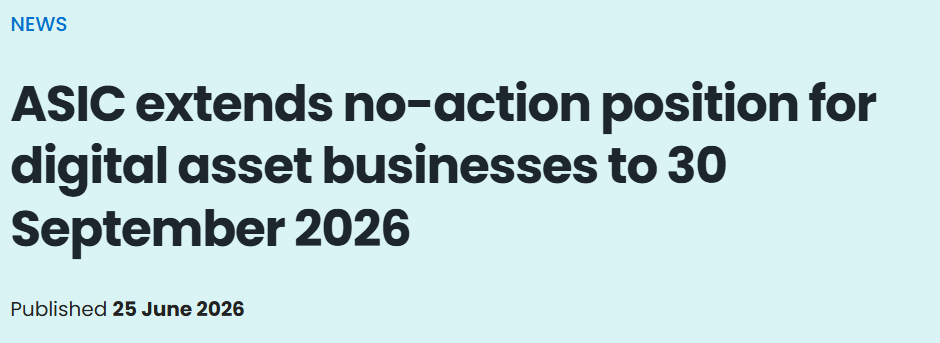
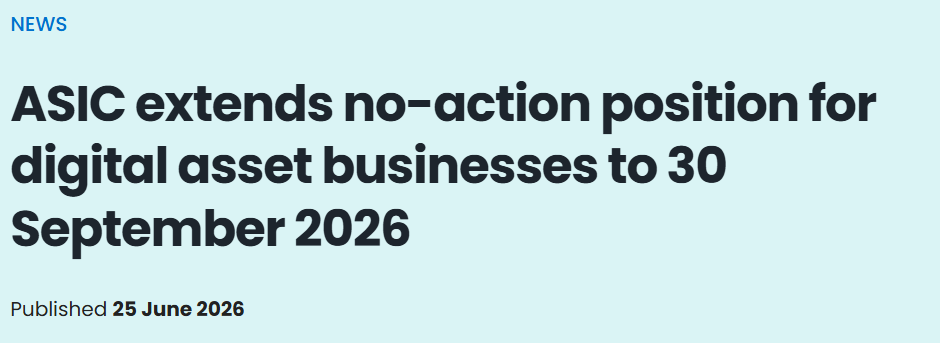
The Australian Securities and Investments Commission (ASIC) has given digital asset businesses another three months to apply for licenses required under its updated regulatory guidance.
Australia’s financial regulator said that the temporary protection from enforcement would remain in place until Sept. 30, pushed from the previous June 30 deadline.
The extension applies to businesses seeking an Australian Financial Services (AFS) license, as well as companies that may require market or clearing and settlement authorizations.
ASIC also expanded the no-action relief to cover digital asset businesses operating through authorized representatives or intermediary arrangements with licensed firms, widening the pool of companies eligible for the transition period.
The regulator said it has received about 30 license applications since updating its digital asset guidance in October 2025.
Source: ASIC
Australia’s crypto licensing transition takes shape
ASIC previously introduced the no-action position after updating its Information Sheet 225 (INFO 225) guidance to clarify how existing financial services laws apply to digital assets. The guidance states that many digital asset products are financial products under existing law, meaning many providers require an AFS licence.
That approach rests on ASIC’s view that Australia’s definitions of financial products are broad and technology-neutral. The regulator said its interpretation was recently reinforced by the High Court’s Block Earner ruling, which found that the company’s former crypto yield product was a financial product under the Corporations Act.
Related: Coinbase plans expansion to stock trading in Australia after securing license
The temporary relief is separate from Australia’s Digital Asset Framework, which passed Parliament in April and is scheduled to commence on April 9, 2027.
The law will bring digital asset platforms and tokenized custody platforms under Australia’s financial services licensing regime. ASIC has warned that some firms licensed under the current guidance may need additional authorizations once the new framework takes effect.
“Many digital asset firms that apply for a licence based on INFO 225 will also need to add DAP and TCP authorisations to their licence once that regime commences,” ASIC said in a May announcement.
Magazine: AI is banking the unbanked in Africa… faster than crypto



U.S. senators have urged the Commodity Futures Trading Commission to investigate Polymarket over allegations that the prediction market platform used deceptive advertising to reach American users despite restricting access in the country.
Summary
- Senators Adam Schiff and John Curtis have asked the CFTC to investigate Polymarket over alleged deceptive advertising practices.
- The lawmakers questioned whether the CFTC has sufficient authority and resources to oversee prediction markets and protect consumers.
- The request comes as the CFTC faces legal and regulatory scrutiny over crypto perpetual futures and derivatives oversight.
According to a letter obtained by The Wall Street Journal, Senators Adam Schiff and John Curtis asked CFTC Chair Michael Selig to examine claims that Polymarket promoted its markets through simulated trading websites, staged transactions, and undisclosed paid influencer campaigns. The lawmakers wrote that, if the allegations are accurate, they warrant immediate regulatory scrutiny.
The request follows a Wall Street Journal investigation alleging that Polymarket hired content creators to record trades using fake trading interfaces instead of the live platform.
The report also claimed some influencers failed to disclose they were being paid and that promotional material exaggerated potential winnings, creating a misleading impression for U.S. audiences, even though the platform does not serve domestic users.
The senators requested that the CFTC provide a written response by July 10 stating whether it has opened an investigation into the allegations. If the regulator has decided against pursuing the matter, they asked it to explain that decision.
Lawmakers question CFTC oversight of prediction markets
Beyond the advertising allegations, Schiff and Curtis asked the CFTC to outline the consumer safeguards it currently expects prediction market operators to maintain. Their questions covered advertising standards, age verification, responsible gaming tools, addiction warnings, affiliate marketing practices, and disclosure requirements for influencer promotions.
The lawmakers also challenged whether the agency has the authority, expertise, and resources needed to carry out responsibilities traditionally handled by state and tribal gaming regulators. Their letter asked whether the CFTC can deliver comparable licensing, enforcement, and consumer-protection measures while continuing to argue that prediction markets fall under its exclusive jurisdiction.
Those concerns arrive as the CFTC continues defending that position in court. Earlier this week, the regulator sued Kentucky after state authorities moved against prediction market operators, including Polymarket and Kalshi, arguing that federal law gives the agency sole oversight of those products.
Schiff and Curtis cautioned the regulator against allowing federal oversight to become a way for companies to avoid state or tribal gaming laws or weaken consumer protections through misleading promotional campaigns.
Regulatory pressure extends beyond prediction markets
The letter lands during a period of increasing debate over how the CFTC is supervising crypto-linked derivatives.
Last week, CME Group sued the regulator and Chairman Michael Selig after the agency approved U.S. crypto perpetual futures, arguing the contracts should be classified as swaps rather than futures under the Dodd-Frank Act.
According to CME’s complaint, the CFTC departed from its long-standing interpretation of perpetual-style contracts and approved the products without going through formal rulemaking. CME Chief Executive Terrence Duffy had previously stated that the exchange planned legal action after platforms including Kalshi and Coinbase received approval to list regulated crypto perpetual futures.
On Friday, the CFTC and the Securities and Exchange Commission opened a 60-day public consultation on crypto derivatives regulation. The agencies are seeking feedback on portfolio margining across securities, swaps, futures, and related products while separately reviewing whether Dodd-Frank definitions governing swaps and security-based swaps still match current derivatives markets.
SEC Chair Paul Atkins said closer coordination between the two regulators could improve market efficiency, strengthen consumer protections, and reduce overlapping regulatory responsibilities as crypto derivatives and tokenized financial products continue to expand in the U.S.
Disclosure: This article does not represent investment advice. The content and materials featured on this page are for educational purposes only.
Remittix has urged RTX presale buyers to register wallets ahead of the upcoming token distribution.
Summary
- Remittix urges RTX presale buyers to register wallets ahead of token distribution and upcoming launch updates.
- RTX holders are encouraged to complete wallet registration as Remittix prepares for token distribution.
- Remittix opens wallet registration for RTX presale participants before token distribution and launch announcements.
Remittix has issued a major reminder to RTX holders as airdrop registration continues ahead of the upcoming token distribution phase. Presale buyers are now being encouraged to register their wallets through the official Remittix site before distribution begins.
The update has added fresh urgency across the Remittix community, with holders moving to complete registration and stay connected before the next launch-stage announcement. As attention builds around the upcoming RTX launch price reveal, wallet registration has become one of the most important steps for presale participants.
Wallet registration is now the key step
The Remittix airdrop refers to the distribution of RTX tokens purchased during the presale. This is not being positioned as a separate free-token giveaway, but as the process linked to getting presale tokens ready for holders.
To register, users need to visit the official Remittix airdrop registration page, connect their wallet, submit their wallet address, and complete the registration page. There is also an optional section where users can add notification details to receive future updates linked to the airdrop and token distribution process.
Once the process has been completed, the page confirms that the user has successfully registered.
For RTX holders, this step is important because it helps keep them updated as Remittix moves closer to token distribution. The community is being urged to use only official Remittix links and avoid connecting wallets to any unofficial pages or accounts.
Token distribution moves closer
With registration now live, the focus is shifting toward the next phase of the Remittix launch process. Presale holders have been waiting for clearer updates on token distribution, launch price, and wider exchange activity.
The launch price reveal remains one of the most-watched updates in the Remittix community. As that announcement moves closer, wallet registration gives holders a direct action to take now instead of waiting on the sidelines.
This is why the current update has created renewed attention around the project. It gives RTX buyers a clear checkpoint before the launch phase begins and helps bring the community back into focus.
Live platform adds more confidence
The registration update also comes as Remittix continues to highlight its live crypto-to-fiat platform. The platform is designed to let users send crypto while recipients receive fiat directly into their bank accounts.
Multiple community members have reportedly received fiat payments into their bank accounts through the Remittix system, giving the project an active utility story alongside its token launch preparations.
That combination is now driving the latest wave of attention around Remittix. The platform is live, airdrop registration is open, and the community is waiting for the launch price reveal.
For RTX holders, the message is simple. Register your wallet through the official Remittix site, stay alert for future updates, and make sure you are prepared before token distribution begins.
For more information, visit the official website and airdrop registration.
FAQ
What is the Remittix airdrop for?
The Remittix airdrop refers to the distribution of RTX tokens purchased by holders during the presale, rather than a separate free-token giveaway.
How do RTX holders register for the airdrop?
Holders can register through the official Remittix site by connecting their wallet, submitting their wallet address and completing the registration process.
Why is the Remittix launch price reveal important?
The launch price reveal is one of the biggest upcoming updates because it will help shape expectations around RTX as the project moves from presale into its launch phase.
Disclosure: This content is provided by a third party. Neither crypto.news nor the author of this article endorses any product mentioned on this page. Users should conduct their own research before taking any action related to the company.
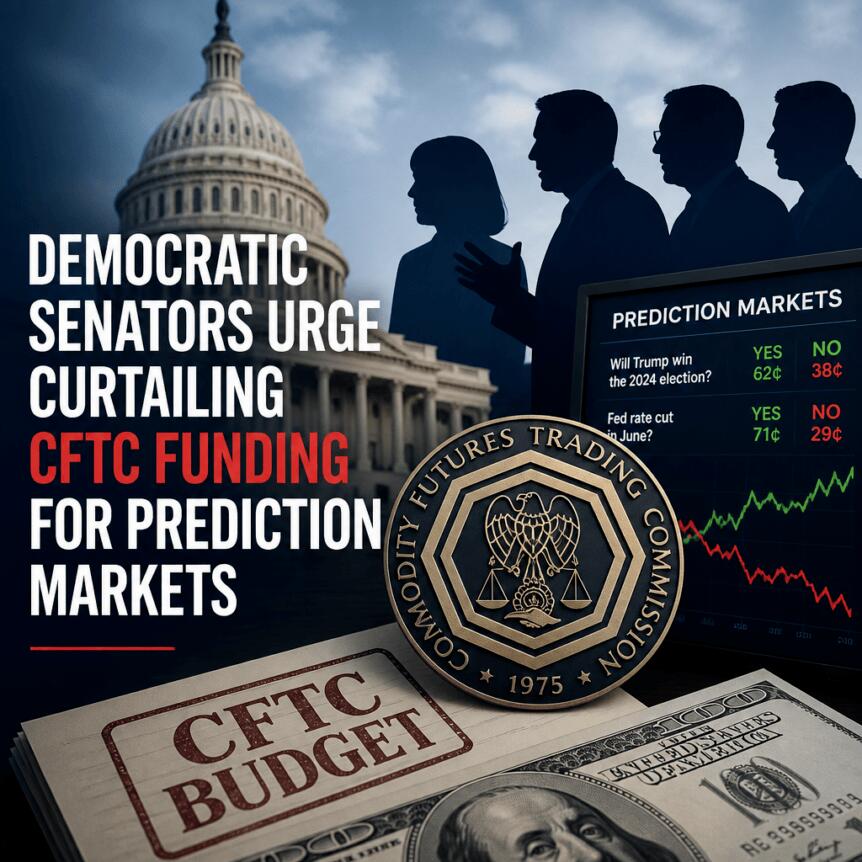
A group of 17 Democratic US senators has asked leadership of the Senate Appropriations Subcommittee on Financial Services and General Government to prevent the Commodity Futures Trading Commission (CFTC) from using federal funding to continue lawsuits targeting state regulators over prediction markets. The senators’ request centers on Chair Michael Selig’s litigation strategy, which asserts that the CFTC has “exclusive jurisdiction” over certain prediction market products.
The letter—sent to the chair and ranking member of the appropriations subcommittee—frames the issue as a practical and compliance-relevant question of federal oversight, state consumer-protection authority, and how enforcement resources are deployed in parallel regulatory systems.
Key takeaways
- 17 Democratic senators urged subcommittee leadership to block CFTC access to federal funds for litigation against state gaming authorities tied to prediction market enforcement.
- The senators contend that ongoing CFTC lawsuits could undermine state consumer protections and intensify a “race-to-the-bottom” dynamic across jurisdictions.
- CFTC litigation has targeted multiple states, while some market operators—including Kalshi and Polymarket—have brought related lawsuits challenging state actions.
- The dispute sits within a broader legislative debate over the Digital Asset Market Clarity (CLARITY) Act and the division of authority between the CFTC and SEC.
- Legal observers have pointed to the possibility that one of the cases could eventually reach the US Supreme Court, potentially revisiting the balance of state authority in sports betting.
Senators seek limits on CFTC litigation funding over state actions
In the Wednesday letter, Senators Richard Blumenthal, Jeff Merkley, and 15 additional Democrats asked the appropriations subcommittee to intervene in the budgeting and oversight process governing how the CFTC can use federal resources. Their request is directed at preventing the CFTC from employing federal funds in Chair Michael Selig’s legal challenges against state-level authorities pursuing crackdowns on prediction markets.
The senators argue that the CFTC’s litigation posture risks distorting federal-state regulatory balance in a way that could benefit online prediction markets while reducing consumer protection and oversight. They specifically warn that the CFTC’s use of enforcement litigation as leverage against state authorities may enable platforms to evade local guardrails.
While appropriations do not determine the legality of the CFTC’s underlying statutory interpretations, the senators’ intervention signals a policy and accountability concern: whether enforcement resources should be used in a way that the senators view as escalating conflict rather than clarifying jurisdiction.
Jurisdictional fight: CFTC “exclusive jurisdiction” and “swaps” characterization
At the center of the dispute is the CFTC’s position that certain contracts used on prediction market platforms fall within its regulatory authority. According to the senators’ framing, Selig and the agency defend the view that the event contracts in question qualify as “swaps,” placing them under the CFTC’s purview.
This jurisdictional argument has been tested across a growing set of state challenges. As of June, the CFTC has pursued legal actions involving prediction markets in a range of states, including Connecticut, Illinois, Arizona, Kentucky, Wisconsin, New York, Minnesota, Rhode Island, and New Mexico. In parallel, some companies, including Kalshi and Polymarket, have filed their own lawsuits against state authorities, a development that underscores how quickly these disputes have evolved into multi-forum litigation.
According to Cointelegraph’s reporting, the CFTC’s cases have included litigation such as its suit against Kentucky after state-level prediction market enforcement actions. Cointelegraph has also covered related operator litigation, including challenges that support the CFTC’s broader view of federal jurisdiction.
Potential Supreme Court implications and the sports-betting jurisdiction precedent
As the legal battles progress, some experts have suggested that the trajectory of these cases could ultimately produce a Supreme Court outcome. The concern is not limited to prediction markets alone; it also relates to the broader constitutional and statutory question of how much regulatory space states retain when federal agencies assert exclusive control over particular types of wagering or trading-like instruments.
The senators’ letter implicitly draws on the existing legal framework around state regulation of sports betting. In the 2018 Supreme Court decision Murphy v. National Collegiate Athletic Association, the Court held that states may regulate sports betting. If the justices were to grant review in one of the currently pending prediction market-related matters, they could be asked to clarify or revisit the scope of state authority under circumstances where federal regulators contend that certain products fall within an exclusively federal regulatory category.
For compliance and legal teams, the potential for Supreme Court review matters because it could reshape how state gaming rules apply to contracts characterized by federal agencies as financial derivatives. It could also determine whether state enforcement efforts remain viable when operators argue federal preemption or exclusive jurisdiction.
CFTC leadership, agency structure, and the CLARITY Act debate
Beyond the litigation itself, the senators’ intervention comes amid a broader debate over how US regulators should divide responsibility for digital assets and related market structures. Chair Michael Selig is currently the sole commissioner and chair of the CFTC, giving him significant control over the agency’s leadership-driven policy direction. The senators’ focus on appropriations reflects their view that the CFTC’s current approach is not merely an isolated enforcement matter, but part of a wider institutional posture toward prediction market regulation.
The CFTC is expected to have a bipartisan group of five commissioners in the long run, but as of Friday there had been no announcement of additional CFTC appointments to fill vacancies. That governance context can affect regulatory predictability: when leadership is concentrated, courts and Congress may scrutinize whether enforcement priorities align with statutory intent and legislative design.
Meanwhile, the US Senate is expected to vote on the Digital Asset Market Clarity (CLARITY) Act, a proposal intended to establish separate regulatory roles for the CFTC and the SEC over digital assets. The prediction market enforcement controversy intersects with this legislative discussion because some stakeholders have argued that the CLARITY Act should not be used to extend federal oversight in ways that they believe exceed the CFTC’s mandate.
Last week, gaming organizations petitioned the Senate to add language barring sports event contracts from CLARITY’s coverage, contending that the CFTC was not created to regulate such wagers. This reflects how prediction markets are increasingly treated as a legal and policy test case for the broader question of how Congress intends to allocate authority across regulators.
What to watch next
The immediate next step is whether appropriations subcommittee leadership will act on the senators’ request to restrict federal funding for the CFTC’s prediction market litigation. Separately, the ongoing multi-state cases and related challenges by market operators will determine how quickly courts clarify jurisdictional boundaries—potentially culminating in higher-court review. Until then, uncertainty remains for institutions trying to map compliance obligations across federal and state regimes, particularly where contract structuring, derivative labeling, and wagering classifications overlap.

Key Highlights
-
Tokenization platform Securitize anticipates $400M in capital from CEPT transaction
-
NYSE trading debut under ticker SECZ scheduled for July 2
-
Critical shareholder approval meeting set for June 29
-
Minimal redemption requests preserve transaction funding
-
Platform currently oversees $4B in real-world tokenized assets
The impending business combination between Securitize and Cantor Equity Partners II is projected to deliver roughly $400 million in total gross funding. Following a crucial shareholder vote scheduled for June 29, the transaction could finalize on July 1, paving the way for public trading to commence under the SECZ symbol on the New York Stock Exchange just one day later.
Minimal Redemption Activity Preserves Transaction Capital
According to recent disclosures, under 30% of CEPT’s Class A stockholders exercised their redemption rights. This outcome ensures substantially more funding will be accessible to the merged entity upon deal completion. The anticipated $400 million figure encompasses accompanying private investment but does not account for deal-related expenses.
The capital infusion will enable Securitize to expand its footprint in the rapidly developing tokenized asset sector. The firm presently administers over $4 billion worth of tokenized real-world assets across its platform. Its infrastructure powers investment vehicles created in partnership with numerous prominent international asset management firms.
Before the merger can proceed, CEPT investors must grant their approval at the specially convened meeting on June 29. Both organizations must also satisfy or obtain waivers for all standard closing conditions. Current projections indicate the deal will reach completion forty-eight hours following the stockholder vote.
Public Market Entry Positions SECZ on NYSE
Once finalized, the unified enterprise will conduct business publicly as Securitize Corp. The company’s common shares are anticipated to launch trading on the New York Stock Exchange under the SECZ ticker symbol on July 2. This public listing will establish a prominent tokenization services provider within traditional equity capital markets.
Securitize delivers compliant infrastructure enabling the creation, administration, transfer, and exchange of tokenized financial instruments. The platform collaborates with industry giants including BlackRock, Apollo, BNY, Hamilton Lane, KKR and VanEck. These strategic alliances bridge conventional asset management firms with distributed ledger technology-based financial systems.
The organization maintains multiple regulated subsidiaries spanning North America and Europe. Within the United States, its operations encompass a licensed broker-dealer, securities transfer agent, registered investment adviser, and fund administration entity. Its European division functions under the European Union’s specialized DLT Pilot Regime framework.
SPAC Transaction Stems from Late 2025 Agreement
Securitize and CEPT publicly unveiled their binding merger agreement on October 28, 2025. CEPT functions as a blank-check company sponsored by an affiliate of Cantor Fitzgerald. The framework established plans for the post-combination company to obtain a New York Stock Exchange listing.
In subsequent months, both entities have compiled comprehensive regulatory submissions and deal documentation for investor examination. These disclosures encompass CEPT’s mandated regulatory filings and Securitize’s registration statement submitted to the Securities and Exchange Commission. The documentation details transaction mechanics, corporate structure, funding arrangements, and potential risk factors.
Citigroup is acting as financial and capital markets advisor to Securitize for this transaction. Cantor Fitzgerald provides advisory services to CEPT, with both institutions additionally coordinating the associated private placement offering. Multiple legal firms are delivering counsel to the companies and placement representatives.
Securitize approaches this prospective public listing with more than eight years of operational history in asset tokenization. The platform integrates securities issuance, transfer agency services, fund oversight, and secondary market trading within a unified regulated framework. The SECZ public debut would link its tokenization capabilities with enhanced access to mainstream capital markets.



Ondo Finance has enabled around-the-clock minting and redemption for tokenized US stocks and ETFs on Ethereum and BNB Chain, removing the prior weekday-only constraint that had tied the creation and cancellation of positions to US market hours. The upgrade, announced by Ondo Finance on Wednesday,… Read the full story at The Defiant
Binance will remove four digital assets from its platform on July 10, 2026, and the announcement drove three of the tokens to record lows the same day.
The exchange will delist Alchemix (ALCX), Ardor (ARDR), NFPrompt (NFP), and Marlin (POND) after a periodic review that weighs liquidity, compliance, and overall project quality.

Traders Rush to Exit Positions
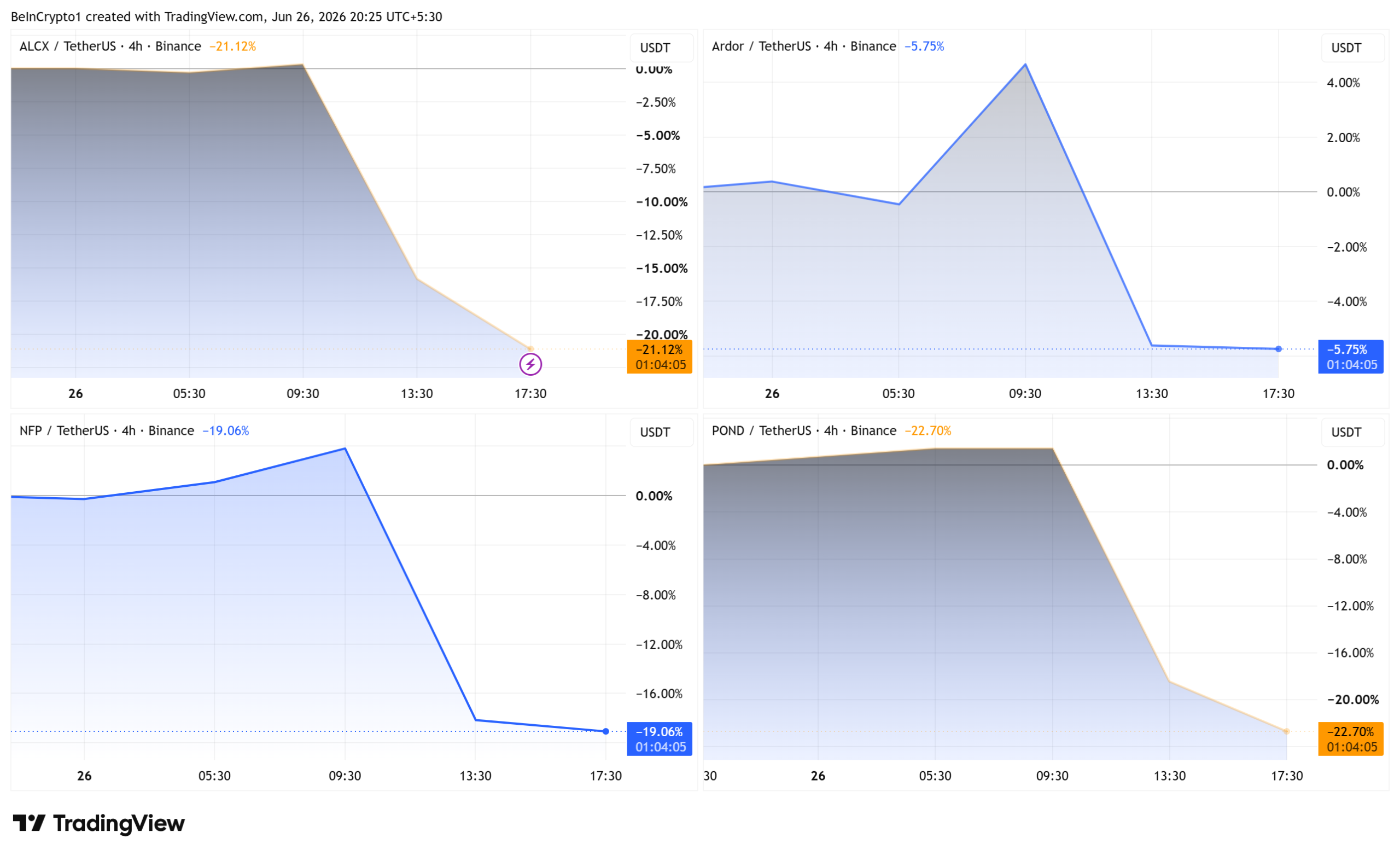
The selloff hit hardest among the smaller tokens. NFPrompt and Marlin each dropped about 20% after the announcement, repeating the recent double-digit losses tied to delisting calls.
Alchemix fell just as hard, while Ardor held up better, slipping roughly 6%. Thin trading volume left little cushion once the selling began.
As of this writing, Alchemix traded around $2.67, NFPrompt sat near $0.0054, and Marlin changed hands at about $0.0011.
All four had already shed more than 30% over the past month. Alchemix, NFPrompt, and Marlin each touched an all-time low the same day, while Ardor avoided a fresh record.
Why Binance Pulled the Tokens
Binance reviews listed assets on a set schedule, weighing trading volume, liquidity, network security, team commitment, and regulatory factors.
The four had become long-tail bets. All trade more than 98% below their record highs, and each has posted negative returns over the past year.
NFPrompt stands out. Binance launched the token on its own Launchpool in December 2023. NFP then peaked near $1.17 the day it listed before sliding about 99%.
The removal is the latest in a run of 2026 delistings, including an earlier move to delist four other altcoins.
Spot trading for ALCX, ARDR, NFP, and POND stops on July 10, while withdrawals stay open until September 9. Binance Futures liquidated the related perpetual contracts earlier, on July 2.
Holders still have time to move or sell their tokens before the deadlines. The coming weeks will show whether the removals deepen the slide or echo the pressure on other altcoins facing removal.
The post 4 Binance Delisting Targets Tumble as Traders Rush for the Exit appeared first on BeInCrypto.
Four lesser-known cryptocurrencies have plummeted by double digits over the past 24 hours, and this time the main culprit is not the broader market correction but Binance.
Meanwhile, the company has faced significant regulatory challenges that could negatively impact its users in the European Union (EU).
The Normal Reaction
The world’s largest crypto exchange conducted another review to verify that the coins listed on the platform meet the necessary standards and industry requirements. The checklist includes a variety of factors, such as the team’s commitment to the project, network stability, the level of development activity, adequate liquidity, and more.
As a result, Binance decided to terminate all services with Alchemix (ALCX), Ardor (ARDR), NFPrompt Token (NFP), and Marlin (POND). The actual delisting is scheduled for July 10, but the announcement has already caused a major decline for the affected tokens. They have all headed south by double digits, with NFP taking the biggest blow after posting a 21% daily plunge.
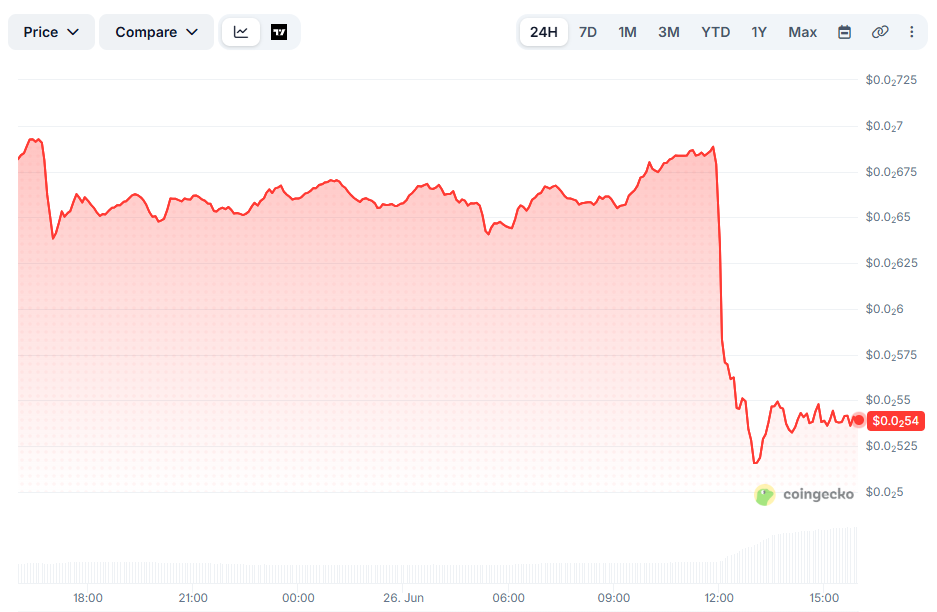
Reactions of that type shouldn’t come as a surprise, as losing backing from a market leader like Binance typically leads to thinner liquidity, reduced availability, and reputational damage.
Earlier this month, it delisted Contentos (COS), Dar Open Network (D), Highstreet (HIGH), and MOBOX (MBOX), which resulted in similar price drops. Prior to that, Automata (ATA), Harvest Finance (FARM), Enzyme (MLN), Phoenix (PHB), and Syscoin (SYS) fared even worse after an analogous effort from the exchange.
The Problems in Europe
Perhaps the biggest news surrounding Binance as of late concerns its issues with financial regulators in the European Union. Several days ago, the media outlet Reuters reported that the company might seek the necessary MiCA license from another country rather than Greece.
Binance officially addressed the issue by saying that it has withdrawn its application with the Hellenic Capital Market Commission (HCMC) in the southern European nation.
“When we are ready to announce that Member State, we will do so publicly. We made this decision after careful consideration of the status and the timeline of the process in Greece, with our users’ interests at the center,” it added.
The exchange’s CEO Richard Teng stated that it remains committed to securing a MiCA authorization in the coming months, while “providing clarity, minimizing disruption, and keeping users informed directly.” It is important to note that the deadline for obtaining such a license is July 1, and some of Binance’s competitors, including Kraken and Coinbase, have already met the requirements.
The company assured customers that their assets are safe and promised to unveil further details in due time. Meanwhile, users in other European nations such as Poland, Italy, Spain, and France have reportedly been told to withdraw their funds from the platform.
The post Binance Triggers a Brutal Collapse for 4 Altcoins: Here’s How appeared first on CryptoPotato.
Coinbase-incubated Layer 2 Base stopped producing blocks for about two hours on Thursday after an invalid block stalled its chain, before the network recovered and resumed normal operation. The halt revived questions about the centralized sequencer that orders transactions on most major rollups…. Read the full story at The Defiant
Sophon is decommissioning its zkSync-based Layer 2 chain and pivoting to "Soph+," a consumer product studio that will build exclusively on Base, Coinbase's Layer 2. The shutdown announcement came Thursday, capping a chain that raised $60 million through node sales but attracted fewer than 200 daily… Read the full story at The Defiant
Crypto World
Crypto Markets Erase $120B as Bitcoin Tanks to $58K Amid Growing Strategy FUD: Weekly Recap
Although there are still some days left in June, the month has turned out to be one of the worst for the entire cryptocurrency market in recent history.
Before we explore what took place in the past week alone, let’s rewind the clocks to last Friday when the most significant news came from the new Fed Chair Kevin Warsh, who continued Powell’s policy of maintaining the interest rates unchanged and had a hawkish conference after the FOMC meeting. In addition, the promised deal between the US and Iran failed as both parties have yet to reach a permanent agreement.
Bitcoin reacted with a nosedive from $67,200 to $63,000. Although the bulls managed to defend that level and even push the cryptocurrency to $65,500 on Monday, the real trouble was just ahead.
BTC was quickly and violently rejected there and dropped by over three grand in hours. Its recovery attempt was halted at $63,000, and the bears initiated another leg down on Wednesday, taking the asset south to $59,000, which became a new multi-year low. Bitcoin reacted well at first and quickly rebounded to $62,000, but that turned out to be a dead-cat bounce.
The bears were even more persistent during the next phase of the correction, driving the asset down to $58,000 for the first time since October 2024. That support level has held for now, and BTC has recovered some ground, but still remains below $60,000 as the overall market uncertainty continues. This is particularly true for Michael Saylor’s Strategy, but more on that a bit later.
The weekly chart below will paint a clear picture, as red dominates almost all charts. BTC is down over 5%, while ETH and XRP have bled 8.5% and HYPE 7%. DOGE, ZEC, ADA, and XLM have plummeted by double digits. The only notable exceptions are RAIN (8%) and AAVE (20.5%) in the green. The total crypto market cap is down by over $120 billion weekly.
Market Data

Market Cap: $2.14T | 24H Vol: $99B | BTC Dominance: 55.6%
BTC: $59,555 (-5.1%) | ETH: $1,560 (-8.5%) | XRP: $1.04 (-8.5%)
This Week’s Crypto Headlines You Can’t Miss
Saylor Should Stop Buying Bitcoin, Says CryptoQuant. As mentioned above, Strategy continues to be the main talk in crypto, with CQ urging the firm to halt its BTC buying spree in favor of rebuilding its USD reserve. The company indeed followed a similar philosophy over the past week, buying just $35 million in BTC while increasing its USD reserve by $300 million.
MSTR’s Bitcoin Per Share Gets ‘Annihilated’ in Extreme Bear Case: Analyst. Meanwhile, a popular analyst outlined the massive risks to Strategy and its stock price if BTC’s bear market extends, including a worst-case scenario for MSTR of a drop to $1. Separately, KALEO warned last week that the firm might have to sell over 50,000 BTC in the next couple of years.
Polymarket to Refund Users After Hackers Steal $3M in Frontend Attack. The team behind the popular platform confirmed on Friday that a compromised third-party vendor allowed attackers to inject malicious code into its frontend, draining $3 million from a handful of users. It promised to fully reimburse the affected customers.
Hyperliquid Responds After Appearing on Singapore’s Investor Alert List. The Monetary Authority of Singapore (MAS) added Hyperliquid to its Investor Alert List (IAL), raising concerns within the industry. However, the exchange claimed that this doesn’t necessarily constitute a regulatory violation, an enforcement action, or a ban.
Bitcoin Miners Flood Binance as Exchange Inflows Hit Four-Month High. On-chain data shared by CryptoQuant showed that BTC miners had sent massive portions of their bitcoin holdings to some exchanges, including Binance. This coincided with the asset’s violent price drop.
Bitcoin Didn’t Lose to Gold, the Rotation Story Is Wrong: Analyst. Although both assets have turned red in 2026, gold continues to take the recent market-wide correction better. However, analyst Shanaka Anslem Perera believes the rotation story from BTC to the precious metal is actually wrong.
Charts
This week, we have a chart analysis of Ethereum, Ripple, Cardano, Binance Coin, and Hyperliquid – click here for the complete price analysis.
The post Crypto Markets Erase $120B as Bitcoin Tanks to $58K Amid Growing Strategy FUD: Weekly Recap appeared first on CryptoPotato.

BFM Crypto : Christine Lagarde veut-elle chasser Binance de l’Europe ?

Big redevelopment of Bury Interchange takes step forward

Senators urge CFTC to probe Polymarket over fake ad claims


-

 Fashion7 days ago
Weekend Open Thread: Miami – Corporette.com
-

 Entertainment6 days ago
Renter of Home in Anne Heche Crash Denies Settlement With Son
-
 Sports3 days ago
Two goals and an assist by sheer aura: Cristiano Ronaldo just entered the World Cup chat
-

 Tech4 days ago
Microsoft accidentally kills epic Outlook email threads
-

 Business6 days ago
Soccer-U.S. defends Iran World Cup travel restrictions, says discussions ongoing
-

 Politics11 hours ago
The House | Manchesterism won’t survive the painful trade-offs unless it gets citizens on board
-

 Politics6 days ago
Andy Burnham and the meaning of Makerfield
-

 Politics15 hours ago
Potential 2028er World Cup attendee leaderboard
-

 Tech21 hours ago
A Look At A Gaggle Of Transputer Boards
-
Crypto World3 days ago
Bitcoin (BTC) Dips Below $62K, Ethereum (ETH) Plunges 6% Daily: Market Watch
-

 Crypto World2 days ago
Securitize Wraps Roubini's SEC-Registered ETF as Dubai VARA Digital Security
-
 Crypto World23 hours ago
Dell (DELL) Shares Tumble Over 5% Following Analyst Downgrade to Hold
-
Business3 days ago
Entergy settles forward sale agreements, raises $672 million in cash proceeds
-
 Business7 days ago
Wall Street Week Ahead: Investors see Micron earnings as pulse check of AI rally momentum
-
 Crypto World6 days ago
Can Charles Hoskinson Really Rescue Cardano?
-

 Entertainment7 days ago
Jose Alvarado Wants Taylor Swift at More Knicks Games
-

 Crypto World7 days ago
HIVE shares jump as $220M AI deal speeds Bitcoin mining pivot
-

 Crypto World6 days ago
Jake Chervinsky accuses CME of protecting derivatives monopoly
-
Crypto World3 hours ago
Hyperliquid Named on Singapore MAS Investor Alert Register
-
 Tech5 days ago
Signal’s Meredith Whittaker says AI chatbots ‘are not your friends’ and calls Copilot agents a backdoor
You must be logged in to post a comment Login