
Crypto World
Aterian (ATER) Stock Rockets 122% Following $18M Asset Divestiture Deal


Key Highlights
- Aterian has entered into a binding agreement to divest its e-commerce brand assets to Trademark Global LLC for $18 million cash
- The transaction value represents almost triple Aterian’s pre-announcement market capitalization of $6.23 million
- Portfolio assets being transferred: Mueller Living, PurSteam, hOmeLabs, Squatty Potty, Healing Solutions, and Photo Paper Direct
- David Lazar will inject $7 million through convertible preferred shares and assume the CEO position
- Shareholders should expect to receive net distribution proceeds during Q3 2026
Aterian (ATER) experienced a remarkable trading session Tuesday, with shares skyrocketing more than 122% following the company’s disclosure of a binding agreement to transfer its e-commerce brand assets to Trademark Global LLC for $18 million cash.
The transaction encompasses six distinct brands: Mueller Living, PurSteam, hOmeLabs, Squatty Potty, Healing Solutions, and Photo Paper Direct. Under the terms, Trademark Global will acquire global sourcing, marketing, and sales operations connected to these properties, including existing inventory and select obligations.
The $18 million acquisition price stands out when placed in perspective. Prior to the announcement, Aterian’s total market capitalization stood at merely $6.23 million, making the transaction value approximately three times the company’s entire valuation.
The headline price is subject to modifications based on net working capital calculations and transaction-related expenses. Aterian’s board unanimously endorsed the arrangement, though shareholder consent remains necessary.
Aterian intends to submit a proxy filing in early May 2026. The parties anticipate completing the transaction during Q2 2026.
Following completion, Aterian will distribute the remaining proceeds to shareholders in Q3 2026. The final distribution amount will account for transaction costs, debt obligations, and working capital requirements.
The company will also distribute one non-transferable contractual Contingent Value Right (CVR) for each outstanding common share. CVR holders would receive payments from possible tariff reimbursements and additional asset dispositions.
$7M Capital Infusion and Leadership Transition
Concurrent with the asset divestiture, Aterian executed a securities purchase arrangement with David Lazar involving a $7 million private investment in convertible preferred shares. The investment is divided into two equal $3.5 million installments.
The initial installment has been completed. The subsequent portion is scheduled to close simultaneously with the brand portfolio transaction, contingent upon stockholder endorsement.
Lazar was appointed to Aterian’s board prior to finalizing the investment terms. Upon completion of the second installment, he will assume the CEO role, succeeding current leader Arturo Rodriguez.
Lazar and associated parties have relinquished their entitlement to any distributions from the asset transaction or CVR payments.
Challenging Operating Environment Drives Strategic Shift
The context surrounding this transaction is significant. Aterian experienced a 30% revenue decline over the trailing twelve months to $68.97 million. The organization maintains negative EBITDA of $12.53 million and has faced ongoing cash consumption challenges.
A substantial portion of personnel currently supporting the divested brands are anticipated to transfer to Trademark Global under the agreement terms.
The strategic alternatives evaluation that culminated in this agreement was initially disclosed in December 2025. CEO Arturo Rodriguez had previously indicated an update would arrive in mid-April.
Aterian also recently modified its Credit and Security Agreement with Midcap Funding IV Trust, lowering its minimum liquidity requirement to $3.5 million, effective March 13, 2026.
The proxy documentation is scheduled for submission in early May 2026, with the shareholder referendum to proceed thereafter before the targeted Q2 transaction closure.


Crypto World
Here’s everything to expect when the Fed issues its latest interest rate decision Wednesday

US Federal Reserve Chair Jerome Powell arrives for a press conference following the Federal Open Market Committee meeting at the Federal Reserve Board Building in Washington, DC, on March 18, 2026.
Brendan Smialowski | Afp | Getty Images
In what could be Jerome Powell’s final meeting as Federal Reserve chair, he is expected to lead his fellow policymakers toward another cautious pause, with stubborn inflation and a resilient labor market leaving little room yet for interest rate cuts.
The decision Wednesday will come against a backdrop of elevated energy prices and a central bank that has been above its 2% inflation target for five years at the same time that the labor market has been weak but not in distress. That’s not a recipe for easing, at least not yet.
“On the dual mandate, they’d say we’re roughly at a stable labor market,” Roger Ferguson, an economist and former vice chair at the Fed, told CNBC. “On the inflation side of the mandate, [there’s] a lot more work to be done with a sticky 3% [inflation rate], and I hope they argue, ‘we’re going to sit tight for a little while to see how this all plays out.’”
Similarly, Goldman Sachs economist David Mericle expects the post-meeting statement “is likely to acknowledge the better labor market news and higher inflation numbers but to leave the standing policy guidance unchanged. We expect a strong consensus to stay on hold for now, with only one dissent, as in March.”
So with little drama over the rate decision — markets are pricing in a 100% chance of the FOMC staying on hold — attention will turn squarely to Powell.
Unless something unexpected pops up, the chair’s designated successor, Kevin Warsh, appears on track to take over when Powell’s term ends in May.
The transition clouds the usual signaling value of Powell’s post-meeting news conference.
Inflation the key
Powell’s post-meeting news conference, normally a closely watched event for markets, could be viewed as less of a guide to future policy steps than it is a valedictory for a central bank leader who has had one of the most contentious relationships with a president in the institution’s history.
“If Powell were staying, I might be trying to read more in between the lines of what he says at the press conference,” said Jerry Tempelman, a former senior analyst at the New York Fed and now vice president of economic and fixed income research at Mutual of America Capital Management. “But given the fact that, in all likelihood, Kevin Warsh will soon be the Fed chair, all the surrounding language, etc., probably becomes less relevant.”
From a communications standpoint, Tempelman expects the Fed will put the focus on inflation, which most recently ran at 3% on an ex-food and energy basis using the central bank’s preferred gauge.
Crude oil prices are hovering around $100 a barrel and the average price nationwide for gasoline is surging again, now around $4.18 a gallon, further complicating the Fed’s path.
Though Fed officials often would look through such spikes as temporary, they also remain cautious about longer-term impacts should the fighting in the Middle East escalate.
“Inflation has continued to come in far above anyone’s expectations and far above the Fed’s target,” Tempelman said. “Everyone expects this to be Jay Powell’s final meeting. I think also there’s very little uncertainty as to what the decision will be, namely, that there will be no change to monetary policy in this meeting, and that from the June meeting on, it will be the Fed … chaired by Kevin Warsh.”
What does Powell do next?
That does not, however, mean that Powell’s future will be settled. The current chair has the option to stay on at the central bank for the final two years of his term as governor. So far, he has provided no indication of what he will do.
At the March meeting, he did say he wouldn’t be leaving until an investigation into the renovations at the Fed’s headquarters is completed. Jeanine Pirro, the U.S. attorney for the District of Columbia, passed the investigation off to the Fed’s office of inspector general, a move that politically cleared the way for Warsh’s confirmation.
However, it’s unknown whether that will satisfy the “well and truly over” bar that Powell set in March for his leaving.
“I’m not sure that the move of this investigation from the Justice Department to someplace else really fully checks the box of putting this behind us,” Ferguson said. “I’m not sure that if I were sitting in his seat or [was one of] his advisors, that I would say, let’s blow the all clear.”


The coalition has secured ETH commitments to refill the bridge in tranches and will use Aave and Compound governance proposals to liquidate the exploiter’s remaining positions.
DeFi United, a coalition of decentralized finance (DeFi) ecosystem participants, on Tuesday published the technical implementation plan to restore the backing of Kelp DAO’s rsETH and recover roughly 107,000 tokens still controlled by the exploiter.
The exploit targeted rsETH’s LayerZero-powered bridge on the Unichain to Ethereum route, where a forged inbound packet was verified on the Ethereum side without a corresponding burn on Unichain. The attack released 116,500 rsETH from the Ethereum-side adapter, with proceeds distributed across multiple addresses and supplied as collateral on lending protocols.
Seven addresses associated with the exploiter currently hold active rsETH-backed positions on Aave and Compound, representing approximately 107,000 rsETH of the original 116,500 rsETH stolen.
Restoring Backing
DeFi United said it has secured the ETH commitments needed to restore rsETH’s backing, with final execution subject to governance approvals and definitive agreements. The committed ETH will be converted into rsETH in tranches and transferred to the bridge lockbox contract, allowing the bridge to resume normal operation.
The process targets rsETH’s nominal exchange ratio of 1.07 ETH. The coalition’s fundraising effort has progressively chipped away at the original 163,200 ETH shortfall.
LayerZero Labs on Tuesday pledged more than 10,000 ETH to the effort, donating 5,000 ETH directly to DeFi United and depositing an additional 5,000 ETH to strengthen Aave markets’ liquidity. The firm said it would also strategically deepen liquidity for Aave’s GHO stablecoin.
Clearing Exploiter’s Positions
Recovering the exploiter’s excess collateral requires governance proposals pertaining to Aave’s Ethereum and Arbitrum deployments. The execution involves a controlled liquidation sequence: the rsETH oracle price will be temporarily adjusted to enable efficient liquidation, generating a temporary deficit to be addressed in a subsequent step. Recovered rsETH will be transferred to a DeFi United multisig and redeemed for ETH through Kelp’s standard redemption procedure, with the resulting ETH applied to clear the Aave Ethereum and Arbitrum deficits.
The Aave clearing process aims to recover approximately 13,000 ETH. Compound will take a similar approach with DeFi United providing the liquidity, recovering an estimated 16,776 ETH.
WETH and rsETH reserves on Ethereum Core, Arbitrum, Base, Mantle, and Linea will remain frozen during the process. The final phase involves unpausing and unfreezing rsETH and ETH across affected instances and restoring loan-to-value ratios for any assets whose configurations were temporarily adjusted.
Risks
DeFi United flagged several execution risks. ETH deployment is contingent on finalizing agreements and governance approvals. Deliberate interference by the attacker could result in incomplete accrual of deficits, requiring additional liquidation steps to fully resolve the positions. Residual bridge risk also remains until the newly implemented LayerZero and Kelp security measures are validated in production.
This article was written with the assistance of AI workflows. All our stories are curated, edited and fact-checked by a human.


Top‑100 crypto traded mixed today as Humanity Protocol jumped 14.5%, MemeCore slid 9.3% on 90% insider‑supply fears, and total market cap dipped 1.39% to $2.65T.
Summary
- The top 100 cryptocurrencies by market cap saw divergent action, with Humanity Protocol (H) leading gainers at 14.53% and MemeCore (M) dropping 9.26% as total crypto market cap slipped 1.39% to about 2.65 trillion dollars.
- Humanity Protocol, an Ethereum Layer 2 focused on privacy‑first palm‑scan identity and proof‑of‑human consensus, traded near 0.1639 dollars, while Binance Life, Siren, Pi Network and Tezos rounded out the day’s strongest performers.
- MemeCore declined amid on‑chain reports that over 90% of its supply sits with insiders, echoing RaveDAO‑style liquidity risks, as Bitcoin hovered near 76,500 dollars, Ethereum held around 2,260 dollars, and stablecoins grew to 317 billion dollars in market cap.
The top 100 cryptocurrencies by market capitalization recorded divergent price action during today’s trading session, with Humanity Protocol (H) leading gainers at 14.53% and MemeCore (M) pacing decliners with a 9.26% loss, according to CoinMarketCap data. The mixed performance reflects ongoing consolidation across crypto markets as total market capitalization sits at approximately $2.65 trillion, down 1.39% over the past 24 hours.
Humanity Protocol (H), an Ethereum Layer 2 blockchain focused on privacy-first identity verification through palm scanning technology, surged to $0.1639, extending gains amid growing interest in Proof of Human consensus mechanisms. Binance Life followed with a 9.11% advance to $0.3754, while Siren (SIREN) added 7.3% to reach $0.7059. Pi Network (PI) climbed 5.45% to $0.1915, and Tezos (XTZ) rounded out the top five gainers with a 5.34% rally to $0.3842.
Losers Face Technical Pressure
On the downside, MemeCore (M) dropped 9.26% to $3.55 amid mounting scrutiny over concentrated token distribution, with onchain analysis revealing over 90% of supply held by insiders, raising liquidity concerns similar to RaveDAO’s recent 95% crash. DeXe (DEXE) fell 6.32% to $13.43, while Zebec Network (ZBCN) declined 6.26% to $0.003695. Zcash (ZEC) slid 5.7% to $334.42, and Chiliz (CHZ) lost 5.07% to trade at $0.04609.
The broader market exhibited cautious sentiment as Bitcoin (BTC) traded near $76,500, down approximately 2% over the past 24 hours following its failure to break through the $80,000 resistance zone. Ethereum (ETH) changed hands around $2,260, maintaining stability despite the selloff in select altcoins.
Trading volume across the top 100 assets remained subdued at approximately $133.6 billion over 24 hours, with Bitcoin dominance holding steady near 59.98%, reflecting a flight to quality during periods of uncertainty. Stablecoin market cap reached $317 billion, representing 11.73% of total crypto market capitalization, underscoring their role as safe-haven assets during volatility.
Samson Mow, a prominent Bitcoin advocate, entrepreneur, and CEO of Jan3, has forecasted that an “Omega candle” and $1 million Bitcoin (BTC) are “just around the corner.”
The Bitcoin maximalist argues that the available supply is far lower than the market recognizes and that a price below $120,000 is undervalued.
Samson Mow Explains Why $1 Million Bitcoin Is Coming
In an interview with Pete Rizzo, Mow argued that recent market behavior challenges the idea of a fixed four-year cycle. He noted that Bitcoin reached an all-time high before the halving and only saw a less euphoric peak afterward.
While some interpret this as a cycle top and expect a prolonged downturn, Mow disagrees.
“Everything is up in the air now. And I think an Omega candle and $1 million Bitcoin is just around the corner, especially with all the buy pressure that is flooding the market now with Saylor through STRC and other Bitcoin treasury company players all coming in,” he said.
Follow us on X to get the latest news as it happens
Mow did not lay out a specific timeline but said the move would happen “very quickly.”
“There are only 21 million, and the supply to be mined is less than a million. And there are multiple big entities scooping up Bitcoin. Like you wouldn’t believe, with no intention to stop and no sensitivity to the price. So if you don’t believe in 1 million Bitcoin, good luck. But it’s coming,” he noted.
The executive argued that Bitcoin’s supply is far more constrained than the market assumes. He suggested this misunderstanding could eventually lead to a supply shock, as Bitcoin’s fixed supply becomes more apparent.
“People think there’s, you know, 2 3 million coins on exchanges ready for sale. But those are not coins that are meant for sale. That is liquidity. That’s market makers, trading firms, and hedge funds using that Bitcoin on exchange to perform other activities. And it is not meant to be just sold and never bought back,” Mow noted.
He also highlighted that large institutional buyers, such as MicroStrategy under Michael Saylor, are continuing to accumulate even during downturns, lowering their average cost.
Similar behavior from other treasury-focused firms, such as Metaplanet, reinforces the idea that these entities act as price-insensitive buyers of last resort, consistently absorbing available supply.
In his view, the fact that investors are still willing to sell at relatively low levels enables this accumulation, but it is unlikely to persist indefinitely.
In addition, Mow maintains that “we’re really early.” Based on factors such as inflation adjustments and valuation models like the stock-to-flow model, he believes Bitcoin is currently undervalued, with fair value estimates well above prevailing prices.
“Even anything under $120,000, $110,000 I think, is below fair market value. Just keeping track with inflation, like Bitcoin needs to be at 111,000, I think, to keep track with inflation over the past four to five years, and then fair market value from stock to flow models are indicating its fair market value is something like $110 $115,000, so this is a deep, deep discount right now, and it’s because people don’t really understand Bitcoin,” he remarked.
Experts Back BTC’s Seven-Figure Forecast
Mow’s view echoes similar projections from major institutional voices. Bitwise Chief Investment Officer Matt Hougan highlighted that Bitcoin could reach $1 million if it captures roughly 17% of a projected $121 trillion store-of-value market within a decade.
Subscribe to our YouTube channel to watch leaders and journalists provide expert insights
ARK Invest CEO Cathie Wood maintains a 2030 target of $1.2 million for Bitcoin. Wood revised the figure down from $1.5 million in late 2025, citing the rise of stablecoins.
The Gap Between Bitcoin Forecasts and Reality
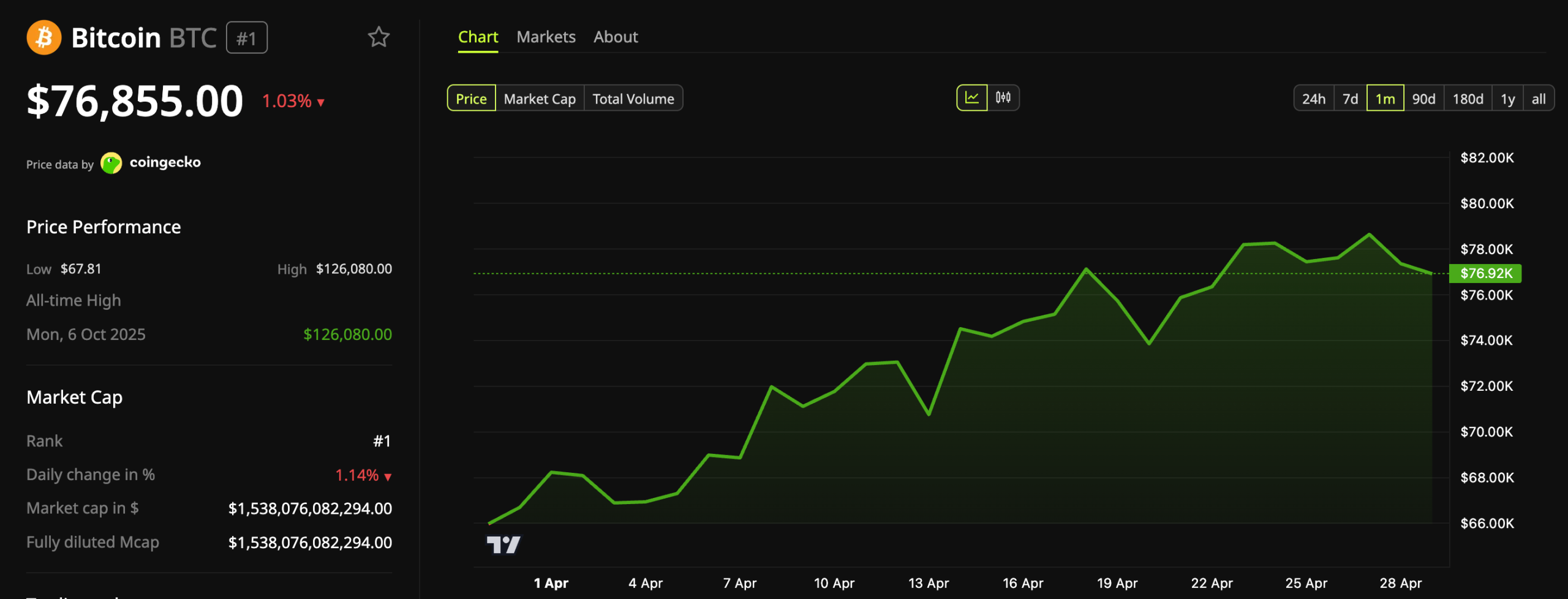
Despite these calls, Bitcoin trades roughly 39% below its October 2025 all-time high of over $126,000. The asset traded at $76,855 on April 27, with several analysts forecasting a market bottom only in late 2026.
From around $76,855, reaching $1 million would require a price increase of nearly 1,200%, or more than 13 times the current value. Such a move might be mathematically possible over a multi-year horizon, but unlikely in the immediate term.
Bitcoin also missed multiple bullish 2025 forecasts that called for $150,000 or higher by year-end. While the asset may eventually approach the seven-figure milestone, the path looks far longer than Mow’s “Omega candle” framing suggests.
Forecasts of this scale remain scenarios, not guaranteed targets, and a $1 million Bitcoin would require a major structural shift in the market.
The post Expert Says $1 Million Bitcoin and “Omega Candle” Is Just Around the Corner appeared first on BeInCrypto.


Over Foundation has shut down all Over Protocol infrastructure, abandoning OverWallet, nodes and explorers, and leaving block production to any validators stubborn enough to keep running.
Summary
- Over Foundation says “insurmountable financial constraints” forced it to permanently cease operations, killing OverWallet, OverNode, OverFlex, RPC endpoints, block explorers, and public APIs with immediate effect.
- The Layer 1 was pitched as a way for ordinary users to run validators on personal computers, but with all foundation‑run infra offline, the chain’s survival now depends entirely on whether independent node operators keep producing blocks.
- The shutdown folds Over Protocol into a growing list of underfunded L1s and DeFi projects that failed to outlast the consolidation cycle, exposing how fragile foundation‑dependent “decentralization” becomes once the treasury runs dry.v
The Over Foundation announced it will permanently cease operations of Over Protocol, a Layer 1 blockchain network, citing insurmountable financial constraints that have forced the immediate shutdown of all infrastructure and services. The foundation confirmed it has discontinued OverWallet, OverNode, OverFlex, RPC nodes, block explorers, and all related APIs, with no plans for recovery or restart.
Over Protocol was designed as a decentralized Layer 1 mainnet that aimed to democratize blockchain participation by enabling ordinary users to run validator nodes and contribute to network consensus. However, the foundation acknowledged that while the protocol’s architecture supports decentralization in theory, practical operation is now uncertain following the infrastructure shutdown. Block production will depend entirely on whether independent validators choose to continue running the open-source client software, an outcome the foundation cannot guarantee.
Network Faces Uncertain Future
The announcement represents a critical test of blockchain decentralization claims. Layer 1 networks typically require robust infrastructure including RPC endpoints, block explorers, and wallet services to remain accessible to users and developers. Without foundation-operated infrastructure, the protocol faces significant barriers to continued operation, even if validators theoretically remain active.
The foundation emphasized that Over Protocol‘s original mission centered on allowing everyday users to participate in building Layer 1 network infrastructure, contrasting with blockchains dominated by institutional validators requiring specialized hardware. In their final statement, the team thanked the community for their support and expressed regret that they could not continue advancing the project’s vision.
This shutdown adds to a growing list of blockchain projects that have ceased operations during the extended crypto market consolidation phase. Financial sustainability remains a critical challenge for newer Layer 1 protocols competing against established networks with deeper treasury reserves and institutional backing.
The Over Foundation did not disclose specific details regarding the financial circumstances that precipitated the shutdown or whether token holders would receive any form of compensation or migration path to alternative networks.

TLDR
- Tether introduced a modular bitcoin mining system developed with Canaan and ACME Swisstech.
- The company designed the system around application-specific hash board modules instead of sealed mining rigs.
- Tether integrates the modules into its own control architecture, cooling systems, and software stack.
- CEO Paolo Ardoino said the company aims to improve efficiency and scalability through modular design.
- Canaan will supply hash boards while ACME Swisstech supports engineering and industrial integration.
Tether introduced a modular Bitcoin mining system built with Canaan and ACME Swisstech on Tuesday. The company said it redesigned mining hardware to separate compute, power, and enclosure components. The move expands Tether’s direct role in bitcoin infrastructure beyond stablecoin issuance.
Tether Partners with Canaan and ACME to Redesign Mining Hardware
Tether structured the new systems around application-specific hash board modules rather than sealed mining rigs. The company integrates those modules into its own control architecture and cooling systems. It also manages the software stack to coordinate performance and power use.
The company said it separates compute units from power supply and enclosures to optimize each element independently. It pairs the architecture with immersion cooling to cut energy overhead and improve uptime. CEO Paolo Ardoino said, “Most mining infrastructure is still built as sealed, fixed units, which makes it expensive to scale and inefficient to run.”
He added that Tether is “revisiting that concept” with modular compute that operators can tune and upgrade. Canaan said the partnership reflects demand for modular, high-performance hardware for custom deployments. ACME Swisstech said the design shifts away from “plug-and-play, retail-oriented products” toward industrial systems.
Tether said the modular approach allows operators to replace or upgrade hash boards without discarding entire machines. The company expects this design to support higher system availability in large facilities. It also said independent component control can streamline maintenance cycles.
Canaan confirmed it will supply application-specific integrated circuit hash boards for the project. ACME Swisstech said it will contribute engineering and industrial integration support. Tether said it will coordinate system assembly and operational deployment.
The announcement outlined how Tether intends to control hardware, software, and cooling within a unified framework. The company said it wants tighter oversight over cost, energy use, and performance. It framed the effort as part of its broader infrastructure strategy.
Tether Expands its Footprint Across Bitcoin Mining and BTC Infrastructure
Tether remains best known as the issuer of USDT, the largest stablecoin by market capitalization. However, the company has expanded its presence across bitcoin infrastructure over the past year. It said mining supports its strategy to manage bitcoin holdings directly.
Last week, Tether disclosed an 8.2% stake in Antalpha, a Bitmain-linked mining finance firm. Earlier this year, the company open-sourced its Bitcoin Mining OS, known as MOS. Tether said the software aims to challenge proprietary mining management platforms.
In December, Tether-backed Northern Data sold its Peak Mining arm to entities controlled by Ardoino and Giancarlo Devasini. The transaction highlighted the company’s deeper operational involvement in mining. Tether confirmed the deal through public statements at the time.
Ardoino said in 2024 that Tether plans to become the world’s largest bitcoin miner by the end of 2025. He tied that target to securing and hedging the company’s bitcoin reserves. The latest modular hardware initiative forms part of that ongoing plan.

Live weekday coverage of Bitcoin markets, geopolitics, and frontier technology debuts Summer 2026 from Nashville, airing across six platforms to a projected 58 million annual impressions.
NASHVILLE, TN, April 27, 2026 — Bitcoin Magazine, a global media brand within BTC Inc. (the “Company”), a Nakamoto Inc. (NASDAQ: NAKA) subsidiary, today announced BM TV (Bitcoin Magazine TV), a daily live broadcast network launching Summer 2026. The show will air Monday through Friday from 9:30 to 11:30 AM ET, timed to U.S. market open, delivering rigorous, unsentimental analysis of Bitcoin, global capital markets, macroeconomic currents, geopolitical policy, and frontier technology commentary.
Produced from the Company’s Nashville office and distributed simultaneously across six platforms, including X, YouTube, Facebook, Rumble, BitcoinMagazine.com, and LinkedIn, BM TV targets the Company’s existing 5 million aggregated online audience, which reached over one billion impressions in 2025.
“Bitcoin has moved from the periphery of global finance to its center, and the media infrastructure around it must evolve accordingly,” said Brandon Green, CEO of BTC Inc. “BM TV represents a fundamental expansion of what Bitcoin Magazine is, from the world’s most trusted publication in this space to a full-spectrum media company capable of meeting this moment at scale.”
Built for Bitcoin’s Institutional Inflection
BM TV arrives at a pivotal juncture. More than $102 billion is now held in Bitcoin ETF assets under management, according to Bitbo. The Company estimates that, following the launch of Bitcoin ETFs in 2024 and the subsequent public company adoption of Bitcoin as a balance sheet asset, an expanding cohort of institutional allocators is evaluating Bitcoin as a strategic portfolio position.
The Company believes that demand for credible, broadcast-quality analysis on Bitcoin has emerged as a result of this new class of investors. Simultaneously, artificial intelligence is commoditizing text-based media. BM TV is purpose-built for the post-AI landscape: its experiential value is designed to compound trust through production quality, editorial personality, and the irreplicable spontaneity of real-time analysis.
“The Bitcoiner is changing. In the post-Covid era of monetary stimulus, a largely retail-oriented cohort joined the ranks of Bitcoin investors. Now, with the launch of Bitcoin ETFs, institutional adoption, and serious consideration from world governments, it’s more important than ever to meet the Bitcoiner where they are,” said Spencer Nichols, Executive Producer and Director of BM TV. “We look forward to providing nuanced coverage of Bitcoin in the context of global events, in addition to preserving the ethos and legacy of Bitcoin’s cypherpunk roots that Bitcoin Magazine has supported since its creation in 2012.”
A Show for Modern Audiences
Each two-hour episode will feature multi-camera, broadcast-grade production with an anchor-and-analyst desk, live data overlays including tickers, charts, prediction markets, ETF flow trackers, and two remote guests drawn from the leading voices in finance, technology, energy, and policy. Coverage will span four interlocking verticals: Bitcoin, global markets, macro and political commentary, and energy, AI, and frontier technology.
“Every consequential shift in capital markets has been accompanied by the rise of a defining media voice. BM TV is being built for the allocator, the builder, and the policymaker who understand that Bitcoin is no longer optional, it’s inevitable,” said Mark Mason, Head of Media at Bitcoin Magazine. “We have the audience, the credibility, and the distribution. This is the broadcast the market has been waiting for.”
The show aims to explain Bitcoin market activity against the backdrop of global events and themes, treating Bitcoin as a monetary constant embedded in financial markets, energy systems, semiconductor supply chains, AI compute economics, government regulation, and internet culture.
The Company believes that the influx of Bitcoin-backed securities investors has expanded the audience for Bitcoin-centric news and media.
Distribution
BM TV will broadcast across six simultaneous platforms, leveraging Bitcoin Magazine’s distribution infrastructure. The show aims to produce approximately 230 episodes per year, with each broadcast generating derivative content across short-form clips, newsletter features, and BitcoinMagazine.com editorial analysis.
Bitcoin Magazine has established itself as the preeminent livestream broadcaster in the Bitcoin and crypto ecosystem, with a proven track record of producing high-impact live events such as the Bitcoin Conference, Halving coverage, the 2024 Inauguration show, and numerous bespoke livestreams.
Be the First to Know When BM TV Launches
With BM TV expected to launch Summer 2026, the Company has created a website where it intends to share updates and behind-the-scenes previews with early subscribers.
About BTC Inc.
BTC Inc. is the world’s leading Bitcoin media enterprise, operating Bitcoin Magazine, the Bitcoin Conference, and Bitcoin for Corporations. Through its media, events, and educational platforms, BTC Inc. delivers trusted news, research, and experiences that advance Bitcoin adoption among individuals, institutions, and enterprises worldwide.
BTC Inc. is a subsidiary of Nakamoto Inc. (NASDAQ: NAKA), a publicly held Bitcoin company that owns and operates a global portfolio of Bitcoin-native enterprises.
Forward-Looking Statements
Certain statements in this press release constitute forward-looking statements, as defined under U.S. federal securities laws. Forward-looking statements can be identified by the use of words such as “estimate,” “project,” “predict,” “believe,” “expect,” “anticipate,” “potential,” “intend,” “could,” “would,” “may,” “plan,” “will,” “seek,” “target,” or similar expressions.
Forward-looking statements in this press release include, but are not limited to, statements regarding BTC Inc.’s business plans and strategies, projected audience size, reach, impressions, expected launch dates, production schedules, and anticipated growth of Bitcoin-related media, events, and services.
These forward-looking statements are inherently uncertain and involve numerous assumptions and risks, including Bitcoin price volatility, changes in audience engagement, platform dependency, regulatory developments, competition, and general economic conditions.
Additional details can be found in Nakamoto Inc.’s filings available at www.nakamoto.com and www.sec.gov.
Because Nakamoto Inc. (NASDAQ: NAKA) is the parent company of BTC Inc., investors should be aware that the performance and risks of BTC Inc.’s operations may affect Nakamoto Inc.’s overall results.
Crypto World
Riot extends $200 million Coinbase credit facility, and bitcoin weakness could mean more sales
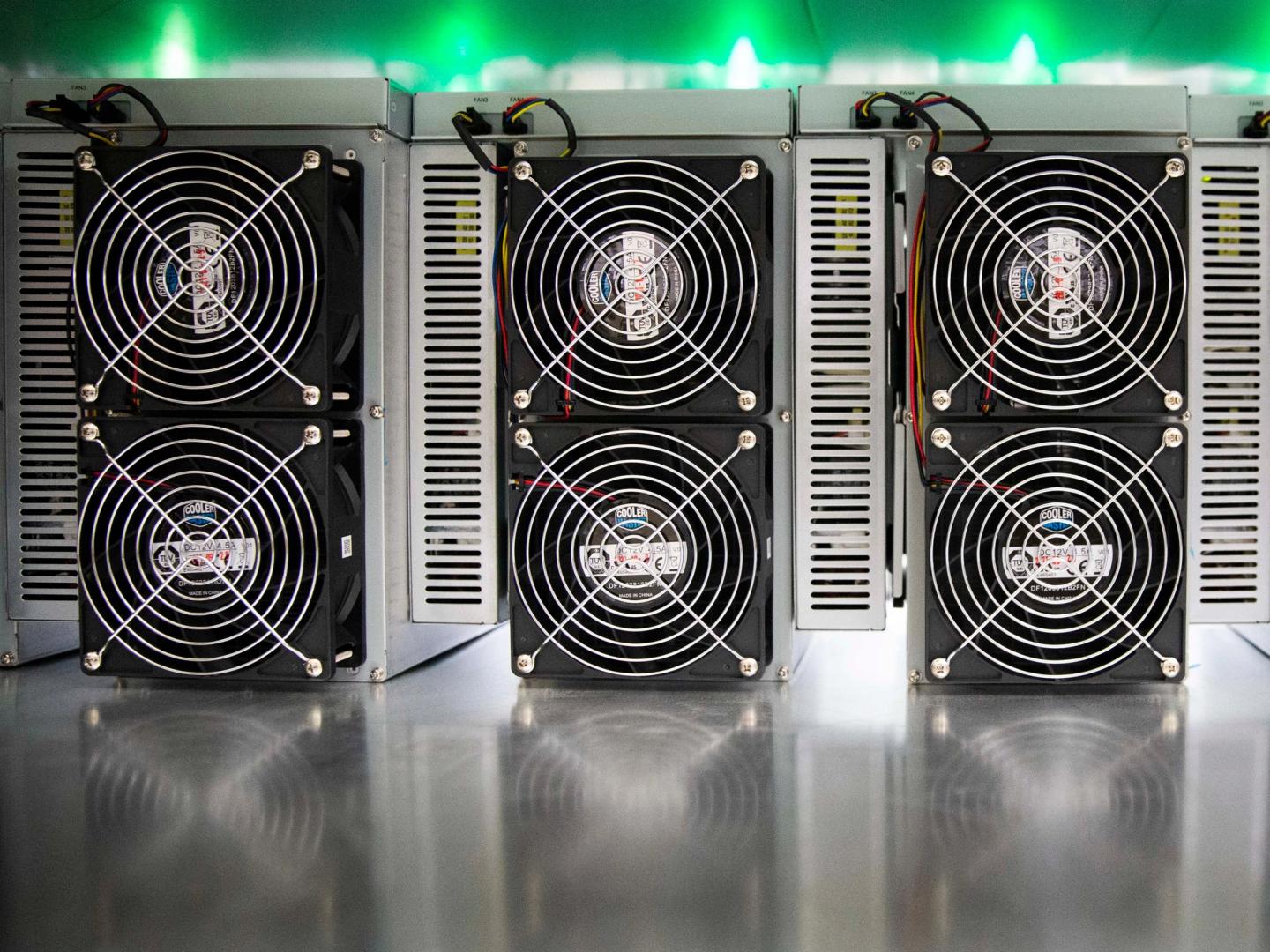
The miner locked in fixed borrowing costs and extended maturity, but a shrinking BTC treasury and loan-to-value triggers leave little room for error if prices slide.
Polymarket is seeking approval from the Commodity Futures Trading Commission (CFTC) to bring its main prediction market back to U.S. users.
The company has discussed lifting its ban on U.S.-based traders with CFTC officials in recent weeks, Bloomberg reported Tuesday, citing sources familiar with the talks. The ban has been in place since Polymarket reached a 2022 settlement with the agency and moved its main exchange overseas.
The CFTC cleared a separate U.S.-only Polymarket platform last November after the company acquired a registered exchange. That site has yet to fully launch.
Prediction markets let users trade contracts tied to future events, such as elections, sports games or economic data. These markets have drawn increasing scrutiny from various states, which argue these function as unlicensed gambling operations.
The CFTC would need to vote before it could remove Polymarkt’s U.S. block. That process may be simpler now because four commission seats are vacant, leaving Chairman Michael Selig as the only sitting commissioner.
Selig has in the past defended that states do not have the ability to police prediction markets, whose authority falls under the CFTC’s purview.
The talks also come after authorities accused a soldier of using a Virtual Private Network (VPN) to access Polymarket’s international exchange and make more than $400,000 from trades based on classified information.
Polymarket declined to comment.
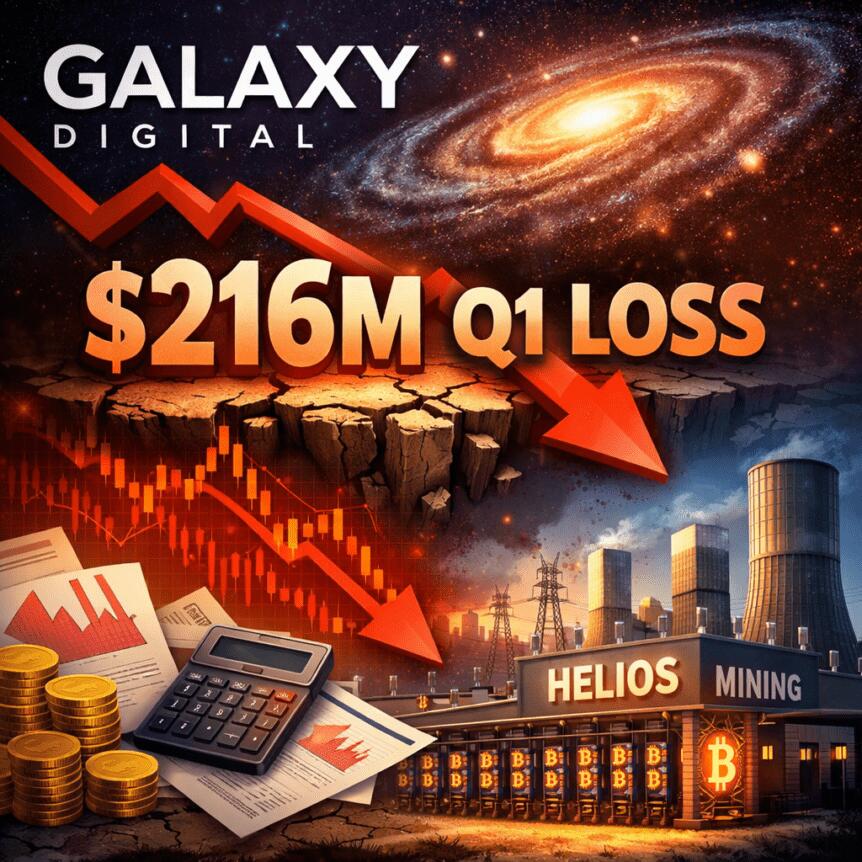
Galaxy Digital has reported a first-quarter 2026 net loss of $216 million, with earnings per diluted share of $0.49 loss, narrowing versus Q1 2025. The firm’s results come as it continues tilting away from a crypto-market-driven model toward a data-center and AI-focused growth strategy anchored by its Helios campus in Texas.
For the quarter ended March 31, Galaxy posted gross revenue of $10.2 billion, roughly flat with Q4 2025, but down from $12.9 billion in the year-ago period. The results align with the company’s pivot toward recurring revenue streams while it continues to manage exposure to crypto asset prices.
Looking back at full-year 2025, Galaxy reported a net loss of $241 million on gross revenue of $61.4 billion. The company reiterated that near-term growth will hinge on scaling its data-center operations and monetizing AI workloads through Helios, rather than relying primarily on crypto trading activity.
Management noted that growth in the data-center segment is expected to begin contributing to earnings in the second quarter of 2026, once revenue recognition from the Helios campus in Texas starts to appear in the company’s financials. The Helios project, acquired in December 2022, is being developed into a large-scale data-center campus designed to support high-performance computing and AI workloads.
The quarterly figures underlined Galaxy’s strategic transition—from crypto-market cycles to a diversified model centered on Helios and AI-enabled data-center revenue.
Key takeaways
- Q1 2026 net loss: $216 million, with diluted-earnings per share of $0.49 (vs. a $0.86 loss per share in Q1 2025), signaling narrowing losses as the business shifts focus toward non-volatile revenue streams.
- Revenue situation: Gross quarterly revenue stands at $10.2 billion, flat versus the prior quarter but lower than the year-ago period, highlighting a move away from asset-price-driven swings toward recurring income.
- Crypto-price headwinds: Weaker digital-asset prices weighed on asset valuations, with Galaxy noting a roughly 20% drop in crypto market capitalization during the quarter. Digital Assets contributed $49 million in adjusted gross profit, while the Treasury and corporate segment bore heavy losses (about $167 million in adjusted EBITDA).
- Helios ramp and revenue timing: The company said data-center growth should begin contributing to earnings in Q2 2026 as Helios starts recognizing revenue, supported by ongoing Phase I deployments.
- Balance sheet and allocation: As of March 31, 2026, Galaxy reported $2.8 billion in equity capital, up 46% year over year. Equity is distributed across digital assets (33%), data centers (28%), and treasury/corporate holdings (39%).
Strategic pivot: from market cycles to infrastructure and AI
The quarter’s results reinforce Galaxy’s deliberate shift from a crypto-market-driven stance toward a more diversified business model anchored by Helios and AI-enabled data-center revenue. Galaxy executives have consistently signaled that the Helios campus—Dallas-area expansion of the Argo Blockchain acquisition into a broad HPC and AI facility—will be a long-term growth engine. In the latest update, management stressed that Helios is not just a hardware deployment but a platform for recurring revenue streams tied to capacity and service agreements with institutional clients and AI workloads.
Delivered milestones at Helios underscore the transition. Galaxy reported the first data hall to CoreWeave, a notable progress marker in Phase I, and reaffirmed that the project remains on budget and on schedule to deliver substantially all 133 megawatts of critical IT load under the Phase I lease by the end of Q2 2026. This implies a ramp in revenue recognition as data-center capacity comes online and tenants begin consuming services.
Analysts and investors watching Galaxy’s path will be focused on how quickly Helios monetizes its capacity, how pricing for high-performance computing and AI workloads evolves, and whether the data-center business can offset volatility from crypto markets. The company’s stated trajectory suggests a longer-term horizon where recurring fees and capacity utilization will provide more predictable cash flows than crypto asset price swings.
Operational clarity: Helios milestones and capacity targets
Galaxy has long framed Helios as the primary growth platform. The Texas campus, which began as a larger-scale data-center initiative anchored in PoE (power and cooling) efficiency and AI compute, has progressed toward a multi-phase deployment. Galaxy’s update indicates progress toward delivering most of the Phase I capacity—133 MW of IT load—by the end of the current quarter, with revenue recognition following as customers begin to deploy workloads.
Constructive progress on Helios matters beyond the topline numbers because it translates into a tangible shift in the business mix. The company has already pointed to the likelihood of Helicots (Helios’ capabilities) supporting AI workloads as a compelling use case for institutional clients seeking scalable compute capacity. If Helios meets its phased targets, the data-center segment could start contributing meaningfully to profitability during 2026, offering more resilience in soft crypto markets than a purely asset-price-driven business model.
As of the end of March 2026, Galaxy’s equity capital stood at roughly $2.8 billion, a 46% year-over-year increase. The capital mix—roughly one-third in digital assets, just under a third in data centers, and the remainder in treasury and corporate holdings—highlights the company’s diversified but still crypto-adjacent balance sheet. The trajectory implies risk has shifted toward infrastructure upside and capital-intensive growth rather than speculative crypto exposure alone.
Implications for investors and the market
Galaxy’s Q1 2026 results illustrate both the challenges and opportunities facing a crypto-adjacent firm trying to pivot into infrastructure-led growth. The weaker crypto price environment clearly depressed asset valuations, contributing to the quarterly loss structure that persists despite stabilizing per-share losses versus a year earlier. Yet the early indicators from Helios—data-center capacity coming online and a clear revenue ramp in the quarters ahead—offer a potential path to steadier, recurring income that could cushion earnings when crypto markets remain volatile.
Investors will be watching several moving parts: the pace at which Helios contributes to quarterly results, the ability to attract and retain long-term data-center tenants, and the management of capital allocation across the firm’s diversified portfolio. The 20% contraction in crypto market capitalization during the quarter underlines the sensitivity of Galaxy’s financials to digital-asset cycles, even as a portion of revenue becomes more deterministic through data-center contracts and AI compute services.
Additionally, the broader market context remains relevant. As Galaxy shifts toward a blended model, any regulatory developments around digital assets, data-center energy costs, or AI compute demand could influence the pace and profitability of Helios’ rollout. Analysts will also scrutinize how the Helios ramp aligns with expectations for the company’s 2026 guidance and whether the anticipated Q2 2026 revenue recognition from Helios translates into meaningful earnings uplift in the back half of the year.
In the short term, Galaxy’s results reinforce a narrative common to many crypto-adjacent operators: price action in digital assets will continue to reverberate through the earnings line, but the growth story is increasingly anchored in infrastructure, capacity utilization, and the monetization of AI workloads. The question for investors is whether Helios can deliver the reliable, scalable revenue streams necessary to offset periods of crypto weakness and drive a more durable earnings trajectory over the next several quarters.
Looking ahead, readers should monitor Helios’ progress toward full Phase I capacity, any updates on tenancy and utilization rates, and the broader demand environment for AI compute services. These factors will likely shape Galaxy Digital’s next earnings cycle and the long-term viability of its transition from a crypto-market focus to an infrastructure-led business model.

Ireland has ‘one of the worst disability employment records’, finds report

America’s special relationship is ‘probably Israel’, says British ambassador to US

A mandate that marks the end of “digital later”

Manchester United reach agreement with Casemiro over contract clause amid transfer speculation

US brings back mandatory military draft registration

Steven Gerrard disagrees with Gary Neville over ‘shock’ Chelsea and Arsenal claim | Football


-

 Tech1 day ago
Register Renaming | Hackaday
-

 Fashion4 days ago
Weekend Open Thread – Corporette.com
-
Crypto World3 days ago
Hyperliquid $HYPE Rally Builds Momentum as AI Sector Enters Prove-It Phase
-

 Politics6 days ago
Making troops accountable for war crimes threatens US alliance, ex-SAS colonel warns
-

 Politics6 days ago
Disabled people challenge government SEND proposals over segregation concerns
-

 Business5 days ago
Patterson-UTI Energy, Inc. (PTEN) Q1 2026 Earnings Call Transcript
-

 Business6 days ago
Rolls-Royce Voted UK’s Most Iconic Trade Mark as IPO Register Hits 150
-
 Sports2 days ago
IPL 2026: Ruturaj Gaikwad registers slowest fifty of the season, enters all-time unwanted list | Cricket News
-

 Politics23 hours ago
Drax board avoid their own AGM, accused of greenwashing & environmental racism
-

 Crypto World7 days ago
New York sues Coinbase, Gemini over prediction market offerings
-

 Politics6 days ago
Starmer handler McSweeney to be dragged from shadows by Foreign Affairs Committee
-
Politics6 days ago
Wings Over Scotland | How To Get Away With Crimes
-

 Politics6 days ago
Zack Polanski responds to home secretary’s taser threat
-

 Politics6 days ago
‘Iran is still a nuclear threat’
-
 Business7 days ago
HCL Tech share price tank over 9% after weak Q4. JPMorgan, HSBC & 3 others cut target price
-

 Crypto World7 days ago
Crypto’s great hope in Senate’s Clarity Act still has a path to survive tight calendar
-

 NewsBeat3 days ago
LK Bennett closes all stores after entering administration
-
 Sports6 days ago
Tim Bradley names the current best in the world: “Better than Inoue and Usyk”
-

 Crypto World4 days ago
Michael Saylor says BTC winter is over. Market analyst disagrees, says bitcoin was in a pullback
-
 Crypto World7 days ago
Ethereum Price News: ETH Flashes a Bullish Setup No Holder Should Miss While Pepeto Nears Its Binance Listing
You must be logged in to post a comment Login