

Crypto World
Backpack to Give 20% Equity to Token Stakers Ahead of IPO


Backpack Exchange on Monday unveiled a novel incentive for its upcoming Backpack token: committed stakers of at least 12 months can swap tokens for equity in the exchange at a fixed ratio—20% of the company today. CEO Armani Ferrante disclosed the plan in a post on X, signaling a shift toward a token structure designed to emphasize long-term commitment rather than speculative utility. The move aligns with Backpack’s broader strategy as it eyes a potential United States IPO, and ties token unlocks to regulatory milestones, product launches, and other milestones that could unlock the rest of the supply for early backers and the team.
Key takeaways
- Long-term staking converts into equity: users who hold Backpack tokens for at least one year may exchange their stake for equity representing 20% of the company today.
- Structured token unlocks tied to milestones: the supply is 1 million tokens, with 25% unlocked at the Token Generation Event (TGE) and 62.5% slated for distribution to users ahead of the IPO, while the remaining 37.5% would unlock post-IPO for the team and investors.
- Tokenomics aimed at reducing sell pressure: Backpack emphasizes an inverted model that prioritizes user ownership and alignment with long-term growth rather than insider-first allocations.
- Foundational critique of centralized promises: Ferrante argues that many past token launches offered “false promises” of utility, and positions this plan as a more accountable approach to token utility.
- Regulatory and product milestones drive progress: the plan is designed to keep token unlocks in step with regulatory approvals and the rollout of new products, including recent on-chain stock tokenization efforts.
Tickers mentioned:
Sentiment: Neutral
Market context: The move arrives amid broader industry experimentation with tokenized equity and milestone-based token unlocks as projects edge toward traditional financing routes, including potential IPOs, while navigating an evolving regulatory landscape.
Why it matters
The Backpack project is venturing beyond the conventional token model by tying a portion of its equity directly to user participation. By offering an equity exchange for token staking, the company is attempting to fuse governance, financial upside, and product loyalty into a single instrument. If successful, this approach could recalibrate how users perceive token utility, moving away from short-lived hype cycles toward genuine ownership stakes in a platform’s growth trajectory.
Ferrante has positioned the plan as a corrective to perceived excesses in the crypto boom-and-bust era. In a bold assertion, he described a crypto landscape that has become “the most centralized” in its history, where “the more centralized something is, the less meaningful a token is.” The strategy, he suggests, aims to counterbalance that trend by anchoring token value to company equity and tying unlocks to milestones rather than speculative trading alone. While the message leans toward a principled stance on token design, it also acknowledges the practical need to maintain a viable path to decentralization as the product matures.
The proposed structure signals a broader industry shift: tokenized equity as a pathway for user incentivization and as a bridge to potential public-market access. Backpack’s approach would anchor a significant portion of the token supply to user-driven value creation, a model that could influence how future crypto platforms think about long-term incentives and governance. However, the roadmap remains conditional on regulatory approvals and the successful execution of product milestones, which adds a layer of risk for token holders and early backers alike.
Backpack’s emphasis on preventing early insider dominance also speaks to a growing insistence on fairness and sustainability in token distribution. The plan to allocate a substantial share of tokens to users before an IPO, with insiders and investors receiving allocations later, is designed to reduce immediate sell pressure and foster a longer horizon for value realization. If the strategy resonates with the market, it could encourage a more patient, utility-driven participation from both retail and professional users.
“I came into crypto because I believe it’s going to change the world … But somewhere along the way, amidst the booms, the busts, the moonshots, the decentralization theater, and the straight up scams, we lost our way. I don’t know about you, but I’m just tired of false promises.”
Backpack’s tokenomics also dovetail with its broader business moves. The company has previously announced plans to unlock tokens in stages as part of a path toward a potential US IPO, and it has pursued on-chain stock tokenization through a partnership with a registered transfer agent. The token distribution plan underscores a concerted effort to align incentives with the company’s regulatory and product milestones, rather than relying solely on passive liquidity or speculative drivers.
What to watch next
- Timing and criteria for the Token Generation Event, including the 25% unlock and the milestone-based releases before the IPO.
- Progress toward regulatory approvals and the practical milestones that unlock the remaining supply.
- Details surrounding the equity-exchange mechanism for stake-holders and how the fixed ratio will be applied in practice.
- Status of the on-chain tokenization of stocks and any regulatory considerations that accompany that initiative.
- Any updates about the company’s IPO journey and how token liquidity will evolve post-IPO.
Sources & verification
- Backpack CEO Armani Ferrante’s X post announcing the 20% equity offer for year-long token staking.
- Cointelegraph report outlining Backpack’s token unlocks tied to IPO ambitions and the initial 25%/62.5%/37.5% schedule.
- Backpack tokenomics overview detailing the supply and milestone-based unlocks.
- Announcement of the partnership with Superstate to bring tokenized stocks on-chain.
- Background on Backpack’s leadership and prior ventures related to the crypto landscape.
What the article means for investors and users
Backpack’s approach narrows the gap between a conventional equity stake and a crypto token by offering actual equity in exchange for token staking. If realized, it would create an explicit counterweight to the typical risk-reward profile of early-stage exchanges that often rely on mere token liquidity rather than tangible ownership or governance influence. For users, it could translate into more meaningful participation in a platform’s success, turning long-term commitment into a measurable stake in the company’s outcomes.
From a market perspective, the plan contributes to a broader discussion about how to align incentives as crypto platforms transition toward regulated milestones. While it introduces potential benefits, it also raises questions about valuation, governance rights, and the practical mechanics of converting tokens into equity—issues that regulators will scrutinize as the project progresses toward an IPO.
What to watch next
- Whether the Token Generation Event occurs on a defined timeline and how milestones influence ongoing unlocks.
- Regulatory developments in the US that could impact both the token structure and the eventual IPO process.
- Operational readiness to support tokenized equity and the technology to ensure secure, auditable exchanges between tokens and equity.
Backpack’s equity-for-stake plan: a closer look at the tokenomics
The essence of Backpack’s model is to anchor token value to real company equity, a move that could reshape incentives in the crypto exchange space. By design, the first 62.5% of tokens are slated for user distribution ahead of the IPO, with the remaining 37.5% reserved for insiders and investors post-IPO. The 25% at the Token Generation Event acts as a foundation for early adoption, while milestone unlocks before the IPO encourage continued product development and regulatory alignment. The structure aims to avoid the insider-dominant dynamics that can accelerate sell pressure and erode retail confidence in a token’s long-term viability.
Critically, the plan reflects a broader push in crypto to demonstrate tangible value beyond hype. Ferrante’s comments about centralized trends and false promises point to a deliberate attempt to combine utility with governance and economic upside. Whether this model gains traction depends on execution—timely regulatory clarity, robust product milestones, and transparent reporting to token-holders about how equity allocations translate into real-world ownership and voting rights. As Backpack proceeds, observers will be watching how the equity outcomes interact with on-chain capabilities and the pace at which decentralization goals are realized after the IPO.
In the near term, users will be assessing the practical mechanics of staking, the fixed equity ratio, and how liquid the equity component will be in a pre-IPO environment. It remains to be seen how this approach will interact with the broader market sentiment around new token launches and the appetite for long-horizon bets tied to traditional corporate milestones. The alignment of token unlocks with regulatory milestones could, if successful, serve as a blueprint for future tokenized equity initiatives within crypto exchanges and beyond.
Backpack’s token-to-equity plan signals a shift in crypto tokenomics and IPO ambitions

Terraform Labs’ bankruptcy administrator has filed a lawsuit in Manhattan accusing trading giant Jane Street of playing a key role in the 2022 collapse of Terra’s ecosystem.
Summary
- Terraform Labs has sued Jane Street, alleging the firm played a central role in the 2022 Terra collapse by accelerating the UST depeg and profiting from the fallout.
- The lawsuit claims Jane Street dumped 85 million UST shortly after Terraform withdrew liquidity, triggering panic that led to LUNA’s hyperinflation and a $40 billion market wipeout.
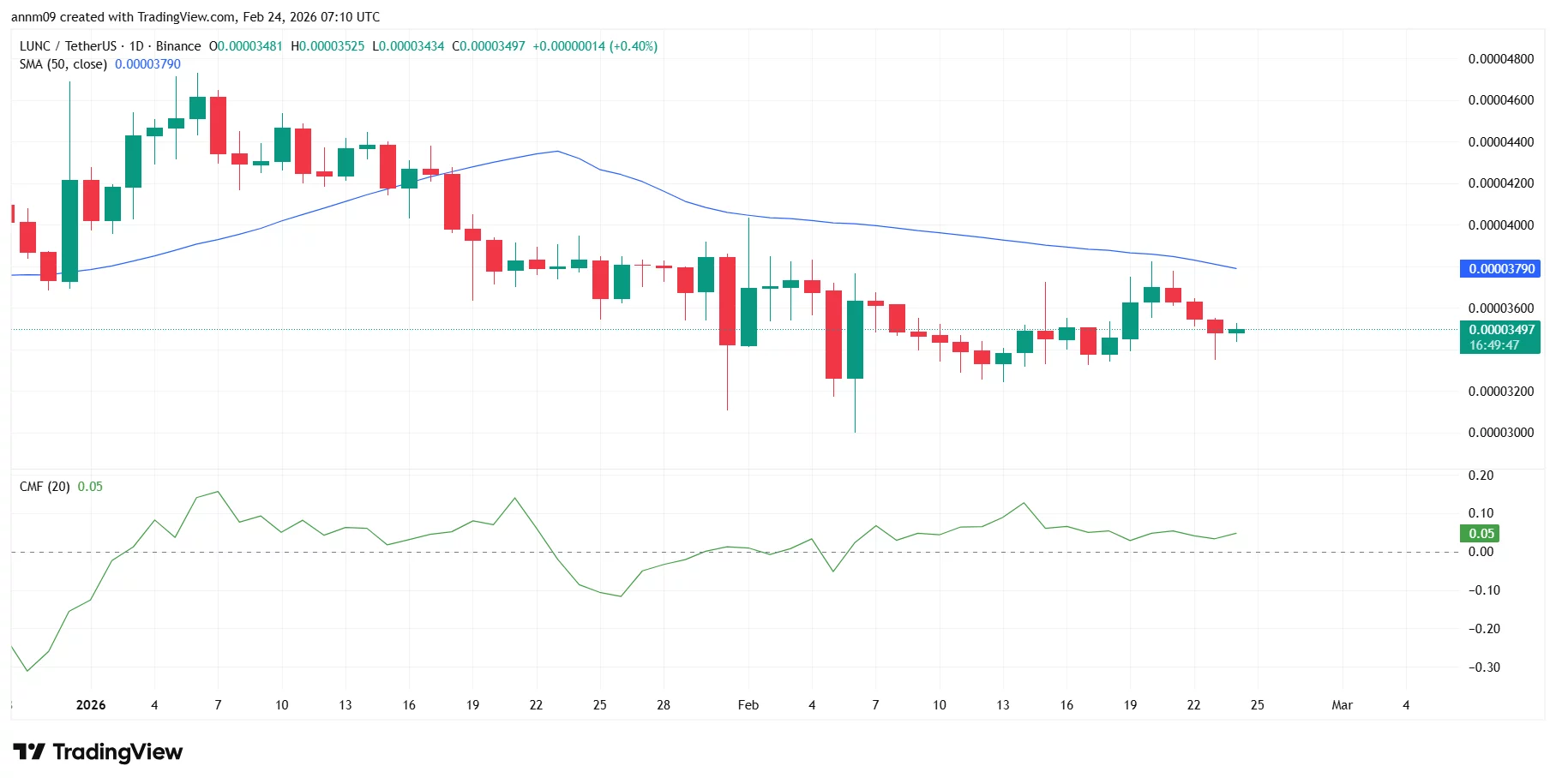
- Meanwhile, Terra Classic is consolidating near $0.000035, trading below its 50-day moving average, with $0.000032 acting as key support and $0.000038 as major resistance.
Terraform blames Jane Street insider trading for collapse
The complaint alleges that Jane Street front-ran the depegging of UST and helped trigger the death spiral that wiped out roughly $40 billion in market value.
According to the filing, Terraform quietly withdrew 150 million UST liquidity from Curve in May 2022. Minutes later, Jane Street allegedly dumped 85 million UST, accelerating the depeg. Panic spread quickly, UST lost its dollar peg, and LUNA hyperinflated due to its mint-and-burn mechanism.
The suit further claims a Jane Street trader, a former Terraform intern, shared insider information in a private group chat dubbed “Bryce’s Secret.” The firm allegedly avoided more than $200 million in losses and profited during the meltdown. Jane Street has denied the allegations, calling the lawsuit baseless.
Terra Classic price analysis
Amid the renewed headlines, Terra Classic (LUNC) is trading around $0.00003497 at press time on the daily chart. Price remains below the 50-day simple moving average, which sits near $0.00003790, signaling that the broader trend is still tilted to the downside.
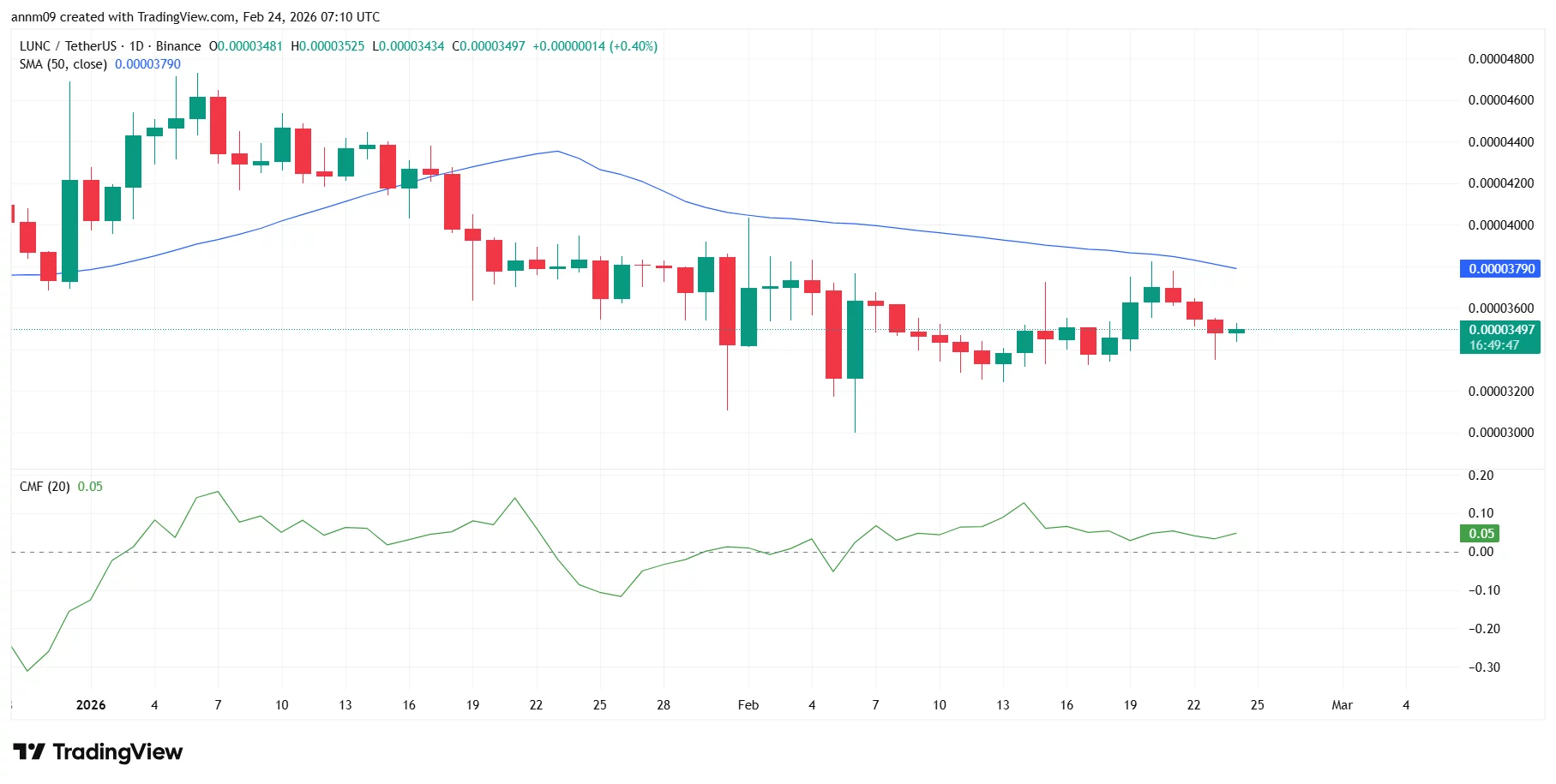
The chart shows a series of lower highs since early January, confirming bearish structure.
However, recent candles suggest short-term consolidation after a sharp early-February sell-off that briefly pushed price toward the $0.00003000–$0.00003200 support zone. That area now acts as key near-term support.
On the upside, immediate resistance sits at $0.00003600, followed by the 50-day SMA near $0.00003790. A sustained break above that level could open the door toward $0.00004000.
The Chaikin Money Flow (CMF) indicator is slightly positive at 0.05, suggesting mild capital inflows, but not strong accumulation. Unless LUNC reclaims its moving average, rallies may face selling pressure.
A breakdown below $0.00003200 would likely expose the psychological $0.00003000 level again.
XRP price is hovering near $1.30 as leverage on Binance hits cycle lows, putting focus on a potential breakout.
Summary
- XRP is trading near the lower end of its recent range with leverage at cycle lows.
- Derivatives positioning has cooled, reducing liquidation risk.
- A breakout above $1.50 or breakdown below $1.30 could decide the next move.
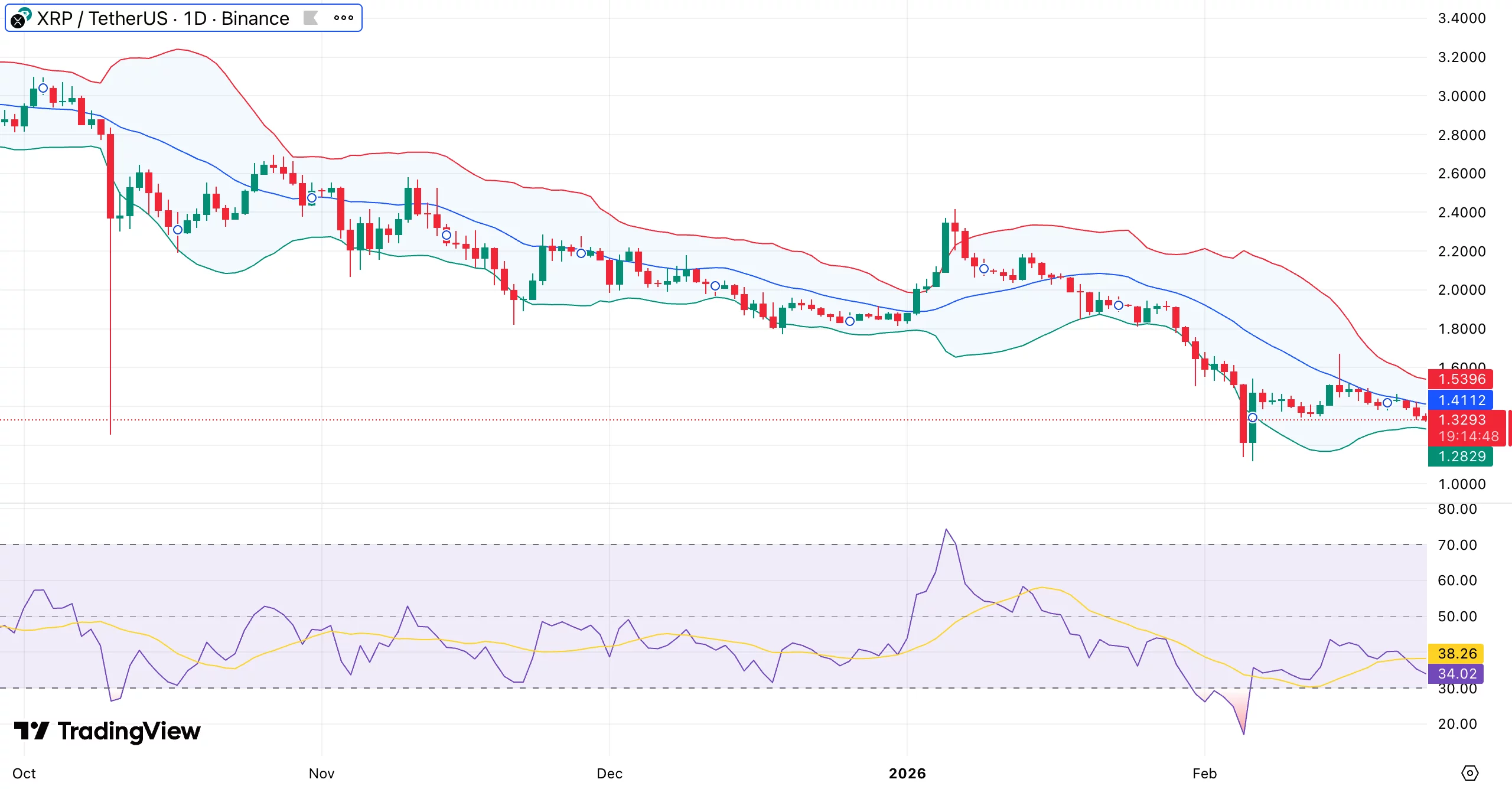
XRP was trading at $1.33 at press time, down 1.2% over the past 24 hours. The token is hovering at the bottom of its 7-day range between $1.33 and $1.49.
XRP is in the red across all major timeframes, down 10% over the past week, 30% in the last month, and nearly 50% over the past year. It has now retraced about 63% from its July 2025 all-time high of $3.65.
Spot activity has picked up despite the weak price action. XRP (XRP) recorded $3.13 billion in 24-hour trading volume, up 40.4% from the previous day.
Derivatives data from CoinGlass shows futures volume up 38.3% to $5.37 billion, while open interest slipped 3.7% to $2.29 billion, suggesting leverage is being reduced even as trading activity rises.
Binance leverage resets as speculative excess fades
A Feb. 23 report by CryptoQuant contributor PelinayPA shows XRP’s Estimated Leverage Ratio has dropped sharply to about 0.16, with both the 30-day and 50-day moving averages trending down.
This decline means that speculative positioning has cooled off. Forced liquidations have largely run their course, and neither longs nor shorts appear crowded. The derivatives market looks balanced rather than stretched.
The focus on Binance is significant. Binance is the main hub for XRP derivatives. Leverage shifts there often reflect global risk appetite. A sharp drop usually means risky positions have been cleared across the market.
Interestingly, price has continued drifting lower while leverage falls. That combination can be constructive. High leverage increases the risk of cascading liquidations. A low-leverage environment, by contrast, reduces forced selling pressure and creates cleaner conditions for larger players to build positions.
For now, XRP appears stuck in what is commonly called a “dead zone,” a phase marked by sideways-to-down movement, contracting volatility, and fading leverage.
XRP price technical analysis
On the daily chart, XRP is forming lower highs and lower lows, but downward momentum has eased. Immediate support is around $1.30, a level that has held several times.
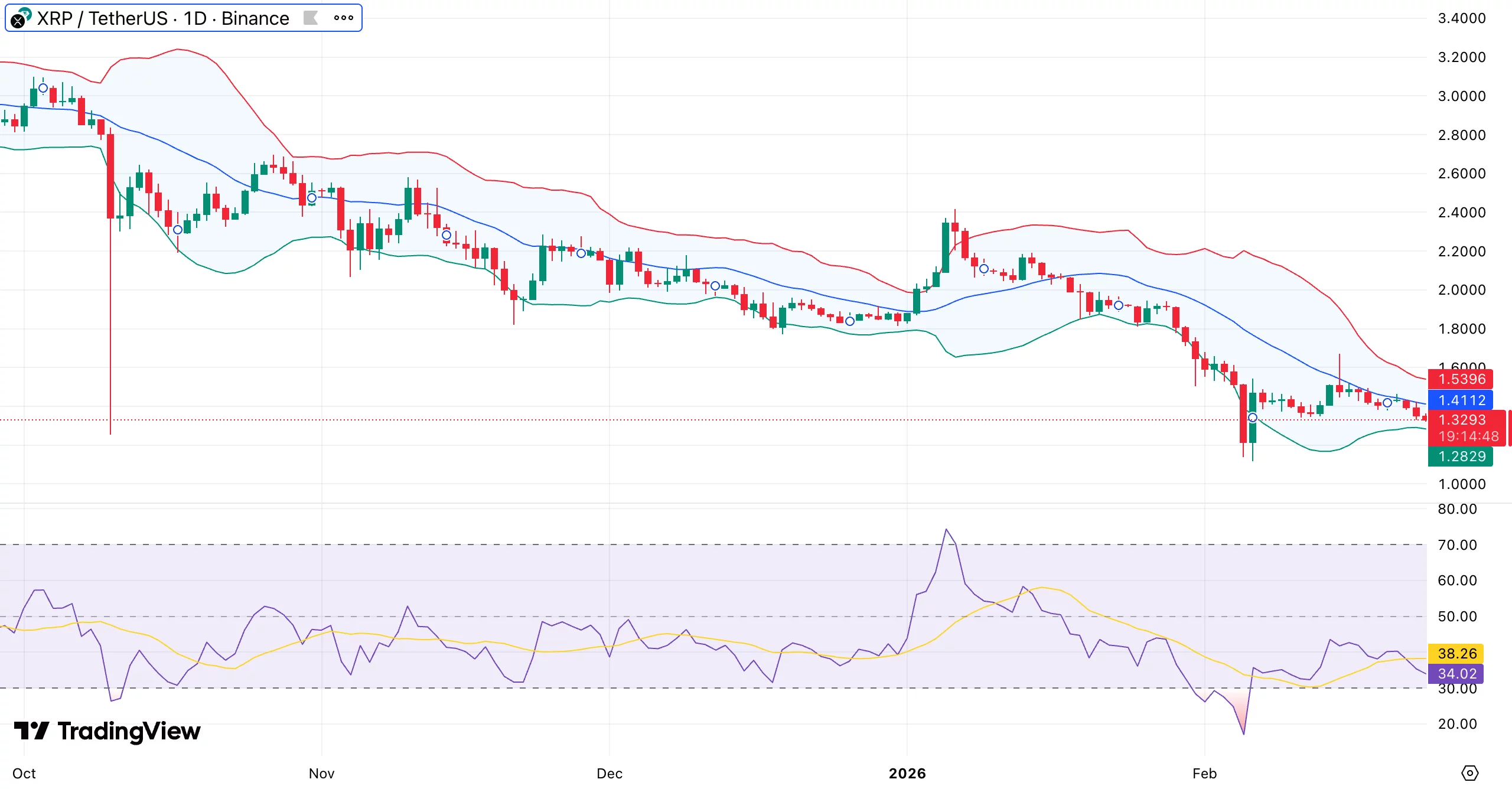
On the upside, $1.41 acts as the first resistance. A more critical barrier lies between $1.50 and $1.53, where the 30-day and 50-day moving averages cluster. Trading below both, which are sloping down, keeps the medium-term bias bearish.
The relative strength index is near oversold, hovering around 35, and the MACD is still bearish, despite the shrinking histogram suggesting that selling pressure is cooling. Low volatility is indicated by tightening Bollinger bands, a condition which often precedes sharp moves.
A move above $1.50–$1.53 with rising volume could shift momentum and open the door toward $1.60, potentially triggering a fresh build-up in leverage. Failure to reclaim resistance, followed by a daily close below $1.30, may lead to a slide toward $1.20.
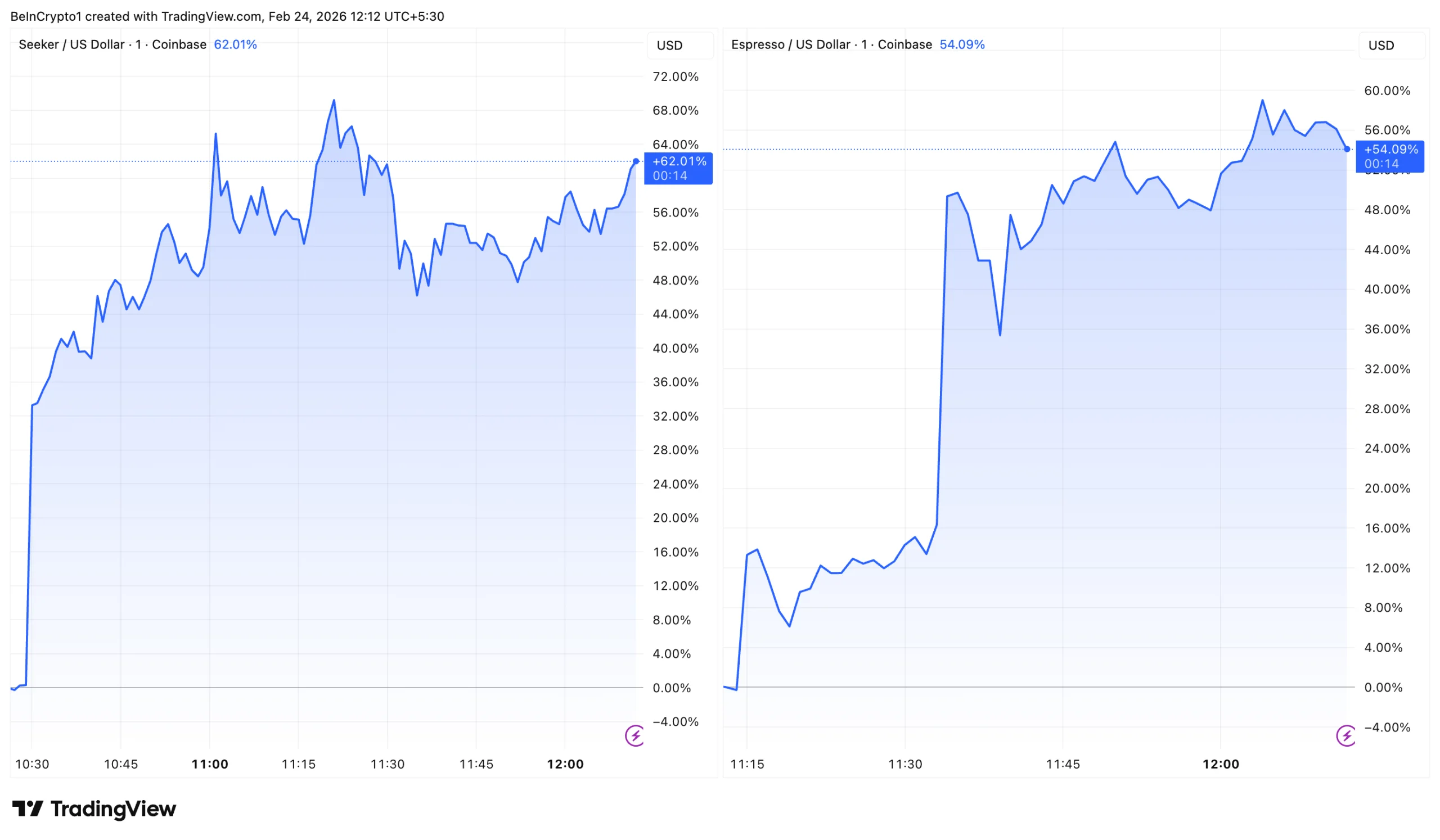
Upbit, South Korea’s largest cryptocurrency exchange, has announced the listing of two new altcoins. The platform confirmed it will add spot trading support for Seeker (SKR) and Espresso (ESP).
In addition, Bithumb will also list ESP today. Following the listing announcements, both tokens recorded strong gains, with prices surging by double digits as trading interest accelerated.
Upbit and Bithumb Expand Offerings With New Token Listings
According to Upbit’s notice, SKR will be available to trade against three pairs: Korean Won (KRW), Bitcoin (BTC), and Tether (USDT). The exchange will open spot trading at 16:00 Korean Standard Time (KST) on February 24 and enable deposits and withdrawals within 90 minutes of the announcement.
“Deposits and withdrawals are supported only through the specified network (SKR-Solana). Please verify the network before making a deposit. The contract address for SKR supported by Upbit is: SKRbvo6Gf7GondiT3BbTfuRDPqLWei4j2Qy2NPGZhW3. Please confirm the contract address when depositing or withdrawing SKR,” the exchange added.
In a separate notice, Upbit announced support for ESP in the KRW, BTC, and USDT markets. Trading is scheduled to begin at 17:00 KST today.
Bithumb also announced the addition of ESP in its KRW market. The exchange stated that deposits and withdrawals will open within two hours of the announcement, with trading scheduled for 17:00 KST on February 24. The exchange set the reference price at 149 KRW.
Both exchanges outlined temporary restrictions designed to manage volatility during the initial trading period. Upbit will restrict buy orders for approximately five minutes after trading begins.
Sell orders priced 10% or more below the previous day’s closing price will also be restricted for about five minutes. Additionally, the exchange will permit only limit orders for approximately two hours after trading support begins.
Bithumb will similarly restrict buy orders for five minutes following the start of trading. During the same initial five-minute window, sell orders will be blocked if priced 10% or more below or 100% or more above the reference price. Like Upbit, Bithumb will allow only limit orders for roughly two hours after trading opens.
Exchange Listings Drive Sharp Moves in SKR and ESP
The listings triggered notable price movements in both tokens. Data shows that SKR, the native token of the Solana Mobile ecosystem, rose more than 62% following the announcement.
The daily trading volume increased by over 700%, with Bithumb accounting for approximately 33% of total activity, according to CoinGecko data. The figures suggest elevated trading interest from the South Korean market.
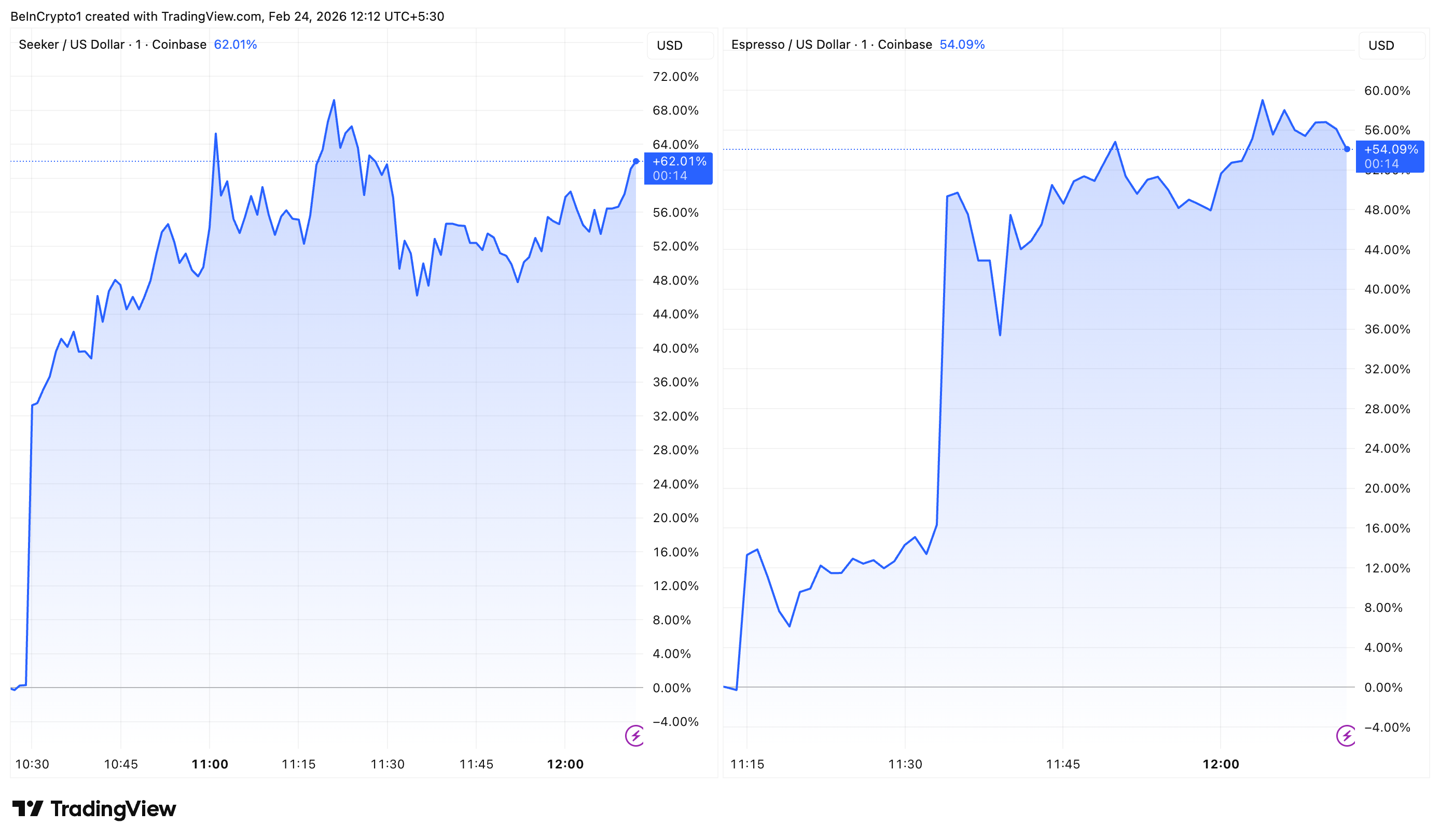
ESP also recorded significant gains, climbing more than 50% and reaching a new all-time high of $0.16. The token was launched earlier this month, making it a recent entrant to the market. ESP serves as the native token of the Espresso Network.
Espresso Network is a blockchain protocol that provides a shared sequencing and confirmation layer for rollups and other chains. It aims to improve scalability and interoperability by coordinating transaction ordering across multiple networks.
Crypto World
Who will ZachXBT expose as ‘insider traders’ on Thursday? Polymarket thinks these firms
Blockchain investigator ZachXBT hasn’t named the target yet. Polymarket bettors are already pricing it in.
A prediction market asking which crypto company ZachXBT will expose for insider trading has drawn nearly $3 million in volume since the on-chain sleuth posted on X that a “major investigation” into one of crypto’s most profitable businesses would drop on February 26. He offered no specifics beyond alleging insider trading.
That was enough. Within hours, Polymarket traders began placing bets across several candidates, and the resulting odds function as a real-time map of where the market thinks the bodies are buried.
Polymarket is a blockchain-based prediction platform where users trade contracts on real-world outcomes using real money. The odds tend to reflect genuine conviction because bettors risk capital rather than just opinions. The platform gained mainstream credibility during the 2024 U.S. election cycle and has since become crypto’s de facto sentiment gauge for unresolved events.
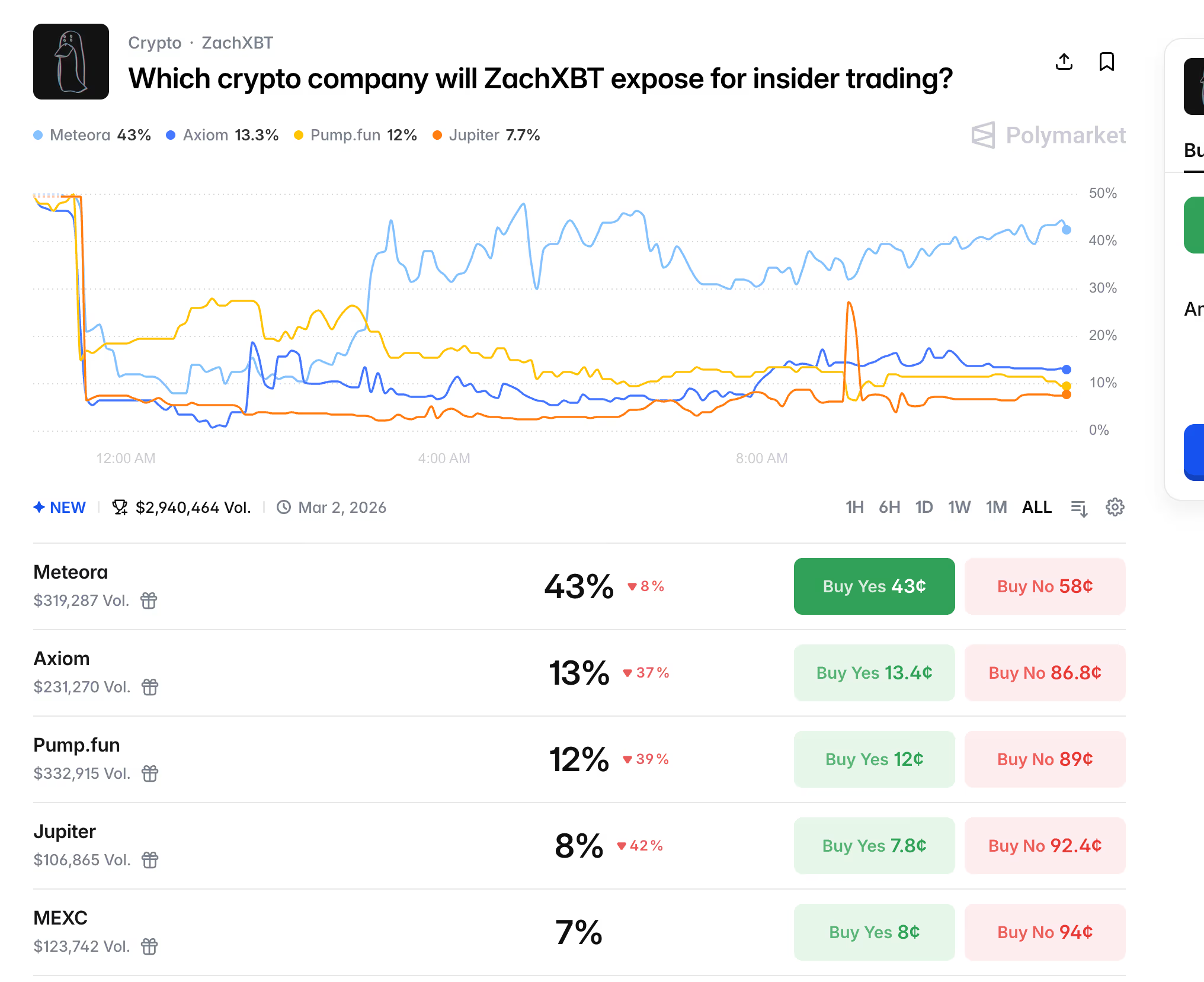
As of Asian morning hours Tuesday, Meteora is the heavy favorite at 43%, with $319,000 in volume on that outcome alone. The Solana-based liquidity layer has been a recurring name in community discussions around meme coin market structure — particularly around how launch liquidity gets seeded and who ends up on the right side of early price moves.
Its proximity to politically linked token activity, including Trump-themed meme coins, has kept it in the spotlight.

Axiom sits at 13%, followed by Pump.fun at 12% with the highest single-outcome volume at $332,000 — suggesting heavy two-way action rather than consensus. Pump.fun’s inclusion tracks with months of scrutiny over early-wallet sniping on the platform, though the project has denied allegations of insider advantages.
Jupiter rounds out at 8% and MEXC at 7%. Jupiter’s presence reflects broader questions about Solana DeFi routing and fee extraction, while MEXC has faced persistent social media chatter about listing behavior and whale-friendly timing on meme coin markets.
The odds have shifted notably since the market opened. Axiom, Pump.fun, and Jupiter have all fallen 37-42% from their initial readings, while Meteora has consolidated its lead — a pattern that suggests early speculation has given way to more directional conviction as bettors parse ZachXBT’s prior work and posting patterns for clues.
None of this constitutes evidence, however. Prediction markets price belief, not fact, and Polymarket’s odds reflect the collective speculation of a few thousand traders rather than any inside knowledge of the investigation itself.
But the market is doing what prediction markets do best — forcing participants to put capital behind their hunches rather than just tweeting them.
The answer arrives in two days.


- Bitcoin price dipped to $62,800 amid the latest market weakness.
- Analysts say $60,000 is key to the bulls’ short-term picture.
- BTC could dip to $50,000 amid a bear cross pattern.
Bitcoin’s price slide gathered momentum on Tuesday, with fresh losses to under $63,000 as the cryptocurrency’s vulnerability to macroeconomic pressures and global uncertainties continued.
Trading volume surged 25% as investors reacted to a confluence of events, and top altcoins followed suit.
Bitcoin drops below $63,000
Bitcoin extended its losses to lows of $62,700 on Tuesday, bringing total declines to nearly 29% in the past month.
The benchmark digital asset’s latest dump comes amid mounting concerns over President Trump’s latest tariffs, with investor jitters rippling through the crypto market.
Analysts have noted that these trade policies heighten fears of inflation, trade instability, and reduced global liquidity.
Risk assets like cryptocurrencies are under pressure, and escalating geopolitical tensions surrounding potential US strikes on Iran add to this weakness.
BTC’s struggle mirrors traditional stock indices, which also tumbled after Citrini research sparked a sell out in companies that work in delivery and payments with software stocks also falling on Monday.
Meanwhile, on-chain data shows Bitcoin continues to confront huge ETF outflows, with investors pulling capital from investment products across the market.
According to Farside Investors’ data, Bitcoin ETFs saw $203.8 million worth of outflow on Monday.
These factors have outweighed Strategy’s 100th Bitcoin purchase and have failed to stem the downside.
BTC traded at $63,030 at the time of writing, down 2.4% in the past 24 hours.
The top cryptocurrency is down 7% from last week’s peak near $68k.
What’s next for Bitcoin price?
This dip thrusts the pivotal $60,000 support level into sharp focus.
Bears have already tested this psychological and technical floor, with BTC rebounding off the level following the February 5 crash.
Analysts warn that further short-term pain could allow for a potential revisit to $50,000.
If selling accelerates, lower support levels will come into play.
However, chart patterns suggest Bitcoin could find a bottom as the 50-week moving average crosses below the 100-week average. Price recovery has historically followed such patterns.

At the moment, the chart indicates no such cross has occurred, and prices will likely head lower.
However, extreme oversold conditions suggest a potential sharp rebound is next.
Bullish catalysts, including macro shifts and ETF inflows, can change the direction of Bitcoin.
The $70,000 mark remains key, with a breakout likely to accelerate short-term recovery.
“For a durable breakout to materialise, the market will require a clear resurgence in spot demand and stronger institutional participation; until then, Bitcoin is likely to remain range-bound within its established absorption zone,” analysts at Bitfinex wrote in a research note.

Framework Ventures has forged a strategic partnership with mortgage technology company Better to advance a $500 million credit facility into Sky’s decentralized stablecoin ecosystem. The collaboration aims to unlock the tokenization of real-world assets, beginning with mortgage-backed instruments that could generate yields for holders within a DeFi framework. The move signals a broader push by traditional finance and crypto-native firms to bridge tangible assets with scalable blockchain protocols, a trend that has gathered momentum as tokenization efforts spread from money-market funds to more complex asset classes.
Key takeaways
- Framework Ventures will extend up to $500 million in credit to Sky’s stablecoin ecosystem, enabling the launch of mortgage-backed tokens tied to Better’s assets.
- The initiative envisions tokens that represent mortgages, initially offered to accredited investors, with a long-term plan to broaden access to retail participants.
- Better is pursuing a stake in its own stock through Framework, with a reported 10% acquisition valued around a $45 million equity stake, alongside the tokenization push.
- The project sits within a wider wave of tokenization in traditional finance, including BlackRock’s exploration of tokenized instruments for money-market funds.
- Better’s leadership frames the effort as a means to cut intermediation and reduce costs for consumers, potentially enabling cheaper mortgage financing over time.
Tickers mentioned: $BETR
Market context: The plan arrives amid rising institutional interest in tokenized real-world assets and growing experimentation with DeFi-native structures that can support asset-backed tokens. It aligns with a broader move by asset managers toward tokenization as a way to broaden liquidity and potentially lower financing costs in traditional markets.
Why it matters
The collaboration highlights a convergence between crypto-native protocols and traditional mortgage finance. By channeling a sizable $500 million credit line into Sky’s stablecoin system, the initiative seeks to create a pipeline for mortgage-backed tokens that can be minted and traded within a decentralized framework. If successful, the approach could demonstrate a viable pathway to connect real-world debt—specifically conforming, government-backed mortgages—with blockchain rails, a pairing that proponents say can enhance efficiency, transparency, and liquidity.
Better’s leadership has framed the move as a broad effort to trim layers of intermediation and reduce operating costs. Vishal Garg, founder and CEO of Better, has argued that tokenization could lower overall financing costs, which, in turn, could translate into cheaper mortgage terms for consumers. While the precise mechanics and rate implications remain to be seen, the emphasis on cost reduction reflects a recurring theme in real-world asset tokenization: the potential for blockchain-enabled processes to streamline origination, underwriting, and settlement without sacrificing regulatory safeguards or consumer protections.
The strategic angle extends beyond just lending costs. By taking a stake in Better and pursuing mortgage-backed tokens, Framework and Better are testing whether a hybrid model—combining on-chain settlement with traditional mortgage assets—can deliver consistent yields to token holders while maintaining compliance and risk management. The initiative also underscores the appetite among some crypto investors for assets that can offer a bridge between digital liquidity and the stability of real-world collateral. In this sense, the project resonates with a wider industry trend toward tokenized assets that aim to preserve credit quality while expanding access to investors who are comfortable with DeFi governance and transparency standards.
The broader tokenization theme has gained notable attention from institutional players. For example, major asset managers have shown interest in tokenized versions of money-market funds, a development that could signal a future where high-quality, asset-backed tokens play a more prominent role in diversified portfolios. The industry’s trajectory toward tokenized real-world assets (RWAs) has been punctuated by regulatory scrutiny and the need to establish clear redemption, custody, and compliance frameworks. Even as investors weigh opportunities in these tokenized products, the emphasis remains on ensuring that tokenization scales without compromising investor protections.
The market backdrop includes public disclosures around Better’s equity positioning with Framework. Fortune reported that Framework would purchase about 10% of Better’s stock, which is currently valued at roughly $45 million, and that the tokenized mortgages could be made available initially only to accredited investors. Garg indicated the tokens would be issued first, with efforts to determine how those assets could reach everyday consumers, but specific launch dates were not disclosed. Market observers will be watching not only for token economics and compliance paths but also for how these mortgage-backed tokens would perform within Sky’s ecosystem and how collateralization, liquidity, and risk management would be structured in practice.
From a pricing perspective, Better’s stock BETR has experienced a challenging period since peaking near the $86 level in October. It was trading around $27 as of last close, reflecting ongoing volatility in the stock’s performance and investor sentiment amid broader market fluctuations. This backdrop adds another layer of complexity to any tokenization plan tied to a public equity component, highlighting the delicate balance between on-chain innovation and traditional market dynamics.
The motivation for the program rests partly on the belief that tokenization can unlock new efficiencies and access. Garg’s remarks suggest a long-term view where mortgage-backed tokens could reduce cost pressure on lenders and borrowers alike by removing redundant steps in the origination and settlement processes. The promise hinges on rigorous risk controls, credible asset backing, and a framework for on-chain governance that preserves the integrity of the underlying mortgage assets.
As the industry watches, a number of fundamental questions remain: How will the mortgage-backed tokens be structured in terms of collateralization and payment streams? What governance mechanisms will oversee the Sky ecosystem to ensure reliability and security? What regulatory approvals or safe harbors will be necessary to allow token holders to participate economically in mortgage yields without running afoul of securities or commodities rules? While these are not uniquely defined yet, the collaboration between Framework and Better signals a concerted effort to address these issues in a convergent manner—blending the best practices of traditional credit markets with the transparency and programmability of DeFi.
What to watch next
- Official rollout details for the $500 million credit facility to Sky and the timeline for token issuance.
- Detailed tokenomics for the mortgage-backed tokens, including yield structures, collateral requirements, and redemption mechanics.
- Regulatory filings or statements clarifying compliance pathways for accredited-investor tokens and eventual consumer access.
- Subsequent investor communications from Better and Framework regarding the equity stake and governance rights tied to the token program.
- Updates on Sky’s protocol integration, including security audits, collateral-custody arrangements, and on-chain settlement protocols.
Sources & verification
- Better and Framework Ventures press release announcing the strategic partnership to deploy $500MM into Better via Sky’s stablecoin ecosystem (BusinessWire).
- Fortune coverage of Framework’s investment in Better and the proposed “Home Token” mortgage-backed tokens, including the 10% stock acquisition and accreditation restrictions.
- Cointelegraph reporting on BlackRock’s exploration of tokenization for money-market funds as part of the broader tokenization trend.
- Cointelegraph explainer on tokenization, outlining the mechanics and opportunities of tokenizing traditional assets.
- BETR stock price context from Google Finance showing recent trading levels in Better’s public market.
Market reaction and key details
The partnership between Framework Ventures and Better marks a notable step in the ongoing experimentation with tokenized real-world assets. If the mortgage-backed token concept proves viable, it could provide a scalable model for aligning mortgage originators with DeFi liquidity, potentially lowering financing costs for borrowers while offering a novel yield channel for token holders. The approach emphasizes real-world asset backing, robust risk controls, and a governance framework designed to coexist with traditional financial oversight. Investors should monitor how the tokenization framework adapts to regulatory developments, how capital is deployed to Sky, and how consumer-ready token products are designed, tested, and rolled out in the months ahead.
What it means for users and builders
For users, the initiative could eventually translate into accessible, tokenized exposure to mortgage-originated yields—an option that sits at the intersection of DeFi and mainstream finance. For builders, the Sky ecosystem represents a testbed for on-chain loan structures, asset-backed collateral, and transparent settlement processes that can scale across asset classes. The collaboration also signals ongoing interest from institutional players in tokenized RWAs, a trend that could help drive liquidity, standardization, and better risk management practices within DeFi.
Blockchain intelligence platform TRM Labs has joined forces with banking infrastructure firm Finray Technologies to create a unified system that monitors both crypto and fiat transactions.
Finray’s compliance and decision engine, XZiel, has been integrated with TRM’s blockchain intelligence tools to enable real-time alert triaging, automated escalation, case management, and risk assessment across crypto and fiat transactions, the companies announced on Tuesday.
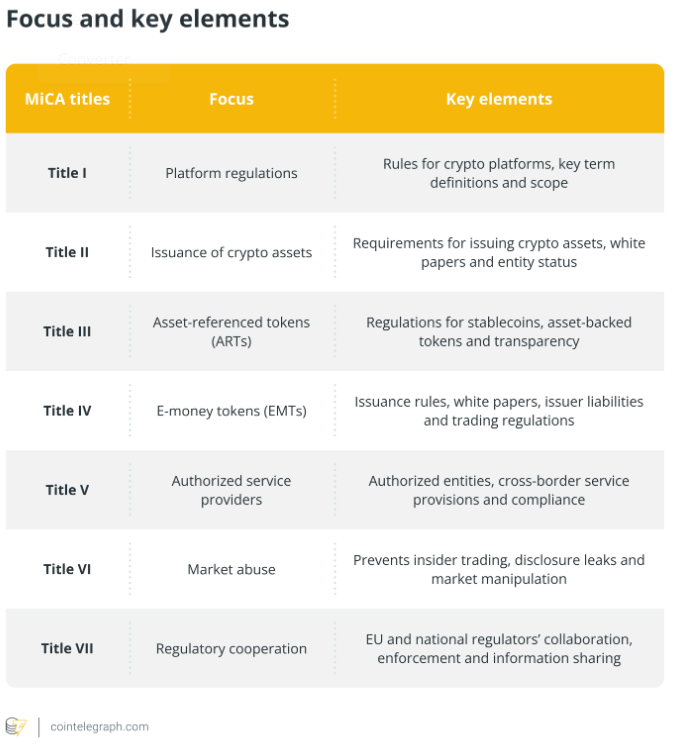
With stablecoin settlements and fiat payment flows becoming increasingly interconnected and with new regulations such as Europe’s Markets in Crypto-Assets (MiCA), institutions operating in both markets now require unified oversight, according to Finray Technologies and TRM Labs.
The system is designed to help institutions implement structured, auditable monitoring programs aligned with MiCA requirements and anti-money laundering obligations, streamlining market entry for regulated entities.

Bitcoin, Ethereum, and other blockchains covered
Key features of Finray and TRM Labs’ new system include real-time risk alerts for suspicious crypto transactions, using the same workflow as traditional payment monitoring. Blockchains covered include Bitcoin, Ethereum and Tron.
The system supports wallet screening during onboarding and ongoing monitoring, assessing the risk of wallet addresses across both on-chain and off-chain environments.
It also automatically records a detailed, time-stamped audit trail, documenting why an activity was flagged as risky, who reviewed it and what decision was made in the event of regulatory or audit reviews.
Aimed at banks expanding into crypto
Finray and TRM Labs’ system is aimed at exchanges, custodians serving institutional clients, corporate treasuries, banks, and electronic money institutions looking to expand their crypto offerings or enable crypto on- and off-ramp services, the firms said.
Related: TRM Labs completes $70M investment round at $1B, becomes crypto unicorn
“Compliance teams can’t manage fiat and crypto risk in separate systems anymore,” Oleksandr Potapenko, the CEO of Finray, said in a statement.
“Embedding TRM’s blockchain intelligence directly into XZiel gives our customers a single, auditable view of risk across both rails — where they can hold, clear, escalate, and document decisions within one environment. That is what operating under MiCA and evolving supervisory expectations actually demands,” he added.
A growing number of institutions are already expanding into crypto. More than half of the top US banks have started or announced plans to offer Bitcoin-related services, such as trading or custody Bitcoin financial services firm River said last month.
Magazine: Is China hoarding gold so yuan becomes global reserve instead of USD?
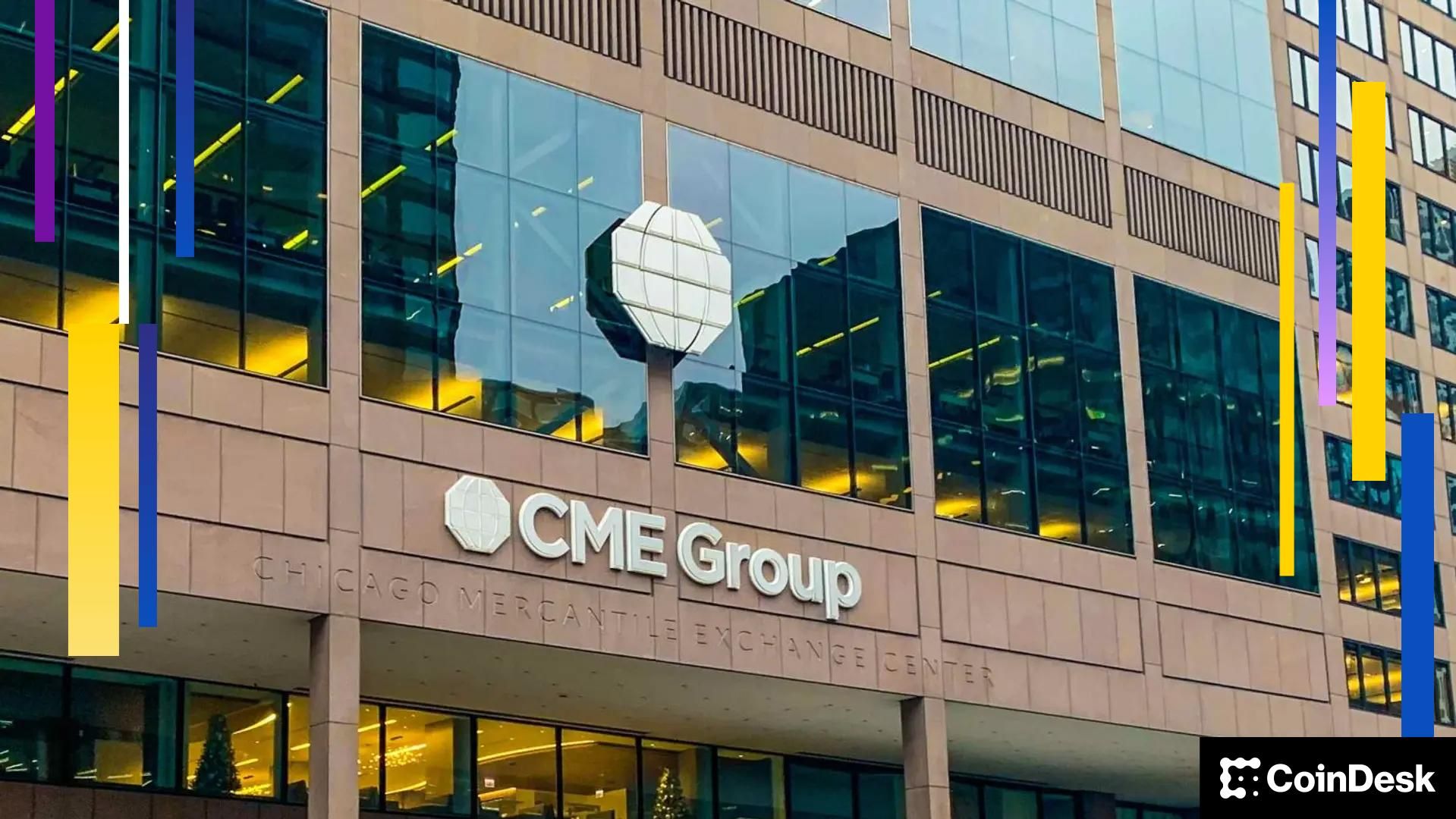
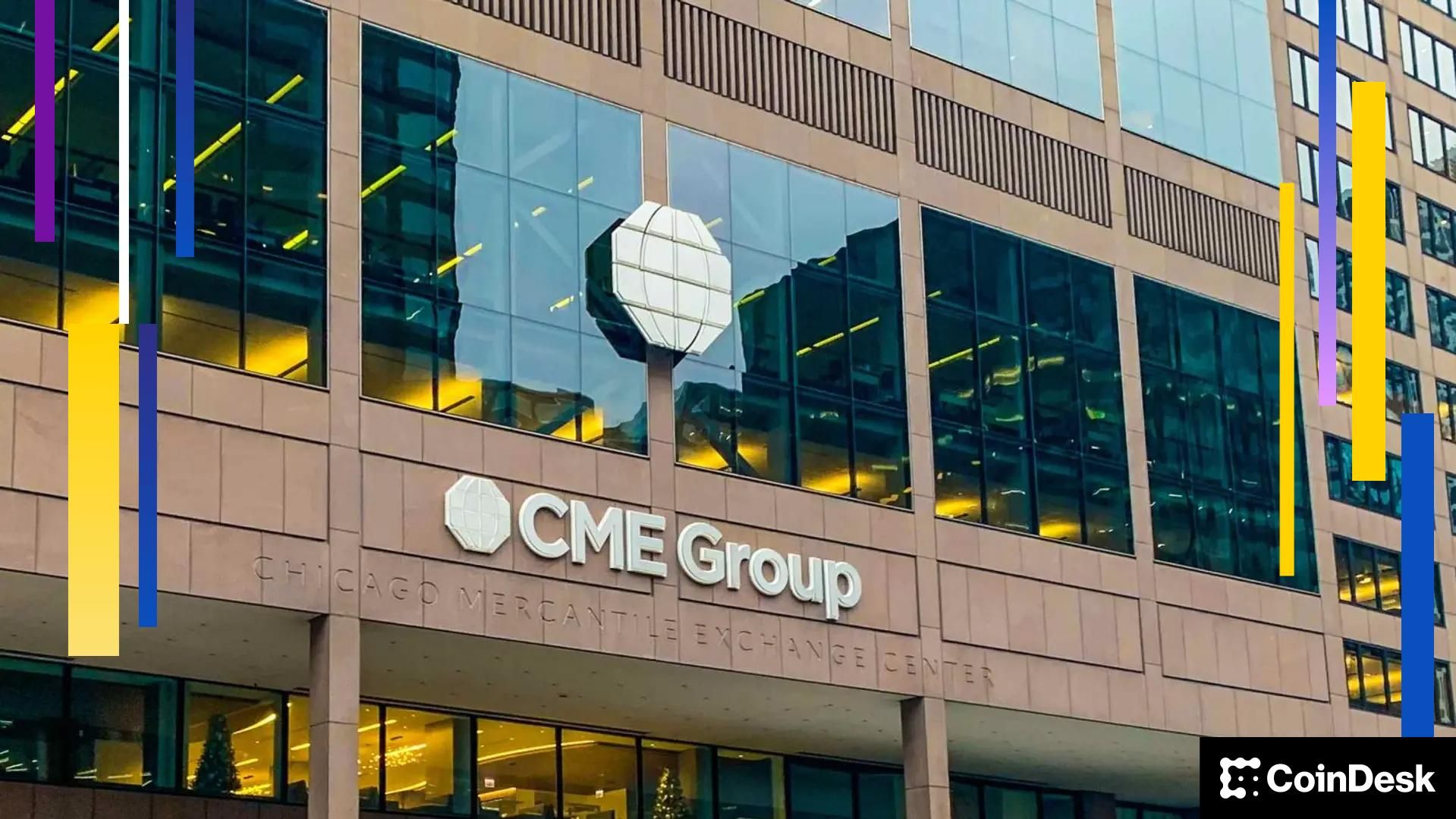
Bitcoin , once hailed as an anti-establishment asset and antithesis to Wall Street, may now bend to sharp traders from those same floors.
Trading in the leading cryptocurrency is steadily shifting toward CME Group, and the exchange’s move to 24/7 derivatives later this year could cement its role as the dominant venue for institutional crypto risk.
The change removes one of the last advantages held by crypto exchanges: nonstop market access.
“You’ll see more traditional hedge fund managers getting more into the asset class, because they’ll be able to trade it on instruments they know, without having to upgrade their tech or move their signals,” Karl Naim, Chief Commercial Officer at XBTO, told CoinDesk. “Why would they want to take a counterparty risk of an entity they don’t know?”
CME already leads regulated bitcoin futures markets by open interest, and its contracts underpin much of the hedging activity tied to U.S. spot ETFs. Until now, however, trading paused over the weekend, producing the well-known “CME gaps” and leaving institutional investors unable to adjust positions while offshore exchanges continued operating.
Around-the-clock trading removes that constraint. Institutions that once relied solely on exchange-traded funds (ETFs) or avoided weekend exposure will be able to hedge continuously, tightening arbitrage windows between prices for regulated futures and offshore perpetual swaps.
As those gaps disappear, so too does the need for large allocators to maintain exposure on crypto exchanges simply for access. For institutions that prioritize regulatory clarity and established clearinghouses, CME begins to look less like an alternative and more like the default.
Even crypto exchange executives are aware of this. In January, OKX President Hong Fang wrote in a CoinDesk op-ed that crypto derivatives trading could one day rival or even surpass spot volumes on major global exchanges, making U.S. regulated volatility markets an even stronger anchor for bitcoin price discovery worldwide.
Institutions calling the shots
For Naim, the shift reflects a broader evolution in how capital enters bitcoin. What began as a grassroots activism by retail traders chasing BTC as an alternative to Wall Street has flipped upside down, with traditional institutions now calling the shots.
“Today we speak to a lot of the sovereigns, a lot of the institutions. They go for what they know,” he said, describing allocators that first accessed the asset through spot ETFs before considering more complex strategies.
With institutional positioning carrying more weight, bitcoin’s short-term direction increasingly reflects global risk sentiment.
“If [Trump attacks Iran], obviously what we’re going to see is that it’s going to be all risk off,” Naim said, referring to a potential forced regime change in Iran by the U.S. “Gold already started rallying. Equities will go down. Bitcoin will go down.”
In that framework, bitcoin behaves less like a standalone crypto trade and more like a macro instrument, priced alongside equities and commodities rather than apart from them.
Naim acknowledged the irony.
“Bitcoin was all about decentralization,” he said.
But as institutional capital scales and liquidity consolidates within regulated clearinghouses, the infrastructure surrounding the asset is becoming increasingly centralized — because institutional money chases risk assets, not risky platforms.
Shares in leading listed cybersecurity companies have fallen since Anthropic’s launch of Claude Code Security on Friday, an AI-powered code vulnerability scanner.
Anthropic launched Claude Code Security on Feb. 20 as a limited research preview.
Claude can reason like a skilled security researcher
According to the company website, Anthropic’s chatbot Claude “scans your entire codebase for vulnerabilities, validates each finding to minimize false positives, and suggests patches you can review and approve.”
Claude reasons through code “like a skilled security researcher,” it understands context, traces data flows, and “catches vulnerabilities that pattern-matching tools miss,” before proposing a fix.
Anthropic’s most advanced AI model, Claude Opus 4.6, has already found more than 500 high-severity vulnerabilities that have survived decades of expert review, VentureBeat reported on Monday.
ChatGPT maker OpenAI launched a new benchmark on Feb. 19 to evaluate how well different AI models detect, patch, and exploit security vulnerabilities in smart contracts. Claude Opus 4.6 came out on top.
Cybersecurity company shares decline
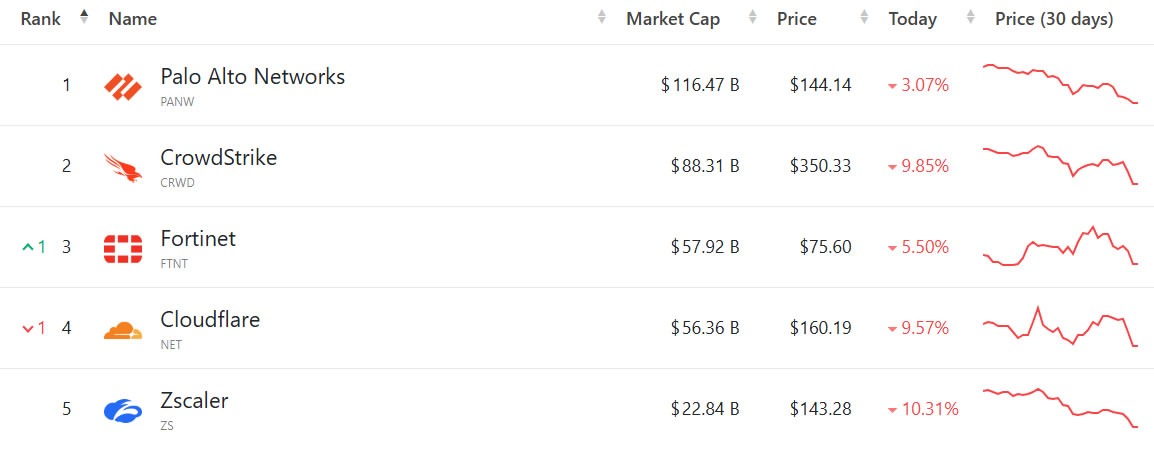
The top five US-listed information technology security companies by market capitalization have all seen heavy share price declines continue this week.
Palo Alto Networks, America’s largest cybersecurity company with a market capitalization of $116 billion, saw its stock (PANW) slide almost 9% since the launch.
CrowdStrike, which provides endpoint security, threat intelligence, and cyberattack response services, had an even greater loss with its share prices tanking 18% since Feb. 20, erasing $20 billion in market cap.
Meanwhile, California-based Fortinet, which develops and sells security products, lost 9% from its share price (FTNT) over the same period, according to Google Finance.
Other leading cybersecurity firms, such as Cloudflare and Zscaler, also saw their stocks slide amid the new AI competitor.
“What you’re seeing today is really the continuation of a panic-driven, narrative-led selloff,” Shrenik Kothari, security and infrastructure analyst at Robert W. Baird, told Reuters.

Market reactions are not irrational
“These reactions are not irrational,” noted the Kobeissi Letter in a lengthy post on the threat of AI taking over the IT workforce on Tuesday.
“When AI replicates what workers do, pricing power shifts to the buyer. That is the first-order impact, and it is very real.”
Related: Citrini’s AI doom report sees software, payment stocks tumble
Analysts at financial services firm Wedbush said the stock sell-off was due to “AI Ghost Trade fears.” They noted that Anthropic’s move into the market reinforces a broader view that cybersecurity will be a key beneficiary of the AI boom, reported Proactive on Tuesday.
Magazine: Crypto loves Clawdbot/Moltbot, Uber ratings for AI agents: AI Eye
Crypto venture firm Framework Ventures has partnered with mortgage services company Better to help it launch a $500 million plan to integrate with the decentralized finance protocol Sky, formerly MakerDAO.
Better said on Monday that Framework would help it provide $500 million in credit to Sky’s stablecoin ecosystem, enabling it to launch tokens tied to mortgages that would generate yield.
Framework Ventures co-founder Vance Spencer said real-world assets are “one of the most important frontiers in decentralized finance, and government-backed conforming mortgages are one of the largest real-world asset classes in the world.”
The plan comes amid a broader interest in tokenization from traditional finance companies, with firms such as BlackRock dabbling in tokenization for money market funds.
Tokens only for accredited investors, but will expand
Fortune reported on Monday that Framework also struck a deal to buy 10% of Better’s stock, currently valued at about $45 million, and that the planned tokens would initially be available only to accredited investors.
Better founder and CEO Vishal Garg said that it would issue the tokens and then would be “figuring out how do we get this in the hands of consumers,” but did not say when the tokens would be launched.
Fortune reported that the retail-focused tokens would be named “Home Token,” citing a person familiar with the plans.
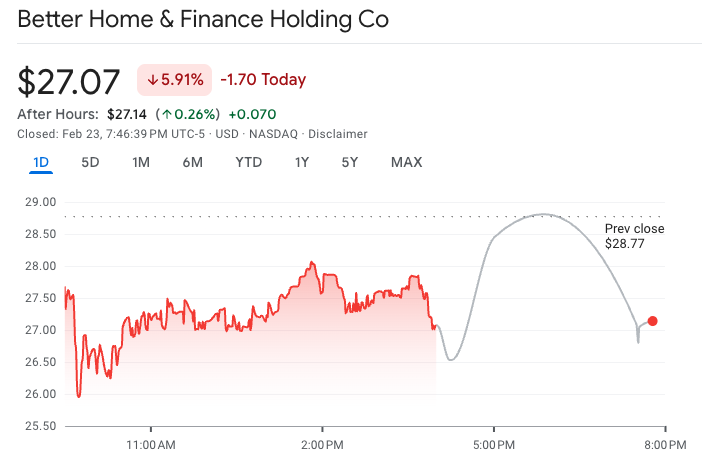
It comes as shares in the Nasdaq-listed Better (BETR) have struggled after hitting a peak of over $86 in late October.
Its stock has since sunk, ending trading on Monday at around $27, down nearly 17% so far this year.

Related: Backpack pledges 20% equity to token stakers amid IPO plans
Garg explained to Fortune that its push into crypto was driven by the promise of lower fees and operating costs, and that there are “so many different layers of intermediation that we’re going to be able to take out.”
“If we’re able to finance at a much lower cost than anyone else in the mortgage market, we’re going to be able to offer consumers a much cheaper mortgage than anybody else in the market,” he added.
Magazine: Bitcoin’s ‘biggest bull catalyst’ would be Saylor’s liquidation — Santiment founder

Robert Carradine, Lizzie McGuire And Revenge Of The Nerds Star, Dies Aged 71

‘Suddenly there’s a loud bang’: Airstrikes, blackouts and frustration in Russia’s frontline city | World News

More than 12K Vive Health bed rails recalled over entrapment and death risk


-

 Crypto World7 days ago
Can XRP Price Successfully Register a 33% Breakout Past $2?
-

 Video4 days ago
XRP News: XRP Just Entered a New Phase (Almost Nobody Noticed)
-

 Fashion4 days ago
Weekend Open Thread: Boden – Corporette.com
-

 Politics2 days ago
Baftas 2026: Awards Nominations, Presenters And Performers
-

 Sports13 hours ago
Women’s college basketball rankings: Iowa reenters top 10, Auriemma makes history
-

 Politics14 hours ago
Nick Reiner Enters Plea In Deaths Of Parents Rob And Michele
-

 Business6 days ago
Infosys Limited (INFY) Discusses Tech Transitions and the Unique Aspects of the AI Era Transcript
-

 Entertainment6 days ago
Kunal Nayyar’s Secret Acts Of Kindness Sparks Online Discussion
-

 Video7 days ago
Financial Statement Analysis | Complete Chapter Revision in 10 Minutes | Class 12 Board exam 2026
-

 Tech6 days ago
Retro Rover: LT6502 Laptop Packs 8-Bit Power On The Go
-
 Sports5 days ago
Clearing the boundary, crossing into history: J&K end 67-year wait, enter maiden Ranji Trophy final | Cricket News
-

 Business2 days ago
Mattel’s American Girl brand turns 40, dolls enter a new era
-

 Business2 days ago
Law enforcement kills armed man seeking to enter Trump’s Mar-a-Lago resort, officials say
-

 Entertainment5 days ago
Dolores Catania Blasts Rob Rausch For Turning On ‘Housewives’ On ‘Traitors’
-
 NewsBeat22 hours ago
‘Hourly’ method from gastroenterologist ‘helps reduce air travel bloating’
-

 Business6 days ago
Tesla avoids California suspension after ending ‘autopilot’ marketing
-

 Politics7 days ago
Eurovision Announces UK Act For 2026 Song Contest
-

 Tech2 days ago
Anthropic-Backed Group Enters NY-12 AI PAC Fight
-

 NewsBeat2 days ago
Armed man killed after entering secure perimeter of Mar-a-Lago, Secret Service says
-

 Politics2 days ago
Maine has a long track record of electing moderates. Enter Graham Platner.