

Crypto World
Balance Coin (BLC) Crashes 99% After 42DAO Suffers Exploit


Balance Coin (BLC) collapsed by over 99% on Tuesday after DeFi protocol 42DAO suffered an exploit that security researchers estimate may have drained about $915,000 from the platform.
The attack sent BLC from nearly $1 to fractions of a cent in one fell swoop, adding another entry to a growing list of crypto protocols breached in 2026.
Oracle Manipulation Triggered Rapid Liquidation
The incident was first flagged by blockchain security firm PeckShield, which reported that 42DAO had been exploited for approximately $915,000. SlowMist later published a more detailed breakdown, putting the loss closer to $912,000 and tracing the root cause to 42DAO’s Median Oracle, which reportedly fed an abnormally low BTCB price into the system.
According to SlowMist, the attacker used the protocol’s Spotter poke function to write that bad price straight into the VAT contract since the Spotter lacked several safeguards, including no price deviation checks, no maximum drawdown limits, and no minimum price floor protections.
Once the manipulated price entered the protocol’s accounting system, the Dog module picked it up with “no liquidation delay or oracle price validation,” allowing the attacker to trigger instant liquidations across several BTCB vaults in one transaction. SlowMist identified the bad actor’s wallet as 0x9d8d…231c and the victim contract as 0x973a…a9c0c, while the exploited Spotter and Dog contracts sit at 0x849d…29288 and 0x0010…1f634e.
The market reaction was swift, with data from GeckoTerminal showing BLC trading around $0.0025 at the time of writing, down 99.75% in the last 24 hours after previously trading at around $0.997. The token’s market cap has also fallen to about $12,000, with trading volume at $94,900 across more than 1,600 transactions, over 1,000 of those being buys and the rest being sells.
Another Security Breach Hits DeFi
42DAO is the latest in a run of DeFi and bridge exploits this year. Other recent ones include an attack on Allbridge, a cross-chain stablecoin bridge, which was forced to pause activity on July 20 after a hacker made off with $1.65 million. According to investigators, the thief manipulated Allbridge’s stablecoin pool ratios using transactions funded by a flash loan before extracting funds from distorted liquidity pools.
In June, Syscoin suffered a bridge exploit that allowed an attacker to mint as many as 5 billion SYS tokens, an act that triggered a near 20% drop in the asset’s price. A month before that, the Echo Protocol ended up suspending cross-chain transactions after an exploit involving the minting of 1000 eBTC. That particular incident also hurt Echo’s native token, as it immediately dumped more than 12% of its value.
While the technical details may be different, the 42DAO incident followed a familiar pattern where the exploit did not rely on breaking cryptography or stealing keys but instead took advantage of missing safeguards around price feeds and liquidations.
The post Balance Coin (BLC) Crashes 99% After 42DAO Suffers Exploit appeared first on CryptoPotato.

Crypto World
Reddit May Block Google AI Access as $60 Million Deal Nears Expiry: Will RDDT Stock Crash?
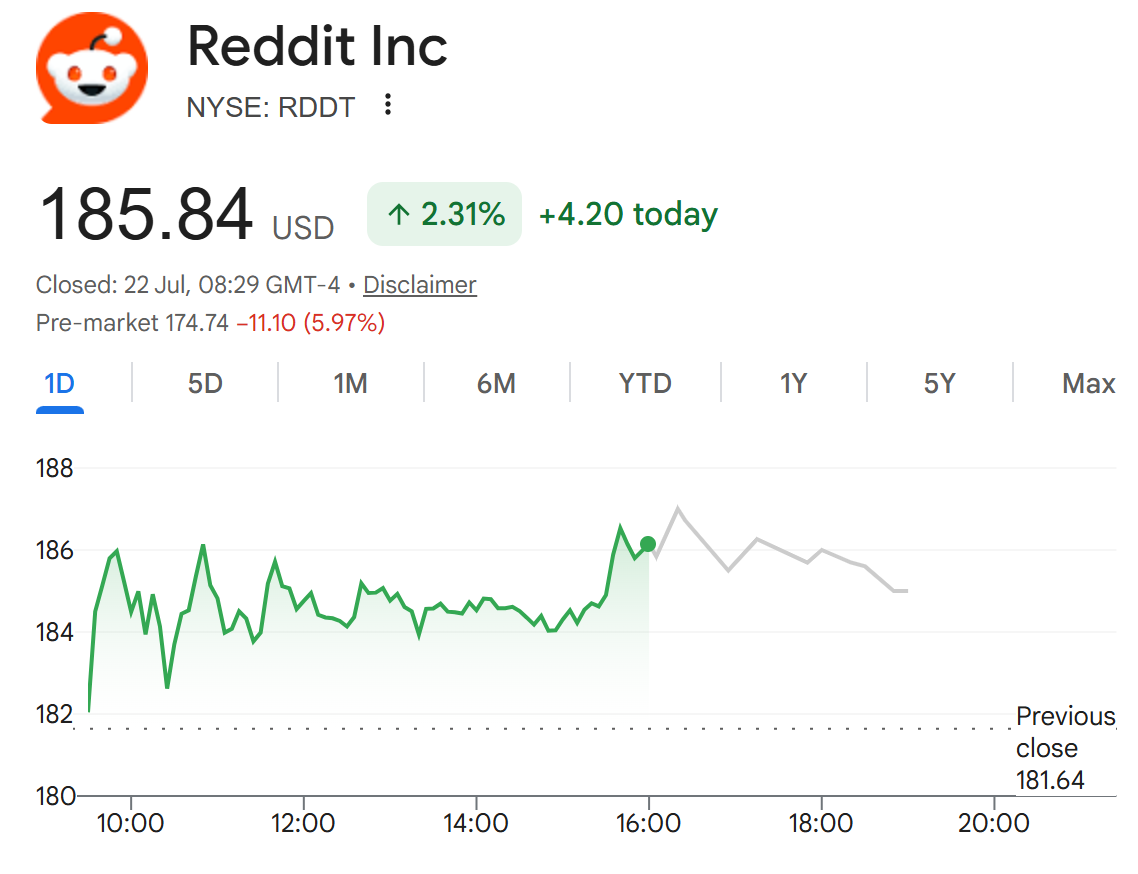
Reddit may block Google’s AI from using its content. Their licensing deal, reportedly worth $60 million per year, is about to expire. Reddit (RDDT) shares fell as much as 5.8% in premarket trading Wednesday.
The 2024 deal lets Google use Reddit’s posts to train and power its AI models. Talks over a renewal are ongoing. Neither company has made a final call.

Why Publishers Are Rethinking Google AI Deals
Reddit is not alone. The Journal also named USA Today, Politico, the Economist, People Inc., and Reuters. All are rethinking their ties with Google.
The anger comes down to one thing. Google’s AI Overviews answer questions right on the search page. Readers get the answer. Publishers lose the click.
Pew Research Center data shows how big the hit is. Users clicked a regular result just 8% of the time when an AI summary appeared. Without one, the rate was 15%. Only 1% clicked a source inside the summary itself.
Semrush data cited in the Journal’s reporting points the same way. USA Today’s Google traffic fell nearly 50% in a year. Politico’s dropped 23%.
Regulators are stepping in too. On June 3, Britain’s antitrust watchdog, the Competition and Markets Authority (CMA), gave publishers a new right. They can now opt out of Google’s AI features without vanishing from search.
“It is crucial that content publishers, including news organizations, have appropriate bargaining power over how their content is used,” CMA Chief Executive Sarah Cardell said in the announcement.
Similar complaints about Google stealing publisher traffic now reach crypto media, where AI answers are already siphoning publisher visits.
Will RDDT Stock Crash?
A crash looks far from certain. Reddit’s threat may be a bargaining chip, not an exit. Its human conversations are among the most cited sources in AI answers. It also licenses data to OpenAI. That gives it rare pricing power.
Executives reportedly want usage-based fees that grow as Reddit becomes more central to AI results. A new Reddit Google AI deal could reset prices across the market. AI training data lawsuits are already testing what unlicensed content costs.
Timing adds pressure. Alphabet reports Q2 earnings after Wednesday’s close. Options traders are already pricing outsized earnings moves across big tech. Any comment on content costs could move both stocks, as noted in BeInCrypto’s Alphabet Q2 earnings preview.
For now, this looks like hardball, not a breakup. The renewal terms, and Alphabet’s comments tonight, should soon show what Reddit’s data is really worth.
The post Reddit May Block Google AI Access as $60 Million Deal Nears Expiry: Will RDDT Stock Crash? appeared first on BeInCrypto.


Crypto-friendly digital bank Revolut has been valued at $115 billion in a secondary share sale, lifting the company’s valuation by 53% in less than a year.
The company priced shares at $2,017 each, according to an internal message from CEO Nik Storonsky reported by The Wall Street Journal. The transaction allows employees and other existing shareholders to sell stock rather than raising new capital for Revolut.
The valuation has more than doubled from $45 billion in 2024 and makes Revolut Europe’s most valuable private company, representing a major rise from the $75 billion valuation seen in November last year.
It also puts the firm above rival banking giants like Barclays’ roughly $95 billion market value, though with the caveat that Revolut’s price is based on a private transaction whose size has not been disclosed.
Revolut reported $2.3 billion in pre-tax profit for 2025, up 57%, as revenue rose 46% to $6 billion. Its customer base has since passed 75 million.
The company’s main app lets its users trade more than 200 crypto tokens, transfer assets to external wallets and stake holdings, while the firm also manages its own standalone crypto exchange called Revolut X.


Arbitrum will collect 10% of fees generated on Robinhood Chain and every other Layer 2 built on its technology stack, Offchain Labs co-founder Steven Goldfeder said Wednesday on X. Of that cut, 8% goes to the tokenholder-controlled Arbitrum treasury and 2% funds development, he said. Goldfeder… Read the full story at The Defiant

XRP price is trading around $1.13, up about 2% over the past 24 hours. Those modest gains hide a much larger binary risk approaching. A Senate deadline could determine whether XRP secures the regulatory clarity many institutional investors want or loses its biggest legislative catalyst for now. That possibility still appears underpriced, leaving traders on edge.
Meanwhile, the crypto market is sending mixed signals. Bitcoin and Ethereum have spent the past two days moving sideways, and large-cap altcoins, including XRP, are following suit. XRP has traded between $1.12 and $1.16 during the past day, reflecting consolidation with no decisive trend.
Even so, price stability does not mean risk has disappeared. XRP has increasingly become a legally driven trade, with sentiment shifting alongside every regulatory headline. Any court filing, settlement rumor, or signal from lawmakers before Thursday could trigger a sharp repricing.
The real question is the direction of that move. A favorable outcome could strengthen confidence and attract fresh institutional demand. On the other hand, another delay or disappointing development may leave XRP stuck in its current range, or even spark another wave of selling as traders unwind expectations.
Discover: The Best Token Presales
Can XRP Price Break $1.25 Before the Senate Deadline?
XRP has been consolidating around the $1.08 to $1.15 range over the past week. The $1.10 area continues to act as a short-term pivot, while support sits near $1.05 after holding several recent pullbacks. Meanwhile, sellers have repeatedly defended the $1.15 to $1.20 zone.
Recent trading volume has offered little conviction despite the rebound. Instead, the move looks more like traders adjusting positions than chasing a fresh trend. That often happens before major headlines, when market participants prefer waiting over making aggressive bets.
The bullish scenario remains straightforward. If Senate legislation advances or Ripple receives favorable legal news, XRP could break above $1.20 with strong volume. That would expose the next resistance around $1.30 to $1.40, where sellers may try to slow the rally.

The base case assumes no meaningful update arrives. In that situation, XRP could remain trapped between $1.08 and $1.15 as traders wait for the next catalyst. XRP Price action is likely to remain choppy until fresh news shifts sentiment.
The bearish case comes into play if legislation stalls or regulatory pressure increases again. A decisive break below $1.05 could send XRP toward the $1.00 level first. If that support fails, the next buying zone sits around $0.90 to $0.95.
Technically, XRP still appears compressed, and those conditions rarely last forever. Once a catalyst arrives, the move could develop quickly in either direction. Position sizing ahead of Thursday remains the key consideration because this setup is unlikely to stay quiet for long.
Trade XRP on Bybit and Get a Chance to Win Our $1,000 USDT Airdrop
Maxi Doge Targets Early-Mover Upside as XRP Tests Key Levels
XRP at $1.13 is, at minimum, a known asset with a nine-figure market cap and a legal binary that limits near-term upside to a defined range. Even the optimistic $1.50 target represents roughly a 30% move from current levels. It’s respectable, but not the kind of asymmetric return early-stage exposure can theoretically offer.
Traders watching the XRP setup and seeking a different risk profile have been rotating attention toward early presale positions.
Maxi Doge ($MAXI), available at $0.000283 per token, has pulled in $4.8 million in total raised, a number that signals meaningful community traction without the dilution risk of a fully saturated cap.
Built on Ethereum as an ERC-20 token, the project is positioned around a “leverage king” trading culture. It has a holder-only competition with leaderboard rewards, a Maxi Fund treasury for liquidity and partnerships, and meme-first marketing built around a 240-lb gym-bro mascot embodying 1000x trading mentality.
The staking program runs on a dynamic APY structure. The tagline, “never skip leg-day, never skip a pump,” commits to the bit. As with any presale, token value post-launch is speculative, and capital loss is a real outcome.
Research Maxi Doge before committing to any position.
Discover: The Best Crypto to Diversify Your Portfolio
The post XRP Price Could Turn Volatile This Month: What’s at Stake for Ripple? appeared first on Cryptonews.


White House AI adviser Michael Kratsios accused Chinese startup Moonshot AI of secretly copying Anthropic’s Claude Fable 5. He said the copies helped build its new Kimi K3 model.
Kratsios made the claim in a Wednesday post on X. He said Moonshot built a special platform for large-scale distillation of US models. The firm allegedly kept switching access routes to avoid getting caught.
White House Draws a Line on Moonshot AI Distillation
The technique at the center of the row is called distillation. It trains a new AI model on the answers of a stronger one. Done openly, it is legal and common. Kratsios said the covert, industrial-scale version is theft.
“We have information that Moonshot AI distilled Anthropic’s Fable for the development of its K3 model… However, large-scale, covert industrial distillation aimed at stealing proprietary U.S. technology and undermining American research is unacceptable,” Michael Kratsios, Director of the White House Office of Science and Technology Policy stated.
Anthropic has said the same thing. In a February report, the company traced over 3.4 million Claude exchanges to Moonshot. The traffic came from hundreds of fake accounts. Account records even matched the public profiles of senior Moonshot staff.
Anthropic said the campaign targeted Claude’s reasoning, coding, and vision skills.
Kratsios also said Moonshot got hold of NVIDIA GB300 servers and used them in Thailand. These are NVIDIA’s top AI chips, and US rules block their sale to China. Washington tightened its AI chip export clampdown in May. In June, a Super Micro office raid in Taiwan targeted alleged chip smuggling into China.
Kimi K3 Deepens the US-China AI Fight
Moonshot launched Kimi K3 on July 16. At 2.8 trillion parameters, it is the biggest open-weight model ever released. Demand was so strong that Moonshot had to pause new Kimi subscriptions within 48 hours. The full model weights go public by July 27.
That date matters. Anthropic warns that copied models lose their safety guardrails. Once open-sourced, they can spread beyond anyone’s control.
This is not the first such charge. In January 2025, White House AI czar David Sacks accused DeepSeek of copying OpenAI’s models. DeepSeek denied it. Beijing called Anthropic’s February findings groundless.
Kratsios announced no penalties, and Moonshot has stayed silent. The US still holds a 23x spending lead in AI, yet Chinese models keep gaining ground. The next move now sits with Washington.
The post China’s Moonshot Reportedly Stole U.S. AI Tech for Kimi K3 appeared first on BeInCrypto.
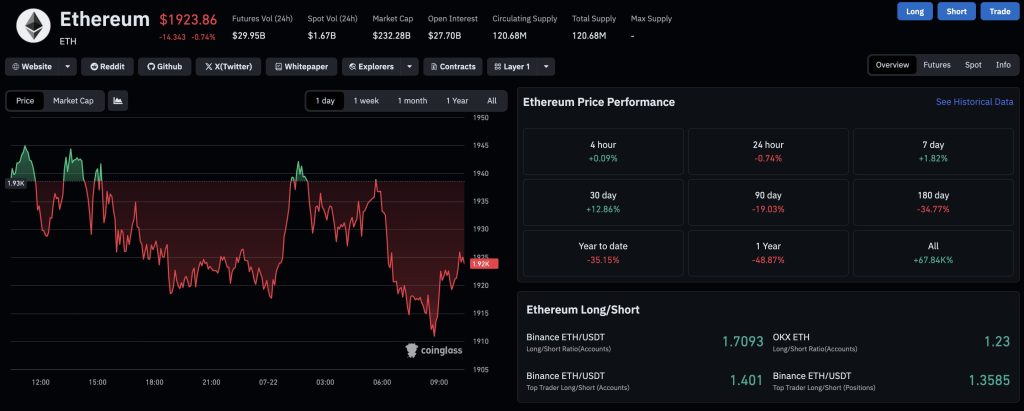
In Ethereum news today, new smart contract deployments on the network have surged 192% above the 90-day baseline, with funding rates simultaneously running 220% above their 90-day norm, a combination of signals that, according to a CryptoQuant QuickTake published by analyst CryptoOnchain, rarely fires without preceding a significant directional move.
The question the data forces is whether the early leverage bid currently accumulating in derivatives markets is front-running the builder activity, or simply reacting to it.
ETH price climbed unevenly from roughly $1,770 to $1,903 over the past two weeks, a movement that reads as ordinary chop on the surface. Beneath it, three structurally distinct signals are activating in parallel for the first time in recent memory.
Ethereum News: Builder Activity Spikes While Capital Stages on Binance
The sharpest signal in the CryptoQuant analysis is the developer activity reading. Smart contract deployments jumped roughly 192% versus the 90-day baseline, with nearly 57% of that increase occurring within the past week alone.
Deployment spikes of this magnitude typically indicate new protocol launches, redeployed contracts ahead of a release, or coordinated testing cycles, builder activity, not speculative noise.
Alongside that, stablecoin net flow into Binance has surged to nearly 370% above its three-month average, with daily inflows averaging over $58M. Capital staging on an exchange rather than deploying directly on-chain is a classic pre-trade positioning pattern; it suggests intent without yet confirming direction.
What complicates the read is that these two signals, which typically appear in sequence during a clean accumulation phase, are running simultaneously with a hot derivatives market. That removes the analytical comfort of a slow, cold-funding accumulation setup.
Discover: The Best Crypto to Diversify Your Portfolio
Leverage Signal Disrupts the Accumulation Script
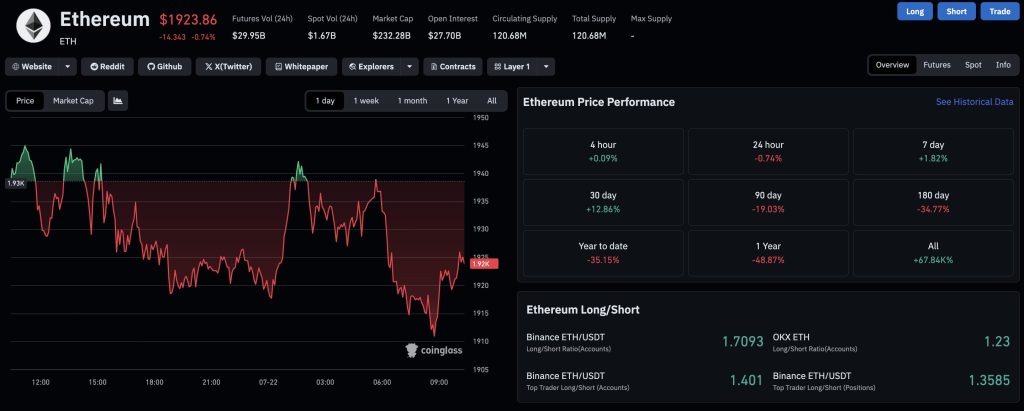
Funding rates on Binance are now running approximately 220% above their 90-day norm. That is not an ambiguous reading; it is a clear signal that leveraged traders are already positioned long and paying to hold those positions.
For anyone tracking perpetual trading dynamics, elevated funding at this level has historically preceded either a flush that resets overextension or price follow-through that validates the bet.
The problem, as CryptoOnchain’s analysis notes, is that having both stablecoin staging and hot funding rates activate together is not a clean accumulation script.
It is a setup that historically precedes more volatile, two-sided price action rather than a straightforward directional trend. Open interest building into elevated funding with a price that has not yet broken out cleanly creates the conditions for sharp moves in either direction.
The on-chain metrics that would normally anchor a bullish read are not in dispute. Staking has climbed to a fresh all-time high of 33.58%, tightening liquid float.
Median transaction fees are down by over 96% versus three months ago, not due to network abandonment. These are the readings that define the valuation gap: base-layer economics remain subdued: median transaction fees are down over 96% versus three months ago, while staking continues its steady climb to a fresh high of 33.58%.
The gap between robust on-chain metrics and ETH price performance has attracted institutional attention at these levels, and staking continues its steady climb to a new high of 33.58%, further tightening the liquid float.
Trade Ethereum on Bybit and Get a Chance to Win Our $1,000 USDT Airdrop
Three Signals Rarely This Active Simultaneously
In other Ethereum news, CryptoQuant’s analysis highlights a rare convergence of three signals: elevated builder activity, capital staging in stablecoins on exchanges, and existing leverage via derivatives. Each signal has meaning individually, but their simultaneous occurrence in the absence of a price catalyst is notable.
Ethereum’s post-Dencun architecture shows lower fees, as Layer 2 activity has offloaded execution costs from the mainnet without compromising economic security or validators’ staking yield. Developer activity remains robust, with a 192% spike in deployment, indicating resilience even during downturns.
Institutional flows suggest cautious short-term behavior, but demand from cumulative inflows since the launch of the ETH ETF remains evident. This context is crucial for understanding whether the leverage bid stems from retail speculation or early institutional accumulation.
According to CryptoQuant, the outcome will either be funding rates cooling as leveraged longs are flushed out, or a price breakthrough that validates the leverage position.
The eventual dominant signal, whether from builders, exchange capital, or derivatives, will only be clear as these paths unfold. Until then, the three-signal convergence remains the primary focus.
Discover: The Best Token Presales
The post Ethereum News: Builder Activity & Leverage Data Align, $2k Next? appeared first on Cryptonews.


Coinbase has secured a $150,000 settlement from the U.S. Securities and Exchange Commission after the regulator lost nearly 11 months of former Chair Gary Gensler’s text messages.
Summary
- SEC will pay Coinbase $150,000 after losing Gary Gensler’s crypto-related text messages.
- An SEC watchdog blamed avoidable IT failures and a factory reset for the loss.
- The settlement requires the regulator to revise its policies for preserving official communications.
A Wall Street Journal op-ed written by Coinbase Chief Legal Officer Paul Grewal disclosed the agreement on July 22, bringing the exchange’s Freedom of Information Act lawsuit against the agency to an end.
Under the settlement, the SEC will pay Coinbase $150,000 and revise its record-retention policies, according to Grewal.
Coinbase filed the case while seeking internal SEC records about how senior officials handled crypto regulation and enforcement. The exchange also sued the Federal Deposit Insurance Corporation in 2024 for documents that it believed could show coordinated attempts by U.S. regulators to restrict crypto companies’ access to financial services.
The disputed SEC records included messages exchanged between Gensler and other agency officials. Grewal wrote that the regulator attributed the loss to a process that “automatically wiped” certain data, even though Coinbase had requested communications connected to crypto policy decisions.
SEC failures erased months of records
A September 2025 review by the SEC Office of Inspector General found that avoidable errors caused the loss of Gensler’s messages. The missing texts covered Oct. 18, 2022, through Sept. 6, 2023, a period when the agency was pursuing several enforcement actions involving digital assets.
According to the Inspector General’s report, SEC technology staff performed a factory reset on Gensler’s agency-issued iPhone on Sept. 6, 2023, after he could no longer access SEC applications. The reset permanently deleted the phone’s data before staff completed a usable backup.
Although the Office of Information Technology backed up the device later that afternoon, the Inspector General found that the messages could no longer be recovered. The report concluded that a timely backup and earlier action to improve recordkeeping would have prevented the loss.
SEC technology staff had announced an initiative to disable texting on agency devices in October 2022, according to the review. However, the office postponed enforcement while it developed an exemption process and prepared for a possible government shutdown, leaving Gensler’s phone without another backup before the reset.
The SEC eventually removed the texting application from agency devices in March 2024, the Inspector General reported. A separate notice submitted to the National Archives and Records Administration also disclosed that the agency later found problems searching for and recovering messages from the SEC-issued phones of five other senior officials.
Following the Inspector General’s findings, Grewal accused the former SEC leadership of violating its public obligations by losing material Coinbase had sought. In a September 2025 post, the legal chief wrote that the agency destroyed “documents they were required to preserve and produce.”
“The Gensler SEC did this even though we asked for information about ‘all communications’ within the SEC related to crypto regulatory and enforcement decision-making years ago.”
Coinbase’s disclosure fight predates the settlement
Coinbase’s pursuit of SEC communications had also appeared in the agency’s former enforcement lawsuit against the exchange. In July 2024, Coinbase asked a New York federal court to compel the regulator to produce documents tied to Gensler’s internal discussions during his tenure, which began in 2021.
After resistance from the SEC and U.S. District Judge Katherine Polk Failla, Coinbase narrowed an earlier request that had covered Gensler’s communications from both before and during his chairmanship. Its July 23 motion focused on records from his time leading the agency.
Subpoena Request No. 23 sought documents connected to Gensler’s public speeches about digital-asset regulation. Grewal argued at the time that those materials “bear directly on the claims the SEC now asserts.”
According to Coinbase’s motion, the SEC had declined to search beyond its Enforcement Division’s investigative files, citing relevance and the burden involved. The exchange also claimed that the regulator would not run searches across custodians’ email accounts or establish a system to produce responsive documents or list withheld records.
Those requests emerged as Coinbase defended itself against SEC allegations that it operated an unregistered securities exchange, broker and clearing agency. Under the Trump administration, the commission dismissed the enforcement case in February 2025 without requiring Coinbase to pay a fine or change its business practices.
As reported by crypto.news, Coinbase has since supported federal crypto legislation, including the stablecoin framework approved by Congress, while CEO Brian Armstrong and Grewal have pressed lawmakers to advance the CLARITY Act. The SEC has also started developing policies for tokenized securities and other digital-asset products under its post-Gensler leadership.
The latest settlement resolves Coinbase’s FOIA dispute while requiring the regulator to change how it preserves official communications. Grewal’s account places the $150,000 payment alongside those recordkeeping reforms, tying the financial award directly to messages the Inspector General determined were lost through preventable agency failures.

Ethereum is pressing against a price level that has capped every rally. ETH trades at $1,925, little changed over the past 24 hours. But the $2,000 mark remains both a technical ceiling and a psychological flashpoint. What’s changed is who’s bidding, and why.
Fundstrat’s Tom Lee posted on X that capital tied to the AI sector is rotating from chip stocks into Ethereum. He framed ETH as the new digital infrastructure play for AI-focused portfolios. The thesis argues that decentralized compute and data networks could attract capital that previously favored names like Nvidia.
That narrative gained institutional support the same week. S&P Dow Jones Indices and Pantera Capital launched the S&P Pantera Digital Asset Index. The 18 asset benchmark applies S&P 500-style financial viability screens to crypto protocols. Ethereum is its largest holding, while the index’s constituents generated more than $3 billion in annualized revenue across the previous two quarters.
Both developments arrive as ETH tests a resistance zone it has struggled to clear throughout July. For Ethereum price, if institutional demand strengthens while technical resistance weakens, it could finally get a clean shot at reclaiming the $2,000 level.
Discover: The Best Crypto to Diversify Your Portfolio
Can Ethereum Price Break $2,000 This Week?
Ethereum is trading around $1,925 after briefly testing the $1,940 price area. Price action remains tight, with only a modest gap across major exchanges. That narrow spread points to cooling intraday volatility rather than aimless trading. Buyers and sellers are waiting for the next catalyst before making a decisive move.
Trading volume has improved from last week’s average, giving the latest rebound more credibility. Even so, traders will likely want another pickup in activity before treating any breakout as sustainable.

Technically, the structure remains straightforward. Support sits between $1,850 and $1,900, where buyers stepped in several times this month. On the upside, resistance stands around $1,950, followed by the psychological $2,000 mark. Ethereum has yet to secure a convincing daily close above $1,950, making that the key level to watch.
If buying pressure continues to build, Ethereum could break $1,950 and challenge the $2,000 to $2,100 zone over the coming weeks. A more likely outcome is continued consolidation between $1,880 and $1,960 until a macro event or major network development shifts sentiment. However, a daily close below $1,850 would put the $1,720 to $1,750 region back into focus.
ETF inflows into Ethereum investment products have continued to strengthen, providing steady demand beneath the market. That support may help limit downside, even if the push above $2,000 takes longer than bulls expect. Still, price confirmation matters more than headlines, especially while Ethereum trades just below a major resistance zone.
Trade Ethereum and Major Alts on Bybit and Get a Chance to Win Our $1,000 USDT Airdrop
LiquidChain Targets Early Mover Upside as Ethereum Tests Key Levels
ETH at $1,925 with a $231 billion market cap is not where asymmetric returns live; it’s where capital preservation and measured upside live. Traders who want the AI infrastructure narrative without the large-cap ceiling are looking at where that architecture is being built at the execution layer.
LiquidChain is a Layer 3 infrastructure project positioned as a cross-chain liquidity layer that fuses Bitcoin, Ethereum, and Solana liquidity into a single execution environment. The pitch to developers is clean: deploy once, access all three ecosystems.
The Order builds. — LiquidChain (@getliquidchain) July 15, 2026
Brick by brick. Layer by layer.  ⟁https://t.co/vqvBcdSQYC pic.twitter.com/tcfMNP4lNq
Its core architecture boasts Unified Liquidity Layer, Single-Step Execution, Verifiable Settlement, and Deploy-Once Architecture. Those targets one of DeFi’s most persistent friction points: siloed liquidity across chains.
The presale is live at $0.01482 per $LIQUID, with $915K raised to date.
For traders who’ve done the diligence and want exposure to L3 infrastructure before institutional attention reaches that layer, research LiquidChain’s presale structure here.
Discover: The Best Token Presales
The post Ethereum Price Eyes $2,000 as AI Funds Shift From Chips to ETH, Says Tom Lee appeared first on Cryptonews.


Cardano wallet SecondFi is winding down after attackers exploited a flaw in its transaction signing software to steal 16.1 million ADA, worth roughly $2.4 million, from 374 wallets.
The service, which replaced EMURGO’s Yoroi wallet, said it will not resume normal operations despite patching the vulnerability.and at the time securing 129 million ADA before attackers could reach the funds.
The flaw allowed attackers to derive private key material from transaction data visible on the Cardano blockchain, SecondFi said. The Cardano network itself was not compromised, and hardware wallet users were not affected.
Groom Lake, the blockchain intelligence firm hired by EMURGO, found that the main attacker was sophisticated and well-funded. Some indicators point to North Korea’s Lazarus Group, though no attribution has been confirmed, the firm said.
A separate attacker targeted another set of wallets during the same period.
SecondFi expects to release wallet export tools in early August and a zero-knowledge recovery portal later that month. EMURGO has funded an asset recovery wallet, but no firm distribution date has been given.
The attacker behind the $6 million Summer.fi exploit has begun laundering the stolen funds, moving roughly $1.35 million in DAI through Tornado Cash, the sanctioned crypto mixer, according to Summer.fi's own post-mortem of the July 6 attack. Summer.fi, the front-end for the Lazy Summer Protocol,… Read the full story at The Defiant

Miami Heat posts and deletes video about LeBron James’ possible return

Every frontier AI model the UK tested for cheating cheated

Bedhampton home opens community ‘Cool Space’ for local people during the heatwave


-
 NewsBeat6 days ago
London Mayor Sadiq Khan handed a peerage by Keir Starmer alongside 15 other Labour figures… just days before the PM leaves No10
-

 Fashion5 days ago
Weekend Open Thread – Corporette.com
-

 Politics4 days ago
The House | The City of London can help the new chancellor deliver growth in every postcode
-
 Crypto World5 days ago
Two July Windows Left: The CLARITY Act’s Senate Fight and What Failure Means
-

 Crypto World7 days ago
CFTC blocks Kalshi from unwinding Michigan trades after court order
-

 Crypto World4 days ago
Ripple Payments Joins MiCA With 14 Firms, Does It Mean Anything For XRP?
-

 Business7 days ago
Nvidia Stock Slips After Big Tuesday Rally as Huang Confirms Vera Rubin Chip Is Now in Production Today
-

 Politics3 days ago
Democrats look to World Cup watch parties to register thousands of voters
-
 Entertainment7 days ago
Disney’s Most Ambitious Failed Star Wars Attraction Is Coming to SDCC
-

 Crypto World5 days ago
Ripple wins EU-wide access as ESMA adds it to MiCA register
-

 Crypto World1 day ago
Grayscale Files For Worldcoin ETF, WLD Registers Sharp Rise
-

 Crypto World6 days ago
Injective Submits SEC Transfer-Agent Registration to Onchain Ownership Records
-

 Business7 days ago
Palantir Shares Rise After Expanded Nvidia Partnership and Fresh Analyst Upgrades Ahead of Earnings Day
-

 Tech2 days ago
Sail Virtually Aboard The “Itanic” With IA-64 Emulator
-
 Tech2 days ago
Turtle Beach Command Series KB7 review: a nifty screen-equipped gaming keyboard
-

 NewsBeat2 days ago
Unregistered fitter used Gas Safe logo on business flyers
-

 NewsBeat5 days ago
Registration is now open for March for Men with Kev 2026
-
 Sports7 days ago
New Cornerback Enters Vikings Trade Rumor Mill
-
 Business12 hours ago
New Jersey voter registration controversy explained: How 6,600 noncitizens got on the rolls, and what happens next
-

 News Videos5 days ago
Money | Class 12 Economics | CBSE Board Exam 2026-27
You must be logged in to post a comment Login