
Crypto World
Base58 Labs’ BASIS 2026 Blueprint Forges a New Standard for BTC, ETH, SOL & PAXG


[PRESS RELEASE – London, UK, March 17th, 2026]
New roadmap positions BASIS as an institutional-grade digital asset management platform built for macro volatility, tokenized safe-haven demand, and frictionless Web3 onboarding.
Base58 Labs today unveiled the BASIS 2026 Technical Blueprint & Infrastructure Roadmap, introducing what the company describes as a next-generation digital asset management platform purpose-built for global institutional investors seeking secure exposure, capital efficiency, and advanced on-chain yield infrastructure. The company said BASIS is designed specifically for institutions navigating geopolitical instability, macroeconomic uncertainty, and rising demand for both blue-chip crypto assets and tokenized safe-haven alternatives.
According to Base58 Labs, BASIS is not designed as a conventional staking product. The platform is described as an “intelligent yield infrastructure” that integrates algorithmic execution, institutional-grade security controls, and digital asset management across BTC, ETH, SOL, and PAXG. The company stated that this approach is intended to address increasing institutional demand for infrastructure that supports asset management and risk mitigation in volatile market conditions.
Base58 Labs Targets Institutional Flight Toward Safe-Haven Digital Assets
At the center of the roadmap is the strategic integration of PAX Gold (PAXG), which Base58 Labs has prioritized as a core supported asset amid growing institutional interest in gold-linked digital instruments. The company said BASIS is designed to move beyond passive exposure by enabling a “yield-bearing gold” model that pairs PAXG holdings with algorithmic yield infrastructure intended to capitalize on structural market inefficiencies.
Base58 Labs said this approach reflects a broader shift in institutional capital allocation, where investors are increasingly seeking digital strategies that can combine capital preservation, portfolio diversification, and non-directional return opportunities under stressed macro conditions.
BTC, ETH, and SOL Infrastructure Built on the BHLE Execution Engine
Alongside PAXG, the company said BASIS is being developed around major digital assets including Bitcoin, Ethereum, and Solana, all supported by its proprietary Base58 Hyper-Latency Engine (BHLE). According to the roadmap, BHLE is designed as a high-performance execution environment capable of supporting low-latency routing, institutional-scale transaction throughput, and market-neutral strategy execution. The company states that the engine targets sub-50 microsecond latency and 100,000+ operations per second, with proprietary routing infrastructure tailored for precision execution and structural yield capture.
Base58 Labs said BHLE evolved from the firm’s high-precision R&D efforts and is intended to help power institutional-grade strategy deployment across multiple supported assets, regardless of broader market direction.
Privy-Powered Onboarding Aims to Remove Web3 Friction for Institutions
To address one of the biggest barriers to institutional adoption, Base58 Labs said BASIS has integrated with Privy.io to simplify wallet creation and user authentication. According to the company, institutions using BASIS will be able to create wallets through email and enterprise social logins without relying on traditional seed phrase management. The onboarding design uses Privy-based Multi-Party Computation (MPC) and includes a dual wallet system that separates funding activity from staking activity in order to improve transparency, operational clarity, and accounting convenience.
Base58 Labs said this onboarding model is central to its effort to reduce complexity for traditional financial institutions entering digital asset markets while preserving non-custodial control and strong operational safeguards.
Security Stack Designed for Institutional-Scale Capital Protection
The roadmap also highlights a security and risk-management framework intended for large-scale capital deployment. Base58 Labs said it has completed the first phase of internal testing covering core infrastructure integrity and external attack defense logic, while network stress tests focused on cross-chain liquidity routing and institutional-scale transaction handling are in the final stage.
The company further disclosed internal systems including the BASIS Sentinel Circuit Breaker (BSCB) and Defensive Maintenance Mode (DMM), which are designed to react rapidly in the event of black swan market events, exchange API failures, or extreme slippage. In addition, Base58 Labs said it has initiated formal procedures to pursue ISO 27001 and ISO 20000-1 certifications as part of its broader compliance and operational assurance strategy.
2026 Rollout to Include Closed Beta, Global Launch, and Institutional Private Pools
Base58 Labs said the BASIS rollout will proceed in phases throughout 2026. According to the published roadmap, Q2 2026 will focus on revealing the closed beta architecture and conducting external core logic audits by a Tier-1 global security firm. Q3 2026 is scheduled for the official global launch of BASIS and the opening of BTC, ETH, SOL, and PAXG asset management pools. In Q4 2026, the company plans to expand into private pools for institutional investors and customized algorithmic derivative strategies.
Executive Commentary
“Institutional capital is no longer looking only for access to digital assets it is looking for infrastructure that can deliver security, operational efficiency, and resilient yield under real-world market stress,” said a spokesperson for Base58 Labs, Dirk Johan Jacob Broer. “With BASIS, we are building an institutional platform designed for the next phase of on-chain finance, where seamless onboarding, intelligent execution, and capital protection must exist in one integrated system.”
About Base58 Labs
Base58 Labs is the research institute behind the BASIS ecosystem. While BASIS operates the execution and product infrastructure, Base58 Labs develops the measurement frameworks, execution logic, and risk models that support the platform under both normal and stressed market conditions. Through its work on market microstructure, execution risk, and structural alpha, Base58 Labs provides the research foundation that powers the next generation of institutional on-chain finance.
Binance Free $600 (CryptoPotato Exclusive): Use this link to register a new account and receive $600 exclusive welcome offer on Binance (full details).
LIMITED OFFER for CryptoPotato readers at Bybit: Use this link to register and open a $500 FREE position on any coin!



- XRP shows rare bottom signals and strong rebound potential.
- The key support at $1.44–$1.48 will guide near-term price action.
- A break above $1.60 with volume needed to sustain the rally.
XRP has grabbed the spotlight after overtaking BNB in market cap ranking following its recent price rebound.
Analysts point to technical signals that suggest XRP may have recently formed a long-term bottom.
These signals include an oversold RSI on the weekly chart and a stretch of negative funding rates that historically appear before significant rebounds.
XRP rebounded after hitting a rare bottom
After a period of sideways trading, XRP surged to a weekly high near $1.60.
This move followed a modest beta-driven pullback alongside Bitcoin, reflecting that broader market trends still influence XRP.
Despite the rally, the cryptocurrency faced technical resistance, with momentum indicators suggesting it had been overbought.
Trading volumes have cooled after the rally, which is typical when an asset approaches a key resistance area.
The current support zone around $1.44–$1.48 has become crucial.
Holding above this area could allow XRP to test $1.60 again and potentially reach new resistance levels beyond that.
Conversely, a breach below this support may see a decline toward $1.34, highlighting the importance of technical positioning.
What is fueling XRP’s rally?
XRP’s recent gains were fueled by multiple factors. First, its short-term correlation with Bitcoin helped it catch a wave as the broader market dipped slightly.
Second, technical patterns are now aligning in a way that traders rarely see, suggesting the bottom may hold.
Third, market inflows from institutional investors remain a key driver, especially in the form of spot XRP ETF activity.
Outflows from these ETFs in recent weeks have restrained buying pressure, but a reversal could reignite momentum.
But despite these positives, risks remain.
Volume remains lower than during the peak of the rally, signaling that conviction is not yet at its highest. Moreover, the current resistance at $1.60 is a significant hurdle.
A breakout above it, supported by rising trading activity, would confirm that the uptrend can continue.
However, caution is warranted, as the cryptocurrency is still navigating critical resistance and depends on continued support from market flows.
Traders should closely watch to see if XRP can hold its gains and build on this rare bottom.
If the support around $1.44-$1.48 remains firm and institutional demand resumes, the path toward higher levels may be within reach.
At the same time, failing to hold this support could quickly undo the recent gains.
For now, XRP sits at a critical juncture, with potential for both continuation and retracement depending on the next wave of market activity.


- Citigroup forecasts Bitcoin at $112,000 despite slow US crypto legislation.
- Bitcoin price ranges show cautious momentum with potential volatility ahead.
- Institutional demand remains key amid regulatory uncertainty.
Bitcoin has been steadily climbing over the past week, with its price now sitting around $74,000.
This marks a 6.5% increase over the last seven days, showing renewed momentum after several months of sideways movement.
Citigroup, in its latest update, adjusted its 12-month price forecast for Bitcoin to $112,000, from its previous target of around $143,000.
Citi’s move reflects a cautious optimism shaped by both market dynamics and regulatory developments.
Regulatory headwinds weigh heavily
One of the main reasons for Citigroup’s revised forecast is the slow progress on US cryptocurrency legislation. Lawmakers have yet to finalize clear rules on key issues like stablecoins and decentralized finance.
This lack of clarity is affecting institutional adoption.
Investment firms and hedge funds are hesitant to increase exposure without clear regulatory guidance. The window for passing meaningful crypto laws in the Senate is narrowing.
Internal political divisions are slowing the process further.
Without these legislative catalysts, the market may continue to trade in ranges despite overall optimism.
Citigroup notes that this legislative uncertainty could act as a ceiling for Bitcoin in the near term. Even with strong demand from retail and institutional investors, clear rules are needed to support sustained growth.
What traders should watch out for
Ethereum, Bitcoin’s closest competitor, is also experiencing slower growth due to similar challenges.
Citigroup lowered Ethereum’s 12-month target to $3,175, down from over $4,000. Both cryptocurrencies are influenced by network activity and investor demand, which have shown signs of weakening.
Currently, Bitcoin is trading within a 24-hour range of $73,500 to $74,800, showing relatively stable momentum.
Over the past week, it has moved between $69,000 and $75,600, indicating that volatility is still present.
Citigroup outlines several potential scenarios for Bitcoin’s trajectory. In a bear case, a broader economic downturn or continued regulatory delays could push the price toward $58,000.
On the other hand, strong investor interest and institutional flows could drive it up to $165,000.
These scenarios suggest a wide range of outcomes, highlighting the risks and opportunities for traders.
Even in the base case, Bitcoin is expected to trade around $112,000 within 12 months if adoption trends continue and market confidence improves.
This makes it an attractive, though still volatile, asset for those looking to participate in the cryptocurrency market.
The road ahead is clearly influenced by policy decisions, investor sentiment, and market activity, and traders will need to watch for both regulatory developments and demand signals to navigate this landscape successfully.

Tally announced its shutdown amid the shifting regulatory climate regarding cryptocurrencies in the US.
The regulatory climate in the US is shifting, and although many consider it for the better, the changes are already taking effect.
Tally, a governance tooling platform that’s used by more than 500 decentralized autonomous organizations (DAOs), including Uniswap, Ethereum Name Service (ENS), and Arbitrum, announced that it will be shutting down after more than five years of operations.
In a video posted on X, the CEO of Tally, Dennison Bertram, outlined some reasons for the decision to wind down operations.
https://t.co/WD6Z4uVTeR pic.twitter.com/JJt3XIIJbl
— Tally (@tallyxyz) March 17, 2026
The move comes just as the SEC and the CFTC issued joint guidance clarifying that most cryptocurrencies are not securities, a major de-risking event for the entire industry.
While the previous administration pushed many projects toward a decentralized structure in the form of a DAO to reduce legal risk, the current, more relaxed environment has reduced demand for DAO governance, as Wu Blockchain noted in its commentary on the news.
Tally will not be conducting an ICO. Bertram said that continuation plans are already in the works with all of the firm’s enterprise clients, while the interface will remain operational for them as needed.
Binance Free $600 (CryptoPotato Exclusive): Use this link to register a new account and receive $600 exclusive welcome offer on Binance (full details).
LIMITED OFFER for CryptoPotato readers at Bybit: Use this link to register and open a $500 FREE position on any coin!
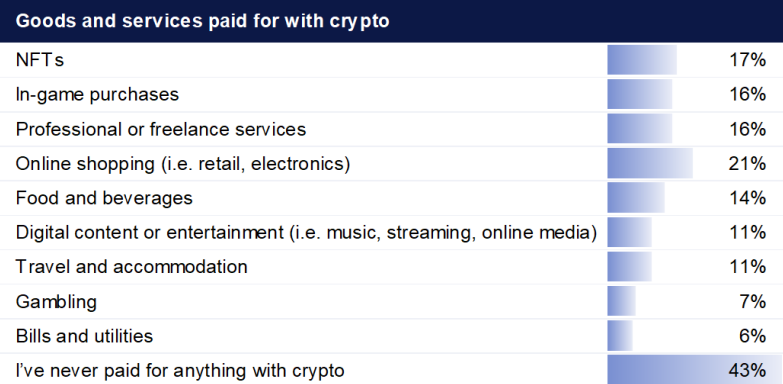
More Australians reported using cryptocurrency to pay for goods and services in 2026 compared to the year before, but banking friction has continued to weigh on crypto users, according to a newly published report by crypto exchange Independent Reserve.
The annual survey of 2,000 “everyday Australians” was conducted between Jan. 12 and Jan. 30.
It found that the share of Australians using crypto to buy goods or pay for services doubled from 6% to 12%, with the report suggesting “more Aussies are viewing crypto as a practical payment method rather than just a speculative bet.”
Among the respondents who used crypto for goods and services, 21% reported using crypto for online shopping, making it the leading real-world use case.
Another 16% said they used crypto to pay for services such as freelancing and video game purchases.
Despite growing adoption, barriers remain, with some citing a lack of education and training, and the technology being too complex to use.

Banking issues on the rise
Beyond complexity, banking blocks were highlighted as a significant obstacle. A Binance survey last year found that users faced banking barriers when engaging with exchanges and crypto businesses — a problem the Independent Reserve’s survey respondents also flagged.
Around 30% of investors said they have experienced delays or rejections when trying to buy cryptocurrency or transfer funds to a crypto exchange at least once, compared with 19.3% in 2025.
Banking restrictions on crypto transactions in Australia tightened around 2023, when major banks, including Commonwealth Bank and National Australia Bank, introduced measures such as payment delays, caps on transfers to crypto exchanges and additional identity checks.
Younger investors reported more trouble with transaction delays than their older counterparts, and those making smaller transactions reported greater interference.

“For many Australians, the lack of regulation hits home when a payment to a crypto exchange is delayed or blocked, an issue that has continued to rise for another year,” the report authors said.
“These interruptions affect both consumers and businesses, showing how cautious banks are with crypto when the rules aren’t clear.”
Clear licensing and regulation are the solution
The report said the findings suggest that banks have not relaxed their posture toward crypto and may be refining their approach by focusing on user behavior and transaction patterns instead of transaction size, underscoring the growing need for regulatory clarity.
Related: Crypto lobby slams Australian broadcaster’s ‘sensational’ Bitcoin article
“Clear licensing and regulation can help fix this. By setting high standards for crypto operators, banks would have more confidence that transactions are legitimate,” they added.
“For Australia’s blockchain industry, which has faced banking hurdles for over a decade, effective regulation could finally bridge the gap between exchanges and banks, giving investors and businesses more certainty and reliability.”
Crypto executives told Cointelegraph last month that Australia’s crypto market is making progress in user growth and regulatory reforms, but there are still a range of issues to iron out.
Magazine: Clarity Act risks repeat of Europe’s mistakes, crypto lawyer warns


The US Securities and Exchange Commission and the Commodity Futures Trading Commission have issued a joint interpretation outlining how crypto assets are treated under federal securities laws. Most notably, the statement emphasised that most crypto assets are not themselves securities.
Summary
- SEC and CFTC issue joint interpretation stating most crypto assets are not securities and outlining how they fall under federal law
- The guidance introduces a token classification framework and clarifies treatment of airdrops, staking, and other on-chain activities.
Both agencies released the interpretation as one of their first coordinated steps since signing a memorandum of understanding, with the update detailed in a Tuesday notice. According to the SEC, the interpretation would serve as an “important bridge” as the US Congress continues to work toward market structure legislation for digital assets.
The interpretation, according to the regulators, will provide a “coherent token taxonomy for digital commodities, digital collectibles, digital tools, stablecoins, and digital securities,” and clarify how a “non-security crypto asset” may or may not fall under the definition of an investment contract.
The interpretation also clarifies how federal securities laws apply to activities such as “airdrops, protocol mining, protocol staking, and the wrapping of a non-security crypto asset.”
“It also acknowledges what the former administration refused to recognize – that most crypto assets are not themselves securities,” SEC Chairman Paul Atkins said in an accompanying statement.
“After more than a decade of uncertainty, this interpretation will provide market participants with a clear understanding of how the Commission treats crypto assets under federal securities laws,” he added.
Separately, Atkins has said that “only one crypto asset class remains subject to the securities laws,” identifying it as “traditional securities that are tokenized.”
Until now, there has been a significant degree of regulatory ambiguity and a fragmented approach to digital asset oversight.
Which has fueled persistent market confusion and led to a series of high profile enforcement actions initiated against various industry participants and major exchanges.
Over the long run, this unified interpretation is expected to foster greater institutional adoption and provide the legal certainty necessary for sustainable innovation within the American financial ecosystem.
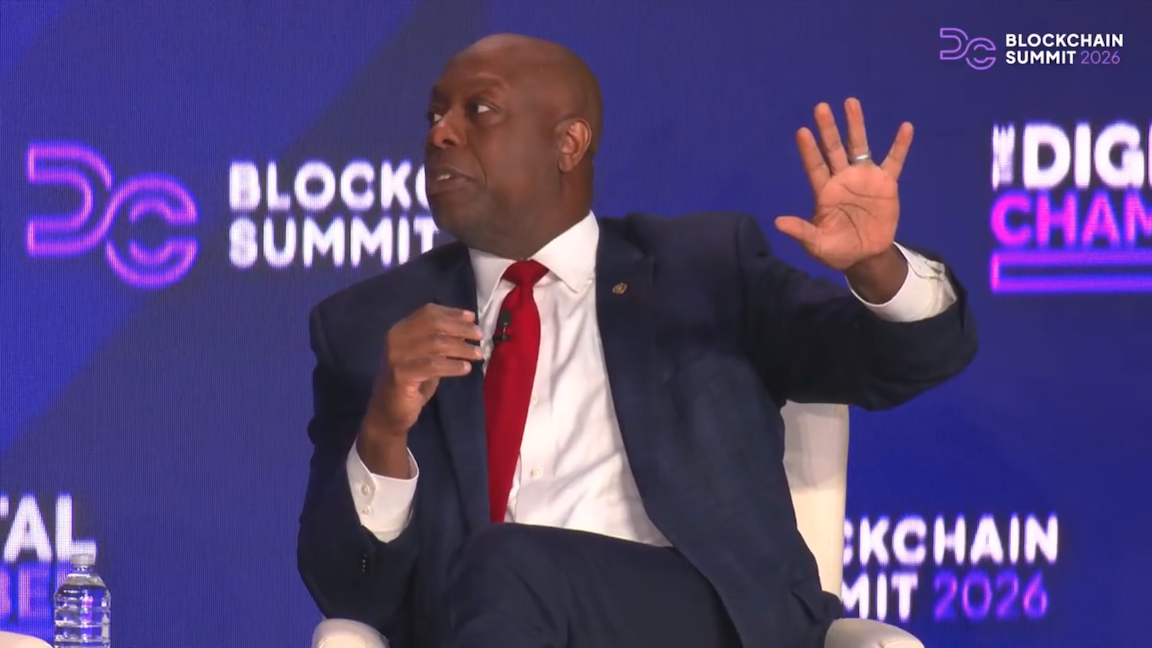
US Senator Tim Scott says he is expecting a possible compromise this week on a stablecoin yield payments provision that has stalled a crypto market structure bill in the Senate.
“I believe that this week we will have the first proposal in my hands to take a look at,” Scott, the chair of the Senate Banking Committee that is working to advance the bill, said on Tuesday at a crypto lobby event in Washington, D.C.
“If that actually happens before the end of this week, and I think that it will […] I think we’re going to be in much better shape,” he added.
The Senate has been looking to advance its version of a crypto market structure bill that outlines how regulators will approach crypto after the House passed similar legislation in July, called the CLARITY Act.

The Senate’s bill has stalled amid negotiations between banking and crypto lobbyists over a provision in the legislation that would ban third parties from offering stablecoin yield payments.
Banking groups assert that stablecoin yields paid by platforms such as crypto exchanges are a loophole in the GENIUS Act, which banned yield payments from stablecoin issuers, and could threaten the stability of the banking system through deposit flight.
As stablecoin yield payments are a popular way for exchanges to entice customers, crypto lobbyists have fought the claims and accused the banks of anti-competitive behavior.
Other issues in bill also making progress
Scott said the issue of stablecoin yield was only the “largest publicly celebrated challenge” of the bill, but other issues under negotiation included provisions around ethics, decentralized finance, and “who is carved in and who is carved out” of the rules.
“Those issues seem to pale in comparison to the rewards issue, but they’re still very important outstanding issues that we are nibbling away at as we work on the more popular issue of rewards and yield,” he added.
Related: CLARITY Act risks handing crypto to centralized players: Gnosis exec
“We have made a lot of progress over the last probably 30 days or so,” Scott said. “We’re working on a lot of issues, but every single day it feels like the big momentum is finally on our side and we’re heading in the right direction.”
Procedural rules mean two committees are overseeing crypto market structure legislation in the Senate, as the bill concerns the Securities and Exchange Commission and the Commodity Futures Trading Commission.
Senate Banking, which oversees the SEC, indefinitely postponed a markup of the crypto bill in January, while the Senate Agriculture Committee, which oversees the CFTC, sent its markup of the bill to the Senate floor that same month.
Magazine: Quitting Trump’s top crypto job wasn’t easy: Bo Hines

On March 16, hourly inflows into centralized crypto venues spiked to 6,100 units, the highest level in over a month as a broad market rally took hold. Data compiled for the period show that larger transfers dominated the flow, comprising 63% of total inflows—the strongest share dating back to mid-October 2025. The surge in exchange deposits comes as the leading digital asset has advanced roughly 12% for the month, with intraday prints approaching six-week highs near 76,000 in mid-March. Traders frequently move funds to exchanges in anticipation of selling or swapping into stablecoins, a pattern that market participants watch closely for signs of distribution when price momentum wavers.
CryptoQuant’s analysis highlighted that the spike included a notable rise in the share of large inflows, a behavior historically linked to selling pressure. These on-chain dynamics add a layer of nuance to the ongoing rally, suggesting that even as prices push higher, there could be a growing readiness among market participants to monetize gains. The data, reported by Julio Moreno, the head of research at CryptoQuant, underscore the choppy balance between demand and potential supply as the market navigates macro uncertainty and cross-asset risk sentiment. CryptoQuant
Beyond the on-chain signal, the price landscape remains a focal point for traders. Bitcoin’s price action has driven the market to a roughly 12% gain for March, with the asset trading near multi-month resistance levels. In recent days, the market has flirted with a six-week high around $76,000, a level that has proven challenging to break on several attempts. Market observers point to the Realized Price, a measure of the average price at which active supply transacted, as a proxy for potential resistance. The Realized Price currently sits in the neighborhood of $84,700, with the lower band—where many traders previously found concrete resistance during bear phases—acting as a rough guide for possible price ceilings in the near term. This dynamic was evident as the price repeatedly tested the $75,000 area on Coinbase, finding resistance at each try in a short span of time. TradingView data corroborate the near-term challenge around that psychological threshold.
Amid the price action, traders are keenly watching the Federal Reserve’s policy trajectory. The forthcoming Fed meeting, scheduled for Wednesday, sits at the center of market expectations, with many participants pricing in no interest-rate changes for March. CME Group’s FedWatch tool showed a high probability—about 98.9%—that the federal funds rate will remain unchanged, with only a 1.1% chance of a hike. The market’s attunement to the Fed reflects a broader risk-off risk-on mood that often drives crypto liquidity and ETF flow dynamics in tandem with macro cues. As coverage in traditional outlets highlights, a hawkish or cautious stance from the central bank could alter risk appetite across assets, including cryptocurrencies. CME FedWatch data and related market commentary underscore the tightrope between growth worries and inflation concerns that has defined the current regime.
In context, the rally’s momentum appears fragile, and the on-chain signals—while pointing to ongoing demand—also warn of potential distribution if large holders decide to realize gains as headline risk shifts. The price vicinity around $75,000 remains a key focal point; if the asset can push above this zone, it could test the next band near the realized price level, although history shows the lower RP band can act as a stubborn resistance in bear-market cycles. Traders are therefore weighing whether the current flow pattern represents a temporary flush of liquidity to exchanges or the onset of a broader reallocation into longer-term holdings or other assets, including stablecoins.
Why it matters
For investors, the observed spike in exchange inflows—especially with a rising share of large transfers—serves as a reminder that on-chain activity does not always align with short-term price strength. If sellers emerge from notable exchange deposits, price weaknesses could follow, even in a currently constructive market backdrop. The Fed’s rate stance, coupled with macro headlines, can influence liquidity and risk sentiment, which in turn shapes how and where capital flows. For market builders and liquidity providers, monitoring the balance between on-chain realized prices and exchange inflows could offer early clues about shifts in supply-demand dynamics and potential volatility around key technical levels.
From a macro perspective, the interplay between monetary policy expectations and crypto price action remains a critical driver of flows and risk tolerance. The Fed’s decision on Wednesday—alongside ongoing inflation readings and geopolitical developments—will likely set the tone for near-term momentum. Traders keeping a close eye on the on-chain data and the official communications should be prepared for rapid shifts in sentiment, especially if the Fed signaling strengthens or weakens the case for rate cuts later in the year.
What to watch next
- Federal Reserve decision and accompanying statement (Wednesday): assess any changes to forward guidance and inflation outlook.
- Next batch of on-chain data from CryptoQuant: watch for shifts in the share of large inflows versus overall inflows and any corroborating metrics on exchange net flows.
- Price action around the $75,000 level and the realized price vicinity near $84,700: look for breakout or rejection patterns and volume confirmation.
- Market reaction to Fed commentary: observe risk appetite shifts that could impact liquidity, ETF flows, and spot market participation.
Sources & verification
- CryptoQuant insights on exchange inflows and the share of large inflows for March 16–17, including the 63% figure.
- CME FedWatch tool data on the probability of rate hold versus hike.
- Associated Press reporting on Fed policy expectations and inflation considerations in the current environment.
- Cointelegraph market coverage discussing Bitcoin’s price around $70k and near-term resistance levels.
- TradingView BTCUSD data for price action on Coinbase as a reference for breakout and resistance testing.
Bitcoin exchange flows rise ahead of Fed decision; on-chain signals warn of selling pressure
Bitcoin (CRYPTO: BTC) exchange flows surged ahead of the Federal Reserve’s policy decision, with on-chain data indicating a potential tilt toward distribution despite a broader rally. On March 16, centralized exchanges recorded inflows totaling 6,100 coins—the highest since February 20—according to CryptoQuant. A closer breakdown shows large transfers dominating the flow, making up about 63% of total inflows, the strongest proportion observed since October 2025. These signals emerge as the asset has climbed roughly 12% in March, drawing near $76,000 in intraday trading on March 17. The behavior of inflows and on-chain metrics has historically foreshadowed price dynamics, and traders are weighing whether the current momentum can be sustained or whether a wave of selling could emerge as participants seek risk-adjusted gains. CryptoQuant notes the potential for selling pressure when large deposits to exchanges spike, a pattern that has played out in past cycles.
The price backdrop remains a mix of resilience and caution. After a month characterized by a steady ascent, the asset touched six-week highs near $76,000, underscoring renewed risk appetite among investors. Yet the on-chain Realized Price, which represents the average break-even price for active holders, sits well higher at approximately $84,700. This creates a ceiling effect, as the current price remains below the lower band of the realized-price metric, a zone historically associated with resistance during bear-market phases. Market data from TradingView show the asset testing the $75,000 mark on Coinbase multiple times in the past 24 hours, underscoring the psychological and technical significance of that level.
The broader market is anchored by expectations around the Federal Reserve’s policy stance. CME FedWatch data indicated a near-ceremonial stance for the March meeting, with markets pricing in a substantial probability of no rate change. The implications of the Fed’s decision—or even its language around rate paths—could influence liquidity cycles across crypto markets, where ETF interest, spot demand, and derivative positioning interact with macro risk sentiment. Associated Press reporting on the Fed’s trajectory highlights ongoing inflation concerns and the possibility that the central bank could refrain from rate cuts in the near term, a scenario that could shape risk-on versus risk-off temperament in the weeks ahead. CME FedWatch Associated Press
Looking forward, the market will likely calibrate its expectations around the Fed’s guidance and the pace of any potential policy normalization. Should the Fed acknowledge persistent inflation risks while signaling a cautious path, traders could see continued volatility as liquidity shifts between risk assets. Conversely, a more accommodating read could sustain the current momentum, allowing the rally to extend and on-chain inflows to reflect renewed demand rather than distribution. The next few sessions will be telling, as investors parse macro cues against the backdrop of on-chain indicators that have in the past proven prescient about fundamental shifts in supply and demand.

The joint decision is historic, but what does it mean specifically for your crypto portfolio?
For years now, the entire cryptocurrency industry has operated under a fog of regulatory uncertainty. Investors and developers alike were wondering which crypto asset the U.S. government might suddenly decide to classify as an unregistered security. Take Ripple’s XRP, for instance – one of the most obvious examples. The company was tangled in a prolonged lawsuit with the Securities and Exchange Commission, which lasted roughly half a decade, casting the shadow of ambiguity over an entire cohort of investors.
That era, however, effectively ended on March 17th, when the SEC, together with the Commodity Futures Trading Commission (CFTC), issued a landmark joint interpretive guidance.
The core takeaway, stated by the Chairman of the SEC, Paul Atkins, represents a true paradigm shift:
Most crypto assets are not themselves securities. – He said.
But while significant and historic, what does it all mean for the regular Joe? Here is a breakdown of what this decision means for your crypto portfolio, your staking yields, and your airdrops.
Staking and Airdrops: The Rules of Engagement
Staking and airdrops are perhaps two of the more common ways many retail crypto investors participate in decentralized networks. They have also historically been some of the biggest legal gray areas. The new joint guidance draws some clear and actionable lines for both of these.
First things first, for staking, the regulatory status would now depend on the structure of operation. If you are participating in protocol-level staking (read: locking up your tokens in order to secure a blockchain network like Ethereum, for example, and earning automated and pre-determined protocol rewards), this particular activity would generally fall outside of the scope of securities laws.
However, if you use a centralized, third-party service that pools investor funds and then promises a return based on its own managerial efforts, chances are regulators will still classify that yield product as a security (an investment contract).
You may also like:
Moving on to airdrops. These face a relatively similar test depending on context. Tokens that are distributed freely to a community, without requiring a financial investment or promising future profits based on the centralized team’s efforts, are currently a lot less likely to be classified as securities. On the other hand, if the airdrop is advertised and used explicitly to promote an investment opportunity, promising future returns based on the team’s efforts, it may still draw the scrutiny of the SEC.
A New Taxonomy for Digital Assets
If you’ve been around in crypto for a while, you know that there’s been an overlapping jurisdictional battle that has simply plagued the industry for years. The new joint guidance establishes a formal token classification framework. This taxonomy categorizes digital assets into distinct groups.
- Digital Commodities: These fall primarily under CFTC jurisdiction and concern assets that function primarily as a decentralized medium of exchange or store of value.
- Digital Collectibles: These are unique digital items and non-fungible tokens (NFTs).
- Digital Tools: These are utility tokens used to access or operate software applications or networks.
- Stablecoins: Digital assets pegged to fiat currencies.
- Digital Securities: Tokens that represent traditional investment contracts, equity, or profit-sharing agreements.
Essentially, by effectively separating the underying digital asset from the transaction itself, both regulators have provided a rather coherent roadmap for developers to build networks that are compliant without the constant fear of arbitrary enforcement.
Conclusion: What the SEC/CFTC’s New Guidance Means for Your Crypto
For everyday crypto investors, this guidance is a massive de-risking event. The Chairman of the CFTC said that the goal is to further foster an environment where the entire industry can flourish with “clear and rational rules of the road.”
Speaking practically, this means that major altcoins are much less likely to face sudden delistings from U.S. exchanges due to unexpected regulatory lawsuits or even the fear of them.
Moreover, it paves the way for a robust integration of digital assets into traditional finance – something that we have already seen starting to take shape. Recall that Mastercard enlisted Ripple, Binance, and other firms in a new crypto partnership, seeking to further integrate crypto into mainstream commerce.
Of course, the decision doesn’t necessarily guarantee the market success of any individual token, but at the very least it removes the heavy regulatory overhang that has suppressed US-based crypto markets (and arguably globally) for years.
Binance Free $600 (CryptoPotato Exclusive): Use this link to register a new account and receive $600 exclusive welcome offer on Binance (full details).
LIMITED OFFER for CryptoPotato readers at Bybit: Use this link to register and open a $500 FREE position on any coin!
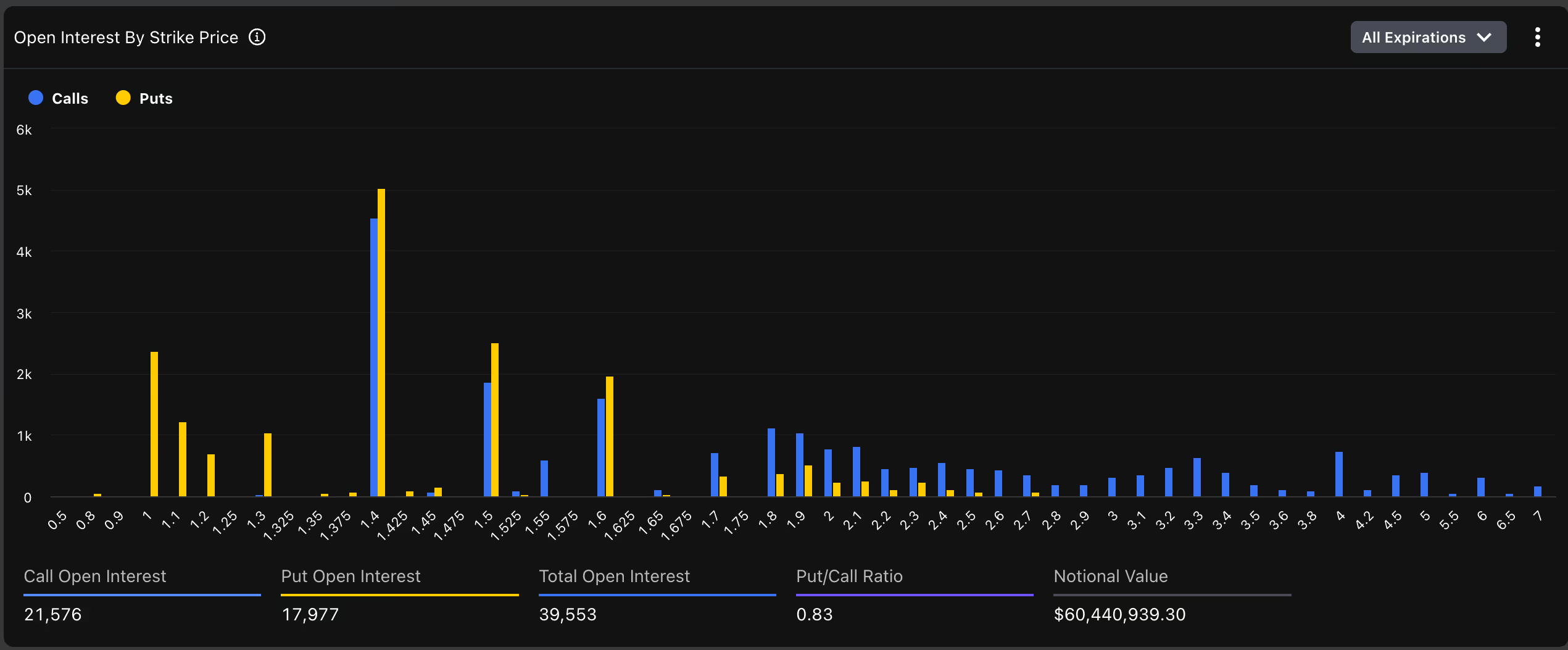
XRP (XRP) is trading just above a level heavily targeted by derivative traders, making it a critical zone for near-term price action.
The payments-focused cryptocurrency changed hands at around $1.50 at press time, placing just above a notable concentration of options activity at $1.40 on crypto exchange Deribit. XRP is used by Ripple to facilitate cross-border transactions.
Options are derivatives contracts whose value is derived from an underlying asset, in this case XRP. They give traders the right, but not the obligation, to buy or sell XRP at a specific price (known as the strike) before a set expiry date. Call options are typically used to bet on upside, while put options are used to hedge or speculate on downside.
As of writing, about $6.95 million worth of call option positions were open at the $1.40 strike, alongside $7.69 million in put positions at the same level. In total, that brings the value of outstanding or “open” contracts at this strike to roughly $14.6 million, or nearly 25% of all XRP options open on the exchange. Most of this open interest in concentrated in the March 27 expiry.
CoinDesk reached out to Deribit for a comment on the same.
This kind of clustering at a single strike is unusual and typically signals that the market is approaching a key inflection point.

As expiry approaches, this level may act as a magnet or gravitational price zone. Market makers, and traders who sold options at $1.40 and are “short gamma” could dynamically hedge their exposure, potentially pulling the price toward the strike. This phenomenon is widely referred to as “pinning.”
This concept is common in currency markets, where major currency pairs like EUR/USD often gravitate toward large strikes as expiry nears.
Traders, therefore, need to watch $1.40 level closely in the days ahead. A sustained move above it could leave much of the put-side open interest to expire worthless, while a drop below it could trigger hedging flows that amplify selling pressure.
Either way, the heavy concentration of options at this strike suggests that XRP’s short-term price action could be heavily influenced by how this open interest unwinds or gets settled.
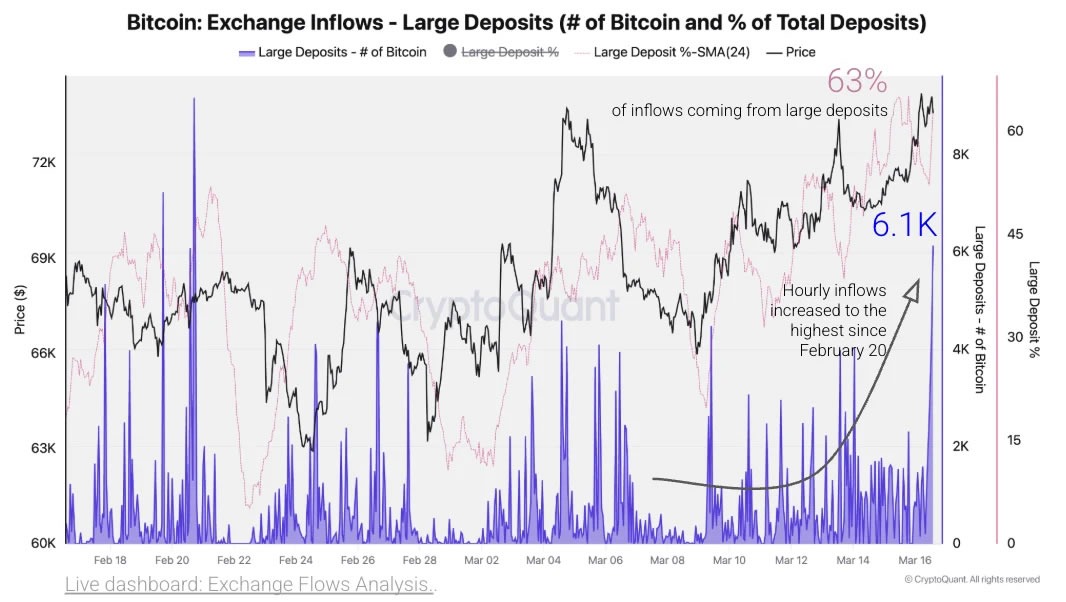
Centralized crypto exchanges recorded a spike in Bitcoin hourly inflows on Monday as the crypto market rallied, with one analyst warning it could signal selling pressure.
Hourly Bitcoin flows into exchanges spiked to 6,100 BTC on March 16, the highest since Feb. 20, reported head of research at CryptoQuant, Julio Moreno, on Tuesday.
He added that the share of large inflows reached 63% of total inflows, which is the highest since mid-October 2025.
It comes as Bitcoin has rallied around 12% so far this month, hitting a six-week high of around $76,000 on March 17.
Traders often send Bitcoin (BTC) to exchanges in preparation to sell or exchange for stablecoins.
“Historically, spikes in large deposits to exchanges have been associated with increased selling pressure,” the analyst noted.

Fed may signal no rate cuts this year
The spike in exchange inflows comes just days before the Federal Reserve’s meeting and rate decision on Wednesday, which can have an impact on crypto sentiment.
However, markets have priced in no changes to the US interest rate this month, with CME futures predicting a 98.9% probability of them remaining the same and only a 1.1% chance that they will be increased.
Related: Trump ups pressure for Fed chair Powell to cut rates ‘right now’
The Fed could even signal no interest rate cuts at all this year in the wake of the US-Iran war and increasing inflation concerns, reported the Associated Press on Wednesday.
Bitcoin realized price resistance at $75,000
Moreno also noted that if Bitcoin continues to rally, it could first find resistance at $75,000.
“These levels represent the lower band of the traders’ onchain Realized Price, which historically acts as price resistance in bear markets,” he said.
The asset came just shy of $75,000 three times on Coinbase over the past 24 hours and hit resistance each time, according to TradingView.
The actual Realized Price, or the average break-even price for active traders, which acted as resistance in October and January, is currently around $84,700.

Magazine: Metaplanet’s Japan Bitcoin bet, Bithumb ordered suspension: Asia Express

Wales boss Craig Bellamy believes Northern Ireland have every chance of beating Italy

Treasuries and Other Government Bonds Will Keep Selling Off, BlackRock Says. These Risks Are Lurking.

XRP hits $1.60 after stunning comeback: ‘rare bottom’ signal triggers buzz


-
 Tech7 days ago
A 1,300-Pound NASA Spacecraft To Re-Enter Earth’s Atmosphere
-
 Crypto World4 days ago
HYPE Token Enters Net Deflation as HyperCore Buybacks Outpace Staking Rewards
-

 Fashion5 days ago
Weekend Open Thread: Addict Lip Glow
-

 Tech2 days ago
Your Legally Registered ‘Motorcycle’ Might Not Count Under Proposed US Law
-
Sports4 days ago
Why Duke and Michigan Are Dead Even Entering Selection Sunday
-

 NewsBeat7 days ago
Residents reaction as Shildon murder probe enters second day
-

 Sports6 days ago
PWHL, Senators discussing plan to keep Charge in Ottawa
-

 Business2 days ago
Search for Savannah Guthrie’s Mother Enters Seventh Week with No Arrests
-

 Business7 days ago
Search Enters Sixth Week With New Leads in Tucson Abduction Case
-

 Business4 days ago
US Airports Launch Donation Drives for Unpaid TSA Workers as Partial Government Shutdown Enters Fifth Week
-
 Tech14 hours ago
Are Split Spacebars the Next Big Gaming Keyboard Trend?
-
Crypto World4 days ago
Coinbase and Bybit in Investment Talks: Could Bybit Finally Enter the US Crypto Market?
-

 NewsBeat7 days ago
I Entered The Manosphere. Nothing Could Prepare Me For What I Found.
-

 Business4 days ago
Country star Brantley Gilbert enters growing non-alcoholic beer market
-

 Business2 days ago
Australian shares drop as Iran war enters third week
-

 Crypto World2 days ago
Crypto Lender BlockFills Enters Chapter 11 with Up to $500M in Liabilities
-

 Sports4 days ago
College Basketball Best Bets: Conference Tournament Semifinal Picks
-
 Crypto World6 days ago
Three Binance Charts May Be Hinting at Bitcoin’s Next Move
-
 Business5 days ago
Trump demands Powell cut rates as Iran conflict raises energy prices
-

 Fashion2 days ago
25 Celebrities with Curly Hair That Are Naturally Beautiful


You must be logged in to post a comment Login