

Crypto World
BeInCrypto Institutional Research: 10 Enterprise Blockchain Implementations Powering Production-Scale Finance



Best Institutional Enterprise Blockchain Implementation recognises named deployments that move real money or assets on distributed-ledger infrastructure, rather than the broader company or the underlying blockchain.
This category is a part of the BeInCrypto Institutional 100 awards. It sits under Pillar 6: Tokenization & Enterprise Blockchain. The 10 implementations below are listed alphabetically and are not ranked. A shortlist will be named in May 2026, with the winner announced at Proof of Talk in Paris on June 2–3, 2026.
Key Facts
- Long list: 10 production deployments across settlement, tokenized deposits, digital bonds, regulated stablecoins, capital markets infrastructure, cross-border interoperability, and institutional custody
- Initial pool: More than 25 enterprise blockchain deployments screened; 10 advanced to the long list
- Order: Listed alphabetically, not ranked
- Scoring: 30% quantitative data · 50% Expert Council · 20% disclosed company data
- Criteria assessed: Business impact and ROI, deployment scale, technical sophistication, innovation, replicability, stakeholder breadth, sustainability
- Boundary scope: This category evaluates the implementation itself, not the underlying chain, DLT framework, or parent company’s broader digital asset strategy
| Implementation / Firm | HQ & Listing | Reach | Representative Work |
|---|---|---|---|
| BNY Mellon Digital Asset Platform | New York, USA NYSE: BK |
Institutional digital asset stack within BNY Mellon’s $55.8T AUC/A platform BTC and ETH custody live since 2022 with Fireblocks integration |
IBIT primary cash custodian and administrator since spot Bitcoin ETF launch in Jan 2024 Co-custodian for Morgan Stanley Bitcoin Trust; tokenized MMF platform with Goldman Sachs live since Sep 2025 |
| Broadridge Distributed Ledger Repo (DLR) | New York, USA NYSE: BR |
More than $1T per month in tokenized repo transactions Production since 2018; built on Canton Network with DAML smart contracts |
UBS, Société Générale, HSBC, and BNY Mellon participate Privacy-preserving sponsored repo platform with JP Morgan Kinexys interoperability for collateral movement |
| Citi Token Services | New York, USA NYSE: C |
Citi tokenized deposit and trade finance platform Production since Sep 2023 across the US, Singapore, and the UK |
Tokenized deposit cross-border platform for institutional clients Smart-contract trade finance covering reverse factoring, automated FX, and programmable corporate liquidity |
| Goldman Sachs Digital Asset Platform (GS DAP) | New York, USA NYSE: GS |
Institutional digital bond platform built on Daml and Canton Spin-out as standalone industry utility announced with partners including BNY, BNP Paribas, Barclays, Microsoft, Tradeweb, Standard Chartered, and EquiLend |
European Investment Bank €100M digital bond issued in Nov 2022 HKMA Project Ensemble tokenized deposit pilots; interoperability alignment with Broadridge DLR through Daml and Canton |
| HSBC Orion | London / Hong Kong LSE / HKEX: HSBA |
HSBC permissioned blockchain digital bond issuance and tokenization platform Integrated with Hong Kong Central Moneymarkets Unit and active in multi-bank interoperability pilots |
Hong Kong government HK$6B digital green bond issued in Feb 2024 Digital bond platform connects Hong Kong CMU infrastructure with tokenized issuance rails |
| Kinexys by J.P. Morgan | New York, USA NYSE: JPM |
More than $5B daily transaction value as of Apr 2026 More than $3T cumulative volume since 2020; hundreds of institutional clients across five continents |
Kinexys Digital Payments processes tokenized deposits at production scale Kinexys Digital Assets includes intraday repo and Tokenized Collateral Network; Trimont settlement compressed from two days to near real time |
| Mastercard Multi-Token Network (MTN) | Purchase, New York / UK NYSE: MA |
$4.5B in stablecoin card spending in 2025 Crypto Partner Program launched in Mar 2026 with 85 participating companies |
Definitive agreement to acquire BVNK for up to $1.8B announced in Mar 2026 Integrated with JP Morgan Kinexys, Ondo OUSG, Fiserv Digital Asset Platform, USDG, PYUSD, USDC, and FIUSD |
| Société Générale FORGE (EURCV / USDCV) | Paris, France EPA: GLE |
EURCV about €105M circulating USDCV 26.3M tokens; multi-chain on Ethereum, Solana, and XRP Ledger |
First MiCA-compliant EUR stablecoin from a tier-one bank First US tokenized bond issuance on Canton Network; MetaMask integration via Consensys |
| SWIFT + Chainlink CCIP Cross-Border Interop | La Hulpe, Belgium Chainlink Labs: multi-location |
SWIFT network reaches 11,000+ banks Production interoperability launched in 2024 with partners including UBS, BNY Mellon, ANZ, Citi, and Lloyds |
UBS Asset Management Singapore tokenized fund cross-chain pilot MAS Project Guardian integration and Australia–EU interbank tokenized asset transfer corridor |
| Visa Tokenized Asset Platform (VTAP) | San Francisco, USA NYSE: V |
API-based bank-grade tokenization platform on Visa Developer Platform $7B annualized stablecoin settlement run rate; 15,000+ Visa-network banks accessible globally |
BBVA fiat-backed euro and dollar token on public Ethereum live in 2025 USDC settlement live in the US; Visa Direct stablecoin pilot; Circle Arc design role; Visa-Bridge card API program |
About This List
The BeInCrypto Institutional 100 — Best Institutional Enterprise Blockchain Implementation identifies production blockchain deployments in which regulated banks, payment networks, asset managers, and corporates have moved real money or real assets onto distributed ledger infrastructure.
Coverage includes tokenized deposit settlement, regulated bank stablecoins, B2B tokenization networks, institutional digital bond issuance, cross-border interoperability, DLT-based capital markets infrastructure, and institutional digital asset custody.
The category does not score the underlying chain or DLT framework. It also does not evaluate the parent institution’s broader digital asset adoption strategy. Pilots and proofs of concept are not eligible.
Methodology
This category is evaluated under Track B of the BeInCrypto Institutional 100 methodology: 30% quantitative metrics, 50% Expert Council scoring, and 20% disclosed company data.
Assessment spans seven criteria: business impact and ROI, deployment scale, technical sophistication, innovation, replicability, stakeholder breadth, and sustainability.
The disclosed data weighting reflects the limited public visibility into bank-operated tokenized deposit volumes, intra-platform settlement flows, permissioned network integrations, and named-counterparty programs.
Data was verified using regulatory registers, company annual reports, SEC EDGAR filings, audited platform disclosures, Chainlink CCIP and Canton Network transaction logs, RWA.xyz, DefiLlama, third-party rating agencies, private-market sources including PitchBook, Tracxn, and Crunchbase, and mainstream financial press.
The post BeInCrypto Institutional Research: 10 Enterprise Blockchain Implementations Powering Production-Scale Finance appeared first on BeInCrypto.



The European Securities and Markets Authority (ESMA), a key EU regulator supporting the implementation of the Markets in Crypto-Assets (MiCA) framework, is launching a dedicated process for reviewing crypto custody providers.
ESMA plans to conduct a common supervisory action (CSA) focused on the operational resilience of crypto-asset service providers (CASPs), with a specific emphasis on custody services, according to an official announcement on Wednesday.
“The CSA will assess the maturity of CASPs’ digital operational resilience frameworks in relation to custody activities,” ESMA said, adding that the reviews will focus on areas including key and storage management, alongside other operational risks.
The move comes shortly after the end of MiCA’s transition phase on July 1, prompting increased attention to how EU authorities will supervise compliance with the new framework, including potential enforcement questions.
National regulators to conduct custody reviews
ESMA said the supervisory action will be conducted by national competent authorities (NCAs) across the EU, which will assess a risk-based sample of authorized CASPs.
The reviews will run from now through the first half of 2027, with regulators examining how companies handle custody-related operational risks.
In addition to reviewing key and storage management, NCAs are expected to assess areas such as governance structures, transaction controls, incident detection and response, and dependencies on external service providers.
Related: Belgian regulator flags 6 unauthorized crypto providers after MiCA deadline
ESMA will later consolidate the findings into a final report to be submitted to its Board of Supervisors after the exercise concludes in the second half of 2027.
The review comes as some custody providers have stepped in to support crypto platforms adapting to Europe’s new regulatory environment.
Last month, crypto custody company BitGo launched a Europe-focused crypto-as-a-service platform aimed at helping platforms maintain access to the market while working through MiCA-related compliance requirements.
Magazine: How crypto laws changed in 2025 — and how they’ll change in 2026
Viva Republica, the operator of South Korea-based mobile money transfer app Toss, reportedly signed a memorandum of understanding with blockchain company Optimism to test a Korean won-based stablecoin infrastructure for institutional payments.
The companies, along with privacy solutions provider Sunnyside Labs, will conduct a three-month proof of concept (PoC) using Optimism’s OP Stack and Sunnyside’s Privacy Boost protocol to develop a Korean won-based stablecoin and assess whether these technologies can be applied to domestic blockchain-based payment infrastructure for financial institutions, reported Yonhap News on Wednesday.
The PoC will explore whether financial institutions can control the settlement process, the feasibility of implementing know-your-customer (KYC) and anti-money laundering (AML) verification requirements and whether transactions can remain private on a public blockchain ledger.
Toss plans to use the three-month PoC as the foundation for building compliant stablecoin-based payment infrastructure in the country, according to the report.
Cointelegraph has approached Toss for more details about the stablecoin pilot.
Toss app homepage. Source: Toss.im
Optimism will provide the blockchain infrastructure, while Sunnyside Labs will provide the privacy-preserving technology to shield transfers. Sunnyside is a core developer for the Optimism Collective and has been building core OP Stack infrastructure.
Seoul-headquartered Toss was launched in 2015 and claims it has more than 30 million users on its mobile application.
Related: Kiwoom eyes Bithumb stake as Korean brokerages push into crypto: Report
Payments giants test stablecoins for improved settlement
Toss’ PoC follows similar stablecoin-based initiatives from other large financial institutions in the country.
In late April, one of South Korea’s largest credit card providers, Shinhan Card, teamed with the Solana Foundation to test the commercial feasibility of stablecoin payments and the use of non-custodial wallets, after completing a joint pilot project earlier that month.
Shinhan Card said it hoped to eventually develop its own DeFi-linked services that implement blockchain oracles, a technology used to connect information in offchain and onchain environments.
Late last year, payments giant Visa also launched USD Coin (USDC) settlement services for some US-based financial institutions on the Solana blockchain in one of the more advanced examples of stablecoin projects.
Other large payment providers exploring stablecoins for improved payments and settlement include Mastercard and South Korea’s BC Card.
Magazine: The biggest blockchain upgrades still to come in 2026

Key Highlights
- Chrome Web Store will prohibit prediction market extensions starting August 2026.
- Real-money trading tools for outcome predictions will face enforcement measures.
- Enhanced data privacy requirements mandate clearer user disclosures from developers.
- Extension creators must report any modifications to data handling after launch.
- Tools designed to circumvent AI safety mechanisms will be prohibited.
The Chrome Web Store will implement a comprehensive ban on prediction market extensions beginning August 1, 2026, according to revised developer guidelines announced by Google. These restrictions specifically target extensions facilitating real-money betting on future events while simultaneously introducing enhanced requirements for data transparency and expanding developer accountability.
Prediction Markets Join Chrome’s Restricted Category List
Google has designated prediction market extensions as prohibited items within its regulated goods and services framework. This categorization encompasses any tools enabling monetary transactions based on speculative outcomes. The decision effectively removes this entire class of applications from the approved extension marketplace.
The announcement arrives amid increasing regulatory oversight of prediction market operators. Polymarket and Kalshi have encountered heightened examination from state-level authorities regarding gambling-related issues. Multiple regulatory bodies contend these services function similarly to sports betting operations.
Google positioned this policy shift as a component of broader platform security enhancements. The technology company advised developers to audit their currently published extensions ahead of the enforcement deadline. Any extensions violating these guidelines after August 1, 2026, will be subject to removal from the Chrome Web Store.
Enhanced Data Privacy Standards For Extension Developers
Google has strengthened its Limited Use Policy governing user information collection. Extension developers are now restricted to gathering only data essential for their declared primary function. This means extensions cannot harvest user information for undisclosed or secondary purposes.
The platform has simultaneously broadened mandatory disclosure obligations for publishers. Every instance of data collection must be transparently communicated to users, regardless of whether it directly supports the extension’s core functionality. Additionally, developers must notify users whenever data handling procedures are modified following initial installation.
These regulations impose significant new obligations on Chrome extension creators. Publishers must ensure that permissions, user notifications, and data practices remain consistent with their extension’s advertised purpose. Consequently, vague or overly broad data access requests may trigger compliance violations.
Restrictions On AI Safety Bypass Tools Implemented
Google has established an additional policy addressing extensions connected to AI-driven platforms. This regulation prohibits extensions specifically engineered to evade safety protocols or usage restrictions. It extends to tools that compromise protective features integrated into artificial intelligence products.
The company emphasized that these modifications aim to strengthen user confidence and platform reliability. Google seeks to ensure users maintain clear understanding of extension capabilities and data practices. The objective includes preventing the Chrome Web Store from hosting products that generate security vulnerabilities or regulatory complications.
The prediction market prohibition establishes fresh parameters for developers working in evolving technology sectors. It simultaneously mirrors intensifying scrutiny surrounding event-based wagering and real-money forecasting applications. Google has provided developers until August 1, 2026, to either modify or withdraw non-compliant extensions.

A federal judge has approved Elon Musk’s $1.5 million settlement with the US Securities and Exchange Commission (SEC), ending the case over his delayed disclosure of Twitter stock purchases in 2022.
US District Judge Sparkle Sooknanan signed off on the agreement on July 8 after warning she would not rubber-stamp the deal.
Why the Judge Scrutinized the Musk SEC Settlement
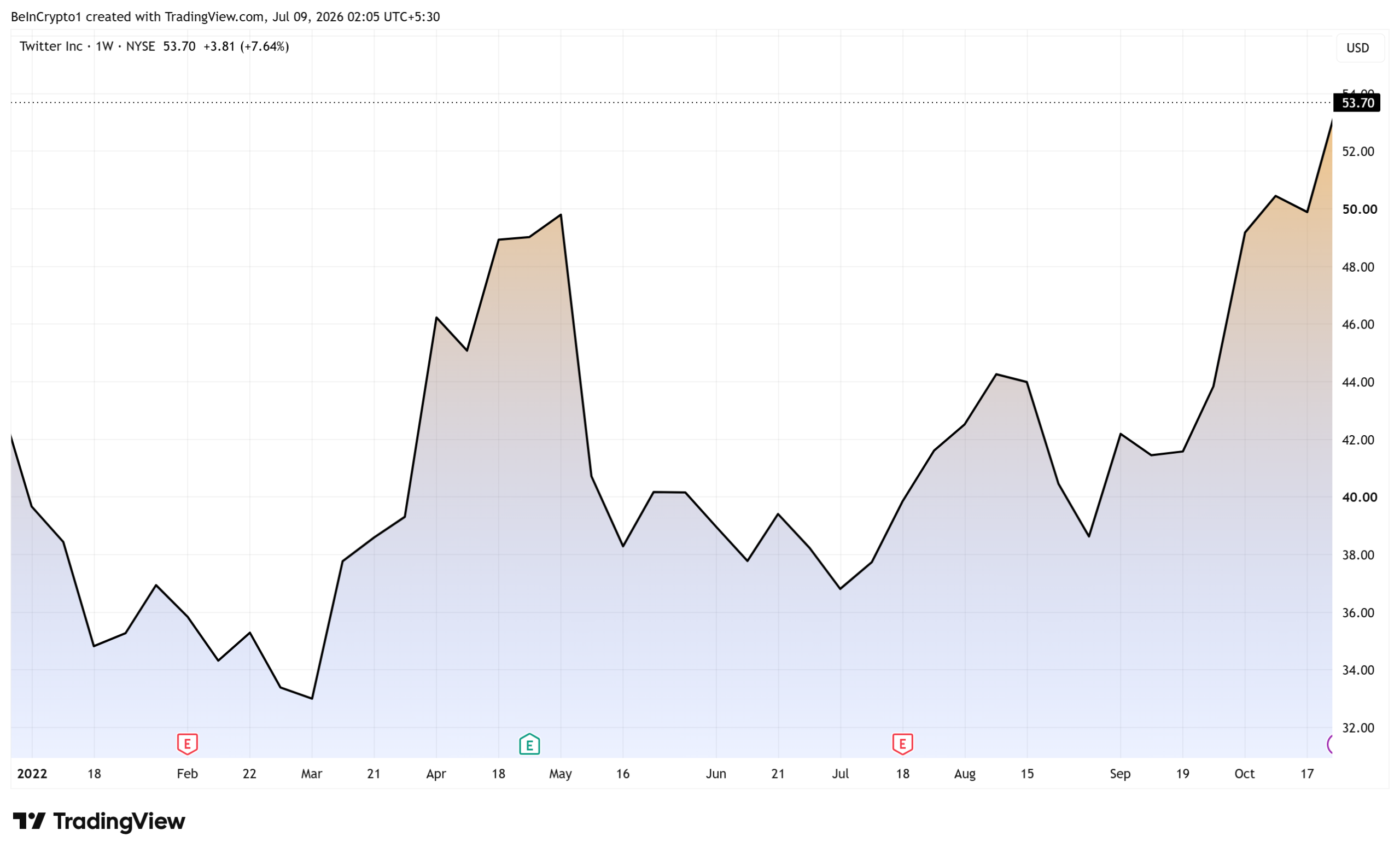
The SEC sued Musk in January 2025, according to the case docket. Its complaint said he crossed Twitter’s 5% ownership threshold on March 14, 2022, but disclosed his stake 11 days after the March 24 deadline.
By then, Musk had quietly built a 9% position. Twitter shares jumped more than 27% once he disclosed, and the SEC claimed the delay saved him at least $150 million.

Sooknanan rejected Musk’s bid to dismiss the case in February. At a May 13 hearing, she questioned why his revocable trust would pay a penalty equal to 1% of those alleged savings, per Reuters.
The SEC defended the deal in June as the product of nearly a year of negotiations, per Bloomberg. Its filing described the penalty as follows.
“The largest penalty the SEC has ever obtained in a case involving a standalone violation of Section 13(d) of the Securities Exchange Act of 1934.”
Follow us on X to get the latest news as it happens
What the Ruling Means for Musk
Musk’s trust pays without admitting or denying the allegations, and the court dismissed the claims against him personally. He surrenders none of the alleged $150 million, the NYT reported.
The outcome is softer than Musk’s 2018 clash with the regulator. That case, over his “funding secured” Tesla tweet, cost him and Tesla $20 million each and his board chairmanship.
The ruling clears a legal overhang as investors weigh Musk’s SpaceX pay package and the company’s Nasdaq-100 debut this week.
Tesla’s recent stock rally and SpaceX’s Bitcoin treasury moves keep his ventures in focus.
The approval settles one of the last regulatory disputes from the $44 billion Twitter takeover. How firmly the SEC polices disclosure deadlines after accepting a 1% recovery is the open question.
The post Judge Approves $1.5 Million Penalty for Elon Musk in Twitter SEC Case appeared first on BeInCrypto.
Key Highlights
- European regulators initiate coordinated custody audits following MiCA’s full activation.
- Crypto service providers undergo scrutiny on client asset safeguarding mechanisms.
- Examination covers private key management, governance structures, and transaction oversight.
- MiCA framework transitions from registration phase to active compliance verification.
- Comprehensive findings expected by 2027 to identify custody vulnerabilities across member states.
European securities regulators have initiated a comprehensive custody examination targeting crypto firms operating under the new MiCA regulatory framework. The investigation evaluates how licensed providers safeguard customer holdings and address operational vulnerabilities. This coordinated effort aims to establish uniform protection standards throughout the European Union.
Pan-European Custody Investigation Underway
ESMA activated the joint examination on July 8, collaborating with financial regulators across all member nations. The investigation zeroes in on licensed crypto-asset service providers offering custody functions. This initiative follows MiCA’s transition deadline that concluded on July 1.
National supervisory bodies will identify firms using risk-weighted selection criteria. Oversight will concentrate on entities handling substantial operational volumes and significant customer asset exposures. Not all registered platforms will undergo examination.
ESMA directs regulators to evaluate the robustness of digital operational resilience protocols. The examination encompasses corporate governance, asset storage infrastructure, transaction authorization procedures, and emergency response capabilities. Authorities will verify whether firms maintain custody operations with transparent internal oversight structures.
Asset Protection Mechanisms Under Examination
The investigation prioritizes private key management and storage methodologies as central supervisory concerns. Custody providers maintain access authority over client cryptocurrency holdings, meaning inadequate security systems can trigger immediate financial losses. ESMA will determine whether firms implement robust safeguards surrounding these critical functions.
Regulators will additionally scrutinize transaction approval workflows and security breach detection capabilities. These elements prove essential because custody breakdowns can rapidly cascade across platforms and service networks. Consequently, authorities expect firms to demonstrate comprehensive risk mitigation frameworks.
The examination will investigate external service dependencies and smart contract vulnerabilities. Numerous crypto platforms depend on third-party technology suppliers and infrastructure networks. ESMA directs national authorities to uncover weaknesses before system failures impact customers.
Regulatory Enforcement Reaches Operational Phase
MiCA establishes the European Union’s unified regulatory framework for crypto service platforms. Nevertheless, individual member-state authorities maintain primary supervisory responsibilities. ESMA will leverage this investigation to harmonize divergent national oversight methodologies.
The examination launches as the EU’s authorized crypto provider registry expands continuously. Recent licensing approvals have incorporated additional exchanges, custodians, and service platforms into the regulated ecosystem. This growth intensifies demands on supervisors to validate real-world compliance performance.
ESMA anticipates the investigation will continue through mid-2027. Following completion, the regulator will compile unified conclusions for its Board of Supervisors. The comprehensive report will provide European authorities with detailed intelligence on custody vulnerabilities under MiCA’s operational framework.
TLDR:
- The XRP Ledger AI Hub has launched as a new discovery point for AI builders, agents, services, merchants, and x402 payment activity on XRPL.
- The XRP Ledger has surpassed 1 million agentic payments, showing rising machine-driven settlement activity across AI-linked services.
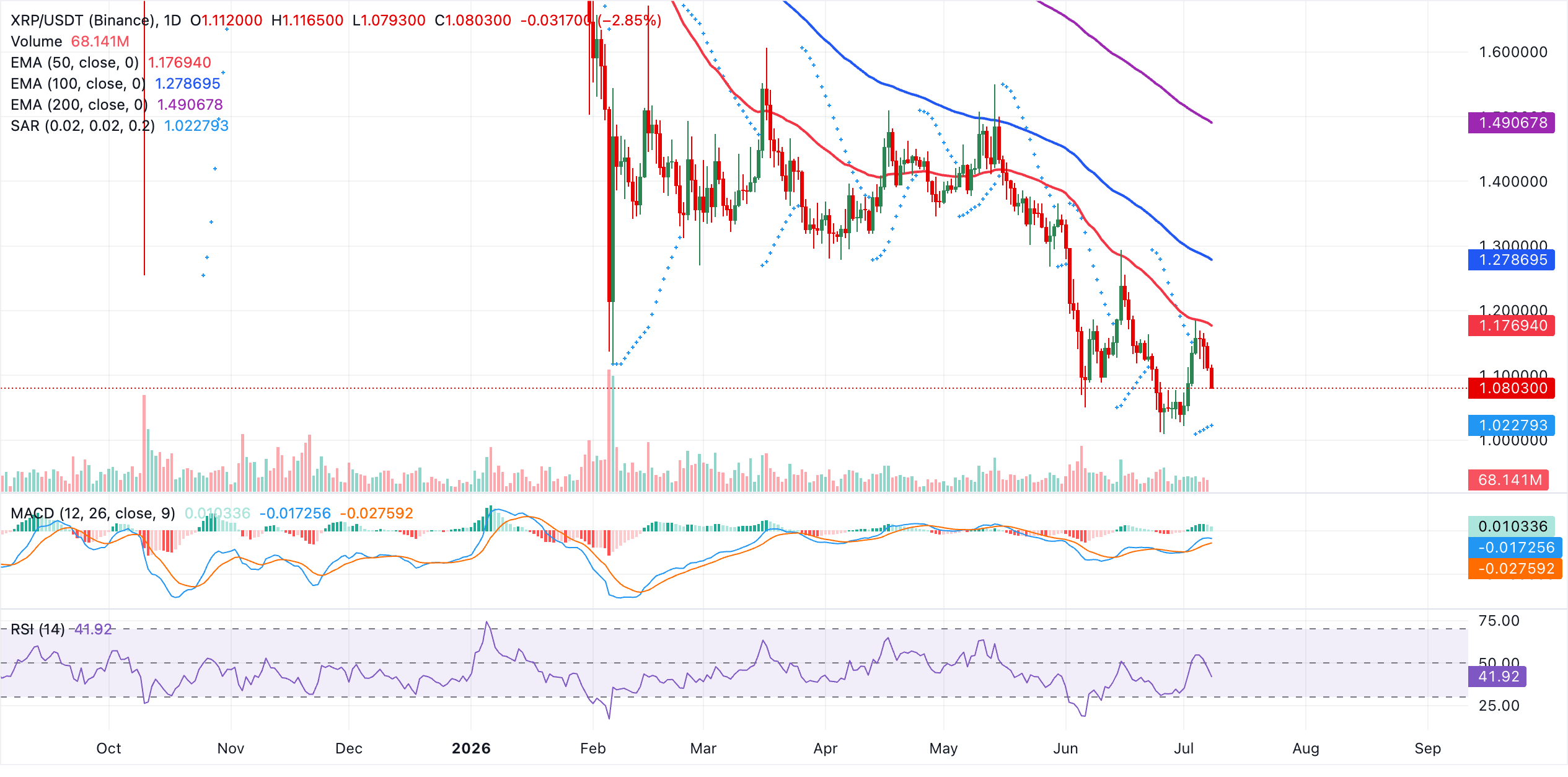
- XRP price remains under pressure near $1.06, with sellers still controlling momentum below major daily moving averages.
- Weak ETF flows, lower active addresses, and declining futures interest show that market demand has not matched the network milestone yet.
The XRP Ledger AI Hub has gone live as XRPL records a major milestone in AI-linked blockchain payments. t54.ai announced the platform as a single destination for AI agents, developer tools, payment services, and merchants building on the network.
The launch comes as the XRP Ledger Foundation says XRPL has surpassed 1 million agentic payments through the x402 protocol. The milestone adds a fresh utility narrative for XRP and RLUSD, although XRP price action remains weak near $1.06.
XRP is trading below $1.10 after four straight days of losses. Muted ETF flows, weaker active addresses, and lower futures demand continue to weigh on near-term sentiment.
XRP Ledger AI Hub Opens New Door For AI Builders
The XRP Ledger AI Hub is designed to help developers track what is already live across the XRPL AI ecosystem. It starts with three core areas covering x402 activity, developer resources, and a directory of AI projects.
The index section tracks live x402 payment activity on the network. The developer section includes docs, SDKs, repositories, and other resources. Meanwhile, the directory highlights AI projects, agents, services, and merchants using XRPL rails.
The launch follows Ripple’s XRP Ledger AI Starter Kit, which introduced tools for agentic payments. The kit supports x402 payments using XRP and RLUSD, allowing AI agents to pay for APIs, compute, and inference services.
That structure matters as AI agents need fast, low-cost, and predictable settlement. XRPL offers short settlement times and fixed-style transaction costs, which can help software agents operate without manual approval loops.
The latest activity also points to deeper merchant adoption. Reports show 121 active merchants are now recorded, with Heurist Mesh, LucyOS, and AskSurf accounting for much of the transaction volume.
XRP Price Stays Weak Despite Agentic Payments Milestone
Nevertheless, the XRP Ledger AI Hub launch has not changed the short-term XRP price trend. XRP remains below key moving averages, keeping the market structure under pressure.
The 50-day EMA sits near $1.18, while the 100-day EMA is around $1.28. The 200-day EMA near $1.49 remains a wider resistance zone for any stronger recovery attempt.
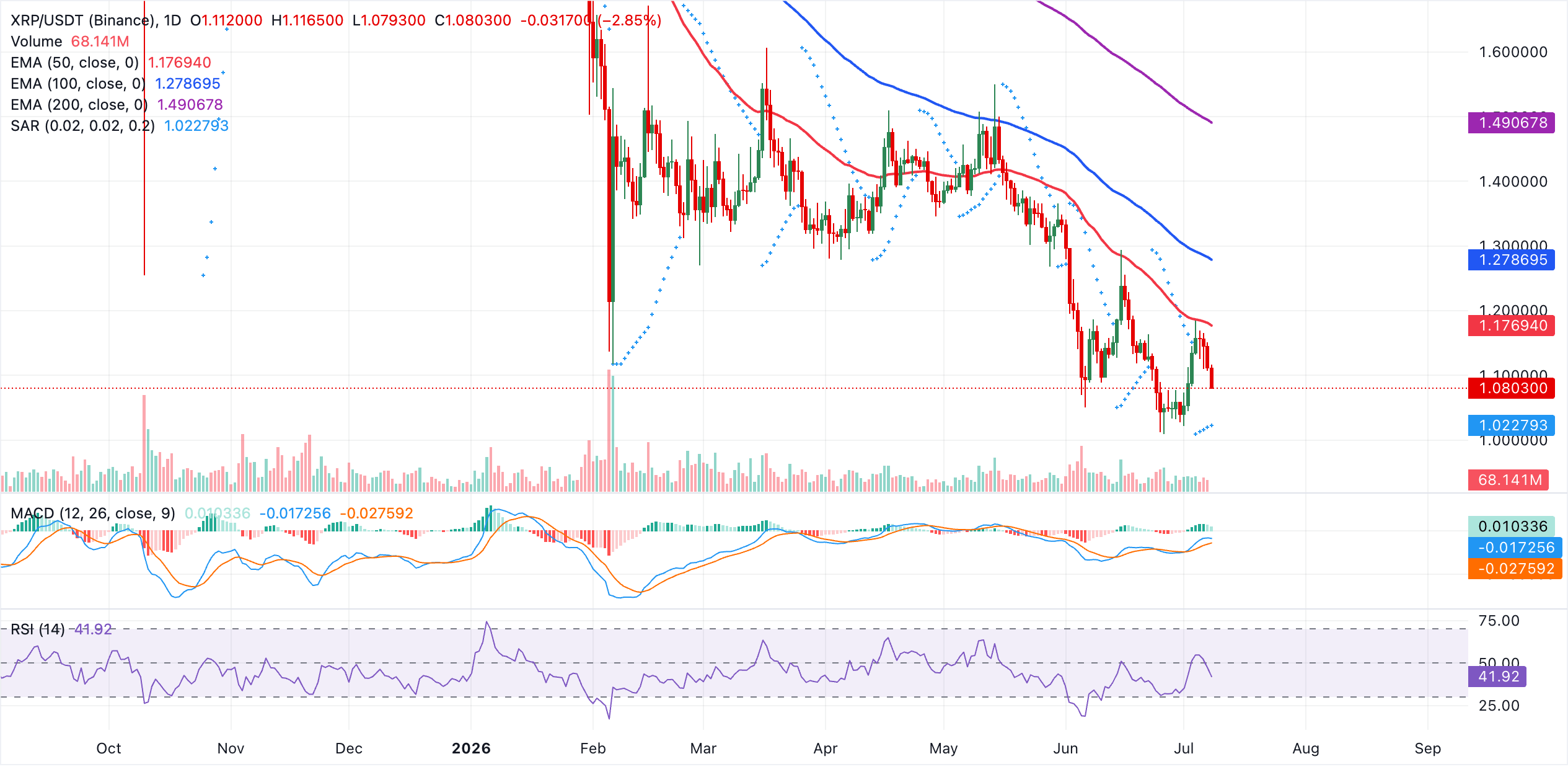
On the downside, traders are watching support near $1.05 and $1.02. A break below this range could expose XRP to another wave of selling, especially if broader crypto sentiment weakens.
On-chain activity also shows caution. Active addresses recently dropped to about 14,500 from nearly 31,000 a day earlier, after peaking near 43,000 on June 30.
ETF activity has also slowed, with no recorded spot XRP ETF flows on Monday and Tuesday. Cumulative inflows still stand near $1.49 billion, but fresh demand remains limited.
Futures data adds to the softer picture. Open interest has slipped from late-June levels, showing weaker speculative appetite as XRP struggles below resistance.
The split between network utility and price action is now central to XRP’s next move. Agentic payments may support a longer-term XRPL adoption story, but traders still need a stronger price reaction above $1.18.
Bitcoin (BTC) is seeing a “textbook” bear-market bottom as speculators take profits on the trip toward $65,000.
Key points:
- Bitcoin is repeating previous macro bottom behavior in a “textbook” manner, analysis argues.
- Short-term holders are taking profits on minor recoveries — something “characteristic of a bull market.”
- Doubts remain about speculators avoiding future capitulation.
Analysis: Bitcoin bottom will “be very obvious in hindsight”
In their latest analysis on X, the Bitcoin quant account known as Frank, named for the famous economist Frank A. Fetter, doubled down on conviction that the worst of the BTC price downtrend is over.
“This is a textbook bitcoin bottom; I mean every bottom signal has flashed or is flashing, it’ll be very obvious in hindsight,” one post stated.
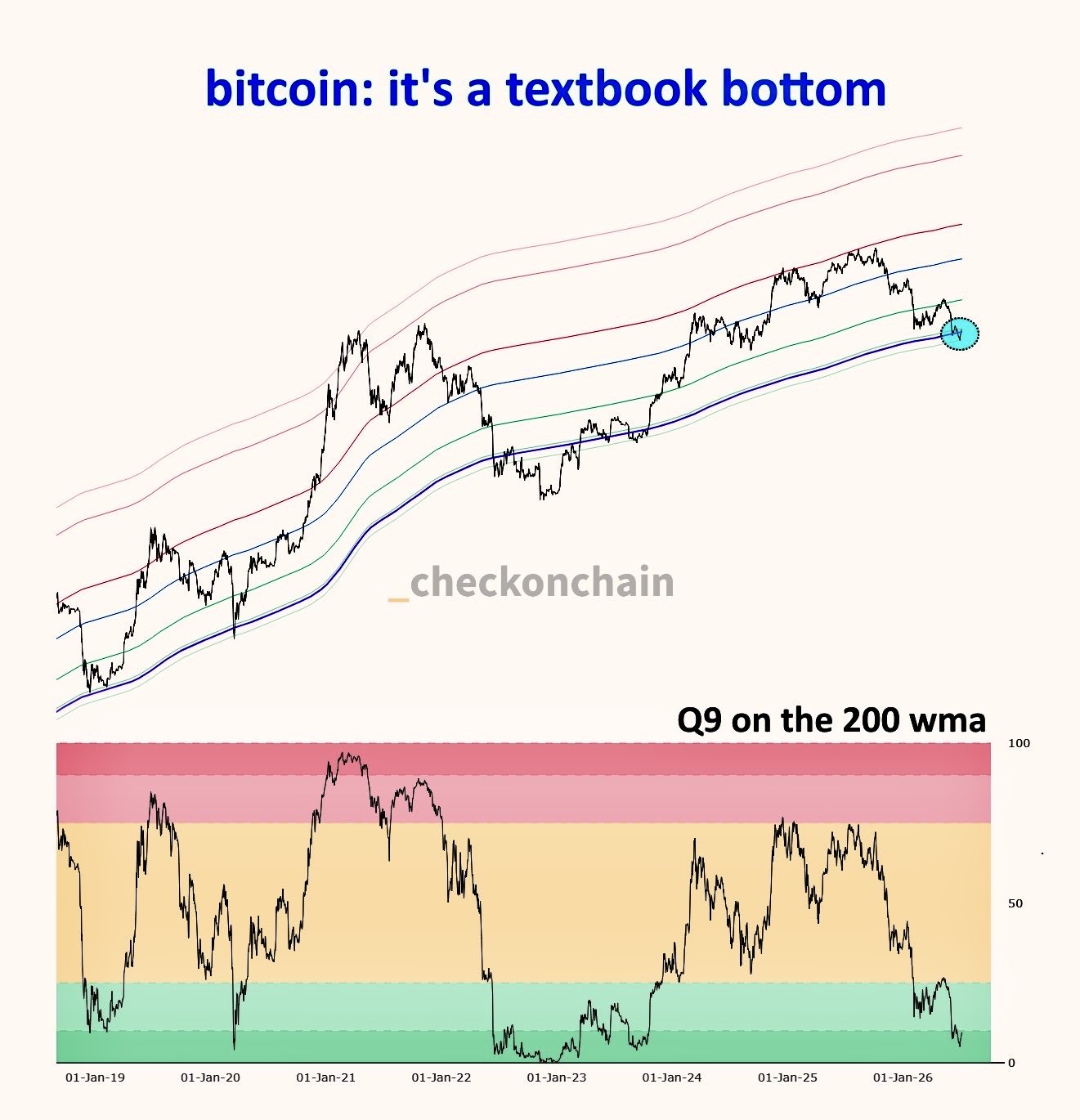
An accompanying chart showed the 200-week simple moving average (SMA) for BTC/USD, along with various quantiles.
The ninth quantile is of particular interest, having marked reversals at the pit of the 2022 bear market and March 2020 COVID-19 crash. Price is now back in that reversal zone.
BTC/USD chart with 200-week SMA data. Source: Frank/X
Turning to short-term holders (STHs) — wallets holding BTC for up to six months without selling — another encouraging sign emerges.
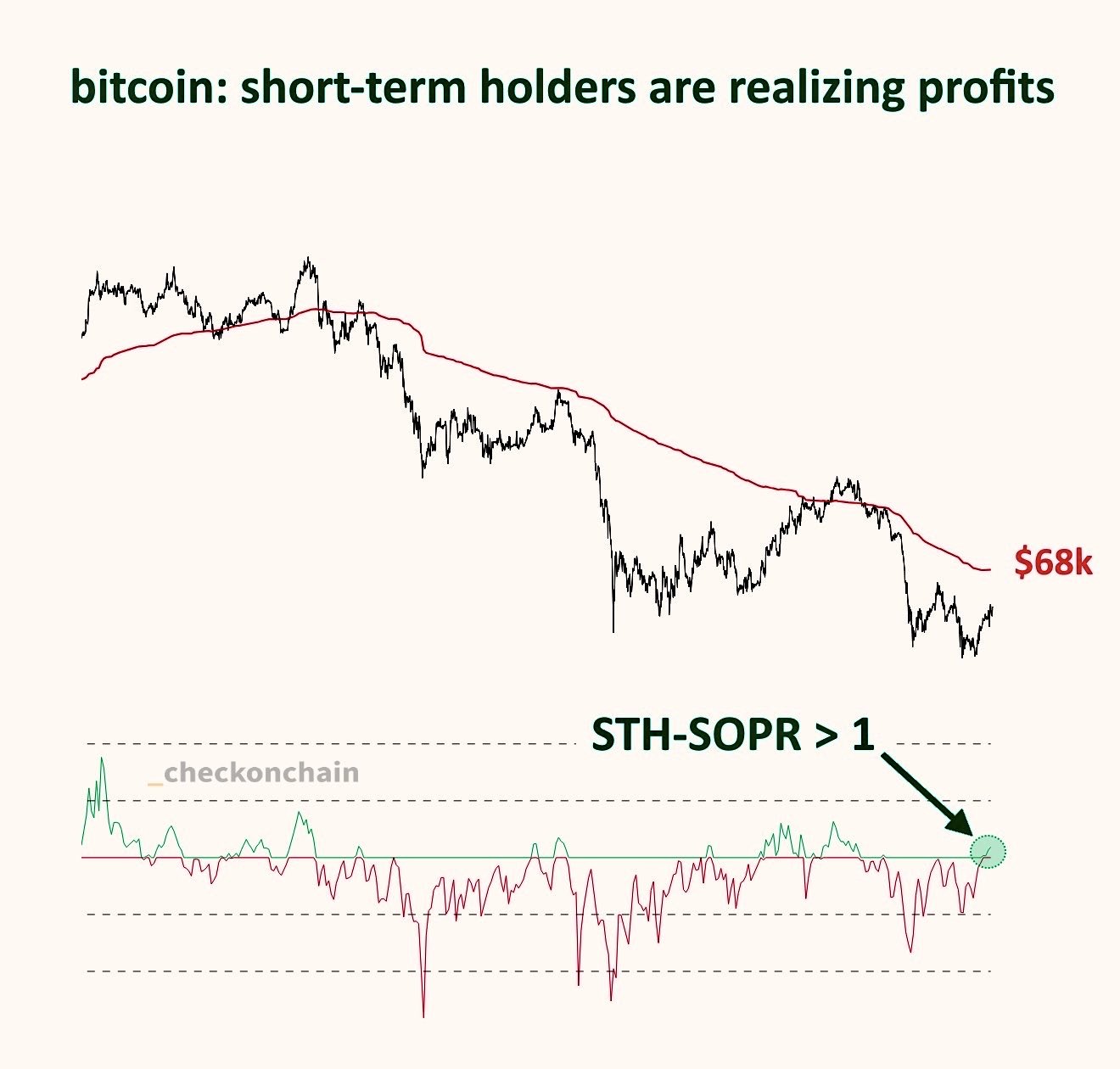
For Frank, positive readings from the cohort’s spent output profit ratio (SOPR), which measures the proportion of STH coins moving onchain in profit or loss, are conspicuous.
“A key bitcoin metric might be signaling that a market shift is underway. Sth-sopr just flipped green as short-term holders are realizing profits,” they wrote.
“The market treating short-term holders well is a characteristic of a bull market.”
Bitcoin STH-SOPR data. Source: Frank/X
Short-term holders may still see “capitulation”
The findings add to a growing consensus among market participants that the 2026 bear market has little time left to run.
Related: $60.4K Becomes ‘most important area’: Five things to know in Bitcoin this week
As Cointelegraph reported, various onchain indicators and related price yardsticks are hitting levels not seen since 2022.
Adopting a more cautious view of STH-SOPR, meanwhile, onchain analytics platform CryptoQuant warns that new lows in the metric could be needed first.
“In stronger bottoming zones, STH SOPR often drops much deeper as short-term holders capitulate and sell at large losses. However, the current level is not near the deeper capitulation area seen around 0.93 in previous local bottom zones,” contributor Trader Germini commented in a blog post on Wednesday.
“This means the market has cooled down, but it has not yet shown a strong short-term holder capitulation signal.”
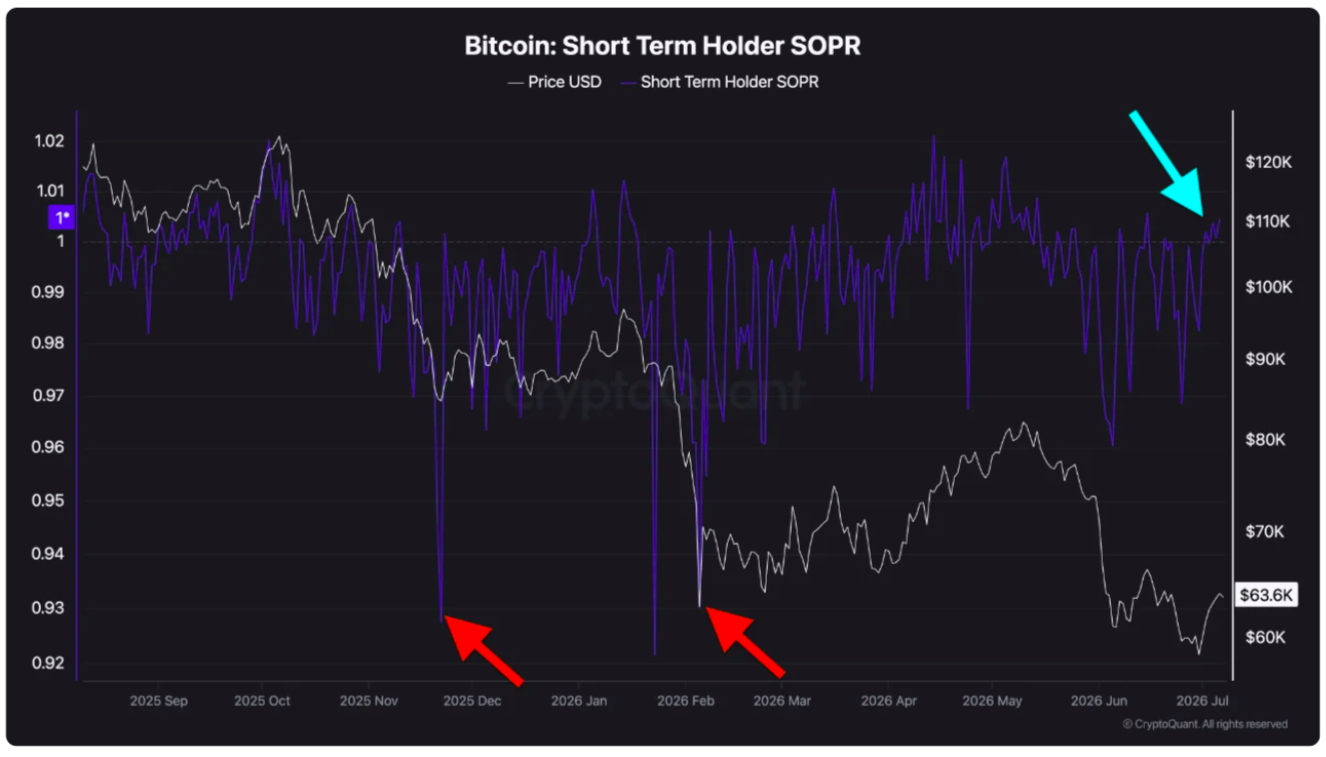
Bitcoin STH-SOPR data (screenshot). Source: CryptoQuant
Key Highlights
-
Shares of SMCI advanced 4.67% following the unveiling of edge AI appliances
-
Partnership with Red Hat and Everpure aims to streamline edge AI implementations
-
The solution integrates Kubernetes, storage infrastructure, and edge computing hardware
-
The system leverages Red Hat OpenShift for hybrid cloud AI operations
-
Portworx by Everpure delivers Kubernetes-native storage for decentralized AI applications
Shares of Super Micro Computer, Inc. climbed 4.67% to reach $27.48 as the company strengthened its edge AI capabilities. The stock maintained strong momentum throughout the trading session, closing near its daily peak. The upward movement came after the company unveiled a new Kubernetes Edge AI appliance developed alongside Red Hat and Everpure.
Super Micro Computer, Inc., SMCI
Stock Performance Follows Edge AI Product Unveiling
Supermicro announced pre-validated Kubernetes Edge AI appliances designed for businesses operating computing infrastructure beyond traditional data centers. The integrated solution merges Supermicro’s hardware platform with Red Hat OpenShift and Portworx by Everpure. This combination delivers customers a pre-configured appliance engineered for accelerated implementation.
The product addresses the requirements of organizations deploying AI inference capabilities across geographically dispersed facilities. Target environments encompass retail outlets, manufacturing plants, telecommunications facilities, and isolated business operations. The company’s objective centers on minimizing configuration challenges for distributed infrastructure administrators.
According to the announcement, the appliance accommodates containers, virtual machines, and AI inference processing at remote locations. Customers gain access to an integrated ecosystem encompassing computation, storage, and administrative capabilities. The turnkey solution will be offered through Supermicro’s direct sales channels.
OpenShift Platform Enables Multi-Site Operations
Red Hat OpenShift serves as the foundational Kubernetes application platform within the new infrastructure. This platform enables organizations to deploy and oversee workloads spanning hybrid cloud architectures and edge environments. Through this integration, Supermicro delivers a standardized operational framework across diverse geographic deployments.
The company characterizes the offering as a fully validated, comprehensive solution. This methodology eliminates the requirement for independent validation across hardware components, software platforms, and storage infrastructure. The approach also accelerates deployment timelines for organizations with constrained on-premises technical resources.
This collaboration reinforces Supermicro’s position within the edge computing infrastructure market. The organization currently provides compact server platforms and edge devices across multiple configuration options. Its product lineup accommodates implementations ranging from standalone servers to comprehensive rack-mounted systems.
Everpure Integration Delivers Distributed Storage Capabilities
Portworx by Everpure contributes the Kubernetes-native storage and data orchestration component. This platform consolidates local storage resources on Supermicro edge computing platforms. Organizations can therefore operate fault-tolerant infrastructures without deploying conventional storage arrays at individual locations.
The storage architecture provides high availability, data safeguarding, and autonomous functionality during connectivity interruptions. This capability proves essential for remote installations that cannot rely on continuous centralized network access. Additionally, it enables organizations to implement uniform storage governance across edge and cloud environments.
Supermicro’s Data Center Building Block Solutions approach underpins this product introduction. This methodology employs validated building blocks to construct flexible infrastructure tailored to diverse customer requirements. The Red Hat and Everpure collaboration represents another strategic advancement in the company’s edge AI expansion efforts.


BlackRock has pulled back on AI stocks most directly tied to the artificial intelligence (AI) boom, Chief Investment Officer of Global Fixed Income Rick Rieder said Wednesday. He described the sales as rebalancing, not a reversal.
BlackRock manages more client assets than any rival, so its positioning attracts unusual attention. Investors are already debating whether the market’s concentration in a few AI winners has gone too far.
BlackRock AI Stocks Pullback Reflects Selectivity
Speaking on CNBC, Rieder said his team trimmed positions in companies whose earnings depend most heavily on the AI buildout. In a separate clip, he added that the firm also cut a notable slice of its overall equity exposure.
He framed the shift as trimming winners rather than exiting the theme.
“Some of the companies that are more directly tied to AI, we’ve pulled back a bit and rebalanced a bit,” Rieder said in the interview.
Follow us on X to get the latest news as it happens
The scale behind the words matters. BlackRock reported a record $13.9 trillion in assets under management as of March 31, according to an SEC filing.
However, the comments extend a stance Rieder has held all year. At a CNBC event in June, he rejected dot-com comparisons. The Magnificent 7 then traded near 26 times earnings, he noted, with forward earnings growth above 20%.
His January outlook likewise argued 2026 would reward income and selectivity as AI gains separate winners from laggards.
Wall Street is already divided on the trade. JPMorgan urged clients to buy the recent chip dip while Morgan Stanley preferred hyperscalers instead, a split over AI chips that mirrors BlackRock’s selectivity.
Where the AI Money May Rotate Next
Rieder indicated the firm may redeploy into cheaper beneficiaries of AI adoption. Power producers, industrials, and infrastructure builders could capture the next wave of data center spending.
Signs of profit-taking are spreading across the AI supply chain. AI memory stocks still lead 2026 trading even as money flows turn cautious. Meanwhile, Samsung shares fell this week despite forecasting a 19-fold profit jump, because investors booked recent gains.
Concentration remains the deeper worry. The S&P 500 has repeatedly set records on weak market breadth, with a small group of mega caps carrying the index.
BlackRock’s wider portfolio guidance this year points the same way. The firm now recommends a 1% to 2% Bitcoin (BTC) allocation, another route to returns beyond a few dominant AI names.
For investors, the message reads as discipline rather than alarm. The coming earnings season may show whether the market’s biggest AI names can still defend their premiums.
The post The World’s Biggest Investor Is Trimming AI Stocks. Should You Worry? appeared first on BeInCrypto.


Elon Musk has confirmed that SpaceXAI will release its Grok 4.5 artificial intelligence model to the public on Thursday after completing beta testing, setting up a direct contest with OpenAI’s upcoming GPT-5.6 launch.
Summary
- Elon Musk says SpaceXAI will launch Grok 4.5 publicly after positive beta testing.
- OpenAI plans to release GPT-5.6 models Sol, Terra, and Luna on the same day.
- Grok 4.5 runs on xAI’s new 1.5-trillion-parameter V9 model with a strong focus on coding.
According to Elon Musk, the decision follows strong feedback from users who tested Grok 4.5 during its beta phase. In a post on X, Musk described the model as “an Opus-class model, but faster, more token-efficient, and lower cost,” adding that the public rollout will begin tomorrow.
The announcement places Grok 4.5 alongside several major AI releases expected this week as competition between leading developers continues to accelerate.
At nearly the same time, OpenAI confirmed that its GPT-5.6 family, consisting of the Sol, Terra, and Luna models, will also become publicly available on Thursday. The announcement follows approval from the U.S. Commerce Department for a broad public launch, as previously reported by crypto.news. OpenAI’s choice of model names attracted attention within the crypto industry because they match names of some of the crypto industry’s best-known blockchain projects.
Last month, Anthropic added to the competitive landscape by releasing its Fable 5 and Mythos 5 models, which the company described as its most capable AI systems to date. Those models were temporarily restricted under U.S. export controls before the government later removed the limitations, allowing wider availability.
Grok 4.5 introduces a larger foundation model
Additional technical details shared by developer Tetsuo indicate that Grok 4.5 is built on xAI’s V9 foundation model, which contains roughly 1.5 trillion parameters. According to Tetsuo, the architecture is around three times larger than the v8-small model that powered Grok 4.3, making it the largest foundation model the company has released so far.
Tetsuo added that the model was trained on Nvidia Blackwell GPUs at the Colossus computing cluster in Memphis. He also stated that software development capabilities have become a central priority for Grok 4.5 after SpaceXAI incorporated developer data from Cursor into supplemental training. According to the developer, reinforcement learning has continued improving the model through the Grok Build training framework.
crypto.news previously reported that SpaceXAI completed its acquisition of Cursor, a move that expands the company’s access to software engineering datasets. Tetsuo noted that the next foundation model, which is already undergoing training, will include Cursor data from the beginning of the pre-training process rather than adding it later.
Monthly flagship releases form the long-term roadmap
Beyond the immediate launch, Tetsuo outlined a more aggressive release schedule for future models. He described Grok 4.5 as the first flagship model introduced under the merged SpaceXAI organization and said the company plans to ship a newly built foundation model every month through the end of 2026.
While Musk focused on Grok 4.5’s performance, speed, and operating cost, Tetsuo’s technical comments suggest that future versions will continue expanding coding capabilities through larger training datasets and updated reinforcement learning methods.
With Grok 4.5, OpenAI’s GPT-5.6 lineup, and Anthropic’s recently released models entering the market within weeks of one another, competition among leading AI developers is intensifying as each company pushes newer foundation models to public users and enterprise customers.

Rihanna & Her Three Kiddos Break The Internet During NYC Stroll

Crab and Lobster at Asenby, near Thirsk, hits the market

ESMA Reviews Crypto Custody Security Under EU Rules


-

 Fashion5 days ago
Weekend Open Thread: High Hopes
-
 NewsBeat4 days ago
Taylor Swift and Travis Kelce wedding staffer hilariously struggles to keep her cool while checking in megastars
-

 Fashion2 days ago
Open Thread: What Great Books Have You Read Recently?
-

 Politics5 days ago
The House | “Reframing the debate from a binary discussion of winners and losers”: Yuan Yang reviews ‘We Are Not Machines’
-

 Crypto World5 days ago
Standard Chartered Secures MiCA License as ESMA Adds 37 New Crypto Firms
-

 News Videos2 days ago
Whats Hidden Inside This Cash Register? #treasure #reselling #money
-
 Tech2 days ago
Anthropic’s new “J-lens” reveals a silent workspace inside Claude that mirrors a leading theory of consciousness
-

 Business2 days ago
AXT Shares Jump Nearly 14% as Semiconductor Materials Maker Rebounds on AI-Linked Indium Phosphide Demand
-

 Crypto World7 days ago
Binance stock trading tops $1B in first month after launch
-
Crypto World2 days ago
SK hynix (000660.KS) Stock Dips as $28B Nasdaq ADR Offering Drives AI Memory Expansion
-

 Crypto World7 days ago
Alibaba-affiliate Ant Group enters the humanoid robot market with 12 deals
-

 Crypto World3 days ago
South Africa proposes crypto tax guidance under existing rules
-

 News Videos2 days ago
Best Time to Enter Small Caps Right Now? Another Bull Run? | Financially Free
-

 Tech3 days ago
Lenovo laptops are now shipping with YMTC SSDs, a sign of Chinese NAND entering the mainstream
-
Crypto World5 days ago
ESMA Expands Crypto Register by 37 Firms Following MiCA Transition Period
-
 NewsBeat7 days ago
New exhibition reflects five decades of movement between island of Ireland and GB
-

 Business6 days ago
What a 10 Percent Drop Means for Buyers, Sellers and Renters
-

 Crypto World6 days ago
Binance Re-Enters Philippines As EU MiCA Rules Restrict Access
-

 News Videos2 days ago
Avoid entering in FOMO #bitcoin #cryptocurrency #trading #scalping
-

 Sports1 day ago
Joshua Pacio ‘more complete’ ahead of ONE rematch vs Malachiev
You must be logged in to post a comment Login