

Crypto World
Belgium Adds Six Crypto Firms to Fraud List Under Mica Rules

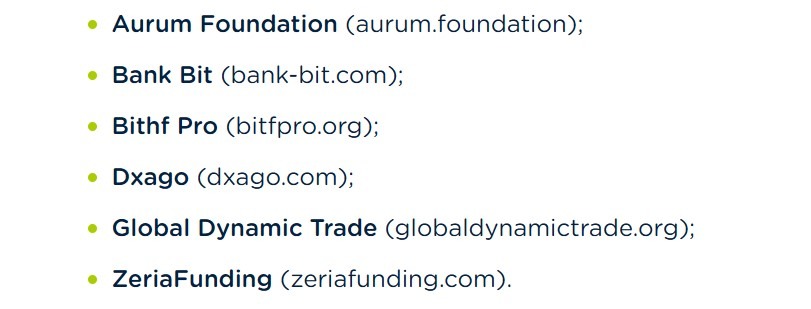
Belgium’s financial markets regulator warned consumers against six crypto-asset service providers (CASPs) it said were operating in the country without authorization, days after the European Union’s Markets in Crypto-Assets (MiCA) licensing deadline took effect.
On Monday, the Financial Services and Markets Authority (FSMA) identified several CASPs active in Belgium without authorization under MiCA regulation. FSMA named Aurum Foundation, Bank Bit, Bithf Pro, Dxago, Global Dynamic Trade and ZeriaFunding. The regulator said it had added these entities to its list of fraudulent CASPs.
The warning indicates that national regulators are beginning to apply the MiCA licensing perimeter following the EU’s transitional period, which ended on July 1.
The Brussels-based regulator strongly advised consumers not to accept offers from the named companies and told users to check whether a provider is listed in its official CASP register. The FSMA also warned that crypto assets can be volatile, may suffer from liquidity limitations and are not covered by a compensation scheme that could reimburse users for potential losses.
Cointelegraph contacted FSMA for more information but did not receive a response by the time of publication.
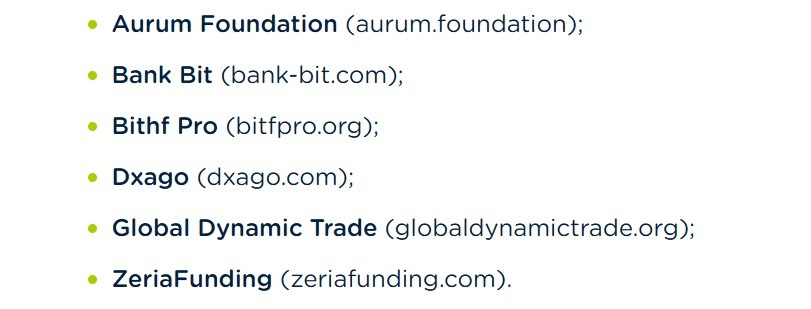
List of unregistered CASPs. Source: FSMA
MiCA deadline starts enforcement phase across Europe
MiCA entered into force at the end of 2024, creating a harmonized EU framework for CASPs and issuers. Under Belgium’s FSMA guidance, only authorized CASPs are permitted to offer crypto asset services like custody, trading platforms, crypto-to-fiat exchange, crypto-to-crypto exchange, order execution, transfer services, advice and portfolio management.
Belgium’s transitional regime expired on July 1, the same date by which existing providers across the EU generally had to obtain authorization or stop offering crypto-asset services.
Related: Germany leads MiCA crypto authorization race as Europe’s deadline looms
The deadline has been a major pressure point for crypto companies operating in the bloc. On June 24, crypto exchange Binance withdrew its MiCA application filed in Greece and planned to seek authorization in another EU jurisdiction just days before the July 1 deadline.
At the time, the exchange said it was “not leaving Europe” but acknowledged some users could be affected as it worked to comply with applicable requirements.
Magazine: Bitcoin slides to $58K, XRP hits $1 but onchain data promising: Market Moves


Key Highlights
-
Shares of SK hynix decline 3.38% following announcement of historic Nasdaq listing plan.
-
Company prepares to raise approximately $28 billion through American Depositary Receipts.
-
Funds earmarked for fabrication plants, cutting-edge EUV equipment, and AI memory expansion.
-
South Korean government unveils Won576 trillion support plan for semiconductor sector.
-
Market-leading position in HBM technology positions company for AI infrastructure boom.
Shares of SK hynix Inc. experienced a 3.38% decline, closing at 2,343,000 KRW, following the chipmaker’s announcement of an ambitious Nasdaq listing initiative. The South Korean memory semiconductor giant is preparing to secure approximately $28 billion through a fresh issuance of American Depositary Receipts. This strategic capital raise directly addresses the surging global demand for AI-focused semiconductor solutions, with funds designated for manufacturing facilities, advanced production tools, and expanded memory chip capacity.
Major Capital Raise Through American Exchange Debut
The memory chip manufacturer will introduce 17.79 million newly issued shares via American Depositary Receipts on the Nasdaq exchange. Each ADR package will represent one-tenth of a standard SK hynix ordinary share under the proposed offering structure. The pricing band is scheduled for disclosure on Monday, with final pricing determination set for Thursday.
Public trading is expected to commence Friday following the price-setting session, based on regulatory filing timelines. This cross-border listing provides SK hynix with enhanced access to U.S. capital markets. The move also creates tighter alignment between the company’s operations and the explosive growth in artificial intelligence hardware demand.
Capital raised through the offering will directly finance new semiconductor fabrication facilities and state-of-the-art manufacturing systems. SK hynix intends to acquire extreme ultraviolet lithography equipment from ASML for next-generation chip production. These sophisticated tools are essential for manufacturing the advanced memory components that power AI accelerators and hyperscale data infrastructure.
Production Expansion Aligns With Artificial Intelligence Investment Surge
This capital-raising initiative arrives as semiconductor manufacturers worldwide accelerate capacity buildouts to meet AI-driven demand. According to projections from GlobalData TS Lombard, worldwide capital expenditure on artificial intelligence infrastructure could approach $800 billion by 2026. The United States is expected to represent over 80% of this massive investment wave.
South Korea‘s government has launched comprehensive support measures for its domestic chip industry. Officials unveiled a Won576 trillion semiconductor and artificial intelligence development programme focused on the nation’s southwestern regions. Both SK hynix and Samsung Electronics have been designated as primary participants in this national industrial strategy.
SK hynix has separately committed to substantial domestic manufacturing expansion in Cheongju. The company revealed a Won100 trillion investment blueprint covering the M17 NAND fabrication facility and P&T7 advanced packaging operations. These initiatives will significantly boost production capacity within one of South Korea’s premier semiconductor manufacturing hubs.
Dominant Market Share Underpins Artificial Intelligence Growth Strategy
SK hynix maintains its position among the world’s leading memory semiconductor producers. The company captured 29.1% of worldwide DRAM revenue during the first quarter of 2026. This performance encompasses high bandwidth memory products, which have become critical components in AI computing architectures.
In the specialized high bandwidth memory segment, the company holds commanding market leadership with a 56.4% share. SK hynix also secured the second position in NAND flash memory with an 18.5% market presence. Its memory solutions are integrated into graphics processors, server systems, consumer computers, and mobile platforms globally.
Financial results showed Won52,576 billion in first-quarter revenue alongside Won40,346 billion in profit. For the full 2025 fiscal year, the company recorded Won97,147 billion in revenue and Won42,948 billion in profit. SK hynix has further extended its global reach through its Solidigm subsidiary and strategic supply agreements with Nvidia.


The United Nations Development Programme (UNDP) has signed a new agreement with the Stellar Development Foundation to expand the agency’s use of blockchain-based payments after completing pilot projects in five countries, signaling a broader role for public blockchain infrastructure in its development programs.
The agreement follows 16 months of research and pilot programs in Haiti, Syria, Kenya, Guatemala and The Gambia, with additional projects in Colombia and Papua New Guinea, the agency said Monday. According to UNDP, the next phase will establish the process for country offices to use blockchain payments across a wider range of programs.
UNDP said the pilots produced measurable results. In Syria, a Cash for Work program that recorded payments onchain reduced distribution costs from 10% to 2%, while a pilot in Haiti continued processing payments during a cellular network outage.
Blockchain payment networks, particularly those supporting stablecoins, have increasingly been promoted as a way to improve cross-border payments and remittances, especially in regions where access to traditional banking services is limited. The announcement marks one of the clearest examples of a UN agency moving beyond limited blockchain trials toward broader use of the technology for humanitarian purposes.

Source: UNDP
Last month, UNDP launched a Blockchain Advisory Group at the Proof of Talk conference in Paris, France, to help guide its use of blockchain technology across development programs. Beyond digital payments, the group will explore how blockchain can support digital public infrastructure and improve public systems.
Related: Kbank teams with Ripple on overseas blockchain remittance trial
Stablecoins gain ground in remittance markets
UNDP’s expanded use of blockchain payments reflects a broader push to modernize cross-border payments in emerging markets, where limited access to traditional banking and high remittance costs have made stablecoins an increasingly attractive alternative.
Ripple recently acquired an equity stake in African fintech Flutterwave as part of a broader effort to expand the use of its RLUSD stablecoin and the XRP Ledger across Africa, where remittances remain a major source of household income.
Latin America is also emerging as a key market for stablecoin-powered remittances, with issuers targeting payment corridors in Argentina, Bolivia, Colombia and Venezuela.
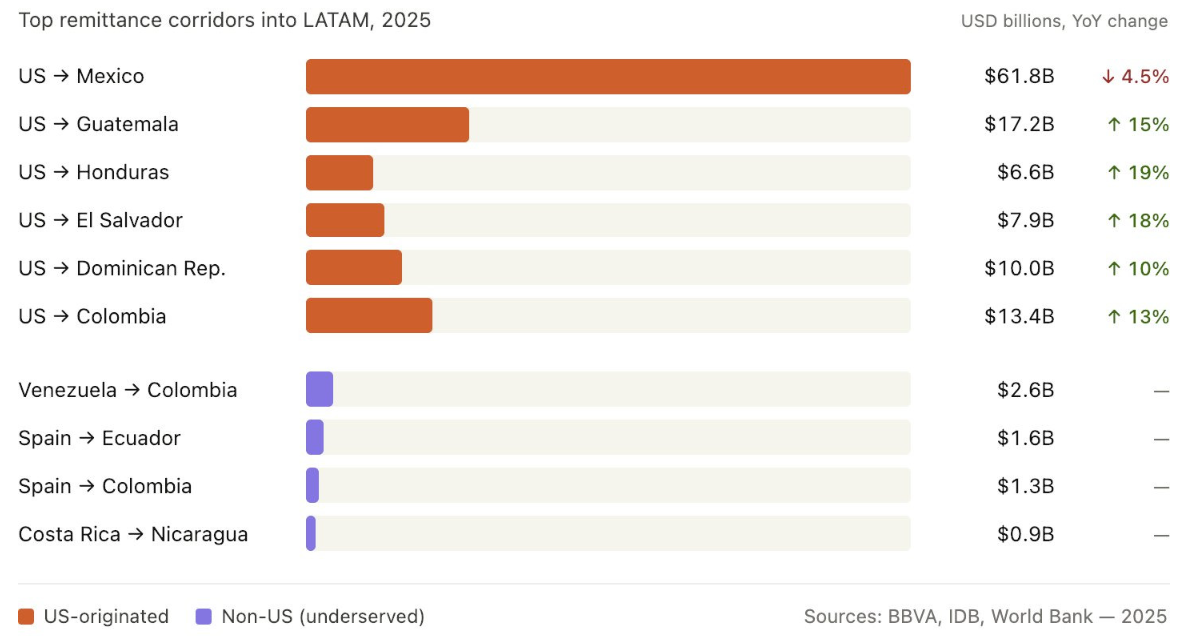
The most active remittance channels across Latin America. Source: Claudia Wang
Former UN under-secretary-general Vera Songwe said the growing importance of digital payments extends beyond remittances. Speaking at the World Economic Forum’s annual meeting in January, Songwe said that stablecoins are becoming “more important than aid” in some developing economies because they provide access to digital financial services where traditional banking remains out of reach.
“650 million people don’t have access to a bank account in Africa,” Songwe told the WEF attendees. “With a smartphone, you have access to stablecoins, so you can save in a currency that is not exposed to fluctuations of inflation and making you poor.”
Related: Bybit Pay enters South Africa through MoneyBadger integration


The UK Financial Conduct Authority has published a 147-page roadmap warning that autonomous AI systems could transform retail financial services while increasing the need for programmable digital payment infrastructure.
Summary
- The FCA has published a 147-page roadmap outlining how agentic AI could automate retail financial services.
- The report identifies stablecoins and tokenized deposits as potential infrastructure for instant AI-driven settlements.
- The regulator says firms must keep human accountability in place as autonomous AI adoption accelerates.
The UK’s Financial Conduct Authority has released a detailed review outlining how artificial intelligence is moving beyond assisting consumers to making financial decisions on their behalf, raising new questions about regulation, governance, and the future of digital payments.
Prepared under the leadership of outgoing executive director Sheldon Mills, the report, AI and the future of retail financial services, describes a financial system where AI agents continuously manage savings, investments, insurance, and payments instead of relying on occasional human instructions. The regulator said this transition requires updated rules that balance innovation with consumer protection.
In the report’s foreword, Mills wrote, “The central shift is from human-led, episodic financial activity towards services that are AI-enabled, continuous and delegated.”
Published after the FCA opened a review into advanced AI in January, the report presents seven recommendations for future policy. Among them are creating trusted protocols for agentic finance and expanding the regulator’s AI Lab to help financial firms test AI models in a controlled environment.
Agentic AI increases demand for programmable money
Rather than focusing only on today’s chatbot technology, the FCA describes the rapid emergence of “agentic AI,” where software can independently carry out financial tasks across an autonomy spectrum. At the highest level, the report says, humans become observers while AI systems continuously manage financial decisions.
According to the FCA, more than 20 frontier AI models have been introduced since late 2025, accelerating the development of autonomous financial services far faster than previous regulatory expectations anticipated.
Mills also warned that financial institutions are moving beyond recommendation engines. “Firms are moving from systems that recommend actions to systems empowered and trained to take them, and consumers will soon gain agents that act on their behalf,” he wrote.
Research cited by the FCA found that one in five UK adults would already consider allowing AI to make financial decisions autonomously.
As these AI systems become capable of executing multiple transactions without human approval, the report notes that traditional banking infrastructure may struggle to support machine-speed financial activity. Because stablecoins and tokenized bank deposits operate on programmable distributed ledger networks, they can settle transactions instantly through automated execution instead of relying on conventional multi-day settlement processes.
The report therefore identifies programmable forms of digital money as infrastructure that could support autonomous financial services if adoption continues.
Human accountability remains central despite automation
Alongside the technological opportunities, the FCA dedicates significant attention to governance and legal responsibility. It warns that firms cannot delegate accountability to algorithms even if AI systems execute financial decisions independently.
Industry participants consulted during the review highlighted growing uncertainty over legal liability. According to the report, one chief executive suggested that financial markets could eventually require a “Turing test” to distinguish between genuine human decisions and autonomous algorithmic activity.
Commenting on the publication, Emma Banymandhub, chief executive of The Payments Association, said the review reinforces the need for firms to address governance before autonomous AI becomes commonplace.
“The FCA’s Mills Review reinforces that firms should treat agentic AI as an accountability and governance issue now, while providing greater confidence to innovate responsibly as AI adoption accelerates.”
She added that AI offers significant opportunities for financial services, but its long-term success depends on clear accountability, sound governance, and maintaining consumer trust.
Ahead of the report’s release, Mills also told the Financial Times that responsibility cannot be transferred to software. “You need a human on the hook for what they’re doing,” he said, underlining the FCA’s position that management remains accountable even as financial services become increasingly automated.

Key Highlights
- MSFT shares decline following announcement of 4,800 workforce reductions
- Gaming division absorbs 3,200 layoffs as part of strategic realignment
- Microsoft stock trades near $386 amid restructuring concerns
- Multiple gaming studios transitioning away from Microsoft ownership
- Growing AI investments and sluggish gaming margins drive cost reduction efforts
Shares of Microsoft (MSFT) dropped 1.15% to close at $386.00 Monday following the company’s disclosure of 4,800 workforce reductions. The cuts represent roughly 2.1% of the tech giant’s total employee base, with the Xbox gaming segment bearing the most significant impact. This development intensifies questions surrounding Microsoft’s expense management, gaming roadmap, and artificial intelligence investment trajectory.
Tech Giant Initiates 4,800-Person Workforce Reduction
Microsoft confirmed the workforce reductions would commence without delay as the organization reshapes certain operational divisions. Company leadership positioned the action as one component of an expanded cost management initiative. The announcement arrived amid mounting pressure from deteriorating stock performance.
MSFT shares declined throughout morning trading hours before experiencing modest recovery during midday activity. The stock eventually found support around the $386 threshold as investors digested the news. Meanwhile, the broader Nasdaq Composite index posted gains, highlighting the divergence in Microsoft’s trajectory.
The technology leader has implemented various expense reduction tactics throughout the current year. Last April, Microsoft extended voluntary separation packages to specific employees based in the United States. Corporate communications indicated that more than one-third of qualifying personnel opted into the program.
Gaming Unit Undergoes Significant Organizational Changes
The gaming operation will absorb the most substantial portion of position eliminations. Microsoft intends to eliminate 3,200 Xbox-related positions, with 1,600 roles terminated Monday. Additional reductions will roll out progressively through the conclusion of fiscal 2027.
This restructuring impacts approximately 20% of the Xbox workforce. Microsoft additionally plans to spin off multiple development studios from corporate ownership. Compulsion Games and Double Fine Productions will return to independent studio status.
Ninja Theory and Undead Labs have agreed to terms for acquisition by alternative ownership groups. Microsoft continues evaluating alternatives for its French-based Arkane Studios location. These organizational shifts signal a comprehensive recalibration following extended periods of substantial gaming sector investments.
Artificial Intelligence Expenditures and Gaming Challenges Influence Strategic Direction
Microsoft has committed significant capital toward artificial intelligence infrastructure, cloud computing expansion, and gaming acquisitions. However, financial analysts have raised doubts regarding the potential return on these investments. The company’s equity value has experienced notable declines in 2026, elevating the importance of fiscal restraint.
Microsoft clarified that artificial intelligence technology did not directly displace the affected employees. Nevertheless, the organization acknowledged that AI continues reshaping operational workflows. This statement indicates an evolving approach to workforce allocation and capital deployment priorities.
The Xbox business has encountered difficulties competing against Sony and Nintendo in the console marketplace. Microsoft has simultaneously expanded game availability across competing platforms as hardware unit sales remain underwhelming. Therefore, these latest reductions point toward heightened emphasis on profit margins, platform economics, and sustained operational efficiency.

Crypto analyst Credible Crypto believes many of the beaten-down altcoins could offer better risk-reward than Bitcoin (BTC) at current prices.
According to him, projects trading 80% to 90% below their all-time highs may deliver outsized returns if the market turns.
Market Is Building a Base as Attention Moves to Altcoins
Speaking in the July 5 episode of the NinjaTrader podcast, Credible Crypto said that BTC has been in a higher time frame downtrend since hitting its $126,000 peak in October last year. However, he believes the correction is unfolding inside an important support zone rather than breaking the broader bull market.
The analyst pointed to the flagship cryptocurrency’s 2024 consolidation between $50,000 and $75,000, stating that the market has returned to an area where, in the past, buyers have accumulated. And as long as Bitcoin holds above $50,000, he expects the current range to become a base before another higher move.
He also cited on-chain data showing that nearly 80% of the BTC supply is now in the hands of long-term holders, which is the highest level on record. According to him, those investors have historically continued buying through market weakness instead of selling when prices dipped, meaning they tend to gradually absorb supply until prices recover.
That outlook has shaped the trader’s portfolio, with his capital now almost entirely allocated to altcoins after he accumulated Bitcoin from as low as $3,000 and exited his position as the asset approached the $100,000 mark. He said his reason for doing this is that, while there’s every possibility that BTC can climb from its local low near $60,000 to as high as $250,000 over time in his assessment, many altcoins have already dropped 80% to 90% from their peaks, which gives them greater potential if sentiment improves.
“At this point, I think the better bet is on altcoins that are now basically where Bitcoin was when Bitcoin was trading at $3K or $6K or even $15K,” he explained. “Many alts are now down 80 to 90% from their highs. Just as that was the best time to buy Bitcoin, I think that’s now the best time to buy alts.”
Selectivity Is Still Critical Even With the Bullish Outlook
Despite his hope for an eventual uptick in alternative crypto assets, Credible was also quick to point out that not every token deserves a recovery. In his estimation, most cryptocurrencies on the market right now don’t have any meaningful value. As such, he warned against assuming that every chart will revisit previous highs simply because their prices are down.
Instead, he advised investors to focus on projects with working products, active users, and sustainable business models.
“I’m not saying that every single altcoin in the entire market is going to have a massive run because that’s just not realistic,” he clarified. “We have now hundreds of thousands of coins in the market, and I would say 85-90% of them do absolutely nothing and should not really be existing at this point in time.”
In his opinion, the remaining 5 or 10%, even if they don’t make it back to their all-time highs, could still see returns of up to 3 or 4x their present values in a matter of weeks “when the time is right.” In contrast, for Bitcoin to multiply by the same number, which would take it to at least $250,000 from its current level, may require months, if not years.
The post Analyst: Altcoins Down 80-90% Could Outperform Bitcoin appeared first on CryptoPotato.


Coinbase (COIN) sent users a false “breaking news” alert saying Norway’s soccer team beat Brazil 3-2 in a World Cup knockout match before the game had even started.
The alert said Erling Haaland scored twice in the match at MetLife Stadium. Coinbase’s own prediction-market page still listed the game as weather-delayed at the time.
Users posted screenshots of the notification on X on Sunday. Coinbase CEO Brian Armstrong replied to one saying he was looking into it with the team. According to one post, the alert was sent at 10:26 a.m. ET. The match didn’t start until 4 p.m.
Max Branzburg, the company’s head of consumer & business products, later clarified that the incorrect story was fixed and the firm “made some updates to avoid these types of inaccuracies in the future.”
“It’s awesome to see the power of AI-enabled 24/7 insights for trading, but obviously still need to tune it to address these types of issues,” Branzburg wrote on X.
The actual match did see Norway beat Brazil, and Haaland scored twice. The final score was 2-1.
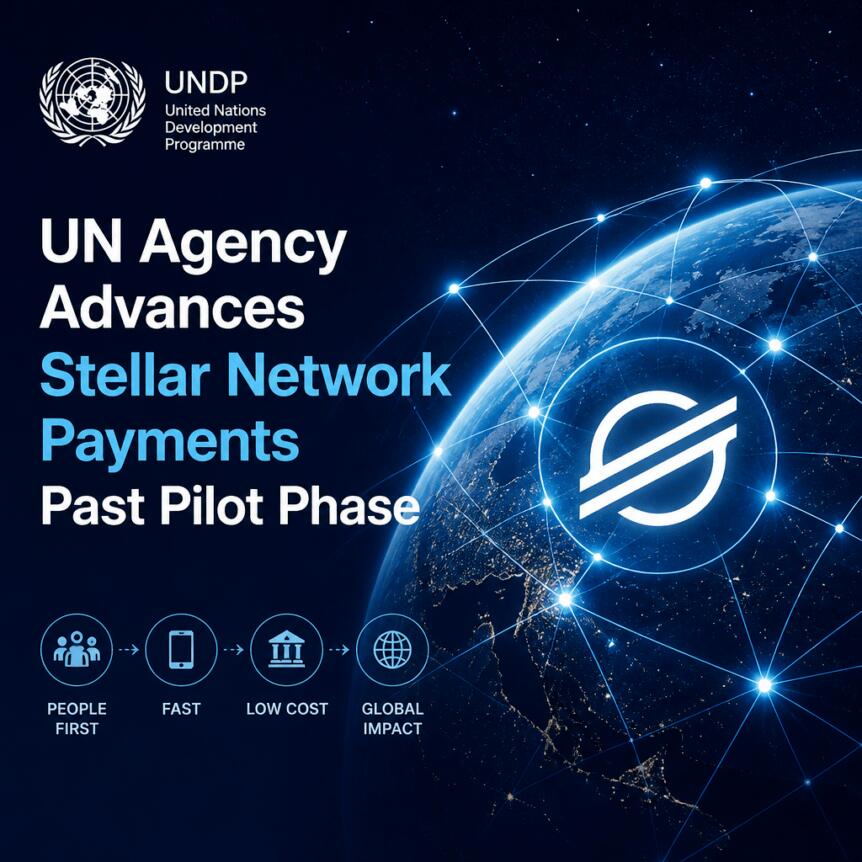
The United Nations Development Programme (UNDP) is moving from blockchain pilots to a wider rollout of blockchain-based payments after signing a new agreement with the Stellar Development Foundation. The initiative builds on 16 months of testing in multiple countries and aims to define how UNDP country offices can use blockchain payments across a broader set of development and humanitarian programs.
According to UNDP, the new phase will focus on creating a repeatable process that offices can apply, following pilot projects in Haiti, Syria, Kenya, Guatemala and The Gambia, with additional work reported in Colombia and Papua New Guinea. UNDP said the pilots generated measurable outcomes that helped justify the next step.
Key takeaways
- UNDP has signed an agreement with the Stellar Development Foundation to expand blockchain-based payment usage across programs beyond initial pilots.
- Pilot results cited by UNDP include lower distribution costs in Syria and continued payments during a cellular network outage in Haiti.
- The next phase is intended to standardize how UNDP country offices adopt blockchain payments across a wider range of activities.
- The move reflects a broader push to modernize cross-border and aid-related payments in regions with limited access to traditional banking.
From pilot projects to a scaled deployment
UNDP’s agreement with the Stellar Development Foundation follows research and pilot deployments conducted over 16 months. UNDP said it is now preparing a framework that country offices can use to deploy blockchain payments more systematically, rather than treating the technology as a one-off trial.
UNDP’s announcement points to the operational lessons it claims to have learned during implementation. In Syria, the agency cited a Cash for Work program where payments recorded onchain reportedly reduced distribution costs from 10% to 2%. Separately, a pilot in Haiti continued processing payments during a cellular network outage, an issue that often disrupts delivery in areas where connectivity is unreliable.
For investors, builders, and aid technologists, this matters because it signals how a major public-sector organization is thinking about blockchain not just as a theoretical tool, but as payment infrastructure that must work under real-world constraints—cost pressure, network interruptions, and uneven access to financial rails.
Why blockchain payments are gaining attention
Blockchain payment networks—particularly those designed to handle stable-value digital assets—have increasingly been promoted as a way to improve cross-border transfers and remittances. The core appeal in emerging markets is straightforward: stablecoins and blockchain rails can potentially reduce friction and access barriers where traditional banking is limited.
UNDP’s decision to expand use of blockchain-based payments adds another data point to a trend already visible in the private sector, where stablecoin infrastructure is being pushed to serve remittance corridors and underbanked populations. It also distinguishes this development from many early “experiments,” since UNDP is explicitly describing a move toward broader integration into ongoing program operations.
UNDP’s roadmap further links payments to a wider set of potential public-good applications of distributed ledger technology, indicating that the agency is not limiting its view to transfers alone.
Connection to UNDP’s broader blockchain strategy
The expanded payments agreement comes after UNDP launched a Blockchain Advisory Group earlier this year. In a move designed to guide the agency’s use of blockchain across development programming, UNDP said the group was unveiled at the Proof of Talk conference in Paris, France.
UNDP indicated that, beyond digital payments, the advisory group will examine how blockchain could support digital public infrastructure and help improve public-sector systems. That matters because it suggests a longer-term internal strategy: payments are one tangible starting point, but the agency appears to be assessing broader use cases where auditability, verifiability, and system resilience may be valuable.
Stablecoins, remittances, and the push for digital access
UNDP’s emphasis on blockchain-based payments aligns with a wider market narrative: remittances remain a major source of household income in many regions, and stablecoin-based systems are increasingly positioned as a way to make those transfers faster and more accessible. In that context, broader corporate activity around stablecoins is becoming more frequent.
Earlier coverage noted that Ripple acquired an equity stake in African fintech Flutterwave as part of efforts to expand the use of its RLUSD stablecoin and the XRP Ledger across Africa. Separately, Latin America has also drawn attention from stablecoin-linked initiatives aimed at payment corridors across countries including Argentina, Bolivia, Colombia and Venezuela.
These developments are occurring alongside remarks from public-policy leaders. In January, former UN under-secretary-general Vera Songwe told the World Economic Forum annual meeting that stablecoins are becoming “more important than aid” in some developing economies by offering a route to digital financial services where traditional banking remains out of reach. Songwe also said that, with a smartphone, people may gain access to stablecoins—framing them as potentially reducing exposure to inflation volatility in environments where that risk affects daily finances.
While UNDP’s announcement does not resolve debates about stablecoins’ regulatory status, long-term viability, or country-specific risks, it does underline that public institutions are actively exploring how blockchain rails can complement or replace parts of legacy payment workflows—especially for cash distribution and time-sensitive transfers.
Readers should watch how UNDP’s “process” for country offices is implemented in practice—whether blockchain payments become a standard operational option across more programs, and how the approach performs under local infrastructure constraints such as connectivity, verification requirements, and partner onboarding.

Bitcoin is facing a test, and its price prediction is not helping. So far in 2026, BTC has fallen about 28%, while gold is down just 3.9%. That gap has fueled debate over whether money will return to crypto or keep flowing into the world’s oldest safe-haven asset.
Veteran chart analyst Peter Brandt recently said he is considering selling part of his Bitcoin for gold. He believes gold could outperform BTC from here, based on the long-term XAU/BTC chart. It’s a notable shift from someone known for following price action instead of chasing headlines.
Not everyone agrees. Dave Portnoy has doubled down on Bitcoin, saying he’ll hold it even if it falls to zero. That leaves traders staring at two opposite convictions, with neither side lacking confidence. Sometimes markets enjoy making both camps sweat before picking a direction.
The recent numbers explain why this debate has intensified. Bitcoin lost 20% in June, marking its weakest monthly performance in four years. Gold also slipped, falling about 11.7% to near $4,000 an ounce, but its decline remained far smaller over the year.
For now, the Bitcoin-versus-gold trade has become one of the market’s biggest themes. If BTC starts reclaiming ground, crypto bulls will argue the selloff was just another shakeout. If gold keeps pulling ahead, Brandt’s call could end up looking less controversial than it first sounded.
Discover: The Best Token Presales
Bitcoin Price Prediction: Can BTC Reclaim $75,000 or Is a Drop to $50,000 the More Likely Scenario?
Bitcoin trades near $63,200 after recovering from recent lows, but momentum remains mixed. Bulls still need a convincing push above $72,000 to $75,000 before calling the trend a breakout. Until then, the market keeps traders guessing instead of celebrating.
Meanwhile, steady macro conditions and signs of seller fatigue have helped defend the $60,000 area. Some analysts still view $60,000 to $75,000 as a healthy base. Others argue Bitcoin remains stuck in a distribution range, leaving the door open for a drop toward $50,000 if support finally gives way.

Don’t Miss Out on Our $1,000 USDT Airdrop on ByBit
Long-term forecasts remain optimistic despite the short-term uncertainty. Several institutional analysts still expect Bitcoin to reach $150,000 during this cycle. More aggressive projections stretch well beyond that, although those targets depend on stronger ETF demand, friendlier regulation, and supportive macro conditions. That’s quite a shopping list.
For now, the bull case is simple. A decisive move above $75,000 could clear the path toward $85,000. The base case keeps Bitcoin moving between $60,000 and $72,000 before another breakout attempt. The bearish view sees continued weakness dragging prices toward $50,000. When veteran chart watchers start eyeing the exit, even the bulls tend to stop scrolling for a minute.
Discover: The Best Crypto to Diversify Your Portfolio
Bitcoin Hyper Targets Early Mover Upside While Spot BTC Grinds Through Key Levels
If BTC’s near-term upside is capped by distribution pressure and institutional rotation uncertainty, the asymmetric opportunity at this stage of the cycle shifts toward early-stage infrastructure plays. It is shifting specifically ones with genuine technical differentiation rather than vaporware positioning.
The hold-vs-sell debate playing out at the top of the market historically compresses spot BTC’s short-term range while capital scouts the next lever.
Bitcoin Hyper ($HYPER) is a Bitcoin Layer 2 that integrates the Solana Virtual Machine, the first project to do so on Bitcoin. It delivers sub-second finality and low-cost smart contract execution while inheriting Bitcoin’s security layer.
The presale has raised close to $33 million at a current price of $0.0136827, with staking live and offering high APY during the presale window. The core proposition is bridging Bitcoin’s trust model with Solana-level throughput via a Decentralized Canonical Bridge for BTC transfers. Bullish long-term BTC narratives structurally benefit Layer 2 infrastructure that expands what the network can actually do.
Review Bitcoin Hyper’s presale details here.
Don’t Miss Out on Our $1,000 USDT Airdrop on ByBit
The post Bitcoin Price Prediction: Peter Brandt Might Dump BTC for Gold appeared first on Cryptonews.


DeFi vault platform Summer Finance was drained of roughly $6 million on Monday in an exploit that security firm Blockaid said its detection system flagged as it was unfolding. Blockaid posted the exploit transaction, the attacker's address and the affected Lazy Summer contracts within minutes of… Read the full story at The Defiant


DeFi platform Summer Finance, which offers “institutional DeFi Vault infrastructure for everyone” has been hacked for approximately $6 million.
The sum was drained from its Lazy Summer USDC vault, managed by risk advisor Block Analitica. Summer Finance confirmed the exploit and has paused vaults while investigating the cause of the loss.
Read more: DeFi drama: ENS governance battle, EF cuts and Gnosis reboot
According to blockchain security auditor BlockSec, the loss was caused by a price manipulation attack. The hacker first “accumulated a large amount of deprecated vgUSDC, likely at negligible cost” before using the tokens to carry out a “share-price distortion” and withdrawing USDC from the vault.
The hack represents just over a quarter of Lazy Summer’s pre-exploit TVL, according to DeFiLlama data. The team has sent an on-chain message to the exploiter, requesting they get in touch.
A $2M slippage slip-up, and a $70B bullet dodged
Elsewhere, an unlucky user appears to have lost approximately $2 million when their trade was routed through an illiquid Uniswap v3 pool.
According to Decurity, which flagged the transaction, the majority of the back-running MEV bot ($1.8 million) was paid as a tip to TitanBuilder.
In better news, blockchain security firm Hexens disclosed a bug on Aptos on Sunday, which it estimates “put up to $70 billion at systemic risk.”
Read more: MEV bot JaredFromSubway.eth loses $7.5M to approvals honeypot
Highlighting the find, Polygon CTO Mudit Gupta called it “the worst kind of bug possible.” He explains that the “arbitrary state write bug” puts “most assets across all chain[s]” at risk.
Got a tip? Send us an email securely via Protos Leaks. For more informed news and investigations, follow us on X, Bluesky, and Google News, or subscribe to our YouTube channel.

World Cup 2026 : Watching Mexico-England in one Boston's Hispanic outskirts

Google Now Uses Your Uploaded Search Media To Train AI

Bitcoin Whales Just Made a Massive Crypto Bull Market Bet!


-

 Fashion3 days ago
Weekend Open Thread: High Hopes
-

 Politics3 days ago
The House | “Reframing the debate from a binary discussion of winners and losers”: Yuan Yang reviews ‘We Are Not Machines’
-

 Crypto World7 days ago
Strategy authorizes up to $1.25B in Bitcoin sales under new capital plan
-

 News Videos6 days ago
How to Build INSANE Live Financial Dashboards With Claude
-

 Tech7 days ago
Anonymous researcher drops 0-day ‘exploitarium’ repo
-

 Business7 days ago
Australia treasurer says alleged access of prime minister’s bank data ’incredibly concerning’
-
 NewsBeat2 days ago
Taylor Swift and Travis Kelce wedding staffer hilariously struggles to keep her cool while checking in megastars
-
Crypto World5 days ago
Airdrop Registration Becomes Key Focus For Remittix As RTX Launch Updates Approach
-

 Sports5 days ago
Broncos roster: OL Ben Powers (No. 74) entering final year of contract
-

 Crypto World5 days ago
Binance stock trading tops $1B in first month after launch
-

 NewsBeat6 days ago
Presenter Caroline Flack’s brother Paul Flack dies aged 55
-

 Crypto World5 days ago
Alibaba-affiliate Ant Group enters the humanoid robot market with 12 deals
-

 Crypto World3 days ago
Standard Chartered Secures MiCA License as ESMA Adds 37 New Crypto Firms
-

 Crypto World1 day ago
South Africa proposes crypto tax guidance under existing rules
-
 NewsBeat4 days ago
New exhibition reflects five decades of movement between island of Ireland and GB
-

 News Videos4 hours ago
Best Time to Enter Small Caps Right Now? Another Bull Run? | Financially Free
-

 Fashion3 hours ago
Open Thread: What Great Books Have You Read Recently?
-

 Business5 days ago
Meta Platforms Stock Jumps 7% Today as Bloomberg Reports Company Plans to Enter the Cloud Business
-

 Tech1 day ago
Lenovo laptops are now shipping with YMTC SSDs, a sign of Chinese NAND entering the mainstream
-

 Business4 days ago
What a 10 Percent Drop Means for Buyers, Sellers and Renters
You must be logged in to post a comment Login