
Crypto World
Best Real Estate Tokenization Companies in the USA


AI Summary
- The blog post discusses how blockchain-powered tokenization is transforming the United States real estate market by converting property assets into digital securities.
- Real estate tokenization allows investors to own fractional interests in properties, providing liquidity and borderless participation.
- The post outlines the key steps involved in real estate tokenization, such as asset structuring, regulatory compliance, smart contract development, and investor onboarding.
- It also highlights some of the top real estate tokenization companies in the US, including Antier, Brickken, RealT, Tokeny, Alpharive, InvestaX, SettleMint, Spydra, Securitize, and Rapid Innovation.
- These companies offer services ranging from compliance-focused consultation to asset digitization dashboards and investor management modules.
The United States real estate market, valued in the trillions, has long been considered one of the most stable yet illiquid asset classes. High capital requirements, lengthy transaction cycles, and limited accessibility have traditionally restricted participation. Today, blockchain-powered tokenization is reshaping this landscape by converting tangible property assets into compliant digital securities. As institutional capital increasingly flows toward real-world assets (RWAs), the demand for real estate tokenization development services is accelerating across commercial, residential, and mixed-use property segments.
What is Real Estate Tokenization?
Real estate tokenization is the process of turning real estate ownership interests in physical real estate into a digital blockchain token – these tokens are known on the blockchain as fractional equity interests, profit-sharing interests, or cash flow interests attached to an underlying real estate asset.
Instead of buying all of the buildings/structures, or putting money into a traditional REIT structure, investors now have the opportunity to own a digital fractional interest (fractional token) in these types of real estate investment opportunities via a legally determined way to hold/hold these interests in an entity.
On a structure basis, tokenization uses legal engineering and blockchain (distributed ledger) technology to provide investors with a way to digitize their interest in a real estate asset AND still comply with applicable laws. Commonly, the underlying real estate asset will have been acquired through a special purpose vehicle (SPV). Each token represents a unique economic right associated with that particular SPV.
Key characteristics of tokenized real estate include:
- Fractional ownership access
- Automated compliance via smart contracts
- Transparent blockchain-based ownership records
- Potential secondary liquidity
- Borderless participation frameworks
Given the regulatory and technical complexity involved, partnering with a specialized real estate tokenization development company is often essential to ensure compliant structuring, smart contract security, and scalable platform architecture.
Take a deep dive into Top Real Estate Tokenization Trends shaping property investment in 2026
How Does Tokenization Work in Real Estate?
The tokenization of real estate represents a multi-stage procedure that entails asset structuring, regulatory alignment, blockchain development, and investor management systems. Tokenization is achieved by merely issuing tokens, rather than creating a fully compliant digital securities framework; identified in the lifecycle stages below.
1. Asset Identification & Structuring
Properties are selected and legally structured through an SPV or other means, isolating liabilities and defining ownership.
2. Regulatory Compliance
Issuance of tokens must comply with SEC regulations; specifically, under Reg D, Reg A+, or Reg CF, to qualify as a compliant digital token security.
3. Smart Contract Development
Deploy smart contracts to represent ownership, enforce transfer restrictions and automate dividend distributions.
4. Investor Onboarding
Issuance platform should integrate means of verifying investor identity (KYC/AML requirements) as well as vetting the accreditation of any interested investor prior to being issued a token.
5. Primary Token Offering
Tokens should be offered to investors, in a manner compliant with available fundraising regulations, as a means of completing the initial token distribution phase of the overall tokenization process.
6. Secondary Market Liquidity
Tokens should be issued to investors under a compliant fundraising framework and subsequently listed on regulated digital markets (where applicable) in order to facilitate liquidity.
Companies that provide end-to-end real estate tokenization development services often manage the entire tokenization lifecycle (legal coordination, support, post-launch investor management, etc.), which, in turn; reduce operational friction for asset owners.
Explore a Strategic Guide to Real Estate Tokenization
Best Real Estate Tokenization Companies in US
The following organizations are frequently recognized among the real estate tokenization companies USA contributing to the growth of compliant digital property markets. As institutional adoption accelerates, many of these firms are projected to rank among the best real estate tokenization companies 2026 due to their regulatory depth, infrastructure capabilities, and scalability.
1. Antier
Antier is a technology-forward and human-centric real estate tokenization development company delivering enterprise-grade infrastructure for asset digitization. Recognized among leading property tokenization companies in the US, Antier integrates blockchain engineering with AI-driven intelligence to build scalable property tokenization ecosystems.
To demonstrate the advantages of their services, Antier provides full-spectrum project management tokenization infrastructure, compliant smart contracts and streamlined solutions for creating the second marketplace that can be customized according to client requirements. This combines both automation and investor-first design methodologies to help further establish Antier as one of the premier developers of real estate tokenization technology in the USA.
- End-to-end tokenization platform development
- AI-powered asset intelligence modules
- Regulatory-aligned smart contract architecture
- Investor onboarding & compliance integration
- Secondary marketplace enablement
Book a Compliance-Focused Consultation with the Experts
2. Brickken
Brickken’s Tokenization Framework allows for real estate owners to issue digital assets with minimal complexity through a series of streamlined issuance tools utilizing smart contracts to manage the lifecycle of the assets. This platform will make it easier for property sponsors to raise money through digital fundraising because it has regulatory compliant smart contracts.
The infrastructure of Brickken has been built to make token issuance simpler, thus keeping it aligned to compliance needs. By offering cap table automation and digital subscription management tools, Brickken makes the process simpler for issuers. Within the broader ecosystem of real estate tokenization firms USA, Brickken supports cross-border projects seeking structured asset digitization models.
- Token lifecycle management tools
- Compliance-ready smart contracts
- Asset digitization dashboards
- Cap table automation
- Investor management modules
3. RealT
RealT has been identified as one of the early leaders in the space for fractional blockchain-based real estate ownership, specifically within the United States. Their business model has been centered on the tokenization of rental properties, with the aim of providing fractional ownership via blockchain tokens for investors across the globe.
This has been achieved by providing the opportunity for smaller investment sizes, which has been a major factor for the democratization of real estate ownership within the United States.
This business model combines traditional property management with digital asset infrastructure, providing rental income distribution via blockchain technology, which has been a major factor for the prominent real estate tokenization companies USA.
- Property-level tokenization
- Automated rental income distribution
- Transparent on-chain ownership
- Retail-focused accessibility
- Investor-friendly dashboards
4. Tokeny
Tokeny is a provider of enterprise-level digital securities infrastructure that can be easily customized for different real estate tokenization applications. The company’s unique approach to compliance incorporates regulatory logic directly into its token standards. This is accomplished through the use of rule-based restrictions on the transfer of tokens and criteria for determining eligibility to invest.
The company’s technical rigor and regulatory alignment make it relevant among leading property tokenization companies US serving institutional markets. Its architecture supports issuance, identity verification, and lifecycle asset management within structured frameworks.
- ERC-3643 compliant token standard
- On-chain identity integration
- Institutional compliance modules
- Transfer restriction enforcement
- Lifecycle asset management
5. Alpharive
Alpharive is focused on structured real estate tokenization through the use of SPV structures. This is helpful in ensuring the modernization of the capital raise process for property developers and fund managers.
The structured approach is helpful in ensuring the strengthening of credibility for tokenization companies in the USA, especially in projects which require the use of investor accreditation processes.
- SPV-based token issuance
- Accredited investor onboarding
- Digital subscription management
- Cap table automation
- Investor reporting tools
6. InvestaX
InvestaX is a regulated digital securities platform that operates on an established system, allowing for property-backed tokens to be issued (with the capability of being integrated into a marketplace). Its cross-border nature enables capital from all over the world to participate in structured product offerings.
By combining issuance frameworks with exchange-grade systems, InvestaX contributes to the expanding global dimension of real estate tokenization firms USA engaging foreign investor bases.
- Licensed digital securities infrastructure
- Exchange integration
- Cross-border investor participation
- Custody partnerships
- Asset lifecycle management
7. SettleMint
SettleMint is a company that offers enterprise-grade blockchain infrastructure that has the capability for customization for specific property tokenization ecosystems. Instead of a specific platform for issuing tokens, it allows enterprises to develop their own internal digital asset systems that conform to existing ERP and regulatory systems.
This model, which is based on infrastructure, allows enterprises that want to develop specific real estate tokenization development services frameworks within institutional systems.
- Low-code blockchain deployment
- Multi-chain compatibility
- Enterprise integration APIs
- Permissioned blockchain options
- Scalable backend systems
8. Spydra
Spydra is dedicated to providing enterprises with a secure, permissioned blockchain for tokenization. Its goal is to address major institutional concerns such as control of assets, compliance with regulations, and protecting the privacy of data.
By offering private network deployments and compliance-integrated smart contracts, Spydra strengthens enterprise adoption pathways among top real estate tokenization companies in the USA supporting regulated markets.
- Private blockchain deployment
- Compliance-oriented smart contracts
- Asset lifecycle automation
- Identity-integrated frameworks
- Enterprise-grade security
9. Securitize
Securitize, a leading regulated digital securities platform specifically designed for the issuer of Tokenized Assets, such as Property-Backed Instruments, in the USA, is also a registered transfer agent that provides seamless issuance and trading capabilities.
By integrating transfer agent services with digital marketplace functionality, Securitize delivers a comprehensive lifecycle ecosystem, positioning it among influential real estate tokenization companies USA shaping institutional adoption trends.
10. Rapid Innovation
Through its team-based approach to custom-built solutions for real estate tokenization, Rapid Innovation positions itself as both a technology provider and consultant to firms looking to capitalize on emerging technologies such as blockchain. It also specializes in developing tokenomics frameworks and providing access to creating secure smart contracts, which are critical components of any successful tokenization project.
Rapid Innovation continues to support other real estate tokenization firms USA throughout the United States by enabling them to collaborate with existing regulated issuance platforms and helping them bring their vision into fruition through technological support for their respective clients.
- Custom security token development
- Smart contract engineering
- Platform architecture design
- Blockchain advisory services
- Integration and deployment support
Future Outlook of Tokenized US Real Estate Ecosystem
The tokenized real estate industry in the United States continues to advance towards the widespread adoption of tokenized real property within the mainstream financial markets. As the regulatory landscape becomes more defined and the infrastructure supporting digital securities continues to advance, tokenized real property will become a vital part of the modern capital markets.
The best real estate tokenization companies 2026 will be those that offer depth in regulatory compliance, infrastructure, and intelligent systems within the real estate tokenization Development Services.
Antier is well positioned to meet the needs of the tokenized real property markets because the company offers a human-centric approach to real estate tokenization solutions that integrate intelligent systems.
Frequently Asked Questions
01. What is real estate tokenization?
Real estate tokenization is the process of converting ownership interests in physical real estate into digital blockchain tokens, allowing investors to own fractional interests in real estate assets.
02. What are the benefits of tokenized real estate?
Benefits of tokenized real estate include fractional ownership access, automated compliance through smart contracts, transparent ownership records on the blockchain, potential secondary liquidity, and borderless participation.
03. Why is partnering with a specialized real estate tokenization development company important?
Partnering with a specialized company is crucial to ensure compliant structuring, smart contract security, and scalable platform architecture due to the regulatory and technical complexities involved in tokenization.


European Central Bank Executive Board member Piero Cipollone warned that tokenized deposits and stablecoins in Europe will only scale if they rest on tokenized central bank money as a public settlement anchor. In remarks delivered in Brussels, Cipollone pointed to Pontes, the Eurosystem’s distributed ledger technology settlement initiative, which aims to connect market DLT platforms with the Eurosystem’s TARGET Services and settle transactions in central bank money.
The ECB has signaled that Pontes could be launched in the third quarter of 2026, enabling market participants to settle DLT-based transactions using central bank money. The comments extend the ECB’s broader Appia initiative, which the central bank outlined on March 11 as a blueprint for a future European tokenized financial ecosystem by 2028.
Related: The ECB has been advancing work on tokenization and digital finance, including efforts around the digital euro and related settlement infrastructure.
Key takeaways
- Tokenized financial assets in Europe would require tokenized central bank money to serve as a low-risk settlement anchor, reducing exposure to price volatility or credit risk.
- Pontes, the Eurosystem’s DLT settlement initiative, aims to interlink market DLT platforms with central bank payment rails, with a planned initial launch in Q3 2026.
- The Appia roadmap seeks to establish interoperability standards so tokenized assets can transfer smoothly across different DLT ecosystems, supported by standardized data formats and smart contract protocols.
- Beyond technology, Cipollone underscored the need for a coherent legal framework and stronger public-private collaboration to support tokenized markets at scale.
- Regulatory progress is underway, but industry participants—along with issuers of stablecoins—are pressing for broader guidance, including expansion of the DLT Pilot Regime and related cash account services for authorized providers.
Tokenized markets hinge on central bank settlement rails
In his Brussels address, Cipollone framed the issue around the core risk that currently limits scale: when a seller of a tokenized security is paid in an asset they would rather not hold, the resulting counterparty risk and volatility can chill adoption. He emphasized that central bank money can serve as a stable, trusted settlement asset, mitigating liquidity and credit concerns that might otherwise deter market participants from embracing tokenized instruments. The stance aligns with a broader ECB push to anchor tokenized finance in public money while maintaining market resilience.
As part of this vision, Pontes is described as a bridge between private market platforms and the Eurosystem’s settlement rails. If successful, the project would make it feasible to settle tokenized trades directly in central bank money, enhancing finality and reducing settlement risk across Europe’s growing tokenized ecosystem.
Appia: interoperability as the backbone of a tokenized Europe
The Appia initiative, introduced by the ECB, is designed to provide a blueprint for a European tokenized financial infrastructure through 2028. A central pillar is an interoperability standard for assets, enabling cross-platform transfers of tokenized securities and other instruments. In practice, this means harmonizing data formats and smart contract standards so that tokenized assets can move between DLT networks without bespoke bridge solutions.
Cipollone urged market infrastructure operators, banks, custodians and technology providers to engage with the Appia roadmap, offering feedback to help foster broader public-private partnerships. The underlying expectation is that a shared standard will reduce fragmentation, lower integration costs and accelerate adoption across European markets.
Legal clarity and the regulatory path forward
Beyond technology, Cipollone argued that Europe needs a more explicit legal framework to support tokenized issuance and transfer across the bloc. He flagged that while Appia and other initiatives push the technical envelope, a coherent regulatory foundation is essential to prevent a patchwork of rules that could hinder scalable settlement infrastructure.
The European Commission’s proposal to extend the DLT Pilot Regime was described as an important step, yet Cipollone cautioned that without a comprehensive tokenization framework, the region risks building high-value settlement infrastructure atop inconsistent rules. In this context, a dedicated legal framework for tokenized assets could help harmonize issuance, transfer and custody across member states.
Industry response and the next steps
The interview comes on the heels of industry activity responding to Europe’s tokenization push. Recently, stablecoin issuer Circle submitted feedback to the European Commission’s Market Integration Package, urging lawmakers to broaden the DLT Pilot Regime and to allow e-money token cash accounts for authorized crypto-asset service providers. The broader takeaway from market participants is a call for practical, scalable paths to tokenized finance, rather than piecemeal reforms that complicate cross-border settlement.
Looking ahead, the ECB’s public-private collaboration around Appia, the Pontes settlement rails, and the evolving legal framework will be in focus for institutions seeking to participate in Europe’s tokenized finance era. As with any large-scale infrastructural shift, progress will likely hinge on coordinated industry input, regulatory clarity and tangible pilot outcomes.
Readers should watch upcoming updates on Pontes’ pilot milestones and the Appia roadmap’s public consultation cycles. While the Q3 2026 launch window is a concrete near-term milestone, the broader question remains: can Europe converge on a unified framework that makes tokenized central bank money the default settlement anchor for tokenized markets?
TLDR:
- Ethereum exchange reserves have fallen to roughly 16.2 million ETH, the lowest recorded level since 2016.
- Around 37 million ETH locked in staking contracts is actively reducing circulating supply and sell-side pressure.
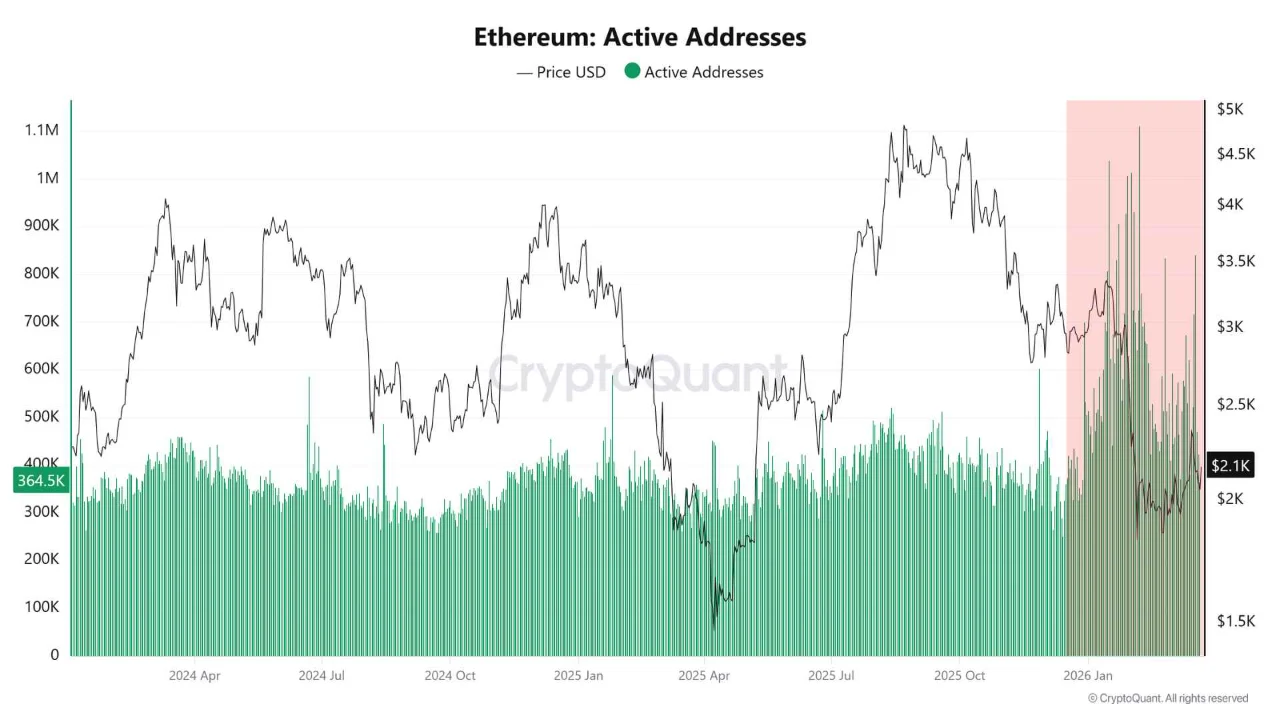
- Surging active addresses and lower gas fees from EIP-4844 reflect real user demand, not speculative activity.
- Staking-based ETH ETF launches and U.S. regulatory clarity are drawing fresh institutional capital into Ethereum.
Ethereum’s on-chain data points to a structural supply shift that is quietly building price pressure. Exchange reserves have fallen to around 16.2 million ETH, the lowest level since 2016.
Meanwhile, approximately 37 million ETH remains locked in staking contracts. Active addresses have also surged in recent weeks.
Together, these trends suggest that Ethereum’s current market phase may be driven more by fundamentals than by speculation.
Exchange Reserve Drop and Network Activity Signal Tightening Supply
Ethereum’s exchange reserves have reached their lowest point since 2016, sitting at around 16.2 million ETH. This drop reduces available sell-side liquidity on trading platforms.
As fewer coins sit on exchanges, any new demand can move prices more sharply. The reduced float creates conditions for heightened price sensitivity.
At the same time, around 37 million ETH is currently locked in staking. This removes a large share of the circulating supply from active trading.
Together, the staking lock-up and low exchange reserves shrink available market supply considerably. That combination puts structural pressure on price over time.
Active address counts have surged recently, pointing to genuine network usage. This rise in activity comes from real users, not speculative positioning.
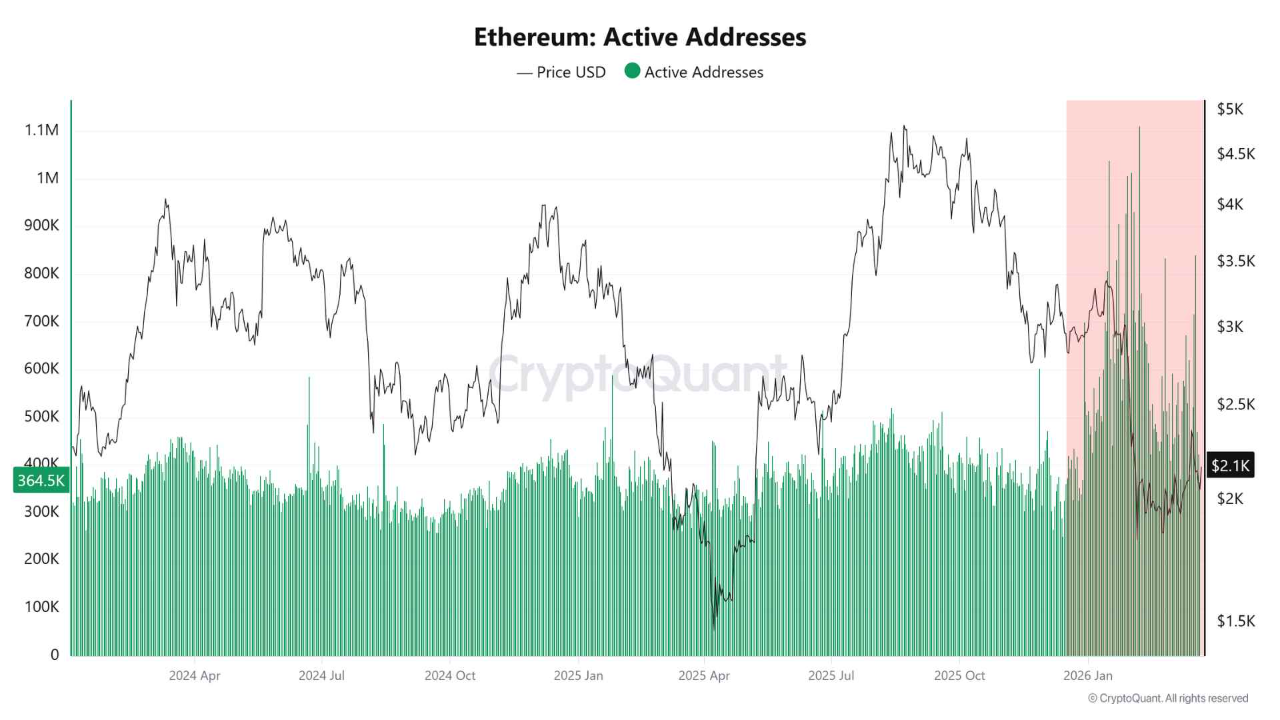
Source: Cryptoquant
Lower gas fees following EIP-4844 have made Layer 2 transactions cheaper and faster. As a result, more users are engaging with these applications than before.
Unlike prior market cycles, usage appears to be leading price rather than following it. Transaction volume on Layer 2 networks has grown steadily since EIP-4844.
This shift shows that adoption is organic and tied to improved infrastructure. The data, therefore reflect demand driven by utility rather than momentum trading.
Derivatives Reset and Institutional Access Add a New Layer of Support
Open interest in Ethereum derivatives was flushed out following prior market highs. That washout cleared excessive leverage from the system.
Since then, open interest has been rebuilding gradually and at a steadier pace. This pattern points to a healthier positioning structure in the derivatives market.
Moderate open interest growth, without aggressive funding rates, further supports this reading. Fresh capital appears to be entering rather than recycled speculative money.
The absence of extreme funding rates reduces the risk of a sudden leveraged unwind. Traders are, therefore, taking on new positions with more measured risk.
Analyst Trader Tardigrade noted on social media that Ethereum recently invalidated a bearish chart setup. The asset triggered a breakdown below support, which then reversed quickly.
That false breakdown, also known as a fakeout, is generally read as a bullish reversal pattern. The analyst cited the move as a technical shift in Ethereum’s short-term direction.
Separately, the launch of staking-based ETH exchange-traded funds has expanded institutional access to Ethereum. Regulatory clarity from U.S. agencies has further reduced uncertainty around the asset.
These developments have made ETH more accessible to a wider range of capital. Institutional participation, combined with tightening supply, adds another layer of support to current market conditions.



SIREN has reversed sharply after a fast rally on BNB Chain, with the AI-focused token falling more than 70% from its March 22 all-time high. The drop came after several days of outsized gains and fresh scrutiny over supply concentration and wallet activity.
Summary
- SIREN dropped over 70% after reaching an all-time high during a sharp rally.
- Wallet concentration concerns added pressure as scrutiny around the token grew across crypto circles.
- The BNB Chain token now struggles to stay above $1 after the crash.
SIREN traded near $0.40 on March 10 before climbing to an all-time high of about $3.61 on March 22. The move placed it among the stronger short-term performers in the market during a period when many larger assets posted smaller weekly gains.
That run then reversed. CoinGecko data showed SIREN trading near $1.01 on March 24, leaving the token down about 72% from its peak. Its 24-hour trading range stretched from about $0.80 to $2.56, showing how unstable the market remained after the sell-off began.
Part of the pressure came as onchain researchers raised concerns about supply concentration. Bubblemaps said one cluster held close to 50% of SIREN’s supply and warned that the setup carried clear downside risk if those wallets started to move tokens into the market.
The same scrutiny added to wider discussion across crypto social media about whether the token’s rally reflected normal market demand. Public claims on X linked the wallet cluster to known market participants, but no official confirmation was presented in the material reviewed here. That part remains unverified in public reporting.
The latest drop has left SIREN trying to hold above the $1 level after a rapid collapse from its record high. CoinGecko’s market page also showed bearish community sentiment on March 24, reflecting weaker confidence after the reversal.
Disclosure: This article does not represent investment advice. The content and materials featured on this page are for educational purposes only.

Aave’s decentralized autonomous organization has signaled broad consensus on advancing the V4 upgrade onto Ethereum’s mainnet. In a near-unanimous Snapshot vote, the DAO backed the deployment path, signaling a move beyond months of internal friction and contributor turnover toward formal on-chain adoption.
The off-chain vote recorded more than 645,000 votes in favor, with fewer than one against and without any abstentions, according to Snapshot data. The overwhelming backing marks a notable shift from earlier governance tensions and sets the stage for an on-chain Aave Improvement Proposal (AIP) vote that would authorize the actual deployment of V4 on Ethereum.
Key takeaways
- Deliberate momentum: The Snapshot result, with near-unanimous support, accelerates Aave V4’s path to Ethereum mainnet, subject to an on-chain AIP vote.
- New architecture, broader use cases: V4 introduces a modular design that separates liquidity from risk, enabling more diverse collateral types and structured credit markets while preserving centralized liquidity depth.
- Governance shakeouts: The vote comes after long-standing contributors exited the DAO, highlighting a turning point in governance dynamics as alignment coalesces around a common deployment plan.
- Next step: The binding AIP vote will determine whether the protocol can activate V4 on Ethereum, moving from proposal to on-chain execution.
Aave V4’s modular design aims to evolve on-chain credit markets
Launched by Aave Labs on March 19, V4 seeks to reimagine how on-chain lending markets are structured. The core idea is to decouple capital from risk management by introducing a two-tier architecture: shared liquidity pools, dubbed “Hubs,” and distinct borrowing environments called “Spokes.” Each Spoke carries tailored risk parameters and exposure limits, enabling the protocol to support a wider array of use cases without sacrificing the depth and efficiency of the unified liquidity pool.
In practical terms, the proposal envisions a framework where new collateral types and structured credit markets can emerge within a unified liquidity system. This modular approach is meant to accommodate assets with varying risk profiles, maturities, or reliance on off-chain data, potentially expanding the range of DeFi products that can be supported by Aave’s core protocol.
Aave Labs underscored that the model preserves the “depth and efficiency of unified liquidity while enabling more precise risk management.” If realized, the change could help the protocol offer more sophisticated credit markets while maintaining capital efficiency for lenders and borrowing flexibility for users.
Governance tensions and the path forward
The push toward V4’s mainnet deployment arrives after a period of notable governance churn. In February, BGD Labs—one of Aave’s longstanding technical contributors—announced its exit after four years, citing an “asymmetric organizational scenario” and what it described as an “adversarial position” toward ongoing work on the existing version. Then in March, The Aave Chan Initiative (ACI), a major governance delegate and service provider, said it would wind down operations following disagreements over governance standards and voting dynamics.
Despite these fractures, the current vote’s outcome implies a broader, cross-community consensus around the direction of the protocol. As Stani Kulechov, founder of Aave, noted, the proposal is expected to advance to an AIP, a binding on-chain vote that would enable the actual deployment and activation of V4 on Ethereum. The exchange between competing viewpoints in recent weeks appears to have given way to a shared sense of where the project must head for the future.
What this means for users, builders, and investors
For users, the V4 upgrade represents a potential expansion of the DeFi toolkit. The modular architecture could unlock new asset classes and risk profiles, enabling more nuanced borrowing strategies and potentially more efficient capital use across on-chain markets. For builders, the shift toward hubs and spokes may offer clearer interfaces and modular upgrade paths, reducing risk integration friction as new collateral types and credit products are introduced.
Investors and liquidity providers may view the move as a test of governance resilience amid contributor turnover. The near-unanimous support in the Snapshot vote signals that a critical mass of the community is confident in the upgrade’s long-term value, even as the DAO navigates the complexities of on-chain governance and contributor dynamics. If the AIP passes, deployment on Ethereum would mark a concrete milestone in Aave’s evolution from a multi-vaceted governance experiment to a more codified, on-chain credit protocol architecture.
Looking ahead, the essential question centers on the timing and outcome of the on-chain AIP vote. While the community appears aligned on the strategic direction, actual deployment hinges on the binding on-chain decision. Market participants should watch not only the vote result but also how the new architecture performs in practice, including risk controls, collateral onboarding timelines, and the integration path for existing liquidity providers.
As the Aave community steers toward the AIP phase, observers will be assessing how governance mechanisms adapt to a more modular system and whether the exits that punctuated earlier months presage a broader stabilization in voting dynamics. The next few weeks will reveal whether V4’s Ethereum mainnet deployment becomes a defining turning point for Aave and a bellwether for modular DeFi architectures across the broader ecosystem.


- Cardano price hovers near $0.30 as altcoins eye gains.
- ADA is down 74% since peaking above $1 in early 2025.
- Downturn sees 43% of holders in the red.
Cardano has dropped out of the top 10 cryptocurrencies by market capitalization amid downside pressure.
Meanwhile, on‑chain data reveals that average wallets currently sit deep in the red, with roughly a 43% loss over the past year.
This drawdown has impacted investor sentiment, leaving ADA facing potential bearish acceleration towards new multi-year lows.
Cardano wallets in red amid ADA price decline
According to analytics firm Santiment, average wallets active on the Cardano network over the last 12 months are sitting on a return of about -43%.
This marks substantial unrealized losses across the Cardano ecosystem, and aligns with ADA’s steep price declines over the past year.
Notably, the cryptocurrency’s value has shed roughly 74% of its gains since hitting highs of $1.19 in January 2025.
The combination of higher entry levels and prolonged bearish price behavior has left many holders “underwater.”
In this case, any little uptick has become an immediate incentive to book profits.
Currently, sentiment‑driven indicators highlight the negative terrain bulls are trying to navigate. Data also shows the token’s MVRV (Market Value to Realized Value) metric has dropped sharply.
In practical terms, a negative MVRV suggests that, on average, selling all ADA at current prices would crystallize a loss for the typical investor.
While not the best of predicaments, the metric has historically meant market capitulation gives way to long‑term accumulation.
In recent months, ADA has seen long‑term believers step in, with whales taking advantage of dips for discounted price levels.
ADA price analysis
From a price analysis standpoint, ADA trades in a broad downtrend that has been in place since its 2025 peak.
Bulls have failed to take control as repeated attempts to reclaim key resistance levels hit supply walls around the $0.30-$0.33 mark.
The lack of sustained upside momentum is what’s helping sellers keep the broader structure bearish.
But could the bottom be in following recent lows?

As noted above, on‑chain metrics and technical indicators do paint a more nuanced picture.
The deeply negative MVRV readings, coupled with oversold readings on traditional oscillators, suggest that Cardano could be on the cusp of a key bounce.
Many short‑term traders and weak‑hand holders have already exited.
“In a zero-sum game, when average returns are severely negative, this is an indication of a looming turnaround with coins always averaging 0% on MVRV’s (average trading returns) across any timeframe,” Santiment posted on X.
If the broader market conditions improve, recovery could follow. This puts the $0.33 level out here as a key bullish reversal level.
Short-term targets on the upside include $0.50 and $0.75.
The current pain for average wallets, however, means buyers could yet eye profits. The $0.22 area offers a crucial demand reload zone.
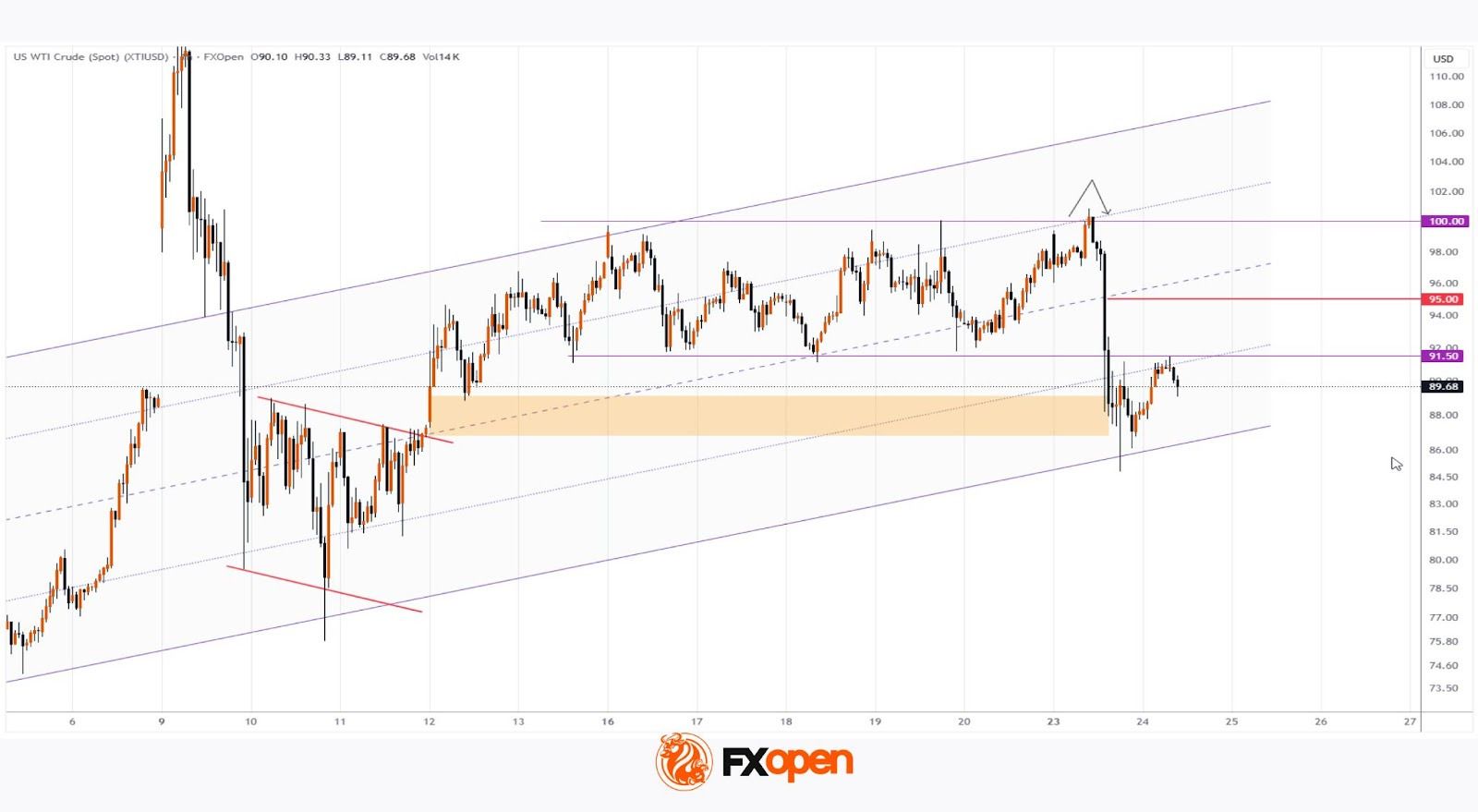
Yesterday, following a false bullish breakout above the psychological $100 level, WTI crude prices fell sharply towards the $85 area. The primary driver of this rapid decline was comments made by the US President.
According to Donald Trump:
→ the United States has postponed planned strikes on Iranian energy infrastructure for five days;
→ productive negotiations are ongoing.
However, Iran later denied these claims, stating that no negotiations to end the conflict were taking place. Moreover, Israel continued its strikes on Iran, while Tehran launched fresh attacks on US assets in the Middle East.
Against this backdrop, the US President’s remarks appear to be a form of verbal intervention aimed at pushing oil prices lower — and, as the XTI/USD chart shows, it is having an effect. Today, WTI crude is trading below last week’s lows.
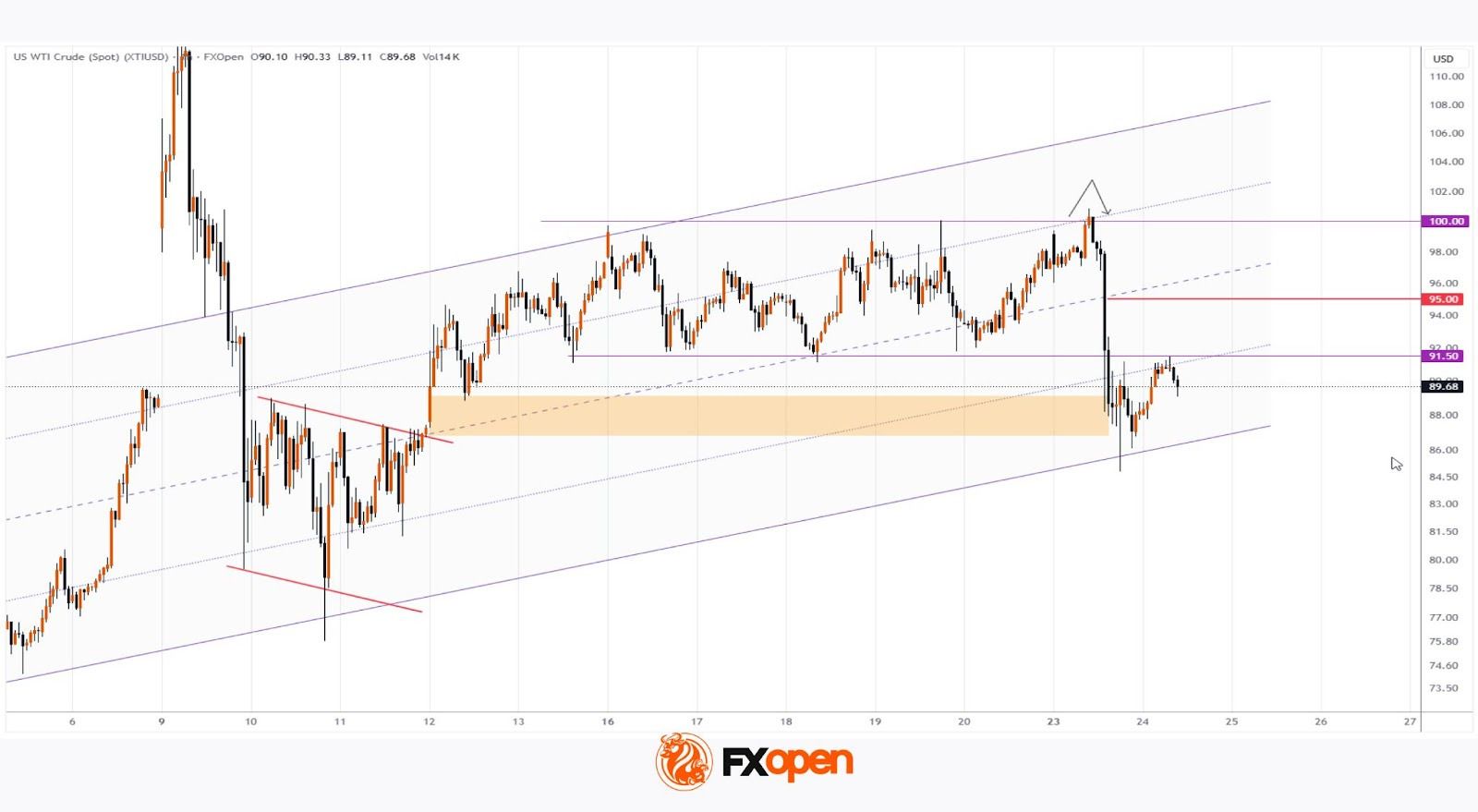
Technical Analysis of XTI/USD
When analysing WTI price movements on 16 March, we highlighted:
→ strong selling pressure near the psychological $100 level;
→ a support zone that formed after the breakout from a local descending channel.
This support area significantly slowed yesterday’s decline in oil prices. At the same time, recent price action allows for the construction of a broad ascending channel, with its lower boundary acting as an important support level.
From a bearish perspective:
→ the $91.50 level, which acted as support last week, has now turned into resistance;
→ if bulls attempt to develop a rebound from the lower boundary, a key test of their strength will be the $95 level, where bears previously pushed prices below the channel median.
In the near term, a period of consolidation between the lower boundary of the channel and the $91.50 level cannot be ruled out, at least until stronger news catalysts emerge, particularly those related to developments around the Strait of Hormuz.
Start trading commodity CFDs with tight spreads (additional fees may apply). Open your trading account now or learn more about trading commodity CFDs with FXOpen.
This article represents the opinion of the Companies operating under the FXOpen brand only. It is not to be construed as an offer, solicitation, or recommendation with respect to products and services provided by the Companies operating under the FXOpen brand, nor is it to be considered financial advice.

Major US financial regulators have redefined the digital asset landscape, publishing joint guidelines that classify the vast majority of cryptocurrencies as commodities or “digital tools” rather than securities. The shift, spearheaded by SEC Chair Paul Atkins and his “token taxonomy,” effectively exempts most projects from strict oversight, a move insiders suggest will directly benefit the Trump family’s extensive crypto ventures.
This deregulatory signal also coincides with the expansion of the Strategic Crypto Reserve, which now holds approximately 200,000 BTC, ETH, and SOL.
Markets responded aggressively to the regulatory overhaul. This data suggests a market pivoting from defensive posturing to institutional accumulation.
Discover: The best pre-launch token sales
Forget Regulation: Can TRUMP Crypto Reclaim $4.00 Ahead of April Gala?
The TRUMP token is consolidating above local support at $3.27, recovering from volatility following the announcement of the April 25 Mar-a-Lago gala. While the token remains significantly below its 2025 highs, volume profiles indicate renewed interest as the event approaches.
Analysts identify the gala, where top holders gain private access to the President, as a critical liquidity event that could drive price action independent of broader macro trends.
TRUMP MEMECOIN: NEW PROMO AFTER 96% CRASH!
The $TRUMP memecoin is trading 96% below its ATH, but the team has launched a new Gala Promo!
√ The top 297 token holders are being given invitations to the Mar-a-Lago conference.
√ Even though the token is at record lows, the… pic.twitter.com/TQVeXgXlpj— Crypto Aman (@cryptoamanclub) March 13, 2026
Technical indicators show resistance clustering between $3.80 and $4.00. A clean break of $3.80 would confirm a bullish continuation pattern, potentially targeting the $4.50 region. However, failure to hold the $3.00 psychological level could see capital rotate back into major infrastructure assets, which current price analysis suggests is benefiting strongly from institutional inflows.

The chart itself paints a picture of a coiled spring waiting for a catalyst.
Discover: The best pre-launch token sales
LiquidChain Targets Interoperability as Reserve Assets Fragment
While TRUMP offers high-beta exposure to political headlines, the administration’s Strategic Crypto Reserve highlights a deeper structural issue: the government is hoarding distinct assets (BTC, ETH, SOL) that cannot easily interact. This fragmentation creates a massive opportunity for infrastructure layers capable of unifying these chains.
LiquidChain ($LIQUID) is emerging as a solution to this exact bottleneck. Defined as a Layer 3 (L3) infrastructure project, it fuses Bitcoin, Ethereum, and Solana into a single execution environment, allowing developers to deploy code once and access liquidity across all three diversified ecosystems. This “Unified Liquidity Layer” aligns perfectly with the new regulatory exemptions for digital tools.
Smart money appears to be hedging political volatility with this infrastructure play. The LiquidChain presale has already raised more than $600K. The token is priced at $0.0143 and offers more than 1700% staking rewards.
By offering Verifiable Settlement across the exact assets held in the Strategic Reserve, $LIQUID positions itself as the glue for the next market cycle. Investors looking for utility-driven upside beyond the Bitcoin major support levels are beginning to specifically research LiquidChain.
Disclaimer: This article is not financial advice. Cryptocurrency markets are highly volatile. Do your own research before investing.
The post Trump Crypto Ventures to Benefit From SEC? appeared first on Cryptonews.
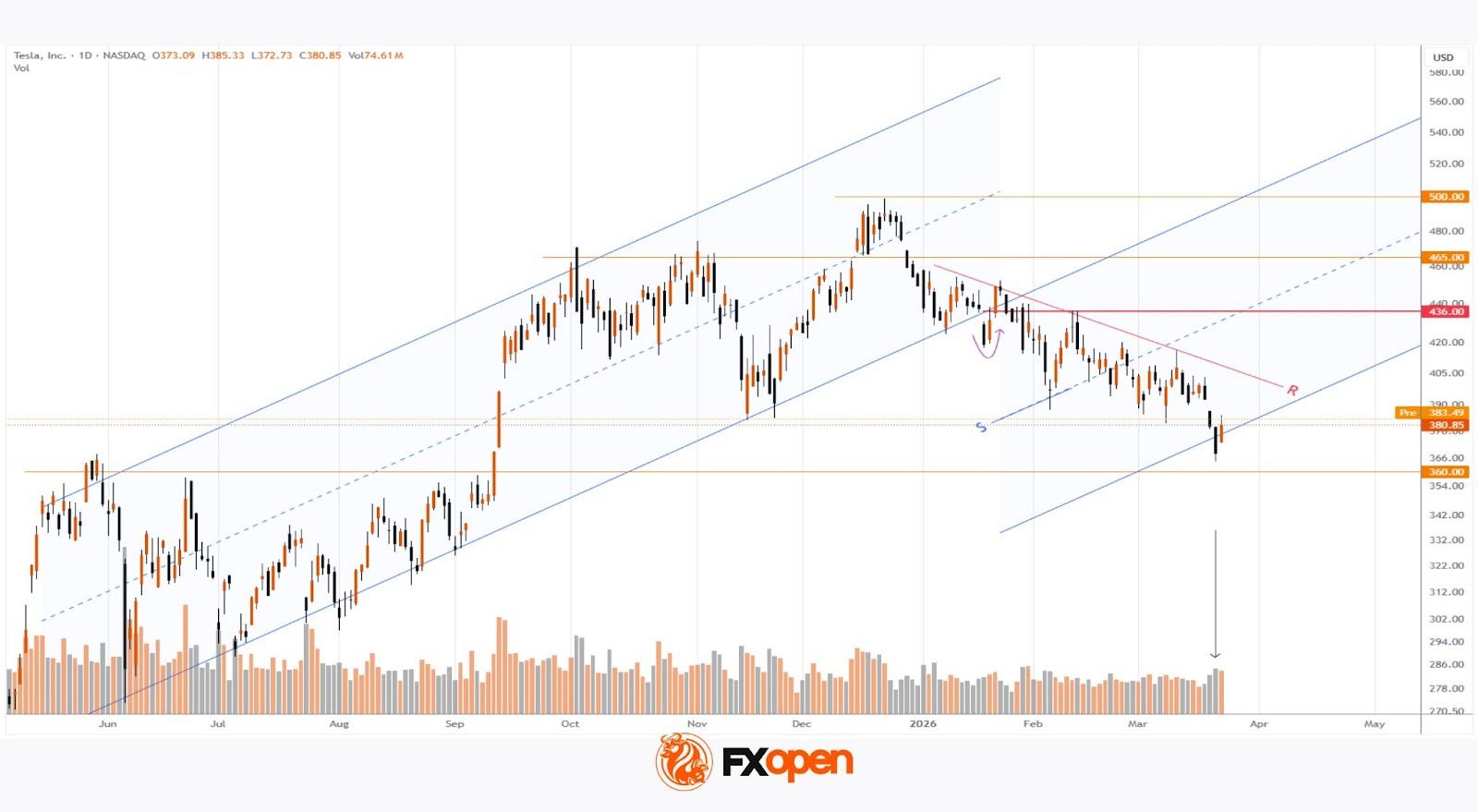
According to the chart, Tesla (TSLA) shares had been under significant pressure since the start of 2026: from their December high, they had lost around 25% of their value. The main bearish drivers included:
→ Intense competition from Chinese automakers, particularly BYD.
→ Falling margins. To maintain market share amid fierce competition, Tesla had to offer price concessions.
→ Doubts over whether Musk could launch the Robotaxi project on schedule, given incidents involving the Autopilot system in poor visibility conditions.
However, on 23 March, the shares staged a strong rebound — TSLA gained approximately 3.5% and closed above $380.
The rally was supported by Elon Musk officially unveiling the Terafab project over the weekend — a joint venture between Tesla, SpaceX, and the startup xAI, with investments estimated at $20–25 billion. The plan to build the world’s largest full-cycle semiconductor factory in Texas is intended to supply Tesla with its own advanced chips, including the new AI5 generation, for Full Self-Driving (FSD) systems, Cybercab robotaxis, and Optimus humanoid robots.
Technical Analysis of TSLA Shares
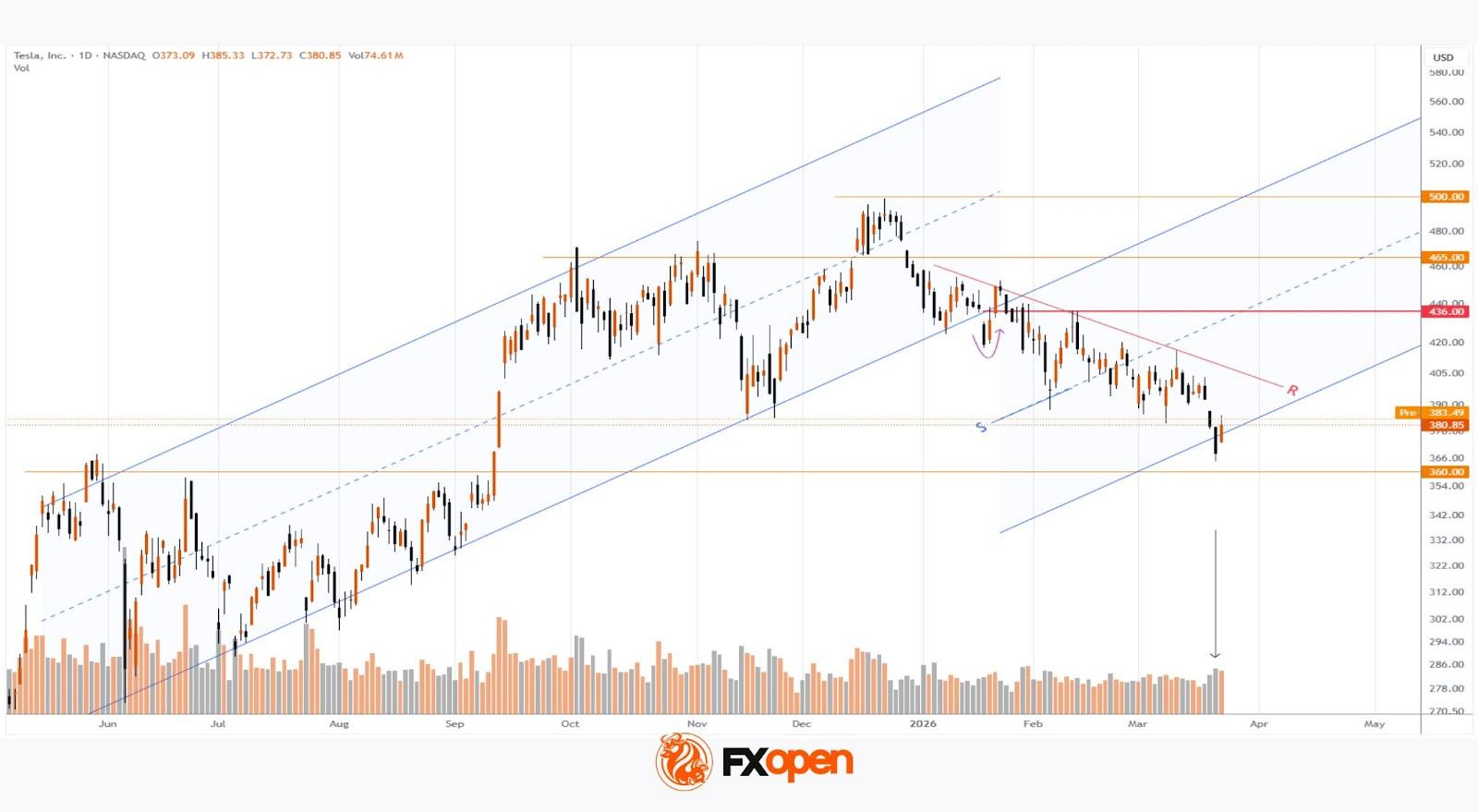
Analysing TSLA’s price on 23 January, we:
→ Updated the ascending channel, which had been in place since summer 2025;
→ Noted signs that bulls were regaining control near the lower boundary of this channel.
Despite this, the shares did not return to the main ascending channel, and the downtrend persisted. This led us to:
→ Draw a descending trendline;
→ Extend a parallel ascending channel downwards, which proved relevant on 5 February when TSLA bounced off its median.
The current upward reversal is notable:
→ It forms a bullish engulfing pattern;
→ It develops near the lower boundary of the parallel channel and the former resistance level at $360;
→ It suggests that Smart Money may be active, as indicated by the largest trading volumes since late January.
Thus, it is reasonable to suggest that the bearish trend for TSLA shares observed in 2026 may be approaching exhaustion.
Buy and sell stocks of the world’s biggest publicly-listed companies with CFDs on FXOpen’s trading platform. Open your FXOpen account now or learn more about trading share CFDs with FXOpen.
This article represents the opinion of the Companies operating under the FXOpen brand only. It is not to be construed as an offer, solicitation, or recommendation with respect to products and services provided by the Companies operating under the FXOpen brand, nor is it to be considered financial advice.


Delaware lawmakers have introduced two bills that would update state banking law and create a licensing framework for stablecoin issuers and digital asset service providers. The package is part of a broader effort to modernize Delaware’s financial rules as states and federal agencies move to define how crypto and stablecoins should be regulated.
Summary
- Delaware filed two bills to modernize banking law and regulate stablecoin issuers and service providers.
- The stablecoin measure would set licensing, reserve, redemption, custody, privacy, and anti-money laundering rules.
- Senate Bill 16 would define digital assets and update Delaware banking code after decades.
Senator Spiros Mantzavinos and Representative Bill Bush filed Senate Bill 16, the Delaware Banking Modernization Act, and Senate Bill 19, the Delaware Payment Stablecoin Act. Delaware Senate Democrats said the package aims to update the state’s banking code while adding consumer protections for newer financial products.
Governor Matt Meyer backed the proposal and said,
”This legislative package sends a signal loud and clear: here in Delaware, we’re democratizing our financial services and lowering the barriers to entry.”
The announcement said the effort is meant to help residents send, receive and store money more easily through digital financial tools.
Senate Bill 19 would create a licensing framework for payment stablecoin issuers and digital asset service providers working with or on behalf of Delaware residents. The bill uses definitions drawn from the federal GENIUS Act and other federal models, according to the announcement.
The proposal also lists reserve rules, redemption timing standards, capital standards, anti-money laundering duties, custody safeguards and data privacy floors. If the measure becomes law, the State Bank Commissioner would be directed to issue implementing regulations within set timeframes.
The stablecoin bill is part of a wider package. The same announcement said another proposal, the Delaware Money Transmission & Virtual Currency Modernization Act, will be filed in the coming days to standardize which activities require a license and to add more consumer protections.
Banking bill updates state code and defines digital assets
Senate Bill 16 would make the first major revision to Title 5 of the Delaware Code since 1981. The bill would define digital assets in state banking law, expand the State Bank Commissioner’s authority, and update governance and organizational requirements for state-chartered banks and trust companies.
Representative Bush said,
”It’s been more than four decades since we’ve made any meaningful updates to our state’s banking laws, and in that time, the way people bank and conduct transactions has changed significantly.”
The package also includes rules to support interstate trust company operations and broader fiduciary activity by out-of-state financial institutions in Delaware. Lawmakers said the aim is to keep Delaware competitive as financial services continue to change.
Bills move forward as crypto rules stay in focus
Both bills have been assigned to the Senate Banking, Business, Insurance & Technology Committee. They would still need committee approval, passage in the full Senate and House, and the governor’s signature before becoming law.
The Delaware move comes as crypto regulation remains active across the United States. In the same announcement, lawmakers said the package is part of an effort to build an innovative banking system while keeping protections in place for consumers and the wider market.
At the federal level, a Securities and Exchange Commission proposal titled “Crypto Assets” is now under Office of Management and Budget review. That review status adds to signs that both state and federal officials are moving toward more formal digital asset rules.


Nasdaq and Talos are expanding their work in digital assets with a new integration aimed at improving how institutions manage tokenized collateral.
Summary
- Nasdaq and Talos joined systems to improve tokenized collateral workflows for institutional market participants.
- The partnership targets about $35 billion in collateral tied up in inefficient measures.
- Nasdaq surveillance tools will help Talos clients monitor wash trading, spoofing, and layering risks.
Meanwhile, the plan links Nasdaq’s Calypso risk and collateral platform and its trade surveillance tools with Talos’s digital asset trading system, as firms look for smoother ways to handle tokenized assets across crypto and traditional markets.
Nasdaq and Talos said the new setup is designed to give institutional clients a more unified workflow. The integration connects execution, collateral management, risk controls and market monitoring in one structure for firms active in both traditional finance and digital assets.
On Monday, the companies said the partnership is aimed at tokenized collateral use cases that have so far faced operational barriers. Nasdaq said these barriers include the difficulty of fitting digital assets into existing collateral and risk systems used by large institutions.
Nasdaq said internal research points to about $35 billion in collateral being tied up in “corrective and non-interest-bearing measures.” The new integration is meant to reduce that friction by helping firms manage tokenized collateral more efficiently across different asset classes.
Talos chief executive Anton Katz said,
”The evolution toward tokenized collateral is a natural progression for institutional capital markets.”
He added that bringing Talos together with Nasdaq’s systems could reduce friction across onchain and offchain assets.
In addition, the integration also adds Nasdaq’s trade surveillance tools to Talos’s client workflow. That means users will be able to monitor trading activity for patterns linked to wash trading, spoofing and layering across the venues they access.
That focus comes as digital asset markets continue to face questions around market integrity. Nasdaq said the combined system is intended to bring “institutional-grade” compliance standards into workflows used for tokenized collateral and digital asset trading.
Tokenization push continues across large firms
The Nasdaq-Talos move comes as larger financial groups keep building tokenization tools for institutions. In BlackRock’s 2026 chairman’s letter, Larry Fink wrote that tokenization could help modernize market infrastructure by making investments easier to issue, trade and access.
Other firms are also building collateral programs around tokenized assets. Franklin Templeton said in February that eligible institutions can use tokenized money market fund shares as off-exchange collateral in digital markets, showing that large firms are moving beyond pilots into live institutional products.

Beskar notches unexpected win on 2026 Golden Slipper day

A Broken Game Boy Advance Returns Stronger Than Before

$21.5T GIANT Just Sent a HUGE Bitcoin WARNING!!! | EP 1462


-
 Crypto World4 days ago
NIO (NIO) Stock Plunges 6.5% as Shelf Registration Sparks Dilution Worries
-

 Fashion4 days ago
Weekend Open Thread: Adidas – Corporette.com
-

 Politics4 days ago
Jenni Murray, Long-Serving Woman’s Hour Presenter, Dies Aged 75
-
 Tech7 days ago
Are Split Spacebars the Next Big Gaming Keyboard Trend?
-

 Crypto World3 days ago
Best Crypto to Buy Now: Strategy Just Spent $1.57 Billion on Bitcoin During Fear While Early Investors Quietly Enter Pepeto for 150x Potential
-

 News Videos6 days ago
RBA board divided on rate cut, unusually buoyant share market | Finance Report | ABC NEWS
-

 Crypto World3 days ago
Bitcoin Price News: Bhutan Sells $72 Million in BTC Under Fiscal Pressure, but the Smart Money Entering Pepeto Sees What the Market Does Not
-

 Politics6 days ago
The House | The new register to protect children from their abusers shows Parliament at its best
-

 Tech4 days ago
inKONBINI Lets You Spend Summer Days Behind the Register
-
 Politics7 days ago
Real-time pollution monitoring calls after boy nearly dies
-

 Crypto World6 days ago
Canada’s FINTRAC revokes registrations of 23 crypto MSBs in AML crackdown
-

 Sports24 hours ago
Remo Stars and Kano Pillars Strengthen Survival Hopes in NPFL
-
 NewsBeat6 days ago
Residents in North Lanarkshire reminded to register to vote in Scottish Parliament Election
-

 News Videos6 days ago
PARLIAMENT OF MALAWI – PAC MEETING WITH REGISTRAR OF FINANCIAL ON AMARYLLIS HOTEL – INQUIRY LIVE
-

 Politics5 days ago
Gender equality discussions at UN face pushbacks and US resistance
-

 Business2 days ago
No Winner in March 21 Drawing as Prize Rolls to $133 Million for Next
-

 Business6 days ago
Who Was Alex Pretti? 5 Key Facts About the ICU Nurse Killed by Federal Agents in Minneapolis
-

 Sports23 hours ago
Gary Kirsten Accuses Pakistan Cricket Board Of ‘Interference’, Mohsin Naqvi Responds
-

 Tech2 days ago
Give Your Phone a Huge (and Free) Upgrade by Switching to Another Keyboard
-

 Sports4 days ago
2026 Kentucky Derby horses, odds, futures, preview, date: Expert who nailed 12 Derby-Oaks Doubles enters picks
You must be logged in to post a comment Login