
Crypto World
BiggerZ: Building a Fairness-First Crypto Casino, Sportsbook, and Prediction Markets Platform

[PRESS RELEASE – Miami, Florida, USA, August 16th, 2026]
BiggerZ is strengthening its position as a fairness-first betting platform, bringing casino gaming, sports betting and prediction markets together under one account while making transparency, verifiability and clearly defined rules central to the player experience.
As online betting platforms expand across crypto, casino gaming, sports and prediction markets, BiggerZ is taking a different approach to how these products are presented to players: fairness should be explained rather than simply claimed.
The platform’s approach is built around four principles – transparency, clarity, verifiability and defined rules – applied at the moments where players would otherwise be asked to simply trust an operator.
BiggerZ combines a crypto casino, sportsbook, and prediction markets product through one account and one balance, supporting cryptocurrency alongside selected fiat payment methods.
Fairness That Players Can Verify
One of the clearest examples of this approach is BiggerZ Touch, the platform’s exclusive collection of short-format fair games, including Mines, Dice, Plinko, Hi-Lo, Keno, Baccarat, Limbo and Soccer.

Eligible BiggerZ Touch outcomes include a provably fair transparency layer, allowing players to independently verify results rather than relying solely on what appears on the platform interface.
This distinction is important. Third-party slots and live dealer games remain governed by their respective providers’ certified systems, RNG controls and audit standards. BiggerZ Touch adds a separate verification mechanism for eligible in-house game outcomes.
For BiggerZ, the principle extends beyond casino results: players should be able to understand the mechanism governing an outcome before committing funds.
Transparency Beyond Casino Games
The same fairness-first philosophy extends across BiggerZ’s sportsbook and prediction markets.
In the BiggerZ sportsbook, fairness is primarily a question of settlement clarity. Market rules, live betting conditions, void bets, cancelled or postponed events and settlement conditions are defined through the applicable rules so players can understand how their bets will be resolved.
With BiggerZ Prediction Markets, transparency centres on defined resolution.
Markets can cover real-world outcomes across crypto, sport, finance, politics, culture, entertainment and major world events. Each market is connected to specific resolution criteria, with its wording, timing, settlement conditions and specified data source determining the final outcome.
The objective is straightforward: users should be able to understand what must happen, when it must happen and what determines the result before taking a position.
Clearer Rules Around Payments and Verification
BiggerZ also applies the same principle to payments and account verification.
The platform supports cryptocurrencies including Bitcoin, Ethereum, USDT and USDC alongside other digital assets and selected fiat payment methods, depending on location and account status.
Crypto deposits are credited following the required network confirmations, while BiggerZ supports instant crypto withdrawals for eligible approved transactions, subject to network conditions and any required account verification.
Verification requirements are governed by the platform’s Terms and Conditions, KYC Policy and AML Policy.
The philosophy is that requirements affecting access to funds or account activity should be available to players before they deposit or place a bet, rather than becoming visible only after a win.
Global Partnerships and Social Proof
BiggerZ has also built brand visibility through partnerships and documented betting activity involving globally recognised figures across music, sport and entertainment. High-profile activity has included names such as Cardi B, Rick Ross, French Montana, Rich The Kid, Nicky Jam and Nate Diaz.
These partnerships provide social proof and brand visibility alongside the platform’s broader focus on transparent game mechanics, settlement rules and verifiable outcomes.
One Fairness Standard Across Three Products
Casino games, sports betting and prediction markets operate differently, meaning fairness cannot rely on one mechanism alone.
For BiggerZ Touch, it can mean independently verifiable outcomes. For third-party casino games, it means provider-level certification and auditing. For sportsbook bets, it means clearly defined settlement rules. For prediction markets, it means transparent resolution criteria. And for payments and verification, it means communicating applicable conditions before they become relevant.
By connecting these products through one account and balance, BiggerZ is working to make that same expectation of transparency consistent across the wider platform.
Rather than treating fairness as a marketing claim, BiggerZ’s approach is to make the mechanisms behind outcomes, settlement and verification easier for players to understand.
About BiggerZ
BiggerZ is a crypto-friendly online betting platform combining casino gaming, sports betting and prediction markets through one account and balance. The platform supports cryptocurrency and selected fiat payment methods and includes BiggerZ Touch provably fair games, pre-match and live sports betting, esports and outcome-based prediction markets.
BiggerZ is operated by CDK PLAY INC SRL and licensed by the Government of the Autonomous Island of Anjouan, Union of Comoros.
The post BiggerZ: Building a Fairness-First Crypto Casino, Sportsbook, and Prediction Markets Platform appeared first on CryptoPotato.


Cardano founder Charles Hoskinson has published a free tool that removes Anthropic’s watermarks from Claude output. He named it Anthropies, a blend of Anthropic and herpes.
The project appeared on GitHub on Sunday, five days after Anthropic switched on invisible marking across every Claude product. Hoskinson shipped it under an Apache 2.0 license.
How the Anthropic Watermark Actually Works
Anthropic now marks Claude text at the model level. The rollout answers the European Union AI Act transparency code, which took effect on Aug. 2.
The mark is not a hidden character string. Instead, a secret key steers tournament sampling, a process that breaks ties between words fitting equally well.

Hoskinson’s repository splits the problem into three layers. The “Co-Authored-By” git trailer strips out cleanly. C2PA credentials on images disappear after a re-encode.
Prose is the hard layer. The tool therefore routes text through a model other than Claude, a step the repository calls a non-origin rewrite.
That design carries a blunt limitation. Running the rewrite inside Claude or Gemini would stamp the mark straight back on, so the skill refuses.
The repository ships three modes. Clean strips trailers deterministically, humanize rewrites prose elsewhere, and orchestrate blocks the job when the host model is Claude.
Code barely carries a signal at all. Syntax leaves almost no room for substitution, so the watermark has nowhere to sit.
The Apache 2.0 license matters here. It is a permissive open-source term that lets anyone copy, modify, sell, or bundle the code, provided they keep the original notices. It also grants a patent license, so Anthropic could not block forks on patent grounds.
“The mark is the wording. There is no separate payload to delete. Removing it means changing which words are there.”
Anthropies README

The Legal Argument Behind the Tool
Hoskinson framed the release on X as a warning rather than a utility. He said the watermark and the Claude co-author line could cause issues down the road.
Roughly half the repository is not code. Hoskinson attacks the assignment clause that assigns ownership of output to users, which applies “subject to your compliance with our Terms.”
He reads that phrase as a condition precedent, meaning a hurdle users must clear before ownership passes. A breach of terms could therefore mean ownership never transferred.
The git trailer draws separate fire. A published co-authorship line could later surface as evidence of joint authorship, he argues. He also flags a risk of false positives. An editor who runs human copy through Claude for a quick proofread may trip a detector months later.
AI defaults now arrive unasked, as Twitch showed when it opted creators into training. Anthropic has stayed quiet so far. The company is meanwhile preparing a listing above $2 trillion, and it has already withheld its strongest model from the public.
Hoskinson, for his part, has spent 2026 picking fights over technical credit, including a claim that Ethereum copied Cardano’s ledger design.
The repository counted four stars on Sunday morning. Adoption matters less than the question it poses. Who owns a sentence once the model has signed it?
The post Cardano Founder Launches New Free Tool to Remove Anthropic’s AI Watermark appeared first on BeInCrypto.


Bits of Gold, Israel’s regulated crypto broker, is investigating a cyber incident that may have exposed customer identity and financial information after unauthorized access to a third-party system used for support and data analysis.
Summary
- Bits of Gold said funds, crypto, passwords, ID scans and full card details remained unaffected.
- Potentially exposed data includes names, identification numbers, emails, phones, IP addresses and bank account details.
- Bits of Gold linked the incident to third-party software compromised during a wider global breach.
- Bits of Gold reports 300,000-plus customers and operates under Israeli financial regulation with license 56716.
- BILS received approval in April after a two-year sandbox and remains backed one-to-one by shekels.
The company notified customers on Aug. 16 and said it had blocked the access, disconnected the affected system from its information sources and informed relevant authorities, Calcalist reported.
The company said its review indicates “there may have been access to certain personal information,” including names, ID numbers, emails, phone numbers, IP addresses, bank account details and public crypto wallet addresses. It said digital assets, account passwords, scanned ID documents, full credit card details and CVV codes were unaffected. Bits of Gold also said “there is no indication” so far that the potentially exposed information has been used.
Bits of Gold links breach to a broader third-party incident
Bits of Gold said the incident formed part of a broader cyber event involving a software company it uses and other businesses worldwide. Calcalist reported that hundreds of companies may have been affected and that Bits of Gold was not believed to have been directly targeted. The software provider has not been publicly identified in the disclosures reviewed.
Reports circulating Sunday put the potentially affected customer count at roughly 200,000. That figure should be treated cautiously. The customer notice reproduced by Calcalist does not state how many records were accessed, while the company’s site says it has more than 300,000 customers. Bits of Gold has not publicly confirmed that 200,000 people were affected.
Exposed details could increase phishing risk
The main immediate risk is social engineering rather than theft from customer wallets through the reported incident itself. Names, phone numbers, emails, banking information and public wallet addresses could give attackers data for more convincing messages impersonating Bits of Gold, a bank or another financial service. Bits of Gold specifically warned customers about phishing and impersonation attempts.
The company told users not to provide passwords, verification codes or private keys and not to transfer money or digital assets in response to unsolicited approaches. The warning follows another third-party exposure in the crypto sector: as crypto.news reported, a ShipMonk breach exposed personal information belonging to 13,689 Trezor customers, prompting similar concerns about targeted phishing.
Bits of Gold operates under Israeli financial regulation
Bits of Gold operates under financial services license 56716. The company says it was the first active Israeli crypto business to receive a permanent financial services license from the Capital Market, Insurance and Savings Authority. Its website lists more than 300,000 customers, while Calcalist described it as the first currently active company among nine businesses licensed to trade cryptocurrencies by the authority.
Its regulatory profile expanded this year with BILS, a shekel-pegged stablecoin. Bits of Gold says regulators approved BILS for issuance and distribution on April 27 after a roughly two-year sandbox. As crypto.news previously reported, Israel approved the BILS shekel stablecoin after its regulatory pilot, with Bits of Gold saying each token is backed 1:1 by shekels held in reserve.
What happens next
Bits of Gold said its security team has begun a comprehensive review with a specialist cyber incident response company and continues to monitor its systems. It also said relevant authorities have been notified. Services remain operational, and the company has told customers that no account action is currently required.
The next key disclosures will be the confirmed number of affected customers, the identity of the compromised software provider, the exact scope of accessed records and whether investigators find evidence that the data was misused. Until then, the widely reported 200,000-customer figure and the full scale of the incident remain unconfirmed by Bits of Gold.


The breach has impacted 39,798 customers who placed orders between March 2, 2025 and April 11, 2026.
SafePal stressed that the core security of its wallets remains intact, adding that users’ seed phrases, private keys, bank passwords, bank account information, payment card numbers, and government-issued IDs were not affected.
However, SafePal said users who have shared their private keys or seed phrases via a phishing email, phone call, or letter should treat their wallet as compromised and transfer their assets to a new wallet.
How SafePal is responding
The company said it had patched the vulnerability and introduced additional security measures in response. SafePal notified all affected customers by email from security@safepal.com on Sunday and hired an independent third-party security firm to audit the fix and review its order-processing systems.
SafePal also said it would retain customers’ personal data in its order-processing system for only 90 days from the date of collection. In addition, the company identified and removed more than 30 fraudulent websites and phishing links associated with the breach.
Customers can use a verification tool on SafePal’s website to check whether their data was affected, the company said.


DefiLlama delayed the public launch of its mobile application while trying to remove applications impersonating the DeFi analytics platform from Apple’s App Store, pseudonymous founder 0xngmi said on Aug. 15.
Summary
- DefiLlama delayed its mobile launch until fake App Store listings were removed, founder 0xngmi said.
- Apple removed one impersonating app within days after DefiLlama demonstrated it could drain cryptocurrency funds.
- DefiLlama’s official iPhone app is now live, with Apple listing DEFILLAMA LIMITED as its provider.
- Apple’s guidelines prohibit app impersonation and unauthorized use of another developer’s brand or product name.
- Fake crypto apps have repeatedly reached Apple’s store, including recent Ledger and Sparrow wallet cases.
The team eventually demonstrated that one fake application could drain a funded crypto wallet before Apple removed it, according to his post.
0xngmi said DefiLlama had reported the application for months over trademark and impersonation concerns without securing its removal. The team then funded a small test wallet, downloaded the application and watched the funds disappear. “App was taken down in days after that,” he wrote. The amount drained from the test wallet was not disclosed.
DefiLlama waited until fake apps were removed
The security problem directly affected DefiLlama’s product rollout. 0xngmi said the company “waited ’till all the fake apps were taken down before we launched ours to avoid any user getting scammed.” That timeline is DefiLlama’s account and has not been independently confirmed by Apple.
The genuine DefiLlama application is now publicly available. DefiLlama’s official page says its mobile product is live on iOS and Android. Apple’s listing identifies the iPhone application as “DefiLlama: DeFi Tracker,” names DefiLlama as the developer and lists DEFILLAMA LIMITED as the provider.
Meanwhile, Apple’s App Review guidelines prohibit applications that impersonate other apps or services. The rules also bar developers from using another developer’s icon, brand or product name without permission. Repeated impersonation can lead to removal from the Apple Developer Program.
Apple has not publicly addressed 0xngmi’s specific account in the official materials reviewed for this report. The company has previously said its App Review system evaluates applications for security and safety, and Apple reported rejecting more than 320,000 submissions in 2024 because they copied other apps, constituted spam or otherwise misled users.
Fake crypto apps have caused documented losses
The DefiLlama dispute follows other cases where fake cryptocurrency applications reached Apple’s marketplace. As crypto.news reported, a fraudulent Ledger Live application drained 5.9 BTC worth roughly $420,000 from musician Garrett Dutton in April. On-chain researcher ZachXBT traced the stolen Bitcoin to addresses associated with KuCoin.
Apple is also facing a U.S. lawsuit involving three users who allege fake Sparrow Wallet apps caused $1.835 million in Bitcoin losses. Those allegations have not been tested in court. Apple said in that case that it removed impersonating applications and terminated related developer accounts.
In related coverage, a fake Phantom Wallet application also reached Apple’s App Store before being removed after users reported losing funds.
What happens next
DefiLlama’s official app is now active, and its website provides direct access to the legitimate mobile product. The iOS listing currently shows version 1.0.5 and identifies defillama.com as the developer website, giving users multiple details to verify before installation.
The founder has not disclosed the attacker addresses, amount stolen during DefiLlama’s test or technical analysis of the malicious application. Those details would be needed to independently reconstruct the wallet drain. For users, the clearest verified safeguard is to reach the mobile application through DefiLlama’s official website and confirm the listed developer and provider rather than relying only on an App Store search result.


The European Securities and Markets Authority (ESMA) confirmed it was aware of criminals misusing its identity, name, and logo, including through falsified documents, to convince users that their funds were at risk.
The Netherlands’ Authority for the Financial Markets (AFM) warned that the migration of unregulated crypto exchanges itself was the attack surface. “Fraudulent actors may indeed see an opportunity to scam retail investors who are in the process of looking for an alternative licensed provider,” the AFM told CoinDesk. It urged investors to verify any provider on the official ESMA register before transferring assets, and warned that unsolicited approaches requesting fund transfers should be treated with suspicion.
Austria’s Financial Market Authority issued a similar warning recently. telling retail crypto users that hundreds of platforms lost legal status on July 1 and urged them to verify providers against official databases before moving assets or transferring to self-hosted wallets to avoid migration traps entirely.
Regulator warnings
The scammers’ modus operandi follows a pattern regulators know all too well. The U.K.’s Financial Conduct Authority (FCA) told CoinDesk via email that it has 4,465 reports on record of fake FCA impersonations in the first half of 2025 alone, with 480 victims tricked into handing over money.


Ripple CEO Brad Garlinghouse is scheduled to speak at the Wyoming Blockchain Symposium on Aug. 18, joining U.S. policymakers and financial industry executives as the debate over digital asset regulation moves into another important stretch.
Summary
- Ripple CEO Brad Garlinghouse will discuss modernizing financial infrastructure at Wyoming Blockchain Symposium on Tuesday.
- SALT scheduled Garlinghouse’s session for 3:05 p.m. Mountain Time, moderated by CNBC reporter Tanaya Macheel.
- The invitation-only gathering brings 500 investors, builders and policymakers to Jackson Hole from August 17-20.
- SEC Chair Paul Atkins and Senators Cynthia Lummis and Tim Scott also speak during Tuesday.
- No Ripple announcement or XRP product launch has been disclosed for Garlinghouse’s scheduled Wyoming appearance.
SALT’s updated agenda schedules Garlinghouse’s 15-minute session, “Modernizing Financial Infrastructure,” for 3:05 p.m. Mountain Time at the Four Seasons Resort Jackson Hole. CNBC markets and crypto reporter Tanaya Macheel will moderate.
Ripple CEO’s session focuses on financial infrastructure
Garlinghouse’s appearance is now more specific than when SALT first announced him as a speaker in July. As crypto.news previously reported, Ripple joined the third annual Wyoming gathering before organizers had disclosed his session title or time.
The current agenda does not list an XRP announcement, product launch or new Ripple partnership alongside his session. The “Modernizing Financial Infrastructure” title also provides no detailed discussion topics. Claims that Garlinghouse will unveil an XRP-specific development would therefore go beyond what organizers have confirmed.
U.S. crypto policy will frame the Wyoming event
Garlinghouse will speak on a day carrying a strong U.S. regulatory focus. SEC Chair Paul Atkins is scheduled at 10:00 a.m. for “Inside America’s Regulatory Restructuring.” Senators Tim Scott and Cynthia Lummis follow with a discussion titled “Cementing America’s Financial Leadership.”
Their appearances come days after the SEC cancelled its Aug. 14 meeting on proposed crypto offering rules. The agency has not announced a replacement date. Congress is also waiting on the Digital Asset Market Clarity Act. A Senate cloture motion on proceeding to H.R. 3633 is scheduled to ripen Sept. 15 at 2:15 p.m.
In related coverage, crypto.news reported that the SEC delayed its Regulation Crypto meeting without withdrawing the underlying proposal. The CLARITY Act now faces a Sept. 15 procedural test, rather than a final passage vote.
Ripple arrives with a broader institutional finance stack
Garlinghouse’s session also follows several expansions of Ripple’s financial infrastructure business. In April, Ripple launched Digital Asset Accounts and Unified Treasury, allowing corporate treasury teams to manage fiat alongside XRP, RLUSD and other digital assets within its treasury platform.
As crypto.news reported, Ripple has pushed deeper into corporate treasury infrastructure following its acquisition of GTreasury. Ripple also launched Ripple Mint in July, giving institutional RLUSD customers API and user-interface tools for minting, redeeming and managing the stablecoin.
The U.S. banking element remains incomplete. The Office of the Comptroller of the Currency granted Ripple National Trust Bank preliminary conditional approval, rather than an unrestricted final charter, in December 2025. The institution must satisfy OCC conditions before commencing banking operations under the charter.
What happens next
The Wyoming Blockchain Symposium opens Aug. 17 with registration and a welcome reception. Its main conference sessions run Aug. 18 and Aug. 19 before optional activities on Aug. 20. SALT describes the event as an invitation-only gathering of 500 investors, builders and policymakers.
Garlinghouse’s Aug. 18 appearance will provide the next verified update. Until he speaks, there is no confirmed basis for predicting an XRP announcement. The disclosed subject is financial infrastructure, while regulation, institutional adoption, stablecoins and market structure feature prominently elsewhere on the official agenda.
Crypto World
Ripple CEO scheduled to deliver a major speech from August 17 to 20; XRP holders set to gain an opportunity to earn $8,000 daily


Disclosure: This article does not represent investment advice. The content and materials featured on this page are for educational purposes only.
EiCrypto has launched a contract-based cloud mining platform designed to help XRP and BTC holders diversify asset participation amid market volatility.
Summary
- EiCrypto launches a renewable-powered cloud mining platform, offering XRP and BTC holders an alternative way to put their assets to work.
- It has introduced cloud mining contracts backed by computing power, targeting investors seeking alternatives to crypto price volatility.
- The platform is drawing XRP investor interest with its automated contracts and renewable-powered mining infrastructure.
The XRP community is closely monitoring a speech by Ripple CEO Brad Garlinghouse, hoping it will drive up the price of XRP.
According to XRP community member Eri, Ripple CEO Garlinghouse is scheduled to speak at the 2026 Wyoming Blockchain Symposium — co-hosted by SALT and Kraken — in Jackson Hole from August 17 to 20. This invitation-only event, limited to 500 attendees (including heavyweights from the cryptocurrency sector such as SEC Chair Paul Atkins), aims to provide opportunities for focused discussion and networking, with Ripple and the broader XRP ecosystem taking center stage.
According to reports, Garlinghouse is scheduled to speak on the second day of the conference on the topic of “Modernizing Financial Infrastructure.” His presentation aims to take a forward-looking approach to fostering digital asset regulation, creating a global financial system that is decentralized rather than centrally planned, and driving a deeper understanding and adoption of blockchain infrastructure among institutions.
New asset management strategies for XRP holders
At the same time, a fatal problem has been presented to XRP holders. Apart from adopting a simple speculative strategy: buying XRP at a low price and holding it for the long term to wait for the price to rise, which could potentially bring unpredictable profits in the short term if the market is in a bull market, they also face the risk of asset devaluation or a long correction period due to market fluctuations.
Consequently, an increasing number of XRP holders are shifting away from speculative “buy low, sell high” strategies. Instead, they are adopting diversified management approaches that enhance asset utilization and generate cash flow — enabling their XRP holdings to effectively produce passive income in a more stable and sustainable manner.
A new option for XRP holders: EiCrypto Cloud mining
EiCrypto, a leading global digital asset service provider, has launched a brand-new cloud mining platform that is attracting significant attention from XRP investors. Leveraging an innovative contract-based mechanism that links returns to computing power, the platform effectively helps investors — including those holding XRP and BTC — mitigate the risks associated with market stagnation and price volatility, thereby enhancing asset utilization and maximizing returns.
EiCrypto operates mining facilities across more than 100 countries, utilizing over 800,000 mining units powered entirely by renewable energy and situated in regions with low electricity costs and stable infrastructure.
These mining facilities operate continuously to mine cryptocurrency; users do not need to purchase hardware or grapple with technical complexities. Instead, they participate remotely by selecting cloud mining contract plans via the EiCrypto platform, gaining the right to utilize computing power for a fixed contract term. The share of computing power purchased determines the user’s final returns, offering the potential to earn $8,000 per day.
How to quickly join EiCrypto and earn passive income
Register an Account: Sign up here to receive a $15 new-user bonus.
Deposit Methods: EiCrypto supports a wide range of mainstream digital assets; deposit can be made using major cryptocurrencies such as BTC, USDT, ETH, LTC, USDC, XRP, SOL, and BNB.
Select a Contract: Choose a cloud mining contract that suits a particular budget and timeframe; the system will then operate automatically.
Popular Contract Recommendations:
- Entry-level Contract: $100 — 2 days — Total Profit: Approx. $108
- Basic Contract: $500 — 5 days — Total Profit: Approx. $532
- Basic Contract: $1500 — 10 days — Total Profit: Approx. $1705
- Stable Contract: $5500 — 20 days — Total Profit: Approx. $7050
- Stable Contract: $9900 — 25 days — Total Profit: Approx. $14280
- Advanced Contract: $50000 — 35 days — Total Profit: Approx. $79750
Click here to view more contract details.
Once the contract is activated, earnings will be automatically settled to the account after 24 hours. Users can choose to withdraw their earnings or reinvest them, thereby achieving long-term, compound growth of their digital assets.
Environmental sustainability and lawful operations
EiCrypto powers its mining facilities on a large scale using renewable energy sources such as solar and wind power. This approach enhances operational efficiency while effectively reducing carbon emissions, enabling a green, low-carbon model for digital asset computing and creating a safer, more efficient, and sustainable cloud computing ecosystem for global users.
Headquartered in the UK, EiCrypto operates in compliance with relevant UK and European regulatory frameworks and continuously enhances its transparency, operational standards, and user protection mechanisms by aligning with regulatory standards such as MiCA (Markets in Crypto-Assets Regulation) and MiFID II (Markets in Financial Instruments Directive).
In conclusion
As the regulatory framework for digital assets continues to mature, investors are increasingly focusing on diversified strategies that preserve long-term value and enhance asset utilization; leveraging the yield-generating mechanisms of the EiCrypto platform to transform XRP, BTC, and ETH into wealth-generating assets represents the optimal approach today.
For more information, visit the official website and download the application.
Disclosure: This content is provided by a third party. Neither crypto.news nor the author of this article endorses any product mentioned on this page. Users should conduct their own research before taking any action related to the company.

Popular cryptocurrency analysts continue to debate whether BTC has already bottomed in this cycle, and, interestingly, several agree that the actual capitulation event is not here yet, but it’s close.
Beyond predicting when it’s supposed to occur, Ali Martinez went further by outlining potential bearish price targets.
When and How Low
CryptoPotato reported yesterday the combined conclusion from Martinez, Rekt Fencer, Peter Brandt, and other analysts claiming that the long-anticipated and debated BTC bottom will take place in early October. The idea is simple, but it’s surprisingly accurate – history.
Although historical performances do not guarantee a repeat, the fact that the primary cryptocurrency has bottomed out at approximately 364 after the bull market top on more than one occasion has the community waiting for October to see if it plays out again. As such, analysts speculate that the period between October 4 and 16 represents a potential macro bottom.
Since that sounds historically accurate and promising, given the fact that there are perhaps less than two months left, let’s join the fun. Let’s accept that bitcoin indeed bottoms at the start of Q4. The question that comes next is: at what price?
Martinez advised investors to prepare and initiate a long-term dollar-cost-averaging strategy and accumulate more BTC within a wide range between $62,000 and $48,000. He described the latter as the “final capitulation candle,” and concluded that after that it would be “time to get BULLISH.”
Fellow analyst Merlijn The Trader also weighed in on bitcoin’s structure, indicating that the RSI divergence that marked the previous market tops has built the same shape, but inverted, at the bottom now. In contrast to Martinez, he noted that the bottom might actually be closer, and he won’t be waiting for a dip below $50,000, even though a monthly close beneath $58,000 would invalidate the pattern.
OI Suggests Big Move Ahead
The evident dullness of the market hasn’t deterred leveraged investors from opening big futures positions. Data shared by Ted Pillows shows that the BTC open interest has skyrocketed to a three-year high after a sharp uptick in the past week or so.
This means that every larger volatility spike will be exacerbated by the fact that there’s so much leverage in the market now. Recall the events of the October 2025 massacre when such investors lost over $19 billion as prices unraveled. And the BTC OI then was slightly lower than it is now. As such, Pillows concluded that so much leverage typically ends with lots of wrecked positions.
Bitcoin Open Interest is now at its highest level in 3 years.
Too much leverage is back, and this only ends with people getting rekt. pic.twitter.com/N2WbQATT0x
— Ted (@TedPillows) August 15, 2026
The post How Low Will Bitcoin Go? Analysts Pinpoint a Bottom Date and Price Range appeared first on CryptoPotato.
Crypto World
The stablecoin yield clash that won’t go away has banks, crypto battling over tradition


The battle is likely to be finished one way or another next month, when the Clarity Act gets its final three weeks of Senate action before the midterm elections, and the stakes will test the old-guard strength of bank lobbyists against the high-spending political powers of crypto advocates.
The banks have made an appeal that what they’re doing represents the public good: Their business model requires that people keep their money in deposits, which don’t pay enough interest to compete with what crypto firms would pay in stablecoin yield, if given the chance. People can’t be allowed to make money off their holdings of stablecoins, the banks contend, because if customers abandon low-interest bank deposits, the institutions won’t be able to reuse their money to support bank lending.
One of their standard bearers, JPMorgan Chase & Co. CEO Jamie Dimon, says banks aren’t being treated fairly, contending that stablecoins don’t carry the same government scrutiny, regulations and requirements to track the identity of users.
“It should be fair and equal, period,” Dimon, whose bank is the largest in the U.S., said in a June Fox Business interview, saying the Clarity Act had “almost no legal protections” to prevent money laundering and other illicit finance.


DefiLlama’s founder said Apple removed one fake app within days after the company documented it draining funds from a small crypto wallet.
Natera director Jonathan Sheena sells $2.89m in stock

Cardano Founder Launches New Free Tool to Remove Anthropic’s AI Watermark

East Bengal vs Indian Army FT Live Streaming Durand Cup Quarterfinal Live Telecast: When And Where To Watch


-

 Fashion2 days ago
Weekend Open Thread: Ann Taylor
-
 NewsBeat5 days ago
Communication cards help banking customers access services or report scams
-
 Business6 days ago
Oil Price Today (August 11): Crude oil rises to $88 after Trump’s compensation demand dents Hormuz opening. Here’s why
-

 Crypto World6 days ago
Revolut wins French banking licence, creates second EU banking hub
-

 Fashion7 days ago
Amazon Sundays: Closet Care Before Fall
-
 Crypto World6 days ago
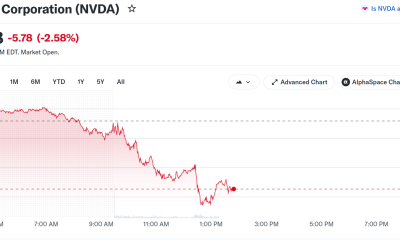
Why Did Nvidia Stock Fall on Monday Despite a $500 Billion Wall Street AI Deal?
-
 Sports3 days ago
This U.S. Amateur is a glimpse into golf’s future in more ways than you think
-

 Politics7 days ago
Ben-Gvir’s crocodile project halted but abuses at Ketziot Prison continue
-

 Sports1 day ago
Birmingham 2026: Day 6 Timetable for Irish Athletes
-

 Politics7 days ago
The Church of England’s ruinous reparations racket
-

 Politics7 days ago
Saudi Arabia used 86% of missile stockpile defending Iran attacks
-
 NewsBeat1 day ago
Myanmar says over 300,000 Rohingya refugees verified for repatriation as exodus enters ninth year
-

 Politics1 day ago
SEQ Code: The Three Letter Boarding Pass Code That Could Give You The Worst Seat
-

 Crypto World7 days ago
Crypto Made a $9.6 Billion Record, But It’s Hiding a Crucial Truth
-

 Fashion6 days ago
Can You Wear Double Cloth Gauze Clothing To Your Office?
-
 Crypto World7 days ago
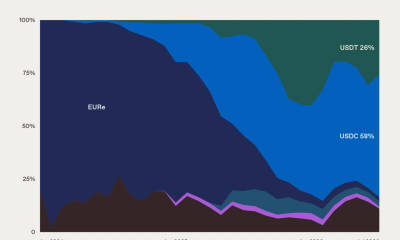
USDC and USDT Now Own 84% of Crypto Card Spend as the Euro Retreats
-
 Crypto World7 days ago
Is Clarity's delay a blessing in disguise?: State of Crypto
-
 Crypto World6 days ago
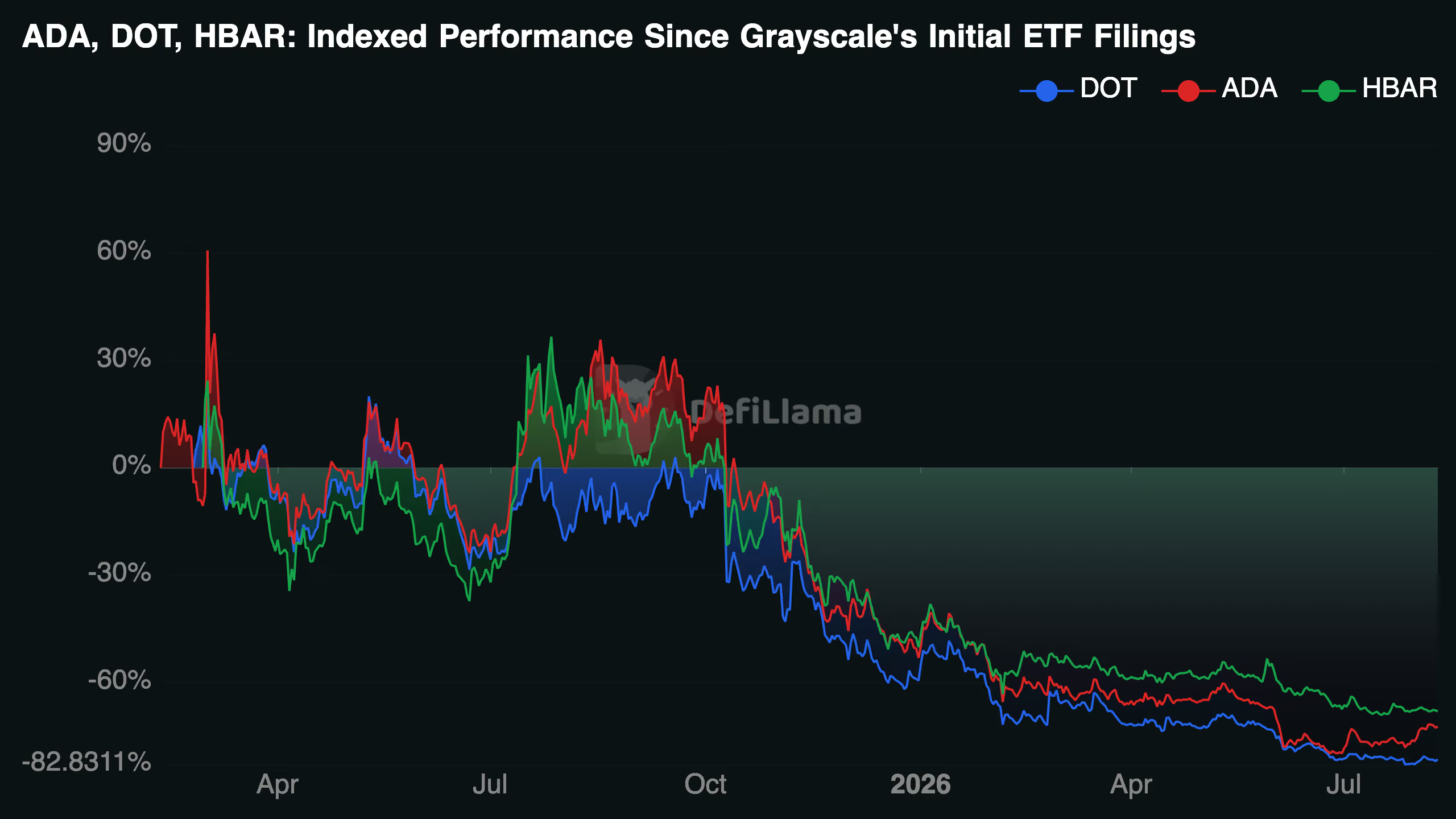
Grayscale quietly drops Cardano, Polkadot and Hedera ETF plans
-
 Entertainment6 days ago
57 Years Later, the Best Sitcom Ever Made Still Deserves a Reboot
-
 Entertainment4 days ago
Keke Palmer Subtly Hints At Sean Evans Drama With Cryptic Post
You must be logged in to post a comment Login