Crypto World
Binance Phishs Own Staff Monthly, India Censors BitChat: Asia Express

Binance ‘red teams’ its own staff every month to keep hackers out
Cryptocurrency exchange Binance has been running simulated phishing attacks against its own employees for the past four years and can fire staff who repeatedly fail the tests, according to Binance chief security officer Jimmy Su.
The fake attacks are conducted by Binance’s red team, an internal ethical hacking unit whose job is to break into systems to identify vulnerabilities.
“We do phishing attacks on our own employees on a monthly basis just so we understand if our security hygiene is improving,” Su told Cointelegraph. “The ones that have failed it, we will do remediation training.”
In February, AMLBot estimated that 65% of crypto security incidents in 2025 were driven by social engineering.
India’s BitChat GitHub takedown order ‘unconstitutional’
India’s Internet Freedom Foundation (IFF) has condemned a government order directing GitHub to remove repositories for Jack Dorsey’s decentralized messaging app BitChat, calling the move unconstitutional and warning it threatens free speech and open-source software.
The statement came a day after India’s cybercrime agency ordered GitHub to disable access to three BitChat repositories within three hours, saying the decentralized messaging app could be used to bypass internet shutdowns, evade lawful surveillance and facilitate unlawful activities.


BitChat is a decentralized messaging app that routes encrypted messages between nearby devices over Bluetooth without relying on internet connectivity or centralized servers.
Since its release in July 2025, the app has gained traction during periods of unrest and internet outages in countries including Madagascar, Nepal, Uganda, Jamaica and Iran.
More crypto news from India:
— India’s Central Board of Direct Taxes (CBDT) has issued guidance directing crypto exchanges to report all transactions on their platforms to the Income Tax department.
Balaji’s Network School turns to Kazakhstan amid Malaysian setback
Balaji Srinivasan’s utopian Network School looks set to move to Kazakhstan after Malaysian authorities revoked its business license over alleged premises-use violations.
A memorandum of understanding was signed between Kazakhstan’s Minister of Digital Development and Srinivasan to establish a campus in the country which has been positioning itself as an emerging technology hub, and has plans for Central Asia’s first “crypto city” in Alatau.
The Network School had been at the centre of a scandal involving hosting Israeli citizens given the Muslim majority country has no diplomatic relations with Israel. The US State Department called in the Malaysian envoy to ask for an explanation about the country’s apparent policy of deporting dual citizens with Israeli passports.


Source: The Times of Israel/Reuters
South Korea crypto volumes shrink as retail investors shift to stocks
South Korea’s five major crypto exchanges have seen their combined trading activity fall by 89% year over year, even as the country’s stock market surged.
The Korea Composite Stock Price Index (KOSPI) benchmark more than doubled over the period, while volumes across the country’s largest won-based crypto platforms fell off a cliff.
Cointelegraph reviewed CoinGecko’s historical 24-hour volume readings for Upbit, Bithumb, Coinone, Korbit and Gopax, comparing seven-day periods in July 2025 and July 2026.
On a combined basis, average daily volume fell about 89%, to $305 million from $2.82 billion in the comparable July 2025 period.
More crypto news from Korea:
— South Korean crypto exchange Korbit will reportedly rebrand as Digital X after becoming part of Mirae Asset Group.
— South Korea’s KB Kookmin Bank will launch a blockchain-based cross-border payment service for import and export businesses in August using JPMorgan’s Kinexys network.
— South Korean regulators have removed 29 unlicensed crypto exchange apps from the Google Play store. Affected apps include those from OKX, Bybit, MEXC, Kucoin, Gemini, Backpack, and BitMEX.
— North Korean authorities have reportedly arrested a group of former state cyber operators and IT specialists accused of hacking two state banks and laundering stolen funds through cryptocurrency.
Thailand SEC files complaint against Bitkub over alleged false disclosures
Thailand’s SEC filed a criminal complaint against Bitkub and two former directors over alleged false disclosures linked to a 2021 cyberattack involving $50 million in assets.
The complaint names former Bitkub directors Sakolkorn Sakavee and Thaweesap Rawan, who the SEC said were responsible for submitting company reports during the period under investigation.
The case comes as Bitkub’s parent company considers a potential public listing, putting renewed attention on transparency and governance at one of Thailand’s most prominent crypto businesses.
More crypto news from Thailand:
— Thailand’s Kbank has signed a memorandum of understanding with BPMG and HashKey Group to develop stablecoin-based cross-border remittance services.
— Thailand authorities have raided seven illegal Bitcoin mining operations after uncovering large scale electricity theft. More than 1900 crypto mining machines were seized.
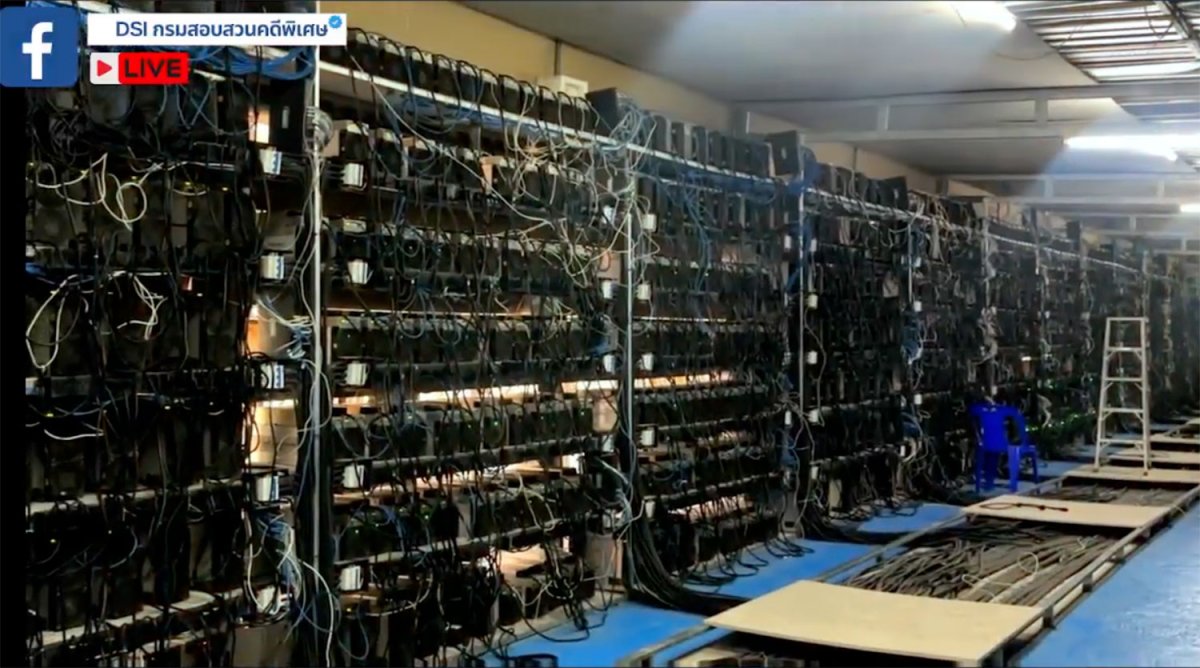

One of two Bitcoin mining warehouses in Samut Sakhon alleged to be stealing power. Source: DSI Facebook page.
Philippine bank BPI plans stablecoin payments pilot
The Bank of the Philippine Islands (BPI) is planning to pilot a stablecoin-based settlement rail for cross-border payments to freelancers, virtual assistants and other workers receiving overseas income.
Developed with global digital clearinghouse Meridian, the system is intended to reduce the cost and processing time of inbound payments while retaining safeguards used in traditional banking transactions, according to ABS-CBN and the Philippine Daily Inquirer.
Stablecoins would be used as a settlement instrument before the funds are converted to Philippine pesos and credited to recipients’ BPI accounts.
Coinbase to expand Singapore office headcount by 25%: Report
Cryptocurrency exchange Coinbase plans to expand its presence in Singapore and grow its headcount from 150 to about 200 staff members by the end of 2026.
The cryptocurrency exchange is mainly looking to hire more engineers, customer service, relationship management staff and institutional sales representatives for its Singapore office, which opened at One Raffles Quay on Wednesday.
Hassan Ahmed, Coinbase’s country director for Singapore, told the Business Times the exchange plans to expand its operations in Singapore because the city state is increasingly becoming a strategic hub for cryptocurrency innovation.
More Singapore crypto news:
— The Singapore Police Force and the U.S. FBI signed a memorandum of understanding to strengthen joint operations on online scams including crypto related scams, cyber fraud, and money laundering cases.
— Singapore based payments firm Triple-A reportedly lost $11.8 million after its hot wallet was drained. The firm said it was investigating but no customer funds were affected.
— The Monetary Authority of Singapore has tightened monetary policy, which will lead to the Singapore dollar appreciating by about 1% per year.


Hong Kong crypto giant HashKey merges regional exchange into one
Hong Kong digital asset services business HashKey Holdings has merged its HashKey Exchange and HashKey Global exchanges into a single platform and application.
Core jurisdictional hubs including Hong Kong, Singapore, the Middle East (Dubai) and Bermuda have been merged under a single platform.
The idea is that all users download the same application wherever they are, while the platform manages compliance on the back end with local regulatory frameworks.
News in brief from China
— A Hunan man was penalized under the Anti-Telecom and Online Fraud Law for reselling virtual currency for profit and for lending out his relative’s payment accounts to others so they could receive and transfer funds.
—Authorities in Shenzen have closed down numerous social media accounts for hyping up cryptocurrencies.
Cointelegraph publishes long-form journalism, analysis and narrative reporting produced by Cointelegraph’s in-house editorial team with subject-matter expertise. All articles are edited and reviewed by Cointelegraph editors in line with our editorial standards. Content published in here does not constitute financial, legal or investment advice. Readers should conduct their own research and consult qualified professionals where appropriate. Cointelegraph maintains full editorial independence.
You must be logged in to post a comment Login